2027 Self-Paced Online Environmental Science Bachelor's Degree Programs

Co-Founder and Chief Data Scientist
Choosing an online environmental science bachelor’s degree is not just a question of convenience. It affects how quickly you can finish, how much you may pay, whether your credits transfer, and whether employers or graduate schools will recognize the credential. Self-paced programs are designed for students who need more control over their schedule, including working adults, parents, military learners, and career changers who cannot attend fixed weekly classes.
Interest in this format has increased as more students look for career-relevant science degrees that fit around existing responsibilities. According to recent data, enrollment in self-paced online environmental science programs has grown by over 35% in the past five years. The appeal is clear: students may be able to move quickly through familiar material, use transfer credits or prior learning, and avoid waiting for traditional semester timelines.
This guide explains how self-paced online environmental science bachelor’s degree programs work, how they differ from standard online programs, what accreditation to look for, how long completion may take, what costs and financial aid issues to expect, and how to evaluate transfer credit, prior learning, concentrations, and career fit before enrolling.
Key Benefits of Self-Paced Online Environmental Science Bachelor's Degree Programs
- Self-paced online environmental science programs offer unmatched flexibility for working professionals balancing employment, family, and education commitments, enabling progress without strict schedules.
- These programs often accelerate skill acquisition through competency-based models, allowing students to advance upon demonstrating mastery rather than time spent in class.
- Cost-effective pathways include transfer credits and prior learning assessments, reducing tuition expenses while earning an accredited credential recognized by employers and industry.
What Are Self-Paced Online Environmental Science Bachelor's Degree Programs, and How Do They Differ From Traditional Online Formats?
Self-paced online environmental science bachelor’s degree programs let students complete coursework on a more flexible timeline than standard term-based online programs. Instead of progressing with a cohort through weekly modules and fixed due dates, students often move through material as they demonstrate readiness, complete required assessments, and meet program milestones.
The biggest difference is control. In a traditional online format, classes may still follow an academic calendar, with scheduled discussion posts, assignment deadlines, and instructor-led pacing. In a self-paced format, students usually have more freedom to accelerate, pause, or adjust their study load based on work, family, health, or military obligations. That freedom can be valuable, but it also shifts more responsibility to the student.
How self-paced programs usually work
- Flexible enrollment: Some programs allow students to begin at multiple points during the year instead of waiting for a fall or spring semester start.
- Personalized pacing: Students may finish faster if they already understand the material or can study intensively.
- Competency-focused progress: In many models, advancement depends on showing mastery through exams, projects, papers, labs, or portfolios.
- Asynchronous faculty support: Instructor contact is often available through messaging, scheduled appointments, feedback, or academic coaching rather than live weekly classes.
- Transfer and prior learning options: Students may shorten the degree by applying previous college credits, military training, professional certifications, or documented work experience.
Who benefits most from this format?
Self-paced environmental science programs are strongest for students who are organized, comfortable learning independently, and able to build a realistic weekly study routine. They can work especially well for adults who already have college credits, career experience, or a clear reason for earning the degree.
They may be less suitable for students who need frequent live instruction, peer discussion, structured deadlines, or close daily accountability. Environmental science also includes technical subjects such as biology, chemistry, statistics, geographic information systems, policy analysis, and field or lab methods. Even in a flexible format, students should expect rigorous science coursework rather than a lighter version of an on-campus degree.
Students comparing efficient education pathways may also look beyond the bachelor’s level. For example, those planning long-term academic advancement can review resources such as the shortest phd programs to understand how accelerated or flexible formats may appear at later stages of education.
Which Accredited Institutions Offer Self-Paced Online Environmental Science Bachelor's Degree Programs?
Accredited self-paced online environmental science bachelor’s degree options are offered by institutions that combine online delivery with flexible pacing, competency-based education, transfer-friendly policies, or rolling start dates. Before applying, students should verify the current program name, delivery model, tuition structure, and accreditation status directly with the institution, since online formats and degree titles can change.
The institutions below are commonly discussed by students seeking flexible, accredited online pathways. Each has different rules for pacing, tuition, transfer credit, and prior learning, so the best choice depends on how much college credit you already have, how quickly you can study, and whether you prefer a subscription model or per-credit billing.
- Western Governors University: Western Governors University provides a competency-based online environmental science program with a flat subscription fee per six-month term rather than per credit. Accredited by the Northwest Commission on Colleges and Universities (NWCCU), the model allows students to complete courses at their own pace, with typical completion in 2 to 3 years depending on experience and course load.
- City University of Seattle: City University of Seattle offers a self-paced Bachelor of Science in environmental science and uses a subscription tuition model. The program accepts transfer credits and prior learning assessments that may reduce time to graduation. It is also accredited by the Northwest Commission on Colleges and Universities.
- Capella University: Capella University’s FlexPath format uses a competency-based structure with tuition charged per term, allowing students to take unlimited courses during that period. Accredited by the Higher Learning Commission (HLC), average completion ranges from 18 to 36 months based on individual pacing.
- Southern New Hampshire University (SNHU): Southern New Hampshire University offers an online environmental science degree with flexible start dates and self-directed learning. It is accredited by the New England Commission of Higher Education (NECHE). Tuition is charged per credit, but transfer credit policies and Credit for Prior Learning (CPL) options may help students accelerate completion.
- Excelsior College: Excelsior College offers a Bachelor of Science in environmental science with per-credit tuition. Accredited by the Middle States Commission on Higher Education (MSCHE), its competency-based model, transfer-friendly policies, and prior learning evaluations may allow students to finish in about 2 to 4 years depending on prior coursework and experience.
How to compare institutions before applying
- Confirm institutional accreditation: Regional accreditation is important for federal financial aid, transfer credit, graduate school admission, and employer recognition.
- Ask for a transfer estimate before enrolling: A generous transfer policy is only useful if your specific courses apply to general education, major, or elective requirements.
- Compare tuition models carefully: Subscription tuition can be cost-effective for fast-moving students, while per-credit tuition may be more predictable for students who need a lighter pace.
- Check science requirements: Environmental science may require labs, fieldwork, GIS software, statistics, or capstone projects that affect scheduling.
- Review student support: Strong advising, tutoring, library access, technical support, and career services matter more in self-paced programs because students manage more of their own progress.
Students comparing online education costs across disciplines may find it useful to review how tuition structures differ in other fields, such as this guide to mlis degree online cost.
How Long Does It Take to Complete a Self-Paced Online Environmental Science Bachelor's Degree?
Completion time depends on how many credits you transfer, how many hours you can study each week, and whether the program uses a per-credit, term-based, or competency-based structure. Some students finish in as little as 18 months, but most take between three and six years. Data from the National Center for Education Statistics (NCES) shows that related STEM bachelor’s degrees typically require about 4.5 years for full-time learners, which provides a useful benchmark.
A self-paced degree is not automatically faster. It becomes faster when the student has applicable transfer credits, can study consistently, and can complete assessments without long breaks. Environmental science courses may also include labs, field assignments, data analysis, or software-based projects that cannot always be rushed.
Factors that affect completion time
- Prior credits: Students who enter with transfer or dual enrollment credits can reduce their remaining course load. Many schools accept up to 90 semester hours, which may cover roughly two-thirds of the coursework.
- Transfer course fit: Credits may transfer as electives but not always as major requirements. Biology, chemistry, statistics, geology, policy, and environmental studies courses are more likely to be useful if they match degree requirements.
- Weekly study hours: Students who can commit 20+ hours per week often progress more quickly. Those balancing full-time work, caregiving, military duties, or irregular schedules may need a longer timeline.
- Prior learning assessments: Competency-based education and PLAs may award credit for documented knowledge gained through work, training, certifications, or military experience.
- Program pacing rules: Some programs allow rapid acceleration, while others require minimum term lengths, course sequencing, proctored assessments, or capstone timing.
- Support services: Advising, tutoring, writing support, library services, and technology help can prevent delays, especially in science-heavy online courses.
How to build a realistic graduation plan
- Request a transfer credit evaluation before committing to a program.
- Ask which transferred courses satisfy major requirements versus electives.
- Estimate weekly study time honestly, not optimistically.
- Identify courses likely to slow you down, such as chemistry, statistics, GIS, or lab-based requirements.
- Build in buffer time for work peaks, family obligations, illness, or financial aid processing.
A professional who pursued a self-paced online environmental science degree described time management as both the hardest part and the main reason the format worked. “It wasn’t just about logging hours weekly but knowing when to push ahead and when to pause,” he said. He also noted that advisor support helped him shape a schedule around unpredictable work demands. Transfer credit evaluations created some frustration, but prior learning credits saved him months and made it possible to continue working while finishing the degree.
What Are the Admission Requirements for Self-Paced Online Environmental Science Bachelor's Degree Programs?
Admission requirements for self-paced online environmental science bachelor’s degree programs are often more flexible than highly selective on-campus science programs, but students still need to show readiness for college-level work. Requirements vary by institution, accreditation, degree structure, and whether the program is open-access, transfer-focused, or competency-based.
- High school diploma or GED: Most programs require applicants to hold a high school diploma or GED before beginning bachelor’s-level coursework.
- GPA expectations: Some programs require a minimum GPA, often between 2.0 and 2.5 on a 4.0 scale, while others use open admissions or broader review standards.
- Science and math preparation: Applicants may need prior coursework in biology, chemistry, algebra, or related subjects. Even when not required for admission, these courses help students handle environmental science coursework.
- Open enrollment or rolling admissions: Many self-paced programs offer multiple start dates or rolling admission, which helps working adults avoid long waits between application and enrollment.
- Official transcripts: Students with prior college coursework usually need to submit transcripts from every institution attended for transfer credit review.
- Technology readiness: Online science programs may require reliable internet access, webcam-enabled proctoring, spreadsheet software, GIS tools, virtual labs, or other digital platforms.
- English proficiency: International applicants or students educated outside English-language systems may need to meet institutional language requirements.
Open-access vs. selective programs
Open-access programs reduce barriers for returning students, adult learners, and applicants with uneven academic records. The trade-off is that students may need to be more proactive about advising, tutoring, and time management. Selective programs may require stronger grades or prerequisites but often provide more structured academic pathways.
How to strengthen your application
- Explain relevant work, volunteer, military, sustainability, conservation, or compliance experience in your application materials if the school accepts them.
- Complete missing math or science prerequisites through an accredited provider before starting upper-division coursework.
- Ask whether professional certifications, workplace training, or military education can be reviewed for prior learning credit.
- Request a preliminary transfer review so you know whether admission will lead to meaningful progress toward the degree.
Cost should be part of the admissions decision, not an afterthought. Applicants comparing affordability across online bachelor’s programs can review examples such as the cost of accounting degree online to understand how tuition, fees, transfer credits, and pacing affect total price.
How Much Does a Self-Paced Online Environmental Science Bachelor's Degree Cost, and What Affects Tuition?
The cost of a self-paced online environmental science bachelor’s degree depends on the school, tuition model, transfer credits, fees, and how quickly you complete the program. The sticker price can be misleading because a student who transfers many credits or accelerates through a subscription model may pay far less than a student starting from zero credits and moving slowly.
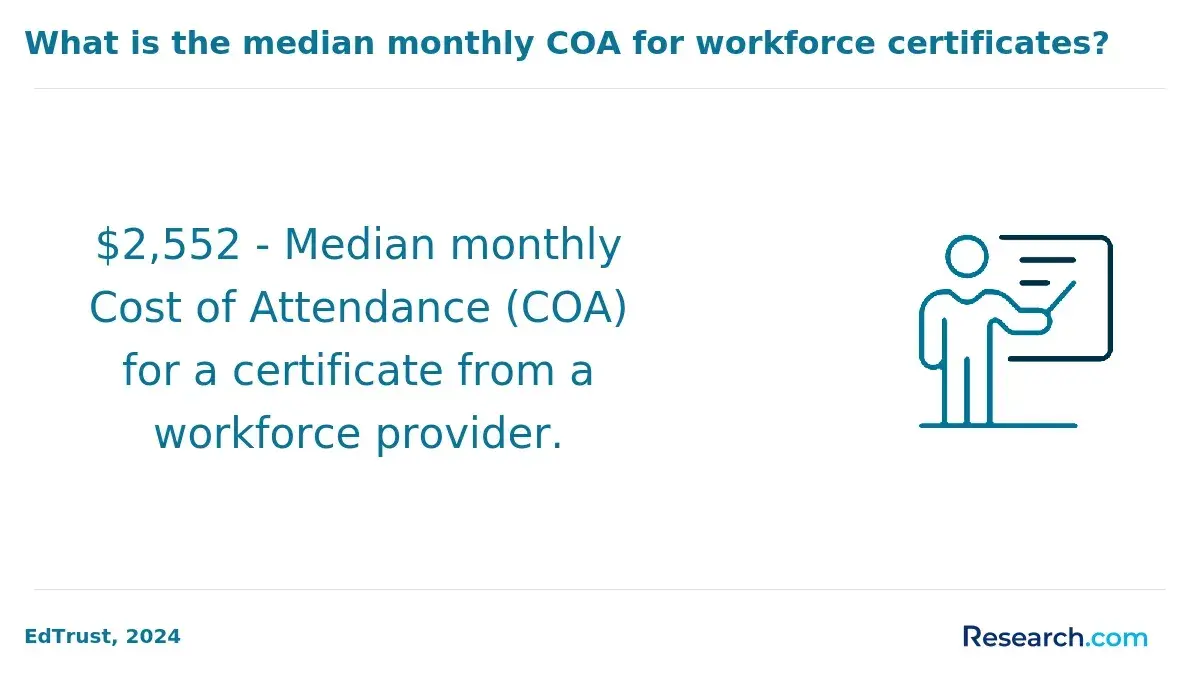
- Per-credit tuition: Many programs charge by credit hour, with costs ranging from $300 to $600 per credit. Since bachelor’s degrees typically require around 120 credits, total tuition often falls between $36,000 and $72,000 before scholarships, grants, transfer credits, or employer assistance.
- Flat-rate subscriptions: Some schools charge a monthly, quarterly, or term-based subscription fee. This can lower total cost for students who complete multiple courses in each subscription period, but it can become expensive if progress slows.
- Bundled fees: Some institutions combine tuition, textbooks, proctoring, technology, or course materials into a single price. Bundling can make budgeting easier, but students should still confirm exactly what is included.
- Additional costs: Environmental science students may encounter technology fees, online proctoring fees, textbooks, lab kits, GIS software, field equipment, or required software subscriptions.
- Pace of study: Faster completion may reduce total cost in flat-rate models. In per-credit models, pace may not change tuition as much, but it can affect fees, loan borrowing, and time away from full-time career advancement.
- Transfer and PLA savings: Accepted transfer credits and prior learning credits can reduce the number of courses you need to pay for.
Questions to ask before comparing tuition
- Is tuition charged per credit, per course, per term, or by subscription?
- Are textbooks, lab materials, proctoring, and technology fees included?
- How many of my credits will apply to the degree, not just transfer as electives?
- Does the program charge additional fees for prior learning assessment?
- What happens financially if I need to pause or slow down?
- Will my enrollment pace affect financial aid eligibility?
A graduate of a self-paced online environmental science bachelor’s program said cost control required frequent planning. She found that completing more credits during a flat-fee period reduced her overall expense, but she also warned that technology and proctoring charges can surprise students who only look at tuition. Her experience shows why students should calculate total program cost, not just advertised tuition.
What Financial Aid Options Are Available for Self-Paced Online Environmental Science Bachelor's Programs?
Students in self-paced online environmental science bachelor’s programs may be eligible for federal, state, institutional, employer, military, and private scholarship aid. Eligibility depends on the school’s accreditation, the program’s aid approval status, enrollment intensity, satisfactory academic progress rules, and whether the self-paced format is measured through traditional credits or competency-based milestones.
The Free Application for Federal Student Aid (FAFSA) is usually the starting point for federal grants, loans, and work-study consideration. However, competency-based education (CBE) programs may apply distinctive credit-hour or progress-measurement rules that affect when aid is disbursed. Students should not assume that “self-paced” means aid works exactly like a semester-based program.
- Federal aid: FAFSA is the main route to federal student aid, but students should confirm that the institution and specific program are eligible and that their enrollment pace meets aid requirements.
- State grants: Some state aid depends on residency, enrollment status, program approval, or pursuit of high-demand fields such as STEM.
- Institutional scholarships: Schools may offer merit-based scholarships, need-based grants, transfer awards, adult learner grants, or sustainability-related scholarships.
- Environmental scholarships: Professional organizations, including the Ecological Society of America and the National Environmental Health Association, may offer awards for students involved in environmental research, public health, conservation, or community service.
- Employer tuition assistance: Students working in sustainability, utilities, environmental compliance, local government, construction, energy, or public health should ask whether their employer reimburses job-related education.
- Military and veteran benefits: Military-affiliated students should ask how military tuition assistance, GI Bill benefits, ACE-recommended credits, and institutional military discounts interact with the program’s pacing model.
According to the College Board’s 2023 Trends in Student Aid report, approximately 86% of undergraduate students, including those enrolled online, receive some form of financial aid, with grants covering nearly half the average tuition cost. That broad availability is encouraging, but each student’s award package depends on individual eligibility and the program’s rules.
Financial aid questions for self-paced students
- Is this specific online environmental science program eligible for federal financial aid?
- How does the school define full-time, half-time, or satisfactory progress in a self-paced format?
- When are aid funds disbursed?
- What happens to aid if I accelerate, pause, withdraw, or fail to complete enough competencies?
- Can scholarships be used with subscription tuition?
- Are PLA fees, lab kits, books, or software covered by aid?
How Do Competency-Based Education (CBE) Models Work in Self-Paced Online Environmental Science Programs?
Competency-based education (CBE) measures learning by demonstrated mastery rather than time spent in class. In a self-paced online environmental science program, students complete defined competencies tied to subjects such as ecology, environmental policy, chemistry, sustainability, data analysis, research methods, and scientific communication. Progress occurs when students pass assessments that show they can apply the required knowledge or skills.
CBE can be a good fit for students who already know some material through work, military service, prior college study, or professional training. It can also help motivated students move more quickly through general education or familiar topics. However, it is not an easier path. Assessments may include exams, research papers, lab reports, GIS projects, case analyses, portfolios, or capstone work that require independent preparation.
Common CBE assessment types
- Objective exams: Tests used to confirm knowledge of concepts, terminology, regulations, or scientific principles.
- Performance tasks: Applied projects such as environmental impact analyses, policy briefs, data interpretation exercises, or sustainability plans.
- Portfolios: Collections of work that demonstrate competency across multiple outcomes.
- Capstone projects: Final projects requiring students to integrate environmental science knowledge and communicate findings professionally.
- Faculty-reviewed assignments: Written or applied work assessed against rubrics instead of traditional participation-based grading.
Some institutions translate mastery into credit hours so students can qualify for financial aid within familiar federal aid frameworks. Others use direct assessment programs that evaluate competencies without traditional credit-hour equivalencies. Credit-hour-equivalent CBE may feel more familiar to students and financial aid offices, while direct assessment can offer greater flexibility but requires careful verification of aid eligibility and transferability.
Notable programs include Western Governors University, which integrates performance-based assessments with faculty mentorship, and Southern New Hampshire University, where modular exams and around-the-clock faculty support facilitate student progress. Recent statistics show a growth of over 20% in CBE bachelor’s program enrollment over the last five years, reflecting rising demand for flexible, skills-focused education.
Who should choose a CBE model?
- Good fit: Self-directed students, working adults, students with prior knowledge, fast readers, strong writers, and learners comfortable preparing independently for assessments.
- Potentially difficult fit: Students who need live lectures, frequent reminders, fixed weekly deadlines, or extensive peer interaction to stay motivated.
- Key success habit: Set weekly goals based on completed competencies, not just hours spent online.
What Accreditation Should a Self-Paced Online Environmental Science Bachelor's Program Hold?
A self-paced online environmental science bachelor’s program should be offered by an institution recognized by an accreditor accepted by the U.S. Department of Education. Accreditation affects whether students can access federal financial aid, transfer credits, apply to graduate school, and present the degree confidently to employers.
Regional accreditation is generally the most widely recognized form of institutional accreditation for bachelor’s degrees. The six regional accrediting bodies recognized by the U.S. Department of Education include the Middle States Commission on Higher Education, New England Commission on Higher Education, Higher Learning Commission, Northwest Commission on Colleges and Universities, Southern Association of Colleges and Schools Commission on Colleges, and Western Association of Schools and Colleges Senior College and University Commission.
National accreditation may be legitimate in some contexts, but it can create challenges. Credits from nationally accredited or non-accredited institutions may not transfer easily to regionally accredited schools, and some graduate programs or employers may view them less favorably. Non-accredited programs are especially risky because they may not qualify for federal financial aid and may not meet expected academic standards.
Institutional vs. programmatic accreditation
- Institutional accreditation: Applies to the college or university as a whole and is the most important accreditation to verify first.
- Programmatic accreditation: Applies to a specific degree or department. In environmental science, specialized accreditation from bodies such as the Accreditation Board for Engineering and Technology (ABET) may appear in some related programs, though it is less common.
- Employer relevance: Many environmental science jobs focus on the overall legitimacy of the degree, coursework, technical skills, and experience rather than programmatic accreditation alone.
How to verify accreditation
- Search for the institution in the U.S. Department of Education accreditation database.
- Check the Council for Higher Education Accreditation (CHEA) directory.
- Confirm the accreditor listed on the school’s website matches the official database.
- Ask whether the specific online program is included under the institution’s accreditation.
- Verify that the program is eligible for federal financial aid if you plan to use aid.
Students exploring flexible graduate options in other disciplines can also compare accreditation and affordability considerations in programs such as an online masters in child psychology.
How Many Transfer Credits Can Be Applied Toward a Self-Paced Online Environmental Science Bachelor's Degree?
Many self-paced online environmental science bachelor’s programs are designed for transfer students, but the number of credits accepted depends on the institution and how well prior coursework fits degree requirements. Some programs allow up to 90 credits toward the 120-130 credits typically required for graduation. That can significantly reduce both time and cost, but only if the credits apply in useful categories.
Transfer credit is not only about the total number accepted. A school may accept many credits as electives while still requiring students to complete most environmental science core courses. The most valuable credits are those that satisfy general education, foundational science, math, statistics, environmental policy, lab science, or upper-division requirements.
What schools review during transfer evaluation
- Institutional accreditation: Courses from regionally accredited colleges are typically more transferable.
- Course equivalency: The school compares prior course content with its own requirements.
- Grade earned: Some institutions require minimum grades for transfer.
- Course age: Older science, technology, or GIS courses may be reviewed more carefully because methods and tools change.
- Credit level: Lower-division courses may not replace upper-division major requirements.
- Degree residency rules: Schools often require students to complete a minimum number of credits through the enrolling institution.
Military training credits recommended by the American Council on Education (ACE) are widely accepted by many institutions and can help veterans and active military students apply formal training toward degree requirements. Articulation agreements with community colleges can also improve transfer outcomes by guaranteeing that specified courses count toward a bachelor’s degree.
Before enrolling, request a comprehensive transfer credit evaluation using official transcripts. The evaluation should show how many credits were accepted, which requirements they satisfy, and which courses remain. Students with prior coursework in quantitative fields, such as a math degree online, should ask whether those credits can satisfy statistics, modeling, data analysis, or general education requirements.
Transfer credit mistakes to avoid
- Enrolling before receiving a written transfer estimate.
- Assuming an associate degree automatically covers all lower-division requirements.
- Counting credits accepted as electives as if they reduced major requirements.
- Ignoring residency requirements that limit how much can be transferred.
- Failing to ask whether military, certification, or workplace training can be evaluated separately.
Can Students Earn Credit Through Prior Learning Assessment in Self-Paced Online Environmental Science Programs?
Yes. Prior Learning Assessment (PLA) can allow students in self-paced online environmental science programs to earn academic credit for college-level learning gained outside a traditional classroom. PLA may evaluate professional experience, military training, industry certifications, independent study, workplace projects, or standardized exam results.
PLA is especially useful for adult learners who have worked in environmental compliance, sustainability, utilities, agriculture, public health, construction, conservation, emergency management, laboratory support, GIS, or military technical roles. However, credit is not awarded simply for years of experience. Students must document and demonstrate that their learning matches specific college course outcomes.
Common PLA methods
- Portfolio reviews: Students submit evidence such as work samples, reports, training records, certifications, reflective essays, and supervisor letters to show college-level learning.
- Challenge exams: Students take an exam created or approved by the institution to prove mastery of a specific course.
- Standardized tests: CLEP and DSST exams can validate knowledge in widely recognized subject areas.
- ACE-recommended training: Military and professional training reviewed by the American Council on Education may be converted into academic credit.
- Certification review: Some schools evaluate industry credentials for possible credit when the certification aligns with course outcomes.
Institutions such as Western Governors University and Thomas Edison State University offer flexible and affordable PLA options. These programs often allow up to 30-50% of degree requirements to be fulfilled via PLA, depending on institutional policy and degree requirements. Recent statistics show nearly 45% of adult learners use PLA to speed up degree completion.
How to improve your chances of receiving PLA credit
- Match your experience to specific course descriptions before submitting a portfolio.
- Use clear documentation, such as certificates, job descriptions, project reports, licenses, training records, and employer letters.
- Explain what you learned, not just what duties you performed.
- Ask about PLA fees and timelines before applying.
- Confirm whether PLA credits count toward the major, electives, or general education requirements.
- Check whether PLA credits will transfer if you later change schools.
PLA can lower cost and shorten time to graduation, but students should compare the price of PLA evaluation with the cost of taking the course. In some cases, a challenge exam or standardized test may be faster and cheaper than building a full portfolio.
What Concentrations or Specializations Are Available in Self-Paced Online Environmental Science Bachelor's Programs?
Concentrations help students tailor an environmental science degree toward a specific career direction. In a self-paced format, the best concentration is not only the most interesting one; it is the one that fits your career goal, available study time, comfort with technical coursework, and willingness to complete labs, fieldwork, internships, or software-heavy projects.
Environmental Policy and Management
This concentration focuses on environmental laws, regulations, permitting, compliance, resource management, and organizational decision-making. It can prepare students for roles such as environmental policy analyst, compliance coordinator, or environmental compliance manager. Median salaries are near $70,000 annually. Some positions may require or prefer certifications such as Certified Environmental Professional (CEP).
This track may suit students who are strong writers, interested in government or corporate compliance, and comfortable interpreting regulations. It may also be easier to complete fully online than concentrations with extensive lab or field requirements.
Ecology and Conservation Biology
This specialization emphasizes ecosystems, biodiversity, species protection, habitat restoration, and conservation planning. It can support career paths such as wildlife biologist, conservation scientist, ecological technician, or natural resource specialist. Median earnings are approximately $65,000.
Students should review fieldwork expectations carefully. Field internships, seasonal research, or hands-on ecology requirements can extend program length, especially for students who need a fully remote schedule.
Sustainability and Renewable Energy
This concentration examines sustainable business practices, energy systems, climate strategy, resource efficiency, and green technologies. Graduates may pursue roles such as sustainability coordinator, environmental program assistant, or solar energy specialist, with median salaries around $68,000.
This track is often practical and project-based. Students may analyze energy use, write sustainability plans, evaluate organizational practices, or complete applied projects that require access to workplace or community data.
Environmental Chemistry and Toxicology
This specialization studies pollutants, chemical exposure, hazardous substances, environmental health, and the movement of chemicals through air, water, soil, and organisms. Career paths may include environmental chemist, laboratory analyst, toxicology assistant, or hazardous materials specialist. Environmental chemists earn over $70,000 annually, and some roles may require additional lab work or certifications such as Hazardous Waste Operations.
This option is best for students comfortable with chemistry, quantitative analysis, and lab-based learning. It may be less flexible than policy-focused tracks if the program requires supervised lab activities.
Geographic Information Systems (GIS) and Remote Sensing
GIS and remote sensing concentrations train students to collect, map, analyze, and interpret spatial environmental data. This track can support roles such as GIS analyst, environmental data technician, planning analyst, or remote sensing assistant. Median wages are near $63,000.
Students should expect software-intensive coursework. GIS can be highly marketable, but it may require a stronger computer, specialized software, and more practice time than reading-based courses.
How to choose the right concentration
- Choose policy and management if you want compliance, government, nonprofit, or corporate sustainability roles.
- Choose ecology and conservation if you want field-based, wildlife, habitat, or natural resource work.
- Choose sustainability and renewable energy if you want applied organizational or energy-focused roles.
- Choose chemistry and toxicology if you are comfortable with lab science and environmental health topics.
- Choose GIS and remote sensing if you want technical data and mapping skills that can apply across many environmental jobs.
Students who need the fastest self-paced route should look closely at internship, lab, field, and software requirements. Policy-heavy paths may allow faster progress, while lab, field, and technical tracks can take longer but may build more specialized job skills.
What Graduates Say About Self-Paced Online Environmental Science Bachelor's Degree Programs
- : "Choosing a self-paced online environmental science bachelor’s degree was essential for me because I needed to balance work and family commitments. The affordability of the program made it possible to pursue my passion without taking on heavy debt. This degree opened doors to opportunities in sustainability consulting and gave me more confidence in my career direction. — Allan"
- : "The flexibility was the biggest advantage. I could learn at my own speed without leaving my job, and the cost was reasonable compared with traditional programs. Now, as an environmental analyst, I can see how the degree gave me both credibility and practical skills that I use in my profession. — Gunnar"
- : "Pursuing a self-paced online environmental science bachelor’s degree was a strategic move for entering the green tech industry. The cost-effectiveness helped me focus on learning instead of financial stress. Since graduating, I have seen stronger job prospects and more opportunities to lead projects with a positive environmental impact. — Jaxon"
Other Things You Should Know About Environmental Science Degrees
Yes. Many 2027 self-paced online environmental science bachelor's programs require at least 1 to 3 field or laboratory courses, often completed in person through approved local sites, weekend intensives, or short residencies. Programs with regional accreditation usually spell out these hands-on requirements in the catalog.
Applicants generally need a high school diploma or equivalent, with transcripts. Some programs may also require standardized test scores or prerequisite coursework in sciences. It's essential to check individual school requirements for details on eligibility criteria and deadlines.
References
- What Is Competency-Based Education? - 10 Facts About This Online Learning Model https://www.umassglobal.edu/blog-news/competency-based-education-10-facts-online-learning-model
- Exploring the Online Environmental Science Degree: A Pathway to Sustainability and Innovation https://www.ozolabs.com/blog/online_environmental_science_degree.html
- PLA Programme https://online-degrees.org/uni/prior-learning-assessment/programme
- EduPathway - Your Guide to College and University Success https://edupathwaynow.lovable.app/programs/environmental-science
- Environmental Science Transfer Pathway https://catalog.monroeccc.edu/preview_program.php
- CAEL | Why Credit for Prior Learning (CPL) or Prior Learning Assessment (PLA) Matters https://www.cael.org/lp/cpl-pla
- Bachelor of Science in Environmental Science | Royal Roads University https://www.royalroads.ca/programs/bachelor-science-environmental-science
- Bachelor of Science degree with a major in Environmental Science & Management https://applyzones.com/bachelor-of-science-degree-with-a-major-in-environmental-science-management-cou52823
- CES - Certified Environmental Scientist https://www.nrep.org/certifications/certified-environmental-scientist-ces
- The Complete Guide to Competency-Based Education https://www.d2l.com/blog/the-complete-guide-to-competency-based-education/