2027 Fastest Online Mathematics Degree Programs You Can Finish in Under 2 Years

Co-Founder and Chief Data Scientist
If you want a mathematics degree but cannot spend four years in a traditional program, the main question is not simply which school is fastest. It is whether an accelerated online mathematics degree can fit your schedule, accept enough prior credit, maintain academic quality, and lead to the career outcomes you want. Recent data shows that 38% of online mathematics degree enrollees prioritize accelerated programs to enter the workforce sooner, which reflects how strongly students now value speed, flexibility, and practical return on investment.
This guide explains how fast online mathematics degree programs work for U.S. students, especially options designed to be completed in under two years. You will learn what makes a program accelerated, which formats shorten the timeline, what admissions teams usually expect, how transfer credits affect completion speed, what employers look for, and how to compare cost, technology requirements, and career outcomes before enrolling.
Key Benefits of Online Mathematics Degree Programs You Can Finish in Under 2 Years
- Accelerated online mathematics degrees enable graduates to enter the workforce up to 50% faster, meeting high demand for quantitative analysts and statisticians projected to grow 28% by 2031.
- Completing a mathematics degree online in under 2 years reduces tuition and living costs, with accelerated programs typically costing 30% less than traditional pathways.
- Flexible scheduling in online formats supports working adults, evidenced by a 45% increase in adult enrollment in online STEM courses over the past five years.
What Features Make an Online Mathematics Program Accelerated?
An online mathematics program is accelerated when its structure allows qualified students to complete degree requirements faster than a standard academic calendar would normally allow. Speed usually comes from shorter terms, heavier credit loads, year-round scheduling, transfer-credit flexibility, or competency-based progress. The strongest programs shorten time without weakening the mathematics curriculum or reducing academic expectations.
That distinction matters. A fast program should still require rigorous work in areas such as calculus, linear algebra, statistics, discrete mathematics, mathematical modeling, or proof-based reasoning, depending on the degree level and curriculum. About 25% of online degree students finish their programs in less than half the expected time, but those outcomes generally require planning, strong time management, and a realistic understanding of workload.
- Compressed course terms: Many accelerated programs use shorter sessions, often around eight weeks instead of the traditional 15. This lets students complete more courses across the year, but it also means assignments, exams, and problem sets arrive quickly.
- Higher course loads: Students may take more credits per term than they would in a standard schedule. This can shorten the timeline, but it is best suited to students who can protect consistent study time each week.
- Flexible online scheduling: Asynchronous lectures, digital assignments, recorded lessons, and online discussion tools can help working adults continue progressing without commuting or fixed classroom times.
- Streamlined curricula: Some accelerated programs reduce electives or use more direct degree maps so students avoid unnecessary courses. The goal should be efficiency, not a diluted academic experience.
- Transfer-friendly policies: The fastest path is often available to students who already have college credit. A generous and transparent transfer policy can reduce both time and cost.
Before choosing a fast-track option, ask whether the program is accelerated because it is well designed or simply because it expects students to take an unusually heavy load. Students comparing intensive online pathways may also find it useful to review how other fields structure flexible graduate study, such as online SLP master's programs.
What Are the Online Mathematics Degree Formats You Can Finish in Under 2 Years?
The format of an online mathematics degree determines how quickly you can move through courses, how much control you have over pacing, and how demanding each term will feel. Programs that can be finished in under two years usually rely on one or more accelerated delivery models rather than a traditional two-semester calendar.
- Accelerated term-based programs: These programs divide the academic year into shorter sessions, often 8-week sessions instead of 16. Students can complete more course cycles per year while focusing on fewer subjects at a time.
- Competency-based education: In this format, students advance by demonstrating mastery instead of waiting for a fixed term to end. It can benefit students who already understand some topics, but it requires self-direction and comfort working independently.
- Full-time intensive tracks: These programs are built for students who can treat school as a major time commitment. They may be a strong fit for learners with fewer outside obligations, but they can be difficult for those working long hours.
- Year-round enrollment models: Programs with fall, spring, and summer study options reduce delays caused by long breaks. Continuous enrollment can be especially useful when courses must be taken in sequence.
Research from the Online Learning Consortium and U.S. Department of Education suggests that programs employing these formats can cut typical degree durations by 25-50%. That does not mean every student will finish at that pace. Your completion time depends on accepted transfer credits, course availability, prerequisite sequencing, weekly study capacity, and whether you can remain enrolled without interruption.
When comparing accelerated online mathematics degree programs, look for a published degree plan that shows exactly how a student can finish in under two years. If the advertised timeline assumes transfer credits, summer enrollment, or an overload schedule, make sure that matches your situation. For a broader look at intensive online degree design in another field, you can also review the best online CACREP counseling programs.
What Are the Admission Requirements for Accelerated Online Mathematics Degrees?
Admission requirements for accelerated online mathematics degrees are often stricter than those for standard-paced programs because the coursework moves quickly and builds on prior quantitative preparation. Schools want evidence that applicants can handle condensed terms, advanced problem-solving, and independent online study without falling behind.
- Minimum GPA thresholds: Many accelerated programs look for a competitive academic record, commonly around 3.0 or higher. A strong GPA helps show readiness for rigorous mathematics coursework.
- Prior mathematics coursework: Applicants may need completed prerequisites such as calculus, linear algebra, or other foundational mathematics courses. Transcripts are usually required so the school can verify credit, grades, and course level.
- Placement exams or standardized tests: Some institutions use quantitative placement tools to determine whether students are ready for advanced courses or need additional preparation before entering the accelerated sequence.
- Transferable college credit: Because many under-two-year pathways depend on previous coursework, admissions teams may review transfer credit early in the process. Ask for a preliminary transfer evaluation before committing.
- Academic or professional experience: Work in data analysis, finance, engineering, teaching, programming, or another quantitative area may strengthen an application, especially when paired with relevant prior coursework.
- Evidence of readiness for intensive study: Personal statements, recommendations, or advising interviews may be used to assess motivation, time-management habits, and ability to succeed in an online format.
A common mistake is applying only because the timeline is short. The better question is whether your academic background lines up with the starting point of the curriculum. If you have not recently studied college-level mathematics, ask whether the program offers placement guidance, refresher resources, tutoring, or a less aggressive first-term plan.
Because the pace is demanding, retention rates in these accelerated settings can be lower. Admissions professionals generally prefer applicants who have already demonstrated academic discipline and a solid mathematics foundation. Students comparing intensive online learning options may also review related professional pathways, including MFT online programs, to understand how online programs evaluate readiness for compressed study.
Breakdown of Public Fully Online Title IV Institutions

How Many Transfer Credits Do Fast Online Mathematics Programs Accept?
Transfer credit can be the difference between finishing quickly and needing several additional terms. Many accelerated online mathematics programs are fastest for students who already completed general education requirements, introductory mathematics courses, or credits from an associate degree or prior bachelor’s study. Studies show that around 70% of undergraduates transfer credits, making transfer policy one of the most important factors to review before enrolling.
Common transfer-credit practices include:
- Maximum credit acceptance: Programs generally permit between 30 and 60 credit hours to be transferred. In some cases, this can cover a substantial portion of the degree and make an under-two-year timeline more realistic.
- Course equivalency review: Prior courses must usually match the level, content, and learning outcomes of required courses. For mathematics majors, schools may examine whether previous calculus, linear algebra, statistics, or proof-based courses align with their curriculum.
- Minimum grade rules: A minimum grade-usually a "C" or above-is typically necessary for acceptance. Some programs may require higher grades for major-specific courses.
- Residency requirements: Even transfer-friendly programs usually require students to complete a certain number of credits at the degree-granting institution. This can limit how much time transfer credit actually saves.
- Documentation requirements: Official transcripts are standard, but syllabi, catalog descriptions, and course outlines may be needed for upper-level or specialized mathematics courses.
Students should request a written transfer evaluation before making a final enrollment decision. Do not rely only on a general statement that credits are accepted. Ask which credits apply to the major, which apply only as electives, and which requirements remain.
When discussing transfer credits, a recent graduate who completed an accelerated online mathematics program in under two years described the process as both exciting and challenging. He had to gather syllabi and transcripts to demonstrate course equivalency, which was sometimes frustrating but ultimately worthwhile. "Knowing that each approved transfer credit shaved months off my timeline kept me motivated," he said. His experience highlights a practical lesson: transfer planning is not just paperwork; it is a central strategy for shortening the degree timeline.
How Many Classes Do You Take at Once in a Fast Online Mathematics Program?
In a fast online mathematics program, students commonly take enough credits each term to maintain accelerated progress while avoiding an unsustainable workload. Data from the National Center for Education Statistics shows that many students enroll in about 9 to 12 credit hours per term, which typically equals three to four classes. In compressed terms, however, even two difficult mathematics courses can feel intense because assignments and exams are closer together.
- Typical course load: Students usually take between three and five classes each term when trying to accumulate credits quickly. The right number depends on work hours, family responsibilities, prior math preparation, and course difficulty.
- Term length: Many programs use shortened terms, often lasting 5 to 8 weeks. This format can help students focus, but it leaves less time to recover if they fall behind.
- Credit hours per term: A range of 9 to 12 credits per term can support steady progress without automatically requiring an overload. Some students may need more or fewer credits depending on the degree plan.
- Course sequencing: Mathematics courses often build on prerequisites. Calculus, linear algebra, probability, statistics, and advanced proof-based courses may need to be taken in a specific order.
- Course difficulty mix: Pairing two highly technical courses in the same short session can be risky. A better schedule may combine one demanding major course with a general education or elective course when available.
The safest approach is to plan backward from your target graduation date, then test whether the required term-by-term course load is realistic. If you work full time, ask an advisor what pace similar students have successfully maintained. In accelerated mathematics study, taking too many courses at once can lead to withdrawals, repeated classes, or weaker mastery, all of which can delay graduation rather than speed it up.
Do Employers Respect Accelerated Online Mathematics Degrees?
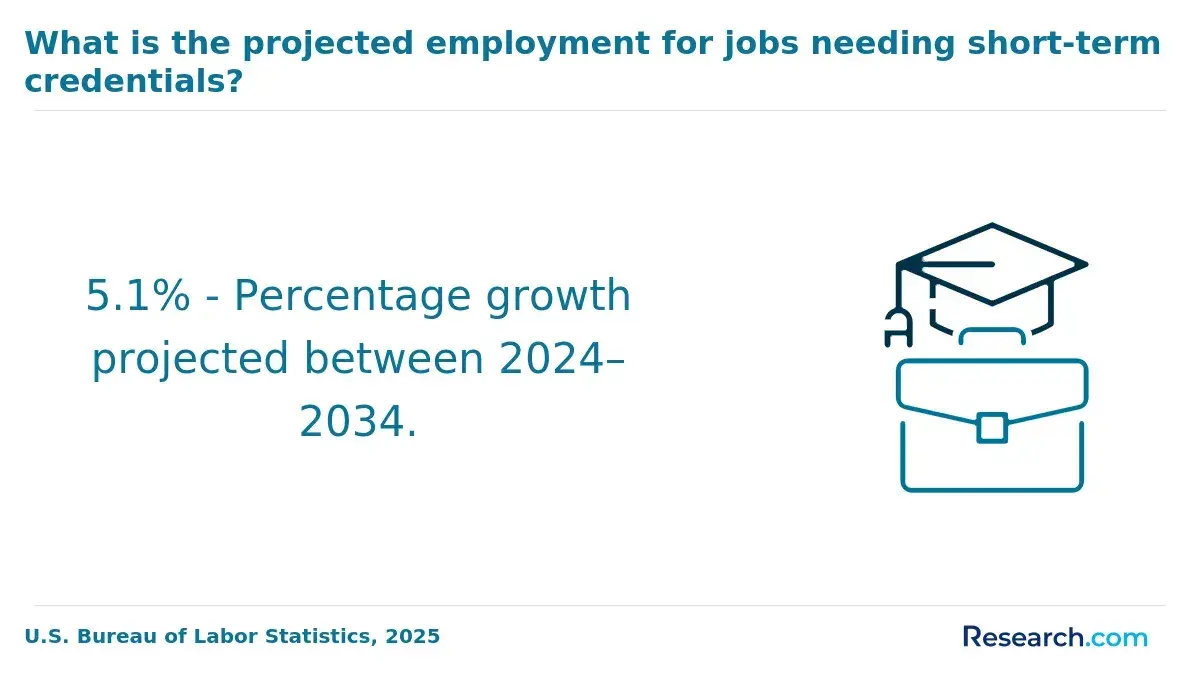
Employers can respect accelerated online mathematics degrees when the degree comes from a recognized institution, the program is academically rigorous, and the graduate can demonstrate relevant quantitative skills. According to recent data, over 70% of employers now regard online degrees as largely equivalent to traditional ones when they come from recognized institutions. The word “recognized” is important: accreditation, institutional reputation, curriculum quality, and evidence of skill all affect how the degree is received.
- Accreditation: Employers and graduate schools are more likely to trust degrees from accredited institutions. Accreditation also matters for federal financial aid eligibility and transfer-credit recognition.
- Skills relevance: Hiring managers usually care less about whether a program was online and more about whether graduates can use mathematics in practical settings. Coursework in statistics, modeling, programming, analytics, or applied mathematics can be valuable depending on the target role.
- Demonstrated experience: Projects, internships, research, work experience, portfolios, and case studies can strengthen a resume. For many quantitative roles, evidence of applied problem-solving is more persuasive than the speed of degree completion.
- Program rigor: A credible accelerated program should still include meaningful assessments, instructor interaction, challenging assignments, and appropriate prerequisite sequencing.
- Clear resume positioning: Graduates do not need to overemphasize that the program was accelerated. Instead, they should highlight the degree, institution, relevant coursework, tools used, projects completed, and measurable accomplishments.
The main employer concern is not acceleration itself. It is whether the degree represents real learning. Completing a demanding online mathematics program quickly can signal discipline and focus, but candidates still need to show competence through interviews, technical assessments, and examples of work.
How Much Does a Fast Online Mathematics Degree Cost?
A fast online mathematics degree can reduce some costs by shortening the time to graduation, but it does not automatically mean the program is cheaper. Most degrees still require the same number of credits, even if those credits are completed in a compressed schedule. The total price depends on tuition, fees, transfer credits, enrollment intensity, financial aid, and whether you can keep working while studying.
- Per-credit tuition: Many schools charge by the credit. If the program requires the same number of credits as a standard degree, the main savings may come from finishing sooner rather than from paying for fewer credits.
- Total program credits: Accelerated calendars usually change the pace, not the academic requirement. Confirm the exact number of credits needed after transfer evaluation.
- Additional fees: Online students may pay technology fees, registration fees, graduation fees, course materials costs, proctoring charges, or software-related expenses. These should be included in any cost comparison.
- Transfer-credit savings: Accepted prior credits can lower tuition by reducing the number of credits you must complete at the new institution. This is one of the clearest ways to make an accelerated degree more affordable.
- Financial aid and scholarships: Students should review federal aid eligibility, institutional scholarships, payment plans, and employer tuition reimbursement when available.
- Opportunity cost: Finishing faster may allow students to seek higher-paying roles sooner, but a heavier academic schedule may also reduce work hours while enrolled.
A graduate from an accelerated online mathematics program explained that completing her degree in under two years helped her manage costs, but only because she planned carefully. By transferring three courses from a prior college and applying for multiple scholarships, she reduced her tuition by nearly a third. Financial aid also played a role, and she cut non-essential expenses while studying. "It was intense, but knowing I saved both time and money kept me motivated," she reflected. Her experience shows why students should calculate total cost after transfer credit and aid, not just compare advertised tuition rates.
What Jobs Can You Get With a Fast Online Mathematics Degree?
A fast online mathematics degree can prepare graduates for roles that rely on quantitative reasoning, data interpretation, modeling, and problem-solving. Career outcomes depend on the degree level, electives, technical tools learned, prior work experience, and whether the student builds a portfolio or completes applied projects. According to the U.S. Bureau of Labor Statistics, employment of mathematicians and statisticians is projected to increase by 33% from 2021 to 2031.
- Data analyst: Data analysts organize, clean, interpret, and communicate data to help organizations make decisions. Relevant skills may include statistics, spreadsheets, databases, visualization tools, and basic programming. Salaries typically range from $60,000 to $85,000 annually.
- Financial analyst: Financial analysts use quantitative methods to evaluate investments, budgets, market trends, and business performance. They often earn between $70,000 and $95,000 while supporting decisions in corporate finance, banking, consulting, or investment-related settings.
- Actuarial assistant: Actuarial assistants help analyze risk using probability, statistics, and financial mathematics. Entry-level salaries in this role generally start around $60,000. Students interested in actuarial work should also research exam expectations and employer preferences.
- Statistical technician: Statistical technicians help collect, organize, review, and prepare data for research or operational use. Typical salaries range from $40,000 to $60,000 per year.
Students should align electives and projects with the job they want. For data-focused roles, coursework in statistics, programming, databases, and modeling can be useful. For finance, quantitative modeling and economics-related electives may help. For actuarial work, probability and statistics are especially important. Students comparing earnings potential across fields can also review the best degrees to make money.
What Technology Is Required for Accelerated Online Mathematics Programs?
Accelerated online mathematics programs depend on reliable technology because missing a lecture, assignment upload, proctored exam, or live problem-solving session can quickly affect progress. Students should confirm technical requirements before the first term begins and test all required systems early.
- Reliable high-speed internet connection: A stable internet connection with at least 25 Mbps download speed is critical for accessing course materials, streaming lectures, joining live sessions, and submitting assignments on time.
- Learning management system access: The LMS is where students usually find syllabi, lectures, grades, discussion boards, announcements, quizzes, and assignment submission portals. In a fast program, checking it frequently is essential.
- Video conferencing software: Some courses use live lectures, office hours, group work, presentations, or tutoring sessions. Screen sharing and chat features can be especially useful for explaining equations, graphs, and proofs.
- Productivity software: Spreadsheet tools, document editors, presentation software, note-taking apps, and cloud storage help students organize assignments and collaborate with classmates.
- Mathematics and statistics tools: Depending on the curriculum, students may need graphing tools, statistical software, programming environments, symbolic computation tools, or approved calculators.
- Exam and security tools: Some programs require webcam access, a microphone, identity verification, lockdown browsers, or online proctoring software for assessments.
Students should also have a backup plan for technology problems, such as access to another computer, a secondary internet location, and saved copies of important work. In an accelerated course, a technical issue that lasts a few days can create a serious academic setback. Learners considering different online formats can explore the range of online college programs available for flexible completion.
How Do You Choose the Fastest Online Mathematics Degree Program?
To choose the fastest online mathematics degree program, look beyond the advertised completion time. The right program is the one you can complete quickly without sacrificing accreditation, transfer-credit value, academic rigor, affordability, or career relevance. A program that is fast on paper may not be fast for you if courses are not offered often enough, prerequisites slow your progress, or transfer credits do not apply to major requirements.
- Program length: Confirm exactly how the school defines the accelerated timeline. Ask whether finishing in under two years requires transfer credits, summer enrollment, full-time study, or overload terms.
- Curriculum structure: Review required mathematics courses, electives, prerequisites, and sequencing. A strong curriculum should match your goals, whether you are interested in analytics, finance, education, statistics, actuarial work, or graduate study.
- Accreditation: Verify that the institution is accredited. Accreditation affects credibility, transferability, financial aid eligibility, and employer confidence.
- Cost: Compare total tuition and fees after transfer credits, scholarships, and financial aid. Do not rely only on per-credit price or advertised program cost.
- Transfer-credit policy: Request a written transfer evaluation. The fastest program for you may be the one that accepts the most applicable credits, not the one with the shortest marketing claim.
- Course availability: Ask whether required courses are offered every term, once per year, or only when enrollment is sufficient. Limited course availability can delay graduation.
- Student support: Look for math tutoring, faculty office hours, academic advising, career services, library access, technical support, and online learning orientation.
- Career outcomes: Review how the program supports internships, projects, portfolios, job search preparation, and alumni career pathways. A fast degree should still help you compete for the roles you want.
Before enrolling, ask an advisor for a personalized completion plan that includes your transfer credits, required courses, expected term schedule, and estimated total cost. If the school cannot show a clear path to completion, treat the advertised speed with caution.
What Graduates Say About Their Fastest Online Mathematics Degree Programs
- Taylor: "Finding an accelerated online mathematics degree that I could complete in under two years was a game-changer. The program's cost was surprisingly affordable compared to traditional routes, making it accessible without sacrificing quality. Finishing so quickly allowed me to advance my career in data science much sooner than I anticipated."
- Cruz: "I was initially skeptical about the value of fast-tracked education, but enrolling in an accelerated online mathematics degree saved me nearly half the usual time and tuition costs. Reflecting on the experience, I realize how this intensive program sharpened my analytical skills and opened doors to advanced roles in finance. The investment was definitely worth it."
- Luka: "Choosing an accelerated online mathematics degree program was a strategic professional decision influenced by its manageable cost and accelerated timeline, which fit perfectly with my work schedule. Completing my degree in under two years not only enhanced my problem-solving capabilities but also led to a significant promotion in my engineering career. This fast-paced education approach proved highly effective for me."
Other Things You Should Know About Mathematics Degrees
Eligibility for these programs typically requires a high school diploma or equivalent. Some institutions might demand prior coursework in mathematics. Additionally, a strong academic record could be beneficial. Prospective students should verify the specific requirements of their chosen program.
In 2027, online mathematics degrees often use exams, quizzes, and project-based assessments. Some programs may include remote proctored exams or online interactive assignments to ensure academic integrity and comprehensive evaluation of students' mathematical skills and knowledge.
Students need a reliable internet connection and a computer meeting specific standards, like a minimum of 8GB RAM and modern operating system, to participate effectively in online classes for 2027's fastest mathematics degree programs. E-learning platforms may specify additional software or plugins.
References
- 10 High-Paying Careers For Math Majors https://www.affordablecollegesonline.org/college-resource-center/math-degree-best-careers/
- Online Math Courses | University of Phoenix https://www.phoenix.edu/online-courses/math.html
- Maths Courses & Degrees https://www.open.edu.au/study-online/science/mathematics
- Mathematics Accelerated BS/MS https://www.ucmo.edu/academics/programs/accelerated-degrees/accelerated-math-program/index.php
- How feasible to learn undergraduate math in one year? https://academia.stackexchange.com/questions/159666/how-feasible-to-learn-undergraduate-math-in-one-year
- Online Math Classes at RSM | Math Enrichment https://www.mathschool.com/rsm-online-math-program
- Mathematics MS https://gpem.luc.edu/portal/abm
- Apply for online Math tutoring jobs https://preply.com/en/online/math-tutoring-jobs
- How Long to Get a Math Degree? The Brutal Truth | ValidGrad https://validgrad.com/blog/math-degree-timeline-truth/
- Advanced math opportunities start in middle school at ASU Prep Digital https://www.asuprepdigital.org/blog/advanced-math-opportunities-start-in-middle-school-at-asu-prep-digital/