
2027 Mississippi Psychology Licensure Requirements – How to Become a Psychologist in Mississippi

Co-Founder and Chief Data Scientist
Becoming a licensed psychologist in Mississippi is a long-term decision: you are choosing a doctoral-level profession, a supervised training pathway, and a state licensure process that determines where and how you can practice. Demand for mental health care remains a major factor. According to the data cited in this guide, 53% of psychologists reported having no openings for new patients, with especially high need among providers serving children, adolescents, young adults, and specific ethnic populations. That shortage is one reason many students are exploring health psychology careers and other psychology specialties tied to public health, chronic illness, trauma, school support, and community mental health.
This guide explains how Mississippi psychology licensure works, what education and supervised experience are required, which exams you must pass, how reciprocity may apply, and how to compare psychology programs in the state. It is designed for undergraduate students, graduate applicants, career changers, out-of-state psychologists, and psychology graduates deciding whether the Mississippi licensure path is worth the time and cost.
Quick Answer: How Do You Become a Psychologist in Mississippi?
To become a licensed psychologist in Mississippi, you generally need to earn a doctoral degree in psychology, complete required supervised experience, pass the Examination for Professional Practice in Psychology (EPPP), pass the Mississippi Jurisprudence Examination, and apply through the Mississippi Board of Psychology. Mississippi requires at least 2 years of supervised experience totaling 4,000 hours, with 2,000 hours per year. The Mississippi Jurisprudence Examination requires a minimum score of 90.
The route is demanding, but it can lead to careers in clinical practice, school settings, hospitals, correctional systems, research, higher education, consulting, and health-related psychology roles. Students who are still comparing options should understand the difference between becoming a licensed psychologist and pursuing related mental health licenses such as LPC, MFT, BCBA, social work, or substance abuse counseling.
Mississippi Psychology Licensure Requirements Guide Contents
- Psychology Workforce and Career Outlook in Mississippi
- Education Needed to Become a Psychologist in Mississippi
- Mississippi Psychology Licensure, Exams, and Renewal
- How to Select a Psychology Program in Mississippi
- Top Psychology Programs in Mississippi for 2027
- Research and Academic Career Options for Mississippi Psychologists
- How BCBA Certification Can Expand Psychology Practice in Mississippi
- Roles Available With a Master’s in Clinical Psychology in Mississippi
- Steps to Become a Licensed Professional Counselor in Mississippi
- How Psychology and Social Work Collaboration Improves Mental Health Care
- Career Advancement Paths for Psychologists in Mississippi
- Criminal Psychology Careers in Mississippi
- Fastest Psychology-to-Counseling Transition Options in Mississippi
- Combining Psychology Education With Mississippi LPC Certification
- Career Options for Psychology Graduates in Mississippi
- Other Mental Health Careers in Mississippi
- Substance Abuse Counseling as a Mississippi Career Path
- Building a School Psychology Career in Mississippi
- Business Psychology in Mississippi and Career Flexibility
Psychology Workforce and Career Outlook in Mississippi
Mississippi has a continuing need for mental health professionals, including psychologists, counselors, social workers, and behavioral specialists. The state is identified by the Health Resources & Services Administration as a Health Professional Shortage Area for mental health care. Based on the cited HRSA-related data, Mississippi needs 96 mental health practitioners to meet service needs and remove its HPSA designation. For students asking about psychology degree career options in Mississippi, this shortage helps explain why mental health training can lead to multiple employment routes.
Pay varies by employer, specialty, experience, and setting. The Bureau of Labor Statistics reports a median annual wage of $94,310 for psychologists nationally. In Mississippi, the cited BLS state figure is $71,700. Salary sources may report different numbers because they use different job samples, time periods, and definitions of “psychologist,” so applicants should compare BLS data, employer postings, state agency salaries, and private practice income carefully.
Mississippi’s psychology education pipeline includes public and private institutions with undergraduate and graduate options. Mississippi State University offers undergraduate and doctoral psychology programs with a strong research orientation. The University of Southern Mississippi provides undergraduate and graduate study across applied areas such as clinical, industrial-organizational, and school psychology. The University of Mississippi also offers undergraduate and graduate psychology degrees and emphasizes clinical psychology, including an APA-accredited doctoral program.
| Factor | What it means for future psychologists in Mississippi | Why it matters before enrolling |
| Workforce shortage | Mississippi is listed as a mental health HPSA and needs 96 mental health practitioners to remove that designation. | Shortages can create service opportunities, but they do not guarantee a specific job, salary, or location. |
| Salary variation | The national median annual wage cited for psychologists is $94,310, while the cited Mississippi figure is $71,700. | Students should evaluate debt, location, employer type, and specialty before estimating return on investment. |
| Doctoral requirement | Licensed psychologist status in Mississippi requires doctoral-level preparation. | A bachelor’s or master’s degree in psychology can open related roles, but it is not the same as psychologist licensure. |
| Program fit | Mississippi schools differ in research strength, clinical training, specialization, cost, and graduate pathways. | The best program is the one that aligns with licensure, career goals, finances, and training needs. |
Education Needed to Become a Psychologist in Mississippi
The Mississippi psychologist pathway starts with undergraduate study and continues through doctoral education, supervised clinical or professional experience, and state examinations. Students asking how long it takes to complete psychology education should plan for a substantial timeline. Many future psychologists spend eight to 12 years in higher education before completing the full academic pathway.
1. Bachelor’s Degree
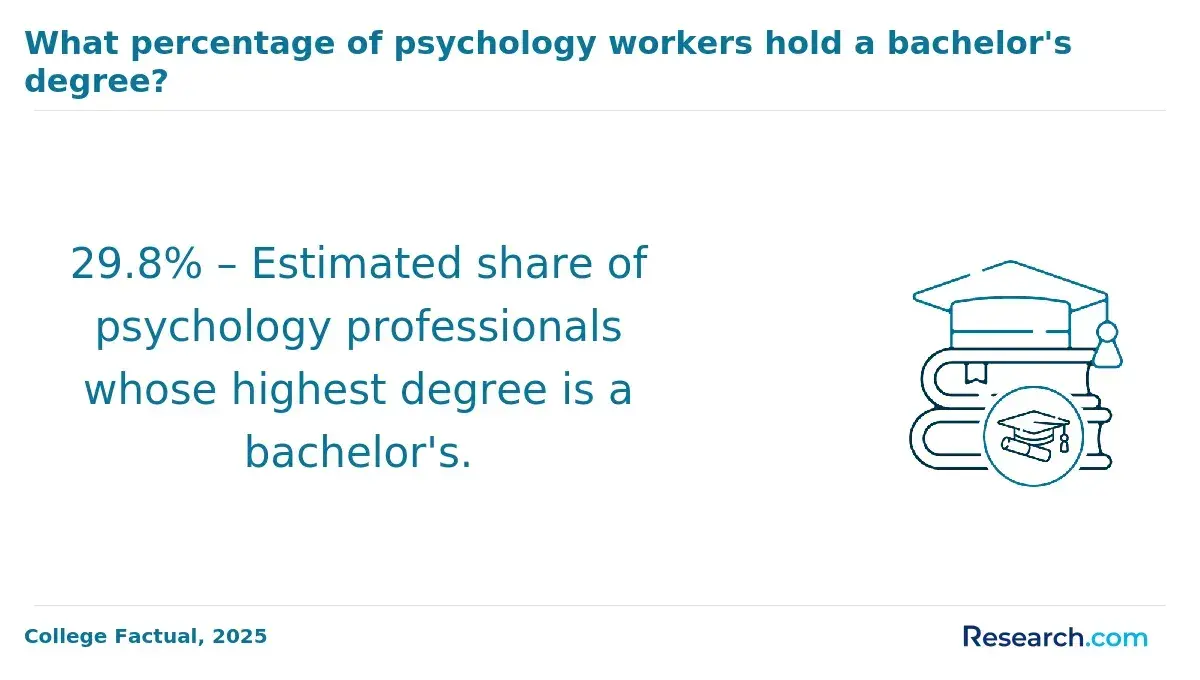
A bachelor’s degree from a four-year college or university is the usual first step. The major does not always have to be psychology, but students who plan to apply to graduate psychology programs should complete foundational coursework in areas such as abnormal psychology, developmental psychology, statistics, research methods, cognition, social psychology, and biological bases of behavior.
Psychology is a common undergraduate choice. According to the National Center for Education Statistics, psychology was the fourth most popular major in the US, with about 129,600 degrees awarded in a year, representing 6 percent of all bachelor’s degrees awarded. The field attracts students because it can lead to graduate study, research, counseling-adjacent roles, human services work, business applications, and preparation for licensed mental health professions.
2. Doctoral Degree
Mississippi psychologist licensure requires doctoral-level psychology education. Students typically compare Ph.D. and Psy.D. programs when they look for doctoral psychology degrees. A Ph.D. is often more research-intensive, while a Psy.D. is commonly designed around clinical practice preparation, although program models vary by institution.
Doctoral study usually includes advanced coursework, supervised practica, assessment training, ethics, research design, diagnosis, intervention methods, diversity and cultural competence, and professional standards. Students interested in academic research, university teaching, clinical practice, school psychology, forensic work, or health psychology should confirm that a program’s training model matches their career target.
| Education stage | Main purpose | Best decision point |
| Bachelor’s degree | Builds the academic foundation for graduate psychology or related careers. | Choose courses and research experiences that support graduate admission. |
| Master’s-level study | May support counseling, research, human services, or doctoral preparation depending on the program. | Confirm whether the degree leads to a license or mainly prepares you for doctoral study. |
| Doctoral degree | Meets the core education requirement for psychologist licensure in Mississippi. | Verify accreditation, internship expectations, practicum structure, and fit with your intended specialty. |
| Postdoctoral or supervised experience | Provides required professional training before independent licensure. | Document hours carefully and ensure supervision meets Mississippi requirements. |
Mississippi Psychology Licensure, Exams, and Renewal
Completing the degree is not the end of the process. Mississippi psychology licensure also requires supervised experience, exams, an application review, and ongoing compliance with state rules after licensure.
1. Supervised Experience
Mississippi requires at least 2 years of supervised experience totaling 4,000 hours, or 2,000 hours per year. This training may include client contact, supervision, professional development, assessment work, and research activities, depending on the approved setting and the nature of the supervised placement.
This period is where doctoral training becomes professional practice. Candidates refine assessment, diagnosis, treatment planning, documentation, consultation, ethical reasoning, and communication skills under the oversight of qualified supervisors. Good supervision also helps emerging psychologists learn when to refer, how to manage risk, and how to work with clients from varied cultural and socioeconomic backgrounds.
Research may also count as part of a supervised professional development plan when it fits the approved requirements. Candidates who plan to work in academia, grant-funded programs, hospitals, or community-based research should use this period to build a stronger publication, evaluation, or applied research profile.
2. Licensure Exams
Mississippi applicants must pass the Mississippi Jurisprudence Examination and the Examination for Professional Practice in Psychology, commonly called the EPPP.
The EPPP assesses broad psychology knowledge used in professional practice, including clinical psychology, industrial-organizational psychology, human development, assessment, diagnosis, ethics, research, and intervention. It is used across the US and Canada as a major licensing examination for psychologists.
The Mississippi Jurisprudence Examination focuses on state-specific legal, regulatory, and ethical responsibilities. Mississippi requires a minimum score of 90 on this exam. Applicants should study Mississippi board rules, scope of practice expectations, confidentiality requirements, professional conduct standards, and state-specific obligations before testing.
3. Licensure
After meeting the education, supervised experience, EPPP, and Mississippi jurisprudence requirements, candidates may qualify for a permanent license to practice psychology in Mississippi. Licensure confirms that the state board has reviewed the applicant’s training and determined that the applicant meets Mississippi’s professional standards.
As of the latest available data cited in this article, Mississippi has 489 licensed psychologists serving a population of approximately 2.94 million, or about 16.6 psychologists per 100,000 people. More recent per capita rankings are not available in the cited material, although earlier data identified South Carolina and West Virginia among the states with the fewest psychologists.
4. Additional Requirements and Renewal Considerations
Doctoral psychology students should also expect supervised predoctoral practicum hours and a predoctoral internship as part of their training sequence. These experiences are important for both licensure readiness and competitiveness in internship, postdoctoral, and employment applications.
Requirements can change, and rules differ by state and specialty. Before making enrollment, internship, or relocation decisions, candidates should verify the latest rules with the Mississippi Board of Psychology or the applicable licensing authority. Licensed psychologists must also maintain ethical practice standards and complete continuing education or other renewal obligations required by the state.
License Reciprocity for Psychologists in Mississippi
Reciprocity allows some psychologists licensed in another jurisdiction to seek Mississippi licensure without repeating every step from the beginning. It is not automatic approval. The state may review whether the applicant’s current license, doctoral education, supervised experience, examination history, and disciplinary record meet Mississippi standards.
Psychologists licensed in another U.S. state or territory generally need an active license from a jurisdiction with comparable requirements. Applicants may be asked to submit license verification, transcripts, supervision documentation, exam results, and evidence that their professional preparation aligns with Mississippi rules. Even when no formal reciprocity agreement applies, out-of-state psychologists may still be eligible if they satisfy Mississippi’s criteria.
Internationally trained psychologists should expect a more detailed review. The process may involve credential evaluation, comparison of foreign coursework and training to U.S. standards, language or communication requirements, additional supervised experience, or supplemental coursework. Because international licensure reviews can take time, foreign-trained applicants should contact the board early and keep detailed records of education, internship, and supervised practice.
| Applicant type | Likely review focus | Practical advice |
| Mississippi doctoral graduate | Doctoral degree, internship, supervised experience, exams, and application materials. | Track hours from the beginning and confirm that supervisors meet board expectations. |
| Out-of-state licensed psychologist | Comparable licensure standards, active license status, exam history, and disciplinary record. | Request official license verification and supervision documentation before applying. |
| Internationally trained psychologist | Credential equivalency, training comparability, communication ability, and possible additional requirements. | Start the review process early because credential evaluation and supplemental requirements can delay licensure. |
How to Select a Psychology Program in Mississippi
The right psychology program depends on your intended license, specialty, finances, learning format, and long-term career plan. A program that is excellent for research may not be the best choice for someone seeking applied clinical training, and a low-cost undergraduate program may not provide the graduate preparation needed for competitive doctoral admission.
Accreditation should be the first filter. Students should confirm institutional accreditation and, for doctoral practice-oriented routes, whether the program’s accreditation and training model support licensure goals. Accreditation can also affect transfer credit, financial aid eligibility, internship competitiveness, and acceptance into advanced programs.
Specialization is the second major factor. Mississippi students may consider clinical psychology, counseling psychology, school psychology, experimental psychology, industrial-organizational psychology, cognitive science, forensic psychology, health psychology, or behavioral analysis. Faculty research areas, practicum sites, clinical partnerships, and internship placement history can be more important than the program title alone.
Students should also compare support services. Strong programs typically provide advising, research mentorship, internship or practicum coordination, career preparation, graduate assistantship opportunities, writing support, and access to labs or clinics. These resources can affect both completion and career readiness.
Cost deserves careful review. Tuition is only one part of the total price. Students should also evaluate fees, books, transportation, campus residency requirements, internship relocation costs, lost income, and whether graduate assistantships, scholarships, or research funding are available. A program with a higher sticker price may be more affordable if it offers assistantships, while a lower-cost program may still be expensive if it requires unpaid fieldwork or relocation.
Location and culture also matter. Some students prefer a larger university environment with research labs and broader graduate offerings, while others do better in smaller programs with close faculty interaction. To compare options, students can review Research.com’s guide to the best psychology colleges in Mississippi.
| Question to ask | Why it matters | What to look for |
| Does the program support my intended license? | Not every psychology degree leads to psychologist licensure, counseling licensure, or school psychology certification. | Clear licensure disclosures, practicum requirements, internship pathways, and board-aligned advising. |
| What are the faculty’s areas of expertise? | Mentorship and research fit can shape doctoral admission, dissertation options, and career direction. | Faculty publications, labs, clinical interests, and student research opportunities. |
| How much will the full pathway cost? | Psychologist training is lengthy, and debt can affect career flexibility. | Total cost estimates, assistantships, scholarships, in-state tuition rules, and funding guarantees if available. |
| Where do students complete practicum and internship training? | Field placement quality affects skills, licensure readiness, and employment connections. | Clinics, hospitals, schools, community agencies, research centers, and supervision quality. |
| What outcomes do graduates achieve? | Completion, internship match, licensure, and employment outcomes show how well a program supports students. | Graduation rates, internship placements, exam preparation, alumni roles, and doctoral acceptance data. |
Top Psychology Programs in Mississippi for 2027
The following Mississippi psychology programs can help students begin comparing academic options. Use this list as a starting point, not as the only basis for enrollment. Before applying, confirm current tuition, admissions rules, accreditation status, degree requirements, online availability, licensure alignment, and financial aid directly with each school.
1. Alcorn State University
- Accreditation: Council for the Accreditation of Educator Preparation (CAEP)
- Programs: Bachelor of Science in Psychology
- Cost: $7,580 (in-state), $15,160 (out-of-state)
Alcorn State University offers a Bachelor of Science in Psychology through its Department of Education and Psychology. The curriculum introduces students to core areas such as general psychology, social psychology, and developmental psychology, making it a practical foundation for graduate study or psychology-related work after graduation.
The department also offers graduate programs in education and counseling psychology for students from varied academic backgrounds. Its Career Resource Center supports career planning, and the department uses LiveText to monitor student learning and accreditation-related outcomes. Students should review all program requirements with faculty advisors before committing to a degree plan.
2. Belhaven University
- Accreditation: Southern Association of Colleges and Schools Commission on Colleges (SACSCOC)
- Programs: Undergraduate and Graduate Programs
- Cost: $13,325 per term or $26,650 per year
Belhaven University’s psychology program combines psychology coursework with a Christian academic perspective. Students develop skills in critical thinking, interpersonal communication, and written and oral expression while studying psychological theory and human behavior through the institution’s faith-based framework.
Belhaven emphasizes applied learning through internships in the Jackson area. Students may also participate in research through honors research opportunities and collaborations connected to the University of Mississippi Medical School.
Graduates may pursue doctoral study in psychology or master’s programs in counseling, marriage and family therapy, experimental psychology, or industrial-organizational psychology. Some also use the degree as preparation for related graduate fields such as social work, law, medicine, speech pathology, physical therapy, or occupational therapy.
3. Blue Mountain College
- Accreditation: Southern Association of Colleges and Schools Commission on Colleges (SACSCOC)
- Programs: Bachelor of Science in Psychology
- Cost: $16,300 per year for full-time students
Blue Mountain College offers psychology within a Christian liberal arts environment. The college’s smaller academic setting may appeal to students who want closer faculty interaction and a community-oriented campus experience. Students can also add a psychology minor if they want behavioral science training alongside another major.
The program includes opportunities for research and internship experience, which can help students apply classroom concepts to real settings. Graduates may use the degree in human resources, social services, education, research support, or as preparation for graduate psychology or counseling programs.
4. University of Southern Mississippi
- Accreditation: Southern Association of Colleges and Schools Commission on Colleges (SACSCOC)
- Programs: Undergraduate and Graduate Programs
- Cost: $5,386 per term for 21 hours or more
The University of Southern Mississippi School of Psychology offers broad psychology training across areas including Clinical, Counseling, School, and Experimental Psychology. Students can study human behavior while learning from faculty with varied applied and research specialties.
The school provides training facilities such as mental health clinics and research laboratories, helping students connect theory, evidence, and practice. Graduates may apply psychology training in mental health, education, law, business, and community service settings.
The school has used a scientist-practitioner model since its establishment in 1940. Its mission includes scholarship, teaching, professional service, and evidence-based practice. The school also has a history of community engagement through research and service partnerships with schools, businesses, and mental health programs serving South Mississippi.
Faculty research addresses issues such as substance use, suicide prevention, childhood obesity, and aging. The University of Southern Mississippi is described in the source material as the sole institution in the country with accredited doctoral programs in clinical, counseling, and school psychology. Students may participate in research, training clinics, student organizations, and presentations at local, regional, and national levels.
5. Mississippi State University
- Accreditation: Southern Association of Colleges and Schools Commission on Colleges (SACSCOC)
- Programs: Undergraduate and Graduate Programs
- Cost: $22,108 per year
Mississippi State University offers psychology education at both undergraduate and graduate levels. Undergraduate students study scientific psychology, experimental design, statistics, critical analysis, communication, motivation, emotion, and behavior. The degree can support entry into the workforce or continued study in graduate psychology and related fields.
The department’s graduate offerings include Ph.D. programs in Clinical Psychology and Cognitive Science. These programs emphasize research training and faculty mentorship. The Clinical Psychology Ph.D. prepares graduates for teaching and community-based professional roles that apply research to practice, while the Cognitive Science Ph.D. uses interdisciplinary approaches to train specialists in cognition.
Graduate students may receive funding through teaching or research assistantships. Teaching assistants gain instructional experience through classroom and laboratory responsibilities, while research assistants work with faculty on scholarly projects and develop hands-on research skills.
Practical Steps for Getting Your Psychology License in Mississippi
Two decisions matter most at the beginning: choose a doctoral path that supports Mississippi licensure, and document every supervised training requirement carefully. A doctoral degree from a regionally accredited institution is the academic foundation, but licensure also depends on exams, supervised hours, board review, and continued compliance with Mississippi rules.
- Confirm your target license before choosing a graduate program. Psychologist, LPC, MFT, BCBA, school psychology, and substance abuse counseling paths have different rules.
- Verify accreditation and licensure alignment. Do not assume that every online, hybrid, or out-of-state program meets Mississippi requirements.
- Build a strong undergraduate record. Take statistics, research methods, abnormal psychology, developmental psychology, and courses tied to your intended specialty.
- Gain research or field experience early. Labs, internships, crisis lines, human services work, and assistantships can strengthen graduate applications.
- Plan for the doctoral timeline. Many future psychologists spend eight to 12 years in higher education before completing the full academic pathway.
- Track supervised experience precisely. Mississippi requires at least 2 years and 4,000 hours, with 2,000 hours per year.
- Prepare for both exams. Study for the EPPP and the Mississippi Jurisprudence Examination, which requires a minimum score of 90.
- Review renewal expectations. Licensure is not a one-time task; psychologists must maintain professional and continuing education obligations.
Students who want to compare future income by specialty can also review Research.com’s guide to high-paying psychology careers, but salary should be evaluated alongside training cost, job availability, personal fit, and licensure requirements.
Common Mistakes to Avoid When Pursuing Psychology Licensure in Mississippi
| Mistake | Why it can cause problems | Better approach |
| Choosing a program before checking licensure rules | A degree may be academically valid but still fail to meet a specific state’s licensing expectations. | Compare program requirements with Mississippi Board of Psychology rules before enrolling. |
| Looking only at tuition | Total cost includes fees, relocation, unpaid training, books, exam fees, and lost work time. | Estimate the complete cost of the bachelor’s-to-doctoral pathway. |
| Assuming online programs automatically qualify | Some online or hybrid programs may not include required practica, internships, or state-specific preparation. | Ask the program directly whether it prepares students for Mississippi psychologist licensure. |
| Waiting to document supervised hours | Incomplete records can delay licensure review. | Maintain signed supervision logs and verify acceptable activities early. |
| Confusing psychologist licensure with counseling licensure | Psychologist, LPC, MFT, social work, BCBA, and school psychology credentials follow different rules. | Choose the credential that matches the work you actually want to do. |
| Relying only on rankings | Rankings may not show faculty fit, licensure outcomes, funding, or local placement strength. | Use rankings as one tool, then compare accreditation, outcomes, cost, and training sites. |
What Research and Academic Career Options Are Available for Psychologists in Mississippi?
Psychologists in Mississippi can pursue university teaching, faculty research, program evaluation, grant-supported studies, community-based mental health projects, and student mentorship. Academic roles can be especially appealing for psychologists who want to publish research, train future clinicians, develop evidence-based interventions, or evaluate mental health programs serving Mississippi communities.
A doctorate in psychology is typically central to research-intensive and academic advancement. Doctoral training can support grant applications, peer-reviewed publications, conference presentations, and leadership in university labs, clinics, and interdisciplinary research teams.
How Can BCBA Certification Expand Psychology Practice in Mississippi?
Board Certified Behavior Analyst certification can help psychology professionals add applied behavior analysis skills to their practice. This may be useful in schools, autism services, developmental disability programs, clinics, community agencies, and behavioral intervention settings.
BCBA training focuses on evidence-based behavior assessment and intervention. For psychologists who want to serve a broader client base or collaborate with education and developmental services teams, this credential may add a practical specialization. Students can review the steps in Research.com’s guide on how to become a BCBA in Mississippi.
What Roles Can a Master’s in Clinical Psychology Support in Mississippi?
A master’s degree in clinical psychology can support roles that use assessment, research, program coordination, behavioral health knowledge, and supervised clinical skills. Depending on the degree structure and state rules, graduates may work as behavioral health coordinators, program evaluators, research staff, case-related support professionals, or clinical supervisors in settings such as community mental health centers, outpatient clinics, nonprofit programs, and workplace wellness initiatives.
Students should understand that a master’s degree in clinical psychology is not the same as psychologist licensure. It may, however, provide a bridge into doctoral study, counseling-related licensure, research employment, or applied mental health administration. For more examples, review Research.com’s guide to jobs available with a master’s in clinical psychology.
What Steps Are Required to Become a Licensed Professional Counselor in Mississippi?
Licensed Professional Counselor licensure is a separate pathway from psychologist licensure. It may appeal to psychology graduates who want to provide counseling services but do not plan to complete a doctoral psychology program. LPC preparation usually involves counseling-specific coursework, supervised counseling experience, ethics training, and state-required examinations.
Because LPC requirements emphasize counseling practice rather than the broader psychologist scope, students should compare both paths before choosing a graduate program. For state-specific details, Research.com provides a separate guide on how to become an LPC in Mississippi.
How Can Psychology and Social Work Collaboration Improve Mental Health Services in Mississippi?
Psychologists and social workers often serve the same clients from different professional angles. Psychologists may focus on assessment, diagnosis, therapy, testing, research, and evidence-based intervention. Social workers often bring strengths in case management, systems navigation, family support, crisis response, benefits access, and community resources.
Collaboration is especially important in shortage areas where clients may face transportation barriers, poverty, chronic illness, housing instability, or limited access to specialty care. Psychologists who understand how social work services function can build stronger referral networks and more complete treatment plans. Students interested in that profession can explore what degree is needed to become a social worker in Mississippi.
Career Advancement Paths for Psychologists in Mississippi
Licensed psychologists in Mississippi can advance by specializing, moving into leadership, opening a practice, entering academia, consulting with organizations, or adding related credentials. Advancement usually depends on experience, reputation, supervision history, business skills, continuing education, and specialty demand.
- Develop a specialization. Psychologists may build expertise in forensic psychology, health psychology, neuropsychology, child and adolescent psychology, school psychology, trauma, substance use, or behavioral medicine.
- Move into leadership. Hospitals, clinics, universities, nonprofit agencies, and public programs may need clinical directors, program managers, department leaders, and training supervisors.
- Start or expand private practice. Private practice can offer autonomy, but it also requires billing knowledge, compliance systems, referral development, scheduling, insurance decisions, and risk management.
- Teach or conduct research. Psychologists with strong research backgrounds may pursue faculty roles, funded studies, publications, and graduate student supervision.
- Add complementary credentials. BCBA, LPC-related training, forensic assessment expertise, or health psychology specialization may broaden practice options when aligned with state rules.
Is Criminal Psychology a Promising Field in Mississippi?
Criminal psychology connects psychological science with law enforcement, courts, correctional systems, and rehabilitation programs. Professionals in this area may evaluate behavior, contribute to risk assessments, consult on legal questions, support treatment planning, or provide expert input in justice-related settings.
This field can be a strong fit for students interested in both mental health and criminal justice, but it requires careful training choices. Forensic and criminal psychology roles often demand strong assessment skills, ethical judgment, documentation discipline, and familiarity with legal processes. Research.com’s guide on how to become a criminal psychologist in Mississippi explains the pathway in more detail.
What Is the Fastest Way to Move From Psychology Into Counseling in Mississippi?
The fastest route depends on what degree you already hold, whether your coursework meets counseling requirements, and how much supervised counseling experience you still need. Psychology graduates should not assume that prior coursework automatically satisfies LPC standards, but some academic background may reduce duplication if it aligns with state requirements.
Students seeking a shorter counseling route should compare accredited counseling programs, transfer credit policies, supervised hour requirements, and exam expectations before enrolling. Research.com’s guide to the shortest path to become a counselor in Mississippi provides a more focused roadmap.
How Can Psychology Graduates Combine Their Education With Mississippi LPC Certification?
Psychology graduates who want broader counseling practice options may pursue LPC certification by completing required counseling coursework, supervised clinical experience, and examinations. This can be a practical route for students who want direct counseling work but do not want the full doctoral psychology pathway.
The key is alignment. Before starting a program, compare your completed psychology courses with counseling licensure requirements and ask whether additional classes, practicum hours, or internship experiences are needed. Research.com’s guide to Mississippi LPC license requirements outlines coursework, supervised experience, and examination expectations.
Career Options for Psychology Graduates in Mississippi
Psychology graduates in Mississippi can work in many settings, but the available roles depend heavily on degree level and license status. A bachelor’s degree may support entry-level work in human services, case support, research assistance, human resources, education support, or community programs. A master’s degree may lead to more specialized roles, depending on licensure alignment. A doctoral degree is required for psychologist licensure.
Clinical psychology remains one of the most recognized routes. Licensed clinical psychologists may work in private practice, hospitals, rehabilitation centers, mental health clinics, correctional facilities, or integrated healthcare settings. Their work may include assessment, diagnosis, psychotherapy, consultation, testing, and treatment planning.
Business psychology is another option for graduates interested in workplace behavior. Mississippi employers may use psychology-informed professionals in human resources, organizational development, employee wellness, training, leadership development, and workplace assessment. These roles typically require comfort with both behavioral science and business operations.
School psychology is a strong fit for professionals who want to work with K-12 students, educators, and families. School psychologists support learning, behavior, emotional health, crisis response, assessment, and intervention planning. Candidates should confirm the credentialing path for school-based practice because it may differ from general psychologist licensure.
Healthcare settings also use psychology training in rehabilitation, medical psychology, behavioral health integration, chronic disease support, and patient education. In these roles, psychologists often collaborate with physicians, nurses, social workers, and counselors.
Students often ask what they can do with a master’s in psychology. Options may include research, program evaluation, behavioral health coordination, human resources, nonprofit services, or preparation for doctoral study, but clinical authority depends on the license connected to the degree.
| Degree or credential | Possible Mississippi career directions | Important limitation |
| Bachelor’s in psychology | Human services, research assistance, HR, social service support, education-related roles. | Does not qualify someone to practice independently as a psychologist. |
| Master’s in psychology | Program evaluation, behavioral health coordination, research, supervised roles, doctoral preparation. | Licensure depends on program design and state rules. |
| Doctoral psychology degree | Clinical psychology, assessment, research, academia, consulting, specialty practice. | Licensure still requires supervised experience, exams, and board approval. |
| Related mental health license | LPC, MFT, BCBA, social work, substance abuse counseling, or school psychology roles. | Each credential has a separate training and licensing process. |
What Other Mental Health Careers Are Available in Mississippi?
Psychology is only one route into mental health work. Mississippi students may also consider counseling, marriage and family therapy, social work, psychiatry, behavior analysis, substance abuse counseling, school psychology, and community mental health roles.
Marriage and family therapy may appeal to students who want to work with couples, families, and relationship systems. Research.com’s guide to the MFT license in Mississippi explains the requirements and career pathways for that profession.
Is Substance Abuse Counseling a Viable Career Path in Mississippi?
Substance abuse counseling can be a meaningful career for students who want to focus on prevention, treatment, relapse planning, recovery support, and behavioral change. The work often takes place in outpatient programs, community agencies, correctional settings, hospitals, residential treatment centers, and integrated behavioral health teams.
Psychology coursework can provide a strong foundation for understanding addiction, motivation, trauma, co-occurring disorders, family systems, and behavior change. However, substance abuse counseling has its own credentialing expectations. Research.com’s guide on how to become a substance abuse counselor in Mississippi explains the career entry process.
How Can You Build a School Psychology Career in Mississippi?
School psychologists help students succeed academically, socially, emotionally, and behaviorally. Their work may involve assessment, intervention planning, consultation with teachers, crisis response, family collaboration, special education support, and schoolwide mental health initiatives.
This path requires training that fits school psychology standards and Mississippi credentialing expectations. Students should look for programs with strong field placements, supervision in K-12 settings, and preparation for school-based assessment and intervention. Research.com’s guide on how to become a school psychologist in Mississippi provides a more direct step-by-step pathway.
Business Psychology in Mississippi: A Flexible Path Beyond Clinical Practice
Business psychology, often connected to industrial-organizational psychology, applies psychological principles to workplaces. Professionals in this area may help employers improve hiring practices, employee engagement, leadership development, organizational culture, training, performance management, and worker well-being.
This path can fit psychology graduates who enjoy data, organizational systems, assessment, and consulting but do not want a traditional therapy-focused career. Students considering this option can explore Research.com’s business psychology degree guide to better understand education requirements and career possibilities.
Key Insights
- Mississippi needs more mental health providers. The state is designated as a mental health Health Professional Shortage Area and needs 96 mental health practitioners to remove that designation.
- Psychologist licensure is a doctoral-level path. A bachelor’s or master’s degree can lead to related roles, but Mississippi psychologist licensure requires doctoral education, supervised experience, exams, and board approval.
- Supervised experience is substantial. Mississippi requires at least 2 years of supervised experience totaling 4,000 hours, with 2,000 hours per year.
- Applicants must pass two exams. Candidates need the EPPP and the Mississippi Jurisprudence Examination, which requires a minimum score of 90.
- Salary should be evaluated carefully. The cited BLS national median annual wage for psychologists is $94,310, while the cited Mississippi BLS figure is $71,700. The cited Indeed salary in Mississippi is $101,134, compared with a national figure of $113,437. Different sources use different methods, so students should not treat any number as guaranteed income.
- Program choice affects licensure readiness. Students should verify accreditation, practicum structure, internship expectations, faculty fit, cost, and Mississippi licensure alignment before enrolling.
- Related credentials may offer faster or more specialized routes. LPC, MFT, BCBA, social work, substance abuse counseling, school psychology, and business psychology can be strong alternatives or complements depending on career goals.
- Do not rely on rankings alone. The best Mississippi psychology program is the one that fits your license goal, finances, training needs, and preferred specialty.
Related Articles for Nearby States
- 2027 Louisiana Psychology Licensure Requirements – How to Become a Psychologist in Louisiana
- 2027 Alabama Psychology Licensure Requirements – How to Become a Psychologist in Alabama
- 2027 Arkansas Psychology Licensure Requirements – How to Become a Psychologist in Arkansas
- 2027 Tennessee Psychology Licensure Requirements – How to Become a Psychologist in Tennessee
- 2027 Florida Psychology Licensure Requirements – How to Become a Psychologist for Florida
- 2027 Missouri Psychology Licensure Requirements – How to Become a Psychologist in Missouri
- 2027 Georgia Psychology Licensure Requirements – How to Become a Psychologist in Georgia
- 2027 Kentucky Psychology Licensure Requirements – How to Become a Psychologist in Kentucky
- 2027 Texas Psychology Licensure Requirements – How to Become a Psychologist in Texas
- 2027 Indiana Psychology Licensure Requirements – How to Become a Psychologist in Indiana
References:
- American Psychological Association (2024). Barriers to Care in a Changing Practice Environment: 2024 Practitioner Pulse Survey. APA report
- Bureau of Labor Statistics. (2024). Field of degree: Psychology. BLS psychology field-of-degree data
- Bureau of Labor Statistics (2025). Psychologists. BLS occupational outlook for psychologists
- Indeed (2026). Psychologist salary in Mississippi. Indeed Mississippi psychologist salary data
- Kaiser Family Foundation (2025). Mental Health Care Health Professional Shortage Areas (HPSAs). KFF HPSA data
- Mississippi Board of Psychology (2024). ANNUAL REPORT TO THE GOVERNOR FY 2024. Mississippi Board of Psychology annual report
Other Things You Should Know About Mississippi Psychology Licensure Requirements
To become a licensed psychologist in Mississippi, you must obtain a bachelor's degree in psychology or a related field, followed by a doctoral degree (Ph.D. or Psy.D.) in psychology from a regionally accredited institution.
Becoming a psychologist in Mississippi typically takes eight to twelve years of higher education. This includes four years for a bachelor's degree and four to seven years for a doctoral degree, along with additional time for supervised experience.
To obtain a psychology license in Mississippi, you must pass the Examination for Professional Practice in Psychology (EPPP) and the Mississippi Jurisprudence Examination.
Mississippi does not have formal reciprocity agreements with other states. Psychologists licensed in other states must meet specific educational and examination requirements established by the Mississippi Board of Psychology and provide verification of their standing with their current licensing board.
International psychologists wishing to obtain licensure in Mississippi must have their credentials evaluated by a board-approved credential service. Additionally, they must meet the same educational and supervised experience requirements as domestic applicants and pass the relevant exams, including the Examination for Professional Practice in Psychology (EPPP).


