2027 Washington Psychology Licensure Requirements – How to Become a Psychologist in Washington

Co-Founder and Chief Data Scientist
Becoming a licensed psychologist in Washington requires more than earning a psychology degree. Applicants must complete a qualifying doctoral program, supervised clinical experience, national and state exams, background checks, and ongoing continuing education. The process matters because Washington is dealing with a strained mental health workforce, licensure delays, and growing demand for services in clinical, school, community, and telehealth settings.
This guide is for students planning a psychology career in Washington, doctoral candidates preparing for licensure, out-of-state psychologists considering relocation, and psychology graduates comparing related mental health credentials. It explains the Washington psychology licensure requirements, how to choose an appropriate program, what to expect during application and renewal, and how alternative paths such as counseling, school psychology, behavior analysis, social work, substance abuse counseling, and marriage and family therapy may fit your career goals.
Because psychology is used to assess, explain, and improve human behavior, understanding the goals of psychology is especially important in a state where mental health access remains a public concern. Recent reports note that nearly 30% of Washington’s licensed psychologists are nearing retirement age, and many clinical psychologist applicants are still waiting for licensure review. Financial pressure also affects the pipeline, with recent data showing average student debt for graduates reaching $39,000 in 2024. Legislative efforts such as House Bill 1724 are intended to reduce barriers and speed up the process, but applicants still need to plan carefully.
Washington Psychology Licensure Requirements Table of Contents
- Washington Psychology Licensure: Quick Answer
- Education Requirements for Psychologists in Washington
- Application, Exams, Supervised Hours, and Renewal
- Top Psychology Programs in Washington for 2027
- Specializations and Career Focus Areas in Washington
- Substance Abuse Counseling as an Add-On Career Path
- Online Psychology Programs and Cost Considerations
- BCBA Pathways in Washington
- Alternative Careers for Psychology Graduates
- Adding an LPC License to a Psychology Background
- Dual Training in Psychology and Social Work
- School Psychology in Washington
- Criminal Psychology and Forensic Career Options
- Fastest Counseling Transition Options
- Financial Aid and Cost-Reduction Strategies
- Networking Opportunities for Psychology Students
- Career Outlook for Psychologists in Washington
- Telepsychology and Washington Licensure Rules
Washington Psychology Licensure: Quick Answer
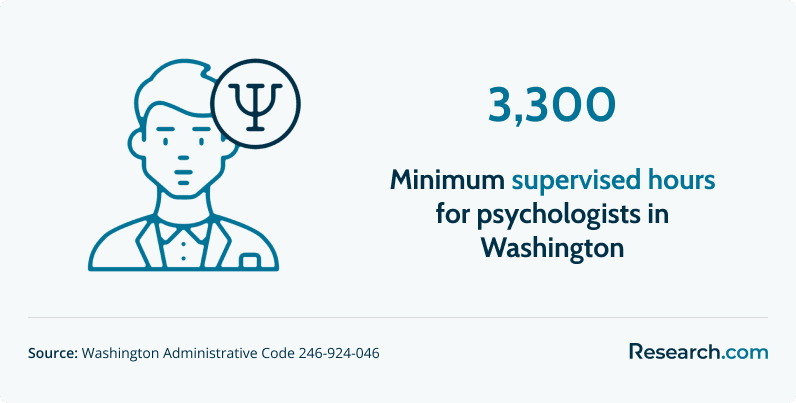
To become a licensed psychologist in Washington, you generally need a doctoral degree in psychology from a regionally accredited institution, qualifying coursework, supervised professional experience, a predoctoral internship, postdoctoral supervised hours, passage of the EPPP, passage of the Washington State Jurisprudence Examination, and a criminal background check. Washington requires 3,300 hours of supervised experience, including 1,500 hours of predoctoral internship and 1,800 hours of postdoctoral supervised experience.
| Requirement | What Washington Expects | Why It Matters |
| Degree level | Doctoral degree from a regionally accredited institution | A bachelor’s or master’s degree alone is not enough for psychologist licensure. |
| Graduate study | At least three academic years of full-time graduate study or the equivalent | Washington requires advanced preparation before independent practice. |
| Coursework | At least 40 semester credits or 60 quarter credits across required psychology content areas | Your transcript must show broad doctoral-level training, not just a general degree title. |
| Supervised experience | 3,300 total hours, including 1,500 predoctoral internship hours and 1,800 postdoctoral supervised hours | These hours demonstrate applied competence before licensure. |
| Exams | EPPP and Washington State Jurisprudence Examination | The EPPP tests psychology knowledge; the jurisprudence exam tests Washington-specific law and ethics. |
| Renewal | Annual renewal, plus 60 continuing education hours every three years | Licensure is not a one-time event; psychologists must maintain competence. |
The practical decision is this: if your goal is independent practice as a psychologist in Washington, choose a doctoral pathway designed for licensure. If you want to provide counseling or behavioral health support sooner, compare related credentials such as LPC, MFT, school psychology, social work, BCBA, or substance abuse counseling before committing to a doctorate.
Overview of the Psychology Industry in Washington
Washington’s psychology workforce is under pressure from several directions: growing demand for mental health care, a sizable group of licensed psychologists approaching retirement, high education costs, and delays in the licensure review process. Nearly 600 clinical psychologist applicants have been reported in the backlog because of administrative inefficiencies and technical issues. The Washington Department of Health has responded by hiring temporary board members to help review pending applications.
State policymakers have also tried to address workforce barriers. House Bill 1724 was passed by the Washington House of Representatives to help move applicants through the licensure pipeline more efficiently, including by removing practice-setting limitations and providing stipends for some out-of-pocket expenses incurred by associates. These efforts may help, but they do not remove the need for applicants to meet all education, experience, exam, and renewal requirements.
The shortage is not limited to hospitals, clinics, and private practices. Washington schools also need more mental health professionals. Some schools have used emergency licenses for new social workers to fill service gaps. Recent estimates indicate that more than 75,000 additional mental health professionals would be needed nationwide to meet recommended school staffing levels.
Compensation can be strong in some psychology roles, but applicants should not ignore debt, unpaid or underpaid training periods, and regional variation. The Bureau of Labor Statistics reports Washington psychologist wages in the range of $99,410 to $105,950 annual mean wage as of April 2024. At the same time, recent reporting has raised concerns about low wages in parts of the mental health workforce and the burden of student loans.
For students who need flexibility, accredited online psychology degrees may help with early academic preparation or related psychology careers. However, students pursuing psychologist licensure must verify that any doctoral program, internship, practicum, and supervised experience plan aligns with Washington rules.
Education Requirements for Psychologists in Washington
Washington’s education standard for psychologist licensure is doctoral-level training. Under the Washington Administrative Code (WAC) 246-924-046, applicants must hold a doctoral degree from a regionally accredited institution. The doctoral program must include at least 40 semester credits or 60 quarter credits across required curriculum areas, including biological bases of behavior, cognitive-affective bases of behavior, social bases of behavior, and other core psychology domains.
The program also must include at least three academic years of full-time graduate study or the equivalent. For most licensure-focused students, the path includes doctoral coursework, supervised practicum experiences, a predoctoral internship, a dissertation or original scholarly project depending on program structure, and postdoctoral supervised experience before full licensure.
A bachelor’s degree in psychology can be a useful starting point, but it does not qualify someone to become a licensed psychologist. Graduates at the bachelor’s level may pursue support roles such as research assistant, behavioral technician, case management assistant, or human services coordinator. A master’s degree may open additional non-psychologist roles, but in many psychology licensure pathways, master’s-level study is embedded within the doctorate. Students interested specifically in clinical practice should understand what a clinical psychology degree entails before choosing between PhD, PsyD, counseling, or social work routes.
| Education Level | Can It Lead Directly to Washington Psychologist Licensure? | Typical Use |
| Bachelor’s in psychology | No | Entry-level behavioral health, research support, human services, or preparation for graduate school |
| Master’s in psychology | Usually no by itself | Preparation for doctoral study or related non-psychologist roles, depending on program and employer |
| Doctoral degree in psychology | Yes, if it meets Washington requirements | Required academic credential for licensed psychologist applicants |
| Related graduate degree | No for psychologist licensure, but may support another credential | LPC, MFT, school psychology, social work, BCBA, or substance abuse counseling pathways |
Licensure planning should begin before enrollment. Recent data indicate that approximately 15% of applicants experience delays of over six months, so students should keep organized records of coursework, practicum, internship, supervision, degree conferral, and exam results. Waiting until graduation to check requirements can create avoidable delays.
Washington Licensure Application and Renewal Process
The Washington State Department of Health outlines the official psychology licensure requirements. Applicants should treat the process as a document-heavy professional application, not merely an exam registration. Missing supervision verification, incomplete transcripts, or unclear internship records can slow review.
- Pass the required exams: Washington applicants must pass the Examination for Professional Practice in Psychology (EPPP), the national psychology licensing exam, and the Washington State Jurisprudence Examination, which focuses on state laws and rules governing psychology practice.
- Complete supervised experience: Applicants must document 3,300 hours of supervised experience, including 1,500 hours of predoctoral internship and 1,800 hours of postdoctoral supervised experience.
- Submit to a background check: All applicants must complete the required criminal background check as part of the licensure process.
- Meet continuing education expectations: After licensure, psychologists must complete continuing education. Washington also requires training in suicide assessment, treatment, and management at least once every six years.
| Stage | Applicant Action | Common Risk to Avoid |
| Before applying | Confirm your doctoral program, internship, and supervision plan match Washington rules | Assuming a psychology degree automatically satisfies state licensure standards |
| During doctoral training | Track coursework, practicum, internship hours, supervisors, and evaluations | Losing documentation needed for board review |
| After doctoral training | Complete and document postdoctoral supervised experience | Starting hours before confirming they qualify under state expectations |
| Exam stage | Prepare for the EPPP and Washington jurisprudence exam | Underestimating state-specific legal and ethical content |
| Renewal stage | Renew annually and complete required continuing education | Missing the birthday-based renewal deadline or CE cycle |
License Reciprocity
Washington may offer a more efficient route for psychologists already licensed in another state, but reciprocity does not mean automatic approval. Out-of-state psychologists still need to show that their education, exams, experience, and professional history satisfy Washington’s standards.
The Washington State Jurisprudence Examination remains important for relocating professionals because state law, scope of practice rules, reporting duties, and ethical expectations vary by jurisdiction. Even experienced psychologists should set aside time to study Washington-specific requirements before applying.
Additional Requirements for Out-of-State and International Psychologists
Psychologists licensed outside Washington may need to provide verification from every jurisdiction where they have held a license. Washington may also review whether additional supervised experience is necessary. The official rule for some applicants is described in the state’s additional licensure provisions.
International applicants should expect a more detailed credential review. Their doctoral psychology education may need to be evaluated for comparability to U.S. standards, and English proficiency may be required where applicable. These steps are designed to protect clients and ensure that psychologists can practice effectively within Washington’s legal and clinical environment.
Special Training in Suicide Intervention
Washington requires licensed psychologists to complete at least six hours of training in suicide assessment, treatment, and management every six years. This requirement is tied directly to public safety and clinical preparedness, not simply professional development.
Effective suicide intervention training helps psychologists identify warning signs, evaluate risk, document clinical decisions, and respond appropriately in urgent situations. Applicants and licensed professionals should make sure the training they choose meets Washington’s accepted standards before counting it toward renewal.
License Renewal and Continuing Education
Washington psychologist licenses renew annually on the licensee’s birthday. To keep the license active, psychologists must submit the renewal materials and required fee by the deadline. Missing the deadline may lead to extra costs or interruptions in practice authority.
Washington also requires 60 hours of continuing education every three years. Of those hours, four must address ethics, and six must cover suicide intervention consistent with WAC 246-924-255. Psychologists who want to strengthen a specialized practice area may consider additional coursework, including options in behavioral science online, but they should confirm how any course fits their CE or career objectives.
Top Psychology Programs in Washington for 2027
Choosing a psychology program in Washington should start with licensure fit, not brand recognition alone. Students who want to join the 3,000-plus psychologists practicing in the state should ask whether a program is regionally accredited, whether it prepares students for the required supervised experiences, whether it supports internship placement, and whether its graduates are positioned for state licensure review. The programs below are examples of Washington options that students commonly evaluate when planning doctoral psychology training.
- Seattle Pacific University Clinical Psychology Ph.D.: This APA-accredited doctoral program combines clinical psychology training with an integration of psychology and theology. Students receive research preparation, clinical instruction, and internship-oriented training intended to support progress toward Washington licensure.
- University of Washington Clinical Psychology PhD: This APA-accredited doctoral program offers broad clinical psychology preparation, research opportunities, clinical training, and community-focused experiences. Students can develop competence across multiple psychological approaches while preparing for licensure expectations.
- Washington State University Doctor of Philosophy in Clinical Psychology: This program follows a scientist-practitioner model and is designed for students who want strong preparation in both research and clinical practice. Areas of study may include health psychology, neuropsychology, and child psychology.
- Washington State University Doctor of Philosophy in Experimental Psychology: This doctoral program is best suited for students focused on research, teaching, and academic careers rather than direct clinical licensure. Students build advanced research methods knowledge and may collaborate on faculty-led projects.
- Antioch University Clinical Psychology Psy.D.: This PsyD option is designed for students interested in clinical practice. Its curriculum includes psychological theory, assessment, psychotherapy methods, and supervised clinical training relevant to licensure preparation.
Specializations and Career Focus Areas in Washington
Psychology students in Washington should choose a specialization based on the populations they want to serve, the settings where they want to work, and whether they need psychologist licensure or a different credential. The state’s employment landscape includes healthcare systems, schools, corporate employers, legal settings, nonprofits, and community mental health agencies.
| Specialization | Best Fit For | Possible Roles |
| Industrial-organizational psychology | Students interested in workplace behavior, leadership, assessment, and organizational performance | Organizational development consultant, talent acquisition specialist, leadership coach, workplace diversity and inclusion specialist |
| Health psychology | Students drawn to the connection between behavior, illness, prevention, and healthcare systems | Behavioral health specialist, chronic illness counselor, wellness program coordinator, public health advisor |
| Environmental psychology | Students interested in sustainability, community behavior, and human-environment interaction | Environmental consultant, sustainability-focused urban planner, conservation psychologist, community outreach coordinator |
| Forensic psychology | Students who want to apply psychology in courts, corrections, law enforcement, or evaluation settings | Court-appointed evaluator, prison psychologist, criminal behavior analyst, law enforcement consultant |
| Child and adolescent psychology | Students focused on youth mental health, development, family systems, and school-related concerns | School psychologist, family counselor, developmental psychologist, child welfare advocate |
Industrial-Organizational Psychology
Industrial-organizational psychology applies psychological science to hiring, leadership, employee performance, team dynamics, workplace culture, and organizational change. In Washington, large employers and technology-centered workplaces make this field relevant for students who prefer business and organizational settings over clinical practice.
Career options may include organizational development consultant, talent acquisition specialist, leadership coach, or workplace diversity and inclusion specialist. Students comparing flexible graduate options may review an affordable online master's in organizational psychology if they want applied workplace training without relocating.
Health Psychology
Health psychology focuses on how behavior, emotion, stress, social conditions, and cognition affect physical health. In Washington, this specialization can fit healthcare systems, integrated behavioral health teams, academic medical centers, public health organizations, and research settings.
Possible roles include behavioral health specialist, chronic illness counselor, wellness program coordinator, and public health advisor. Students considering this area should look for programs with healthcare placements, interdisciplinary training, and research opportunities connected to medical or public health systems.
Environmental Psychology
Environmental psychology examines how physical surroundings influence human behavior and how people make decisions related to climate, conservation, built environments, and sustainability. Washington’s environmental focus makes this area appealing for students interested in community behavior and policy-related work.
Potential employers may include nonprofits, public agencies, planning organizations, and private companies. Roles can include environmental consultant, sustainability-focused urban planner, conservation psychologist, or community outreach coordinator.
Forensic Psychology
Forensic psychology connects psychological assessment and theory with legal and criminal justice systems. Students interested in this field should seek training in evaluation, ethics, legal standards, risk assessment, report writing, and expert testimony.
Career paths may include court-appointed evaluator, prison psychologist, criminal behavior analyst, or consultant for law enforcement. This specialty often requires careful attention to scope of practice, documentation, and legal procedure.
Child and Adolescent Psychology
Child and adolescent psychology focuses on development, learning, family systems, behavioral concerns, anxiety, depression, trauma, and school-related needs. Washington’s demand for youth mental health support makes this specialization important across schools, clinics, hospitals, and community agencies.
Possible roles include school psychologist, family counselor, developmental psychologist, or child welfare advocate. Students should distinguish clinical child psychology from school psychology because the credentials, settings, and licensure rules can differ.
Can integrating substance abuse counseling enhance your mental health career in Washington?
Yes, substance abuse counseling can strengthen a mental health career when your work involves addiction, co-occurring disorders, crisis support, community treatment, or integrated behavioral health. It may be especially useful for psychology graduates who want a focused practice area before or alongside longer doctoral training. To compare training requirements and credential options, see this guide on how to become a substance abuse counselor in Washington.
Can online psychology programs provide a cost-effective pathway to licensure in Washington?
Online psychology programs can reduce relocation, commuting, and scheduling barriers, but students pursuing psychologist licensure must be cautious. The key question is not whether a program is online; it is whether the program is appropriately accredited, includes the required training components, supports supervised experience, and fits Washington licensing rules. Students comparing lower-cost options can start by reviewing the cheapest online psychology degree options, then verify each program’s licensure alignment directly with the school and the Washington Department of Health.
How can I become a BCBA in Washington?
A psychology background can be useful for students interested in behavior analysis, but the BCBA route is different from psychologist licensure. The BCBA credential focuses on applied behavior analysis, including behavior assessment, intervention planning, supervision, and data-based treatment decisions. Candidates generally need specific ABA coursework and supervised experience. For a step-by-step explanation, review how to become a BCBA in Washington.
What alternative career paths can psychology graduates explore in Washington?
Psychology graduates who do not want to become licensed psychologists can still pursue meaningful careers in behavioral health, research, education, human services, business, sports performance, and community programs. Sport psychology is one option for students interested in athlete wellness, performance, motivation, and team dynamics. Those comparing advanced training in this area can explore sports psychology master's programs.
How can I integrate an LPC license into my psychology career in Washington?
An LPC license may make sense for psychology graduates who want a counseling-focused route rather than the longer psychologist licensure path. Counseling licensure can support work in community mental health, private practice, nonprofit settings, and therapy-focused roles. It does not replace psychologist licensure, but it can be a practical credential for professionals whose primary goal is counseling rather than psychological testing or doctoral-level clinical psychology practice. For details, see how to become an LPC in Washington.
Should Psychology Professionals Consider Dual Training with Social Work in Washington?
Dual training can be valuable when a professional wants both clinical skills and a stronger understanding of systems, advocacy, case management, social services, and community-based care. Psychology and social work overlap in mental health treatment, but social work also emphasizes person-in-environment perspectives and resource navigation. Before choosing this route, compare program length, licensure requirements, supervised hours, cost, and the roles you actually want. A good first step is reviewing what degree do you need to be a social worker in Washington.
How can I become a school psychologist in Washington?
School psychology is a separate pathway from licensed psychologist practice. It focuses on student assessment, learning needs, behavioral interventions, consultation with teachers and families, and school-based mental health support. Students should look for graduate preparation aligned with school settings, including practicum and internship experiences. NASP accreditation is an important quality marker because it indicates that the program meets national preparation standards. For a dedicated pathway overview, read how to become a school psychologist in Washington.
How can I specialize in criminal psychology in Washington?
Criminal psychology may appeal to students interested in offender behavior, risk factors, investigation support, corrections, and the relationship between psychology and law. The best preparation often includes forensic coursework, supervised experience in legal or correctional settings, mentorship, and strong training in ethical documentation. To understand the route more clearly, review how to become a criminal psychologist in Washington.
What is the fastest path to transition from psychology to counseling in Washington?
The fastest route depends on your current degree, whether your credits transfer, and which counseling credential you are pursuing. For many psychology graduates, a counseling-focused graduate program may be shorter and more practice-oriented than the doctoral psychology route. However, speed should not override accreditation, supervised-hour requirements, exam preparation, or long-term career fit. Compare options using this guide to the shortest path to become a counselor in Washington.
Financial Aid and Cost-Reduction Strategies for Psychology Students in Washington
Psychology education can be expensive, especially for students pursuing the doctoral training required for licensure. A smart financial plan uses multiple tools: federal aid, scholarships, assistantships, employer benefits, transfer credits where appropriate, and careful comparison of total program cost. Students comparing graduate affordability may also review the cheapest online master's degree in psychology options, especially if their goal is a related psychology career rather than psychologist licensure.
Scholarships and Grants
- Washington State Opportunity Scholarship (WSOS): This scholarship supports low- and middle-income students pursuing eligible fields, including health care and behavioral science areas related to psychology.
- Psi Chi Scholarships: Psi Chi, the International Honor Society in Psychology, offers awards and scholarships for undergraduate and graduate students with strong academic and leadership records.
- University-specific aid: Washington institutions may offer need-based awards, merit scholarships, departmental grants, or graduate funding for psychology students. Applicants should check both the central financial aid office and the psychology department.
Loan Forgiveness Programs
- Public Service Loan Forgiveness (PSLF): Psychologists employed by qualifying nonprofit or public service organizations may be eligible for federal loan forgiveness after 120 qualifying payments.
- National Health Service Corps (NHSC): This program offers loan repayment support to eligible clinicians who serve in Health Professional Shortage Areas.
Assistantships, Work-Study, and Paid Training
- Teaching assistantships: Doctoral students may be able to receive stipends, tuition support, or teaching experience through TA roles.
- Research assistantships: RA positions can help students build research skills, work with faculty, and reduce education costs.
- Work-study: Eligible students may use federal or institutional work-study to earn income while gaining relevant experience.
Cost-Saving Moves That Do Not Weaken Licensure Preparation
- Compare total cost, not tuition only: Include fees, books, commuting, relocation, health insurance, internship travel, exam costs, and unpaid training time.
- Use community college strategically: Completing general education courses at a community college before transferring may reduce undergraduate costs.
- Ask about employer tuition reimbursement: Some healthcare, education, and corporate employers help pay for related coursework.
- Verify licensure fit before choosing an online option: Online or hybrid programs may save money, but only if they meet the requirements for your intended credential.
What networking opportunities are available for psychology students in Washington?
Networking is not optional in psychology. It helps students find mentors, research opportunities, practicum sites, internships, postdoctoral supervisors, and job leads. In a state where licensure delays and workforce shortages affect career planning, professional relationships can also help students understand real hiring conditions.
Professional Conferences
Students can attend events hosted by organizations such as the Washington State Psychological Association or the American Psychological Association. Conferences allow students to learn about current research, meet practicing psychologists, attend workshops, and sometimes present their own work.
Student Organizations
Psychology clubs, graduate student associations, and Psi Chi chapters can help students build leadership experience, connect with faculty, and meet peers who are pursuing similar academic and career paths.
Mentorship
Mentors can help students choose between PhD, PsyD, counseling, social work, school psychology, and other routes. They can also explain how licensure timelines, supervision, internships, and specialization choices work in practice.
Practicum and Internship Sites
Clinical placements are also networking opportunities. Strong performance during practicum, internship, or postdoctoral supervision can lead to references, future job offers, or introductions to other employers.
Career Outlook for Psychologists in Washington
The Washington psychology job market is shaped by strong need and real constraints. Demand exists across healthcare, education, community mental health, private practice, telehealth, and organizational settings. At the same time, training length, licensing delays, student debt, burnout, and uneven regional access can affect career planning.
- Healthcare and education: Psychologists are needed in hospitals, clinics, integrated care teams, universities, and K-12 settings. School-based mental health needs remain a major concern, especially where staffing shortages limit student access to support.
- Private sector opportunities: Corporate employers may hire psychology-trained professionals for organizational development, employee wellness, talent assessment, leadership training, and workplace culture roles.
- Rural and underserved areas: Washington’s urban centers often provide more visible job markets, but rural and underserved communities may offer meaningful opportunities for psychologists who want to expand access to care.
- Academic preparation: Students who want to compare in-state options can review the best colleges for psychology in Washington while also checking licensure alignment, supervised training support, and program outcomes.
The best career strategy is to choose a credential based on the work you want to do every day. If you want independent diagnosis, assessment, and doctoral-level clinical practice, psychology licensure may be the right goal. If your priority is therapy, school services, behavior analysis, addiction counseling, or social services, another credential may be faster, less expensive, or more directly aligned.
Is telepsychology a viable option under current licensure regulations in Washington?
Telepsychology can be a practical way to expand access to care, especially for clients who face transportation, rural access, disability, scheduling, or provider-availability barriers. However, psychologists must practice within Washington licensure rules and follow privacy, security, consent, documentation, and emergency planning standards.
Telehealth also raises cross-state practice questions. A psychologist licensed in Washington should not assume that a client’s location is irrelevant. Before serving clients across state lines, practitioners should review the rules in every relevant jurisdiction. Professionals comparing counseling and telehealth pathways can also review the Washington LPC license requirements to understand how counseling licensure intersects with digital service delivery.
What are the requirements for obtaining an MFT license in Washington?
Marriage and family therapy is another mental health credential for students who want to work with couples, families, and relational systems. In Washington, obtaining an MFT license requires specific graduate education, supervised clinical experience, and passage of the required national exam. Students comparing therapy-focused pathways should review the full requirements for an MFT license in Washington before deciding between psychology, counseling, social work, and family therapy.
Common Mistakes to Avoid When Planning Washington Psychology Licensure
- Choosing a program before checking licensure fit: A psychology-related degree is not always a licensure-qualifying psychology degree.
- Looking only at tuition: Total cost includes fees, unpaid training time, relocation, internships, exams, supervision, and lost income.
- Assuming online automatically means cheaper or acceptable: Online study can be flexible, but licensure-focused students must verify accreditation, supervised placement support, and state approval.
- Waiting too long to track hours: Supervised experience documentation should be organized from the beginning of training.
- Ignoring alternative credentials: LPC, MFT, BCBA, school psychology, social work, and substance abuse counseling may fit some career goals better than psychologist licensure.
- Underestimating renewal obligations: Continuing education, ethics training, suicide intervention training, and annual renewal are part of long-term professional practice.
Questions to Ask Before Choosing a Psychology Path in Washington
- Does this program prepare graduates for Washington psychologist licensure, or for a different credential?
- Is the institution regionally accredited?
- Does the curriculum include the required doctoral psychology content areas?
- How does the program support practicum, internship, and postdoctoral supervised experience?
- What documentation will I receive for licensure review?
- What are the full costs, including fees, supervision, exams, relocation, and unpaid placements?
- What percentage of students secure appropriate internships and complete the program?
- Would counseling, social work, school psychology, MFT, BCBA, or addiction counseling get me to my intended work faster?
- How will I manage debt if my training takes several years?
- What continuing education will I need after becoming licensed?
Washington Psychology Licensure: Final Guidance
Washington’s psychology licensure process is demanding because licensed psychologists carry significant responsibility for assessment, diagnosis, treatment, ethics, and public protection. The core path includes a qualifying doctoral degree, supervised experience, exams, background checks, annual renewal, and ongoing continuing education.
The most important decision is whether licensed psychologist practice is truly the career you want. If your goal is doctoral-level clinical psychology, assessment, supervision, research-informed practice, or private practice as a psychologist, the licensure path may be worth the time and cost. If your goal is counseling, family therapy, school-based support, addiction treatment, behavior analysis, or organizational work, another route may be more efficient. Professionals interested in combining human behavior and organizational strategy may also compare options such as a master of business psychology.
Key Insights
- Washington requires doctoral-level preparation: A bachelor’s or master’s degree in psychology alone does not qualify someone for psychologist licensure in the state.
- The supervised experience requirement is substantial: Applicants must complete 3,300 hours, including 1,500 predoctoral internship hours and 1,800 postdoctoral supervised hours.
- Two exams are required: Washington applicants must pass both the national EPPP and the Washington State Jurisprudence Examination.
- Renewal is ongoing: Psychologists renew annually and complete 60 continuing education hours every three years, including ethics and suicide intervention requirements.
- Licensure delays make documentation critical: Applicants should keep detailed records of coursework, supervision, internship, postdoctoral hours, and exam results.
- Salary potential must be weighed against cost: BLS data show Washington psychologist annual mean wages ranging from $99,410 to $105,950 as of April 2024, but student debt and training costs can affect return on investment.
- Alternative credentials may be a better fit for some students: LPC, MFT, school psychology, social work, BCBA, and substance abuse counseling can lead to meaningful mental health careers without following the full psychologist licensure route.
- Program choice should be practical: Accreditation, supervised placement support, licensure alignment, funding, and career outcomes matter more than name recognition alone.
Related Articles for Nearby States
- 2027 Oregon Psychology Licensure Requirements – How to Become a Psychologist in Oregon
- 2027 Idaho Psychology Licensure Requirements – How to Become a Psychologist in Idaho
- 2027 Montana Psychology Licensure Requirements – How to Become a Psychologist in Montana
- 2027 California Psychology Licensure Requirements – How to Become a Psychologist in California
- 2027 Nevada Psychology Licensure Requirements – How to Become a Psychologist in Nevada
- 2027 Utah Psychology Licensure Requirements – How to Become a Psychologist in Utah
- 2027 Wyoming Psychology Licensure Requirements – How to Become a Psychologist in Wyoming
- 2027 Arizona Psychology Licensure Requirements – How to Become a Psychologist in Arizona
- 2027 Colorado Psychology Licensure Requirements – How to Become a Psychologist in Colorado
- 2027 New Mexico Psychology Licensure Requirements – How to Become a Psychologist in New Mexico
References:
- Washington State Department of Health. (2024). Mental health workforce report. https://www.doh.wa.gov/Portals/1/Documents/Pubs/HealthyYouth/MentalHealthWorkforce.pdf
- Federal Reserve Bank of New York. (2024). Quarterly Report on Household Debt and Credit. https://www.newyorkfed.org/microeconomics/hhdc
- National Association of School Psychologists. (2024). Are we there yet? An update on staffing levels for school mental health professionals. https://www.nasponline.org/advocacy-and-news/current-newsroom/news-releases/2024/02/15/are-we-there-yet-an-update-on-staffing-levels-for-school-mental-health-professionals
- American School Counselor Association. (2024). School mental health staffing needs report. https://www.schoolcounselor.org/Research-Statistics
- Washington State Department of Health. (2025). Psychology licensure statistics. https://www.doh.wa.gov/ohana/licensees/psychology
- U.S. Bureau of Labor Statistics. (2025). Psychologists: Occupational Outlook Handbook. https://www.bls.gov/ooh/life-physical-and-social-science/psychologists.htm
- U.S. Bureau of Labor Statistics. (2024). Field of degree: Psychology. https://www.bls.gov/ooh/field-of-degree/psychology/psychology-field-of-degree.htm
Other Things You Should Know About The Washington Psychology Licensure Requirements
To become a licensed psychologist in Washington, you must hold a doctoral degree in psychology from a regionally accredited institution. The program should include at least 40 semester credits or 60 quarter credits in various curriculum areas and encompass a minimum of three academic years of full-time graduate study.
You must pass the Examination for Professional Practice in Psychology (EPPP), a national exam, and the Washington State Jurisprudence Examination, which focuses on state-specific laws and regulations governing the practice of psychology.
Yes, Washington offers license reciprocity for psychologists licensed in other states. However, you must still pass the Washington State Jurisprudence Examination and meet other specific state requirements.
Licensed psychologists in Washington must complete 60 hours of continuing education every three years, including at least four hours dedicated to ethics and six hours focused on suicide assessment, treatment, and management every six years.
House Bill 1724 aims to expedite the licensure process by removing practice-setting limitations and providing stipends for out-of-pocket expenses incurred by associates. This legislation addresses workforce shortages and aims to streamline the licensure process.
Washington requires licensed psychologists to complete at least six hours of training in suicide assessment, treatment, and management every six years, reflecting the state's focus on addressing mental health crises.
To become a licensed psychologist in Washington in 2027, candidates must complete 3,300 hours of supervised experience. This includes a minimum of 1,500 hours of a pre-doctoral internship and the remainder via post-doctoral supervised experience.
No, you cannot become a licensed psychologist in Washington with just a master's degree. You must earn a doctoral degree in psychology or a closely related field from an accredited institution approved by the Washington State Department of Health.