
2027 Fastest Way To Become a Counselor in Washington

Co-Founder and Chief Data Scientist
Becoming a counselor in Washington is not simply a matter of choosing the quickest degree. The real decision is how to move through education, supervised experience, exams, and state credentialing without wasting time or choosing a program that does not support licensure. For career changers, psychology graduates, social service workers, and students comparing counseling programs, Washington can be a strong place to build a mental health career—but the path must be planned carefully.
This guide explains the fastest realistic route to counseling licensure in Washington, what you can do with only a bachelor’s degree, how online and accelerated programs compare, what employers look for, and how to evaluate salary, demand, affordability, and long-term career value. It also highlights practical mistakes to avoid before you enroll in a program or apply for licensure.
Quick Answer: Is Washington a Good State for Aspiring Counselors?
Yes, Washington can be a practical state for future counselors, especially for students who want to work in mental health, substance use treatment, school support, crisis services, community agencies, or integrated behavioral health. The fastest licensure route is usually to complete a qualifying graduate counseling degree, apply promptly for the Licensed Mental Health Counselor Associate credential, begin supervised post-graduate hours, pass the required exam, and keep accurate documentation from the start.
- Job outlook: Washington shows positive demand for counselors, supported by rising mental health awareness and workforce needs, although opportunities can vary by region.
- Salary: Counselor pay in Washington is commonly described as approximately $60,000 annually, but actual earnings vary widely by license level, specialty, employer, and experience.
- Licensure environment: Washington has defined pathways for counseling credentials, but students should verify program eligibility, supervision rules, and exam requirements before enrolling.
- Best fit: The state is especially appealing for students interested in community mental health, substance use counseling, trauma-informed care, youth services, and work with diverse populations.
- Main caution: Washington’s cost of living can reduce the financial advantage of higher salaries, especially in major metro areas.
- Fast-track counseling route in Washington
- Planning your fastest realistic timeline
- Washington counseling career benefits
- What is the fastest way to become a licensed counselor in Washington?
- What counseling careers can you pursue in Washington with only a bachelor’s degree?
- Are there accelerated counseling degree programs in Washington?
- Are online counseling programs in Washington faster than traditional ones?
- What challenges do fast-track counseling students face?
- How do employers in Washington view fast-track counselors?
- How can I specialize in substance abuse counseling in Washington?
- What are the essential strategies for licensure exam preparation in Washington?
- What are the LPC license requirements in Washington?
- Can aligning counseling and social work education enhance career prospects in Washington?
- Are fast-track and online counseling programs in Washington more affordable?
- Is there a demand for counselors in Washington?
- How much do counselors get paid in Washington?
- Is taking the fast route to become a counselor in Washington worth it?
- Additional fast-track counseling considerations
- Fast-track value and trade-offs
- What counselors in Washington say about their careers
- Typical counseling timeline in Washington
- Shortest online path to counseling work
- Therapist versus counselor in Washington
- Life coaching and mental health limits
- References
What is the fastest way to become a licensed counselor in Washington?
The fastest practical path is to choose a qualifying graduate counseling program, finish all required coursework and clinical training, apply for the Licensed Mental Health Counselor Associate credential immediately after graduation, and start supervised post-graduate practice without administrative delays. A broader overview of time-saving routes is available in Research.com’s guide to the fastest route to becoming a counselor.
In Washington, speed depends less on shortcuts and more on sequencing. Students who wait until after graduation to think about supervision, exam preparation, or documentation often lose months. Students who confirm requirements early can move more efficiently.
| Step | What to Do | Why It Saves Time |
| Choose the right graduate program | Confirm that the curriculum supports Washington counseling licensure and includes required clinical training. | A program that does not align with licensure can delay approval or require additional coursework. |
| Plan supervision before graduation | Identify an eligible supervisor and possible post-graduate placement before your final term ends. | You can begin accumulating supervised experience as soon as your credential allows. |
| Apply for LMHCA quickly | Submit your Licensed Mental Health Counselor Associate application as soon as you meet graduation requirements. | This credential is needed before you can begin counting post-graduate hours toward full licensure. |
| Document every hour | Track the required 3,000 supervised hours, including at least 1,200 direct client-contact hours and 100 hours of direct supervision. | Accurate records reduce the risk of delays when your final application is reviewed. |
| Prepare for the exam early | Choose the NCE or NCMHCE and build a study plan using official materials, practice questions, and peer review. | Passing on the first attempt helps keep your licensure timeline on track. |
| Manage continuing education | Use Washington State Department of Health-approved continuing education options and avoid last-minute completion. | Staying compliant prevents renewal issues and supports long-term professional standing. |
- Start supervision planning before graduation: Do not wait until you have your diploma to ask about approved supervisors, agency placements, or post-graduate employment.
- Submit the LMHCA application promptly: The associate credential is a key bridge between school and full independent practice.
- Use a detailed tracking system: Keep copies of supervision logs, client-contact records, supervisor information, and dates.
- Choose your exam strategically: Review the NCE and NCMHCE formats and select the option that best matches your training and strengths.
- Do not ignore renewal requirements: Continuing education is part of professional practice, not an afterthought.
What counseling careers can you pursue in Washington with only a bachelor’s degree?
A bachelor’s degree alone generally does not qualify someone for independent clinical counseling practice in Washington. However, it can open the door to supervised, support-oriented roles in mental health, substance use treatment, social services, youth programs, and crisis response. These jobs can help students decide whether graduate counseling training is worth the investment. Research.com’s guide to different counseling degree options can help compare academic paths before applying to graduate school.
| Role | Typical Setting | Common Responsibilities | Good Fit For |
| Substance Abuse Counselor Assistant | Community agencies, rehabilitation programs, recovery centers | Support treatment plans, help with group activities, encourage recovery goals, and work under licensed supervision. | Students considering addiction counseling or substance use disorder work. |
| Behavioral Health Technician | Clinics, schools, residential programs, nonprofit organizations | Assist with behavioral interventions, document progress, support skill-building, and follow care plans. | People who want direct client exposure before graduate school. |
| Case Manager or Living Skills Counselor | Social service agencies, housing programs, community mental health organizations | Connect clients with housing, employment, health care, benefits, and community resources. | Students interested in systems navigation and advocacy. |
| Crisis Intervention Specialist | Crisis lines, community response programs, emergency support services | Provide immediate emotional support, safety planning, de-escalation, and referrals. | People who can remain calm under pressure and work with urgent needs. |
| Youth Program Counselor or Mentor | Schools, after-school programs, youth nonprofits | Lead activities, provide behavioral support, promote resilience, and help young people build coping skills. | Students considering school counseling, youth counseling, or family services. |
These roles can strengthen a graduate school application because they show experience with clients, documentation, teamwork, boundaries, and ethical responsibilities. They can also clarify whether you prefer clinical counseling, case management, school services, addiction treatment, or crisis work.
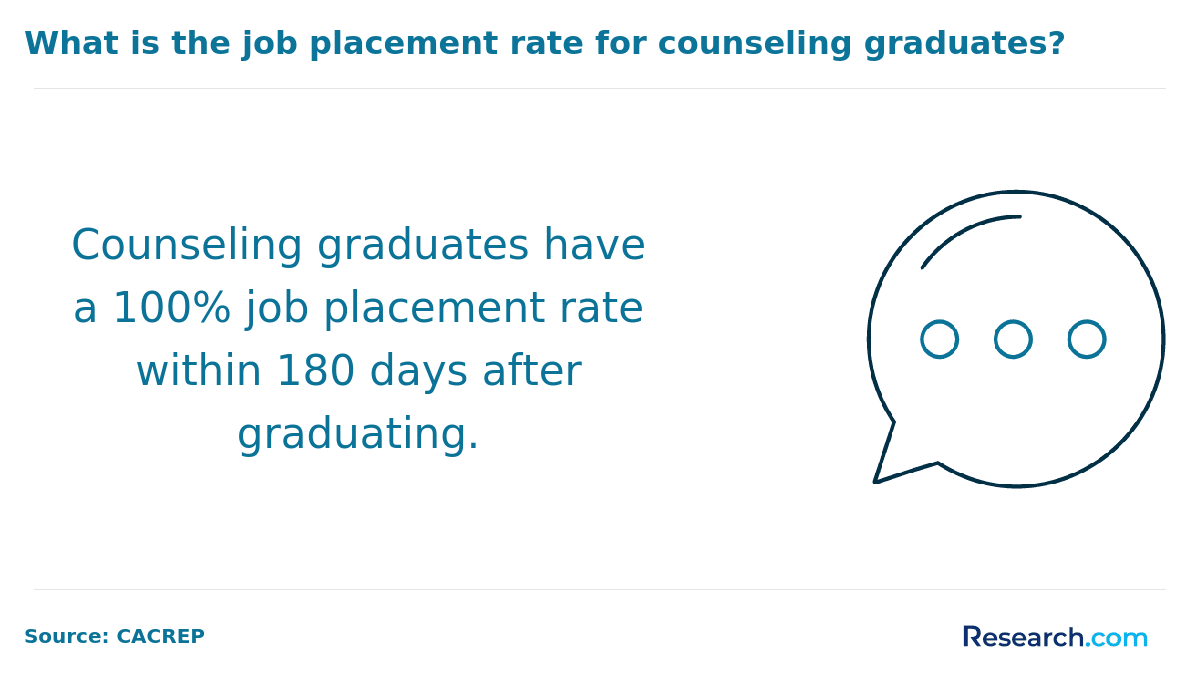
The placement data below provides additional context on counseling graduate outcomes in the state.
Are there accelerated counseling degree programs in Washington?
Some Washington counseling programs are designed to be completed efficiently, but students should be cautious about the word “accelerated.” Licensure-focused counseling degrees still need enough coursework, practicum, internship, and clinical preparation to meet professional standards. The best accelerated option is not the shortest program on paper; it is the fastest program that still supports licensure, supervision, and exam readiness.
Students comparing costs may also want to review Research.com’s list of affordable CACREP-accredited counseling programs online, especially if they are open to distance learning options that meet state requirements.
| Program | Format and Length | Cost Information | Decision Notes |
| Western Washington University | Clinical Mental Health Counseling program; CACREP-accredited; two-year full-time track. | Not stated in the source text. | Efficient full-time structure with academic and practicum preparation, but not designed to compress completion below 18 months. |
| Northwest University in Kirkland | 60-credit Master of Arts in Clinical Mental Health Counseling; online or campus-based; full-time students may finish within two years. | Approximately $846 per credit. | Year-round scheduling may help students maintain steady progress. |
| Bellevue University | 60-credit Clinical Mental Health Counseling program; online and campus options; full-time students can complete it in about two years. | $649 per credit. | Not formally accelerated, but the full-time structure can support timely completion. |
Before enrolling, ask whether the program helps students secure practicum and internship placements in Washington, whether faculty understand Washington licensure rules, and whether graduates have successfully moved into the LMHCA stage.
The chart below shows graduate counts from CACREP-accredited master’s programs in the U.S., which helps illustrate broader growth in the counseling education pipeline.
Are online counseling programs in Washington faster than traditional ones?
Online counseling programs can feel faster because they remove commuting, offer flexible coursework, and may provide multiple start dates. However, online delivery does not eliminate Washington’s supervised clinical experience requirements, exams, or licensure review. In other words, online learning can speed up the academic portion for some students, but it cannot bypass clinical preparation.
Students considering additional credentials should also compare certificate options, including online graduate certificate programs in counseling, but certificate study should not be confused with full licensure preparation unless the program explicitly meets the required purpose.
| Factor | Online Program | Campus Program | Best Choice When... |
| Course scheduling | May include asynchronous classes, recorded lectures, and flexible weekly deadlines. | Often follows fixed class times and campus schedules. | Online works well for working adults who can manage independent study. |
| Clinical placement | Students may need to secure local placements with program approval. | Programs may have established relationships with nearby agencies. | Campus can be helpful if you need more placement support. |
| Start dates | Some programs offer rolling admissions or several start dates each year. | May follow traditional semester or cohort cycles. | Online may reduce waiting time if you missed a campus application deadline. |
| Peer and faculty access | Support may happen through video meetings, forums, advising portals, and virtual office hours. | Students can often build relationships through in-person classes and campus events. | Choose based on how you learn best and how much structure you need. |
| Licensure timeline | Can shorten coursework logistics but not required supervised experience. | May be slower or equally paced depending on course sequencing. | The faster option is the one with fewer bottlenecks, not necessarily the one labeled online. |
- Asynchronous coursework can help: Students who are disciplined may complete assignments around work or family responsibilities.
- Reduced commuting matters: Eliminating travel can free time for studying, employment, and clinical preparation.
- Multiple start dates can reduce delays: Programs with frequent admissions cycles may help students begin sooner.
- Digital support can be useful: Recorded lectures, online advising, and virtual discussions can make graduate study more accessible.
- Clinical requirements remain the bottleneck: Even an efficient online program must still lead to supervised practice that Washington recognizes.
What challenges do fast-track counseling students face?
Fast-track counseling students often trade time savings for intensity. Condensed coursework, practicum responsibilities, documentation, exam preparation, and personal commitments can overlap quickly. Students who thrive in accelerated formats usually have strong time management, stable support systems, and clear communication with advisors and supervisors.
| Challenge | Why It Matters | Better Strategy |
| Heavy academic load | Compressed courses leave less room for reflection, reading, and integration of counseling theory. | Limit outside commitments during the most intensive terms and build a weekly study calendar. |
| Clinical placement pressure | Students must balance coursework with client-facing training and later Washington’s 3,000 supervised experience hours. | Ask programs how they support practicum and internship placement before enrolling. |
| Licensure documentation | Poor records can delay review even when hours were completed correctly. | Track direct client contact, supervision, dates, and supervisor credentials from the beginning. |
| Continuing education planning | Washington’s ongoing requirements, including 36 hours biennially in ethics and suicide prevention, can add another compliance layer. | Use approved providers and plan continuing education well before renewal deadlines. |
| Limited networking time | Accelerated students may miss mentorship, professional association events, or specialty training. | Schedule at least a few networking and supervision-development opportunities each term. |
| Burnout risk | Client work, graduate assignments, and personal stress can accumulate quickly. | Use supervision honestly, maintain boundaries, and monitor your own mental health. |
How do employers in Washington view fast-track counselors?
Washington employers generally care less about whether a program was “fast” and more about whether the applicant is clinically prepared, eligible for the correct credential, ethical, trainable, and able to work with real clients. A candidate from an accelerated or online program can be competitive if the program is rigorous, licensure-aligned, and supported by meaningful supervised experience.
Some hiring managers may question whether a shortened program offered enough depth in assessment, diagnosis, ethics, counseling theory, crisis work, cultural responsiveness, and documentation. This is especially true for positions involving high-acuity clients, trauma, co-occurring disorders, or independent caseloads.
At the same time, fast-track students may bring strengths that employers value. Many are career changers or working adults with experience in social services, education, health care, peer support, addiction recovery, or case management. That background can make them attractive to community mental health agencies, integrated care teams, crisis programs, and substance use treatment providers.
- Employers value: licensure eligibility, strong references, supervised clinical experience, ethical judgment, documentation skills, and reliability.
- Employers may question: insufficient practicum depth, weak assessment training, unclear accreditation, or limited exposure to diverse client populations.
- Students can strengthen their profile by: choosing robust placements, seeking specialized supervision, documenting outcomes, and preparing strong explanations of their training.
How can I specialize in substance abuse counseling in Washington?
To move toward substance abuse counseling in Washington, build your education and supervised experience around addiction treatment, co-occurring disorders, relapse prevention, motivational interviewing, harm reduction, group counseling, ethics, and evidence-based interventions. Look for practicum, internship, or entry-level roles in recovery centers, community agencies, behavioral health clinics, or integrated care settings where substance use is a primary focus.
Mentorship matters in this specialty. Work with supervisors who understand addiction treatment systems, documentation, client safety, referral networks, and Washington credentialing expectations. Workshops and focused training can deepen your skills, but they should support—not replace—the formal requirements for your intended credential. For a more detailed route, review Research.com’s guide on becoming a substance abuse counselor in Washington.
What are the essential strategies for licensure exam preparation in Washington?
Exam preparation should begin before you feel “ready.” Candidates are usually better served by a structured plan than by last-minute review. Start by confirming whether you will take the NCE or NCMHCE, then study the exam format, core content areas, ethical standards, diagnosis, treatment planning, case conceptualization, and clinical decision-making.
- Create a study calendar: Block regular review sessions instead of relying on long, irregular cram periods.
- Use official materials first: Practice with resources that reflect the exam structure and scoring style.
- Review ethics carefully: Boundary issues, confidentiality, mandated reporting, crisis response, and scope of practice are central to safe counseling work.
- Practice case reasoning: For scenario-based questions, focus on what the counselor should do next and why.
- Study with peers when useful: Discussion can expose weak areas, but avoid groups that become unfocused or anxiety-driven.
Students interested in educational settings should also review the pathway for becoming a school counselor in Washington, since school counseling preparation and mental health counseling licensure may involve different requirements and career outcomes.
What are the LPC license requirements in Washington?
Washington commonly uses the Licensed Mental Health Counselor framework rather than the “LPC” title used in some other states. Because terminology can differ across states, applicants should verify Washington’s current credential names and requirements before using out-of-state assumptions.
At a high level, the path includes completing a qualifying counseling program, obtaining the appropriate associate credential when required, completing supervised clinical experience, passing an approved examination, and meeting ethical and continuing education obligations. A detailed explanation is available in Research.com’s guide to Washington LPC counseling licensure requirements.
| Requirement Area | What Applicants Should Confirm |
| Degree | Whether the graduate program meets Washington’s academic requirements for the intended counseling credential. |
| Associate credential | Whether you must hold LMHCA status before supervised post-graduate hours can count. |
| Supervised experience | How to document 3,000 supervised hours, 1,200 direct client-contact hours, and 100 hours of direct supervision. |
| Exam | Whether the NCE or NCMHCE is the right exam for your licensure route. |
| Continuing education | How to complete and document required ongoing education, including ethics and suicide prevention content. |
Can aligning counseling and social work education enhance career prospects in Washington?
Yes, combining counseling knowledge with social work-informed training can help professionals understand clients in a broader context. Counselors who understand housing instability, public benefits, family systems, community resources, advocacy, and care coordination may be better prepared for agency-based and community mental health roles in Washington.
This does not mean a counseling degree and a social work degree are interchangeable. They lead to different credentials, scopes of practice, and career pathways. However, students who want to work in community-based mental health, case management-heavy settings, crisis support, or integrated care may benefit from learning how counseling and social work perspectives complement each other. To compare the educational side of that pathway, review the guide to social worker education requirements in Washington.
Are fast-track and online counseling programs in Washington more affordable?
Fast-track and online programs may reduce total costs, but they are not automatically cheaper. A shorter schedule can lower living expenses and reduce time away from full-time work, while online study can cut commuting, parking, relocation, and campus-related costs. However, students still need to account for tuition, fees, technology requirements, books, insurance, background checks, travel to clinical sites, exam fees, and possible campus residencies.
- Tuition range: Many online master’s programs in Washington cost between $9,500 and $20,000, according to the source material, but students should verify total program cost directly with each school.
- Shorter completion can reduce indirect costs: Fewer semesters may mean fewer months of fees, living expenses, or reduced employment.
- Working while enrolled can help: Flexible formats may allow students to keep income while completing coursework.
- Online learning can remove relocation costs: Students may avoid moving to a campus city or paying for regular commuting.
- Financial aid may still apply: Washington residents in eligible online programs may remain eligible for in-state tuition and state-level financial assistance, depending on the program and student status.
| Cost Question | Why It Matters |
| Is the quoted price tuition-only or total cost? | Fees, technology costs, books, and clinical expenses can change the real price. |
| Are campus visits required? | Travel and lodging can reduce the savings of an online program. |
| Does the school help with clinical placements? | Students who must find their own sites may face delays or extra travel costs. |
| Can I keep working? | Lost income can matter as much as tuition when calculating affordability. |
| Will the program support Washington licensure? | A cheaper program can become expensive if it requires extra coursework later. |
Is there a demand for counselors in Washington?
Yes. Washington continues to show demand for counselors across mental health, substance use, behavioral disorder, school support, crisis intervention, and community care settings. Demand is shaped by mental health awareness, access needs, rural and underserved communities, and shortages across related behavioral health professions.
Employment for substance abuse, behavioral disorder, and mental health counselors is projected to grow by 18.7% from 2020 to 2030. Agencies also report difficulty filling roles for licensed mental health counselors, marriage and family therapists, and clinical social workers. Opportunities may be strongest for candidates willing to work in high-need settings, rural communities, crisis services, integrated care, or substance use treatment.
Demand does not guarantee immediate employment at a preferred salary or location. New counselors should still build supervised experience, pursue strong references, prepare for licensure exams, and consider underserved areas where hiring needs may be greater.
The chart below shows the projected national counselor workforce shortage and provides context for why many states are focused on expanding behavioral health capacity.
How much do counselors get paid in Washington?
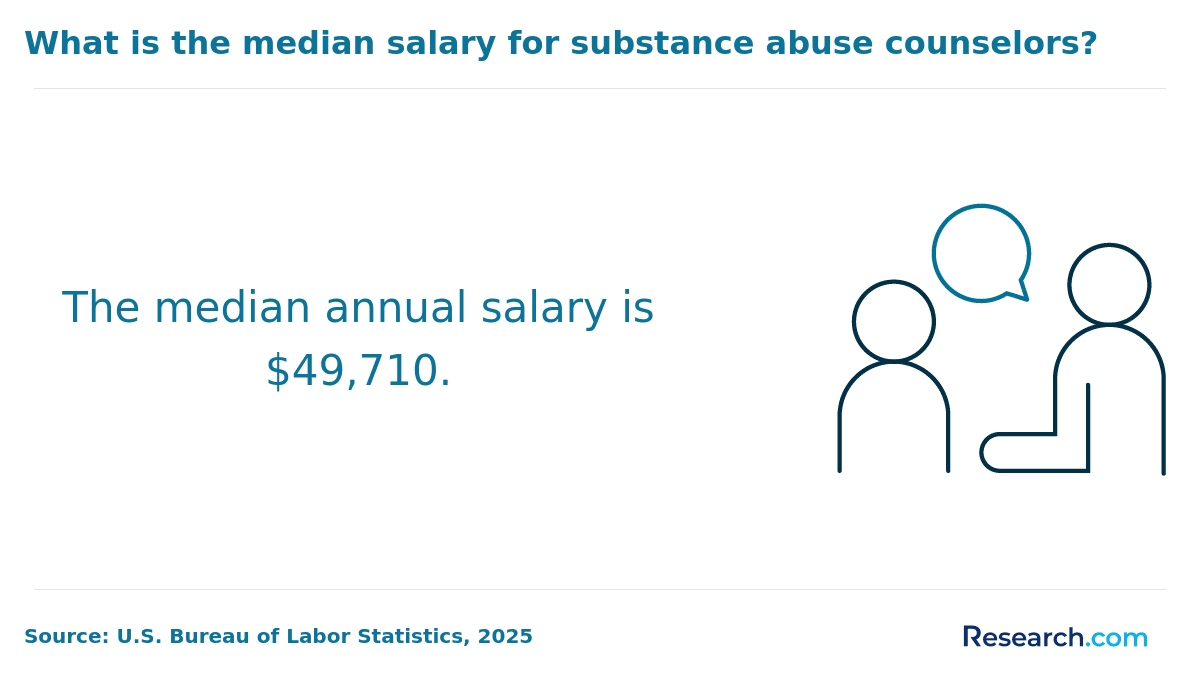
Counselor salaries in Washington vary by credential, specialty, work setting, geography, and years of experience. Some sources describe the average counselor salary in Washington as approximately $60,000 annually, while the source material also cites an average annual wage for licensed counselors of approximately $81,451. The difference reflects how salary estimates can change depending on the occupation title, data source, and population measured.
| Role or Credential | Salary Information Provided | What Can Affect Pay |
| Licensed Professional Counselors | Typically between $56,701 and $81,451 per year, with experienced professionals in high-demand areas reaching as much as $140,000 annually. | Experience, specialization, employer type, location, and demand. |
| Certified Counselors | Average of $26.58 per hour, or roughly $55,286 per year; most fall between $45,900 and $61,700. | Credential level, workplace, region, and responsibilities. |
| School Counselors | Approximately $56,431 to $110,208 per year. | District funding, seniority, geographic area, and education level. |
| Substance Use Disorder Counselors | Generally between $54,000 and $70,000 annually, with hourly rates from $26.00 to $33.65. | Certification, clinical experience, agency type, and client population. |
Private practice and hospital roles may pay more than some public-sector or nonprofit positions, but they may also require stronger credentials, business skills, advanced experience, or a more competitive hiring profile. Students should compare likely earnings with total program cost, debt, supervision requirements, and local cost of living.
Is taking the fast route to become a counselor in Washington worth it?
A fast route can be worth it if it is accredited or otherwise licensure-aligned, clinically rigorous, affordable for your budget, and realistic for your life. It is not worth it if the program is so compressed that you cannot absorb clinical skills, maintain your mental health, complete quality placements, or meet Washington credentialing expectations.
The strongest fast-track candidates usually know why they want counseling, have prior helping experience, can manage heavy workloads, and are willing to accept structured supervision. They also understand that completing a degree quickly is only one part of the process. Washington’s 3,000 supervised hours, including 1,200 direct client contact hours, still require time, consistency, and professional development.
| Fast Route Makes Sense If... | Consider a Slower Path If... |
| You already have experience in social services, education, health care, recovery work, or peer support. | You are new to client-facing work and need more time to build confidence. |
| You can study full time or manage a demanding part-time schedule. | You have major work, caregiving, or financial pressures that make overload likely. |
| The program clearly supports Washington licensure and supervised placement planning. | The school cannot explain how graduates meet Washington requirements. |
| You have access to supervision, mentorship, and emotional support. | You would be navigating practicum, exams, and supervision mostly alone. |
| You are targeting high-need areas such as trauma, substance use, crisis care, or community mental health. | You want a slower exploratory path before choosing a specialty. |
Fast-track preparation can lead to many career options with a counseling degree, including addiction recovery, school support, crisis response, integrated behavioral health, and community mental health. The key is to accelerate the administrative path without weakening clinical readiness.
What Counselors in Washington Say About Their Career Paths
Moving quickly through my counseling preparation helped me enter the field sooner, but the biggest benefit was stability. Washington’s need for mental health professionals made it possible for me to find meaningful work and serve people in my own community. – Claire
Working with clients across Washington has shown me how different mental health needs can be from one community to another. The accelerated path gave me earlier hands-on experience, but supervision was what helped me turn that experience into real clinical growth. – Ryan
I appreciated how many professional development options were available once I started working. Because I finished my education efficiently, I was able to pursue workshops, specialty training, and mentorship sooner than I expected. – Belle
Common Mistakes to Avoid Before Choosing a Counseling Path in Washington
- Choosing a program without checking licensure alignment: Always confirm that the curriculum supports Washington requirements before enrolling.
- Assuming online means easier or faster: Online programs can be flexible, but supervised clinical requirements still take time.
- Looking only at tuition: Compare total cost, fees, travel, clinical placement expenses, exam costs, and lost income.
- Waiting too long to plan supervision: Delayed supervision arrangements can slow the entire licensure timeline.
- Underestimating documentation: Incomplete hour logs, missing signatures, or unclear supervision records can create licensing delays.
- Relying only on rankings: A highly ranked program is not automatically the best fit for your budget, schedule, location, or career goal.
- Assuming salaries are guaranteed: Earnings depend on credential level, employer, specialty, region, experience, and job market conditions.
- Ignoring cost of living: Higher wages in Washington may be offset by housing and transportation costs in certain areas.
Questions to Ask Before Enrolling in a Washington Counseling Program
- Does this program meet Washington’s educational requirements for my intended counseling credential?
- What percentage of students secure practicum and internship placements on time?
- Does the school help students find Washington-based clinical sites?
- Can graduates apply for the LMHCA credential immediately after completing the program?
- How does the program prepare students for the NCE or NCMHCE?
- What is the total cost, including fees, books, technology, travel, and required residencies?
- Can I complete the program while working, or is full-time study expected?
- What supervision, mentorship, or career support is available after graduation?
- Are there graduates working in the Washington settings or specialties I want to enter?
- What happens if I need to slow down, pause, or switch from full time to part time?
Related Articles for Nearby States
- 2027 Fastest Way to Become a Counselor in Oregon
- 2027 Fastest Way To Become a Counselor in Idaho
- 2027 Fastest Way To Become a Counselor in Montana
- 2027 Fastest Way To Become a Counselor in California
- 2027 Fastest Way To Become a Counselor in Nevada
- 2027 Fastest Way To Become a Counselor in Utah
- 2027 Fastest Way To Become a Counselor in Wyoming
- 2027 Fastest Way To Become a Counselor in Arizona
- 2027 Fastest Way To Become a Counselor in Colorado
- 2027 Fastest Way To Become a Counselor in New Mexico
References:
- Bureau of Labor Statistics. (n.d.). Substance abuse, behavioral disorder, and mental health counselors: Occupational outlook handbook. Retrieved from BLS.
- CareerExplorer. (n.d.). Counselor salary in Washington. Retrieved from CareerExplorer.
- CareersinPsychology.org. (n.d.). Washington counselor licensing, certification and education requirements, career. Retrieved from CareersinPsychology.org.
- Counseling Psychology.org. (2025). 2025 best master’s in counseling, Washington - online & affordable options. Retrieved from Counseling Psychology.org.
- CounselingSchools.com. (n.d.). How to become a counselor in Washington DC: Licensure & degrees. Retrieved from CounselingSchools.com.
- O*NET Online. (n.d.). Washington employment trends: 21-1014.00 - mental health counselors. Retrieved from O*NET Online.
- Office of Financial Management, State of Washington. (n.d.). State of Washington class salary range. Retrieved from OFM.
- Online Counseling Programs. (n.d.). How to become a licensed counselor (LMHC) in Washington. Retrieved from Online Counseling Programs.
- Seattle Times. (n.d.). Seven in-demand careers in counseling and mental health. Retrieved from Seattle Times.
- Washington State Department of Health. (n.d.). Mental health counselor. Retrieved from Washington State Department of Health.
Key Insights
- The fastest legitimate route to counseling licensure in Washington is careful sequencing: licensure-aligned graduate study, prompt LMHCA application, supervised hours, exam preparation, and accurate documentation.
- A bachelor’s degree can lead to support roles such as behavioral health technician, case manager, crisis specialist, youth mentor, or substance abuse counselor assistant, but it usually does not allow independent clinical counseling practice.
- Online and accelerated programs can save time, but they do not remove Washington’s supervised clinical experience requirements.
- Program quality matters more than speed. Choose a school that can clearly explain licensure alignment, placement support, exam preparation, and graduate outcomes.
- Washington has demand for counselors, including a projected 18.7% growth for substance abuse, behavioral disorder, and mental health counselors from 2020 to 2030, but job opportunities still vary by region and specialty.
- Salary estimates differ by role and source. Reported figures range from approximately $60,000 annually to an average annual wage of approximately $81,451 for licensed counselors, with higher or lower earnings depending on credential and setting.
- The fast route is worth considering if you can handle an intensive schedule, secure strong supervision, and maintain clinical quality. It is not worth sacrificing licensure eligibility, mental health, or professional readiness.
Other Things You Should Know About the Fastest Way To Become a Counselor in Washington
Washington counselors renew their credentials every year by their birthday. The Department of Health requires 36 hours of continuing education during each 2-year renewal cycle, including 6 hours in professional ethics and 6 hours in suicide assessment, treatment, and management.
To expedite entry into a counseling program in 2027, you typically need a bachelor's degree in psychology or a related field. Specific prerequisites may vary, so check individual program requirements for additional coursework or experience needed to qualify for fast-track options.


