2027 Fastest Way To Become a Counselor in New Hampshire

Co-Founder and Chief Data Scientist
Becoming a counselor in New Hampshire is a licensing decision as much as a career decision. If your goal is to enter the field quickly, the fastest path is not simply choosing the shortest degree program; it is choosing a program that meets New Hampshire requirements, planning supervised experience early, avoiding application delays, and selecting a counseling specialty that fits the roles you want.
This guide explains how to move toward counseling work in New Hampshire as efficiently as possible while staying realistic about degree requirements, supervised hours, costs, employer expectations, and career trade-offs. It is designed for prospective graduate students, career changers, bachelor’s degree holders exploring entry-level behavioral health jobs, and future counselors comparing online, accelerated, and traditional programs.
Key Insights
- The fastest legitimate path to independent clinical counseling in New Hampshire requires a qualifying master’s degree, a 700-hour supervised practicum or internship, LCMHC candidate status, at least two years of supervised clinical experience, and the required national clinical exam.
- A bachelor’s degree can get you into behavioral health work sooner, especially in case management, residential care, behavioral health technician roles, youth support, or supervised substance abuse services, but it is usually not enough for independent counseling practice.
- Online and accelerated programs can save time, but only when they meet New Hampshire licensure expectations and provide strong field placement support.
- Program cost should be judged by total expense, not tuition alone. Fees, travel, placement delays, work disruption, and licensure problems can change the real price of a degree.
- Employers are open to fast-track graduates when candidates can demonstrate clinical competence, strong supervision, ethical judgment, and hands-on experience.
- High-need areas in New Hampshire include rural mental health, school counseling, substance abuse counseling, and family-focused care.
- The best fast route is not the shortest route on paper; it is the pathway that gets you licensed, employable, clinically prepared, and financially stable with the fewest avoidable delays.
Quick answer: What is the fastest route to counseling work in New Hampshire?
The fastest route to independent clinical counseling in New Hampshire is to complete a qualifying master’s degree with the required 700-hour supervised practicum or internship, apply for LCMHC candidate status as soon as you are eligible, complete at least two years of supervised clinical experience, and pass the National Clinical Mental Health Counseling Examination. If you only have a bachelor’s degree, you can enter related behavioral health roles sooner, but you generally cannot practice independently as a licensed clinical counselor without graduate education and supervised post-graduate experience.
Key Benefits of Becoming a Counselor in New Hampshire
- Clear licensing sequence: New Hampshire uses a defined process for counselor licensure, which helps students plan their degree, supervised training, exam preparation, and application timeline.
- Meaningful demand: Mental health, school-based support, substance abuse treatment, and rural behavioral health needs continue to create opportunities for qualified counseling professionals.
- Competitive earning potential: The average counselor salary in New Hampshire is reported at about $73,313, with pay varying by specialization, license level, location, and employer type.
- Multiple entry points: Bachelor’s degree holders may begin in supervised support roles, while master’s-prepared candidates can work toward independent clinical practice.
- What is the fastest way to become a licensed counselor in New Hampshire?
- What counseling jobs can you pursue in New Hampshire with a bachelor’s degree?
- Are there accelerated counseling degree programs in New Hampshire?
- Are online counseling programs in New Hampshire faster than campus programs?
- What challenges do fast-track counseling students face?
- How do New Hampshire employers view fast-track counseling graduates?
- Are fast-track and online counseling programs in New Hampshire more affordable?
- Is there demand for counselors in New Hampshire?
- How can school counseling speed up career entry in New Hampshire?
- How much do counselors earn in New Hampshire?
- How can interdisciplinary training strengthen a counseling career?
- Is the fast route to becoming a counselor in New Hampshire worth it?
- What are the specific licensing requirements for counselors in New Hampshire?
- How can specializing in substance abuse counseling help your career?
What is the fastest way to become a licensed counselor in New Hampshire?
The quickest responsible path is to reverse-engineer your timeline from New Hampshire licensure requirements. A short program will not help if it lacks the right practicum structure, delays your supervised hours, or does not prepare you for the required clinical exam. The New Hampshire Board of Mental Health Practice oversees the licensing process, so your degree, clinical experience, supervisor qualifications, and application materials must align with state expectations.
For independent clinical counseling, the streamlined route usually looks like this:
- Choose a qualifying master’s program. Select a counseling program that includes the required 700-hour supervised practicum or internship and supports your intended license pathway.
- Plan field placement before graduation. Ask early how practicum and internship sites are arranged, whether the program has New Hampshire placement relationships, and how long site approval typically takes.
- Apply for LCMHC candidate status promptly. After graduation, submit materials for LCMHC candidate status as soon as you meet eligibility requirements so your post-graduate supervised experience can begin without unnecessary gaps.
- Complete supervised clinical experience. New Hampshire requires at least two years of supervised clinical experience, so choosing an employer and qualified supervisor early can shorten avoidable delays.
- Prepare for the NCMHCE. The National Clinical Mental Health Counseling Examination is required for licensure in New Hampshire, so build exam preparation into your timeline rather than treating it as a final afterthought.
- Submit complete documentation. Download forms from the New Hampshire OPLC website early, check every requirement, and keep records of coursework, supervised hours, and supervisor verification.
- Use professional networks. Local groups such as the New Hampshire Mental Health Counselors’ Association and national resources such as Agents of Change and NBCC study materials can support exam preparation, mentorship, and job search planning.
If you are still comparing counseling specialties, reviewing the broader counseling psychology career landscape can help you understand how clinical counseling, school counseling, substance abuse treatment, and related mental health roles differ.
| Step | How it affects speed | Decision to make early |
| Master’s program selection | A qualifying curriculum prevents licensing problems later. | Confirm the program includes the required 700-hour supervised practicum or internship. |
| Field placement planning | Late site approval can slow graduation and licensure progress. | Ask whether the school helps secure New Hampshire placements. |
| LCMHC candidate application | Delays after graduation can postpone supervised experience. | Prepare forms and documentation before completing the degree. |
| Supervised clinical work | At least two years are required, so supervisor access matters. | Identify qualified supervisors and employers before graduation when possible. |
| Licensure exam | Retesting or poor preparation can extend the timeline. | Start NCMHCE preparation before the end of supervised experience. |
What counseling careers can you pursue in New Hampshire with only a bachelor’s degree?
A bachelor’s degree can help you enter the behavioral health workforce, but it usually does not qualify you for independent clinical counseling practice. The practical advantage of starting with a bachelor’s-level role is experience: you can learn client documentation, crisis response, care coordination, community resources, and multidisciplinary teamwork before committing to graduate school.
Common bachelor’s-level counseling-adjacent roles in New Hampshire include:
- Substance abuse counselor: In some settings, bachelor’s-prepared workers may support recovery services under appropriate supervision while building specialized addiction-treatment experience.
- Behavioral health technician: These professionals assist with treatment plans, daily client support, observation, and care delivery in clinics, residential programs, or home-based settings.
- Case manager: Case managers help clients connect with housing, treatment, insurance, transportation, food assistance, and other services that affect stability and recovery.
- Direct care professional: This role supports people in group homes, assisted living environments, rehabilitation programs, or residential treatment settings.
- Youth or residential counselor: These workers support young people in shelters, residential programs, youth centers, and related community environments.
These positions are valuable, but applicants should read job descriptions carefully. Some employers require specific certifications, prior human services experience, background checks, crisis training, or supervision by licensed clinicians. A credential such as Certified Recovery Support Worker may strengthen your profile, especially if you are interested in addiction and recovery services.
| Role | Typical entry point | Best for students who want to... |
| Behavioral health technician | Bachelor’s degree or related experience, depending on employer | Gain direct client-care experience before graduate school. |
| Case manager | Bachelor’s degree in counseling, psychology, social work, human services, or a related field | Learn systems navigation and community-based support. |
| Substance abuse support role | Bachelor’s degree plus role-specific supervision or credentials where required | Build experience in recovery, addiction treatment, and relapse prevention support. |
| Youth or residential counselor | Bachelor’s degree or relevant human services background | Work with adolescents, families, crisis needs, and structured residential environments. |
If your long-term goal is licensure, compare each job against the requirements to become a counselor so you understand which roles are stepping stones and which require graduate-level preparation. The following visual also summarizes high-paying counselor careers across the United States.
Are there accelerated counseling degree programs in New Hampshire?
Accelerated counseling options in New Hampshire exist, but they are not all equivalent. Some shorten the bachelor’s-to-master’s transition, some offer online scheduling flexibility, and some reduce time only if you bring transfer credits or can handle a heavier course load. The key question is whether the faster route still meets licensure requirements.
- University of New Hampshire: UNH offers an Accelerated Master’s pathway that allows current undergraduates to begin graduate-level coursework while finishing the bachelor’s degree. This can reduce overall time in school, but eligibility is generally tied to enrolled UNH students and may involve related graduate programs rather than a dedicated counseling acceleration track.
- Southern New Hampshire University: SNHU offers multiple accelerated online options, including bachelor’s-to-master’s pathways. Its master’s in clinical mental health counseling requires 60 credits and typically takes two years. Students may be able to shorten the timeline through transfer credits or intensive study. Tuition is listed at about $627 per credit, or around $37,620 for the full 60-credit program, though actual costs can change based on individual circumstances.
- Plymouth State University and Keene State College: These institutions offer counseling-related programs, but there is no official accelerated master’s degree specifically in counseling currently identified for these campuses.
Students willing to consider out-of-state online programs may find accelerated master’s counseling degrees from institutions such as Capella or Walden University, with some programs designed for completion in 12–24 months. Before enrolling, confirm state licensure alignment, practicum placement support, accreditation, faculty advising, and whether the program is accepted for your intended New Hampshire credential.
If your interest includes family systems, relationship counseling, or flexible graduate study, compare national options in the best rated online marriage and family counseling masters degrees.
Are online counseling programs in New Hampshire faster than traditional ones?
Online counseling programs are not automatically faster because licensure-focused programs still need the same core academic and supervised training components, including a 60-credit master’s degree and 700 practicum hours. However, online study can reduce wasted time if the program offers flexible scheduling, more start dates, and a smoother way to continue working while completing coursework.
| Format | Potential speed advantage | Potential drawback | Best fit |
| Online | Asynchronous coursework, no commute, and multiple start dates may help students maintain momentum. | Students must be proactive about field placement, time management, and faculty communication. | Working adults, career changers, rural students, and students who need schedule flexibility. |
| Hybrid | Combines online convenience with some in-person skill development and networking. | Campus or residency requirements may still require travel. | Students who want flexibility but value face-to-face training. |
| Campus-based | May provide easier access to local faculty, peers, and established placement networks. | Fixed class times and commuting can slow progress for working students. | Students who learn best in person and can attend on a regular schedule. |
Online programs can be especially useful for students in rural parts of New Hampshire who would otherwise spend significant time traveling to campus. The main caution is practicum logistics. Ask whether the program helps approve local clinical sites, whether supervisors must hold specific credentials, and how far in advance you should begin placement planning.
What challenges do fast-track counseling students face?
Fast-track counseling pathways can save time, but they can also compress the most demanding parts of counselor preparation. Counseling is not only academic work; it requires clinical judgment, ethical maturity, emotional regulation, and repeated supervised practice. Moving quickly works best for students who are organized, supported, and realistic about the workload.
- Heavy academic pace: Condensed courses can leave little margin for reflection, skill practice, or recovery time between assignments.
- Practicum and internship pressure: Students must balance client contact hours, documentation, supervision, coursework, and often employment or family responsibilities.
- Less time to build peer support: Accelerated cohorts may move so quickly that students have fewer opportunities to develop professional relationships that help during stressful clinical training.
- Greater risk of burnout: Early and frequent exposure to trauma, crisis, grief, addiction, family conflict, or school mental health needs can contribute to compassion fatigue if students lack support.
- Uneven confidence after graduation: Some graduates need extra supervision or mentoring to feel fully prepared for complex cases.
- Job-search timing challenges: A fast program is only useful if licensure paperwork, candidate status, supervision, and employment opportunities are lined up.
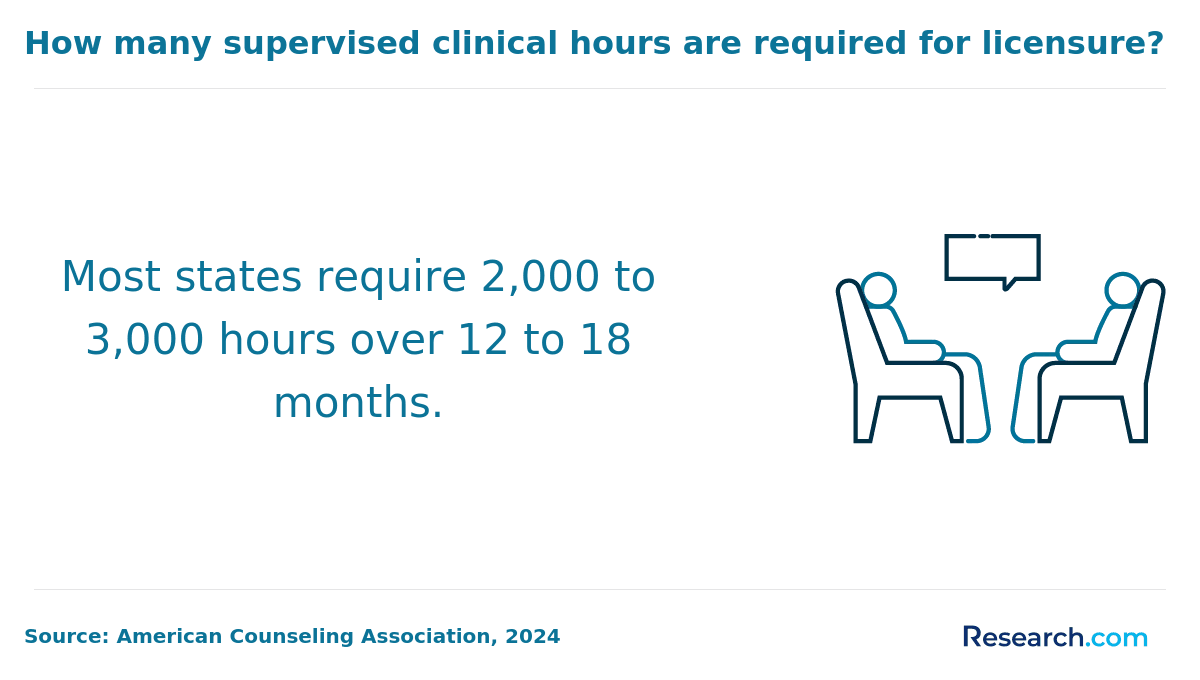
Students should also know the supervised clinical hour expectations before selecting a program. The image below outlines important hour requirements for counseling preparation.
How do employers in New Hampshire view fast-track counselors?
New Hampshire employers typically care less about the label “fast-track” and more about evidence of readiness. A candidate from an accelerated or online program can be competitive if the program meets licensing standards, the applicant has strong practicum experience, and supervisors can speak to the candidate’s clinical skills, ethics, reliability, and documentation habits.
Some hiring managers may be cautious if a program appears too compressed or if a graduate has limited face-to-face client experience. Their concern is practical: counseling work often involves risk assessment, mandated reporting, crisis intervention, treatment planning, and collaboration with families, schools, courts, hospitals, or social service agencies.
Fast-track candidates can reduce skepticism by showing clear proof of preparation. Useful evidence includes strong supervisor evaluations, relevant bachelor’s-level behavioral health work, specialized addiction or trauma training, experience with rural or community-based populations, and a clear plan for ongoing supervision and professional development.
| Employer concern | How to address it |
| “Was the program rigorous enough?” | Show that the degree met New Hampshire requirements and included the required practicum or internship hours. |
| “Does the candidate have real client experience?” | Highlight practicum settings, populations served, interventions used, and supervisor feedback. |
| “Can the candidate handle documentation and ethics?” | Discuss experience with treatment plans, progress notes, confidentiality, mandated reporting, and crisis protocols. |
| “Will the candidate need extensive support?” | Explain your supervision plan, continuing education goals, and readiness to learn within the agency’s model. |
Are fast-track and online counseling programs in New Hampshire more affordable?
Fast-track and online programs can be more affordable, but only if the total cost is lower after fees, field placement expenses, technology costs, books, travel, and lost income are included. The cheapest tuition rate is not always the lowest-cost route if the program delays graduation, lacks placement support, or does not meet licensure requirements.
- Shorter enrollment period: Accelerated study may reduce the number of terms you pay for and help you reach paid supervised work sooner.
- In-state tuition opportunities: Public universities such as the University of New Hampshire list in-state tuition at around $7,440 annually, which can make local options more cost-effective than some out-of-state choices.
- Ability to keep working: Online or hybrid formats may allow students to maintain income while completing graduate coursework.
- Lower commuting and housing costs: Remote study can reduce travel, parking, relocation, and campus housing expenses.
- Financial aid and regional pricing: Some programs offer scholarships, financial aid, in-state pricing, or regional tuition arrangements for eligible online students.
| Cost factor | Why it matters | Question to ask |
| Tuition per credit | Graduate counseling programs often require many credits, so small per-credit differences add up. | What is the full program cost, not just the advertised per-credit rate? |
| Fees | Online, technology, clinical placement, graduation, or residency fees may increase total cost. | Which mandatory fees apply every term? |
| Practicum placement | Delayed placement can extend enrollment and increase expenses. | Does the school help secure approved New Hampshire sites? |
| Work schedule | Programs that require daytime attendance may reduce income. | Can students complete coursework while working full-time or part-time? |
| Licensure alignment | A low-cost program is risky if it does not satisfy state requirements. | Does the curriculum align with New Hampshire counselor licensure expectations? |
Is there a demand for counselors in New Hampshire?
Demand for counselors in New Hampshire is supported by needs in clinical mental health, school counseling, community behavioral health, addiction treatment, and rural care. Employment projections cited for clinical, counseling, and school psychologists show expected 20% growth between 2022 and 2032, reflecting a strong need for mental health professionals compared with many local occupations.
Shortages are especially important in rural and northern communities, where access to care can be more limited. High-need areas include school counseling, substance abuse counseling connected to the opioid crisis, and marriage and family therapy for relationship and family-system concerns. Retirements and workforce turnover can also create openings for new counselors who are prepared to work in community-based or underserved settings.
If you are deciding whether the graduate investment makes sense, reviewing jobs with a masters in counseling can help you compare career paths, salary expectations, and long-term options. The image below shows the average percentage of adults using mental health services per quarter.
How can school counseling accelerate your career entry in New Hampshire?
School counseling can be a focused route for students who want to work in K–12 environments rather than private clinical practice. This path blends academic advising, social-emotional support, family communication, crisis response, and collaboration with teachers and administrators. Because the role is tied to school systems, candidates should review education-specific credentialing and field experience requirements rather than assuming clinical mental health licensure rules are the same.
School counseling may be a strong fit if you want a structured work setting, regular contact with students, and a role that connects academic success with mental health support. It may be less suitable if your primary goal is independent psychotherapy practice with adults, couples, or families outside school settings. For a step-by-step overview, review how to become a school counselor in New Hampshire.
How much do counselors get paid in New Hampshire?
Counselor pay in New Hampshire depends on license level, specialty, employer, region, experience, and whether the role is clinical, school-based, residential, nonprofit, public sector, or private practice. Salary reports also vary by source, so students should treat averages as planning estimates rather than guaranteed outcomes.
- Overall salary range: Counselors in New Hampshire are generally reported to earn between $72,938 and $79,258 per year, with a wider range from about $41,818 for entry-level roles to $110,379 for experienced or specialized professionals.
- School counselors: Average pay is around $49,000 per year, similar to family social workers and slightly above rehabilitation counselors.
- Licensed Professional Counselors: Recent job postings place LPC pay around $52,736 to $52,886.
- Licensed Mental Health Counselors: ZipRecruiter reports an average near $73,313 in New Hampshire.
- Substance abuse and rehabilitation counselors: These roles are often reported near the lower end, commonly between $45,000 and $49,000 per year.
To improve earning potential over time, counselors often pursue licensure, build specialized clinical skills, gain experience with high-need populations, move into supervisory roles, or add training in areas such as addiction, trauma, family systems, crisis response, or integrated care. If cost is a major factor in your decision, compare the most affordable online masters in counseling degree programs before committing to a program.
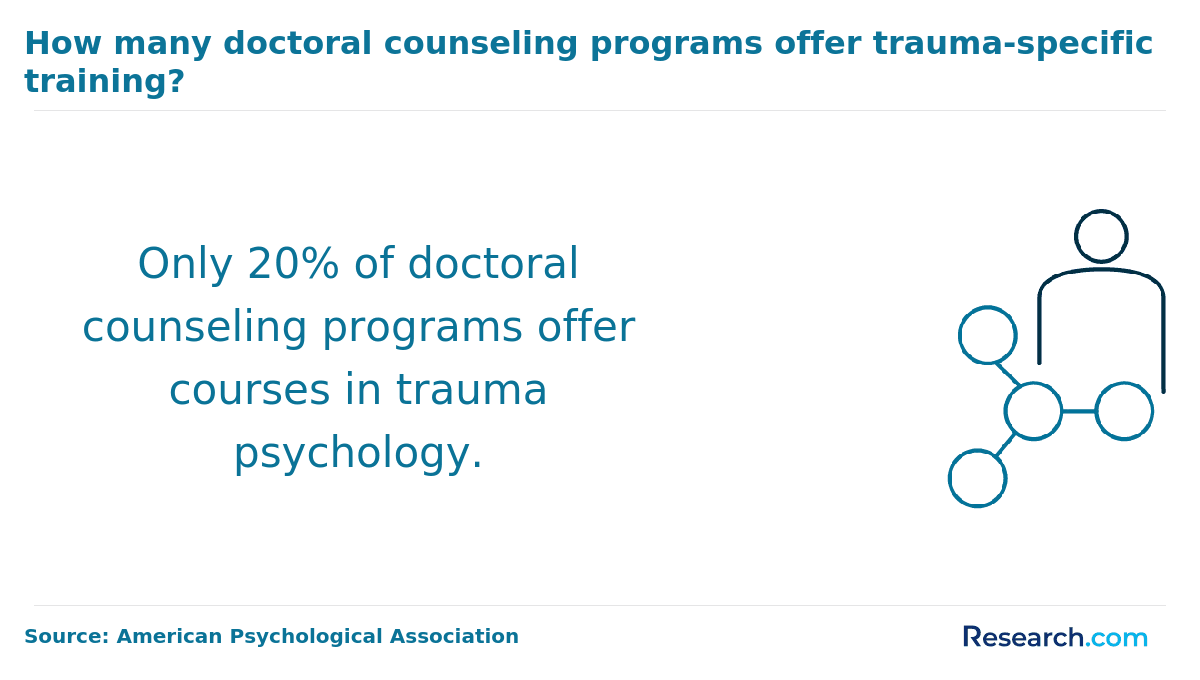
For students considering advanced specialization, the following image shows how many doctoral counseling programs include trauma-specific training.
How Can Interdisciplinary Training Elevate Your Counseling Career?
Counselors rarely work in isolation. They often coordinate with social workers, physicians, school staff, probation officers, crisis teams, case managers, and community organizations. Interdisciplinary training can make you more effective in these settings because it improves your understanding of client needs beyond the therapy session.
Training in social work, public health, education, addiction studies, family systems, or human services can help counselors understand housing instability, trauma exposure, disability services, child welfare, medical conditions, and social determinants of mental health. If you are considering a broader behavioral health career, reviewing the New Hampshire social worker educational requirements can help you compare counseling and social work pathways.
Is taking the fast route to become a counselor in New Hampshire worth it?
The fast route can be worth it if it helps you enter supervised practice sooner without sacrificing licensure eligibility, clinical quality, or personal well-being. It is most useful for students who already know their target counseling specialty, can manage an intensive workload, and choose a program with strong field placement support.
It may not be worth it if acceleration causes you to choose a weak program, ignore accreditation or licensure alignment, overload yourself financially, or rush through clinical skill development. In counseling, speed has to be balanced with competence. Clients, supervisors, and employers need professionals who can handle complex emotional, ethical, and safety issues.
| The fast route may be a good fit if... | A slower route may be better if... |
| You can study consistently while managing practicum and supervision requirements. | You need more time to balance work, caregiving, health, or finances. |
| You already have behavioral health or human services experience. | You are new to counseling and want more time to build foundational skills. |
| The program clearly aligns with New Hampshire licensure requirements. | You are unsure whether the program will qualify you for the credential you want. |
| You have identified potential supervisors, practicum sites, or employers. | You have not yet planned field placement or post-graduate supervision. |
What are the specific licensing requirements for counselors in New Hampshire?
New Hampshire counselor licensure requires documented graduate education, supervised clinical training, qualifying post-graduate experience, and successful completion of required examination steps. Candidates should verify details directly with the state board because requirements, forms, and documentation expectations can change.
At a high level, candidates should expect to complete a qualifying master’s degree, finish the required 700-hour supervised practicum or internship, apply for the appropriate candidate or license status, complete at least two years of supervised clinical experience, and pass the required clinical exam. For a more detailed breakdown, see LPC license requirements in New Hampshire.
What Counselors in New Hampshire Say About Their Careers
- “Choosing an accelerated path helped me enter supervised work sooner, but the biggest benefit was learning from experienced clinicians while serving real clients. The demand for mental health care in New Hampshire gives the work a strong sense of purpose.” – Lester
- “Counseling in New Hampshire has pushed me to be flexible. Rural communities, diverse client needs, and limited resources require creativity. Moving quickly through training helped me start earlier, but supervision was what made me confident.” – Francis
- “Professional development has been essential. Workshops, consultation, and continuing education helped me keep growing after graduation. The accelerated route opened the door, but ongoing training helped me stay effective.” – Karen
How Can Specializing in Substance Abuse Counseling Benefit Your Career?
Substance abuse counseling can be a strategic specialization in New Hampshire because addiction treatment remains a major behavioral health need. Focused training can help you work with recovery programs, community agencies, residential treatment settings, outpatient clinics, justice-involved populations, and integrated care teams.
This specialty can also strengthen your employability by showing employers that you understand relapse prevention, motivational interviewing, co-occurring disorders, recovery support, family impact, and referral networks. If this path matches your interests, review how to become a substance abuse counselor in New Hampshire.
Common mistakes to avoid when choosing a fast counseling pathway
- Choosing speed over licensure fit: A shorter program is not useful if it does not satisfy New Hampshire requirements for your intended credential.
- Looking only at tuition: Compare total program cost, fees, travel, books, technology, field placement costs, and lost income.
- Waiting too long to plan practicum: Field placement can be one of the biggest sources of delay, especially for online students.
- Assuming online means easier: Online counseling programs still require clinical skill development, supervised hours, and disciplined time management.
- Ignoring supervisor qualifications: Supervised experience generally must meet state expectations, so confirm supervisor eligibility before counting hours.
- Depending only on salary averages: Pay varies by setting, specialty, geography, and experience. Use salary figures as estimates, not promises.
- Skipping employer research: Before enrolling, look at local job postings to see which degrees, credentials, and experience employers actually request.
Questions to ask before enrolling in a counseling program
- Does the program meet New Hampshire requirements for the license or credential I want?
- How does the school verify that the curriculum includes the required 700-hour supervised practicum or internship?
- Who helps students secure practicum and internship placements in New Hampshire?
- What percentage of students complete the program on the advertised accelerated timeline?
- Are courses asynchronous, synchronous, hybrid, or campus-based?
- What is the full cost after tuition, fees, books, technology, travel, and residency requirements?
- Does the program prepare students for the National Clinical Mental Health Counseling Examination?
- Can I keep working while enrolled, or will clinical placement hours require daytime availability?
- What support is available for exam preparation, supervision planning, and job search?
- Will this program still make sense if I later move out of state or change counseling specialties?
Related Articles for Nearby States
- 2027 Fastest Way To Become a Counselor in Vermont
- 2027 Fastest Way To Become a Counselor in Massachusetts
- 2027 Fastest Way To Become a Counselor in Maine
- 2027 Fastest Way To Become a Counselor in New York
- 2027 Fastest Way To Become a Counselor in Connecticut
- 2027 Fastest Way To Become a Counselor in Rhode Island
- 2027 Fastest Way To Become a Counselor in New Jersey
- 2027 Fastest Way To Become a Counselor in Pennsylvania
- 2027 Fastest Way To Become a Counselor in Delaware
- 2027 Fastest Way To Become a Counselor in Maryland
References:
- Admissions – University of New Hampshire. (n.d.). Accelerated master's programs | Undergraduate admissions. https://admissions.unh.edu/accelerated-masters-programs
- BestMastersInPsychology.com. (n.d.). Top online programs for a master’s degree in counseling. https://www.bestmastersinpsychology.com/best/online-masters-in-counseling-degree-programs
- CounselingPsychology.org. (n.d.). These states have the highest need for counselors. https://www.counselingpsychology.org/highest-need-for-counselors
- EPPP 101. (n.d.). Best counseling psychology programs in New Hampshire. http://eppp101.com/best-counseling-psychology-programs-in-new-hampshire
- Graduate School – University of New Hampshire. (n.d.). Accelerated master’s | UNH Graduate School. https://gradschool.unh.edu/academics/accelerated-masters-program
- New Hampshire Public Radio. (2025, February 5). Can’t find a therapist? NH clinicians say insurance companies are partly to blame. https://www.nhpr.org/health/2025-02-05/therapist-counselor-mental-health-clinician-shortage-patients-new-hampshire-insurance
- O*NET OnLine. (n.d.). New Hampshire employment trends: 19-3033.00 – Clinical and counseling psychologists. https://www.onetonline.org/link/localtrends/19-3033.00
- Plymouth State University. (n.d.). Clinical mental health counseling (M.S.) | Counselor education and school psychology. https://www.plymouth.edu/counselor-education-school-psychology/program/ms/clinical-mental-health-counseling
- SNHU. (n.d.). How to become a therapist. https://www.snhu.edu/about-us/newsroom/social-sciences/how-to-become-a-therapist
- ZipRecruiter. (2025). Licensed Mental Health Counselor Salary in New Hampshire. https://www.ziprecruiter.com/Salaries/Licensed-Mental-Health-Counselor-Salary--in-New-Hampshire
Other Things You Need to Know About the Fastest Way to Become a Counselor in New Hampshire
The New Hampshire Board of Mental Health Practice issues counselor licenses, including the Licensed Clinical Mental Health Counselor credential. Applicants must meet the board’s education, supervised experience, and exam rules before they can practice independently in the state.
To become a counselor in New Hampshire by 2026 quickly, pursue a CACREP-accredited online Master’s in Counseling program. This meets educational requirements efficiently. Afterward, pass the National Counselor Examination (NCE) and complete 3,000 hours of supervised experience to obtain licensure. Check state regulations periodically as they may change.
To become a counselor in New Hampshire by 2027, passing the National Counselor Examination (NCE) is required. This exam assesses knowledge, skills, and abilities essential for effective counseling practices and is part of the licensure process overseen by the New Hampshire Board of Mental Health Practice.