2027 What Does a Counselor Do? (Roles & Responsibilities)

Co-Founder and Chief Data Scientist
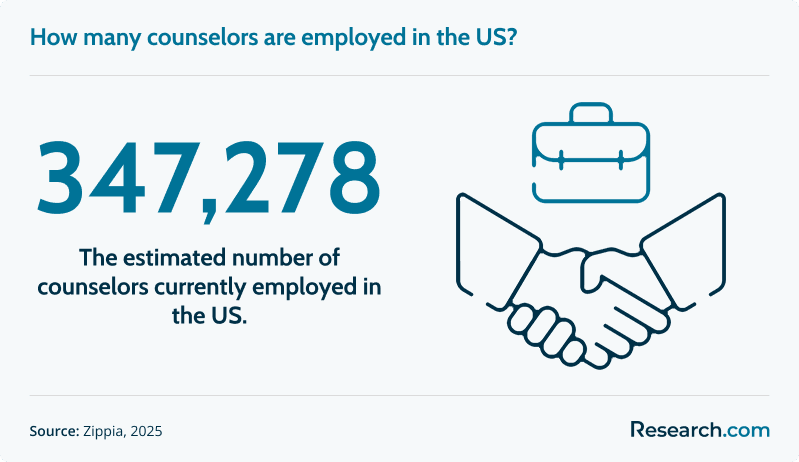
Choosing a counseling career usually starts with one practical question: what do counselors actually do, and what does it take to become one? Counselors help people work through mental health concerns, addiction, grief, school stress, career uncertainty, relationship conflict, and major life transitions. The role can be deeply rewarding, but it also requires the right education, supervised experience, state licensure, ethical judgment, and emotional stamina. According to Zippia, more than 347,278 counselors are employed in the US, reflecting the continued need for mental health, student support, and wellness services. This guide explains what counselors do in 2027, how the main specialties differ, what degrees and licenses are typically required, what salaries and job prospects look like, and how to decide whether this path fits your goals.
Quick answer: What does a counselor do?
A counselor assesses a client’s concerns, provides structured emotional support, helps the client set goals, and uses evidence-based techniques to improve coping skills, behavior, decision-making, and overall well-being. Depending on the setting, counselors may work with individuals, couples, families, students, groups, or communities. Licensed counselors can provide clinical services after completing graduate education, supervised clinical hours, and state-required exams.
Key Things You Should Know About What a Counselor Does
- Counselors support people experiencing mental health symptoms, stress, trauma, addiction, grief, relationship problems, academic challenges, or career uncertainty.
- Most independent clinical counseling roles require a master’s degree, supervised experience, a licensing exam, and continuing education.
- Counseling is not one single job. Mental health counselors, school counselors, substance abuse counselors, career counselors, rehabilitation counselors, and marriage and family therapists often have different training and licensing requirements.
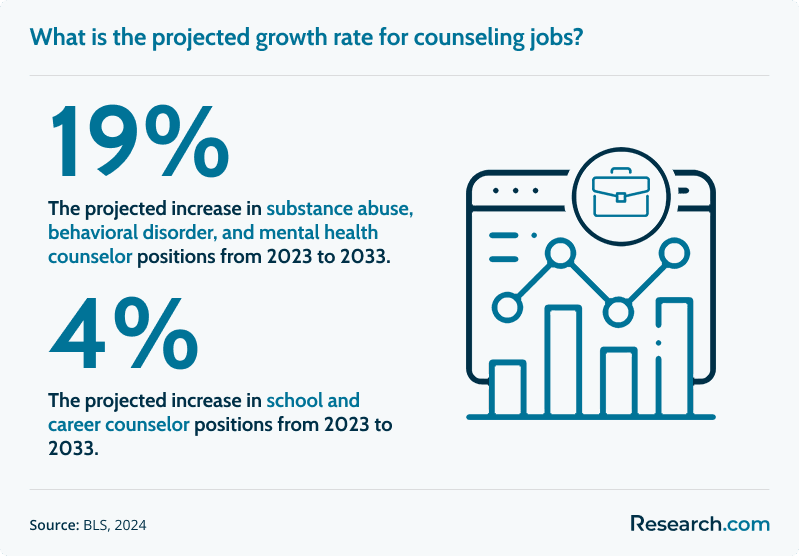
- Demand is especially strong in behavioral health. BLS projects employment for substance abuse, behavioral disorder, and mental health counselors to grow 19% from 2023 to 2033.
- The best counseling path depends on where you want to work, whom you want to serve, whether you want clinical licensure, and how much time and money you can invest in graduate training.
- What are the roles and responsibilities of a counselor?
- What are the most common types of counselors?
- What degree do you need to become a counselor?
- What are the licensing requirements for counselors for 2027?
- What are the highest-paying counseling jobs for 2027?
- What are the job prospects for counselors?
- What are the most effective counseling techniques?
- What ethical guidelines do counselors have to follow?
- How can counselors transition to specialize in marriage and family therapy?
- What is the difference between a counselor and a therapist?
- Is pursuing an online doctorate in psychology beneficial for career advancement?
- How do the education requirements differ between psychologists and counselors?
- How can affordable education enhance your counseling career?
- How can counselors manage work-life balance and prevent burnout?
- What challenges do counseling professionals face in today’s evolving landscape?
- What is the fastest way to become a licensed counselor or therapist?
- What are the pathways for career advancement in counseling?
- How do specialized certifications influence career success in counseling?
- What is the role of affordable specialized training in enhancing counseling careers?
- Are online psychology degrees recognized for advancing counseling careers?
- Can accelerated online programs fast track counseling careers?
- What mistakes should future counselors avoid?
What are the roles and responsibilities of a counselor?
Counselors help clients understand problems, reduce distress, develop healthier coping strategies, and make practical changes. Their exact duties depend on licensure, workplace, population served, and specialty, but the work generally combines assessment, listening, planning, intervention, documentation, and ethical decision-making.
| Responsibility | What it looks like in practice | Why it matters |
| Assess client needs | Review symptoms, history, stressors, safety concerns, strengths, and goals. | Good assessment helps counselors choose appropriate interventions and refer clients when a higher level of care is needed. |
| Create a treatment or support plan | Set measurable goals, identify barriers, and choose strategies that match the client’s situation. | A clear plan keeps counseling focused and helps clients track progress. |
| Provide counseling sessions | Use structured conversations, therapeutic techniques, reflection, skill-building, and goal review. | Sessions give clients a safe, professional space to process challenges and practice change. |
| Document services | Maintain case notes, treatment plans, progress updates, and required reports. | Accurate records support continuity of care, compliance, and ethical practice. |
| Coordinate care | Communicate with schools, physicians, social workers, treatment teams, or family members when authorized. | Clients often need support from more than one professional or system. |
| Follow laws and ethical standards | Protect confidentiality, obtain informed consent, maintain boundaries, and report safety risks when legally required. | Ethical practice protects clients and defines the limits of professional counseling. |
Provide emotional and psychological support
Counselors give clients a structured place to talk through painful experiences, confusing emotions, and recurring patterns. In clinical settings, they may screen for anxiety, depression, trauma symptoms, substance use, or other behavioral health concerns. Many use approaches such as cognitive behavioral therapy to help clients recognize unhelpful thoughts and practice more effective responses.
Help clients handle life decisions and transitions
Counseling is not limited to severe mental illness. Counselors also help people navigate grief, divorce, job loss, burnout, identity questions, academic pressure, parenting stress, and major career choices. The goal is not simply to give advice. Effective counselors help clients clarify priorities, evaluate options, build coping skills, and take realistic next steps.
Support schools, workplaces, and communities
Many counselors work beyond one-on-one sessions. They may lead workshops, respond to crises, teach stress-management strategies, support prevention programs, or collaborate with educators and employers. These activities can make mental health support more accessible and reduce stigma around seeking help.
Know when to refer
A counselor also has to recognize the limits of their role. If a client needs emergency psychiatric care, medication evaluation, psychological testing, inpatient treatment, or specialized services outside the counselor’s training, referral is part of responsible practice.
What are the most common types of counselors?
The counseling field includes several specialties. Before choosing a degree, compare the population you want to serve, the setting you prefer, and whether the role requires clinical licensure.
| Type of counselor | Common clients | Typical settings | Best fit for people who want to... |
| Mental health counselor | Adults, adolescents, couples, or groups dealing with emotional or behavioral health concerns | Clinics, hospitals, private practices, community agencies | Provide clinical counseling for anxiety, depression, trauma, stress, and related concerns |
| Substance abuse counselor | People affected by alcohol, drug, or behavioral addiction | Treatment centers, outpatient programs, correctional settings, community organizations | Support recovery, relapse prevention, and behavior change |
| School counselor | Elementary, middle, and high school students | Public and private schools | Help students with academics, social development, emotional challenges, and college or career planning |
| Career counselor | Students, workers, career changers, and job seekers | Colleges, workforce agencies, private practice, career centers | Guide education choices, job searches, resumes, interviews, and workplace transitions |
| Rehabilitation counselor | People with disabilities or health conditions affecting independent living or employment | Rehabilitation agencies, government programs, healthcare organizations | Help clients build independence, access services, and pursue work or education goals |
| Grief counselor | People coping with death, illness, loss, or major life disruption | Hospices, clinics, faith-based organizations, private practices | Support clients through bereavement and adjustment |
Mental health counselors
Mental health counselors work with clients who experience emotional distress, behavioral patterns, trauma-related symptoms, anxiety, depression, and other concerns. Their work may include assessment, goal setting, individual counseling, group counseling, crisis support, and referrals to other providers when appropriate.
Substance abuse counselors
Substance abuse counselors help clients understand addiction patterns, identify triggers, strengthen recovery plans, and rebuild healthier routines. They often work with physicians, social workers, peer support specialists, treatment teams, and family members when client consent and program rules allow it.
School and career counselors
School counselors support students’ academic, social, emotional, and postsecondary planning needs. Career counselors work with students and adults on career direction, job-search strategy, resumes, interviews, skill gaps, and workplace adjustment. These roles are especially attractive to people who enjoy guidance, planning, and developmental support.
Other specialized counseling roles
Some counselors focus on disability services, grief, military populations, trauma, crisis response, family systems, behavioral analysis, or child development. Specialization can improve fit, but it may also require additional coursework, supervised experience, or certification.
What degree do you need to become a counselor?
The degree you need depends on whether you want a support role, a school-based role, a substance abuse position, or independent clinical licensure. Zippia reports that 59% of counselors hold a bachelor's degree, making it the most common education level among people with the counselor job title. However, many licensed counseling roles require graduate education.
A bachelor’s degree in psychology, counseling, social work, human services, education, or a related field can prepare students for entry-level support roles or graduate study. Some students also explore adjacent human-service programs, including an online bachelor of audiology and speech-language pathology, when they are interested in communication, development, and therapeutic support.
For most licensed professional counseling roles, a master’s degree is the key credential. Zippia reports that 18% of counselors have a master’s degree. Students who want to reduce time to completion sometimes compare flexible options such as the quickest master’s degree online, but speed should not come before accreditation, practicum quality, state licensure alignment, and supervised placement support.
| Education level | What it may qualify you for | Important limitation |
| Bachelor’s degree | Case management, behavioral health technician roles, human services support, some prevention or community roles | Usually not enough for independent clinical counseling licensure |
| Master’s degree | Licensed professional counseling pathways, school counseling pathways, marriage and family therapy pathways, clinical roles after supervision and exams | Must match state requirements and include required clinical experiences |
| Doctoral degree | Advanced research, leadership, teaching, consulting, policy, or psychology pathways depending on degree type | Not always necessary for counseling practice and may not automatically expand scope without proper licensure |
The difference between licensed and non-licensed work is important. A licensed counselor has completed required graduate education, supervised clinical practice, examinations, and state approval. A non-licensed counselor or counseling-related worker may provide support services in agencies or programs, but they generally cannot practice independently as a clinical counselor.
What are the licensing requirements for counselors for 2027?
Counselor licensure is state-specific, so candidates should verify requirements with the licensing board in the state where they plan to practice. In general, the pathway to licensed counseling includes graduate education, supervised clinical experience, a licensing examination, and ongoing professional education.
- Earn a master’s degree in counseling, psychology, or a closely related field that satisfies state coursework rules.
- Complete 2,000 to 4,000 hours of supervised clinical experience under an approved licensed professional.
- Pass a required exam, commonly the National Counselor Examination (NCE) or the National Clinical Mental Health Counseling Examination (NCMHCE).
- Meet state-specific conditions such as background checks, jurisprudence exams, continuing education, or additional supervised practice rules.
Licensure checklist before choosing a program
- Confirm whether the program is designed for your intended license, not just a general counseling-related degree.
- Ask whether the curriculum meets requirements in your state.
- Review practicum and internship placement support before enrolling.
- Check whether online students can complete clinical hours where they live.
- Ask graduates or admissions staff about exam preparation and licensure outcomes, while remembering that individual results are not guaranteed.
What are the highest-paying counseling jobs for 2027?
Counseling pay varies by specialty, employer, region, education level, license, and years of experience. The salaries below come from BLS data cited in the original article and should be treated as benchmarks, not guarantees.
| Role | Median annual wage | Higher-paying settings or notes |
| Substance abuse, behavioral disorder, and mental health counselors | $53,710 in 2023 | Top earners in government agencies and hospitals made over $89,920. |
| Elementary, middle, and high school counselors | $61,710 | Professionals in elementary and secondary schools often earn more than those in some other settings. |
| Career counselors | $61,710 | The highest-paid professionals made over $100,050 in top industries. |
Substance abuse, behavioral disorder, and mental health counselors
These counselors work with clients affected by addiction, behavioral issues, emotional distress, and mental health conditions. They may provide individual counseling, group sessions, recovery planning, relapse-prevention strategies, and coordination with treatment teams. BLS reports a 2023 median annual wage of $53,710 for this group, with top earners in government agencies and hospitals making over $89,920.
Elementary, middle, and high school counselors
School counselors help students manage academic demands, social challenges, emotional development, and postsecondary planning. Their day-to-day work may include individual meetings, classroom lessons, family communication, crisis support, and collaboration with teachers and administrators. BLS reports a median annual salary of $61,710 for school counselors.
Career counselors
Career counselors guide students and adults through career exploration, education planning, job searching, resume development, interview preparation, and workplace transitions. BLS states that career counselors earn a median salary of $61,710, while the highest-paid professionals make over $100,050 in top industries.
Some counseling-adjacent roles focus on specialized populations. For example, child life specialists help children and families cope with healthcare experiences. If that path interests you, Research.com’s guide on how much does a child life specialist make explains earnings factors for that role.
What are the job prospects for counselors?
The strongest growth outlook in the counseling field is in behavioral health. BLS projects employment for substance abuse, behavioral disorder, and mental health counselors to increase 19% from 2023 to 2033, which is much faster than the average for all occupations. Demand is connected to the need for mental health services, addiction treatment, and behavioral health support.
School and career counseling is expected to grow more slowly but remains an important field. BLS projects 4% employment growth over the next decade for school and career counselors. Schools continue to need professionals who can support students’ academic planning, emotional resilience, social development, and career readiness.
If you are comparing helping professions, it may also be useful to look at allied healthcare roles. For example, people who want direct patient interaction in a medical environment sometimes research how to become a medical assistant as an alternative or complementary career path.
Where counselors commonly work
- Community mental health agencies
- Hospitals and outpatient clinics
- Substance use treatment centers
- Public and private schools
- Colleges and universities
- Rehabilitation programs
- Private practices
- Government and nonprofit organizations
- Employee assistance and workplace wellness programs
What are the most effective counseling techniques?
Counselors do not rely on one universal method. They choose techniques based on the client’s goals, diagnosis or presenting concern, culture, readiness for change, risk level, and treatment setting. Evidence-based approaches are especially important because they connect counseling decisions to established clinical practice rather than personal opinion alone.
| Technique | Core idea | Common uses |
| CBT | Thoughts, emotions, and behaviors influence one another. | Anxiety, depression, phobias, stress, coping skills |
| Person-centered therapy | Growth is supported through empathy, acceptance, and a nonjudgmental therapeutic relationship. | Self-exploration, identity concerns, life transitions, personal growth |
| Solution-focused brief therapy | Clients identify strengths and practical steps toward desired outcomes. | Short-term counseling, workplace coaching, crisis-related problem solving |
| Motivational interviewing | Clients explore ambivalence and strengthen their own reasons for change. | Addiction counseling, health behavior change, treatment engagement |
| Mindfulness-based therapy | Clients practice present-moment awareness and emotional regulation. | Stress, anxiety, depression symptoms, resilience building |
CBT
CBT helps clients notice unhelpful thought patterns, test assumptions, and practice new behaviors. It is often used with anxiety, depression, phobias, and stress-related concerns because it gives clients concrete tools they can apply between sessions.
Person-centered therapy
Developed by Carl Rogers, person-centered therapy emphasizes empathy, active listening, genuineness, and unconditional positive regard. The counselor’s role is to create a supportive environment where clients can explore experiences and move toward self-understanding.
Solution-focused brief therapy
Solution-focused brief therapy centers on goals, strengths, and workable next steps rather than prolonged analysis of the problem. It can be useful when clients need a practical, time-limited approach.
Motivational interviewing
Motivational interviewing is often used when a client feels uncertain about change. Rather than pushing advice, the counselor helps the client examine personal values, barriers, and reasons for taking action.
Mindfulness-based therapy
Mindfulness-based strategies may include breathing exercises, grounding skills, meditation, and attention training. These tools can help clients manage distress, increase awareness, and respond less reactively to difficult thoughts or emotions.
What ethical guidelines do counselors have to follow?
Counselors work with sensitive information and vulnerable situations, so ethical practice is central to the profession. Rules vary by license and state, but several principles appear across counseling codes and legal requirements.
- Confidentiality – Counselors must protect client information and explain when disclosure is legally required, such as imminent danger or abuse reporting situations.
- Informed consent – Clients should understand the counseling process, fees, recordkeeping practices, limits of confidentiality, risks, benefits, and alternatives before services begin.
- Non-discrimination – Counselors are expected to provide respectful care regardless of race, gender, religion, disability, sexual orientation, background, or identity.
- Professional boundaries – Counselors must avoid relationships or conflicts that could impair judgment, exploit clients, or compromise care.
- Competence – Counselors should practice within their training and seek supervision, consultation, or referral when a case falls outside their expertise.
- Mandated reporting – When law requires action to protect a client or another person, counselors must follow reporting and safety procedures.
Current trends affecting counseling ethics
- Telehealth requires careful attention to privacy, emergency planning, informed consent, and cross-state practice rules.
- AI tools may assist with administrative work, but counselors must protect client confidentiality and avoid relying on tools that compromise clinical judgment.
- High demand for care can increase caseload pressure, making supervision, documentation, and self-care more important.
- Changing licensure rules mean counselors should regularly check state board updates rather than assuming old requirements still apply.
How can counselors transition to specialize in marriage and family therapy?
Counselors who want to focus on couples, families, and relationship systems may need additional graduate coursework, supervised experience, or a separate marriage and family therapy license depending on state rules. Marriage and family therapy emphasizes family systems, couple dynamics, communication patterns, conflict, parenting issues, and relational treatment planning.
A counselor considering this shift should compare programs that specifically prepare students for family-centered clinical work. For example, a marriage and family therapist degree online may be worth reviewing if you need flexible coursework and want training aligned with family therapy practice. Before enrolling, ask whether the program meets licensing requirements where you plan to work and whether it supports supervised placements with couples and families.
What is the difference between a counselor and a therapist?
The terms counselor and therapist often overlap in everyday language, and in some settings a licensed counselor may provide therapy. The better question is scope: what is the professional trained and licensed to do, and with which clients?
| Category | Counselor | Therapist |
| Typical focus | Specific concerns, adjustment issues, coping skills, academic or career guidance, behavioral health support | Broader psychotherapy, deeper emotional patterns, mental health disorders, relational or long-term treatment |
| Education | Often bachelor’s or master’s level, depending on role and license | Usually graduate-level education for licensed clinical roles |
| Settings | Schools, agencies, rehabilitation centers, colleges, clinics, private practices | Clinics, hospitals, private practices, community agencies, family therapy settings |
| Important note | Licensed professional counselors may provide clinical therapy within their scope. | Therapist is a broad term that can include counselors, clinical social workers, marriage and family therapists, and psychologists. |
Scope of practice
Counselors often help clients address targeted concerns such as stress, grief, career decisions, addiction recovery, academic planning, or adjustment to life changes. In clinical practice, licensed counselors can also treat mental health concerns within the limits of their training and state license.
Therapists may provide longer-term psychotherapy, diagnose and treat mental health conditions when licensed to do so, and use specialized therapeutic models. The title can apply to different professions, including licensed clinical social workers, marriage and family therapists, licensed professional counselors, and psychologists.
Creative helping professions also exist at the intersection of counseling and expressive practice. If you are drawn to therapeutic art-based work, Research.com’s guide to art therapist salary expectations can help you evaluate that specialization.
Education and training
Counselors may hold a bachelor’s degree for some non-clinical support jobs, but licensure usually requires a master’s degree, supervised clinical hours, and an exam. Therapists in licensed clinical roles also complete graduate training, supervised experience, and state licensing requirements specific to their profession.
Clients served
Counselors may work with students, families, job seekers, people in recovery, or clients facing everyday stressors. Therapists more often provide ongoing treatment for clients with diagnosed mental health disorders or complex relational and emotional concerns, although the distinction depends heavily on the professional’s license and setting.
Is pursuing an online doctorate in psychology beneficial for career advancement?
An online doctorate in psychology may be useful for counselors who want to move into research, teaching, leadership, consulting, policy, or advanced specialization. It is not automatically necessary for counseling practice, and it may not replace the licensure pathway required for independent clinical work. The value depends on your career goal.
If you want to continue practicing counseling, compare the cost and time commitment against the likely benefit. If your goal is academic research, program leadership, or psychology-related expertise, an online doctorate in psychology may offer a flexible way to continue studying while working. Always verify accreditation, residency expectations, dissertation or capstone requirements, and whether the degree supports the credential you actually want.
How do the education requirements differ between psychologists and counselors?
Counselors and psychologists both support mental health, but their education and scope are not the same. Counselors usually pursue master’s-level clinical training for licensure. Psychologists typically complete doctoral-level education and may be trained in psychological testing, research, assessment, and clinical intervention.
| Profession | Typical education path | Common scope | Decision point |
| Counselor | Bachelor’s degree followed by a master’s degree in counseling or a specialized counseling field | Counseling, treatment planning, coping skills, mental health support, school or career guidance depending on license | Best fit if you want a direct path into counseling practice without doctoral study |
| Psychologist | Doctoral degree such as a Ph.D. or Psy.D., with internship and postdoctoral supervised hours for clinical licensure | Psychotherapy, assessment, diagnosis, psychological testing, research, teaching, consulting depending on role | Best fit if you want advanced assessment, research, or psychologist licensure |
Counselors
Most aspiring counselors begin with undergraduate study in psychology, social work, counseling, education, or a related field. They then complete a master’s program aligned with their intended license, followed by supervised clinical experience and licensing exams.
Psychologists
Psychologists complete more extensive doctoral training. A Ph.D. or Psy.D. in psychology can take four to seven years beyond a bachelor’s degree, and clinical psychologists also complete internships and postdoctoral supervised hours before licensure.
Psychologists may conduct psychological testing and research and often work in medical, academic, clinical, or organizational settings. For example, sports psychology involves advanced training in performance, behavior, and mental skills, which affects sports psychologists salary patterns across athletics, coaching, and performance-related industries.
How can affordable education enhance your counseling career?
Affordable education can make a counseling career more realistic by reducing debt pressure and giving students more flexibility in choosing supervised placements, entry-level roles, or lower-paying public service settings. The least expensive program is not always the best choice, but cost should be part of a careful return-on-investment review.
Students planning a counseling career may compare options such as a cheap online master's in counseling, especially if they need flexible scheduling. Before choosing, confirm accreditation, licensure alignment, faculty experience, clinical placement support, student services, and total cost beyond tuition.
Cost factors to compare before enrolling
- Tuition and mandatory fees
- Books, technology, background checks, and liability insurance
- Travel or residency requirements
- Practicum and internship placement costs
- Transfer credit and prior learning policies
- Financial aid eligibility
- Licensing exam and application fees after graduation
How can counselors manage work-life balance and prevent burnout?
Counseling can be emotionally demanding. Counselors may hear traumatic stories, manage high caseloads, respond to crises, and balance documentation with direct client care. Burnout prevention is not a luxury; it is part of ethical practice because exhausted counselors are less able to provide attentive, competent care.
- Set realistic boundaries around availability, caseload, and communication.
- Use supervision or consultation to process difficult cases.
- Schedule documentation time instead of letting paperwork accumulate.
- Build peer support with trusted colleagues.
- Use vacation time, breaks, and recovery routines intentionally.
- Seek personal therapy or professional support when secondary trauma or burnout symptoms appear.
- Choose continuing education that improves both clinical skill and workplace resilience.
Graduate and continuing education can also support sustainable practice when it is flexible and relevant. For example, CACREP accredited online counseling programs may be worth comparing if you want a program with recognized counseling accreditation and online accessibility.
What challenges do counseling professionals face in today’s evolving landscape?
Counselors are working in a field shaped by rising demand, technology, changing regulations, workforce shortages in some settings, and growing public awareness of mental health. These changes create opportunity, but they also make the profession more complex.
| Challenge | How it affects counselors | Practical response |
| High caseloads | Less time for planning, documentation, and recovery | Use supervision, prioritize risk, document efficiently, and advocate for manageable workloads |
| Telehealth and digital tools | More access for clients but added privacy, emergency, and licensing considerations | Follow state rules, use secure platforms, and update informed consent |
| Changing regulations | Licensure, supervision, and interstate practice rules may shift | Monitor state board updates and professional association guidance |
| Education cost | Graduate training can create financial strain before earnings increase | Compare total program cost, scholarships, employer benefits, and affordable accredited options |
| Specialization pressure | Employers and clients may look for trauma, addiction, family, or behavioral expertise | Add targeted training only when it aligns with your license, population, and career goals |
Some students reduce education-related financial pressure by starting with lower-cost online psychology or counseling-related programs. If you are exploring undergraduate options, a cheapest online psychology degree resource can help you compare affordability while planning for future graduate study.
What is the fastest way to become a licensed counselor or therapist?
The fastest legitimate route is not a shortcut around licensure. It is a carefully planned path through the right accredited program, required clinical placements, supervised hours, and exams. Because state rules differ, the fastest option in one state may not work in another.
- Choose the exact license you want before applying to graduate school.
- Confirm that the program’s curriculum meets your state’s requirements.
- Select a program with strong practicum and internship placement support.
- Plan supervised hours early and understand post-graduation requirements.
- Schedule licensing exams as soon as you are eligible.
- Keep organized documentation of coursework, supervision, and clinical hours.
Accelerated or online options can help some students move efficiently, but only if they satisfy state requirements. For a more focused discussion, review Research.com’s guide to the fastest way to become a therapist.
What are the pathways for career advancement in counseling?
Career growth in counseling can mean higher responsibility, deeper specialization, private practice, supervision, teaching, program leadership, or policy work. The right path depends on whether you want more clinical complexity, more independence, more leadership, or a broader population focus.
| Advancement path | What it involves | Who it fits best |
| Clinical specialization | Training in trauma, addiction, grief, family systems, crisis counseling, or behavioral intervention | Counselors who want deeper expertise with a specific population or issue |
| Supervision | Guiding associate-level counselors and reviewing clinical work | Experienced counselors who enjoy mentoring and quality improvement |
| Private practice | Independent or group practice management, marketing, billing, and client care | Licensed counselors who want autonomy and business responsibility |
| Program leadership | Clinical director, agency manager, coordinator, or administrator roles | Counselors interested in systems, teams, budgets, and service delivery |
| Teaching or consulting | Training students, agencies, schools, or organizations | Professionals who enjoy education, policy, and professional development |
If you are still comparing specialties, Research.com’s overview of types of counselors can help you map career options to work settings and client populations.
How do specialized certifications influence career success in counseling?
Specialized certifications can strengthen a counselor’s profile when they align with actual job duties, employer needs, and client populations. A credential should signal real competence, not simply add letters after a name. The most useful certifications usually include recognized training standards, supervised practice or experience expectations, ethical requirements, and continuing education.
For example, counselors interested in addiction treatment may consider whether a substance abuse counselor certification aligns with their state, employer, and long-term goals. Certification can support credibility in a specialty area, but it does not replace required state licensure for clinical practice.
Questions to ask before pursuing a certification
- Is this certification recognized by employers in my state or setting?
- Does it expand my legal scope of practice, or only demonstrate additional training?
- What are the education, supervision, exam, and renewal requirements?
- Will the cost likely improve my job options or clinical effectiveness?
- Does it fit the clients I actually want to serve?
What is the role of affordable specialized training in enhancing counseling careers?
Affordable specialized training can help counselors build skills in high-need areas without taking on unnecessary debt. The key is to choose training that is relevant, reputable, and appropriate for your scope of practice. Low cost alone is not enough; the training should be clinically useful and professionally recognized.
Some counselors expand into behavioral intervention, educational support, or applied behavior analysis-related work. Programs such as affordable BCBA programs online may be relevant for professionals who want to understand behavioral analysis and work with clinical or educational populations. As always, verify credential requirements before assuming a program leads to a specific role.
Are online psychology degrees recognized for advancing counseling careers?
Online psychology degrees can be recognized when they come from properly accredited institutions and meet the academic expectations of employers, graduate schools, or licensing boards. The delivery format is less important than accreditation, curriculum quality, faculty qualifications, clinical requirements, and state authorization.
Students should be cautious with any online program that makes vague promises about licensure or career outcomes. If you are unsure how employers and graduate programs view online psychology credentials, Research.com’s discussion of whether are online psychology degrees recognized can help you evaluate legitimacy and reputation.
How to evaluate an online psychology or counseling program
- Check institutional accreditation.
- Confirm programmatic accreditation when it matters for your license or employer.
- Ask whether the program is authorized to enroll students in your state.
- Review practicum, internship, or fieldwork expectations.
- Confirm whether credits transfer to graduate programs.
- Compare graduation requirements, not just advertised program length.
- Ask how the school supports online learners academically and professionally.
Can Accelerated Online Programs Fast Track Counseling Careers?
Accelerated online programs can shorten the academic portion of a career path for some students, especially those with transfer credits, year-round availability, or prior coursework. They cannot eliminate supervised clinical hours, licensing exams, or state approval. For counseling careers, acceleration is useful only when the program still meets all academic and clinical requirements.
Students interested in psychology-related preparation may compare options such as a fast track psychology degree online. Before enrolling, ask whether the accelerated pace is realistic alongside work, family responsibilities, internships, and exam preparation.
What mistakes should future counselors avoid?
Many counseling career problems start before the first job application. The most common mistakes involve choosing a program too quickly, misunderstanding licensure, or focusing on convenience while overlooking clinical requirements.
| Mistake | Why it can hurt you | Better approach |
| Choosing a program without checking licensure alignment | You may graduate without the coursework or fieldwork your state requires. | Contact the state licensing board and ask the school for a written licensure alignment statement. |
| Focusing only on tuition | Low tuition may hide fees, weak placement support, or poor fit. | Compare total cost, clinical support, accreditation, outcomes, and flexibility. |
| Assuming online programs automatically work in every state | State authorization and licensure rules vary. | Verify your state’s rules before enrolling. |
| Ignoring supervised experience requirements | Licensure can be delayed if you cannot secure approved supervision. | Ask how the program helps students find practicum and internship sites. |
| Expecting salary outcomes to be guaranteed | Pay depends on location, license, employer, specialty, and experience. | Use BLS data as a benchmark and research local job postings. |
| Pursuing certifications without a plan | Extra credentials can be expensive and may not improve your career options. | Choose certifications tied to your client population, employer expectations, and legal scope. |
References
- BLS. (2024, April 3). Counselors, all other. BLS.
- BLS. (2024, August 29). Marriage and family therapists. BLS.
- BLS. (2024, August 29). School and career counselors and advisors. BLS.
- BLS. (2024, August 29). Substance abuse, behavioral disorder, and mental health counselors. BLS.
- National Institute of Mental Health. (2024, September). Mental illness. NIMH.
- Zippia. (2025, January 8). Counselor Demographics and Statistics [2025]: Number of counselors in the US. Zippia.
- Zippia. (2025, January 8). Licensed Professional Counselor Demographics and Statistics [2025]: Number of Licensed professional counselors in the US. Zippia.
Key Insights
- Counselors help clients manage emotional, behavioral, academic, career, addiction, grief, and relationship challenges through assessment, support, planning, and evidence-based strategies.
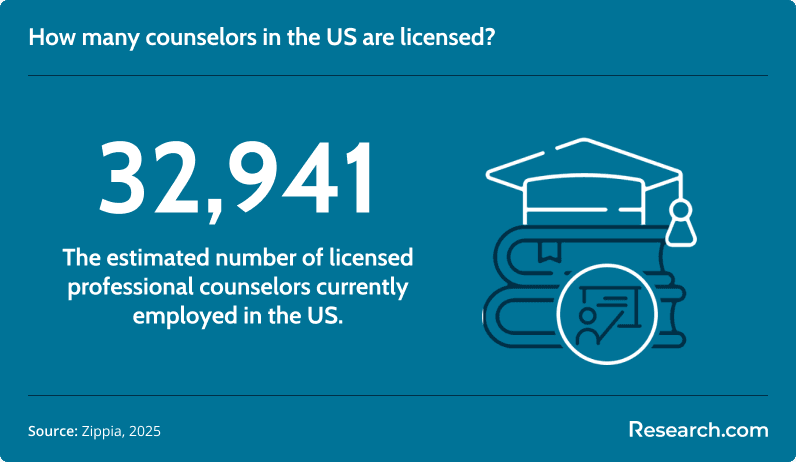
- There are an estimated 347,278 counselors employed in the US, and 32,941 counselors in the US are licensed professional counselors.
- A bachelor’s degree may qualify you for some support roles, but most licensed counseling positions require a master’s degree, supervised clinical hours, and a licensing exam.
- Zippia reports that 59% of counselors hold a bachelor's degree and 18% hold a master's degree; the right degree depends on your intended specialty and state licensing requirements.
- BLS reports a 2023 median annual wage of $53,710 for substance abuse, behavioral disorder, and mental health counselors, while school and career counselors had a median salary of $61,710.
- The strongest projected growth is in behavioral health: BLS expects substance abuse, behavioral disorder, and mental health counselor employment to grow 19% from 2023 to 2033.
- Before enrolling in any counseling program, verify accreditation, state licensure alignment, clinical placement support, total cost, and whether the program fits your preferred counseling specialty.
Other Things You Should Know About What a Counselor Does
In 2027, counselors must follow ethical guidelines set by bodies like the American Counseling Association, focusing on confidentiality, client welfare, and informed consent. These guidelines also emphasize professional boundaries and cultural competence to ensure ethical and effective practice.
To become a counselor in 2027, candidates typically need a master's degree in counseling or a related field, along with state licensure. Licensure requirements generally include completing a supervised clinical experience and passing a national certification exam like the NCE or NCMHCE.
In 2027, counselors are increasingly addressing mental health using holistic approaches, integrating technology like teletherapy to reach broader populations. They also focus on preventive care, helping clients navigate challenges before they escalate into larger issues. This evolution reflects a shift towards accessible and proactive mental health care.
School counselors usually need a state-issued school counseling license or certificate, plus a master’s degree in school counseling or a closely related field. Many states also require a supervised practicum or internship, background check, and passing scores on tests such as Praxis School Counselor exams.