2027 NYU Online SLP Master's Review: Tuition, Admissions, and Clinical Training

Co-Founder and Chief Data Scientist

Reviewed by Rhea Paul, PhD
SLP Education & Research Expert
NYU's online master's in speech-language pathology can be appealing for aspiring clinicians who want a New York University education without relocating full time, but the decision depends on far more than brand recognition. Prospective students need to confirm total charges, prerequisite readiness, required travel, clinical-placement expectations, and state licensure compatibility. This review explains how the program works, what to verify before applying, and when a different CAA-accredited online option may be a better fit.
Key Things You Should Know
- NYU's online SLP pathway is designed to lead to a master's degree in communicative sciences and disorders, but it includes supervised clinical education and may require in-person experiences; it is not a fully self-paced degree.
- Applicants should budget for more than tuition: a 48-credit graduate curriculum, university fees, clinical requirements, travel, technology, background checks, and possible prerequisite coursework can materially change the total investment.
- CAA accreditation supports the educational route toward ASHA certification and licensure, but each student must independently confirm that NYU accepts residents of their state and that the program meets their state board's current requirements.
How is NYU's online SLP master's program structured and delivered for distance students today?
NYU Steinhardt's online speech-language pathology curriculum is intended for students pursuing professional preparation as speech-language pathologists. It combines online academic coursework with hands-on clinical education, because professional SLP preparation cannot be completed through recorded lectures alone. Students should expect a cohort-based sequence rather than unlimited scheduling flexibility.
The program has been presented as a 48-credit master's curriculum that can be completed in about six terms for students who follow the prescribed full-time sequence. Actual completion time can be longer for students who need prerequisite courses, take a reduced load when permitted, repeat a requirement, or face clinical-placement timing constraints.
The following distinctions are especially important for a working adult evaluating the online format.
| Program element | What distance students should expect | Why it matters |
| Academic instruction | Online course delivery with structured deadlines and faculty-led learning activities | Online does not necessarily mean asynchronous; students should confirm live-session times before enrolling. |
| Curriculum sequence | Professional coursework generally follows a planned progression | Course order can limit the ability to pause, accelerate, or select only preferred classes. |
| Clinical education | Supervised practicum experiences in approved settings | Clinical hours, site availability, travel, and daytime scheduling can be the least flexible part of the degree. |
| In-person requirements | Students should verify current immersion, orientation, skills-training, and campus-visit requirements directly with NYU | Required travel affects both budget and feasibility for out-of-state students. |
For students comparing schedules, NYU may suit someone who can protect regular daytime and evening study time and can accommodate clinical training. It may be less suitable for a person needing a wholly asynchronous degree, an open-ended part-time pace, or a guarantee that all clinical experiences will occur near home.
Before accepting an offer, ask for the current term-by-term plan, the expected weekly live-session schedule, all in-person dates, and the policy for taking leave. Applicants seeking a shorter route can also compare a speech language pathology accelerated program, while checking that faster pacing does not conflict with employment or clinical obligations.
What are NYU online SLP master's tuition, mandatory fees, and total program cost estimates?
NYU is a private university, so tuition is generally charged at the applicable graduate per-credit rate rather than a lower in-state rate. The most responsible way to estimate cost is to multiply the published rate for the student's entry year by the required credits, then add charges that tuition alone does not capture. NYU can revise rates annually, so applicants should obtain a written current-cost estimate before submitting an enrollment deposit.
For a 48-credit curriculum, the core calculation is straightforward: published graduate per-credit tuition × 48 credits. It is not safe to treat that result as a final bill because fees, course materials, travel, and clinical compliance expenses vary by term and student.
This planning framework separates charges that are often confused in online program comparisons.
| Cost category | How to estimate it | Planning caution |
| Tuition | Current NYU graduate per-credit rate multiplied by required degree credits | Confirm whether the online program has a distinct rate and whether the rate is locked for a cohort. |
| Mandatory university fees | Review the term-by-term bursar schedule | Fees may apply even when instruction is online and can change annually. |
| Clinical compliance | Budget for background checks, immunizations, drug screening, liability-related requirements, and site-specific onboarding when required | Requirements differ by placement site and may recur. |
| Travel and lodging | Estimate transportation and accommodation for any required campus or immersion experiences | These costs are not interchangeable with tuition and can be substantial for nonlocal students. |
| Books, software, and equipment | Review course supply lists and technology requirements | Clinical materials and a reliable computer/internet connection should be included in the budget. |
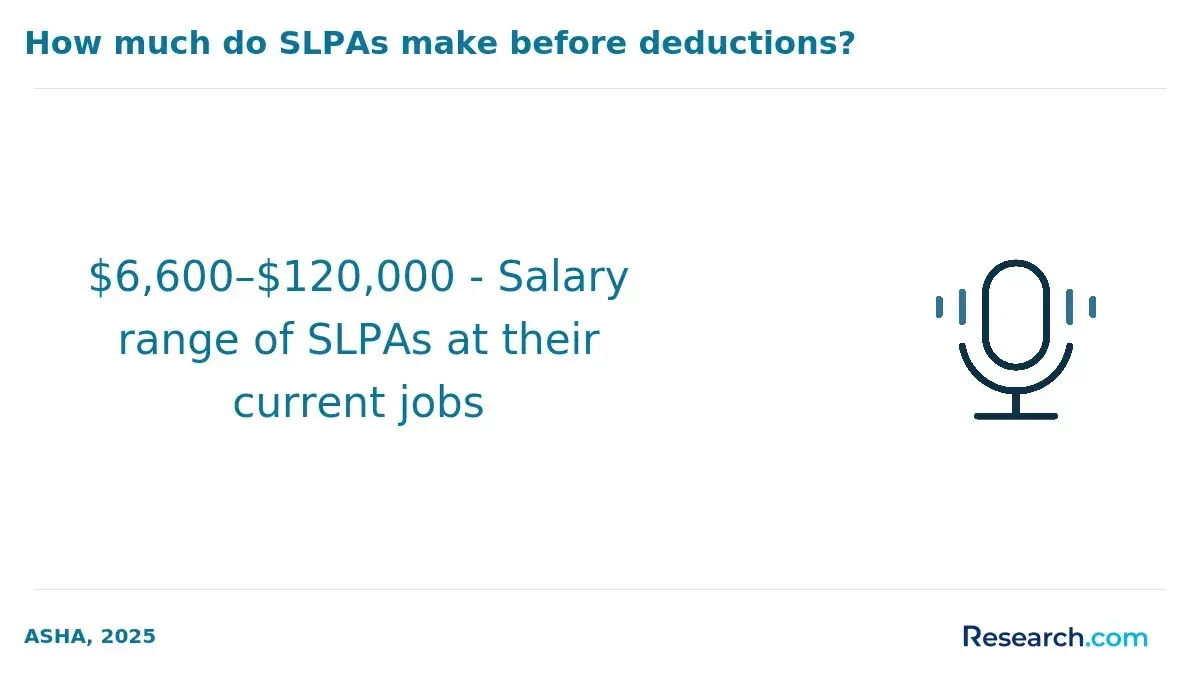
Financial aid can reduce out-of-pocket cost but does not reduce the published price itself. Eligible students commonly explore federal Direct Unsubsidized Loans, Graduate PLUS Loans, employer tuition assistance, outside scholarships, and personal savings. Borrowers should compare the expected borrowing amount with a conservative earnings plan rather than assuming immediate high pay after graduation.
The U.S. Bureau of Labor Statistics reports a May 2025 median annual wage of $97,870 for speech-language pathologists. That national figure is useful for broad ROI planning, but it is not a starting-salary guarantee and varies by employer, setting, location, experience, and work schedule. For role and setting context, review speech and language pathologist salary information alongside a personal debt-to-income estimate.
A common mistake is comparing NYU's per-credit tuition with another school's advertised total tuition without checking credit count, required fees, and travel. Request a personalized estimate from NYU, identify whether tuition may rise between terms, and compare the same categories across every program.
How competitive are admissions to NYU's online SLP master's, and what are the key requirements?
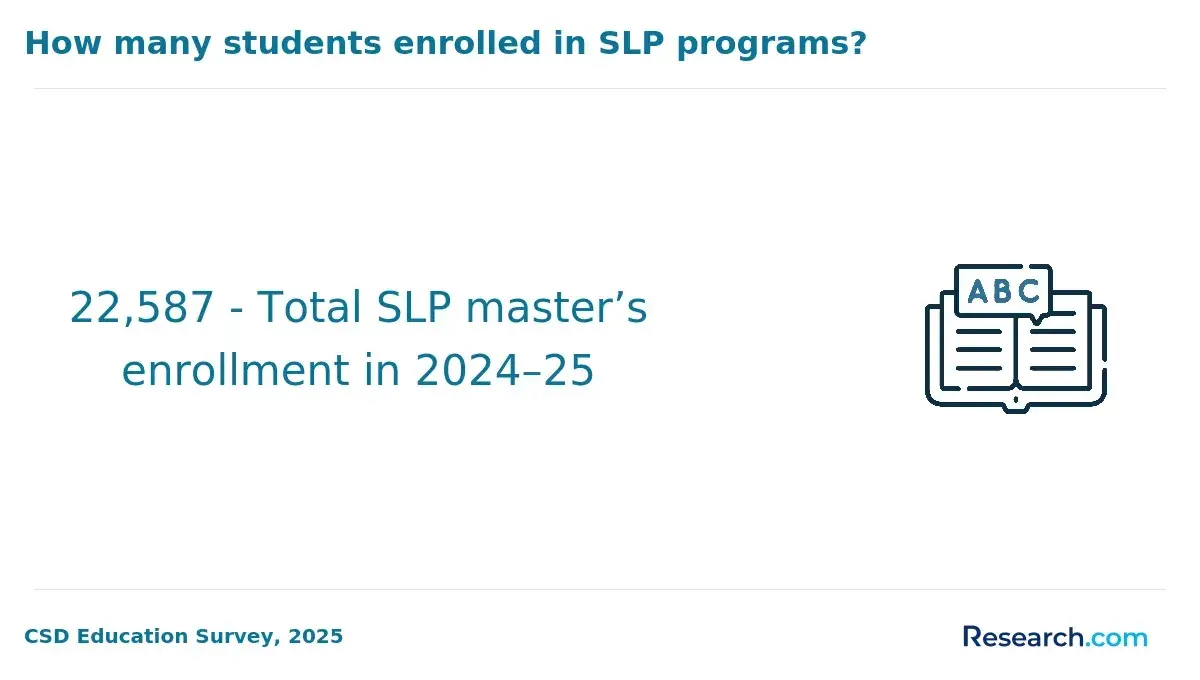
Admission to an SLP master's program is generally competitive because clinical cohorts are limited and each student needs access to supervised training. NYU does not make a universal acceptance-rate figure the most useful decision metric for applicants; the more practical question is whether an applicant has the academic foundation, observation exposure, communication skills, and timing needed for a clinical graduate curriculum.
Applicants should verify the current requirements for their intended start term. A typical NYU graduate application review may include an undergraduate degree, academic transcripts, a statement of purpose, résumé, recommendations, and evidence of required foundational coursework. NYU's specific application platform, deadlines, test policy, and document requirements can change, so applicants should rely on its current admissions instructions rather than older forum discussions.
The table highlights requirements that often determine whether an applicant is ready to apply now or should complete preparation first.
| Admissions area | What to confirm with NYU | Decision implication |
| Undergraduate degree | Whether a degree outside communication sciences and disorders is acceptable | Career changers may be eligible, but they often need additional foundational coursework. |
| Prerequisite courses | Required CSD content and ASHA foundational areas, including biological science, physical science, statistics, and social/behavioral science where applicable | Missing prerequisites can add time and cost before graduate enrollment. |
| Academic record | Current minimum, preferred, or holistic GPA expectations | A stronger record in relevant science and CSD courses can matter as much as overall GPA. |
| Recommendations and essay | Number, preferred recommenders, and prompt requirements | Use these materials to demonstrate readiness for clinical graduate study, not merely enthusiasm for the field. |
| Observation and experience | Whether observation hours, shadowing, or related experience are required or recommended | Experience can help applicants make an informed career decision and write a more specific statement. |
Applicants from non-CSD majors should ask for a transcript evaluation before assuming that one introductory class is enough. They should also ask whether prerequisites must be completed before application, before matriculation, or by a stated deadline. This matters because post-baccalaureate leveling work is often the hidden extra year in an "online master's" timeline.
Do not choose a school solely because it appears easier to enter. Instead, compare prerequisite policies, cohort capacity, state eligibility, clinical support, and your ability to handle the course pace. Readers exploring a wider range of admissions profiles can review speech language pathology programs while confirming that every option is CAA-accredited and licensure-appropriate.
What ASHA CAA accreditation and state authorization details govern NYU's online SLP master's?
Accreditation is the first nonnegotiable check for an aspiring clinical SLP. NYU's professional master's program in communicative sciences and disorders is accredited by the Council on Academic Accreditation in Audiology and Speech-Language Pathology of the American Speech-Language-Hearing Association (CAA). CAA accreditation indicates that the program has met standards for graduate professional education; it does not itself grant a graduate a license.
Students should distinguish three related but separate concepts: institutional or program accreditation, authorization for a university to provide distance education to residents of a state, and professional licensure eligibility. A positive answer to one does not automatically answer the others.
| Requirement | What it means | What the applicant should do |
| CAA accreditation | The graduate SLP program meets CAA educational standards | Confirm the program's current listing and status before enrolling. |
| State authorization | NYU may need authorization to deliver distance education in the student's state | Check NYU's state authorization and professional-licensure disclosures for the applicant's residence. |
| State SLP licensure | A state board determines eligibility to practice in that jurisdiction | Review the state board's education, clinical fellowship, examination, and other requirements. |
| ASHA CCC-SLP | A voluntary professional certification with education, Praxis, clinical fellowship, and other requirements | Use ASHA requirements as a planning framework, but complete each required step after graduation. |
State rules can change, and some states impose requirements beyond the graduate curriculum, such as jurisprudence modules, fingerprinting, school-credential rules, or particular documentation. Applicants who plan to move should check both their current state and the state where they expect to work after graduation.
A major red flag is relying on a general statement that a program "prepares students for licensure" without reviewing the disclosure for the specific state. Ask NYU whether its curriculum is designed to meet educational requirements in your state, whether enrollment is restricted there, and whether it has identified any additional state-specific requirements.
How does NYU arrange clinical placements and supervision for online SLP students across different states?
Clinical placement is usually the most consequential part of an online SLP degree decision. Students must complete supervised clinical education in real service settings, and site schedules often occur during normal business hours. A university may coordinate placements, work with student suggestions, or use a shared approach, but a placement cannot be assumed until an eligible site and supervisor are approved.
NYU students should obtain the current written clinical-education policy. Important details include who contacts potential sites, whether students may suggest sites, the geographic areas NYU can support, whether travel is possible, the timing of each practicum, and what happens if a local site cannot be secured.
The practical division of responsibilities commonly looks like this, although NYU's published policy controls.
| Clinical issue | What must be verified | Why it affects enrollment |
| Placement sourcing | Whether NYU arranges sites, accepts student leads, or requires student participation in outreach | Students in rural or highly competitive markets may need more lead time and flexibility. |
| Supervisor qualifications | How NYU verifies supervisor credentials and training | Only approved supervision and documented hours can count toward program requirements. |
| Site availability | Whether placements can be guaranteed in the student's city or state | No applicant should presume local placement availability without written confirmation. |
| Schedule and travel | Expected days, hours, commute, and possibility of out-of-area placement | Clinical work can conflict with full-time employment and caregiving responsibilities. |
| Compliance requirements | Health, background-check, privacy, vaccination, and onboarding obligations | Missing a site deadline can delay a placement or course progression. |
ASHA's certification standards require a minimum of 400 supervised clinical practicum hours, including at least 375 direct client/patient contact hours. The graduate program and its clinical sequence are designed to help students document qualifying experiences, but students should retain their own records and understand which hours are being tracked.
Before enrolling, ask NYU four direct questions: Can you place students in my state? Is a placement near my home guaranteed? What are the usual clinical hours? What is the contingency plan if a site withdraws? A school that gives clear, written answers is generally easier to evaluate than one that only offers broad assurances.
What learning outcomes, Praxis pass rates, and graduation outcomes are reported for NYU online SLP students?
The appropriate outcomes to review are program completion, Praxis examination performance, employment, and the time period behind each figure. CAA-accredited programs publish required outcome information, but figures can represent a combined program population, a defined reporting window, or a small cohort. Readers should not assume that an outcome rate reported for one delivery pathway necessarily describes every online cohort unless NYU explicitly says so.
NYU's learning outcomes center on evidence-based assessment and intervention, professional communication, ethical practice, cultural and linguistic responsiveness, and clinical reasoning across communication and swallowing disorders. Those outcomes matter because employers and licensing systems evaluate more than academic knowledge; new clinicians must apply it safely under supervision.
Use this outcome-review checklist when examining NYU's current disclosures and comparing schools.
| Outcome measure | How to interpret it | Question to ask |
| Program completion rate | Shows the share of a defined cohort completing the degree within the reporting period | What is the reporting cohort, and does it include online students specifically? |
| Praxis pass rate | Indicates performance on the national SLP examination among test takers in the reported period | How many graduates took the examination, and what score standard applied? |
| Employment rate | Usually reflects graduates seeking employment after program completion | What counts as employment, and what is the survey response rate? |
| Time to completion | Shows whether students finish on the advertised sequence | Do prerequisite needs or placement delays commonly extend the timeline? |
Praxis results and employment statistics are useful quality signals, not guarantees of an individual result. They can be influenced by cohort size, who reports outcomes, geography, and the timing of a survey. A prospective student should request the most recent CAA outcomes disclosure, ask whether it separates online and campus data, and compare the same reporting period across programs.
The employment context remains favorable but should not replace school-specific due diligence. The Bureau of Labor Statistics projects 17% growth in SLP employment from 2025 to 2035, with about 12,500 openings annually on average. That demand supports the value of strong clinical preparation, yet it does not remove state licensing requirements or guarantee employment in a preferred specialty or location.
How does NYU's online SLP master's compare with other CAA-accredited online SLP programs?
NYU is best compared with other CAA-accredited programs that are authorized for the applicant's state and can provide a realistic clinical-training path. Prestige alone is not a sufficient comparison point: an affordable public option with clear placement support may be a stronger choice for one student, while NYU's academic environment and curriculum structure may appeal more to another.
The comparison below identifies the trade-offs to investigate rather than assigning a universal winner.
| Comparison factor | NYU online SLP consideration | Alternative-program consideration |
| Accreditation | Verify current CAA status for the professional degree | Include only CAA-accredited programs for a clinical licensure path. |
| Price | Private-university graduate tuition may produce a higher total cost | Compare total tuition, fees, travel, and prerequisite costs, not only per-credit price. |
| Clinical placements | Confirm support and availability in the student's state | Some programs may have stronger established networks in particular regions. |
| Schedule | Structured cohort pacing may support progression but can reduce flexibility | Other programs may offer different synchronous, part-time, or start-date options. |
| Travel | Confirm current in-person or immersion expectations | Compare required visits, their timing, and whether travel costs are manageable. |
| Career-change entry | Determine prerequisite gaps and their effect on admission timing | Some programs package leveling coursework or use different prerequisite models. |
NYU may fit a student who values a structured professional curriculum, can finance private-university costs, and has confirmed state eligibility and clinical feasibility. Another program may fit better for an applicant prioritizing lower total cost, a specific part-time schedule, fewer travel requirements, or a clinical network concentrated in their home region.
Start with a shortlist of best online SLP programs, then eliminate any option that cannot enroll students in your state or cannot clearly explain clinical placement. This sequence prevents applicants from spending time comparing schools that are not viable licensure pathways.
What technology platforms, faculty access, and student support services define the online NYU SLP experience?
An online clinical degree requires dependable technology and active student support. Students should expect a learning-management system for course materials, assignments, discussions, grades, and announcements, plus videoconferencing tools for live sessions, advising, collaborative work, and some clinical-learning activities. NYU can update platforms, so admitted students should rely on current onboarding instructions for exact software and equipment requirements.
The quality question is not simply whether classes use video. It is whether students can reach faculty, receive timely feedback, access library and disability services, get technology help, and obtain clear clinical coordination support when problems arise.
Before committing, confirm the following service details because they shape the day-to-day online experience.
- Ask how often courses meet live, whether attendance is required, and whether sessions are scheduled in Eastern Time.
- Confirm expected response times for faculty, academic advising, clinical education staff, financial aid, and technical support.
- Verify computer, webcam, microphone, internet, browser, and privacy requirements before the first term.
- Ask how disability accommodations, mental health support, library access, tutoring, and career services are delivered to distance students.
- Find out how students receive help if a clinical site, supervisor, course schedule, or compliance document creates a progression problem.
Students living outside the Eastern Time Zone should calculate the impact of synchronous meetings and clinical communication on work schedules. A practical red flag is treating faculty access as equivalent to a general university help desk; clinical questions, placement issues, and academic concerns may require different offices and different response timelines.
How does NYU's online SLP master's prepare graduates for state licensure and ASHA certification?
NYU's CAA-accredited graduate education is one part of the pathway to professional practice. In most states, graduates must also pass the Praxis examination, complete a supervised post-graduate clinical fellowship or comparable requirement, apply to the state licensing board, and satisfy administrative requirements. ASHA's Certificate of Clinical Competence in Speech-Language Pathology, commonly called the CCC-SLP, has its own requirements and is widely requested or preferred by employers.
The usual sequence after graduation is outlined below. Requirements differ by state, so the relevant licensing board remains the final authority.
- Complete the CAA-accredited graduate degree and required supervised clinical practicum documentation.
- Meet the applicable Praxis examination requirement and retain official score documentation.
- Apply for any temporary, provisional, or initial state credential needed to begin post-graduate supervised practice.
- Complete the clinical fellowship under an eligible mentor while meeting state and ASHA documentation rules.
- Apply for full state licensure and, if desired or required by an employer, ASHA CCC-SLP certification.
Graduates interested in school-based work should separately investigate educator or school-service credentials. A state professional SLP license does not always automatically authorize employment in public schools, and school credential rules may involve an education department rather than the health-professions licensing board.
Do not wait until graduation to investigate this pathway. During the first term, identify the state where you expect to complete the clinical fellowship, learn its provisional-license rules, and ask NYU how it provides transcripts, verification forms, and clinical-hour documentation. This is particularly important for students planning to relocate after graduation.
What consumer-protection, refund, and complaint options apply to NYU online SLP master's enrollees?
Online students should read NYU's current tuition-refund schedule, registration rules, withdrawal policies, financial-aid consequences, and student conduct procedures before enrolling. A withdrawal may change tuition liability based on the date of withdrawal and can affect federal aid eligibility or loan repayment obligations. The applicable policy is the one in effect for the student's enrolled term, not an old web page or an informal verbal statement.
If a problem arises, students should use NYU's internal process first and keep written records. The appropriate office depends on whether the issue concerns grades, clinical education, billing, discrimination, accessibility, academic integrity, or professional conduct.
A sensible escalation path is as follows.
- Review the relevant course, clinical, bursar, or university policy and document dates, communications, and requested resolution.
- Contact the instructor, clinical educator, advisor, or responsible administrative office identified by that policy.
- Use NYU's formal academic grievance, student complaint, accessibility, or billing-review process when informal resolution does not work.
- For unresolved distance-education concerns, consult the institution's state authorization complaint information and the appropriate agency in the student's state, where applicable.
Before paying a deposit, request written answers about the refund deadline, what happens if a clinical placement is delayed, whether a leave of absence is available, and whether a student can reenter the cohort after withdrawal. These questions are especially important in a sequential clinical program, where a missed practicum may affect later courses.
Be cautious of any assumption that federal financial aid creates an automatic right to a refund or that an online student has no complaint avenue outside the university. Consumer protections and procedures exist, but the correct route depends on the issue, the governing policy, and the student's state of residence.
Other Things You Should Know About Speech Language Pathology
Possibly. Many applicants enter SLP graduate study from other majors, but they must satisfy NYU's required foundational and communication-sciences prerequisites. Ask for a transcript review early, because missing coursework can add significant time and cost.
Some students work, but full-time employment can be difficult to combine with a sequenced graduate load and daytime clinical placements. Confirm the live-class schedule, practicum hours, travel expectations, and whether the program offers a pace that fits your work obligations.
No. CAA accreditation supports the educational requirement, but state boards typically require an application, examination results, a clinical fellowship or supervised post-graduate experience, and other state-specific steps.
Ask whether NYU can enroll students in your state, how clinical placements are arranged there, the current full-program tuition and fee estimate, all in-person requirements, expected completion timeline, and the consequences of a delayed placement or withdrawal.
References
- Online MS, Communicative Sciences and Disorders https://steinhardt.nyu.edu/degree/online-ms-communicative-sciences-and-disorders
- Application Requirements - Speech@NYU https://speech.steinhardt.nyu.edu/admissions/application-requirements/
- Best Online Speech & Language Pathology Master's... https://www.onlineu.com/most-popular/masters-speech-pathology
- SLP Program Comparison Tool | Compare Tuition & ROI 2026 https://www.speechpathologygraduateprograms.org/speech-pathology-graduate-programs-comparison-tool/
- Is anyone starting NYU SLP masters online program in the... https://www.facebook.com/groups/123939594310021/posts/26594016810208939/
- NYU-Steinhardt Online SLP program.: r/slpGradSchool https://www.reddit.com/r/slpGradSchool/comments/srnntt/nyusteinhardt_online_slp_program/