2027 Best Online Speech Pathology Master's Programs for Residents of Dallas, TX

Co-Founder and Chief Data Scientist

Reviewed by Rhea Paul, PhD
SLP Education & Research Expert
Dallas residents can earn a speech-language pathology master's degree online, but "online" does not mean fully remote or automatically Texas-licensure eligible. The right choice depends on CAA accreditation, Texas enrollment authorization, local clinical-placement support, required campus travel, and total cost. This guide compares practical options and explains the checks that matter before you apply, so you can select a program that supports your path to Texas SLP licensure, school employment, healthcare practice, or the CCC-SLP credential.
Key Things You Should Know
- A Dallas resident should prioritize a CAA-accredited master's program that confirms Texas eligibility in writing; a general online-learning authorization statement is not the same as a professional-licensure disclosure.
- Online SLP degrees still require substantial supervised clinical education, typically including in-person practicum experiences and, at many programs, campus immersions or residencies that may require travel.
- The U.S. Bureau of Labor Statistics reports a $97,870 median annual wage for speech-language pathologists in May 2025 and projects 17% employment growth from 2025 to 2035, but Texas pay and hiring vary by setting, experience, and local demand.
Which online speech pathology master's programs accept Dallas residents and offer Texas-eligible coursework?
For Dallas applicants, the strongest starting point is not a national ranking but a written confirmation from each university that it accepts Texas residents, is authorized to deliver the program in Texas, and has evaluated its curriculum against Texas SLP licensure requirements. Baylor University's online Master of Science in Communication Sciences and Disorders is a particularly relevant Texas-based option. National programs such as Emerson College and New York University have online CSD/SLP pathways that may enroll Texas residents, but eligibility, clinical placement policies, and professional-disclosure language can change.
| Program option | Why it may fit a Dallas resident | Format considerations | Questions to confirm before applying |
| Baylor University, MS in Communication Sciences and Disorders | Texas-based university with an online pathway designed for aspiring SLPs. | Distance coursework is paired with clinical education and required in-person components. | Texas licensure disclosure, Dallas-area placement process, travel dates, prerequisite pathway, and current charges. |
| Emerson College, MS in Speech-Language Pathology | National online option with a structured cohort model and clinical placement support. | Online coursework includes live learning expectations, clinical placements, and required residency experiences. | Texas enrollment eligibility, local placement availability, residency travel, schedule in Central Time, and total cost. |
| New York University, MS in Communicative Sciences and Disorders | National program option for applicants seeking a large research-university environment. | Distance delivery does not eliminate fieldwork, placement, or possible immersion requirements. | Texas authorization, professional-licensure alignment, placement responsibility, travel, and tuition by term. |
These are not interchangeable programs. A Texas-based option may simplify state-specific communication and access to regional relationships, while a national online provider may offer a more established distance-learning structure. Neither advantage replaces a written answer about whether the school can place and supervise a student in the Dallas-Fort Worth area.
Applicants who need a quicker format should examine accelerated SLP programs online carefully. A shorter academic calendar can be useful, but it may also mean a heavier clinical and course load, fewer opportunities to work, and less flexibility if a placement must be rescheduled.
How does Texas SLP licensure work for graduates of online master's programs based outside Texas?
Texas licensure is issued by the Texas Department of Licensing and Regulation, not by a university and not by ASHA. Graduating from an online program based outside Texas can be a valid route, provided the degree and clinical preparation satisfy Texas requirements in effect when you apply. The school's location is less important than its accreditation, curriculum, supervised experience documentation, and ability to support your Texas placement needs.
In broad terms, a prospective Texas SLP should expect to complete a qualifying graduate degree, meet supervised clinical education requirements, pass the national Praxis examination when required, complete the Clinical Fellowship experience, and apply for the appropriate Texas credential. Requirements, application forms, fees, and supervision rules can change, so applicants should use the state board's current instructions rather than relying on a program representative's verbal summary.
A practical distinction matters: the Certificate of Clinical Competence in Speech-Language Pathology (CCC-SLP) is an ASHA professional certification, while a Texas license is a state legal authorization to practice. Many employers prefer or require the CCC-SLP, but certification and licensure are separate processes.
Before enrolling in an out-of-state program, ask admissions and the program's licensure-contact office for written answers to these questions:
- Does the institution determine that this program's curriculum meets Texas educational requirements for SLP licensure?
- Can the program arrange, approve, and supervise required clinical placements in Texas, including the Dallas-Fort Worth area?
- What documentation will the school provide for practicum hours, supervisor qualifications, and degree completion?
- Are there Texas-specific restrictions for distance students, and has the school received any adverse state determination?
- What steps remain after graduation, including the Clinical Fellowship and state application?
A common mistake is assuming that a CAA-accredited degree alone completes the Texas pathway. Accreditation is a central quality and credentialing requirement, but it does not waive state application, examination, fellowship, background-check, or employer requirements.
Which online speech pathology master's programs are ASHA CAA-accredited and meet CCC-SLP requirements?
CAA accreditation refers to accreditation by the Council on Academic Accreditation in Audiology and Speech-Language Pathology, an accrediting body of ASHA. For an applicant whose goal is clinical SLP practice, a CAA-accredited master's program is generally the safest choice because it is the standard educational foundation used for CCC-SLP certification and widely expected for state licensure.
Baylor University, Emerson College, and New York University each publish CAA accreditation information for their relevant graduate communication sciences or speech-language pathology programs. However, applicants should verify the accreditation status of the exact degree format and campus or distance pathway they plan to enter. A university may offer multiple programs with similar names, and an institution's accreditation is not the same as specialized CAA accreditation.
The table separates three credentials that are often confused during program searches.
| Item | What it means | Why a Dallas applicant should care |
| CAA accreditation | Specialized accreditation of an audiology or speech-language pathology graduate program. | It is a core quality and eligibility checkpoint for clinical practice pathways. |
| CCC-SLP | ASHA's professional certification after qualifying education, clinical requirements, examination, and Clinical Fellowship requirements are met. | It is commonly valued by employers and may support mobility, but it is not itself a Texas license. |
| Texas SLP license | State authorization to practice speech-language pathology in Texas. | It is the legal credential to verify for employment and practice in Texas. |
CAA status can include accredited, candidate, or other designations with different implications. Do not treat candidacy as identical to full accreditation without reviewing the school's disclosures and the current CAA listing. Students seeking the conventional clinical route should also ensure that the program's course sequence, practicum plan, and advising are designed to support CCC-SLP requirements.
What state authorization rules affect Dallas residents enrolling in out-of-state online speech pathology programs?
State authorization governs whether an institution may provide distance education to a resident of a particular state. Texas participates in the State Authorization Reciprocity Agreement, often called SARA, but participation does not automatically answer professional-licensure questions. A school may be able to teach a Texas resident online while still making a separate determination about whether its degree meets Texas professional requirements.
For that reason, Dallas applicants need two distinct confirmations: authorization to enroll and a professional-licensure disclosure specific to Texas. The disclosure should identify whether the institution has determined that the curriculum meets, does not meet, or has not determined Texas requirements. "No determination" is a signal to pause and obtain additional information before committing.
State authorization is especially important once clinical training begins. In-person practicum is not merely online instruction; it involves a Texas site, a qualified supervisor, privacy rules, affiliation agreements, and university approval. A school may accept Texas residents but limit placements because it lacks site agreements, supervisor capacity, or administrative support in a given region.
Students should also ask whether a move during enrollment changes their eligibility. Relocating to another state can affect authorization, placement eligibility, and licensure disclosure status. Notify the university before moving rather than after a semester has started.
How do Dallas-based universities' online SLP master's programs compare with national online options?
A Dallas-area applicant does not necessarily need a Dallas university. The better choice depends on how much value you place on Texas proximity, local relationship-building, travel burden, scheduling structure, and price. A local or Texas-based program can feel more connected to the state's systems, while a national provider may have more mature online course delivery and multi-state placement processes.
This comparison is designed to show the trade-off rather than declare a universal winner.
| Decision factor | Texas-based or nearby option | National online option | Best fit |
| Texas context | May have stronger familiarity with Texas regulations and regional employers. | May provide broad multi-state experience but require more self-advocacy on Texas details. | Choose Texas proximity if you want state-specific support. |
| Clinical placement | May have regional relationships, though no placement is guaranteed. | May use a national placement team and varied site network. | Choose the program that provides the clearest written placement process. |
| Travel | Required immersions may be easier and less costly to reach. | Residencies may require airfare, hotels, and time away from work. | Choose based on the full travel calendar, not a vague "online" label. |
| Schedule | May align more naturally with Central Time. | Live classes can be scheduled around the university's home time zone. | Choose the model compatible with work and caregiving obligations. |
| Cost | May offer clearer Texas-oriented support but not necessarily lower tuition. | May charge a uniform online rate that is higher or lower than local alternatives. | Compare written total cost estimates, including travel and fees. |
University of Texas at Dallas is an important local reference point for communication disorders education, but applicants should not assume that a nearby program offers a fully online clinical master's degree. Program modality can differ by cohort, curriculum, and academic year. If minimal travel is nonnegotiable, first eliminate programs whose residency schedule is incompatible with your life before comparing brand names.
For applicants who are also weighing broader degree choices, a speech language pathologist degree online comparison can help identify cost questions to ask, but affordability should never outweigh CAA status and Texas licensure compatibility.
What supervised clinical practicum and telepractice opportunities can Dallas students expect in these programs?
Clinical education is the part of an online SLP master's program that is least likely to be fully remote. Students generally complete observation, direct patient or client contact, evaluation and treatment activities, documentation, and supervisor-reviewed learning experiences. The exact sequence varies, but programs commonly begin with skills development and simulation before advancing students into supervised placements.
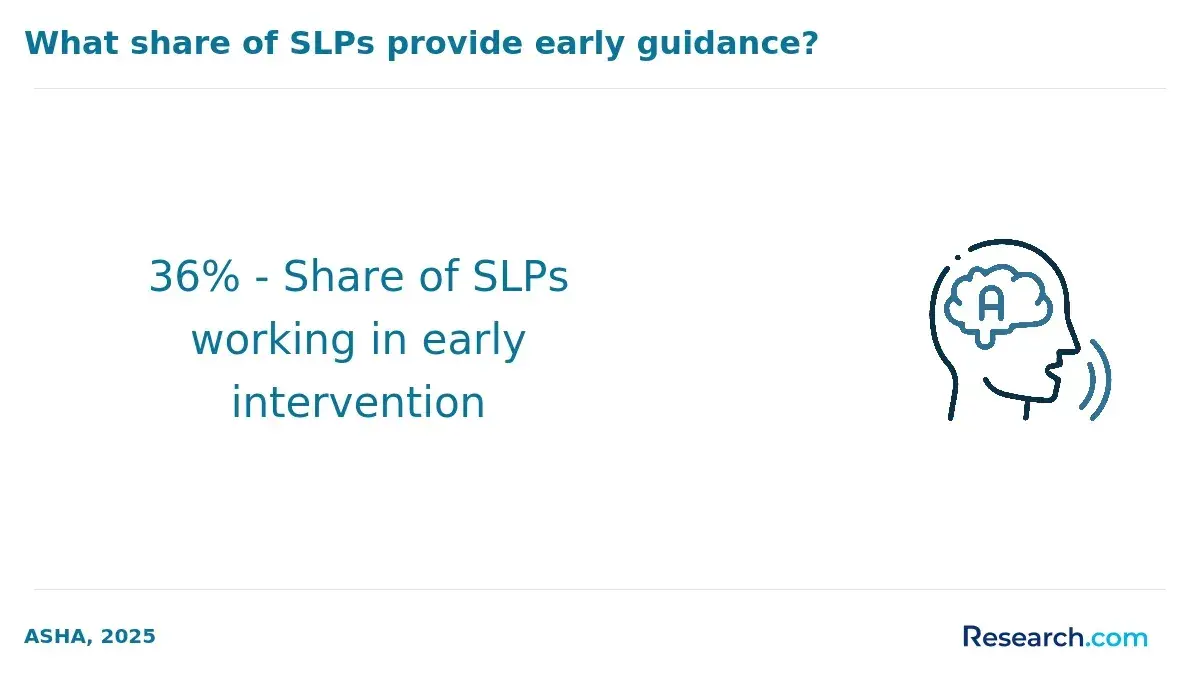
Dallas students may complete placements in settings such as public schools, early-intervention services, hospitals, rehabilitation facilities, outpatient clinics, skilled nursing facilities, or university clinics. Availability depends on university agreements, site capacity, client populations, supervisor credentials, and the student's readiness. No responsible program should imply that every student can choose any desired site.
Telepractice may be part of coursework or clinical education, especially as healthcare and school services continue to use secure virtual platforms. It can help students develop skills in remote rapport, caregiver coaching, digital materials, privacy, and technology troubleshooting. It should be viewed as a supplement to - not an automatic substitute for - every required in-person clinical competency.
Ask each school who owns each part of the placement process. The most important distinction is whether the university identifies and secures sites, requires the student to locate leads, or uses a shared model. Also ask how long the school allows for placement matching, what happens if a site falls through, and whether you may need to commute outside Dallas or accept an unpaid daytime placement.
Working adults should plan conservatively. Even if lectures are online, practicum hours often occur during business or school-day schedules. A program that fits a full-time job during didactic coursework may become difficult to combine with full-time work during advanced clinical semesters.
How do online SLP master's programs support Texas-specific school and healthcare employment pathways after graduation?
Texas SLP employment pathways differ by setting. Schools, hospitals, pediatric clinics, rehabilitation facilities, long-term care organizations, and private practices may all hire SLPs, but their onboarding expectations can differ. A graduate who intends to work in a public school should investigate educator-credential or school-service requirements in addition to the Texas SLP license, because school systems may apply separate standards.
Clinical placements can influence career readiness by exposing students to populations and documentation systems relevant to their goals. For example, a student interested in pediatric school practice may benefit from experiences involving language disorders, augmentative and alternative communication, and educational collaboration. A student considering medical work may seek adult neurogenic, dysphagia, voice, or rehabilitation exposure where available.
The labor market supports careful investment rather than shortcuts. The Bureau of Labor Statistics projects 17% national employment growth for speech-language pathologists from 2025 to 2035, with about 12,500 openings projected annually on average. Those national figures indicate sustained demand, but they do not predict a particular Dallas salary, job offer, or placement availability.
When evaluating potential return on investment, use current local job postings and employer conversations to identify setting-specific expectations. A guide to speech pathology salary can provide broader career context, but applicants should avoid choosing a specialty solely because of pay; clinical interests, supervision opportunities, work environment, and required experience also matter.
Technology is increasingly relevant across settings. Telepractice platforms, electronic documentation, digital AAC tools, and AI-assisted administrative features may affect workflow, yet they do not replace clinical judgment, ethical decision-making, patient communication, or licensed supervision. Choose a program that teaches evidence-based technology use and privacy practices rather than one that treats technology as a substitute for clinical preparation.
What admissions profiles and prerequisite coursework are typical for online speech pathology master's programs?
Online SLP master's programs are graduate clinical programs, not casual online certificates. Applicants commonly need a bachelor's degree, transcripts, prerequisite communication sciences and disorders coursework, a personal statement, recommendations, and evidence of academic readiness. Some schools accept applicants from unrelated majors, but those students generally need leveling courses before or alongside graduate work.
Common prerequisites include anatomy and physiology of speech and hearing mechanisms, phonetics, language development, speech and hearing science, audiology, speech-language disorders, statistics, and social or behavioral science coursework. ASHA certification standards also include foundational content requirements that schools may evaluate through undergraduate transcripts.
Admissions policies vary meaningfully. One program may accept a broader range of undergraduate backgrounds and assign individualized prerequisites; another may require most CSD courses before admission. GRE policies, minimum GPA standards, cohort start dates, interviews, and observation expectations also vary. Do not assume that an "online" program is easier to enter or less academically demanding.
Applicants from outside CSD should map their prior courses before selecting programs. The most affordable-looking option can become more expensive and slower if it requires extensive leveling work. Prospective students looking for schools with more accessible admissions policies can review speech pathology programs, while still treating CAA accreditation and Texas licensure alignment as nonnegotiable checks.
A strong application is specific about professional fit. Discuss relevant work with children, adults, disability services, education, healthcare, research, or communication support honestly, but do not overstate clinical experience. Schools also need to know that applicants understand the time demands of supervised practicum.
How should Dallas applicants verify accreditation, licensure alignment, and consumer protections before enrolling?
The safest enrollment decision is based on documents, not marketing language. Save the school's accreditation page, Texas professional-licensure disclosure, program handbook, tuition schedule, refund policy, and clinical-placement policies. These records are useful if a published policy changes or if you need to compare competing offers.
Use the following sequence before accepting admission. It separates the checks that protect licensure eligibility from the checks that protect your budget and schedule.
- Confirm the exact master's program is listed as CAA-accredited and review its current accreditation status.
- Obtain a written statement that the program accepts Texas residents for your intended cohort and has made a Texas professional-licensure determination.
- Request the current clinical-placement policy, including student responsibilities, supervisor requirements, travel expectations, and contingency procedures.
- Request a complete cost-of-attendance estimate that separates tuition, mandatory fees, technology charges, books, background checks, immunizations, travel, and clinical expenses.
- Review withdrawal, leave-of-absence, transfer-credit, teach-out, complaint, and refund policies before paying a deposit.
- Contact the Texas licensing authority directly to verify the licensure steps you expect to complete after graduation.
Red flags include a program that will not provide a Texas disclosure, uses vague language such as "designed to prepare students for licensure" without naming Texas, cannot explain who secures placements, or quotes tuition without mandatory fees and travel. Another red flag is pressure to enroll before you have received answers in writing.
Consumer protections also include accessibility and support. Ask about disability accommodations, technology support during live clinical activities, grievance procedures, financial-aid counseling, and the process for changing placements. These details can determine whether an online program is workable when circumstances change.
What tuition, fees, and funding patterns distinguish affordable online SLP programs for Dallas residents?
There is no single "Dallas resident" price for online SLP programs. Private institutions often charge one online tuition rate regardless of state residency, while public universities may use different tuition structures, cohort pricing, or fees. Because credit totals, prerequisite needs, and mandatory travel differ, per-credit comparisons alone can be misleading.
The most useful budget is a complete-program estimate. Ask each school to provide an itemized figure for your likely sequence, not just its current one-course tuition rate. The categories below show why two programs with similar advertised tuition can have different real costs.
| Cost category | Why it changes the comparison | What to ask |
| Tuition | Programs can have different credit requirements and rates. | What is the estimated tuition for all required graduate credits? |
| Mandatory university fees | Technology, student-service, clinical, graduation, and distance-learning fees may apply. | Which fees are charged every term and which are one-time? |
| Prerequisite or leveling courses | Applicants without a CSD background may need additional coursework. | Which prerequisites remain, and what will they cost? |
| Travel and residency expenses | Flights, lodging, meals, local transportation, and lost work time can be substantial. | How many visits are required, where are they held, and for how long? |
| Clinical readiness expenses | Background checks, drug screens, immunizations, liability coverage, and site requirements vary. | Which costs are paid by the student before practicum? |
| Opportunity cost | Clinical schedules may reduce a student's ability to work. | When do daytime placements begin, and what weekly availability is expected? |
Federal financial aid may be available to eligible students in qualifying degree programs, and some employers offer education assistance. Scholarships, graduate assistantships, and state or workforce programs can also help, but availability varies widely and should not be assumed. Borrow only after comparing net cost, repayment terms, likely ability to work during practicum, and the credential's fit with your intended career.
Affordable does not simply mean lowest tuition. The best value for a Dallas applicant is a program with a transparent all-in cost, dependable clinical support, manageable travel, and a verified path toward Texas licensure. A cheaper program that delays graduation or cannot support a Texas placement may cost more in time and lost income.
Other Things You Should Know About Speech Language Pathology
Some students work during early online coursework, but full-time employment often becomes difficult during clinical practicum. Placements may require daytime availability, commuting, preparation, documentation, and supervision meetings. Ask for a sample weekly schedule by term before deciding.
Not always. Many programs consider applicants with other majors, but they may require leveling or prerequisite courses. Compare the additional time and cost of those courses before treating a program as a fast entry route.
Employers generally focus on whether you hold the required Texas credential, have appropriate clinical preparation, and meet the role's experience expectations. A CAA-accredited program, strong practicum record, and relevant Clinical Fellowship experience matter more than whether lectures were delivered online.
Do not assume so. Programs determine how telepractice fits their clinical curriculum, and site, supervisor, competency, and regulatory requirements apply. Confirm the balance of telepractice, in-person work, simulation, and required travel with the specific program.
References
- Best Online Master's in Speech-Language Pathology for 2026 https://healthscience.pepperdine.edu/online-masters-in-speech-language-pathology/article/best-online-masters-in-speech-language-pathology-programs-guide.htm
- Speech-Language Pathology MS https://bbs.utdallas.edu/departments/speech-language-and-hearing/graduate-programs/speech-language-pathology-ms/
- Hybrid Online MS-SLP Program | Full & Part-Time | USAHS https://www.usa.edu/college-of-rehabilitative-sciences/master-science-speech-language-pathology-ms-slp/
- Online Master's in Speech Pathology Programs: 2026 Guide https://speechpathologymastersprograms.com/
- Best Online Master's Programs in Speech-Language... https://www.bestcolleges.com/healthcare/masters/speech-pathology/