2027 Best Online Speech Pathology Master's Programs for Residents of Toledo, OH

Co-Founder and Chief Data Scientist

Reviewed by Rhea Paul, PhD
SLP Education & Research Expert
Toledo residents choosing an online speech-language pathology master's program need more than a flexible class schedule: they need a CAA-accredited degree, a workable clinical-placement plan, and a program that can support Ohio licensure.
This guide compares the factors that matter most, including campus travel, live class expectations, prerequisites, cost, and state authorization. It also explains how to verify each school's claims before committing to a program that typically requires several years of intensive academic and clinical work.
Key Things You Should Know
- Choose only a program with current CAA accreditation or an accreditation status that clearly supports your intended graduation and licensure timeline; Ohio clinical licensure depends on more than earning an online degree.
- For Toledo applicants, clinical placement support, required travel, and Ohio enrollment authorization are usually more important than a school's distance from northwest Ohio.
- The U.S. Bureau of Labor Statistics reports a $97,870 median annual wage for speech-language pathologists in May 2025 and projects 17% employment growth from 2025 to 2035, but program cost and licensure eligibility still determine whether the investment fits your plan.
Which online speech pathology master's programs best serve Toledo residents?
The best online option depends on whether you can travel for immersions, need part-time flexibility, already have communication-sciences coursework, and can secure or accept school-arranged clinical placements in the Toledo region. "Online" generally describes didactic coursework; supervised practicum, externships, and some skills assessments still require in-person participation.
The programs below are useful starting points because they are commonly designed for distance learners and have established online or hybrid graduate SLP delivery models. Before applying, confirm current CAA status, Ohio eligibility, costs, and placement availability directly with each institution.
| Program | Delivery considerations | Potential fit for a Toledo resident | Important trade-off to verify |
| Baylor University, MS in Communication Sciences and Disorders | Online coursework with required immersive and clinical experiences | Best for applicants who want a structured cohort model and can travel when required | Current tuition, Ohio authorization, immersion schedule, and placement process |
| Emerson College, MS in Speech-Language Pathology | Online graduate format with in-person clinical education | May fit applicants seeking a distance-based program with organized clinical education | Live-session expectations, travel requirements, and whether local placements can be supported |
| New York University, MS in Communicative Sciences and Disorders | Online pathway with clinical training and immersive requirements | May fit students comfortable with an intensive, cohort-based format | Required travel, full-time pacing, and total cost |
| University of St. Augustine for Health Sciences, MS-SLP | Hybrid/online academic delivery with hands-on clinical training | May suit applicants comparing multiple start dates and health-professions infrastructure | Campus-residency requirements, clinical-site logistics, and Ohio disclosures |
| James Madison University, MS in Speech-Language Pathology | Distance-oriented academic delivery with required in-person components | Potential option for students willing to plan travel around a fixed curriculum sequence | Ohio availability, cohort timing, and site-placement responsibilities |
Do not treat this as a universal ranking. A program is a stronger choice when it can document that it enrolls Ohio residents, has a clear pathway toward Ohio licensure, and can explain exactly how it handles clinical sites near your home or workplace. For a broader comparison of speech pathology masters online, compare total required credits and mandatory travel rather than choosing solely on advertised online convenience.
Which programs meet CAA standards and Ohio licensure requirements?
CAA refers to the Council on Academic Accreditation in Audiology and Speech-Language Pathology, the accreditor recognized by the American Speech-Language-Hearing Association for graduate education in the field. For most Toledo applicants seeking clinical practice as speech-language pathologists, graduating from a CAA-accredited master's program is the prudent baseline because it supports the education component of ASHA certification and state licensure pathways.
CAA accreditation alone does not automatically create an Ohio license. Ohio applicants should expect to complete a qualifying graduate degree, supervised clinical education, post-graduate professional experience required by the state, and applicable examination requirements. Requirements can change, so verify the current rules with the Ohio Board of Speech-Language Pathology and Audiology before enrolling.
Use this distinction when reviewing school disclosures.
| Requirement | Why it matters | What a Toledo applicant should confirm |
| CAA status | Supports recognition of the graduate professional degree | That the program is accredited for your anticipated graduation period, not merely seeking accreditation |
| Ohio professional-licensure disclosure | Explains whether the institution has evaluated curriculum against Ohio requirements | That the disclosure specifically addresses Ohio and your intended credential |
| Clinical education | Provides supervised experience needed for professional preparation | Who approves sites, who secures supervisors, and whether out-of-area travel is possible |
| Praxis preparation | The Praxis examination is commonly part of professional credentialing | Whether the curriculum and advising support the examination and certification timeline |
| Post-graduate requirements | Licensure may require supervised professional experience after graduation | The current Ohio process, supervision requirements, and employer expectations |
A red flag is a school that gives only a general statement that its degree "may" lead to licensure without an Ohio-specific disclosure or without answering whether it can enroll you. Ask for the statement in writing, then compare it with current Ohio board requirements. If you may relocate, request disclosures for every state where you could seek a first license.
How are online speech pathology programs ranked for Toledo applicants?
A meaningful ranking for Toledo residents should prioritize professional readiness over brand recognition. The strongest program is not necessarily the least expensive, shortest, or most recognizable; it is the one that can deliver a CAA-aligned education, workable clinical training, and a realistic path to Ohio practice within your budget and schedule.
The comparison framework below weighs the factors that have the greatest practical effect on a local distance learner's decision.
| Evaluation factor | Why it carries weight | Better evidence |
| CAA accreditation status | It is foundational for a clinical SLP career pathway | Current CAA listing and the university's accreditation statement |
| Ohio enrollment and licensure disclosure | Distance programs can have state-specific restrictions | Written confirmation that Ohio residents may enroll and a current Ohio disclosure |
| Clinical-placement model | Practicum quality and logistics affect progression and graduation timing | Clear explanation of site sourcing, approvals, supervision, and travel contingencies |
| Travel and synchronous requirements | Work and caregiving plans can fail if residency dates or live classes are underestimated | Published academic calendar, immersion schedule, and time-zone information |
| Total educational cost | Tuition is only one part of the financial commitment | Required-credit total, fees, travel, technology, books, and potential lost work time |
| Outcomes transparency | Graduation, Praxis, and employment data help assess program performance | Program-specific outcomes reported using a defined cohort and reporting period |
Applicants considering a shorter route should be especially careful. Accelerated speech language pathology programs can reduce elapsed time, but they often concentrate course and clinical workloads rather than reducing competency requirements. They make the most sense for students with flexible employment, dependable transportation, and the academic prerequisites already completed.
Which programs arrange clinical placements near Toledo, Ohio?
No online SLP program should be assumed to guarantee a practicum or externship at a Toledo-area hospital, school district, outpatient clinic, or skilled-nursing facility. Clinical availability depends on affiliation agreements, supervisor capacity, program approval processes, student readiness, and competition from local campus-based programs.
Programs use different placement models. The distinction matters because a school that "assists" with placement may still require the student to locate contacts, accept a site outside the immediate area, or travel for a specialty experience.
| Clinical-placement model | What it usually means | Question to ask before applying |
| School-arranged placement | The program's clinical team identifies and coordinates sites, subject to availability | Can you provide examples of recent placements within commuting distance of Toledo? |
| Student-supported placement search | The student may identify potential sites while the program handles approval and contracts | What happens if none of my contacts meet supervision or affiliation requirements? |
| Hybrid model | The program arranges some experiences and expects student participation for others | Which placements are guaranteed by the school, and which remain my responsibility? |
| Centralized or travel-based placement | Students may be assigned beyond their home region for selected rotations | What maximum distance or out-of-state travel should I budget for? |
Ask each program for its written placement policy, not just a verbal assurance. A strong question is: "If a Toledo-area placement is unavailable when I am eligible for practicum, what is the program's alternative plan, timeline, and student cost responsibility?" Also ask whether pediatric, medical, school-based, bilingual, and adult-neurogenic experiences can be completed locally or may require travel.
Do not choose a program simply because it mentions partnerships in Ohio. Partnerships can change, and a partner organization is not the same as a reserved placement for an individual student.
Which online programs require campus visits or synchronous classes?
Most clinically oriented online master's programs are not fully asynchronous and not fully remote. They often combine online lectures with live discussions, simulation labs, skills checks, immersion weekends, and in-person clinical experiences. For a Toledo resident, required travel can affect child care, work scheduling, lodging, and transportation costs as much as tuition does.
Before accepting an offer, get a term-by-term format map. It should identify live sessions, required attendance, residency dates, examination proctoring, clinical days, and any travel locations that are not yet assigned.
- Ask whether live classes meet during Eastern Time business hours, evenings, or variable times that change by term.
- Confirm whether participation is mandatory for every synchronous session and whether recordings can ever substitute for attendance.
- Request the number, length, location, and approximate timing of all required immersions or campus visits.
- Ask whether clinical rotations can require weekday daytime availability even if academic classes occur online.
- Budget separately for airfare or mileage, lodging, meals, parking, professional attire, health clearances, and background checks.
Programs with a fixed cohort sequence can be valuable because they provide predictable progression and peer support. They are less suitable for applicants whose work schedules cannot accommodate daytime practicum, mandatory travel, or intensive summer terms. The key question is not whether coursework is online; it is whether the complete educational experience fits your actual calendar.
What prerequisites do Toledo applicants need before admission?
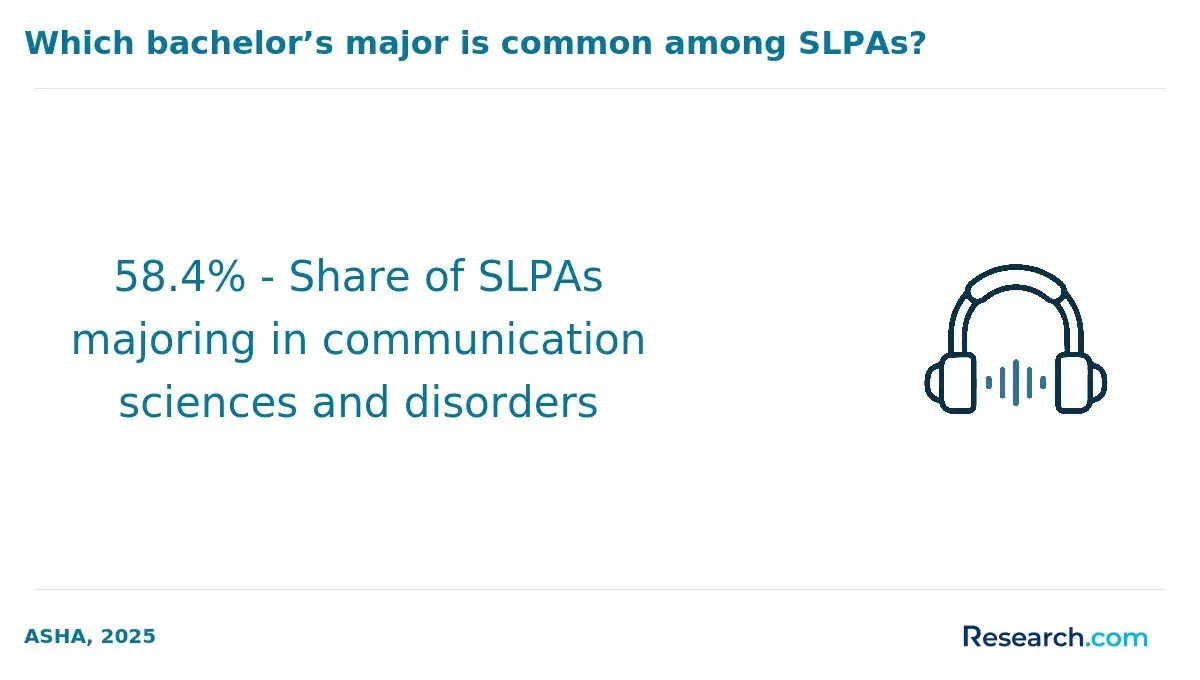
Most entry-level SLP master's programs expect a foundation in communication sciences and disorders. Applicants with a bachelor's degree in speech-language pathology, communication sciences and disorders, or a similar major usually have the clearest route. Applicants from psychology, education, linguistics, health sciences, or unrelated fields may need leveling coursework before or during admission.
Common prerequisites can include phonetics, anatomy and physiology of speech and hearing mechanisms, speech and language development, audiology, speech science, language science, statistics, and observation hours. Requirements vary substantially by institution, so prior coursework should be evaluated course by course rather than assumed transferable.
Applicants changing fields should compare the time and cost of prerequisite completion before choosing a graduate program. Resources about the easiest speech pathology programs to get into can help frame admissions accessibility, but a lower barrier to entry should never outweigh accreditation, clinical quality, and Ohio licensure fit.
To prepare a competitive and complete application, take these steps early.
- Create a transcript inventory that matches every completed course to each program's prerequisite list.
- Ask admissions whether missing courses must be finished before enrollment or may be completed through an approved leveling sequence.
- Confirm GPA expectations, observation-hour documentation, recommendation requirements, personal-statement prompts, and whether the GRE is required or optional.
- Plan for health records, immunizations, background checks, drug screening, CPR training, and transportation needs that may arise before clinical placement.
- Apply only after confirming that the program accepts Ohio residents and can provide an Ohio-specific professional-licensure disclosure.
How do tuition, fees, and residency costs compare?
Comparing online SLP program cost requires more than comparing tuition per credit. Programs may publish different measures, such as per-credit tuition, tuition for one academic year, or an estimated total. A fair comparison starts with the number of required credits and adds fees and unavoidable travel.
The table identifies the cost categories Toledo residents should request in writing from every program. It avoids treating a partial published price as a complete program cost.
| Cost category | Why it changes the comparison | What to request |
| Tuition for required credits | Credit requirements differ across programs | Total tuition at the rate expected for your cohort, including any planned rate changes |
| Mandatory institutional fees | Technology, clinical, graduation, and distance-learning fees may not be included in tuition | A fee schedule showing recurring and one-time charges |
| Immersion travel | Required campus visits can add significant out-of-pocket costs | Number of trips, likely location, duration, and whether lodging is required |
| Clinical readiness expenses | Health and compliance requirements are often paid by students | Estimated costs for background checks, immunizations, drug screening, CPR, and liability coverage |
| Clinical travel and relocation | A placement outside Toledo can affect commuting, housing, and income | The school's policy on travel distance, relocation, and student responsibility |
| Lost earnings | Daytime clinical training can limit full-time employment | Typical practicum schedule and whether part-time enrollment is realistic |
Public universities may charge different resident and nonresident rates, while private institutions often use one tuition rate for all students. Neither model is automatically cheaper. Compare the same measure: estimated total tuition and required fees for completion, then add your personal travel and income effects.
Federal financial aid may be available to eligible graduate students, but borrowing should be evaluated against the full repayment obligation and likely career timeline. The national occupational outlook is favorable, yet salary varies by employer setting, experience, and region. The BLS reports a May 2025 median annual wage of $97,870 for speech-language pathologists; use that as labor-market context, not as a personal earnings promise. Specialty interests can also affect career planning, including potential pathways associated with NICU SLP salary information.
Which programs are authorized to enroll Ohio residents?
State authorization and professional-licensure disclosures are separate checks. A university may be authorized to provide distance education to Ohio residents while still stating that it has not determined whether a particular curriculum meets Ohio professional licensure requirements. Conversely, an academically suitable program may pause or restrict enrollment in a state because of authorization or clinical-placement issues.
For each school on your shortlist, request written confirmation of the following before paying an enrollment deposit.
- The institution currently accepts new students who reside in Ohio for the specific online or hybrid SLP program.
- The school's professional-licensure disclosure specifically identifies Ohio and explains the program's determination, if any.
- Your planned clinical placements may be completed in Ohio or the school clearly explains when another state could be required.
- The institution can continue serving you if you move during the program, or it explains which states could create a restriction.
- The confirmation applies to your intended start term rather than a prior catalog year.
A common mistake is relying on a general national map or an admissions representative's informal statement. Authorization rules and program availability can change. Save the email or disclosure page you receive, note the date, and ask whether any policy change would affect students already enrolled.
How do graduation, Praxis, and employment outcomes compare?
Outcome data can reveal whether a program supports students through a demanding clinical curriculum, but it should be read carefully. Graduation rates, Praxis pass rates, and employment rates may use different cohorts, reporting windows, definitions, and sample sizes. Compare only figures reported using comparable methods and ask schools to explain any missing or unusually broad data.
For applicants, the most useful outcome questions focus on readiness and transparency rather than a single headline percentage.
| Outcome measure | What it can indicate | How to use it responsibly |
| On-time completion | Whether students commonly progress through the planned sequence | Ask how leaves, placement delays, and part-time enrollment affect the measure |
| Program completion | Whether students finish the degree within the institution's reporting period | Review the cohort size and whether the program separates withdrawals from delayed completion |
| Praxis performance | Whether graduates meet a key examination benchmark | Confirm the reporting year, number of test takers, and available academic support |
| Employment after graduation | Whether respondents obtained relevant professional work | Ask how employment is defined, when graduates were surveyed, and response rate |
| Clinical placement completion | Whether students complete required supervised experiences | Ask about average time to placement and policies for delayed site matching |
The employment outlook supports careful consideration of the field: the BLS projects 17% growth in speech-language pathology employment from 2025 to 2035 and about 12,500 openings per year on average over the decade. That national projection does not tell you which Toledo employer will hire you or what salary it will offer. Use it to assess broad demand, then investigate local school, hospital, rehabilitation, early-intervention, and long-term-care opportunities.
Technology is also changing practice. Telepractice platforms, electronic documentation, augmentative and alternative communication tools, and AI-supported administrative tools may shape workflow, but they do not replace the clinical judgment, ethical responsibilities, and supervised training required for licensed SLP practice.
What should Toledo residents verify before enrolling online?
Verify the highest-risk items before comparing softer preferences such as branding or elective offerings. The goal is to avoid enrolling in a program that looks flexible online but creates a licensing, placement, travel, or financial obstacle later.
- Confirm current CAA accreditation status and verify that it covers the program and anticipated graduation timeline.
- Obtain an Ohio-specific professional-licensure disclosure and written confirmation that Ohio residents may enroll in your intended cohort.
- Ask for the clinical-placement policy, including who finds sites, likely travel expectations, contingency plans, and all student responsibilities.
- Request a complete schedule showing synchronous sessions, campus visits, academic breaks, clinical terms, and daytime attendance expectations.
- Calculate total cost using required credits, mandatory fees, travel, compliance expenses, technology, books, and potential reductions in work hours.
- Match your transcript against prerequisite requirements and get written clarification for every course that may not qualify.
- Review outcomes with their reporting period and cohort size; do not rely on a broad marketing claim about employment success.
- Talk with financial aid about borrowing limits, scholarships, employer assistance, and the consequences of extending the program timeline.
If a school cannot provide direct answers to these questions before enrollment, treat that uncertainty as decision-relevant information. A better choice may be a program with slightly higher tuition but clearer Ohio disclosures, dependable clinical coordination, and a schedule you can realistically complete.
Other Things You Should Know About Speech Language Pathology
You may complete much of the academic curriculum online, but clinical SLP preparation is not entirely virtual. You will need supervised in-person clinical education and must meet Ohio's current licensure requirements. Select a CAA-accredited program that confirms Ohio enrollment eligibility and provides an Ohio-specific licensure disclosure.
Not always. Many programs accept students from other majors, but they usually require prerequisite or leveling coursework in communication sciences and related subjects. Completing those courses can add time and cost, so obtain a transcript evaluation before choosing a program.
It depends on the program and your job flexibility. Online coursework may be manageable around work, but clinical rotations commonly require weekday daytime availability and may involve travel. A part-time option can help, but it may extend completion time and delay entry into post-graduate supervised practice.
The timeline varies because Ohio licensure involves more than graduation. After earning the degree, graduates may need to complete required supervised professional experience and examination steps. Confirm the current sequence with the Ohio licensing board and ask each program how it supports graduates through certification and licensure preparation.
References
- Online SLP Master's Program https://www.misericordia.edu/speech-language-pathology/online-slp-masters-program
- Speech-Language Pathology - Master of Arts (M.A.) https://www.utoledo.edu/programs/grad/speech-language-pathology
- Best Online Master's Programs in Speech-Language... https://www.bestcolleges.com/healthcare/masters/speech-pathology/
- Best Online Speech Pathology Programs https://www.forbes.com/advisor/education/healthcare/best-speech-pathology-programs-online/