2027 Best Online Speech Pathology Master's Programs for Residents of McKinney, TX

Co-Founder and Chief Data Scientist

Reviewed by Rhea Paul, PhD
SLP Education & Research Expert
McKinney residents can complete much of a speech-language pathology master's degree online, but no legitimate entry-level SLP program is entirely remote: supervised clinical training and, often, short campus immersions remain required. This guide compares the factors that matter most for Texas applicants - CAA accreditation, Texas licensure compatibility, placement support, travel, cost, and scheduling - so you can identify programs worth contacting before investing time and application fees.
Key Things You Should Know
- A Texas-eligible, CAA-accredited master's degree is the essential starting point for McKinney residents pursuing Texas SLP licensure and the CCC-SLP credential; online coursework alone is not enough.
- Expect local or regional clinical placements plus possible campus immersions, even in programs marketed as online; confirm the school's written placement and Texas authorization policies before applying.
- The U.S. Bureau of Labor Statistics reports a $97,870 median annual wage for speech-language pathologists in May 2025 and projects 17% employment growth from 2025 to 2035, but program cost, time away from work, and licensure eligibility still determine individual return on investment.
Which online speech pathology master's programs enroll McKinney, TX residents without relocation?
The practical answer is that McKinney residents can pursue several distance-delivered SLP master's programs without permanently relocating, but they should not expect a zero-travel or fully self-arranged experience. Entry-level speech-language pathology education requires hands-on clinical practicum, and many online programs require intensives or immersions at a campus or designated site.
The following programs are widely recognized distance-delivery options that Texas applicants commonly investigate. Enrollment eligibility, required travel, and clinical-site availability can change by cohort, so obtain confirmation from each program in writing before paying an application deposit.
| Program | Distance-delivery consideration | McKinney decision point |
| Baylor University Master of Science in Speech-Language Pathology | Online academic delivery with required immersion experiences and clinical education. | Ask for the current Texas authorization disclosure, immersion calendar, and clinical-placement process. |
| Emerson College Master of Science in Communication Disorders | Online cohort format that includes clinical education and required on-campus experiences. | Confirm whether the live-class schedule works in Central Time and how Texas placements are supported. |
| New York University Master of Science in Communicative Sciences and Disorders | Online pathway with clinical placements and in-person learning requirements. | Clarify travel frequency, placement geography, and the current cohort's Texas eligibility. |
| University of St. Augustine for Health Sciences Master of Science in Speech-Language Pathology | Hybrid/distance-oriented program structure with clinical training and residency expectations. | Verify the exact campus affiliation, travel requirement, and authorization for Texas residents. |
Use a program's current admissions and professional-licensure disclosure rather than an old blog post or general ranking. A broader list of online SLP masters programs can help you identify additional options, but each school must still confirm that it can enroll a Texas resident for your intended start term.
A program may fit well if it has a transparent Texas disclosure, a defined clinical-placement support model, and immersion dates you can attend. Consider a campus-based North Texas option instead if you need predictable local clinical relationships, cannot travel, or want frequent in-person faculty contact.
How do Texas licensure rules shape online speech-language pathology degree choices from McKinney?
Texas licensure rules should drive the decision more than a program's marketing label. To practice as a speech-language pathologist in Texas, graduates generally need a qualifying graduate degree, supervised professional experience, a passing national examination, and an application to the Texas Department of Licensing and Regulation. Requirements can change, and applicants should use the board's current rules rather than treating a university statement as a license approval.
For a McKinney applicant, the degree should be designed to support the education and clinical-training components that Texas expects. The most defensible choice is usually a CAA-accredited master's program with a clear statement that its curriculum is intended to meet Texas educational requirements or that it has evaluated Texas requirements.
Texas also distinguishes between completing a graduate program and becoming independently licensed. A program may prepare you for graduation and initial credentialing steps, while the post-graduate supervised experience and board application occur afterward. Do not assume clinical practicum hours completed as a student replace every post-degree requirement.
Common mistakes include choosing a program because it is online without reviewing its Texas disclosure, assuming national accreditation automatically eliminates every state-specific rule, and arranging a clinical site informally before the university approves it. Avoid these problems by asking the school whether it accepts Texas residents, whether it has made a Texas licensure determination, and who approves each practicum site.
What accreditation and state authorization must McKinney students verify for online SLP programs?
Two separate checks matter. CAA accreditation concerns the quality and professional eligibility of the speech-language pathology program itself. State authorization concerns whether the institution may deliver distance education to a student located in Texas. A school can be regionally or institutionally accredited yet have an SLP program that is not CAA-accredited, which is a major difference for licensure planning.
Before applying, verify the items below directly with the institution and the relevant professional directories. These checks reduce the risk of discovering an enrollment or licensure restriction after admission.
- Confirm that the specific master's program - not merely the university - holds CAA accreditation or understand its candidacy status and consequences.
- Read the school's current Texas professional-licensure disclosure for the exact program and degree track.
- Ask whether the institution is authorized to enroll students physically located in Texas for your intended term.
- Request the current schedule of required campus visits, simulations, and clinical rotations.
- Ask whether the school secures placements, approves student-proposed sites, or uses a combination of both methods.
CAA accreditation is especially important because it supports a standardized educational pathway toward ASHA certification and state licensure. Candidacy is not the same as full accreditation; applicants should understand the program's status, anticipated graduation timing, and what the school states about eligibility for graduates before relying on it.
Which accredited online speech pathology master's programs most commonly serve North Texas applicants?
North Texas applicants often compare national online cohorts with Texas-based or Texas-accessible hybrid options. "Best" depends on the fit between the program's travel demands, clinical-placement model, required prerequisites, price, and current ability to enroll Texas residents - not on brand recognition alone.
The comparison below identifies the practical distinctions to investigate among commonly considered options. Confirm every item for the current cohort because online delivery details, tuition, and state disclosures can change.
| Program type or example | Potential strength | Trade-off to evaluate | Best fit |
| Baylor University online MS-SLP | Texas-based university and structured online cohort. | Required immersion and clinical-training commitments may affect work and family schedules. | Applicants seeking a Texas-connected program who can meet travel requirements. |
| Emerson College online MS Communication Disorders | Established online cohort model with structured clinical education. | Private-university pricing and required in-person experiences require careful total-cost planning. | Students who value a highly organized online format and can plan for travel. |
| NYU online MS Communicative Sciences and Disorders | National online pathway and formal clinical education structure. | Travel, tuition, and placement logistics should be assessed early. | Applicants comfortable with a national program and its associated logistics. |
| University of St. Augustine for Health Sciences MS-SLP | Health-professions-focused hybrid model. | Residency and campus expectations may be more substantial than prospective students expect. | Students who want a hybrid clinical-professions environment and can travel. |
| Texas public-university campus or hybrid options | Potentially closer faculty, clinical networks, and resident tuition eligibility. | May offer less online flexibility or require regular travel to campus. | Students prioritizing local clinical infrastructure over maximum remote coursework. |
When comparing SLP master's programs, do not make admissions accessibility the only criterion. A program that is easier to enter but cannot provide a workable clinical plan in North Texas, or does not clearly support Texas licensure, may be a weaker choice than a more selective option with transparent requirements.
Applicants without a communication sciences and disorders bachelor's degree should also ask about prerequisites or leveling coursework. Those courses can add time and cost, and they may need to be completed before the master's cohort begins.
How do ASHA CAA accreditation and institutional accreditation affect McKinney graduates' CCC-SLP eligibility?
Institutional accreditation evaluates the college or university as an educational institution. ASHA's Council on Academic Accreditation evaluates the professional speech-language pathology program. For a graduate seeking the Certificate of Clinical Competence in Speech-Language Pathology, the program-level CAA question is the more consequential one.
A CAA-accredited graduate program is generally the clearest educational route toward the CCC-SLP because it is designed around professional standards for graduate education and clinical preparation. However, the degree alone does not award the CCC-SLP. Graduates also must satisfy ASHA's current requirements, which include supervised clinical fellowship experience and a passing Praxis examination, among other documentation requirements.
CAA status also does not remove the need to meet Texas licensing rules. Think of the credentials as related but distinct: CAA accreditation supports the educational foundation; ASHA certification is a professional credential; and Texas licensure is the legal authority to practice in the state. Employers may value or require one or more of these depending on the setting.
If a program is in candidacy rather than fully accredited status, ask admissions for a written explanation of how accreditation timing applies to your anticipated graduation date. Do not rely on verbal assurances or assume that a future accreditation decision is guaranteed.
What should McKinney residents know about in-state versus out-of-state tuition and fees online?
Online does not automatically mean in-state tuition. Public universities may charge Texas residents a resident rate, a uniform online rate, or a program-specific rate; private universities generally charge the same tuition regardless of residency. Compare published tuition using the same unit - preferably estimated total required program tuition - rather than comparing one school's per-credit rate with another school's annual figure.
The expense categories below are often more useful than a headline tuition figure because clinical education and travel can materially change the actual budget.
| Cost category | Why it matters for McKinney students | What to request |
| Required tuition | May differ by residency, modality, or cohort. | A current term-by-term estimate for all required credits. |
| Mandatory university and program fees | Technology, clinical, graduation, and student-service charges may not appear in the tuition rate. | A list of recurring and one-time required fees. |
| Travel and lodging | Immersions, simulations, or campus residencies may require airfare, hotel stays, and missed work. | The number, location, and approximate duration of required visits. |
| Clinical compliance expenses | Background checks, drug screening, immunizations, liability coverage, and site onboarding can add costs. | An itemized clinical-readiness estimate. |
| Lost income or reduced hours | Full-time practicum schedules can limit employment even when classes are online. | A typical weekly workload and final-placement schedule. |
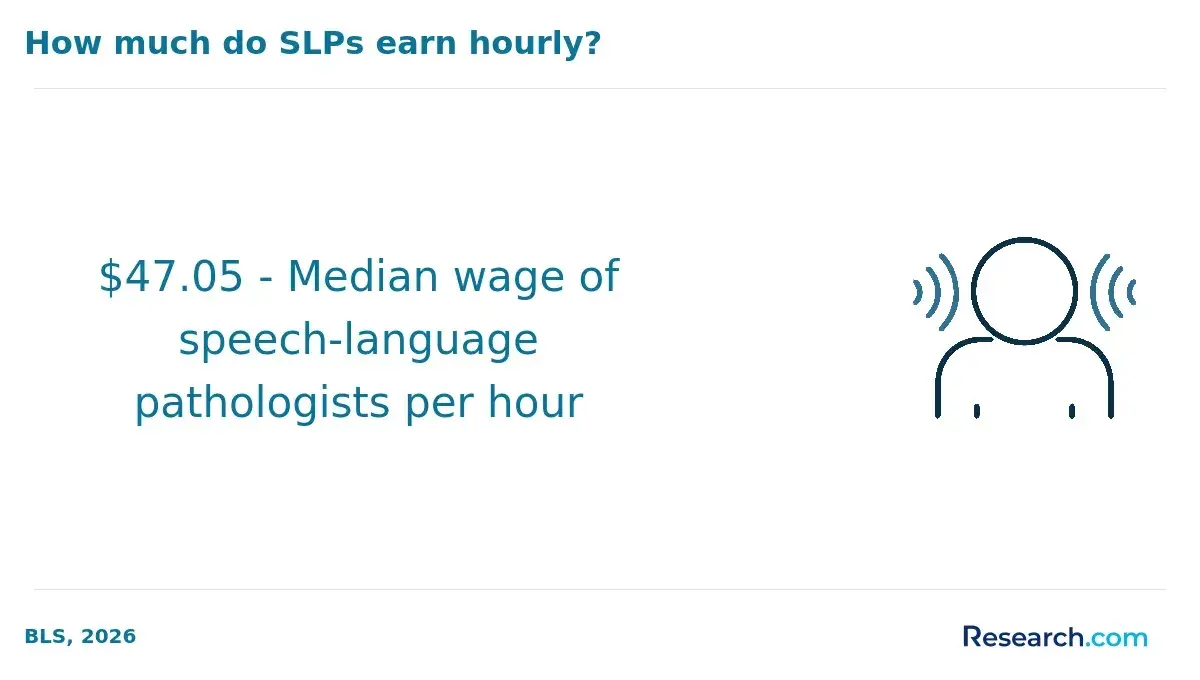
The occupation's May 2025 national median annual wage was $97,870, according to the Bureau of Labor Statistics, but that is not a starting-pay guarantee or a measure of local wages. Use information on how much does a speech pathologist make as career context, then build a conservative budget using the school's required costs and the income you may forgo during clinical terms.
Federal financial aid may be available to eligible graduate students, but borrowing limits, interest, and program cost deserve individualized review. Ask financial-aid offices whether scholarships, employer partnerships, payment plans, and clinical-term enrollment changes affect aid eligibility.
How do clinical placement arrangements work for online SLP students living in McKinney and Collin County?
Clinical placements are supervised patient-care or client-care experiences, not virtual substitutes for direct clinical education. Online SLP programs typically use university-approved sites and qualified supervisors in schools, hospitals, rehabilitation settings, private practices, or other approved environments. A student may live in McKinney while completing a placement elsewhere in Collin County, the Dallas-Fort Worth area, or another location if local capacity is limited.
Programs vary substantially in who does the work. Some identify and contract with sites, some allow students to suggest sites, and many use a shared model. Even where students may suggest a site, the university must approve the affiliation agreement, supervisor qualifications, caseload, and learning opportunities before hours can count.
Ask each admissions or clinical-education office these questions before enrolling:
- Does the program place Texas students directly, or may students locate possible sites for review?
- What happened when recent students could not obtain a placement near home?
- Can the program require travel beyond Collin County, and who pays related expenses?
- When are full-time daytime placements most likely to occur?
- What documentation, onboarding, and immunization requirements apply before placement begins?
A major red flag is a school that promises a "local placement" without explaining its process or refuses to state whether relocation or extended commuting could be necessary. Do not resign from work, sign a lease, or assume a particular employer will host you until the program formally confirms the arrangement.
Which online speech pathology programs best accommodate working adults and parents in McKinney?
The most workable program for a working adult is usually not the shortest one. It is the one whose live-session times, immersion dates, assignment cadence, and clinical rotations fit the household's real constraints. Online didactic classes may be scheduled live, asynchronous, or in a combination; clinical practicums are usually tied to site operating hours and can require daytime availability.
Programs with part-time sequencing can help early in the degree, while a full-time cohort may shorten the academic timeline but compress the workload. A parent or full-time employee should ask for a sample weekly schedule from both an early academic term and a clinical-intensive term before deciding.
Acceleration is useful only when prerequisites, finances, caregiving, and clinical availability align. Review fast track speech pathology programs with particular care: a shorter advertised pathway can still include fixed clinical terms that are difficult to combine with full-time work.
Programs tend to fit working McKinney residents better when they publish Central Time-compatible live requirements, provide advance immersion calendars, offer clear academic support, and explain how clinical placements affect daytime availability. They fit less well when travel dates are released late, practicum timing is highly unpredictable, or the student must independently secure every placement.
How can McKinney applicants compare outcomes data, Praxis pass rates, and employment results across programs?
Outcomes data can reveal whether a program is consistently supporting students, but it must be compared carefully. Use the CAA-required program outcome disclosures and look at the same reporting period for each school. A small cohort can make a single year look unusually strong or weak, so multi-year patterns are more informative than one headline percentage.
The most useful outcomes measures and their limits are summarized below.
| Measure | What it can show | How to use it responsibly |
| On-time completion rate | Whether students generally finish within the program's published timeframe. | Compare it with the school's definition of "on time" and whether the cohort is full-time. |
| Praxis pass rate | How graduates performed on the national examination during the reporting period. | Check the number of test takers and multiple years, not only the percentage. |
| Employment rate | Whether respondents report work in the profession after graduation. | Read the school's employment definition, survey timing, and response information. |
| Attrition rate | The share of students who did not complete the program as reported. | Ask about support, leave policies, prerequisite preparation, and reasons students commonly withdraw. |
Also ask whether reported outcomes include online students specifically or combine several delivery pathways. A strong aggregate result is encouraging, but it does not prove that clinical placement, mentorship, or scheduling will be equally easy for a student in McKinney.
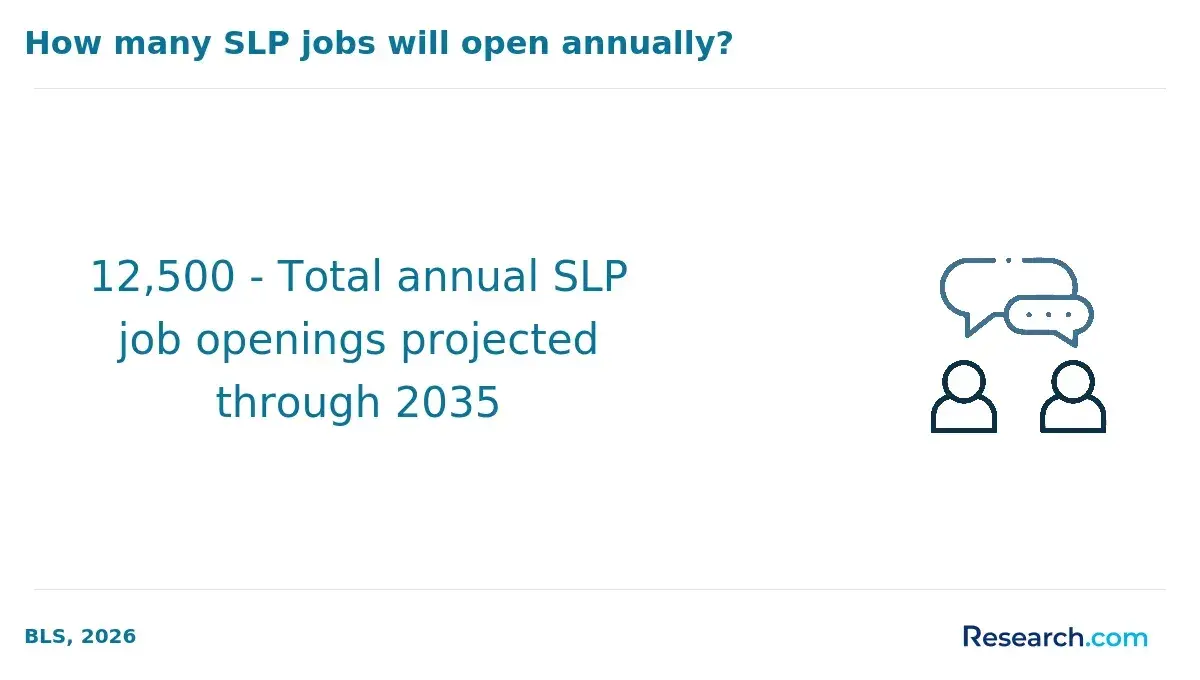
Job demand supports careful consideration of the field: the Bureau of Labor Statistics projects 17% growth in SLP employment from 2025 to 2035, with about 12,500 openings annually on average. That national outlook does not replace a local job search; review North Texas employers, school-district hiring practices, and the settings where you want to work.
What steps should McKinney residents follow to validate current program approval with Texas licensing boards?
Validate a program before applying and again before enrolling, because authorization and licensure disclosures can change. Keep written records of responses, catalogs, and disclosures; they are more reliable than recollection if policies later change.
Follow this sequence to make a defensible enrollment decision:
- Identify the exact degree, delivery track, and anticipated start term rather than asking generally about "the online program."
- Check the ASHA CAA directory for the program's current accreditation status and read any status details.
- Read the university's professional-licensure disclosure specifically for Texas and save a dated copy.
- Contact the university's admissions or compliance office and ask whether it may enroll a student located in Texas for your term.
- Ask the clinical-education office for written details on Texas placements, travel expectations, and responsibility for finding sites.
- Review the current Texas Department of Licensing and Regulation SLP requirements and compare them with the school's disclosure.
- Ask the Texas licensing authority directly if a disclosed uncertainty could affect your intended path, especially when a program is new, in candidacy, or has changed format.
Do not treat an admissions representative's informal statement as a licensing determination. The strongest evidence is a current CAA status, a written Texas disclosure from the institution, and confirmation that you understand the board's current application requirements.
Other Things You Should Know About Speech Language Pathology
Yes, potentially. The degree can include online coursework, but it should be a qualifying CAA-accredited program with required supervised clinical education and a clear Texas licensure disclosure. You must also complete the additional examination, supervised experience, and state application requirements in effect when you apply.
Not always. Some programs accept students from other majors, but they commonly require prerequisite or leveling courses in areas such as phonetics, language development, anatomy, and speech and hearing science. These requirements can extend the total timeline and cost.
Some students work during early coursework, especially in part-time formats. However, clinical placements often occur during standard weekday hours and can require a major reduction in work hours. Ask for a term-by-term workload estimate before committing.
The timeline varies because post-graduate supervised experience, Praxis testing, documentation, and board processing all take time. Ask the program how it supports the clinical fellowship transition, then verify the current Texas requirements and processing steps with the licensing authority.
References
- Online Speech-Language Pathology Graduate Program https://csd.robbins.baylor.edu/graduate/online-csd-graduate-program
- Online MS in Speech-Language Pathology (SLP) | Pepperdine https://healthscience.pepperdine.edu/online-masters-in-speech-language-pathology/