2027 Best Online Speech Pathology Master's Programs for Residents of Laredo, TX

Co-Founder and Chief Data Scientist

Reviewed by Rhea Paul, PhD
SLP Education & Research Expert
Laredo residents pursuing an online master's in speech-language pathology need more than a convenient class schedule: they need a CAA-accredited program that can support Texas licensure and supervised clinical training.
This guide compares the factors that matter most, including state eligibility, clinical placements, tuition structure, travel, admissions, and local career fit. It is designed to help prospective students distinguish a legitimately online professional pathway from a program that may create licensure or placement barriers later.
Key Things You Should Know
- Texas licensure generally requires a graduate degree from a Council on Academic Accreditation in Audiology and Speech-Language Pathology (CAA)-accredited program, supervised clinical experience, a clinical fellowship, and a passing Praxis examination.
- The Bureau of Labor Statistics reports a $97,870 median annual wage for speech-language pathologists in May 2025, while national employment is projected to grow 17% from 2025 to 2035.
- For Laredo applicants, the best online option is not necessarily the least expensive or fastest one; it must confirm Texas enrollment eligibility, clinical-placement support, required travel, and alignment with Texas licensure rules before deposit deadlines.
Which online speech pathology master's programs accept students living in Laredo, Texas?
Several universities offer CAA-accredited or CAA-candidacy master's pathways with substantial online instruction, but acceptance of Texas residents can change because of state authorization, cohort capacity, and clinical-placement availability. Laredo residents should request written confirmation that the institution can enroll Texas students for the intended start term before applying or paying an enrollment deposit.
The programs below are examples of options commonly considered by Texas-based applicants. They are not interchangeable: curriculum delivery, travel, pacing, and fieldwork arrangements can differ substantially.
| Program | Online delivery consideration | Why it may suit a Laredo resident | Important trade-off to verify |
| Baylor University, MS in Communication Sciences and Disorders | Online coursework with clinical education requirements | Texas-based institution and an established online graduate pathway | Campus or clinical travel expectations, placement coverage, and current Texas disclosures |
| University of St. Augustine for Health Sciences, MS-SLP | Online academic instruction paired with required clinical education | May appeal to applicants seeking a structured cohort model | Required immersions, fees, placement process, and Texas eligibility for the selected campus/program |
| Emerson College, MS in Speech-Language Pathology | Online coursework with clinical placements | National online format can broaden choices beyond Texas institutions | Live-session timing, travel, clinical-site availability, and total tuition |
| New York University, MS in Communicative Sciences and Disorders | Online program format with clinical training components | Potential fit for applicants wanting an established distance-learning model | State authorization, required in-person experiences, and placement support in South Texas |
Use this table as a screening tool rather than a guarantee of availability. An online degree does not mean every clinical requirement can be completed remotely or in the student's home city. Applicants who want broader comparisons of online speech language pathology programs should still prioritize accreditation and Texas practice eligibility over admissions convenience.
A strong initial inquiry to each program asks four direct questions: "Can a Texas resident enroll in this cohort?" "Is the program currently CAA-accredited or in candidacy?" "What travel is required?" and "What happens if the school cannot secure a clinical placement within commuting distance of Laredo?"
How do Texas licensure rules shape online speech-language pathology program choices for Laredo residents?
Texas licensure should be the first filter, not the last step after graduation. The Texas Department of Licensing and Regulation regulates speech-language pathologists in the state. Requirements can change, but applicants generally need an appropriate graduate degree, supervised professional experience, a passing national examination, and a completed application process before independent practice.
CAA accreditation matters because it is the clearest educational quality and eligibility signal for students planning to pursue the Certificate of Clinical Competence in Speech-Language Pathology from the American Speech-Language-Hearing Association and state licensure. A program may be academically strong yet still be a poor choice if it does not support the clinical education and documentation needed for Texas requirements.
For Laredo residents, the decision is also shaped by geography. Clinical fellowship employment, school-district credentialing, bilingual service expectations, and site supervision can involve separate employer or agency rules beyond graduate-school graduation. Do not assume that a master's degree alone allows immediate independent practice.
Before enrollment, complete these checks in order:
- Confirm the program's current CAA accreditation status through ASHA's official directory.
- Ask the university for its current Texas professional-licensure disclosure in writing.
- Request a clear explanation of how the program tracks clinical hours, supervisor credentials, and required competencies.
- Review Texas licensing requirements independently and ask whether any requirement may need to be completed after graduation.
- Ask prospective employers or school districts about additional hiring, fingerprinting, educator-certification, or bilingual-service expectations.
The most common mistake is choosing a program based on an "online" label without confirming its licensure pathway. A better approach is to preserve written answers from both the university and the relevant Texas regulator, especially if the program is based outside Texas.
Which accredited online speech pathology master's programs offer Texas-aligned clinical placements and supervision?
No responsible program can promise every Laredo applicant a placement at a specific clinic, hospital, or school. Clinical sites must have appropriate supervisors, client populations, capacity, and contractual approval. The better question is whether a program has a transparent placement model, experienced clinical-education staff, and a contingency process when a local site is unavailable.
CAA-accredited online programs typically combine virtual academic instruction with in-person practicum and externship experiences. Some assign sites directly, some seek placements collaboratively with students, and many use a hybrid approach. A school that asks students to help identify local sites is not automatically a poor option, but applicants should understand exactly who is responsible for contracts, supervisor approval, and delays.
| Clinical-training question | What a strong answer looks like | Potential red flag |
| Who finds practicum sites? | The school explains its placement team's role and the student's role in writing. | The school says students are solely responsible without explaining approval support. |
| Can training occur near Laredo? | The school describes how it evaluates local site availability without guaranteeing a specific location. | The school implies local placement is automatic but will not document the process. |
| Who approves supervisors? | The university verifies credentials and supervises documentation under its clinical policies. | The applicant is told to arrange supervision independently without formal review. |
| What if a site falls through? | The program describes backup planning, timeline effects, and communication procedures. | There is no stated contingency plan or possible graduation-delay explanation. |
| Is travel possible? | The program discloses that a placement may require travel or relocation if local capacity is limited. | Travel expectations are unclear until after enrollment. |
South Texas placements may be especially valuable for students interested in bilingual and bicultural service delivery. However, bilingual populations alone do not make a site appropriate; the site must also provide the required supervision, scope of experience, and university approval. Students should budget for transportation, background checks, health clearances, immunizations, professional liability coverage, and possible temporary housing if an out-of-area placement becomes necessary.
Programmatic accreditation is the foundation, but clinical logistics determine whether an online format remains practical. Compare each school's placement policy before comparing marketing claims about flexibility.
What accreditation should Laredo applicants look for in an online speech pathology master's program?
Applicants should look first for accreditation by the Council on Academic Accreditation in Audiology and Speech-Language Pathology. CAA is the specialized accreditor associated with ASHA for graduate education in speech-language pathology and audiology. Its status is more consequential for a future clinician than general institutional accreditation alone.
A CAA-accredited master's program has completed the accreditor's review process. A program in candidacy has a different status: it may be progressing through accreditation review, but applicants should understand the timeline, implications, and the school's specific disclosures before enrolling. Candidacy is not the same as full accreditation, even when a school expects eventual accreditation.
Institutional accreditation still matters for federal aid, credit recognition, and institutional oversight. It does not, by itself, establish that a speech-language pathology curriculum meets professional standards for certification or Texas licensure.
Use the following distinction when evaluating program claims:
- CAA accreditation: The key specialized accreditation to verify for a clinical SLP master's degree.
- Institutional accreditation: Broad accreditation of the university; necessary but not a substitute for CAA status.
- State authorization: Permission for an institution to deliver education to residents of a state; it does not confirm professional licensure eligibility.
- Texas licensure disclosure: The university's statement about whether its curriculum is designed to meet Texas educational requirements.
Do not rely only on a school's general accreditation logo or third-party directory entry. Check the CAA directory, read the current program disclosure, and confirm the exact degree track. This is especially important when a university has multiple campuses, hybrid pathways, or programs with similar names.
How do major online speech pathology programs compare on cost, timelines, and formats for Laredo students?
Online SLP programs should be compared by total educational commitment rather than tuition alone. A lower per-credit rate can be offset by technology charges, clinical fees, travel, campus immersions, background checks, insurance, testing, and a longer enrollment period. Private institutions may use cohort tuition, while public institutions may apply different tuition rules to distance learners.
The following comparison focuses on the factors that usually drive the real decision for a Laredo applicant. Because tuition and requirements change regularly, applicants should obtain a term-by-term written estimate from each program before making a final selection.
| Comparison factor | Why it matters for Laredo residents | How to compare it fairly |
| Total tuition and mandatory fees | Determines borrowing needs and return-on-investment pressure. | Request total program tuition, required fees, and expected clinical costs; do not compare one school's per-credit price with another school's total program price. |
| Completion timeline | Affects when a student can begin a clinical fellowship and earn full-time income. | Ask for the expected sequence including prerequisites, clinical terms, and potential placement delays. |
| Course format | Live classes can conflict with work schedules and Central Time obligations. | Confirm asynchronous versus scheduled instruction, attendance rules, and recorded-session access. |
| Travel requirements | Campus visits and distant placements add direct and indirect costs. | Identify every required immersion, orientation, lab, simulation, and possible placement-travel obligation. |
| Clinical placement model | Can affect time to graduation more than coursework does. | Ask who secures sites, what geographic radius is realistic, and what happens if a match is delayed. |
Most entry-to-practice SLP master's programs require multiple academic and clinical terms, so the shortest advertised path may not fit a student who needs prerequisite courses, must work full time, or cannot travel. A speech pathology accelerated program can make sense for a well-prepared applicant who can manage an intensive sequence, but acceleration does not remove clinical-hour, competency, or licensing requirements.
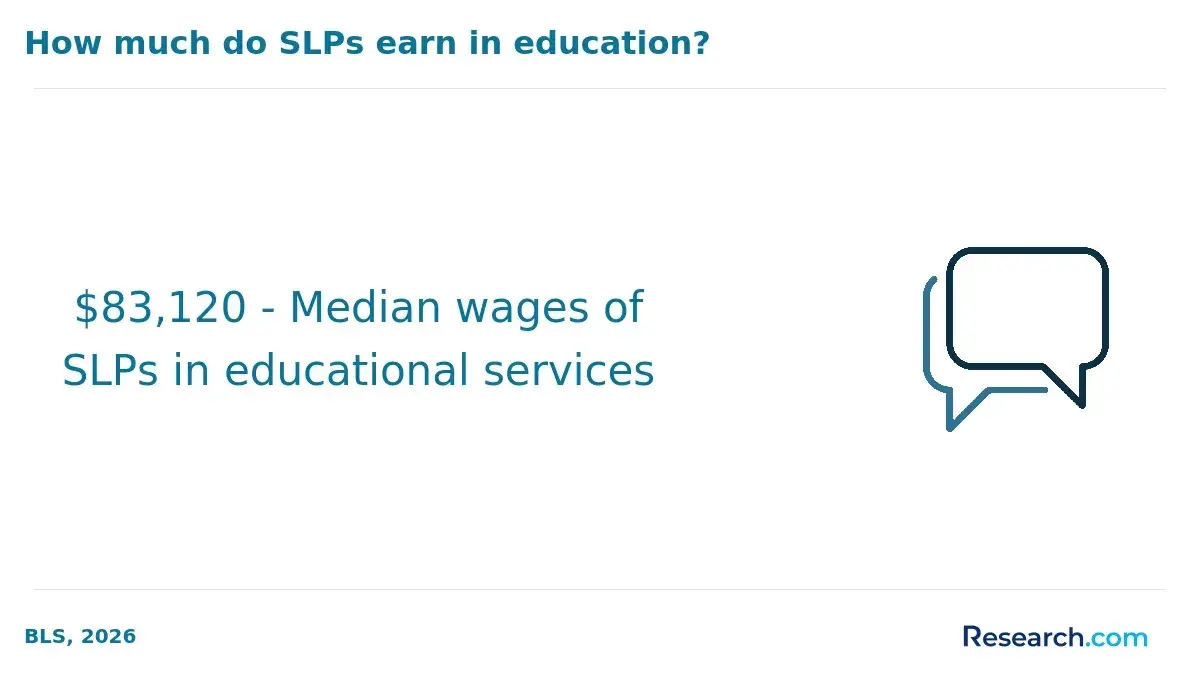
For financial planning, compare the degree's all-in cost with a conservative career outlook rather than assuming an immediate high salary. Nationally, the median annual wage for speech-language pathologists was $97,870 in May 2025, according to the Bureau of Labor Statistics. That figure is useful context, but individual earnings vary by setting, experience, location, employer, caseload, and bilingual expertise.
Which online speech pathology programs provide in-state or regional tuition advantages for Texans?
Texas residency does not automatically create an in-state tuition benefit in every online graduate program. Public universities may have resident and nonresident pricing, but some distance programs charge a single online rate regardless of residency. Private universities typically use one published tuition schedule, though scholarships can change the net price.
A Texas-based public institution may deserve close review because it could offer resident pricing or lower travel burdens, but applicants must verify the rate for the exact online SLP pathway. Do not assume that attending a Texas university means every fee, clinical requirement, or campus visit will be lower-cost.
When comparing financial offers, calculate net educational cost rather than relying on a tuition headline. The most useful comparison includes:
- Published tuition for all required credits or terms
- Program, distance-learning, clinical, technology, and graduation fees
- Prerequisite or leveling-course costs, if needed
- Travel, lodging, meals, and missed-work costs for required campus experiences
- Clinical compliance expenses such as background checks, immunizations, drug screening, and insurance
- Scholarships, employer tuition assistance, and federal loan eligibility
Ask financial-aid offices whether institutional scholarships are available to online clinical-program students and whether awards continue through all clinical terms. A scholarship restricted to the first academic year may not reduce the cost of later practicum or externship terms.
For career-return context, review reliable compensation information such as this guide to speech pathologist salary with a master's degree. Use salary information as a planning reference, not as a repayment guarantee, because local offers and work settings can differ from national figures.
How do Laredo-based students secure clinical practicum sites and school placements through online programs?
Clinical placement is a partnership among the university, the site, the supervisor, and the student. Students can improve their chances of a workable placement by starting early, being candid about transportation and work limitations, and following the university's placement process rather than contacting sites in a way that conflicts with school policy.
Local availability can vary across medical, private-practice, early-intervention, rehabilitation, skilled-nursing, and school settings. A student who can commute only within a narrow radius may have fewer options than a student able to travel elsewhere in Webb County or temporarily relocate for an externship. That is a planning issue, not a reflection of the student's qualifications.
After admission, take these practical steps:
- Read the clinical handbook immediately and note deadlines for health records, background checks, drug screening, CPR training, and liability insurance.
- Tell the clinical-education office your geographic limits, language skills, transportation access, and work schedule before placement matching begins.
- Ask whether the program already has approved Texas sites, while recognizing that prior affiliations do not guarantee a future opening.
- Maintain professional communication with potential sites only as directed by the university.
- Keep a contingency budget and schedule for required travel, delayed placement, or a site outside the preferred area.
School-based placements can be particularly competitive because districts must balance student needs, supervisor capacity, academic calendars, and university agreements. If a long-term goal is school employment, ask whether the curriculum includes preparation relevant to educational settings and whether graduates may need additional Texas education-agency or district-specific credentials.
What are the admissions expectations and prerequisite courses for top online speech pathology master's programs?
Admissions standards vary, but CAA-aligned graduate programs commonly expect a bachelor's degree, academic transcripts, prerequisite coursework, recommendations, a personal statement, and evidence that the applicant can succeed in graduate-level communication sciences and disorders study. Some programs require or recommend interviews, recorded responses, observation experience, or prerequisite verification.
Applicants without a bachelor's degree in communication sciences and disorders can still be viable candidates, but they often need leveling coursework before or alongside graduate study. This can increase both the timeline and total cost. Do not assume that a program marketed to career changers allows immediate entry into the clinical master's sequence.
| Common admissions component | What applicants should verify | Why it affects the decision |
| Undergraduate GPA | Minimum GPA, prerequisite GPA, and whether the school reviews applicants holistically | Helps applicants target realistic programs and address weaker academic areas. |
| Prerequisite courses | Exact course titles, lab requirements, grade minimums, and expiration policies | Missing classes can delay enrollment or add substantial cost. |
| Observation experience | Whether documented observation hours are required before admission | Requirements can take time to complete and may involve privacy procedures. |
| GRE or other testing | Whether scores are required, optional, or not accepted | Avoids unnecessary testing expenses or missed application requirements. |
| Interview or recorded response | Format, technology needs, and evaluation focus | Allows applicants to prepare concise examples of communication, resilience, and professional fit. |
Strong applicants connect their experiences to the realities of clinical training: substantial reading, live or recorded participation, ethical responsibilities, feedback, documentation, and in-person practicum. Admissions committees are generally looking for academic readiness and professional judgment, not simply enthusiasm for helping people.
If you need prerequisite courses, compare sequence length and transfer policies carefully. Some applicants benefit from completing approved prerequisites at lower cost before applying; others may prefer a university-managed leveling sequence for simpler advising. The right choice depends on time, finances, and whether the target master's program accepts outside coursework.
How can Laredo residents verify state authorization, ASHA CAA status, and board approval before enrolling?
Verification should happen before submitting a nonrefundable deposit. University webpages can lag behind policy changes, so obtain current written answers that identify the exact program, degree, modality, and anticipated start term. Keep copies of responses with your application records.
State authorization, CAA accreditation, and professional licensure are related but separate concepts. A school may be authorized to teach Texas residents yet not state that its curriculum meets Texas professional requirements. Conversely, a CAA-accredited program still may have location-specific placement limits or travel requirements.
Use this verification checklist:
- Check ASHA's CAA directory for the program's current accreditation status and review whether the listing applies to the exact campus or online pathway.
- Read the university's Texas professional-licensure disclosure and ask admissions to confirm it applies to your enrollment term.
- Confirm that the institution is authorized to enroll students located in Texas in the intended program format.
- Review current Texas speech-language pathology licensure requirements directly through the state regulator.
- Ask the clinical-education office whether it can support required placements for students located in South Texas and whether travel may be necessary.
- Request a complete cost sheet covering tuition, fees, clinical expenses, and required travel rather than relying on a single advertised rate.
A major red flag is vague language such as "designed to meet licensure requirements" without a program-specific Texas disclosure. Ask whether the institution has determined that the curriculum meets Texas educational requirements, has not made a determination, or cannot enroll Texas residents. The answer should be clear enough to document.
Applicants evaluating several online masters in speech pathology should apply the same checklist to every school. A consistent review method prevents an attractive tuition figure or flexible schedule from overshadowing essential eligibility details.
What unique career paths and local employer needs should Laredo speech pathology graduates anticipate?
A master's degree in speech-language pathology can lead to work across schools, hospitals, outpatient clinics, rehabilitation settings, early-intervention programs, skilled-nursing facilities, home health, and private practice. The best career setting depends on the clinician's preferred client population, tolerance for documentation and caseload demands, schedule needs, and interest in medical versus educational practice.
Laredo's border-region context can make Spanish-English bilingual communication and culturally responsive care especially relevant. Bilingual ability may be valuable to employers and families, but it does not replace graduate clinical preparation, valid assessment practices, or professional competence. Clinicians should work within their training and seek supervision or continuing education when serving multilingual populations.
The labor market supports careful long-term planning. The Bureau of Labor Statistics projects 17% employment growth for speech-language pathologists from 2025 to 2035 and about 12,500 openings per year on average during that period. These national projections indicate broad demand, but they do not predict an opening, salary, or caseload at a particular Laredo employer.
| Career setting | Typical focus | Decision consideration for new graduates |
| Public schools | Speech, language, literacy-related communication, and educational access | May involve school calendars, district credentialing, large caseloads, and collaboration with educators. |
| Hospitals and rehabilitation | Adult neurogenic disorders, swallowing, cognitive-communication, and acute or post-acute care | Often requires comfort with medical documentation, interdisciplinary care, and variable schedules. |
| Early intervention and pediatric clinics | Developmental language, speech sound disorders, feeding, and family coaching | May include travel, caregiver education, and family-centered service delivery. |
| Skilled nursing and home health | Adult communication, cognition, swallowing, and functional participation | Workload can depend on productivity expectations, travel territory, and payer documentation. |
| Private practice | Specialized pediatric or adult services | May offer focused caseloads but can vary widely in benefits, scheduling, and mentorship. |
Technology is changing documentation, telepractice, scheduling, and some assessment workflows, but it does not eliminate the need for licensed clinical judgment. New graduates should prioritize settings that provide appropriate clinical fellowship mentorship, manageable orientation, and experience relevant to their intended specialty rather than choosing solely by a starting-pay figure.
Other Things You Should Know About Speech Language Pathology
Yes, if the program is appropriately accredited, supports the required clinical education, and meets applicable Texas educational and licensing requirements. The degree being online does not automatically prevent licensure, but students must confirm the exact program's Texas disclosure, clinical-placement process, and CAA status before enrolling.
Often, yes. Even programs with online coursework require in-person clinical experiences. Travel needs vary by program and local site availability. Some students can complete much of their training near home, while others may need to commute farther or travel for an immersion, lab, or externship.
The path usually includes prerequisite preparation if needed, a graduate master's program with clinical education, a post-graduate clinical fellowship, examination requirements, and state licensing steps. The timeline varies based on academic background, program pacing, clinical placement timing, and state processing requirements.
It is not universally required for licensure, but it can be highly relevant in settings serving bilingual communities. Bilingual clinicians must still use culturally and linguistically appropriate assessment and intervention practices and work within their professional competence.
References
- Hybrid Online SLP Programs in Texas | Austin & Dallas https://apply.usa.edu/speech-language-pathology-texas
- Online Speech-Language Pathology Graduate Program https://csd.robbins.baylor.edu/graduate/online-csd-graduate-program
- Online Master's in Speech Pathology Programs: 2026 Guide https://speechpathologymastersprograms.com/
- Best Online Speech Pathology Programs https://www.forbes.com/advisor/education/healthcare/best-speech-pathology-programs-online/
- 2026 Most Affordable Online Speech Pathology Master's... https://www.onlineu.com/most-affordable-colleges/speech-pathology-masters-degrees