2027 Best Online Speech Pathology Master's Programs for Residents of Jacksonville, FL

Co-Founder and Chief Data Scientist

Reviewed by Rhea Paul, PhD
SLP Education & Research Expert
Jacksonville residents choosing an online speech-language pathology master's degree need more than a flexible class schedule: they need a program that can support Florida licensure, arrange appropriate clinical education, and meet ASHA certification standards.
This guide compares the decision factors that matter most, including accreditation, state authorization, required travel, placement support, cost transparency, and admissions fit. It is designed for prospective SLPs who want to identify a realistic, licensure-focused pathway before committing significant time and tuition.
Key Things You Should Know
- An online SLP master's is only a strong choice for a Jacksonville resident if the program is accredited by ASHA's Council on Academic Accreditation (CAA), permits Florida enrollment, and can support clinical education that satisfies Florida requirements.
- Leading online-format options commonly require approximately 400 supervised clinical hours and may include required campus immersions, synchronous classes, or travel for assessments; "online" does not mean entirely remote.
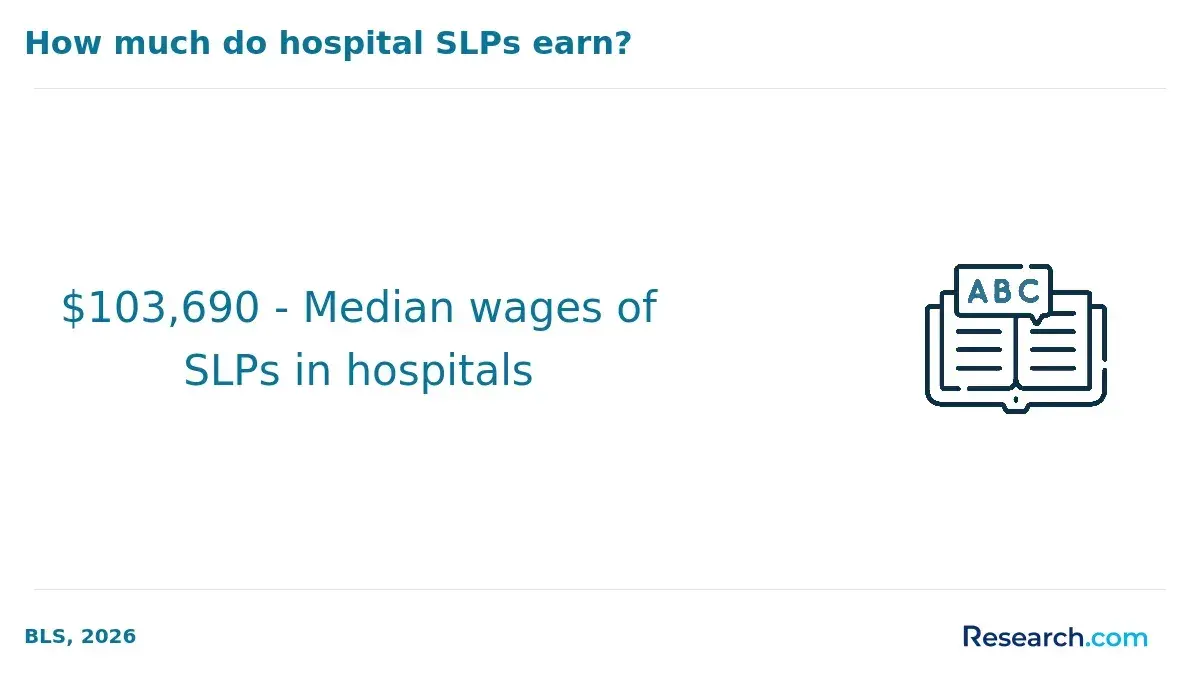
- The U.S. Bureau of Labor Statistics reports a $97,870 median annual wage for speech-language pathologists in May 2025 and projects 17% employment growth from 2025 to 2035, but licensure eligibility - not salary projections - should be the first enrollment screen.
Which online speech pathology master's programs accept Jacksonville, FL residents and offer full ASHA alignment?
For Jacksonville applicants, the best program is not automatically the nearest school or the best-known brand. A strong shortlist begins with CAA-accredited master's programs that publish online or hybrid delivery information and can confirm Florida enrollment, Florida licensure alignment, and clinical-placement procedures in writing.
The programs below are examples of established online or hybrid SLP pathways that prospective Florida students may evaluate. Enrollment authorization, cohort availability, tuition, and Florida-specific professional-licensure disclosures can change, so applicants should obtain a current confirmation directly from each institution before applying or paying a deposit.
| Program | Online-format feature | Key Jacksonville decision point | Potential fit |
| Baylor University, Master of Science in Communication Sciences and Disorders | Online graduate coursework with clinical education and required immersion experiences | Confirm current Florida eligibility, travel expectations, and placement availability before applying | Applicants seeking a cohort-based online pathway with organized clinical support |
| Emerson College, Master of Science in Communication Disorders | Online coursework with live learning components, clinical placements, and immersion requirements | Verify Florida authorization, time-zone demands, and the current clinical-placement model | Students who can commit to structured full-time study and required travel |
| New York University, MS in Communicative Sciences and Disorders | Online graduate program with clinical training and in-person requirements | Ask whether current Florida placement capacity fits the applicant's anticipated enrollment term | Applicants comfortable with a national program and potential travel |
| University of St. Augustine for Health Sciences, MS-SLP | Hybrid-style program with online learning and required in-person clinical or residency components | Review Florida licensure disclosure and distinguish tuition from total mandatory costs | Students who value an allied-health-focused institutional environment and can travel |
CAA accreditation is the nonnegotiable starting point, but it does not answer every practical question. Compare each program's travel calendar, live-session schedule, prerequisite policy, placement process, and total billed cost before deciding which option is "best" for your circumstances.
Applicants who are still building a broad comparison list can review SLP programs online, then narrow the list using Florida authorization and CAA status rather than admission difficulty alone.
How does Florida licensure shape the best online speech pathology master's choices for Jacksonville students?
Florida licensure shapes every meaningful program decision. To practice as a speech-language pathologist in Florida, graduates generally need an appropriate graduate degree, supervised professional experience, a passing Praxis examination score, and satisfaction of Florida Board of Speech-Language Pathology and Audiology requirements. Requirements can change, and the board - not a university - makes the final licensure determination.
For an applicant living in Jacksonville, the central question is not simply whether an institution offers online classes. The question is whether its curriculum, supervised clinical education, documentation, and advising process can support the educational portion of Florida's licensing pathway. A CAA-accredited master's degree is generally designed to support national professional preparation, but applicants should not treat that as an automatic Florida license guarantee.
Use the following verification sequence before ranking programs by convenience or price.
- Confirm that the exact master's program - not merely the university - is currently CAA accredited.
- Request the school's current written professional-licensure disclosure for Florida residents.
- Ask whether the program has any known restriction on Florida enrollment, Florida clinical placements, or post-graduation licensure preparation.
- Compare the school's required clinical-hour documentation with what Florida expects for the license pathway you intend to pursue.
- Keep copies of course descriptions, clinical records, supervisor information, and the school's disclosure for your future licensing file.
Florida applicants should also plan for the post-degree supervised experience period commonly associated with entry into independent practice. A degree program can prepare you for that next stage, but it does not eliminate the need to satisfy the board's separate application and experience requirements.
Which accredited online speech pathology programs serve Florida through SARA or state authorization?
State authorization governs whether an institution may enroll a student who resides in Florida; it is separate from academic accreditation. Many distance-education institutions participate in the State Authorization Reciprocity Agreement, commonly called SARA, but SARA participation does not itself establish that a professional program meets Florida licensing requirements.
That distinction matters because an online SLP program may be able to teach a Florida resident while still limiting clinical placements, requiring additional disclosures, or stating that it has not determined whether its curriculum meets a particular Florida requirement. Treat authorization and licensure alignment as two separate boxes that both need to be checked.
| What to verify | Why it matters in Jacksonville | What a useful answer looks like |
| Florida distance-education authorization | It determines whether the school can enroll you while you live in Florida | A current, program-specific statement that Florida residents may enroll |
| Professional-licensure disclosure | SLP is a regulated occupation with state-specific rules | A written explanation of whether the curriculum meets, is intended to meet, or has not been determined to meet Florida requirements |
| Clinical-placement permission | Placements may involve separate agreements, site capacity, and supervision rules | A clear description of how Florida sites are identified, approved, and documented |
| Change-notification process | Authorization and placement conditions can change during a multi-year degree | A named office or policy explaining how students receive material updates |
Do not rely on a general statement that a university "serves students nationwide." Ask for confirmation tied to the specific online or hybrid SLP master's, your state of residence, and your intended start term. This is particularly important for a student who may move out of Florida while enrolled.
What accreditation and ASHA CAA standards must Jacksonville residents verify in an online SLP master's?
CAA accreditation from the American Speech-Language-Hearing Association is the most important academic quality screen for an entry-level SLP master's degree. CAA evaluates whether a program meets standards involving curriculum, faculty, student outcomes, clinical education, assessment, and resources. For Jacksonville residents seeking eventual ASHA certification and Florida practice, a non-CAA-accredited degree creates substantial risk.
Applicants should distinguish among accreditation terms. "Accredited" indicates that the program currently holds CAA accreditation. "Candidacy" is not the same status and may carry additional uncertainty for students. "Institutionally accredited" refers to the university as a whole and does not replace specialized CAA accreditation for an SLP master's program.
A careful accreditation review should cover more than a logo on a program page.
- Verify the exact degree title and delivery location or format in the current CAA directory.
- Review whether the school lists an accreditation decision date, reporting status, or any public notice affecting the program.
- Confirm that the degree includes academic coursework and supervised clinical education intended to support ASHA certification standards.
- Ask whether graduates are responsible for any additional coursework because of prior academic deficiencies or state-specific rules.
- Save the CAA listing and the school's licensure disclosure dated near the time you enroll.
CAA status is necessary, but it does not make every program equally practical. A fully accredited program may still be a poor fit if it cannot secure clinical opportunities near Jacksonville, conflicts with your work schedule, or requires travel that exceeds your budget.
How do Jacksonville-focused online speech pathology programs handle Florida clinical placements and practicum sites?
Clinical education is usually the least "online" portion of an online SLP master's. Students need supervised direct client contact across appropriate populations and settings, and programs must ensure that placements, supervisors, documentation, and evaluations meet their academic and professional standards. A Jacksonville location can be helpful because the metro area includes medical, school, rehabilitation, pediatric, and private-practice environments, but no applicant should assume a particular site will be available.
Programs use different placement models. Some have dedicated placement teams that identify and contract with sites; others expect students to help locate local possibilities while the university conducts the formal approval process. The distinction can affect the time, uncertainty, and travel involved in completing the degree.
| Placement model | What the student usually does | Main advantage | Main risk to investigate |
| University-arranged placement | Provides availability, compliance documents, and scheduling information to the placement office | Less responsibility for initial site outreach | Local placement cannot be promised when capacity is limited |
| Student-assisted placement search | Identifies potential sites or contacts while the university approves the site and supervisor | May expand options near the student's community | Placement search can require substantial time and may not produce a preferred setting |
| Hybrid or centralized clinic model | Travels to an assigned campus clinic, intensive, or regional site for some training | More standardized clinical instruction | Travel, lodging, missed work, and schedule disruption can raise the real cost |
Before enrolling, ask each admissions or clinical-education office whether it has placed recent students in Northeast Florida, without asking it to promise a specific facility. Also ask about site rejection, background checks, immunizations, drug screening, liability insurance, onboarding timelines, and whether evening or weekend placements are realistic. These operational details often determine whether a working adult can remain employed while completing the program.
A common mistake is treating a school's statement that it "helps with placements" as a guarantee of a nearby placement. The safer approach is to obtain a written explanation of the process, the student's responsibilities, possible travel radius, and the school's contingency plan if a local site falls through.
What are the admissions patterns and cohort profiles for top online SLP master's programs enrolling Floridians?
Online SLP cohorts are typically selective because clinical capacity, faculty supervision, and placement availability limit enrollment. A strong application shows that you can handle graduate-level science and communication-disorders coursework, work professionally with clients and supervisors, and complete a demanding clinical schedule - not merely that you prefer online learning.
Requirements vary by institution, but applicants commonly encounter a bachelor's degree requirement, prerequisite coursework, transcripts, recommendation letters, a personal statement, résumé, and interviews or recorded responses. Some programs may waive the GRE, while others may change testing policies by cycle. Applicants with a non-CSD bachelor's degree may need leveling coursework before or during the graduate program.
The comparison below helps Jacksonville applicants interpret common admissions patterns without assuming that one policy applies everywhere.
| Admissions factor | Why programs use it | What Jacksonville applicants should do |
| Prerequisite coursework | Ensures preparation in communication sciences and related sciences | Request a transcript evaluation early, especially if your undergraduate major was outside CSD |
| Academic record | Helps assess readiness for a rigorous clinical graduate curriculum | Explain documented upward trends or relevant academic context briefly and factually |
| Observation and service experience | May demonstrate informed interest in the profession | Follow observation rules and describe what you learned rather than overstating responsibilities |
| Interview or written statement | Assesses communication, professionalism, and motivation | Connect your goals to pediatric, medical, school, or other practice interests without claiming a fixed specialty too early |
| Schedule readiness | Clinical placements require availability that may exceed class hours | Plan for daytime placement obligations before accepting an offer |
Applicants seeking a faster route should be wary of marketing language. A speech pathology accelerated program may reduce calendar time only when prerequisite preparation, full-time attendance, clinical scheduling, and travel demands align; it does not remove required competency and clinical-training expectations.
How do online speech pathology programs compare in cost and funding options for Jacksonville residents?
Cost comparisons are difficult because schools may publish tuition per credit, per term, or per year, while required fees, travel, clinical expenses, and prerequisite courses are presented elsewhere. Jacksonville residents should compare the estimated total cost of attendance for the entire program rather than treating a lower per-credit figure as proof of lower overall cost.
For an online or hybrid SLP program, the total financial picture usually includes more than tuition.
- Tuition for all required graduate credits, including any required leveling or prerequisite coursework.
- University, technology, clinical, graduation, and course-material fees when applicable.
- Travel, lodging, meals, and lost work time for immersions, residencies, intensives, or campus assessments.
- Clinical compliance costs, such as background checks, immunizations, drug screening, liability coverage, and professional attire.
- Living expenses and income disruption during full-time clinical rotations, which may be more consequential than a modest tuition difference.
Federal financial aid may be available to eligible graduate students through the FAFSA process, but borrowing limits, loan terms, and individual eligibility matter. Employer tuition benefits, institutional scholarships, graduate assistantships, military education benefits, and external scholarships may reduce out-of-pocket costs, though online clinical programs may offer fewer assistantship opportunities than campus-based programs.
The table identifies the right way to compare published prices without creating misleading rankings from incomplete information.
| Cost comparison item | Use it for | Do not mistake it for |
| Per-credit tuition | Estimating base instructional cost when required credits are known | Total program cost |
| Term tuition | Planning cash flow and aid disbursement timing | A comparable annual price across programs with different term lengths |
| Cost of attendance | Evaluating tuition, fees, living costs, and other estimated expenses | Your guaranteed bill or your personal borrowing need |
| Travel estimate | Comparing hybrid programs with in-person requirements | An optional expense when attendance is required |
| Scholarship offer | Reducing the net cost for the stated award period | A renewable award unless renewal terms are explicit |
Start by requesting a program-specific estimate that identifies required credits, billed fees, immersion travel, and clinical charges. Then compare that estimate against household income, likely work interruption, and borrowing capacity. Readers evaluating broader affordability can also explore online speech pathology masters programs with an affordability focus.
What Praxis pass rates and employment outcomes do leading online SLP programs report for Florida graduates?
Outcome data helps distinguish an attractive online format from a program that is effectively preparing students for professional practice. The most useful indicators are typically Praxis examination performance, program completion, employment outcomes, and the timeframe and definitions used to calculate each measure.
The U.S. Bureau of Labor Statistics reports that speech-language pathologists had a median annual wage of $97,870 in May 2025. It also projects 17% employment growth from 2025 to 2035, with about 12,500 openings per year on average. These national figures signal strong demand, but they do not predict an individual Jacksonville graduate's earnings, first job, setting, or timeline to independent Florida licensure.
When reviewing a school's outcomes page, compare like with like. A reported Praxis rate may use a particular cohort, number of test takers, or reporting period; an employment rate may exclude graduates still seeking work, pursuing further education, or unavailable for employment. Ask the program to define its figures rather than assuming a headline percentage answers every question.
Use outcome disclosures to ask targeted questions before you enroll.
- What was the most recently reported Praxis pass rate, and how many graduates were included?
- What completion-rate period does the school report, and how does it count leaves, transfers, or withdrawals?
- How does the program define employment, and how long after graduation is the outcome measured?
- What settings do graduates enter, such as schools, hospitals, rehabilitation facilities, early intervention, or private practice?
- What support does the program provide for Praxis preparation, Clinical Fellowship planning, résumé development, and employer networking?
Employment demand should support - not replace - your personal return-on-investment analysis. Consider debt, required travel, ability to work during clinical education, and the type of positions you want. For additional wage context across career paths, see how much does a speech therapist make.
How can Jacksonville applicants audit consumer-protection disclosures from online speech pathology programs?
Consumer-protection disclosures are practical decision tools, not fine print. Before a Jacksonville applicant applies, a credible program should be able to provide current information on accreditation, state authorization, professional-licensure alignment, tuition and fees, refund policies, clinical requirements, and complaint procedures.
Keep a dated folder of disclosures, emails, and enrollment documents. This creates a useful record if a program changes a material requirement, if you move to another state, or if you need to verify what the school represented when you enrolled.
Use this audit before you submit an enrollment agreement or nonrefundable deposit.
- Read the program's current CAA status and confirm it applies to the degree and delivery format you will enter.
- Locate the Florida professional-licensure disclosure and ask for clarification if it says the institution has not determined eligibility.
- Request the complete program sequence, including clinical terms, immersion dates, expected weekly availability, and any synchronous meeting times in Eastern Time.
- Obtain a written itemization of tuition, mandatory fees, placement-related expenses, and travel requirements.
- Review cancellation, withdrawal, leave-of-absence, transfer-credit, and teach-out policies before committing funds.
- Ask who is responsible for finding placements and what happens if the school cannot place you near Jacksonville.
- Review the school's student complaint process and the appropriate Florida consumer or regulatory contacts listed in its disclosures.
Red flags include vague answers about Florida eligibility, promises of local placements without written process details, tuition quotes that omit mandatory fees, or claims that licensure is "guaranteed." The appropriate response is not necessarily to reject the school immediately, but to pause until its written documentation resolves the issue.
Which emerging online SLP pathways and advanced credentials matter most for Jacksonville-based clinicians?
Online SLP education is evolving toward more technology-enabled learning, telepractice exposure, simulation, and interprofessional training. These developments can be valuable for Jacksonville-based clinicians, especially as telehealth remains part of many service models, but technology does not replace the supervised clinical experience and state-specific licensing steps required for entry-level practice.
After earning the master's degree and completing the applicable licensure pathway, clinicians may consider advanced credentials based on actual career goals rather than résumé pressure. ASHA's Certificate of Clinical Competence is a widely recognized professional credential, while specialty-focused continuing education may support work in areas such as swallowing, autism, voice, augmentative and alternative communication, bilingual service delivery, medical SLP, or school-based practice.
The right next credential depends on the practice setting you want to enter.
| Pathway or capability | Why it may matter | Best timing |
| Telepractice competence | Can support ethical, effective remote service delivery when permitted by employer and licensure rules | Learn core concepts in graduate school; deepen skills after supervised practice begins |
| ASHA certification pathway | May be expected or preferred by many employers and can support professional mobility | Plan during the master's program and complete applicable post-degree requirements |
| School-based specialization | Supports work involving educational teams, eligibility processes, and school service delivery | Choose relevant practicum exposure before adding post-degree training |
| Medical or dysphagia-focused development | Can support hospital, rehabilitation, and skilled-nursing career goals | Build foundational clinical experience before pursuing advanced offerings |
| Bilingual or multicultural clinical competence | Can improve culturally responsive assessment and intervention for diverse communities | Develop throughout training; avoid claiming proficiency without appropriate preparation |
Choose an entry-level master's program for its licensure readiness, clinical quality, and workable schedule first. Specialized certificates and continuing education are most useful after you have identified a setting, population, and supervision environment that fit your developing practice.
Other Things You Should Know About Speech Language Pathology
Possibly, if the specific program is CAA accredited, accepts Florida residents, provides appropriate clinical education, and supports the educational requirements for Florida licensure. You must still meet Florida Board requirements, including applicable examination and supervised-experience steps.
Often, yes. Many online or hybrid programs require immersions, skills assessments, campus visits, or centralized clinical experiences. Ask for the complete travel calendar before applying because travel costs and missed work can materially affect affordability.
Coursework may be flexible, but clinical placements commonly require daytime availability and substantial weekly hours. Some students reduce work hours or leave full-time employment during practicum terms. Confirm the expected schedule term by term rather than relying on a general "online" label.
You may still qualify for some programs, but you will likely need prerequisite or leveling coursework. Request an individual transcript review early, because missing prerequisites can add cost and time and may affect which programs are realistic for your target start date.
References
- Online MS in Speech-Language Pathology (SLP) | Pepperdine https://healthscience.pepperdine.edu/online-masters-in-speech-language-pathology/
- Master of Science in Speech Language Pathology https://www.ju.edu/communicationsciences/programs/ms-speech-language-pathology.php
- Best Online Speech Pathology Programs https://www.forbes.com/advisor/education/healthcare/best-speech-pathology-programs-online/
- Online Master's in Speech Pathology Programs: 2026 Guide https://speechpathologymastersprograms.com/
- #USAHS' hybrid online Master of Science in Speech... https://www.facebook.com/universityofstaugustine/videos/ms-slp-students/937782038368277/