2027 Best Online Speech Pathology Master's Programs for Residents of Greensboro, NC

Co-Founder and Chief Data Scientist

Reviewed by Rhea Paul, PhD
SLP Education & Research Expert
Greensboro residents seeking an online speech-language pathology master's degree need more than a convenient class schedule: they need a CAA-accredited program that can support clinical education and North Carolina licensure. This guide compares practical online and hybrid options by state availability, clinical-placement approach, travel, cost structure, outcomes, and admissions fit. It is designed for future SLPs who want to choose a program that can lead to CCC-SLP certification and practice in North Carolina without making costly assumptions.
Key Things You Should Know
- A Greensboro applicant should prioritize a master's program accredited by ASHA's Council on Academic Accreditation (CAA), because CAA accreditation is central to the usual CCC-SLP and North Carolina licensure pathway.
- Online SLP degrees are not fully remote in the clinical sense: supervised practicum and internship experiences must occur in person, and some programs require campus immersions, simulations, or synchronous classes.
- Speech-language pathology employment is projected to grow 17% from 2025 to 2035, with about 12,500 annual openings; however, program choice should be driven first by licensure eligibility, clinical support, and total cost rather than labor-market demand alone.
Which online speech pathology master's programs accept Greensboro, NC residents without relocation?
Several distance-delivered CAA-accredited master's programs commonly consider applicants living in North Carolina, but eligibility can change by cohort, state authorization status, and clinical-site capacity. "Online" usually means academic coursework can be completed from Greensboro; it does not mean clinical requirements can be completed without travel or in-person patient contact.
The programs below are useful starting points because they have established distance or hybrid pathways. Before applying, obtain written confirmation that the school can enroll North Carolina residents for your intended start term and can support a North Carolina clinical plan.
| Program | Distance-delivery model | Greensboro decision point | Best fit |
| Baylor University, M.S. in Communication Sciences and Disorders | Online coursework with required clinical education and program-directed experiences | Confirm current North Carolina authorization, campus or immersion expectations, and placement process | Students seeking a structured online cohort with intensive pacing |
| Emerson College, M.S. in Communication Disorders | Online coursework, live learning components, simulations, and in-person clinical experiences | Confirm NC eligibility and whether local placement availability affects progression | Students who value a well-defined online clinical curriculum |
| New York University, M.S. in Communicative Sciences and Disorders | Online academic delivery with clinical fieldwork requirements | Review travel, synchronous sessions, and clinical assignment expectations before committing | Students comfortable with a fast-paced, structured graduate experience |
| University of St. Augustine for Health Sciences, M.S. in Speech-Language Pathology | Hybrid model with online learning and required in-person clinical education | Ask how placements are coordinated in the Triad and what travel may be required | Students who want a health-professions-focused hybrid format |
Do not treat this as a promise of admission or enrollment eligibility. A school may accept North Carolina residents generally while limiting a particular cohort, specialty placement, or clinical sequence. Prospective students comparing broader speech pathology programs online should separate programs that are merely online from programs that are explicitly able to enroll and train North Carolina residents.
A local campus-based or hybrid option can still be the better choice when it provides stronger relationships with Triad-area schools, hospitals, early-intervention providers, or medical settings. Choose a national online program when its state eligibility, travel burden, clinical support, tuition, and pace clearly fit your circumstances - not simply because lectures are delivered online.
How does North Carolina licensure shape which online speech pathology degrees Greensboro residents should choose?
North Carolina licensure should be the first filter. To practice as an SLP in the state, graduates generally need a qualifying graduate degree, supervised clinical education, a passing Praxis examination, and completion of the clinical fellowship requirements applicable to the license sought. The North Carolina Board of Examiners for Speech-Language Pathologists and Audiologists makes the final determination; a university cannot grant a North Carolina license.
The most defensible route is a CAA-accredited master's degree designed to meet ASHA certification standards. CAA accreditation is especially important because employers, fellowship supervisors, insurers, and state licensing systems commonly expect graduates to follow the CCC-SLP-aligned pathway. Programmatic accreditation is different from regional or institutional accreditation: both matter, but institutional accreditation alone does not establish SLP professional eligibility.
Use this sequence before you pay an enrollment deposit:
- Confirm the program's current CAA accreditation status in ASHA EdFind or the CAA directory.
- Read the program's North Carolina professional-licensure disclosure and ask whether it meets, is intended to meet, or has not been determined to meet NC requirements.
- Ask whether the school can arrange or approve required clinical placements in North Carolina and what happens if a local site is unavailable.
- Compare the curriculum against ASHA certification requirements, including academic prerequisites, supervised clinical hours, Praxis, and clinical fellowship expectations.
- Verify current licensing requirements directly with the North Carolina Board before enrollment and again before graduation.
A common mistake is assuming that an out-of-state online degree automatically transfers into North Carolina practice. It may be a strong program and still require an individual transcript review, supplemental documentation, or a different clinical sequence. Keep copies of syllabi, clinical-hour records, supervisor credentials, and university verification forms; they can make later credentialing substantially easier.
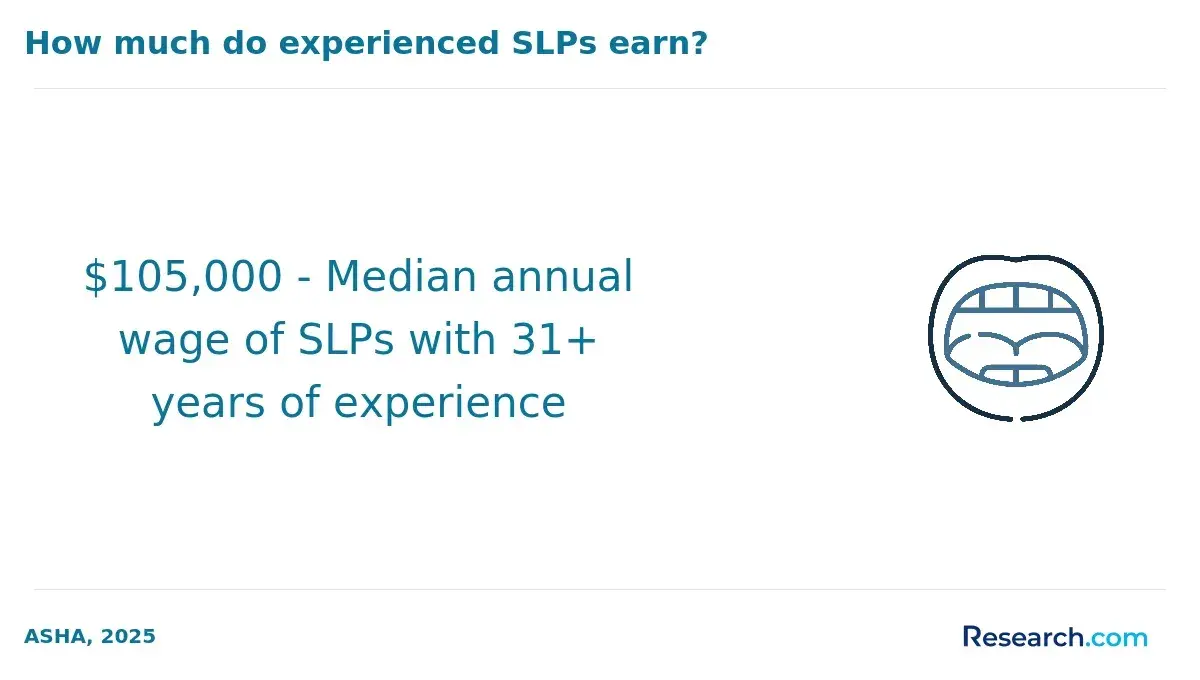
Licensure also affects career planning. The national median annual wage for speech-language pathologists was $97,870 in May 2025, according to the U.S. Bureau of Labor Statistics, but local compensation varies by employer, setting, experience, and credentials. Readers considering the financial return should review how a speech pathologist salary with a master's degree can differ across medical, school, private-practice, and leadership roles rather than using a national median as a personal earnings forecast.
Which online CSD master's programs offer in-state or regional tuition advantages for Greensboro students?
Greensboro residents should be cautious when comparing advertised tuition. Most national online SLP programs charge a uniform online rate or private-university rate rather than North Carolina resident tuition. A public university may look less expensive per credit but still cost more after mandatory fees, travel, lost work time, and extra prerequisite coursework.
North Carolina public universities can offer resident tuition advantages in campus-based or hybrid programs, but availability of an online entry-level SLP master's pathway is limited and can change. For a distance program outside North Carolina, ask whether online students pay resident, nonresident, or program-specific tuition and whether the published figure includes required clinical, technology, graduation, background-check, and residency costs.
| Cost question | Why it matters for Greensboro applicants | What to request |
| Tuition basis | Online programs may not use North Carolina resident rates | A written estimate showing per-credit or total program tuition for your cohort |
| Prerequisite coursework | Applicants without a CSD bachelor's degree may need leveling courses before graduate enrollment | The number of required prerequisites, price, and whether financial aid applies |
| Clinical expenses | Practicum can create travel, parking, attire, health-clearance, and unpaid-time costs | A typical clinical-expense list and who pays for placement-related travel |
| Campus travel | Residencies can add airfare, lodging, meals, and time away from work | Required dates, location, frequency, and whether attendance is mandatory |
| Program length | A longer part-time schedule can change borrowing and living-cost needs | A term-by-term plan for full-time and part-time enrollment, if offered |
Cost-conscious applicants should compare a complete estimated cost of attendance, not just tuition. Ask each institution's financial-aid office for its official budget and then build a personal budget for Greensboro commuting, childcare, reduced work hours, and required travel. A lower sticker price is not automatically the lower-cost option if it delays completion or requires repeated out-of-state visits.
Programs marketed as fast can be appealing, particularly to career changers, but compressed pacing may reduce the number of hours available for paid work. Compare accelerated SLP programs online only after confirming that the accelerated format still supports your prerequisite, clinical, and financial needs.
Which accredited online speech-language pathology programs align with ASHA CCC-SLP requirements and NC's board rules?
The strongest options for Greensboro residents are CAA-accredited programs that provide transparent professional-licensure disclosures, document how clinical education is supervised, and prepare graduates for the standard CCC-SLP pathway. CAA accreditation does not replace personal responsibility for North Carolina licensing, but it is the clearest indicator that a program has been evaluated against professional educational standards.
ASHA certification and North Carolina licensure overlap substantially, yet they are separate credentials. The CCC-SLP is a national professional certification. A North Carolina license is a legal authorization to practice in the state. Many employers prefer or require both, while school-based roles may involve additional education-agency or local-employer requirements.
| Credential or requirement | Who oversees it | What a Greensboro student should verify |
| Graduate program accreditation | ASHA Council on Academic Accreditation | Current CAA status for the exact degree and campus/delivery pathway |
| Academic and clinical preparation | University and ASHA certification framework | Prerequisites, supervised practicum documentation, and graduate clinical curriculum |
| Praxis examination | Educational Testing Service and credentialing bodies | Current score policy and whether the program provides preparation support |
| Clinical fellowship | Employer, supervisor, ASHA, and state requirements | How the fellowship will be documented after graduation |
| North Carolina practice license | North Carolina Board of Examiners for Speech-Language Pathologists and Audiologists | Current application, supervision, and documentation requirements |
Be wary of three red flags: a school that will not provide a state-specific disclosure, a degree that is not CAA-accredited when your goal is entry-level SLP practice, or vague statements that a program "may" lead to licensure without explaining the process. Also avoid relying only on an admissions representative's verbal answer. Request the response by email and save it with the catalog year that applies to your cohort.
Admission accessibility should not override credential fit. Guides to the easiest speech pathology programs to get into can help applicants build a balanced school list, but the appropriate program must still satisfy CAA, state-authorization, and clinical-training requirements.
How do top online speech pathology programs handle clinical placements near Greensboro and the Triad region?
Clinical placement is the part of an online SLP degree that requires the most local planning. Programs generally use a mix of university placement staff, student-provided leads, affiliation agreements, telepractice training, simulation, and in-person practicum. No applicant should assume that a program has an existing agreement with a Greensboro-area school district, hospital, private practice, or rehabilitation provider unless the program confirms it.
The Triad's schools, pediatric clinics, hospitals, skilled-nursing facilities, and rehabilitation settings can be valuable learning environments, but sites may have limited supervisory capacity and may prioritize existing university partners. A school's ability to place students can also vary by adult versus pediatric interest, bilingual service needs, semester, and supervisor availability.
Ask each program these placement questions before enrolling:
- Will the placement team secure every practicum and internship site, or must the student identify sites and obtain approvals?
- Can required clinical experiences normally be completed in North Carolina, and what is the backup plan if a local site is unavailable?
- What settings, client ages, and service-delivery experiences are required before graduation?
- How far may a student be expected to commute, and can the school require travel outside the Triad or North Carolina?
- Who verifies supervisor eligibility, liability coverage, background checks, immunizations, and onboarding requirements?
- Can students keep a job during full-time clinical externships, or are daytime weekday placements expected?
The key trade-off is control versus convenience. A program that centrally places students may reduce administrative work but can offer less choice over site and schedule. A program that allows student leads may help applicants with strong local professional contacts, but it can create risk if an affiliation agreement or qualified supervisor cannot be finalized. Obtain the policy in writing, including whether delayed placement can delay graduation.
Telepractice exposure is increasingly relevant, but it is not a substitute for all in-person clinical competencies. Ask how telepractice hours are supervised, whether North Carolina site rules affect services, and how the program ensures exposure to diverse populations and settings.
What admission requirements and prerequisite coursework do leading online SLP programs expect from Greensboro applicants?
Requirements differ substantially for applicants with a communication sciences and disorders bachelor's degree and career changers from another major. Most entry-level master's programs expect foundational coursework in speech, language, hearing, anatomy or physiology, phonetics, research methods, and related behavioral or social sciences. They also commonly require coursework meeting ASHA's general education and science expectations.
Applicants should expect a holistic review that may include transcripts, a statement of purpose, recommendation letters, résumé or experience record, interviews, observation history, and a demonstrated understanding of the profession. Some schools do not require the GRE, while others may retain, waive, or change that policy by admissions cycle. Never infer a requirement from an older blog post or another campus's catalog.
| Applicant background | Typical preparation issue | Practical planning choice |
| CSD or speech-hearing-sciences bachelor's degree | May already have most foundational courses but still need institution-specific equivalents | Request a transcript review early and confirm any science or statistics gaps |
| Non-CSD bachelor's degree | Usually needs leveling or prerequisite courses before or alongside graduate study | Choose between a post-baccalaureate sequence and a program with an integrated leveling pathway |
| Working adult | Observation, interviews, and prerequisites can compete with work obligations | Map application tasks and course completion dates at least several months ahead |
| Applicant with a lower undergraduate GPA | May need stronger recent coursework or clearer evidence of academic readiness | Ask how the program reviews cumulative, major, and last-60-credit GPA rather than self-screening out |
A strong application demonstrates realistic knowledge of SLP practice, not simply enthusiasm for helping people. Relevant exposure can include observation, classroom support, caregiving, behavioral-health work, rehabilitation experience, research assistance, or communication-disorders volunteering. Follow patient-privacy rules and do not describe identifiable clients in application materials.
The most common application error is starting prerequisites too late. Another is applying without checking whether an online cohort has fixed meeting times that conflict with a Greensboro work schedule. Ask for the exact prerequisite list, minimum grade rules, expiration policy for older science courses, and whether course equivalents must be approved before you register.
How do program length, delivery format, and cohort model differ across online SLP options for Greensboro residents?
Online SLP master's programs usually use a lockstep cohort because clinical skills, sequenced coursework, and placement timing must be coordinated. This structure can provide clear support and predictable milestones, but it offers less flexibility than a self-paced online degree. Most full-time entry-level pathways take roughly two years or longer depending on prerequisite status and clinical sequencing; part-time options, where available, take longer.
Delivery labels can be misleading. "Online" may include live evening sessions, daytime clinical hours, virtual simulations, proctored assessments, on-campus intensives, and in-person internships. A Greensboro student should evaluate the weekly schedule, not the marketing label.
| Format feature | What it usually means | Who it may suit |
| Asynchronous coursework | Recorded lectures and deadlines with limited real-time attendance | Working students who need flexibility, provided clinical requirements remain manageable |
| Synchronous online classes | Live sessions at scheduled times, often with attendance expectations | Students who want regular interaction and can protect meeting times |
| Lockstep cohort | Students move through courses and clinical milestones together | Students who prefer structure and peer accountability |
| Hybrid residency or immersion | Required in-person skills training, assessment, or orientation | Students able to budget for travel and arrange time away from work |
| Full-time clinical internship | Substantial weekday supervised practice near the end of the program | Students with a plan to reduce work hours or take leave |
For many career changers, the deciding factor is not lecture flexibility but the internship semester. A program can offer evening coursework and still require daytime client contact several days each week. Ask for a sample term-by-term calendar, including expected clinical hours, before deciding that a program is compatible with full-time employment.
Accelerated programs make sense for applicants with completed prerequisites, financial reserves, and minimal outside scheduling constraints. A slower or local hybrid route may be wiser for applicants who need to work, coordinate family care, or want more time to develop clinical confidence.
What outcomes data - praxis pass rates, employment, and completion - do online SLP programs report for distance students?
Outcomes data helps distinguish a polished online format from a program that consistently supports learners through graduation and entry into practice. CAA-accredited programs are expected to make student outcome information available, typically covering completion, Praxis examination performance, and employment. Definitions, cohort sizes, and reporting periods can differ, so do not compare percentages without reading the notes.
Ask each program for the most recent outcome report applicable to the exact degree pathway. A very small cohort can produce a high percentage that changes sharply with one or two students, while a larger cohort may provide a more stable picture. Employment figures may also use a defined reporting window and may not show job setting, geographic location, salary, or whether a graduate obtained a preferred role.
| Outcome measure | How to interpret it | Question to ask |
| Program completion rate | Shows the share of students who finish within the program's stated time frame | How are leaves, transfers, delayed clinical placements, and part-time students counted? |
| Praxis pass rate | Shows performance on a required professional examination among reported test takers | Which exam window and graduating cohorts are included, and what support is offered after an unsuccessful attempt? |
| Employment rate | Shows whether reported graduates obtained work in the field or continued education by the reporting date | Does the figure include clinical fellowship positions, part-time work, or jobs outside North Carolina? |
| Attrition information | Can reveal whether the pace, cost, or clinical process creates barriers for some students | What are the most common reasons students extend or leave the program? |
National demand supports the long-term relevance of the field: the Bureau of Labor Statistics projects 17% employment growth for speech-language pathologists from 2025 to 2035. That projection does not validate an individual school or guarantee a job, but it reinforces why verified clinical preparation and credential alignment matter. Employers hiring clinical fellows will focus on whether you can legally begin supervised practice, not whether your classes were online.
Also consider qualitative evidence. Ask admissions staff whether you can speak with a current student or alumnus through an official event, and ask specifically about placement communication, faculty responsiveness, travel, and balancing work with clinic. Personal accounts are useful context, but official outcome disclosures should remain the basis for comparison.
How should Greensboro residents verify state authorization and complaint processes for an online SLP program?
State authorization concerns whether an institution may provide distance education to a resident of North Carolina. Professional licensure disclosure concerns whether the program's curriculum is designed to meet North Carolina's educational requirements for a regulated occupation. They are related but not interchangeable, and you should verify both.
Start with the school's official distance-education and professional-licensure pages. Look for a North Carolina-specific statement tied to the exact speech-language pathology degree, not a general statement about online education. If the institution participates in an interstate authorization arrangement, that can be helpful for authorization, but it does not prove the program meets SLP licensing requirements or guarantees clinical placement.
Use this documentation checklist to protect yourself before enrolling:
- Save the program's current CAA accreditation record and catalog page for your intended cohort.
- Request written confirmation that the institution may enroll North Carolina residents in the program.
- Request the school's written North Carolina professional-licensure determination for the degree.
- Ask for the program's clinical-placement policy, including responsibility for securing sites and consequences of a delayed placement.
- Locate the institution's student complaint procedure and identify the external North Carolina complaint or consumer-protection route listed by the school.
- Keep copies of all emails, disclosures, cost estimates, and enrollment agreements.
A complaint process is not merely a legal formality. It gives students a documented escalation path when an issue cannot be resolved through faculty, program leadership, or the university ombuds process. Read it before enrollment, especially if the school is based outside North Carolina.
Do not rely on a school's authorization statement as a substitute for communication with the North Carolina licensing board. Rules can change, and the board evaluates your individual application. Recheck requirements when you approach graduation, because that is when examination, fellowship, and initial-license details become immediately consequential.
What funding sources, employer support, and loan forgiveness options can Greensboro speech pathology students realistically use?
Most graduate SLP students combine federal aid, personal savings, work income, scholarships, and sometimes employer assistance. Funding is highly individual, especially because clinical terms may limit paid work. Complete the FAFSA early, compare each school's cost-of-attendance budget, and avoid borrowing based only on an expected future salary.
Greensboro applicants can explore several realistic funding paths, although availability and eligibility vary:
- Federal Direct Unsubsidized Loans and Graduate PLUS Loans for eligible graduate students who submit the FAFSA.
- University-based scholarships, graduate assistantships, and need-based grants, recognizing that online cohorts may have different eligibility rules than campus students.
- Employer tuition assistance or education benefits for workers already employed by health systems, schools, rehabilitation organizations, or large nonprofit employers.
- Scholarships through professional associations, community organizations, disability-service groups, and workforce-related foundations.
- Service-oriented opportunities that may support work in high-need settings, where available, after carefully reviewing service obligations and tax treatment.
- Public Service Loan Forgiveness for borrowers with eligible federal Direct Loans who later make qualifying payments while working full-time for qualifying public-service employers; it is not an upfront scholarship and is not guaranteed.
For a future clinical fellow, the most practical financial plan often includes a reserve for the final practicum or internship term. That period may make a normal work schedule unrealistic. Ask whether clinical placements are typically daytime, how far students travel, and whether the university provides aid disbursements on a schedule that matches clinical costs.
Compare borrowing against conservative assumptions. The national median wage is informative, but a new clinical fellow's pay, first job setting, debt load, and household expenses may differ significantly from the profession-wide figure. Borrow only after reviewing repayment options and considering whether a lower-cost in-state or local pathway could deliver the same licensure outcome.
Other Things You Should Know About Speech Language Pathology
Yes, potentially. The degree should be CAA-accredited and the program should confirm that it can enroll North Carolina residents and is designed to meet applicable professional requirements. You must still meet North Carolina Board requirements, complete supervised clinical training, pass the required examination, and complete the applicable fellowship process.
Not always. Many programs consider applicants from other majors, but they typically require prerequisite or leveling coursework. The number of courses, sequence, grade standards, and whether courses can be taken during the master's program vary by school.
Some programs coordinate placements, some approve student-provided leads, and some use a combination. Never assume a school will secure a site in Greensboro. Ask for the written policy, expected commuting range, and the plan if an appropriate local placement cannot be arranged.
It may be possible during some coursework terms, particularly in part-time formats, but full-time work is often difficult during clinical practicum and internship periods. Review live-class times and expected daytime clinical hours before committing to an employment schedule.
References
- Speech-Language Pathology, M.A. Online https://csd.uncg.edu/graduate/masters-of-arts-online/
- Best Online Masters in SLP Programs | CAA-ASHA Included https://www.speechpathologydegrees.com/online/masters-slp
- 2026 Most Affordable Online Speech Pathology Master's... https://www.onlineu.com/most-affordable-colleges/speech-pathology-masters-degrees
- Best Online Speech Pathology Programs https://www.forbes.com/advisor/education/healthcare/best-speech-pathology-programs-online/