2027 Online SLP Master's Attendance Policies: Live Sessions, Recordings, and Participation Rules

Co-Founder and Chief Data Scientist

Reviewed by Rhea Paul, PhD
SLP Education & Research Expert
An online speech-language pathology master's degree can offer geographic and scheduling flexibility, but it is rarely "learn anytime, with no attendance rules." Live instruction, clinical meetings, skills labs, and practicum responsibilities may have very different requirements. This guide helps prospective SLP students distinguish synchronous obligations from recorded coursework, understand when absences can be made up, and compare programs realistically before committing to a cohort schedule, clinical placement, and path toward licensure.
Key Things You Should Know
- Most online SLP master's programs combine asynchronous coursework with required live sessions; recordings may supplement a missed lecture but often do not replace attendance in labs, exams, advising, or clinical activities.
- CAA accreditation standards do not set one universal attendance rule, but accredited programs must demonstrate that distance education provides appropriate student engagement, assessment, supervision, and clinical preparation.
- Attendance flexibility matters because ASHA certification standards require at least 400 supervised clinical practicum hours, including 375 direct client/patient contact hours; missed clinical time commonly requires a documented make-up plan.
How do online SLP master's programs define required live class attendance and presence?
Online SLP programs typically use synchronous to describe instruction held at a specific time through videoconferencing and asynchronous to describe work completed on a student's own schedule before a deadline. "Online" describes where instruction occurs; it does not mean every course can be completed whenever a student chooses.
Required presence is usually defined in the course syllabus, program handbook, clinical manual, or cohort calendar. A school may count attendance through a platform log-in, a check-in, camera visibility, responses to polls, breakout-room work, verbal discussion, submitted activities, or instructor observation. Logging in but not being meaningfully available may not satisfy a participation policy.
The following comparison shows why applicants should evaluate each type of required activity separately rather than relying on a program's overall "online" label.
| Activity | Typical delivery pattern | How attendance is commonly evaluated | Flexibility level |
| Recorded lecture modules | Asynchronous | Module completion, quizzes, assignments, deadlines | Usually high within the assigned week |
| Seminar or discussion class | Often synchronous | Live attendance, discussion, polls, breakout activities | Varies by instructor and course |
| Skills lab or simulation | Frequently synchronous | Performance, observation, peer feedback, competency checks | Often limited |
| Clinical orientation or supervision meeting | Scheduled live | Attendance, preparation, professional conduct | Usually limited |
| Practicum or externship | In person, telepractice, or hybrid | Verified hours, supervisor documentation, client service | Generally low |
A program can be a good fit for a working adult when live sessions are predictable, scheduled well in advance, and concentrated on a manageable number of evenings or days. It may be a poor fit when a student needs unrestricted availability, cannot reliably protect scheduled meeting times, or lives in a time zone that turns required sessions into overnight commitments.
Before accepting an offer, ask for a sample term calendar. It is more useful than a broad statement that classes are "primarily online" because it shows the actual frequency, timing, and duration of required live events.
When can SLP graduate students substitute recordings for live sessions, and who decides?
Recordings are commonly available for lectures and some class meetings, but access to a recording does not automatically create attendance credit. Whether a recording can substitute for a live session depends on the educational purpose of that meeting, the written course policy, university accessibility procedures, and the instructor's or clinical educator's judgment.
A recording is most likely to be an acceptable substitute when the missed activity is primarily informational and the student can demonstrate equivalent learning through a quiz, reflection, annotation, or alternative assignment. It is less likely to substitute for a live activity requiring real-time clinical reasoning, interpersonal communication, role-play, group collaboration, client interaction, or performance feedback.
Students should expect different decision-makers depending on the circumstance. The following roles commonly control different parts of the process.
- The course instructor usually decides whether a missed academic class can be addressed through a recording or alternative assignment.
- The clinical educator or practicum director generally decides whether missed clinic time can be rescheduled and whether the replacement activity meets clinical requirements.
- The disability or accessibility office determines approved academic accommodations, while the program implements them within essential course and clinical requirements.
- The program director or graduate school may review repeated absences, appeals, leave requests, or exceptions that exceed a single course.
Do not assume that a recording will be retained for the full term. Privacy, client confidentiality, guest-speaker agreements, and faculty discretion can limit recording availability. Recorded clinical discussions may also be restricted because they involve protected information, even when de-identified examples are used.
The safest approach is to notify the appropriate person before the absence whenever possible, ask what evidence or work is required, and obtain the make-up arrangement in writing. Waiting until after a missed live session can reduce the options available.
What participation expectations apply during synchronous SLP classes, labs, and clinical meetings?
Participation in graduate SLP education is not simply a measure of attendance. Programs use live sessions to evaluate professional communication, clinical reasoning, collaboration, ethical decision-making, and readiness to work with clients and supervisors. Expectations should be described in a syllabus or handbook, but the level of formality often increases as coursework moves closer to clinical practice.
In a discussion-based class, participation may include arriving prepared, contributing to case analysis, responding to classmates, completing polls, and working in breakout groups. In a diagnostic or treatment lab, it may include demonstrating procedures, giving peer feedback, analyzing language samples, or completing simulated client interactions. In a clinical meeting, it may include presenting accurate documentation, discussing client progress, receiving supervisory feedback, and identifying next steps.
Students should review participation rubrics closely because a program may distinguish among attendance, engagement, and performance. This distinction is particularly important for students who believe they can listen to a session while working another job, driving, caregiving, or managing another obligation. Those conditions may prevent full participation even if the student remains connected to the meeting.
Professional behavior expectations commonly include the following, especially in live clinical or simulation settings.
- Joining on time and remaining available for the full required meeting unless excused.
- Using a professional display name and maintaining communication that is respectful, confidential, and appropriate for a graduate clinical environment.
- Completing assigned readings, case materials, and documentation before the session.
- Responding when called on, contributing to collaborative activities, and following instructions for breakout rooms or demonstrations.
- Protecting confidential information by using approved platforms, private settings, and secure handling of client-related materials.
A reasonable question for admissions staff is not merely, "Are cameras required?" Ask instead how instructors evaluate participation when a camera must be off temporarily, what happens during connection failures, and whether a particular class includes performance activities that cannot be replicated by watching a recording later.
How do attendance policies differ between didactic, clinical, and practicum components in online SLP programs?
Attendance rules usually become less flexible as the educational activity becomes more experiential and client-facing. Didactic courses may permit recorded lectures and deadline-based work, while clinical experiences must account for client continuity, supervisor availability, site policies, documented hours, and professional standards.
This comparison helps applicants identify where a schedule conflict is manageable and where it may delay progression through the program.
| Program component | Primary purpose | Common attendance approach | Likely consequence of repeated absences |
| Didactic coursework | Build knowledge in communication disorders, assessment, research, and intervention | May combine recorded modules with required live discussions | Grade reduction, missed work, remediation, or course repeat |
| Clinical skills laboratory | Practice assessment and intervention techniques before or alongside client work | Live participation is often required for competency evaluation | Incomplete competency, remediation, delayed clinical progression |
| University clinic | Deliver supervised services to assigned clients | Scheduled attendance is usually mandatory | Make-up sessions, concern notice, or removal from assignment |
| External practicum or externship | Develop competence in a professional service setting | Must follow site schedule, school policy, and supervisor requirements | Extended placement, delayed graduation, or professional conduct review |
Clinical absences affect more than a student's own schedule. A missed session may disrupt a client's treatment plan, a school's service schedule, an external site's staffing, and a supervisor's workload. For that reason, programs commonly require immediate notice to both the clinical supervisor and program contact, rather than treating a clinical absence like a missed lecture.
Students should also distinguish clock hours from simple time spent at a site. A student may be present for a full day but earn only the clinical hours that meet the program's documentation rules. Conversely, a make-up activity may address missed learning without replacing direct client/patient contact hours. Ask how the program records, approves, audits, and replaces clinical hours.
What do CAA and ASHA require or recommend regarding online SLP program attendance and engagement?
Instead, CAA accreditation standards require programs to demonstrate that their curriculum, faculty support, student assessment, clinical education, and distance-learning methods enable students to achieve required outcomes. Programs remain responsible for creating, publishing, and enforcing their own attendance and participation policies. That is why two CAA-accredited programs can have materially different expectations for evenings, residencies, cameras, recordings, and clinical scheduling.
CAA accreditation should be one part of a broader review. Prospective students can use lists of asha accredited online SLP programs as a starting point, then verify the school's current accreditation status and distance-education details directly with the institution before enrolling.
For ASHA certification, students must complete a qualifying graduate degree, supervised clinical practicum, and other applicable standards. A central clinical benchmark is at least 400 practicum hours, including 375 direct client/patient contact hours and 25 guided observation hours. Schools determine how students document and earn those hours, but they cannot treat attendance at a passive recording as direct clinical contact.
Accreditation and certification are also not the same as state licensure approval. State boards set their own licensing requirements, and distance-education availability can vary by a student's location. Applicants should review the program's state authorization and professional licensure disclosure for the state in which they intend to train and eventually practice.
How are excused absences, make-ups, and remediation handled in remote SLP coursework and clinics?
Programs generally recognize that illness, family emergencies, religious observances, military obligations, disability-related needs, and unexpected technology disruptions can occur. An excused absence usually means the program acknowledges the reason; it does not necessarily mean the missed learning activity, clinical service, or competency requirement disappears.
Policies often distinguish between an occasional documented absence and a pattern of absences that prevents a student from meeting course, clinical, or professional standards. The exact documentation required varies. A student should avoid oversharing personal health information with faculty when the university has a designated absence, dean-of-students, or accessibility process.
When an absence occurs, a practical response sequence is usually as follows.
- Notify the instructor, clinical educator, or site supervisor as soon as possible using the contact method required by the handbook.
- State whether the absence affects a class, client session, lab, supervision meeting, assignment, or practicum shift.
- Follow the program's documentation procedure when one applies, including any separate accessibility or leave process.
- Confirm the make-up requirement, deadline, and whether the activity restores attendance, competency, clinical hours, or only course content.
- Keep written records of the approved plan and complete the replacement work promptly.
Make-ups may include viewing a recording and submitting a response, completing an alternate case activity, attending another section, scheduling a skills demonstration, adding clinical time, or extending a placement. Not every option is available in every course. A missed client session may require rescheduling with the client and supervisor; it cannot always be solved by completing an independent assignment.
Repeated absences can trigger remediation even when each absence has a legitimate cause. Remediation is commonly a structured plan with clear expectations, additional supervision, competency demonstrations, progress checkpoints, and possible limits on clinical progression. It is intended to protect student learning and client welfare, but it can extend time to graduation.
What technology, camera, and environment requirements affect attendance credit in live online SLP sessions?
Reliable technology is part of attendance readiness in an online clinical degree. Programs may require a computer with current operating software, high-speed internet, a webcam, microphone, speakers or headphones, access to specified videoconferencing and learning-management systems, and the ability to run required clinical or transcription software.
Camera requirements vary. Some instructors require cameras on throughout interactive meetings to support communication and verify participation; others allow temporary camera-off periods for bandwidth, accessibility, or privacy reasons. Clinical simulations, oral examinations, role-plays, and competency assessments are more likely to require visible participation. A program should explain exceptions and alternatives rather than leaving students to infer them after enrollment.
A suitable environment also matters. Students may need a private, quiet, well-lit location where they can speak freely, protect confidential information, and avoid interruptions. Public spaces, moving vehicles, workplaces with competing duties, and rooms where other people can overhear client-related discussions may not meet the program's expectations.
Before the first term, confirm these operational details with the program.
- Whether a laptop or desktop computer is required and whether tablets can be used for all coursework and assessments.
- Minimum internet, webcam, microphone, browser, and software requirements.
- Whether the program supplies specialized software, testing materials, virtual private network access, or technical support.
- Camera and identity-verification expectations for live classes, exams, simulations, and clinical meetings.
- Procedures for an internet outage, platform failure, or device malfunction during a required session.
- Privacy requirements for telepractice, recorded demonstrations, and storage of client-related materials.
Technology failures are not always treated as unexcused absences, particularly when promptly reported and documented. However, recurring preventable problems can affect participation credit. Students who live in an area with unreliable service should ask whether the program offers campus access, approved alternative locations, or contingency procedures.
How do part-time, hybrid, and fully online SLP pathways vary in attendance flexibility?
Attendance flexibility is determined by the program design, not by whether a program uses the word "online." A fully online academic curriculum may still require scheduled virtual meetings and local clinical placements. A hybrid program may reduce weekly screen time but require travel for labs, assessments, or intensive campus sessions. Part-time enrollment can reduce course load, yet it can lengthen the period during which a student must maintain availability for clinical education.
Students comparing an online SLP program should evaluate the full calendar: live class blocks, campus visits, clinical terms, daytime placement expectations, and time-zone conversion. The best option is not necessarily the one with the fewest live classes; it is the one whose required live commitments a student can consistently meet.
| Pathway | Potential scheduling advantage | Attendance trade-off to verify | May fit students who |
| Fully online cohort | Reduced travel for academic courses | May still include fixed evening sessions and local clinical requirements | Can attend recurring virtual meetings and arrange local placements |
| Hybrid program | Some hands-on work may be concentrated into planned visits | Travel, lodging, intensive days, and campus attendance can be mandatory | Can budget for travel and prefer in-person skills practice |
| Part-time pathway | Lower simultaneous course load | Longer completion timeline and clinical terms may remain daytime | Need fewer courses per term and can plan for a longer commitment |
| Accelerated pathway | Potentially shorter academic timeline | Compressed deadlines and frequent live obligations leave little room for missed work | Have strong availability and limited outside scheduling conflicts |
Also ask whether clinical placements occur only after academic coursework or overlap with it. Overlap can help a student apply learning immediately, but it can create a demanding period where daytime clinical work and evening live classes occur in the same week.
What attendance and participation issues most often trigger warnings, probation, or dismissal in SLP programs?
Schools vary in terminology, but concerns generally escalate when attendance or participation interferes with academic progress, clinical competency, client care, ethical obligations, or professional conduct. A single emergency rarely defines a student's standing; unaddressed patterns, incomplete remediation, or serious safety and confidentiality concerns are more consequential.
Common triggers include repeated unexplained absences, late arrivals that disrupt services, failure to notify supervisors, missed client sessions, insufficient clinical-hour progress, unreliable technology without contingency planning, unprofessional behavior in live sessions, breaches of confidentiality, and failure to complete required remediation. In clinical education, programs must consider client welfare as well as student performance.
Warnings and probation should be taken seriously but are not automatically dismissal. A student may receive a written improvement plan, extra supervision, specific attendance targets, additional assignments, a paused clinical assignment, or a requirement to repeat a course or placement. Failure to meet the plan can affect progression or graduation timing.
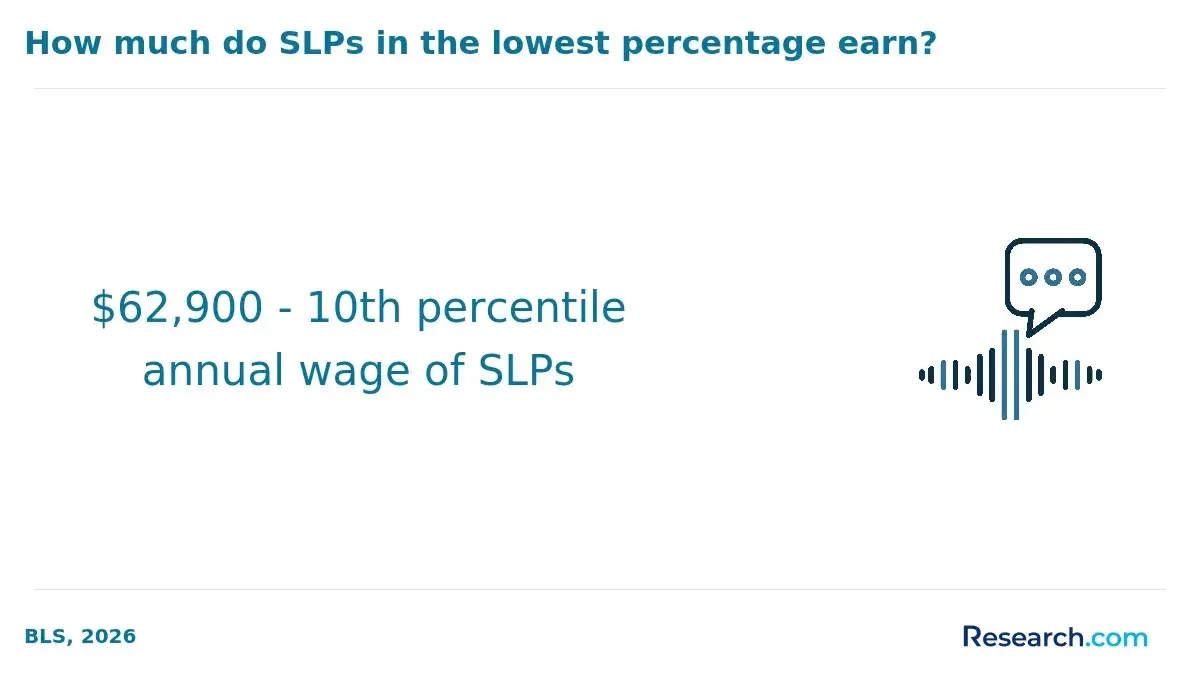
The labor-market opportunity makes program completion valuable, but it does not reduce the importance of meeting professional requirements. The U.S. Bureau of Labor Statistics reports a median annual wage of $97,870 for speech-language pathologists in May 2025 and projects 17% employment growth from 2025 to 2035. Readers exploring how much do speech language pathologists make should treat wage data as career context, not as a reason to choose a program whose attendance structure they cannot realistically sustain.
The most avoidable mistake is assuming that a job, caregiving responsibility, or time-zone difference will receive informal flexibility throughout the program. Raise predictable conflicts before enrollment, get key answers in writing, and choose a schedule that accommodates both coursework and the less-flexible clinical phase.
How should prospective SLP students verify attendance, recording, and participation policies before enrolling?
Do not rely solely on marketing language such as "flexible," "remote," or "designed for working professionals." Ask for the current student handbook, clinical handbook, sample syllabus, academic calendar, and a sample week from both an early academic term and a clinical term. Policies can change, and a verbal assurance is less useful than written program documentation.
Use the following questions in an admissions call or email. They are designed to reveal the practical commitments that can determine whether a program is workable.
- Which courses require live attendance, and on which days and times are they normally scheduled?
- Are live sessions held in a fixed time zone, and how much advance notice is provided if meeting times change?
- When recordings are available, do they count as attendance or only as a study resource?
- Which activities cannot be made up through recordings, including labs, assessments, simulations, orientations, or clinical meetings?
- What is the camera policy, and what approved alternatives exist for disability, privacy, or temporary bandwidth issues?
- How many absences are permitted in academic courses and in clinic, and what documentation is required?
- How are clinical placements scheduled, who arranges them, and should students expect daytime availability?
- Are campus visits, residencies, examinations, or intensive lab weekends required, and what travel costs are not included in tuition?
- What are the policy consequences of missed clinical hours, repeated lateness, or incomplete participation?
- Does the program accept students in the applicant's state and provide a licensure disclosure for that location?
After receiving answers, compare programs using the same standard: the number of fixed weekly hours, frequency of daytime obligations, travel requirements, recording policy, clinical-placement expectations, and absence process. This prevents a common comparison error - choosing a lower-cost or shorter program without accounting for lost work time, child-care needs, travel, or a delayed clinical term.
A speech language pathology accelerated program may be appealing to students who want to enter the workforce sooner, but acceleration typically reduces recovery time after illness, travel, or an unexpected work conflict. It is generally a better match for students with dependable schedules than for those who need frequent flexibility.
Finally, review accreditation status, state eligibility, and total educational costs alongside scheduling rules. An attendance policy that fits your real life is not a minor preference; it is a core retention, progression, and licensure-planning factor.
Other Things You Should Know About Speech Language Pathology
Some students work while completing early coursework, especially in part-time pathways, but full-time employment can become difficult during clinical practicum or externship. Clinical placements commonly require availability during normal service hours. Ask each program for a typical clinical schedule rather than assuming evening or weekend placements are available.
Often, yes. Online programs may use a combination of university clinic, local in-person placements, telepractice, simulations, and external sites. The specific mix varies by program and placement. Students should confirm where placements occur, who secures them, and whether travel outside their community may be necessary.
It can, but eligibility depends on the program's accreditation status, curriculum, clinical preparation, the student's location, and the licensing rules of the state where the graduate seeks to practice. Verify the school's state licensure disclosure and consult the relevant state licensing board before enrolling.
Contact the program promptly, before missing required sessions if possible. Ask whether a part-time sequence, leave of absence, course deferral, or revised clinical timeline is available. Do not assume recordings will solve a recurring schedule conflict, particularly in labs and clinical placements.
References
- Distance MS Speech-Language Pathology https://www.umt.edu/speech-language-hearing-occupational-sciences/graduate_learning/ms_slp/distance_ms_slp.php
- Hybrid Online MS-SLP Program | Full & Part-Time | USAHS https://www.usa.edu/college-of-rehabilitative-sciences/master-science-speech-language-pathology-ms-slp/
- Online MS in Speech-Language Pathology (SLP) | Pepperdine https://healthscience.pepperdine.edu/online-masters-in-speech-language-pathology/
- Master of Science Program (MS) https://communications-disorders.ecu.edu/education/masters-ms/
- Online Master's in Speech Pathology Programs: 2026 Guide https://speechpathologymastersprograms.com/
- Virtual Information Session: M.S. Speech-Language Pathology... https://www.youtube.com/watch