2027 Best Online Speech Pathology Master's Programs for Residents of Omaha, NE

Co-Founder and Chief Data Scientist

Reviewed by Rhea Paul, PhD
SLP Education & Research Expert
Choosing an online speech-language pathology master's program from Omaha requires more than finding a school with virtual classes. The degree must support Nebraska licensure, include qualifying clinical education, and be available to Nebraska residents when you apply.
This guide compares practical factors that matter most: CAA accreditation, state eligibility, clinical placement support, required travel, costs, and outcome disclosures. It is designed for prospective SLPs who want a defensible path from graduate school to supervised practice and Nebraska employment.
Key Things You Should Know
- A Nebraska applicant should prioritize a CAA-accredited graduate program, because CAA accreditation is the central educational requirement for ASHA certification and is the safest starting point for Nebraska licensure planning.
- Online does not mean fully remote: master's-level SLP programs require supervised clinical education, commonly including at least 400 total practicum hours under ASHA standards, and many require campus immersions.
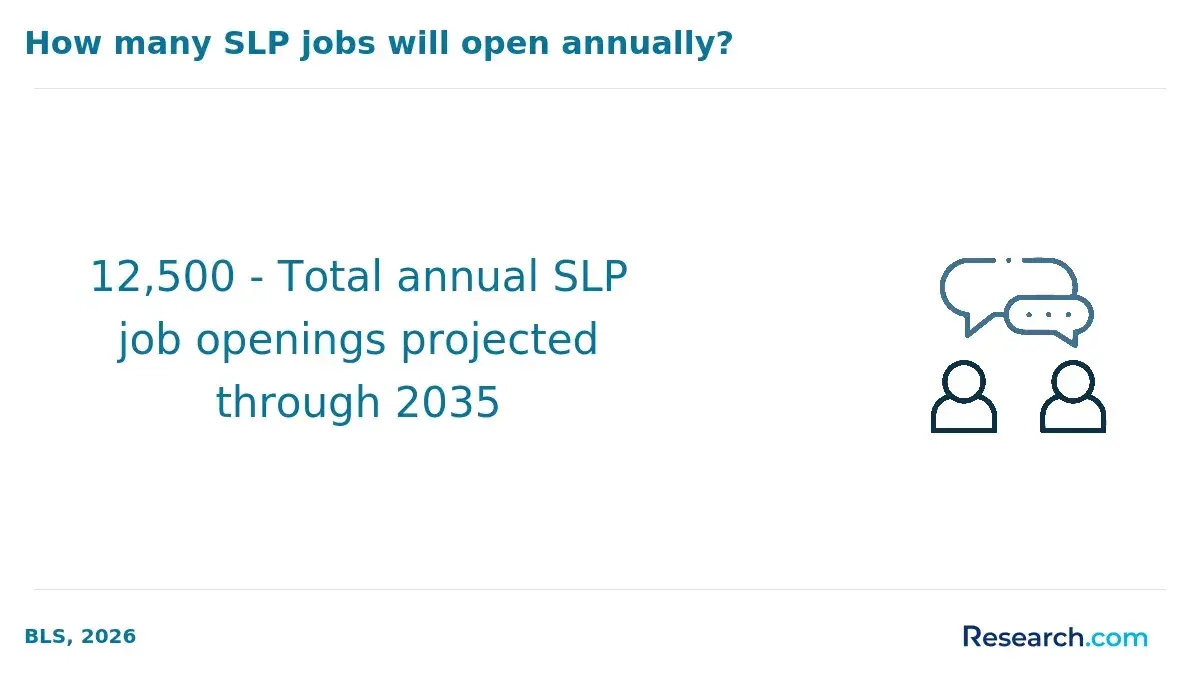
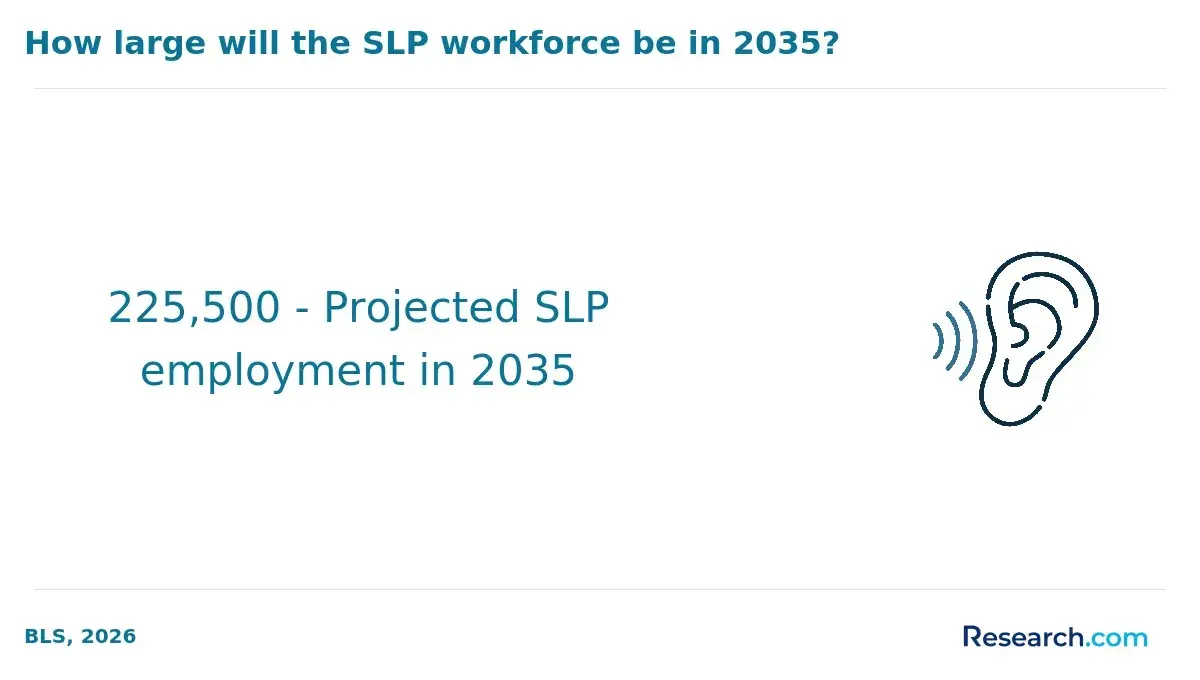
- The national occupation outlook remains favorable: the U.S. Bureau of Labor Statistics projects 17% employment growth for speech-language pathologists from 2025 to 2035, with median annual pay of $97,870 in May 2025; local wages and hiring still vary by setting.
Which online speech pathology master's programs actively enroll and support students living in Omaha, NE today?
The strongest options for Omaha residents are not necessarily Nebraska-based institutions. A worthwhile online or hybrid program must be authorized to enroll Nebraska students, hold appropriate CAA status, provide a workable clinical-placement process, and disclose whether its curriculum is intended to meet Nebraska's educational requirements. Availability can change by cohort, so applicants should obtain written confirmation before paying an application deposit.
The programs below are established online or hybrid graduate SLP options that Omaha residents may reasonably investigate. They are a screening shortlist rather than a promise of Nebraska eligibility, clinical-site availability, or admission.
| Program to investigate | Format considerations | Omaha applicant decision point | Best fit |
| Emerson College, MS in Speech-Language Pathology | Online coursework with clinical education and required in-person experiences | Confirm current Nebraska authorization, immersion schedule, and local placement process | Applicants seeking a structured online cohort model |
| Baylor University, Online MS in Communication Sciences and Disorders | Online coursework combined with clinical training and required immersive experiences | Ask whether Nebraska students are being admitted for the intended start term and how placements are coordinated | Students who can plan for required travel and intensive clinical scheduling |
| New York University, Online MS in Communicative Sciences and Disorders | Online graduate instruction with clinical practicum and immersion requirements | Review live-session timing, travel expectations, and Nebraska professional-licensure disclosures | Applicants comfortable with a high-touch, scheduled online format |
| University of St. Augustine for Health Sciences, MS-SLP | Hybrid/online-oriented professional curriculum with clinical components | Verify the current campus assignment, Nebraska eligibility, and the precise residency and placement model | Applicants who want to compare a health-professions-focused institution |
Start with these schools' current admissions and professional-licensure pages, then broaden your search through online speech pathology master's programs if a program's calendar, prerequisite policy, or travel pattern does not fit your circumstances. "Actively enrolling" is term-specific; an institution may be CAA-accredited yet pause admissions, limit a state, or change a cohort's clinical capacity.
Before treating any program as an option, ask admissions to answer three questions in writing: Can a Nebraska resident enroll in the stated term? Does the curriculum meet Nebraska educational requirements for SLP licensure? Will the school arrange, approve, or require the student to locate clinical placements?
What licensing requirements do Nebraska speech-language pathologists face and how must online master's programs align?
Nebraska licensure is administered through the Nebraska Department of Health and Human Services. An applicant should expect to need a qualifying graduate degree in speech-language pathology or communication sciences and disorders, supervised clinical education, and the examination or supervised-practice documentation required by the state for the credential sought. Requirements can differ between a state health-profession license, an ASHA Certificate of Clinical Competence (CCC-SLP), and a school-based endorsement.
For a clinical career, program alignment matters more than a school's general reputation. CAA accreditation signals that a graduate program is evaluated against professional education standards, while ASHA certification typically adds a passing Praxis score and a Clinical Fellowship after graduation. The current ASHA certification framework includes 400 total practicum hours, including at least 375 direct patient-contact hours and 25 guided observation hours, plus a Clinical Fellowship of at least 36 weeks and 1,260 hours.
This comparison separates requirements that usually arise at different stages. Applicants should use it to identify what the master's program must provide and what remains their responsibility after graduation.
| Milestone | Why it matters in Nebraska | What to verify before enrollment |
| CAA-accredited graduate education | Provides the most reliable academic foundation for national certification and state licensure review | Find the program in ASHA's CAA directory and check its current accreditation status |
| Clinical practicum | Required patient-contact and supervision documentation affects certification and licensure planning | Ask how hours, supervisors, settings, and evaluations are documented |
| Praxis examination | A passing score is commonly relevant to certification and state credentialing | Confirm the Nebraska requirement in effect when you apply, not only when you enroll |
| Clinical Fellowship | Required for ASHA CCC-SLP and often important to employer expectations | Ask prospective employers and the state board what supervision and reporting apply |
| School employment credential | Public-school roles can involve Nebraska Department of Education requirements in addition to professional licensure | Confirm endorsement rules with the school district and state education agency |
Do not assume that a degree labeled "speech pathology" automatically satisfies every Nebraska pathway. The prudent approach is to compare the school's Nebraska disclosure with current Nebraska DHHS requirements, then retain emails, clinical-hour records, course descriptions, and supervisor documentation for your later application.
Which CAA-accredited online speech-language pathology master's programs accept Nebraska residents and meet ASHA standards?
CAA accreditation is the most important program-level filter for a prospective clinician. It means the Council on Academic Accreditation in Audiology and Speech-Language Pathology has reviewed the program against its standards; it does not mean every applicant is eligible to enroll from every state or that a placement will be available near home.
Programs such as Emerson College, Baylor University, New York University, and the University of St. Augustine for Health Sciences are commonly considered by students seeking online or hybrid CAA-accredited SLP education. Their state eligibility, tuition, campus requirements, and cohort availability must be confirmed directly for Nebraska before application. Use the ASHA CAA directory as the controlling source for current accreditation status, including whether a program is accredited, on probation, or a candidate.
CAA status is necessary but not the only comparison point. The following factors help distinguish programs that may all meet the baseline academic standard.
| Comparison factor | Why it matters | Stronger answer from a school |
| Nebraska enrollment disclosure | State authorization rules can affect whether you may start or continue | A written statement that Nebraska residents may enroll in your intended cohort |
| CAA status | Supports certification and licensure planning | Current accredited status listed in the CAA directory |
| Clinical-placement model | Placement availability can determine time to graduation | Clear explanation of who sources sites, who approves them, and what happens if a site falls through |
| Required travel | Travel creates costs and work-schedule constraints beyond tuition | Published number, location, duration, and timing of immersions or residencies |
| Outcome disclosure | Shows how recent cohorts performed | Recent completion, Praxis, and employment outcomes with cohort sizes |
Students who already hold a bachelor's degree in communication sciences and disorders may have more direct entry routes than career changers. Those without prerequisite coursework should carefully compare leveling requirements before applying to online speech pathology programs; an apparently accessible admissions process may still require several prerequisite courses and extend the total timeline.
How does Nebraska's state authorization and SARA participation affect Omaha residents enrolling in out-of-state online SLP programs?
Nebraska participates in the State Authorization Reciprocity Agreement (SARA), a framework that generally allows participating institutions to offer distance education across member states. SARA can reduce administrative barriers, but it does not replace professional-licensure rules or require an institution to enroll Nebraska students in a clinical program.
For an Omaha resident, the practical issue is whether the institution is authorized and willing to deliver the full program in Nebraska, including courses, supervised clinical experiences, and any required fieldwork. Professional programs may have state-specific restrictions even when the university offers other online degrees to Nebraska residents.
Ask each school for its current Nebraska professional-licensure disclosure and compare it with the Nebraska DHHS requirements yourself. A useful disclosure identifies whether the program meets, does not meet, or has not determined Nebraska's educational requirements. "Has not determined" is not the same as "meets requirements," and it deserves follow-up before enrollment.
Also distinguish distance-learning authorization from clinical-site approval. A SARA-participating university may be authorized to teach an Omaha student online while still being unable to secure a local pediatric, medical, or school-based placement in the time frame you need.
Which online speech pathology programs offer Nebraska-aligned clinical placements and supervision for Omaha-based students?
No online SLP program should promise a particular Omaha clinical site unless it has explicitly confirmed one for your cohort. Clinical placements depend on affiliation agreements, supervisor availability, required patient populations, site capacity, background checks, vaccination rules, and the timing of each practicum. Omaha's health systems, schools, rehabilitation providers, and pediatric practices may offer potential learning environments, but availability is never automatic.
A Nebraska-aligned placement plan should provide supervised experiences across appropriate populations and settings while meeting program, CAA, ASHA, and state documentation requirements. The strongest programs describe their placement staff, site-approval process, student responsibilities, contingency procedures, and whether students may need to travel outside their immediate area.
Use these questions during admissions calls to determine whether "placement support" is meaningful rather than marketing language.
- Does the program place students, identify potential sites, or require students to locate sites independently?
- How many recent Nebraska students completed placements in or near Omaha, if the school tracks that information?
- What types of settings must I complete, and can the required experiences be obtained locally?
- When are placements confirmed, and what happens if a supervisor withdraws?
- Who pays for background checks, drug screening, immunizations, travel, liability coverage, and site-specific onboarding?
- Can I continue working during full-time clinical rotations, or does the schedule make that unrealistic?
Clinical education is the least flexible part of an online SLP degree. Applicants with inflexible employment, caregiving obligations, or limited transportation should favor schools that give detailed placement timelines and should build a financial cushion for unpaid practicum periods.
How can Omaha residents verify institutional accreditation, programmatic accreditation, and federal recognition for online SLP degrees?
Three checks protect applicants from confusing broad institutional approval with professional eligibility. Institutional accreditation evaluates the college or university as a whole. CAA accreditation evaluates the specific SLP graduate program. Federal recognition matters for Title IV financial aid and can be checked through the U.S. Department of Education's institutional listings.
Verify each layer independently; a school can be institutionally accredited while its SLP program is not CAA-accredited. Conversely, a program's status can change over time, so do not rely on an old brochure, an admissions representative's verbal statement, or a third-party ranking page.
A careful verification sequence reduces the risk of discovering a credential problem after completing coursework.
- Search the institution in the U.S. Department of Education's database and confirm its recognized institutional accreditor.
- Search the exact degree program in ASHA's CAA program directory; confirm the campus, delivery pathway, and current accreditation status.
- Read the institution's Nebraska professional-licensure disclosure for the specific SLP degree, not a general online-learning page.
- Check Nebraska DHHS licensing requirements and, for school employment, Nebraska Department of Education requirements.
- Save dated screenshots or emails showing the school's status, Nebraska eligibility, tuition terms, and clinical-placement statements before committing.
Federal aid eligibility is useful, but it is not evidence that a degree qualifies a graduate for Nebraska clinical practice. Accreditation, authorization, and licensure alignment are separate protections.
What differences matter between public and private online speech pathology programs for students in Omaha, NE?
Public versus private is a less useful distinction than many applicants expect. A public institution may offer lower tuition in some cases, particularly to in-state students, while a private nonprofit institution may charge one published rate regardless of residence and may operate more standardized national cohorts. Neither structure alone establishes quality, licensure alignment, or return on investment.
For Omaha residents, the most meaningful differences are often total billed cost, travel requirements, placement support, term structure, prerequisite options, and schedule predictability. Private online programs may offer frequent starts and centralized student services; public universities may provide regional networks or lower resident tuition but may have limited distance eligibility or fewer entry points.
This comparison shows the trade-offs to evaluate instead of relying on institution type as a shortcut.
| Decision factor | Public-program pattern | Private nonprofit-program pattern | What Omaha students should do |
| Tuition structure | May differentiate resident and nonresident rates | Often uses a single online or graduate tuition rate | Compare full program tuition and mandatory fees, not a single semester |
| Cohort starts | May follow a traditional academic calendar | May offer more frequent or fixed national cohorts | Match the start date to prerequisite and work timelines |
| Clinical network | May have stronger regional relationships near its campus | May use centralized national placement operations | Ask for Nebraska-specific placement information rather than assuming either model is better |
| Schedule design | May include conventional semester pacing | May use lockstep terms and scheduled live learning | Confirm evening, daytime, and clinical-hour obligations in Central Time |
| Travel | May require campus-based experiences | May require immersions at a main campus or designated location | Budget travel separately and request dates before accepting admission |
Applicants seeking a shorter calendar should be especially cautious with claims about accelerated SLP programs. A compressed academic schedule cannot remove required clinical competencies, and faster pacing may be a poor fit for someone who needs substantial leveling coursework or must maintain full-time employment.
How do leading online speech pathology master's programs compare in tuition, fees, and financial aid for Nebraska students?
The most accurate cost comparison is total cost of attendance, not advertised tuition alone. Online SLP cohorts can differ in required credits, per-credit rates, technology charges, clinical fees, background checks, liability coverage, travel, housing for immersions, books, and lost earnings during intensive practicum. Tuition schedules also change, so applicants should request a written estimate for their specific entry term.
Avoid treating prices from different schools as equivalent when one is a per-credit figure and another is a full-program estimate. The table identifies the cost items that should be normalized before choosing among programs.
| Cost item | Why it can change the comparison | Question to ask the financial aid office |
| Tuition by required credit | Credit totals vary substantially across curricula | What is the tuition for all required degree credits in my cohort? |
| Mandatory institutional fees | Technology, enrollment, clinical, and graduation fees may not be included in tuition | Which required fees are excluded from the advertised program price? |
| Immersion travel | Airfare, mileage, hotel, meals, and time away from work are out-of-pocket costs | How many in-person sessions are required, where are they held, and when? |
| Clinical onboarding | Health records, fingerprints, screening, insurance, and equipment can recur by site | Which clinical-readiness costs should I expect each year? |
| Living and income costs | Full-time practicum may reduce available work hours | How are clinical rotations scheduled, and what aid applies during those terms? |
Federal Direct Unsubsidized Loans and Graduate PLUS Loans may be available to eligible graduate students at participating institutions, but borrowing limits, credit requirements, and interest costs matter. Scholarships, employer tuition benefits, Veterans Affairs education benefits, and payment plans can reduce immediate out-of-pocket expense, though they do not change the underlying program price.
The BLS reports a $97,870 national median annual wage for speech-language pathologists in May 2025. That figure provides broad career context, not a personal repayment guarantee: early-career pay, work setting, debt load, hours, and Nebraska market conditions can differ significantly. Build a conservative budget using your expected debt and likely clinical-year earnings rather than assuming the national median will apply immediately.
Which online speech-language pathology programs report strong Praxis pass rates and employment outcomes relevant to Nebraska practice?
Outcome reporting is useful only when it identifies the reporting period, cohort size, definition of employment, and the number of students included. CAA-accredited programs publish outcome information such as program completion, Praxis examination pass rates, and employment rates. A high percentage based on a very small cohort is less informative than several years of transparent results.
For an Omaha applicant, strong outcomes should be interpreted alongside licensure preparation and local placement quality. A program can report excellent aggregate employment while offering limited information about Nebraska placements, school-based preparation, or graduates working in the Midwest.
Use this evidence hierarchy when comparing published results from otherwise similar programs.
| Outcome evidence | What it indicates | Limitation to remember |
| Praxis pass rate | How graduates performed on a key national examination | It does not by itself show clinical readiness or Nebraska licensure approval |
| Program completion rate | Whether enrolled students finish within the reported period | It may not explain leaves, transfers, or prerequisite differences |
| Employment rate | Whether graduates obtain qualifying work or pursue further training | Definitions and follow-up rates can differ by institution |
| Clinical Fellowship support | How well the program prepares graduates for the post-degree transition | Schools cannot guarantee a particular CF job or supervisor |
| Nebraska alumni information | Potential relevance to local networks and placements | Past local outcomes do not guarantee future local availability |
Ask for the most recent CAA outcome report and request the denominator for every percentage. Also ask whether career services assist with Clinical Fellowship searches in Nebraska and whether graduates have secured positions in Omaha-area schools, medical settings, early-intervention programs, or rehabilitation providers. A future speech language pathologist should weigh work setting and clinical interests alongside pay, because medical, educational, and private-practice roles can have different schedules, caseloads, supervision structures, and compensation.
What consumer-protection steps should Omaha, NE applicants take before committing to an online speech pathology master's program?
The cost and clinical intensity of an SLP master's degree make written verification essential. The most common expensive mistake is enrolling based on a broad statement that a program is "online," "accredited," or "licensure ready" without confirming that the statement applies to the exact degree, delivery pathway, state, and start term.
Before accepting an offer, complete the following checks. They create a record you can use if a disclosure, curriculum, price, or state-eligibility statement later changes.
- Confirm current CAA accreditation for the exact SLP program through ASHA's directory.
- Obtain a written Nebraska eligibility and professional-licensure disclosure for your intended cohort.
- Request the full curriculum plan, including prerequisite requirements, credit total, live-class times, clinical terms, and expected completion sequence.
- Request a complete cost-of-attendance estimate that separates tuition, mandatory fees, travel, clinical onboarding, and living expenses.
- Ask for the written clinical-placement policy, including student responsibilities and the process if a local site is unavailable.
- Review recent CAA outcome data with cohort sizes, not just headline percentages.
- Read withdrawal, leave-of-absence, refund, transfer-credit, and teach-out policies before paying a nonrefundable deposit.
- Speak with Nebraska DHHS and, if you plan to work in schools, the Nebraska Department of Education about the credential path you intend to pursue.
Red flags include pressure to enroll before receiving state-specific answers, vague statements that the school "usually" finds placements, unavailable outcome data, or tuition quotations that omit fees and travel. A school that answers these questions clearly may still not be the best fit; the best choice is the one whose documented requirements match your Nebraska licensure plan, finances, schedule, and ability to complete clinical training.
Other Things You Should Know About Speech Language Pathology
Possibly, but the degree cannot be entirely remote in the practical sense. You will need supervised clinical education, and many online programs require in-person immersions or residencies. Choose a CAA-accredited program that confirms Nebraska eligibility and supports the clinical requirements relevant to your licensure path.
Not always. Some programs admit applicants from other majors, but they typically require prerequisite or leveling courses in areas such as phonetics, language development, anatomy, and speech science. Those courses can add time and cost, so obtain a personalized prerequisite review before comparing program lengths.
Coursework may be manageable for some working adults, but clinical rotations often occur during standard daytime hours and can require full-time availability. Ask for the clinical calendar before deciding whether to keep full-time employment.
State licensure, ASHA certification, and school-based credentials are separate matters. Many employers value or require CCC-SLP, especially after the Clinical Fellowship, while Nebraska licensing requirements are set by the state. Verify requirements with Nebraska DHHS and the employer or school system where you plan to work.
References
- Speech-Language Pathology | online | Degrees & Programs https://www.unk.edu/online/degrees-programs/speech-language-pathology-online.php
- Speech-Language Pathology at UNO https://www.unomaha.edu/college-of-education-health-and-human-sciences/special-education-communication-disorders/graduate/speech-language-pathology.php
- Best Online Master's in Speech Pathology (SLP) Programs https://www.onlinemastersdegrees.org/best-programs/speech-language-pathology-slp/
- Online Master's in Speech Pathology Programs: 2026 Guide https://speechpathologymastersprograms.com/
- Nebraska Speech Pathology Degrees https://www.speechpathologydegrees.com/st/nebraska
- Masters SLP programs - preferably online: r/slpGradSchool https://www.reddit.com/r/slpGradSchool/comments/s5p0p0/masters_slp_programs_preferably_online/
- Fully online speech language pathology masters programs? https://www.facebook.com/groups/123939594310021/posts/26153063910970900/