2027 Best Online Speech Pathology Master's Programs for Residents of Chicago, IL

Co-Founder and Chief Data Scientist

Reviewed by Rhea Paul, PhD
SLP Education & Research Expert
Chicago residents choosing an online speech-language pathology master's program need more than a flexible class schedule: they need a CAA-accredited degree, Illinois eligibility, supervised clinical training, and a realistic plan for travel and tuition.
This guide compares reputable online options and explains the questions that matter before applying. It is designed for future speech-language pathologists who want to study remotely while preparing for Illinois licensure and ASHA certification.
Key Things You Should Know
- An online master's in speech-language pathology must be accredited by ASHA's Council on Academic Accreditation (CAA) to support the usual path to ASHA certification and Illinois professional licensure.
- Chicago residents should expect online coursework but not necessarily fully remote training; clinical placements, simulations, assessments, and required immersions may involve local travel or travel to a university campus.
- Speech-language pathologists had a median annual wage of $97,870 in May 2025, and the occupation is projected to grow 17% from 2025 to 2035, but employment outcomes depend on licensure, clinical fellowship completion, setting, and experience.
Which online speech pathology master's programs can Chicago residents apply to?
Chicago applicants can consider online or hybrid Master of Science programs in speech-language pathology offered by institutions outside Illinois, provided the school is authorized to enroll Illinois residents and can support the required clinical education. "Online" generally describes academic coursework; it does not mean that all clinical requirements can be completed from home.
The programs below are examples of established online-format options that Chicago residents may screen. Enrollment eligibility, tuition, travel expectations, and Illinois licensure disclosures can change, so applicants should obtain written confirmation from each institution before paying an application deposit.
| Program to evaluate | Accreditation consideration | Online-study model | Chicago-specific question to ask |
| Emerson College, M.S. in Speech-Language Pathology | Confirm current CAA accreditation status and Illinois enrollment authorization. | Online graduate coursework with clinical education and in-person requirements. | Can required immersions and clinical placements be completed without repeated long-distance travel? |
| New York University, M.S. in Communicative Sciences and Disorders | Confirm current CAA status, state authorization, and licensure disclosure for Illinois. | Online delivery with supervised clinical training requirements. | What travel, live-session, and placement expectations apply to the entering cohort? |
| Baylor University, M.S. in Communication Sciences and Disorders | Confirm current CAA status and the school's ability to admit Illinois residents. | Online academic study paired with clinical practicum experiences. | Does the program arrange Chicago-area placements, and what costs are excluded from tuition? |
| University of St. Augustine for Health Sciences, M.S. in Speech-Language Pathology | Confirm current CAA status, Illinois eligibility, and any applicable disclosures. | Online coursework with required practical and residency-style learning components. | How many campus-based requirements exist, where are they held, and when are dates released? |
These are not interchangeable choices, and no program is automatically best for every applicant. A working professional may prioritize predictable synchronous sessions and part-time pacing, while a career changer may prioritize prerequisite advising and a strong clinical-placement process. Applicants seeking a speech pathologist online masters degree should compare the complete published cost and clinical model rather than relying on a school's general online-learning description.
Programs that do not clearly state whether they accept Illinois residents should remain on a waitlist, not at the top of an application list. State authorization is a separate issue from accreditation, and an otherwise respected program may be unable to enroll students in a particular state at a particular time.
What accreditation and state authorization must these programs have?
For a prospective speech-language pathologist, institutional accreditation alone is not enough. The master's program itself should hold accreditation from the American Speech-Language-Hearing Association's Council on Academic Accreditation in Audiology and Speech-Language Pathology, commonly called CAA accreditation. CAA accreditation is the central educational standard associated with the normal pathway to ASHA's Certificate of Clinical Competence in Speech-Language Pathology, or CCC-SLP.
Illinois applicants should also verify that the university is authorized to provide distance education to students in Illinois. A school's authorization status can change, and admissions staff should confirm it for the specific program and intended enrollment term. Ask for the school's Illinois professional-licensure disclosure, not merely a statement that the program is "designed for licensure."
Before applying, obtain clear answers to the following points. They distinguish a program that is academically appealing from one that is usable for an Illinois licensure plan.
- Is the specific master's program currently CAA accredited, rather than simply regionally or institutionally accredited?
- Is the university currently authorized to enroll students who live in Illinois in this exact online program?
- Does the university state that its curriculum is intended to meet Illinois educational requirements for speech-language pathology licensure?
- Will the program document required practicum hours, supervision, competencies, and clinical education in a format Illinois regulators and ASHA can evaluate?
- Are there any restrictions for students who plan to complete clinical placements in Illinois?
CAA accreditation does not replace state licensure. Illinois regulates the authority to practice, while ASHA administers a voluntary national professional credential. Many employers prefer or require the CCC-SLP, but applicants should confirm the requirements of their intended employer, school system, and practice setting.
Applicants who need a more accessible admissions route should compare published prerequisites carefully rather than assuming that easiest SLP masters programs to get into will also be the best match for California licensure and clinical scheduling.
Which Chicago accessible programs best fit online study?
The best online fit depends on how much travel, scheduling uncertainty, and placement coordination a student can manage. For Chicago residents, a strong option is not necessarily the nearest university; it is one that combines CAA accreditation, Illinois eligibility, transparent clinical planning, and a format that works with the student's job and family commitments.
This comparison highlights the practical trade-offs Chicago applicants should use when narrowing an initial list. It is more useful than treating "online" as a single, standardized format.
| Applicant priority | Program features to prioritize | Potential trade-off |
| Keep employment while enrolled | Published live-class schedule, predictable course sequence, part-time option, and advance notice of intensives. | Part-time enrollment can extend time to graduation and delay entry into a clinical fellowship. |
| Minimize travel from Chicago | Few required campus visits, virtual simulations where permitted, and transparent location requirements. | Less travel does not eliminate in-person clinical practicum obligations. |
| Need help securing clinical sites | A dedicated placement team, documented affiliation process, and clear contingency procedures. | Students may still need to provide local leads or accept placements outside their preferred neighborhood. |
| Have a non-CSD bachelor's degree | Formal prerequisite review, leveling pathways, and an admissions advisor who can map missing coursework. | Prerequisites can add tuition and time before graduate clinical coursework begins. |
| Want the shortest route | A full-time cohort with a fixed sequence and no outstanding prerequisites. | An accelerated pace can be difficult to combine with full-time employment or caregiving. |
Students who already hold a communication sciences and disorders background may find a full-time cohort more manageable. Career changers should distinguish between a true entry-level master's pathway and a program that requires extensive undergraduate prerequisites before admission. Some applicants also compare 5 year speech pathology programs when they are early enough in their education to consider an integrated undergraduate-to-master's route.
For Chicago-area students, Central Time matters. Ask whether live classes occur during standard work hours, whether attendance is mandatory, whether recordings are available, and whether clinical seminars occur outside ordinary business hours. A program can be technically online but still be a poor fit if its required meetings conflict with a student's work schedule.
How do online clinical placements work for Chicago students?
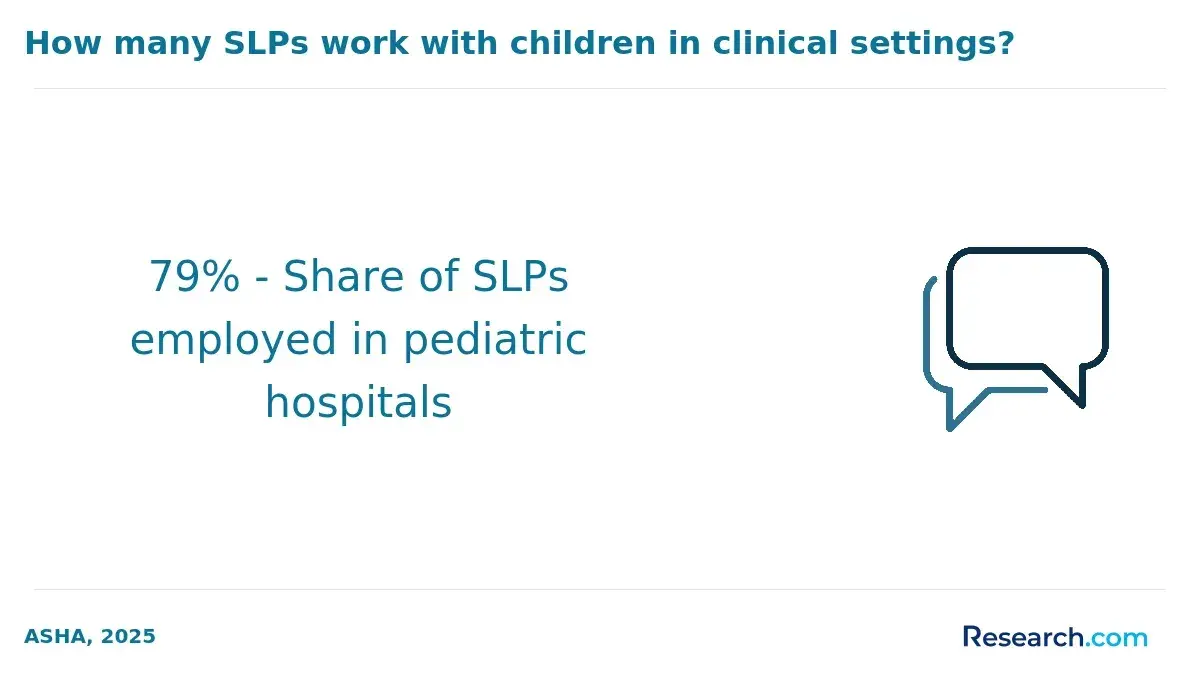
Clinical placements are supervised experiences in which students assess and treat clients under qualified supervision. They are essential because speech-language pathology is a practice profession; an online degree must still develop face-to-face clinical competence. Programs generally combine early clinical learning, simulations or labs, and later practicum experiences in settings such as schools, hospitals, rehabilitation facilities, outpatient clinics, and early-intervention programs.
A university may have a dedicated clinical placement office, but "the school arranges placements" should be clarified carefully. The level of assistance varies: one program may secure sites directly, while another may coordinate contracts after the student identifies possible local sites. Chicago's large health care and school landscape can create opportunities, but a particular site is never guaranteed.
Use this sequence to evaluate the placement process before enrolling.
- Ask whether the program has previously placed students in the Chicago metropolitan area or elsewhere in Illinois.
- Request a written explanation of who finds sites, negotiates affiliation agreements, monitors supervision, and solves failed-placement situations.
- Confirm whether students may be assigned outside Chicago, need a car, or must travel for a specialty placement.
- Ask when the school begins placement planning and whether a delayed placement can delay graduation.
- Identify personal constraints, including work obligations, childcare, transportation, language skills, and preferred populations, before discussing flexibility with the placement office.
Students should budget for more than tuition. Clinical semesters can involve commuting, parking, professional clothing, background checks, immunizations, drug screening, liability coverage, technology, and time away from paid work. Programs may also require travel to campus-based immersions or assessments.
Do not make a final enrollment decision based on an informal assurance that "there are many sites in Chicago." Ask for the program's written process and learn what happens when a site declines a student, a supervisor becomes unavailable, or an affiliation agreement is delayed.
Which programs prepare graduates for Illinois licensure and ASHA certification?
A CAA-accredited master's program is the educational foundation, but graduation alone does not authorize independent practice in Illinois or create the CCC-SLP credential. Students should choose programs that document the academic and clinical requirements needed for the next steps, then complete the additional examinations, supervised experience, and state application requirements that apply at that time.
The usual progression is straightforward in concept, although the exact documentation and timing must be verified with Illinois regulators and ASHA.
| Milestone | Why it matters | What Chicago students should verify |
| CAA-accredited master's degree | Provides the recognized graduate educational framework for the profession. | The program's current accreditation status covers the student's enrollment and graduation period. |
| Graduate clinical education | Builds documented competence under supervision and supports later credential review. | The program tracks clinical hours, supervisor qualifications, evaluations, and required records. |
| Praxis examination | Is commonly part of the ASHA certification and state licensure pathway. | Current score, reporting, and timing rules when preparing to apply. |
| Clinical Fellowship | Provides post-graduate mentored professional experience toward the CCC-SLP pathway. | Illinois temporary or initial practice requirements and the employer's fellowship support. |
| Illinois licensure and CCC-SLP application | Allows practice under the applicable state rules and supports employer credentialing. | Current Illinois application instructions, fees, continuing requirements, and employer expectations. |
Programs that publish Illinois-specific professional-licensure disclosures are easier to evaluate because they identify whether the curriculum is intended to meet educational requirements in the state. Still, rules can change while a student is enrolled. Save copies of course descriptions, syllabi, clinical-hour records, evaluations, and graduation documentation.
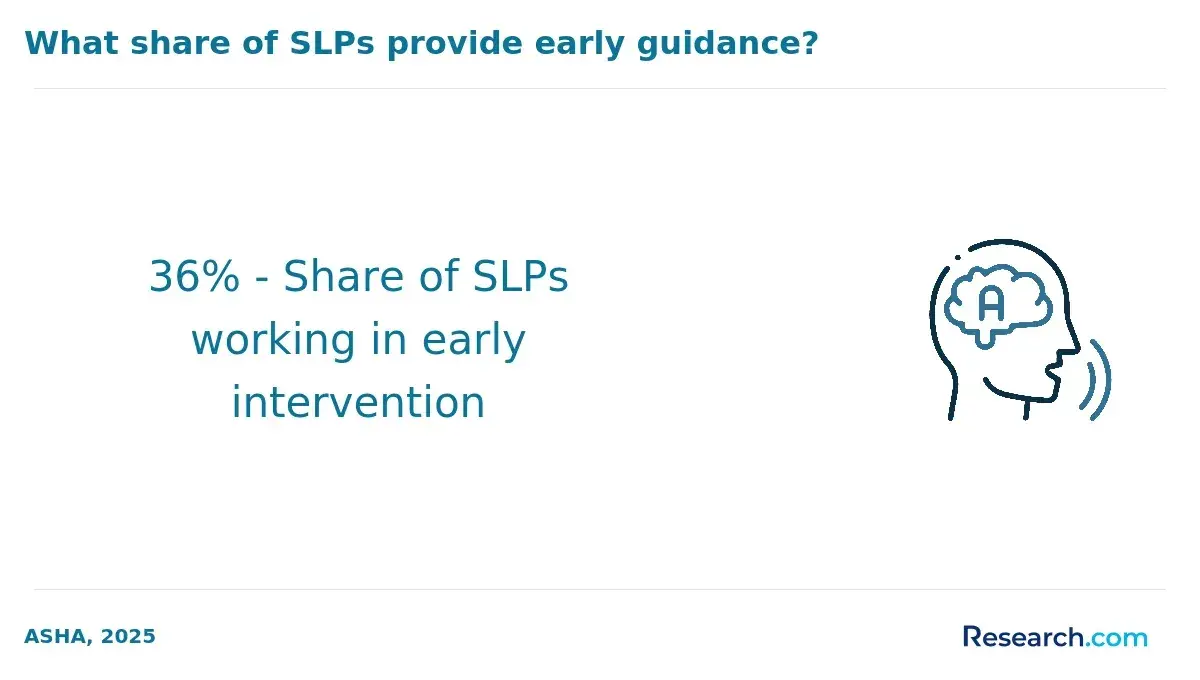
Career prospects support careful program selection rather than rushed enrollment. The U.S. Bureau of Labor Statistics reports a median annual wage of $97,870 for speech-language pathologists in May 2025 and projects 17% employment growth from 2025 to 2035. Those national figures do not predict an individual salary in Chicago, but they indicate why employers place substantial weight on accredited education, licensure, clinical competence, and setting-specific experience. For a wider view of role and setting differences, review speech therapist salary information before estimating return on investment.
What admissions requirements do Chicago applicants usually face?
Admissions requirements vary, but online SLP master's programs commonly seek evidence that applicants can succeed in science-based graduate coursework and clinical training. A bachelor's degree in communication sciences and disorders is helpful but is not universally required. Applicants from psychology, linguistics, education, health sciences, or unrelated majors may need prerequisite courses before beginning clinical graduate study.
Most applicants should expect the following materials, although each school's current admissions page controls.
- Completed graduate application and official transcripts from every college attended.
- Evidence of prerequisite coursework or a plan to complete missing communication sciences and disorders courses.
- Personal statement explaining preparation for clinical practice and professional goals.
- Letters of recommendation, often from academic or professional references who can address readiness for graduate work.
- Resume documenting relevant employment, observation, volunteer work, research, caregiving, or service experience when applicable.
- Interview, writing sample, or recorded response if required by the program.
- Observation documentation, background-check readiness, and health-compliance ability when required before practicum.
Applicants should not assume that a listed minimum GPA is the same as a competitive GPA. Cohort programs have limited clinical capacity, and admissions committees may weigh prerequisite performance, communication skills, writing, recommendations, and evidence of understanding the profession. GRE policies also vary; a waived GRE does not mean other academic requirements are relaxed.
Career changers should request a transcript evaluation early. The most common planning error is applying to a graduate program before understanding how many prerequisites remain. A speech language pathologist degree guide can help applicants frame admissions accessibility, but no applicant should choose a program solely because it appears easier to enter. Accreditation, clinical quality, Illinois compatibility, and total cost remain more consequential.
How much do these online master's programs typically cost?
There is no single reliable "typical" price for an online SLP master's program because schools publish tuition in different ways: per credit, per term, annual tuition, or full-program estimates. A meaningful comparison for a Chicago resident must include every required credit, mandatory fees, prerequisite coursework, travel, clinical expenses, and lost work time during full-time practicum periods.
Ask each program for a written estimate covering the student's expected enrollment plan. The following cost categories are the minimum information needed to compare programs fairly.
| Cost category | What to request | Why it changes the decision |
| Tuition | Total required graduate credits and the tuition rate applicable to Illinois residents. | Per-credit figures are not comparable unless the required credit count is also known. |
| Mandatory university fees | Technology, enrollment, clinical, graduation, and distance-learning fees. | Fees can materially change the amount paid beyond advertised tuition. |
| Prerequisites | Required courses not included in the master's curriculum and their delivery format. | Career changers may face a larger total education cost and longer timeline. |
| Travel and lodging | Number, location, and duration of immersions, labs, or campus visits. | Chicago students may need airfare, hotels, meals, and unpaid time away from work. |
| Clinical costs | Background checks, immunizations, testing, liability coverage, commuting, and required materials. | These expenses often occur later, when clinical workload also limits paid employment. |
Federal student aid may be available for eligible students enrolled in qualifying degree programs, but borrowing should follow a realistic repayment plan rather than the maximum amount offered. Compare the program's full estimated cost against expected borrowing, household obligations, and the possibility that clinical semesters reduce work hours.
A lower published tuition rate is not automatically the lowest-cost choice. A program with slightly higher tuition may be financially preferable if it reduces prerequisite repetition, avoids frequent travel, provides dependable placement support, or allows a student to maintain more employment. Conversely, an expensive program with vague placement or licensure information deserves extra scrutiny.
Which programs offer the strongest outcomes and support services?
The strongest program for a Chicago resident is one that supports completion, clinical readiness, and the transition to the Clinical Fellowship - not one that simply advertises an online format. Because schools report outcomes differently, applicants should compare definitions before treating pass rates, completion rates, or employment figures as equivalent.
Ask every finalist program for its most recent outcomes disclosures and support model. These indicators reveal whether the school has infrastructure for the demanding clinical portion of an online degree.
- CAA-required outcome information, including how the program defines completion, Praxis performance, and employment outcomes.
- Named clinical education staff and a clear escalation process when a placement problem occurs.
- Academic advising for prerequisite planning, progression, remediation, and leave-of-absence policies.
- Career services that address Clinical Fellowship searches, interviewing, resumes, and employer connections.
- Accessibility, tutoring, writing, technology, and mental-health services available to distance learners.
- Transparent data on whether students commonly complete the program on the published timeline.
Outcome data should be read cautiously. A high employment figure may reflect a small graduating cohort, a particular reporting window, or graduates who accepted positions outside their preferred setting. Ask how many graduates were included, what period was measured, and whether the figure refers to all graduates or only respondents.
Technology is also changing clinical education and practice. Telepractice platforms, electronic documentation, and digital assessment tools are increasingly relevant in many settings, but they do not replace supervised clinical judgment. Favor programs that teach ethical technology use, privacy, documentation, and evidence-based practice rather than treating online delivery itself as proof of telepractice preparation.
What red flags should Chicago residents verify before enrolling?
The most expensive mistakes occur when applicants treat accreditation, state eligibility, and placements as assumptions. A polished website or well-known university name does not resolve these requirements. Verify material claims in writing and keep copies of responses received before enrollment.
The following red flags warrant a pause before committing tuition or loans.
- The program is institutionally accredited but does not clearly state current CAA accreditation for the specific SLP master's degree.
- The school cannot confirm that Illinois residents may enroll or provides only a generic statement about state authorization.
- The university does not publish an Illinois licensure disclosure or avoids explaining whether its curriculum meets Illinois educational requirements.
- Admissions staff cannot explain who secures clinical placements, what happens if placement is delayed, or whether students may need to travel outside the region.
- The advertised tuition excludes required fees, immersions, prerequisites, clinical expenses, or other predictable costs.
- The school promises a local placement, salary, graduation date, or licensure outcome without identifying the conditions and limitations.
- Required live sessions, campus visits, or clinical workload are not disclosed until after enrollment.
Another common mistake is choosing solely on convenience. A program with fewer campus visits may still require inflexible daytime practicums, while an accelerated program may demand a pace incompatible with full-time employment. The right choice is the one whose verified requirements fit the student's finances, time, transportation, and licensure goal.
How should students compare online programs before choosing one?
Use the same written questions for every program. This prevents an applicant from comparing one school's per-credit tuition with another school's total estimate, or assuming that one program's "clinical support" means the same thing as another's. Narrow the list only after the nonnegotiable Illinois and accreditation requirements are confirmed.
A practical comparison process begins with eligibility and ends with affordability.
- Confirm CAA accreditation, Illinois enrollment authorization, and the school's Illinois licensure disclosure for the intended start term.
- Map prerequisite courses against each program's curriculum and calculate the earliest realistic start date.
- Request a full cost estimate that separates tuition, fees, prerequisites, travel, clinical expenses, and expected financial-aid options.
- Obtain the clinical-placement policy in writing, including student responsibilities, travel expectations, site delays, and escalation procedures.
- Compare schedule details: full-time or part-time pacing, synchronous meeting times, course sequence, breaks, and clinical-semester workload.
- Review recent outcomes information and ask how the program supports Praxis preparation, Clinical Fellowship searches, and distance learners.
- Choose the program that best fits verified licensure readiness, clinical support, total cost, and personal capacity - not the one with the broadest marketing claim.
For many Chicago residents, the best final choice will be a CAA-accredited program that can enroll Illinois students, clearly explains clinical placements, and provides a complete cost estimate. If any of those elements is uncertain, delay the decision until the school provides a written answer. That extra step can protect both the student's investment and future eligibility to practice.
Other Things You Should Know About Speech Language Pathology
Yes, an online-format degree can support the pathway if the specific program is CAA accredited, the university can enroll Illinois residents, required clinical education is completed, and the graduate meets Illinois licensure requirements. The coursework may be online, but supervised clinical training and possible campus requirements remain in person.
Not always. Many programs consider applicants from other majors, but they may require prerequisite courses in areas such as phonetics, language development, anatomy and physiology, audiology, and speech and hearing science. Request a transcript review before assuming you are ready to apply.
Some students work while completing early coursework, especially in part-time programs. However, clinical placements often occur during regular business or school hours and can make full-time employment difficult. Review the clinical schedule and travel expectations before relying on continued earnings.
Illinois licensure is the legal requirement to practice under applicable state rules. The CCC-SLP is a professional credential rather than a substitute for state licensure, but many employers prefer or require it. Check the expectations of your intended setting, such as schools, hospitals, private practices, or rehabilitation facilities.
References
- MSSLP Program in Illinois | Speech Pathology Master's... https://www.lewisu.edu/academics/slp/
- Speech-Language Pathology (SLP) Master's Degree Program https://www.rushu.rush.edu/college-health-sciences/academic-programs/master-science-speech-language-pathology
- Speech Language Pathology - Chicago https://www.depaul.edu/academics/programs/speech-language-pathology-ms
- Online Master's in Speech Pathology Programs: 2026 Guide https://speechpathologymastersprograms.com/
- Best Online Speech & Language Pathology Master's... https://www.onlineu.com/most-popular/masters-speech-pathology