2027 Online SLP Master's Programs for Oregon Residents: Eligibility, Tuition, and Clinical Placements

Co-Founder and Chief Data Scientist

Reviewed by Rhea Paul, PhD
SLP Education & Research Expert
Oregon residents considering an online speech-language pathology master's degree need more than a flexible class schedule: they need a program that can legally enroll them, provide qualifying clinical education, and support Oregon licensure after graduation. This guide explains how to compare online SLP options, verify CAA accreditation and state authorization, estimate tuition beyond advertised rates, and ask the right questions about Oregon clinical placements before applying.
Key Things You Should Know
- Oregon licensure generally requires a qualifying graduate degree, supervised clinical education, a passing Praxis examination, and a post-graduate clinical fellowship; an online format does not remove these requirements.
- CAA accreditation is the central quality and credentialing check: students should confirm both the program's current CAA status and the school's authorization to enroll Oregon residents before paying an application fee.
- Nationally, speech-language pathologists had a median annual wage of $97,870 in May 2025, and BLS projects 17% employment growth from 2025 to 2035; demand does not, however, guarantee admission, placements, licensure, or a particular salary.
What online SLP master's programs are accessible to Oregon residents and how are they vetted?
Oregon residents can consider distance-learning SLP master's programs offered by public and private universities, but availability changes by cohort, state-authorization rules, and clinical-placement capacity. A school may offer an online degree nationally while pausing enrollment from a particular state or limiting enrollment when it cannot secure required practicum experiences.
Programs commonly considered by students seeking distance SLP education include Baylor University, Emerson College, Idaho State University, James Madison University, New York University, the University of Northern Colorado, and the University of St. Augustine for Health Sciences. This is not a guarantee that each program is currently accepting Oregon applicants. Confirm eligibility directly with the institution before applying.
The comparison below shows the information that matters most when screening online speech pathology masters programs. Accreditation and Oregon eligibility should be confirmed before comparing convenience features or marketing claims.
| Screening factor | What an Oregon applicant should verify | Why it matters |
| CAA status | Current accreditation status in ASHA's program directory, including any probationary or candidacy disclosures | CAA status is central to CCC-SLP eligibility and is commonly expected for state licensure. |
| Oregon enrollment authorization | A written confirmation that the institution may enroll Oregon residents in the specific program and cohort | State authorization can differ by program, modality, and location of clinical training. |
| Clinical placement model | Whether the school finds sites, approves student-proposed sites, or uses a shared model | Placement uncertainty can extend time to graduation or require significant travel. |
| Required travel | Campus immersions, orientation, competency assessments, and any travel for clinicals | Travel can materially change the total cost of an "online" degree. |
| Schedule design | Live class times, time-zone expectations, full-time requirements, and fieldwork hours | Oregon students working daytime jobs may find clinical semesters less flexible than coursework. |
| Licensure disclosure | Whether the school states that its curriculum is designed to meet Oregon educational requirements | A generic statement about licensure is not the same as an Oregon-specific disclosure. |
Do not treat an admissions representative's verbal statement as the final verification. Ask for the program's Oregon professional-licensure disclosure and save the response with your application materials.
How does Oregon licensure law shape which online SLP degrees residents can use?
Oregon's licensing framework determines whether an online master's degree is useful for professional practice in the state. The important question is not whether lectures are online; it is whether the degree, supervised clinical education, examination, and fellowship pathway satisfy Oregon Board of Examiners for Speech-Language Pathology and Audiology requirements.
In practical terms, Oregon applicants should expect to need a graduate degree in speech-language pathology or communication sciences and disorders that meets the board's educational standards, documented supervised clinical experience, a passing score on the national Praxis examination, and the required post-graduate professional experience. Requirements can change, and applicants should review the board's current application instructions before enrolling and again before applying for a license.
Most new graduates also pursue the ASHA Certificate of Clinical Competence in Speech-Language Pathology, commonly called the CCC-SLP. The credential is distinct from an Oregon license, but it is widely recognized by employers, insurers, and clinical supervisors. A CAA-accredited graduate program is ordinarily the cleanest route to the academic and clinical foundations needed for the CCC-SLP.
Students who want a faster undergraduate-to-graduate route can review best 5 year speech pathology programs, but an accelerated academic timeline does not eliminate Oregon's professional licensure steps. It may also be less practical for applicants who already hold a non-CSD bachelor's degree and need prerequisites.
The most common licensure mistake is assuming that "ASHA aligned" means "approved for Oregon." Use this sequence to reduce risk:
- Confirm the program's current CAA accreditation status and expected graduation eligibility.
- Obtain the school's Oregon-specific professional-licensure disclosure in writing.
- Ask how the program documents practicum hours, supervisor credentials, and clinical competencies.
- Review Oregon's current licensure application requirements before choosing elective courses or a clinical fellowship employer.
- Keep official transcripts, practicum records, Praxis documentation, and fellowship records for the licensing process.
Applicants interested in Oregon public schools should also distinguish professional SLP licensure from school employment credentials. School districts may require additional Oregon education-agency or district-specific documentation, background checks, and authorization before hiring a school-based SLP.
What residency, practicum, and supervision rules govern clinical placements for Oregon SLP students?
"Online" usually describes academic delivery, not the entire degree. Entry-level SLP master's programs require supervised clinical education, and students typically complete this work in person with real clients in schools, hospitals, rehabilitation settings, early-intervention programs, or outpatient clinics.
CAA standards require graduate students to complete at least 400 supervised clinical practicum hours, including at least 375 direct client-contact hours. Programs may require more than the minimum or set additional competency benchmarks. These requirements are educational minimums, not a promise that every student can complete placements near home.
Supervision must be provided by qualified professionals under applicable accreditation, institutional, and site rules. Programs generally track both direct and indirect supervision, supervisor qualifications, evaluations, and clinical competencies. A site's willingness to host a student is not enough unless the university approves the affiliation and the supervisor meets program standards.
The table separates terms that applicants often confuse when evaluating a distance program.
| Term | What it usually means | Planning implication for Oregon residents |
| Campus residency or immersion | A required short in-person academic, skills, orientation, or assessment experience | Budget for transportation, lodging, meals, and time away from work even if coursework is online. |
| Practicum | Supervised clinical education completed while enrolled in the graduate program | Expect fixed client schedules and daytime commitments that can limit outside employment. |
| Externship | A later, often more intensive clinical placement in a professional setting | It may be located outside a student's home community if nearby sites lack capacity. |
| Clinical fellowship | Post-degree supervised professional experience, often pursued while working | It is separate from graduate practicum and should be planned with Oregon licensure requirements in mind. |
Ask each program whether it guarantees a placement, guarantees only assistance, or requires students to locate sites themselves. Also ask whether the school can place students in rural, coastal, or eastern Oregon communities, where travel distances and supervisor availability may be more challenging.
Which accreditors and agencies must recognize an online SLP program for Oregon licensure?
For an Oregon-bound SLP student, accreditation, state authorization, and licensure are related but separate checks. A program can be institutionally accredited yet not hold the specialized SLP accreditation needed for the clearest CCC-SLP and licensure path. Conversely, a CAA-accredited program may still have enrollment or clinical-placement limits for Oregon residents.
The Council on Academic Accreditation in Audiology and Speech-Language Pathology, or CAA, is ASHA's specialized accreditor for entry-level graduate programs in speech-language pathology and audiology. Check a program's official CAA listing rather than relying on an old university webpage, since status can change.
These organizations have different roles in an Oregon applicant's decision.
| Organization or authority | Primary role | What to confirm |
| CAA | Specialized accreditation of graduate SLP programs | Current program status, campus or distance-delivery scope, and any public notices. |
| ASHA | Professional standards and CCC-SLP certification | That the program's academic and clinical structure supports the certification pathway. |
| Oregon Board of Examiners for Speech-Language Pathology and Audiology | State professional licensure | Current Oregon education, examination, supervised-experience, and application rules. |
| University state-authorization office | Authority to deliver distance education to Oregon residents | Current authorization to enroll Oregon students and place them in Oregon clinical sites. |
| Oregon school-employment authorities and districts | School-based employment requirements | Any additional credentials, fingerprints, background checks, or district conditions. |
Be careful with candidacy terminology. Candidacy can be meaningful for a newer program, but it is not identical to full accreditation. Applicants should ask how candidacy status affects their graduation date, CCC-SLP pathway, financial aid, and contingency options if a program's status changes.
How do public, private, and for-profit online SLP programs serving Oregon differ in tuition?
Tuition comparisons are difficult because online SLP programs may publish per-credit tuition, term-based charges, cohort pricing, or tuition that excludes clinical and technology fees. The most useful comparison is the estimated total institutional charge for the required degree plan, not the lowest advertised per-credit figure.
Public universities may offer lower tuition for residents of their home state, but Oregon residency does not automatically produce an in-state rate at an out-of-state public university. Private nonprofit programs often charge one rate regardless of residence. For-profit institutions may use similar online pricing models, but applicants should judge the full credential pathway, clinical support, and debt exposure rather than institution type alone.
Use the following framework when comparing SLP programs online. Admission accessibility should never outweigh CAA status, Oregon eligibility, and the realistic cost of completing clinical education.
| Institution model | Typical tuition pattern | Potential advantage | Important trade-off |
| Public university | May differentiate resident and nonresident rates or use a separate online rate | Can be comparatively economical when Oregon students qualify for a favorable distance or reciprocity rate | Out-of-state tuition, limited cohorts, and travel requirements can erase an apparent savings. |
| Private nonprofit university | Often one published rate for all online students | Pricing may be easier to forecast across terms | Sticker price can be high, and scholarships may not cover clinical or travel costs. |
| For-profit university | Often standardized online pricing, sometimes with frequent intake cycles | May offer structured online student services or scheduling options | Applicants should scrutinize total borrowing, accreditation, placement support, and Oregon disclosures. |
Before comparing schools, request a written estimate showing required credits, tuition rate, mandatory program fees, expected clinical fees, and the number of required campus visits. Ask whether tuition can rise after enrollment and whether a delayed placement adds an additional term of tuition.
A lower-cost program is usually the better financial choice only if it also permits Oregon enrollment, supports qualifying clinical education, and fits the student's ability to complete the program without repeated course withdrawals or placement delays.
What additional costs do Oregon residents face for travel, fees, and insurance during clinicals?
Tuition is only one part of the financial decision. In-person clinical work creates costs that can vary sharply by student location, program design, and placement availability. A student in Portland may have different travel exposure than a student in Klamath Falls, Pendleton, Coos Bay, or a smaller rural community.
The following costs should be included in a personal program budget before accepting an offer.
- Application, transcript-evaluation, background-check, fingerprinting, drug-screening, and immunization-documentation charges.
- Technology, distance-learning, clinical-management, student-service, laboratory, and graduation fees that may not appear in base tuition.
- Professional liability insurance, health insurance compliance, CPR certification, masks or other site-specific supplies, and required medical screenings.
- Travel, parking, lodging, meals, and lost work hours for campus immersions, skills assessments, or clinical sites outside commuting distance.
- Reliable computer equipment, webcam, secure internet access, and any required clinical simulation or telepractice tools.
- Praxis examination, Oregon licensure, clinical-fellowship, and professional-certification costs after graduation.
Clinical schedules can create an indirect cost that is larger than a single fee: reduced paid work time. Ask whether placements run during standard weekday business hours, whether evening or weekend experiences are possible, and whether students may decline a placement that conflicts with employment. Many programs cannot promise schedule flexibility once a clinical site has accepted a student.
For applicants focused on long-term earnings, resources about becoming a highest paid speech pathologist can help frame career options. Still, a higher-paying setting may require experience, geographic mobility, specialized skills, or a work schedule that is not available immediately after graduation.
How do online SLP programs arrange in-state versus out-of-state clinical placements within Oregon's borders?
Online SLP programs use different placement models. Some maintain a clinical-placement team that identifies and contracts with sites. Others ask students to suggest local sites for review. Many use a shared model in which the school leads the process but expects the student to provide local contacts or remain flexible about location.
An in-state Oregon placement can reduce travel and help students build professional relationships, but it is not automatically available. The university must have an agreement with the site, the site must have qualified supervision and suitable client experiences, and the timing must align with the student's academic progression.
The table highlights trade-offs Oregon students should understand before relying on a placement promise.
| Placement approach | What it can mean for the student | Question to ask admissions or clinical staff |
| University-arranged placement | The program leads site outreach and assignment, though location may not be chosen by the student | Is an Oregon placement guaranteed, and what happens if no site is available within commuting distance? |
| Student-proposed placement | The student identifies potential sites; the university determines whether they meet standards | What deadlines, affiliation-agreement rules, and consequences apply if my proposed site is not approved? |
| Hybrid placement model | Both the program and student participate in the search | Who is responsible for finalizing the contract, and how many placements have Oregon students completed recently? |
| Out-of-state assignment | The student may need to travel or temporarily relocate when Oregon capacity is limited | Can I decline an out-of-state site, and would declining delay graduation or create extra tuition? |
Do not assume a university's list of prior sites is a current placement inventory. Affiliations can expire, supervisors can change jobs, and sites may not take interns every term. Request a clear description of how the program handles a placement that falls through shortly before the start date.
What Oregon school districts, health systems, and clinics commonly host SLP graduate interns?
Oregon has potential practicum environments across public schools, pediatric and adult medical settings, rehabilitation services, early-intervention programs, and private clinics. Large metropolitan areas may offer more organizations, while rural areas can offer broad clinical exposure but may have fewer qualified supervisors and longer travel distances.
Organizations and settings that Oregon students may encounter include school districts such as Portland Public Schools, Beaverton School District, Hillsboro School District, Salem-Keizer Public Schools, and Eugene School District 4J; health systems such as Oregon Health & Science University, Providence, Legacy Health, Kaiser Permanente Northwest, and PeaceHealth; and community clinics, skilled-nursing facilities, early-intervention providers, and private pediatric practices. Naming an organization does not mean it currently hosts interns from any particular university.
Different settings develop different parts of an SLP's clinical judgment.
| Setting | Common client population or focus | What applicants should consider |
| Public school district | Children and adolescents with speech, language, fluency, voice, swallowing, or communication needs affecting education | School calendars, daytime schedules, district onboarding, and education-specific documentation are common considerations. |
| Hospital or medical center | Adults or children with swallowing, neurological, voice, cognitive-communication, or acute-care needs | Health clearances, competitive placements, and early start times may apply. |
| Outpatient rehabilitation clinic | Speech, language, cognitive, voice, or swallowing rehabilitation | Caseload mix and supervisor availability can vary substantially by clinic. |
| Early-intervention or pediatric clinic | Infants, toddlers, preschoolers, and families | Travel between homes, childcare settings, or community locations may be part of the experience. |
| Skilled-nursing or long-term-care setting | Older adults with swallowing, cognitive-communication, motor-speech, and neurogenic disorders | Medical documentation expectations and infection-control requirements may be significant. |
A strong placement plan includes variety. Ask whether the curriculum ensures experiences across age groups and disorder areas rather than placing a student repeatedly in one convenient setting. Broad experience can be particularly useful when deciding between school-based, medical, pediatric, and adult-focused employment after graduation.
How should Oregon applicants verify state authorization, CAA accreditation, and CCC-SLP eligibility?
Verification is most effective when completed before submitting deposits, arranging prerequisites, or turning down another offer. Written answers are especially important because enrollment eligibility, accreditation status, and placement policies can change between application cycles.
Use this application checklist to compare programs consistently.
- Locate the program in ASHA's CAA directory and record its current status, location, and date checked.
- Read the university's Oregon professional-licensure disclosure for the exact online SLP degree, not a general university statement.
- Email the program and ask whether it is currently authorized to enroll Oregon residents and arrange Oregon clinical placements.
- Request the full degree plan, including prerequisites, total required credits, clinical sequence, expected completion pattern, and all required in-person experiences.
- Ask whether the program's curriculum and clinical-hour documentation are intended to support CCC-SLP eligibility for graduates who meet all ASHA standards.
- Ask who secures clinical sites, whether students must travel, and what happens if a placement cannot be arranged locally.
- Compare the school's written information with current Oregon Board requirements before making an enrollment decision.
Red flags include vague statements such as "licensure varies by state," refusal to explain placement responsibilities, an accreditation claim that cannot be found in the CAA directory, or a tuition quote that excludes required clinical terms and fees. These issues do not always mean a program is unsuitable, but they require a clear written explanation.
Applicants with a bachelor's degree outside communication sciences and disorders should also verify prerequisite requirements. Some programs offer leveling coursework, while others expect applicants to complete specific anatomy, phonetics, language-development, statistics, and communication-disorders courses before admission. Leveling work adds time and cost and may not be eligible for the same aid options as graduate coursework.
What funding, loan forgiveness, and employer tuition benefits are available to Oregon SLP students?
Most graduate SLP students begin with the FAFSA to determine eligibility for federal Direct Unsubsidized Loans and, when needed, Graduate PLUS Loans. Federal borrowing can be useful, but students should calculate the total amount needed for tuition, fees, travel, and reduced work hours rather than borrowing only against a university's published tuition rate.
Oregon residents attending an eligible Oregon institution may also explore state-based aid, including the Oregon Opportunity Grant when applicable. Eligibility rules depend on residency, enrollment level, financial need, institution eligibility, and program type. An Oregon resident enrolled in an out-of-state online program should not assume Oregon state aid will transfer.
Funding options worth investigating include the following.
- University scholarships and departmental awards, which may be competitive and may not cover clinical or travel expenses.
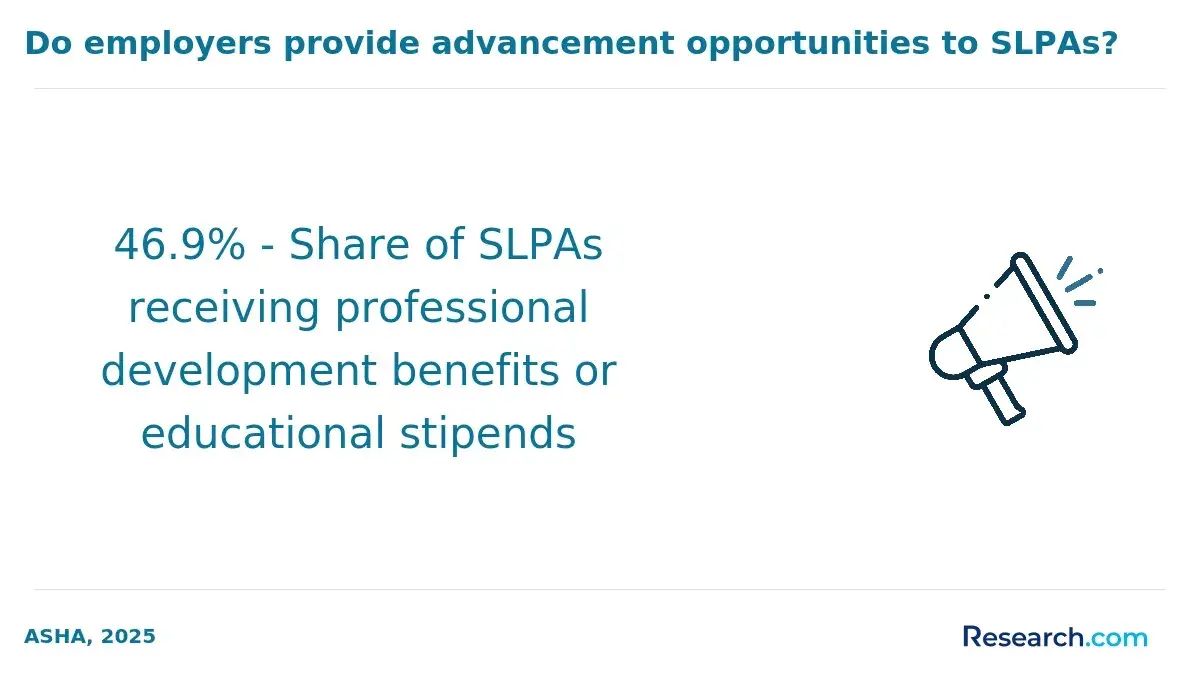
- Employer tuition assistance, particularly for employees of health systems, rehabilitation organizations, schools, and large nonprofit providers.
- Workplace agreements that support employees returning after graduation, provided the repayment obligation and work commitment are understood before signing.
- Public Service Loan Forgiveness for borrowers who later work full time for qualifying government or nonprofit employers and meet federal repayment and payment requirements.
- Federal Teacher Loan Forgiveness only when the borrower, school, position, and other requirements fit the program rules; school-based SLP employment does not automatically establish eligibility.
- Rural, workforce, and employer-specific repayment programs when available, with current eligibility confirmed directly through the administering organization.
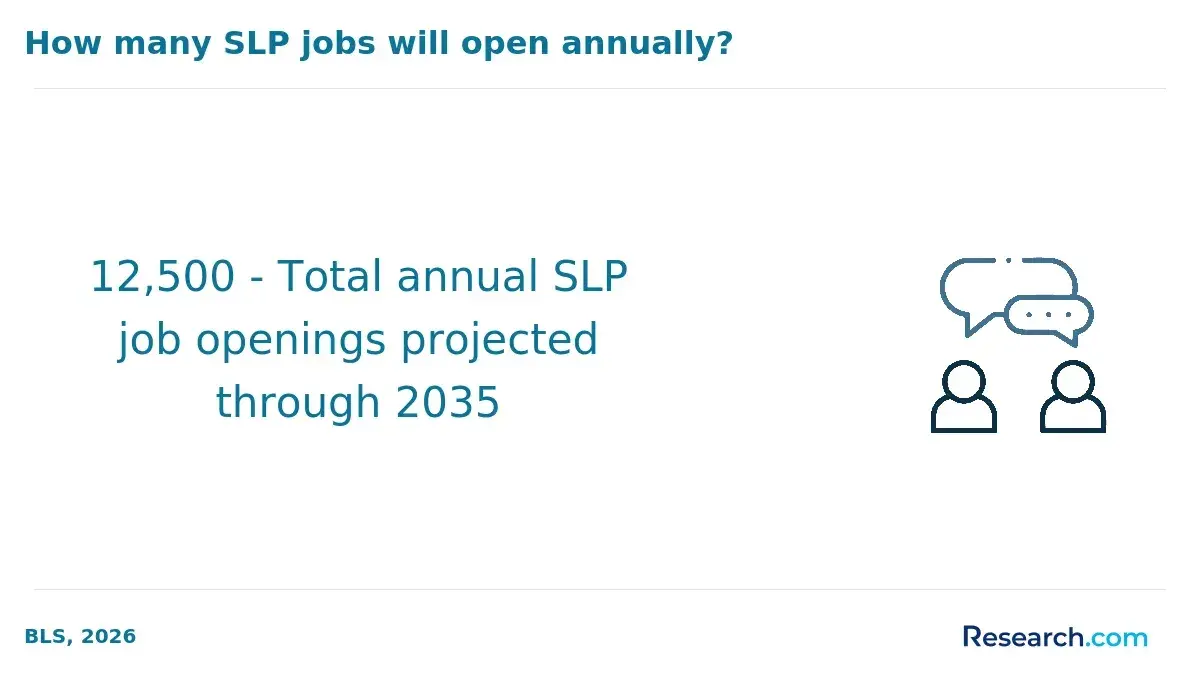
The BLS projection of about 12,500 annual SLP openings on average from 2025 to 2035 suggests sustained national demand, but it should not be used as a borrowing guarantee. The safer financial plan compares expected debt with the local job market, likely starting setting, benefit package, commuting needs, and the possibility of a delayed clinical placement.
Before borrowing, ask an employer whether tuition benefits require continued employment, whether clinical schedules can be accommodated, and whether the benefit is paid upfront or reimbursed after course completion. A reimbursement benefit can still require substantial cash flow during the program.
Other Things You Should Know About Speech Language Pathology
Some students work during online coursework, but full-time employment often becomes difficult during practicum and externship terms. Clinical sites commonly operate during weekday hours, and travel, documentation, and preparation time can add to the commitment. Review the clinical calendar before assuming an online program is part-time compatible.
Not always. Many programs accept applicants with other bachelor's degrees, but they may require prerequisite or leveling courses. The number of courses, grade standards, and whether they must be completed before application vary by university.
No. CAA accreditation addresses program quality standards; it does not guarantee a clinical site in a particular Oregon city or commuting radius. Ask each program how it handles placement shortages, travel, site approval, and delays.
An online program may fit students who need geographic flexibility and can manage required travel and clinical uncertainty. An on-campus option may be better for students who want more local faculty contact, established regional placement networks, or easier access to campus services. Compare total cost, placement support, schedule demands, and Oregon licensure alignment rather than delivery format alone.
References
- Speech-Language Pathology | PennWest Global Online https://online.pennwest.edu/programs/speech-language-pathology-grad/index.php
- Online Speech-Language Pathology Graduate Program https://csd.robbins.baylor.edu/graduate/online-csd-graduate-program
- Best Online MSLP Programs with No GRE Required for 2026 https://www.speechpathologydegrees.com/online/mslp-no-gre-required
- 2026 Most Affordable Online Speech Pathology Master's... https://www.onlineu.com/most-affordable-colleges/speech-pathology-masters-degrees