2027 How to Become a Special Education Teacher in Missouri: Requirements & Certification

Co-Founder and Chief Data Scientist
Becoming a special education teacher in Missouri is a licensing decision, a training decision, and a career-fit decision. You need the right degree or approved preparation pathway, the correct Missouri Department of Elementary and Secondary Education certification steps, supervised classroom experience, and a realistic understanding of the workload, salary range, legal responsibilities, and student support needs involved.
This guide is for aspiring teachers, career changers, paraprofessionals, out-of-state educators, and current teachers considering special education certification in Missouri. It explains the education requirements, licensing routes, timeline, salary expectations, demand, professional development options, advancement paths, and related careers so you can decide whether this route fits your goals.
Quick Answer: How Do You Become a Special Education Teacher in Missouri?
To become a special education teacher in Missouri, you generally need a bachelor’s degree, completion of an approved teacher preparation program, student teaching or supervised field experience, passing scores on Missouri’s required assessments, and an application for the appropriate Missouri teaching certificate through DESE. Career changers, out-of-state teachers, and foreign-trained educators may have alternative routes, but all candidates must meet Missouri’s certification standards before serving as a licensed teacher.
| Decision Point | What It Means for You |
| Education | A bachelor’s degree in special education or a related approved teacher preparation pathway is the standard route. |
| Timeline | Most candidates spend four to six years preparing, depending on whether they pursue only a bachelor’s degree or add graduate study. |
| Licensure | Missouri candidates typically apply for the Initial Professional Certificate after meeting degree, GPA, assessment, and program recommendation requirements. |
| Job Market | Missouri reports continued need for qualified special education educators, with approximately 470 openings expected each year. |
| Salary | The average annual salary is approximately $47,705, with higher earnings possible by district, experience, education level, and specialization. |
Key Things to Know Before Choosing This Career
- The job outlook for special education teachers in Missouri is promising, with a projected growth rate of 6% through 2030.
- Special education teachers in Missouri earn an average salary of approximately $47,705 annually, though pay can vary by school district, years of service, credentials, and local salary schedules.
- Approximately 14% of public school students statewide receive special education services, which makes qualified special education teachers central to school staffing and student support.
- Professional organizations such as the Missouri Council for Exceptional Children can help teachers stay current through workshops, resources, and networking.
- Large public school systems, including St. Louis Public Schools and Kansas City Public Schools, are among the employers that seek special education professionals.
- Educational requirements for Missouri special education teachers
- How long the process usually takes
- Missouri licensing requirements and certificate routes
- Demand for special education teachers in Missouri
- Salary expectations in Missouri
- Professional development options
- Advanced roles for experienced special education teachers
- Common challenges in the field
- How Missouri special education laws affect teachers
- Cost-effective routes to a Missouri teaching credential
- Early childhood strategies for special education careers
- School psychologist pathways related to special education
- Collaborative partnerships in student support
- Mentorship and networking for career growth
- Dual certification in special and elementary education
- Ways to improve your competitiveness
- School counseling strategies for special education classrooms
- Subject-area expertise and career flexibility
- Advanced degrees for special education teachers
- BCBA certification and behavior intervention skills
- Related special education career paths in Missouri
What are the educational requirements to be a special education teacher in Missouri?
Missouri special education teachers need formal preparation that combines education theory, disability-specific instructional methods, classroom management, assessment, and supervised practice. The most direct route is an approved undergraduate teacher preparation program in special education, although alternative options exist for candidates who already have a degree.
- Bachelor’s degree: You generally need a bachelor’s degree in special education or a closely related field from an approved preparation program. Missouri institutions such as the University of Missouri and Missouri State University offer programs designed to prepare candidates for classroom teaching and certification.
- Cumulative GPA: Candidates are expected to maintain a minimum cumulative GPA of 3.0. This requirement matters because Missouri certification depends not only on completing courses but also on demonstrating academic readiness for professional practice.
- Field experience: Approved preparation programs include supervised classroom experiences, usually culminating in student teaching. This is where candidates learn to write and implement instructional plans, support individualized learning goals, collaborate with general education teachers, and communicate with families.
- Master’s degree: A master’s degree is optional for initial entry, but it can support advancement, specialization, and stronger preparation in areas such as autism spectrum disorders, learning disabilities, behavior intervention, or leadership. Lindenwood University is one example of a Missouri institution offering advanced study options.
If you already have a bachelor’s degree in another field, you may not need to start over with a second undergraduate degree. Missouri offers options such as post-baccalaureate teacher preparation, graduate certificates, and other alternative certification routes for candidates who meet state requirements.
Which education route should you choose?
| Your Background | Best-Fit Route | Why It May Make Sense |
| First-time college student | Bachelor’s degree in special education | This is the most straightforward route because teacher preparation, fieldwork, and certification planning are built into the degree. |
| College graduate without teacher certification | Post-baccalaureate or graduate certification pathway | You can build on your existing degree while completing Missouri teacher preparation requirements. |
| Current teacher in another area | Additional certification or endorsement pathway | This may help you move into special education without repeating your entire preparation program. |
| Paraprofessional or school aide | Degree-completion program with teacher preparation | Your classroom experience can help you confirm fit before investing in full teacher certification. |
How long does it take to become a special education teacher in Missouri?
The typical timeline is four to six years, depending on your starting point and whether you pursue graduate study. A traditional undergraduate route usually takes about four years, while candidates who add a master’s degree or complete additional certification coursework may need more time.
- Bachelor’s degree: Most full-time students spend about four years completing a bachelor’s degree in education, special education, or an approved related program.
- Teacher preparation program: If your degree does not already include teacher preparation, you may need an additional semester or two of professional education coursework and clinical requirements.
- Internship or student teaching: Supervised classroom practice often takes one semester and is essential for developing teaching judgment, documentation habits, and instructional flexibility.
- Master’s degree: Optional graduate study commonly takes one to two years and may focus on specialized disability areas, intervention methods, assessment, or leadership.
| Stage | Typical Time Commitment | Main Outcome |
| Undergraduate degree | About four years | Academic foundation and initial teacher preparation |
| Additional teacher preparation | One semester or two | Completion of required pedagogy and clinical components if not embedded in the degree |
| Student teaching or internship | One semester | Supervised experience in a real classroom setting |
| Optional master’s degree | One to two years | Advanced knowledge, specialization, and possible career mobility |
Your personal timeline can be shorter or longer based on transfer credits, part-time enrollment, assessment timing, district hiring cycles, and whether you are changing careers while working. Before enrolling, ask each program how long candidates with your background usually take to complete certification requirements.
What are the licensing requirements for special education teachers in Missouri?
Missouri special education teachers must meet DESE certification requirements before serving as licensed classroom teachers. The exact process depends on whether you completed a Missouri-approved teacher preparation program, hold an out-of-state certificate, trained internationally, or are pursuing an alternative pathway.
Standard Missouri preparation route
Candidates who complete an approved Missouri teacher preparation program typically apply for the Initial Professional Certificate. Requirements include at least a bachelor’s degree from an approved program, a recommendation from the program’s designated official, a 3.0 GPA in relevant coursework, and passing Missouri’s required assessments. The application is completed online, and the institution forwards its recommendation to DESE after completing its review.
Out-of-state certification route
Teachers who already hold valid certification in another state may qualify for Missouri certification if their preparation and credentials align with Missouri standards. These applicants submit a Non-Missouri Graduate application and provide verification of teaching experience when required.
Foreign-trained educator route
Educators with foreign teaching qualifications must have transcripts verified and translated by a credentialing agency. DESE uses that evaluation to determine how the applicant’s preparation compares with Missouri certification requirements.
Temporary Authorization Certificate route
Missouri also offers a Temporary Authorization Certificate for eligible candidates who hold a bachelor’s degree in a content area. This route requires additional coursework, at least two years of mentored teaching, and passing the required exams. After completing all requirements, teachers may be able to upgrade to the Initial Professional Certificate.
| Applicant Type | Likely Certification Path | Key Items to Verify |
| Missouri program graduate | Initial Professional Certificate | Approved program completion, institutional recommendation, GPA, assessments |
| Certified teacher from another state | Non-Missouri Graduate application | Comparable certification, teaching experience if applicable, DESE review |
| Foreign-trained educator | Credential evaluation route | Transcript translation, credential agency evaluation, Missouri equivalency |
| Career changer with bachelor’s degree | Temporary Authorization Certificate or other approved pathway | Content background, coursework plan, mentored teaching, exams |
Licensure checklist before you apply
- Confirm that your program is approved for Missouri teacher certification in special education.
- Ask which special education certification area your program prepares you for.
- Verify required assessments early so you can plan test dates before graduation or hiring deadlines.
- Keep copies of transcripts, field experience records, and program recommendation documentation.
- Check whether your certificate requires renewal steps and continuing professional education.
What is the demand for special education teachers in Missouri?
Missouri continues to need qualified special education teachers because students with disabilities require legally mandated services, individualized instruction, assessment support, accommodations, family communication, and collaboration across school teams. The state has approximately 42,410 special education teachers working with students who have diverse learning needs.
The employment outlook is best understood as stable but replacement-driven. Overall job growth is projected to show little to no change over the next decade, yet an average of about 470 job openings for special education teachers is expected each year. Many of these openings are tied to retirements, transfers, and educators leaving the occupation.
If you are comparing states or considering relocation, certification rules can differ substantially. For example, the process for South Carolina educator certification may not match Missouri’s requirements, so always review the state where you plan to teach.
Where demand may be strongest
- Large urban districts: Districts serving large student populations often need special education teachers across grade levels and disability categories.
- Rural districts: Smaller districts may struggle to recruit specialized educators, especially when one teacher must cover multiple service needs.
- High-need disability areas: Teachers with behavior intervention, autism, communication support, and intensive needs experience may be more competitive.
- Shortage and replacement positions: Openings often arise when experienced teachers retire, move into leadership, or transition to related fields.
How much do special education teachers in Missouri earn?
Special education teacher pay in Missouri varies by district salary schedule, years of experience, degree level, bargaining agreements where applicable, and extra duties. The average annual salary is approximately $47,705, but individual salaries can be higher or lower depending on the employer and role.
- Entry-level special education teachers in Missouri: approximately $49,517
- Mid-career professionals: about $62,146
- Seasoned educators: potentially $83,200
Urban districts may offer higher salaries than some rural districts, but higher pay can also come with a higher cost of living, larger caseloads, or different staffing demands. Advanced degrees, specialized certifications, leadership responsibilities, and hard-to-fill assignments can also affect compensation.
| Factor | How It Can Affect Pay |
| Experience | Most district salary schedules increase pay as teachers gain years of service. |
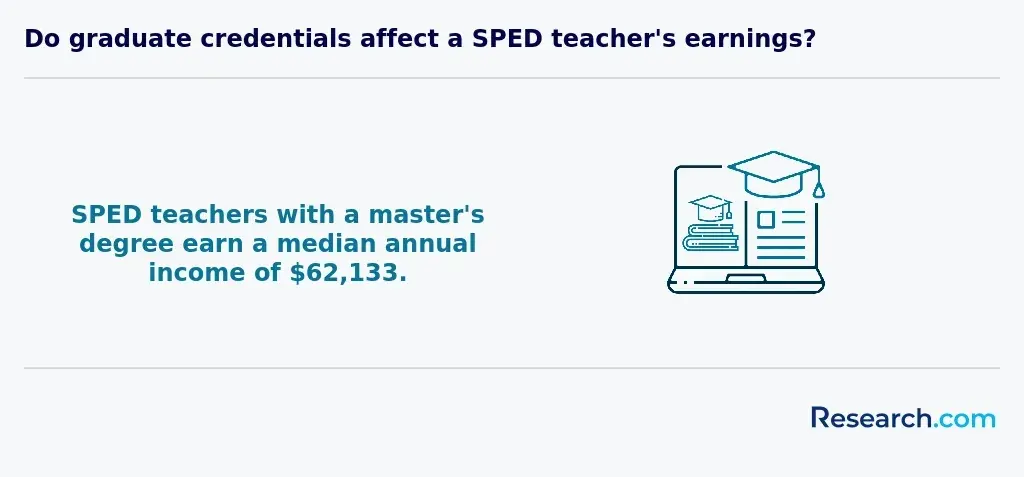
| Education level | A master’s degree or additional graduate coursework may place a teacher on a higher salary lane. |
| District location | Urban, suburban, and rural districts may have different salary structures and staffing pressures. |
| Specialized credentials | Training in high-need areas can improve competitiveness and may support advancement. |
| Additional duties | Department leadership, mentoring, extended school year work, or program coordination may add compensation depending on district policy. |
Salary should not be evaluated in isolation. Compare benefits, retirement contributions, health insurance, planning time, caseload expectations, classroom support, tuition assistance, and professional development funding before accepting a position.
What professional development opportunities are available for special education teachers in Missouri?
Special education teachers need ongoing professional learning because instructional practices, legal requirements, intervention models, assistive technology, and student support expectations change over time. In Missouri, professional development can also help teachers maintain certification, improve classroom effectiveness, and prepare for advanced roles.
- Missouri Council for Exceptional Children events: The Missouri Council for Exceptional Children offers networking, professional learning, and resources for educators who serve students with exceptionalities.
- Missouri Department of Elementary and Secondary Education workshops: DESE-sponsored learning opportunities can help teachers understand compliance expectations, instructional strategies, and changes affecting special education practice.
- CEC 2025 Convention & Expo: Scheduled for March 12-15 in Baltimore, this national event gives educators access to sessions, research-informed practices, and professional connections beyond their local district.
Professional development is most useful when it connects directly to the students you serve. A teacher supporting students with behavioral needs may prioritize behavior intervention training, while a teacher in an inclusive classroom may focus on co-teaching, accommodations, and universal design for learning.
If you are exploring teaching requirements in nearby or alternative states, a guide on how to become a teacher in Oklahoma can help you compare how state-specific certification rules differ.
Are there advanced roles for experienced special education teachers in Missouri?
Experienced special education teachers can move into roles that influence assessment, intervention design, program leadership, teacher preparation, or student support systems. These positions often require additional education, certification, specialized training, or administrative experience.
| Advanced Role | Main Responsibilities | Who It Fits |
| Educational Diagnostician | Assesses student needs, supports eligibility decisions, and collaborates with families and school teams. | Teachers interested in assessment, data interpretation, and early identification. |
| Behavior Intervention Specialist | Develops behavior plans, supports teachers, and helps students with behavioral challenges succeed in school settings. | Educators who want to focus on behavior, intervention systems, and classroom support. |
| Director or Program Manager | Oversees special education programs, staffing, compliance, resources, and service delivery. | Teachers interested in leadership, systems improvement, and district-level decision-making. |
| Adjunct Professor | Teaches future educators in college or university programs, often while drawing from classroom experience. | Educators with advanced degrees who want to mentor teacher candidates. |
Before pursuing an advanced role, compare the required credential, workload, salary structure, and day-to-day responsibilities. Some teachers prefer classroom impact; others want broader influence through assessment, coaching, or administration.
In the chart below, I have illustrated the current interest of teachers in assistive technology training.
What are the biggest challenges faced by special education teachers in Missouri?
Special education can be deeply meaningful, but candidates should understand the realities before committing. The work involves instruction, compliance, collaboration, documentation, family communication, and emotional resilience.
- Staffing shortages: When schools have too few qualified special education teachers, current staff may carry heavier caseloads or cover more service needs.
- High workload: Teachers must balance instruction, IEP documentation, progress monitoring, meetings, accommodations, assessments, and behavior support.
- Compensation concerns: Some teachers feel that pay does not fully reflect the complexity of the work, especially when compared with the time required outside classroom hours.
- Limited support: New teachers may struggle without strong mentoring, planning time, paraprofessional support, and administrative understanding of special education requirements.
- Administrative burden: Compliance paperwork and IEP management can reduce the time available for lesson planning and direct student interaction.
| Common Mistake | Better Approach |
| Choosing a program only because it is convenient | Verify Missouri approval, certification alignment, field placements, and graduate outcomes. |
| Looking only at tuition | Compare fees, testing costs, student teaching requirements, commute costs, and lost work time. |
| Assuming any online program qualifies for Missouri certification | Ask the program and DESE whether the pathway meets Missouri licensure requirements. |
| Underestimating paperwork | Build strong organization, documentation, and time-management habits during field experience. |
| Ignoring school support systems | During interviews, ask about caseloads, mentoring, paraprofessional staffing, IEP systems, and planning time. |
If these challenges make you reconsider your long-term direction, it can be useful to compare other professional paths, including unrelated options such as interior design career options. A thoughtful career comparison can clarify whether you want student-facing work, design-oriented work, healthcare-adjacent roles, or another profession entirely.
In the chart below, I have illustrated the number of students who benefited from special education programs in the United States over the years.
How do special education laws in Missouri impact teachers?
Special education law shapes nearly every part of the job. Teachers are responsible not only for instruction but also for implementing services, documenting progress, supporting student rights, and participating in legally required processes. In Missouri, state rules operate within the broader federal special education framework.
- Missouri State Plan for Special Education: This plan guides how schools serve students aged 3 to 21 and sets expectations for service delivery, compliance, and support.
- First Steps: Missouri’s Part C early intervention program serves children from birth to age 3 and emphasizes early support, family collaboration, and developmental planning.
- Parents’ Bill of Rights: This framework gives parents greater access to information and involvement in educational decisions affecting their children.
- Compliance standards and indicators: Teachers must follow documentation and service expectations that support accountability and quality in special education services.
Understanding these rules helps teachers avoid serious mistakes, such as missing IEP deadlines, failing to document services, using accommodations inconsistently, or excluding families from key decisions. Legal knowledge also helps teachers advocate for appropriate resources and protect student access to instruction.
If you are comparing teaching careers across states, review state-specific requirements carefully. The Wisconsin teacher licensure process, for example, may involve different legal and certification expectations than Missouri.
Are there scholarships and grants available for special education teachers in Missouri?
Teacher preparation can be expensive, especially when candidates must pay tuition, fees, testing costs, books, and living expenses while completing student teaching. Scholarships and grants can reduce the financial barrier for future Missouri special education teachers, but eligibility rules, award amounts, deadlines, and service commitments vary.
- New Futures Scholars Program: This program provides up to $7,800 for eligible students committed to teaching in high-need areas, including special education.
- David Malcolm Scholarship: This $2,500 award supports high school seniors and college students who have overcome significant challenges and have a minimum 3.5 GPA.
- Minority Teacher Education Scholarship: Each scholarship is valued at $2,000, with an increased amount of $3,000 for those entering special education. Participating colleges are required to provide matching funds.
When comparing aid, read the fine print. Some awards are one-time scholarships, while others may require enrollment in a specific institution, teaching in a high-need field, meeting GPA requirements, or completing service obligations. If you are also researching teaching credentials outside Missouri, resources on Nevada teaching credential requirements can help you compare how costs and certification structures differ by state.
What are the most cost-effective pathways to obtain a teaching credential in Missouri?
The most cost-effective route is usually the one that gets you licensed without unnecessary credits, duplicated coursework, or a program that fails to meet Missouri certification requirements. For first-time students, an approved bachelor’s program may be efficient because it combines degree completion and teacher preparation. For career changers, a post-baccalaureate or alternative route may be more efficient if it recognizes prior academic work.
When comparing options, look beyond published tuition. Include application fees, assessment fees, background checks, books, technology requirements, commuting, unpaid student teaching time, and the opportunity cost of reducing work hours. Online or hybrid coursework can lower some costs, but only if the program still provides approved field placements and leads to the certification area you need.
Research.com’s guide to teaching credential programs in Missouri can help you evaluate lower-cost credential routes while keeping licensure quality and long-term career value in view.
Can integrating early childhood education strategies boost my special education career in Missouri?
Early childhood knowledge can be valuable for special education teachers, especially those serving young learners, students with developmental delays, or children transitioning from early intervention services into school-based programs. Understanding developmental milestones, play-based learning, family engagement, and early literacy can strengthen your ability to design age-appropriate interventions.
This approach is especially relevant if you want to work with preschool or early elementary students. It may also broaden your understanding of how early supports affect later academic and behavioral outcomes. If you are comparing related roles, review career and pay considerations in this guide to a career in early childhood education salary.
Could a School Psychologist Role Amplify My Impact as a Special Education Professional in Missouri?
School psychology is a strong related path for special education professionals who want to focus more heavily on assessment, intervention planning, consultation, and student mental health. A school psychologist works with students, families, teachers, and administrators to understand learning, behavioral, emotional, and cognitive needs.
This path is not the same as becoming a special education teacher, and it generally requires different preparation. However, teachers who enjoy evaluation, data-based decision-making, and multidisciplinary collaboration may find the role worth exploring. For a state-specific overview, review school psychologist requirements Missouri.
Can Collaborative Partnerships Enhance Support for Special Education in Missouri?
Special education works best when teachers are not expected to solve every academic, behavioral, communication, and emotional concern alone. Strong teams often include general education teachers, paraprofessionals, school psychologists, counselors, speech-language pathologists, occupational therapists, administrators, nurses, families, and community providers.
Collaboration is especially important when students need behavioral or emotional support beyond academic accommodations. Understanding how allied professionals think can help teachers communicate more effectively and build stronger intervention plans. For example, learning about how to become a substance abuse counselor in Missouri can offer perspective on behavioral health support systems that may intersect with school-based services.
Can mentorship and networking boost my career growth in Missouri?
Mentorship can make the difference between surviving the first year and building a sustainable teaching career. New special education teachers often need guidance on IEP meetings, parent communication, progress monitoring, classroom routines, behavior plans, and collaboration with general education staff.
Networking also helps teachers learn about job openings, district expectations, professional development, assistive technology, and leadership opportunities. Early-career educators may benefit from connecting with teachers across grade levels, including those familiar with preschool teacher requirements in Missouri, because transition planning and early learning knowledge often overlap with special education practice.
Can dual certification in special and elementary education unlock additional opportunities in Missouri?
Dual certification can improve flexibility if you want to work in inclusive elementary classrooms, co-teaching models, resource settings, or intervention roles that require strong knowledge of general education standards. It can also make you more attractive to districts that need teachers who can collaborate across specialized and general education teams.
This route is not automatically the best choice for everyone. It may require extra coursework, assessments, field placements, or advising. If you want broader grade-level and subject-area flexibility, compare the requirements for special education with how to become an elementary school teacher in Missouri.
How to Improve Your Competitiveness as a Special Education Teacher in Missouri
Missouri schools need qualified special education teachers, but strong candidates still distinguish themselves through practical experience, legal awareness, specialized training, and evidence that they can collaborate well under pressure.
- Choose an approved certification pathway. Before enrolling, confirm that the program prepares you for Missouri special education licensure, not just a general education degree or a non-licensure education credential.
- Build classroom experience early. Work as a paraprofessional, tutor, substitute, camp counselor, or volunteer in programs serving students with disabilities. Real experience helps you confirm fit and strengthens interviews.
- Develop IEP and documentation skills. Learn how progress monitoring, accommodations, goals, and service minutes work. Strong documentation habits are highly valued in special education.
- Pursue focused training. Consider professional learning in autism support, behavior intervention, assistive technology, reading intervention, communication supports, or Applied Behavior Analysis.
- Join professional organizations. Membership in groups such as the Missouri Council for Exceptional Children can connect you with workshops, peers, job leads, and current practice discussions.
- Prepare strong interview examples. Be ready to discuss collaboration, de-escalation, differentiated instruction, parent communication, data tracking, and how you respond when a plan is not working.
If you are also considering non-public school settings, review how to become a private school teacher in Missouri because certification expectations, hiring practices, and student support structures can differ from public school systems.
Can integrating school counseling strategies enhance special education effectiveness in Missouri?
School counseling strategies can strengthen special education practice by helping teachers better support student motivation, emotional regulation, executive functioning, peer relationships, and family communication. While special education teachers are not school counselors, they often collaborate with counselors when students need academic, behavioral, or social-emotional support.
Teachers who understand counseling-informed approaches may be better prepared to participate in intervention teams and create classroom environments that support both learning and well-being. For a closer look at the profession, review school counselor requirements in Missouri.
Can diversifying subject expertise enhance a special education teacher's career in Missouri?
Subject-area strength matters in special education because teachers often adapt grade-level content, support reading and writing across the curriculum, and help students access general education standards. Strong academic content knowledge can make lesson planning more precise and improve collaboration with general education teachers.
English and literacy knowledge can be especially useful because many students with disabilities need support with reading comprehension, written expression, vocabulary, and communication. If you are interested in expanding your teaching options, explore how to become an English teacher in Missouri.
Can an advanced degree unlock greater career opportunities for special education teachers in Missouri?
An advanced degree can help special education teachers deepen expertise, prepare for leadership, pursue specialized roles, and potentially move on a district salary schedule. It may be most worthwhile for teachers who know their target outcome, such as behavior specialization, autism support, curriculum leadership, administration, assessment, or teacher education.
Before enrolling, compare total cost, accreditation, field requirements, program reputation, transfer policies, licensure alignment, and whether the degree fits your schedule as a working teacher. Flexible options such as masters programs online education may be worth considering if you need to balance graduate study with classroom responsibilities.
Can pursuing a BCBA certification boost my impact as a special education teacher in Missouri?
BCBA certification can be relevant for special education teachers who want deeper expertise in behavior assessment, intervention design, and data-based behavior support. It can be especially useful for educators working with students who have intensive behavioral needs or autism-related support needs.
This path is not necessary for every special education teacher, and it should be evaluated carefully because certification preparation can require significant coursework, supervised experience, and examination requirements. If behavior analysis is central to your career goals, review how to become a BCBA in Missouri.
Are there other career paths related to special education in Missouri that I should consider?
Special education can lead to several related careers, especially if you are interested in assessment, therapy, counseling, communication, leadership, or behavior support. One closely related path is speech-language pathology, which focuses on communication, speech, language, and swallowing disorders and may involve working with students in school settings.
If you enjoy helping students communicate, participate in class, and access instruction, learning how to become a speech language pathologist in Missouri can help you compare requirements, responsibilities, and long-term fit.
Questions to Ask Before Enrolling in a Missouri Special Education Program
- Is the program approved for Missouri teacher certification in special education?
- Which certificate area, grade band, or disability category does the program prepare me for?
- How are student teaching placements arranged, and can I complete them near where I live?
- What assessments must I pass, and when should I take them?
- What is the total cost after tuition, fees, books, testing, background checks, and transportation?
- Does the program support career changers, paraprofessionals, transfer students, or working adults?
- How does the program prepare candidates for IEP writing, progress monitoring, behavior support, and family communication?
- What professional development or job placement support is available after graduation?
Related Articles for Nearby States
- 2027 How to Become a Special Education Teacher in Kansas: Requirements & Certification
- 2027 How to Become a Special Education Teacher in Iowa: Requirements & Certification
- 2027 How to Become a Special Education Teacher in Nebraska: Requirements & Certification
- 2027 How to Become a Special Education Teacher in Arkansas: Requirements & Certification
- 2027 How to Become a Special Education Teacher in Oklahoma: Requirements & Certification
- 2027 How to Become a Special Education Teacher in Illinois: Requirements & Certification
- 2027 How to Become a Special Education Teacher in Kentucky: Requirements & Certification
- 2027 How to Become a Special Education Teacher in Tennessee: Requirements & Certification
- 2027 How to Become a Special Education Teacher in Indiana: Requirements & Certification
- 2027 How to Become a Special Education Teacher in South Dakota: Requirements & Certification
References:
- U.S. Bureau of Labor Statistics (2023). Occupational Outlook Handbook: Special Education Teachers. Retrieved from https://www.bls.gov/ooh/education-training-and-library/special-education-teachers.htm
- Special Education Degree (2017). Special Education Teacher Salary. special-education-degree.net https://www.special-education-degree.net/special-education-teacher-salary/
- Council for Exceptional Children (n.d.). Professional Development. exceptionalchildren.org https://exceptionalchildren.org/improving-your-practice/professional-development
- Ori Learning (2024). The biggest challenges in special education. orilearning.com https://orilearning.com/biggest-challenges-special-education-2024/
- Missouri Department of Elementary & Secondary Education (n.d.). Laws & Regulations. dese.mo.gov https://dese.mo.gov/special-education/compliance/laws-regulations
- Scholarships.com (n.d.). Special Education Scholarships. scholarships.com https://www.scholarships.com/financial-aid/college-scholarships/scholarship-directory/academic-major/special-education
- U.S. Department of Education (2023). 45th Annual Report to Congress on the Implementation of the Individuals with Disabilities Education Act, 2023. https://sites.ed.gov/idea/files/45th-arc-for-idea.pdf
- Kolmar, C. (2024). Special education teacher salary by State: Highest-Paid Special Education Teachers by State [2024]. Zippia. https://www.zippia.com/advice/special-education-teacher-salary-by-state
- O*Net OnLine. (n.d.). Missouri employment trends: 25-2058.00 - Special education teachers, secondary school. https://www.onetonline.org/link/localtrends/25-2058.00?st=MO
- O*Net OnLine. (n.d.). Missouri employment trends: 25-2057.00 - Special education teachers, middle school. https://www.onetonline.org/link/localtrends/25-2057.00?st=MO
- O*Net OnLine. (n.d.). Missouri employment trends: 25-2056.00 - Special education teachers, elementary school. https://www.onetonline.org/link/localtrends/25-2056.00?st=MO
Key Insights
- Missouri special education teaching is a regulated career. Do not enroll in a program until you confirm it leads to the Missouri certification area you need.
- The traditional route usually takes about four years, while candidates who add graduate study or alternative certification steps may spend four to six years preparing.
- Licensing requirements differ for Missouri graduates, out-of-state teachers, foreign-trained educators, and career changers, so your starting point determines your application path.
- Salary varies by district, experience, education level, and specialization. The average annual salary is approximately $47,705, but salary schedules and benefits should be reviewed before accepting a job.
- Demand is steady because schools must provide services to students with disabilities. Missouri expects about 470 openings each year, many due to replacement needs.
- The strongest candidates combine certification readiness with classroom experience, IEP knowledge, behavior support skills, collaboration habits, and ongoing professional development.
- Related paths such as school psychology, speech-language pathology, counseling, behavior analysis, and educational leadership may be worth exploring if you want to support students beyond the classroom teacher role.
Other Things You Should Know About Becoming a Special Education Teacher in Missouri
The Missouri Department of Elementary and Secondary Education, or DESE, issues special education teacher certification. Applicants apply through DESE’s educator certification system and must meet Missouri’s degree, testing, and preparation requirements before a certificate is granted.
Prospective special education teachers in Missouri are required to complete a supervised internship or practicum, typically during their teacher preparation program. This hands-on experience is essential for understanding classroom dynamics and applying instructional strategies for students with special needs.