2027 Best Online Speech Pathology Master's Programs for Residents of Visalia, CA

Co-Founder and Chief Data Scientist

Reviewed by Rhea Paul, PhD
SLP Education & Research Expert
Visalia residents can pursue an online master's in speech-language pathology (SLP), but the right choice depends on more than virtual classes. California licensure, supervised clinical placements, required travel, and a program's willingness to enroll California students all matter.
This guide compares the decision factors that make an online SLP program practical for Central Valley learners, explains how to verify eligibility, and helps applicants evaluate cost, scheduling, outcomes, and clinical-training support before applying.
Key Things You Should Know
- A California SLP license generally requires a qualifying graduate degree, supervised clinical preparation, a passing Praxis examination, and a Required Professional Experience (RPE) period; an online format does not remove these requirements.
- CAA accreditation is the essential starting point: ASHA certification standards require a graduate degree from a CAA-accredited program, and accreditation also provides the strongest foundation for California licensure planning.
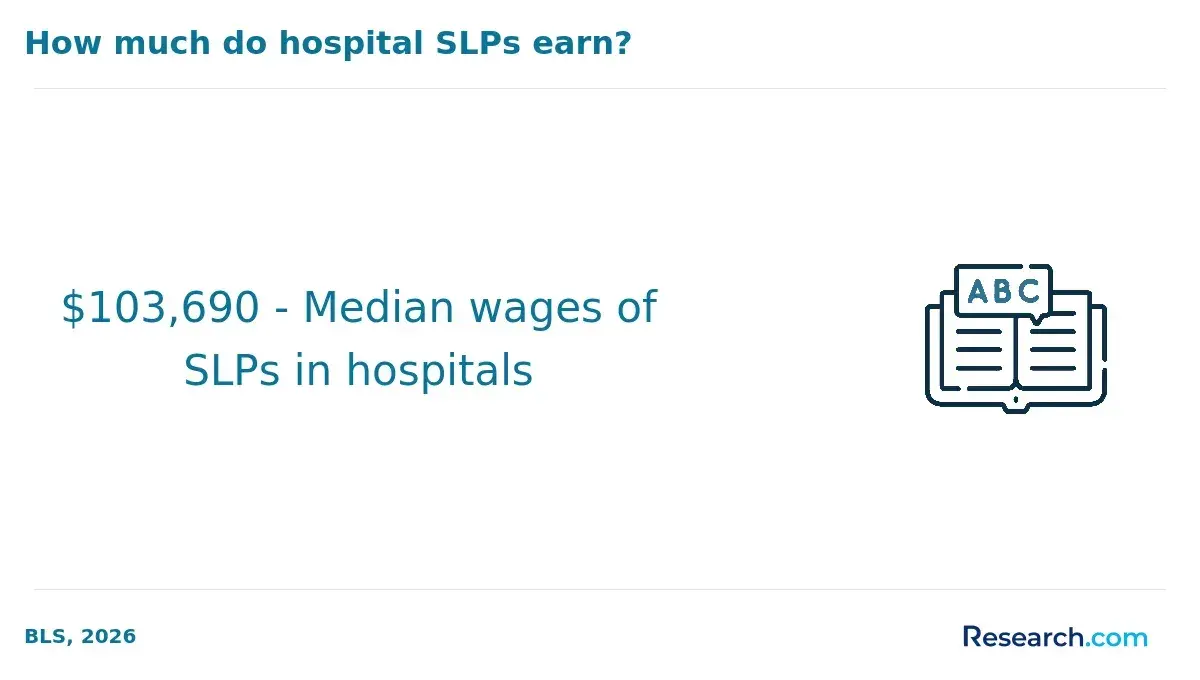
- The U.S. Bureau of Labor Statistics reports a $97,870 median annual wage for speech-language pathologists in May 2025 and projects 17% employment growth from 2025 to 2035, but program cost and placement logistics still determine an individual student's return on investment.
Which online speech pathology master's programs accept students living in Visalia, California?
Several CAA-accredited distance or hybrid SLP master's programs may be viable for California residents, but availability can change by cohort, state authorization status, and clinical-placement capacity. "Online" usually describes academic coursework; students should expect in-person clinical education and, in some programs, campus immersions.
The programs below are strong starting points because they have established distance-learning models. They are not a universal ranking: the best option depends on confirmed California enrollment eligibility, placement support, travel demands, and total cost at the time of admission.
| Program | Delivery model | Clinical-training approach | Visalia decision point |
| Emerson College, MS in Speech-Language Pathology | Online academic coursework with required in-person clinical education | Program-supported placements and clinical experiences | Confirm California availability, current residency requirements, placement process, and any required travel before applying. |
| New York University, MS in Communicative Sciences and Disorders | Online program with live learning elements and fieldwork | Clinical placements coordinated with program processes | Ask whether placement arrangements can reasonably serve the Central Valley and whether travel is needed for intensives. |
| Baylor University, MS in Communication Sciences and Disorders | Online coursework with clinical practicum experiences | Clinical education completed at approved sites | Review California professional-licensure disclosures and clarify the student's role in securing local sites. |
| University of St. Augustine for Health Sciences, MS-SLP | Hybrid model combining online instruction, hands-on training, and clinical education | In-person skills training and supervised clinical placements | May suit students willing to travel for required hands-on experiences; verify California enrollment and licensure disclosures. |
Before treating any school as an option, ask admissions for a written response to four questions: whether California residents may enroll in the intended cohort, whether the curriculum is designed to meet California educational requirements, who obtains or approves placements, and what travel is mandatory. A school's national online marketing language is not evidence of California eligibility.
Applicants who want a wider starting list can review online SLP master's programs, then narrow choices using each university's current state-authorization and licensure disclosures.
How do online speech-language pathology degrees meet California SLP licensure requirements?
An online SLP master's degree can support California licensure when it includes the required graduate education and supervised clinical preparation. The format of lectures is less important than the degree's accreditation, curriculum, documented clock hours, supervision, and the graduate's completion of California's post-degree licensing steps.
California applicants should plan for a sequence that extends beyond graduation. The California Speech-Language Pathology and Audiology and Hearing Aid Dispensers Board sets the controlling rules, so students should verify requirements directly with the Board before enrolling and again before applying for licensure.
- Complete a master's degree in speech-language pathology or communication disorders from a program whose accreditation and coursework support California requirements.
- Document supervised clinical practicum experiences completed during graduate study; CAA standards generally include at least 400 total clinical-practicum hours, including at least 375 direct client or patient contact hours.
- Pass the Praxis examination in speech-language pathology at the score required by California when applying.
- Complete California's Required Professional Experience under an approved supervisor after graduation, then apply for the full state license.
CAA accreditation and California licensure are related but not identical. Accreditation evaluates the educational program, while the Board evaluates an individual applicant's eligibility. A program may be accredited yet require a California student to take responsibility for additional documentation, background checks, fingerprinting, or placement-site requirements.
A common mistake is assuming that ASHA certification, a school-services credential, and a California healthcare license are interchangeable. They are separate credentials with overlapping education requirements. If your goal is a public-school role, ask about the California Commission on Teacher Credentialing pathway as well as the state professional license.
Which accredited online SLP master's programs offer California-friendly clinical placements and supervision?
No university should promise a Visalia placement unless it has specifically confirmed one for your cohort. A California-friendly program is one that can explain, in writing, how it evaluates sites, assigns qualified supervisors, manages affiliation agreements, and responds if a local placement falls through.
For Central Valley students, the practical distinction is between a program that centrally coordinates placements and one that expects students to identify potential sites. Neither model is automatically better. Central coordination may reduce administrative work, while a student-assisted model can be useful for applicants with established professional connections in Tulare County, Fresno, Bakersfield, or surrounding communities.
| Placement feature | Why it matters in the Central Valley | What to ask |
| Affiliation agreements | Schools, hospitals, private practices, and skilled-nursing settings may require agreements before a student can begin. | "Does the program already have California agreements, and who negotiates a new one?" |
| Supervisor qualifications | Supervision must meet program, accreditation, and site expectations. | "Who verifies supervisor credentials and oversees supervision quality?" |
| Placement radius | Local capacity may be limited, particularly for specialty populations or medical settings. | "How far might I need to commute, and are overnight travel costs possible?" |
| Timing flexibility | School calendars, clinic schedules, and cohort sequencing can delay a placement. | "What happens if my placement cannot start on the planned date?" |
| Student responsibility | Some programs ask students to suggest sites but retain approval authority. | "Am I expected to locate sites, or does the placement team secure them?" |
Programs with clinical-placement teams can be attractive, but applicants should still ask about historical placement outcomes for California learners rather than assuming support means a placement near home. The safest choice is a program that gives direct answers about site approval, supervision, liability coverage, and contingency plans.
How can Visalia residents verify CAA accreditation and institutional recognition for SLP programs?
Verify accreditation before paying an application fee or accepting admission. The Council on Academic Accreditation in Audiology and Speech-Language Pathology (CAA) maintains the authoritative status for graduate SLP programs, including whether a program is accredited, in candidacy, or subject to a public notice.
Use a three-part verification process. First, find the exact degree and delivery pathway in ASHA's EdFind or CAA directory; do not rely only on a university's general accreditation statement. Second, read the university's official catalog and professional-licensure disclosure for California. Third, confirm the institution's recognition and authorization to offer education to California residents through its official disclosures and, when needed, California regulatory resources.
- Match the CAA listing to the exact master's degree, campus, and delivery modality you plan to enter.
- Check the accreditation status date and determine whether a program is fully accredited or in candidacy; candidacy status can require closer review of graduate eligibility and timing.
- Save copies of the program's California licensure disclosure, clinical-practicum requirements, and admissions communications for your records.
- Contact the California licensing Board if the school cannot clearly state how its curriculum aligns with California requirements.
Institutional accreditation is not a substitute for programmatic CAA accreditation. Conversely, CAA accreditation does not mean every distance-learning option is available in every state or that every student will receive a local placement. Applicants comparing speech pathology graduate programs should treat accreditation and state eligibility as nonnegotiable filters, not secondary comparison points.
What are the pros and cons of California universities versus out-of-state schools for Visalia SLP students?
A California-based university may offer familiarity with state schools, local employers, and California credentialing, while an out-of-state online program may provide a more flexible online design or additional cohort options. Neither category is inherently better; the important issue is whether the program's clinical and licensure systems work for your location and career goal.
| Option | Potential advantages | Potential trade-offs | Best fit |
| California public university | Potentially lower resident tuition, regional employer familiarity, and proximity to campus resources | May require campus attendance, have limited seats, or offer fewer distance pathways | Applicants seeking in-state tuition and able to meet on-campus or hybrid requirements |
| California private nonprofit university | May offer specialized support, different schedules, or smaller cohorts | Published tuition can be higher, and hybrid attendance may still be substantial | Applicants whose schedule and clinical model fit the program particularly well |
| Out-of-state online university | May offer established distance-learning infrastructure and multiple clinical-placement regions | Travel, nonresident pricing, state authorization, and placement uncertainty can increase total cost | Applicants who obtain written California eligibility and travel details before committing |
Do not choose solely on advertised tuition. Compare net tuition and required fees, travel to immersions, commuting to practicum sites, background checks, health clearances, technology, and the cost of reducing paid work during full-time clinical semesters. A lower per-credit price can be less economical if it creates repeated long-distance travel.
Out-of-state programs can be sensible when they offer a clear California licensure disclosure, a workable placement plan, and a schedule that fits employment or caregiving. A California option may be preferable when local relationships, lower resident charges, or easier access to campus-based clinical resources offset reduced online flexibility.
How do online SLP programs handle practicums and externships in Central Valley communities?
Online programs generally deliver lectures and discussion through learning platforms, but clinical practicum is completed in person. Students may work in university clinics, public schools, early-intervention programs, hospitals, rehabilitation facilities, skilled-nursing facilities, or private practices, depending on the program sequence and available approved sites.
In the Central Valley, placement planning should begin early because site capacity can vary by school district, medical facility, specialty area, and semester. Pediatric school placements may not provide the same experience as adult medical placements, so a program should intentionally sequence experiences rather than simply place students wherever space is available.
Before enrollment, request a placement conversation with the clinical education office. Ask whether it has recently placed California students, how far students may travel, whether students can suggest sites, and whether a delayed placement delays graduation. Also ask about the cost of health screenings, immunizations, drug tests, fingerprinting, professional liability coverage, and transportation.
A red flag is a program that says placements are "available nationwide" but will not explain approval timelines, student responsibilities, or alternatives if a local site declines. Another red flag is an expectation that a student independently secure a site without institutional support; many facilities will not accept trainees without a formal university affiliation agreement.
What admission standards and prerequisite courses do top online SLP programs typically require?
Online SLP master's programs commonly evaluate academic preparation, communication-related coursework, references, a statement of purpose, and evidence that the applicant can manage graduate-level science and clinical training. Requirements differ substantially, especially for applicants whose bachelor's degree is outside communication sciences and disorders (CSD).
Most programs look for foundational study in areas such as phonetics, speech and hearing science, language development, anatomy and physiology of speech and hearing, audiology, and speech-language disorders. ASHA certification standards also require coursework in biological sciences, physical sciences, statistics, and social or behavioral sciences. A school may accept equivalent courses, but applicants should obtain written course-by-course confirmation rather than assuming a similarly named class qualifies.
| Admission factor | What applicants should verify | Practical implication |
| Undergraduate major | Whether a CSD degree is required or a leveling pathway is available | Career changers may need additional time and tuition before graduate coursework begins. |
| Prerequisite courses | Exact course titles, grade minimums, and recency rules | Missing prerequisites can postpone the application or start date. |
| GPA review | Minimum GPA, prerequisite GPA, and whether holistic review is used | Meeting a minimum does not ensure admission in a capacity-limited cohort. |
| GRE policy | Whether the GRE is required, optional, or not considered | Do not spend on testing until the intended program confirms its current policy. |
| Observation and experience | Whether observation hours, shadowing, or related work are required or recommended | Relevant experience can strengthen career-change applications and clarify career fit. |
Applicants without a CSD background should compare standalone prerequisites, post-baccalaureate leveling programs, and integrated leveling options. The fastest route is not always the least expensive or most reliable route; courses must be accepted by the graduate program you ultimately attend. Students considering condensed timelines can explore accelerated speech language pathology programs, but should confirm that acceleration does not create clinical scheduling or travel conflicts.
How do program formats, schedules, and technology platforms affect online SLP study from Visalia?
Online SLP programs are rarely fully self-paced. Many use asynchronous modules for readings and recorded instruction, combined with scheduled live classes, group work, simulations, skills checkoffs, and full-time clinical rotations. Visalia students should confirm all meeting times in Pacific Time, especially when considering institutions based in another region.
The academic format matters most before clinical work begins. A part-time didactic schedule may allow continued employment, but practicum and externship semesters can require weekday daytime availability. Ask for a sample course sequence showing when live meetings, campus immersions, and clinical experiences occur rather than relying on the first semester's workload.
- Confirm whether synchronous sessions are mandatory and whether they occur during work hours in Pacific Time.
- Ask for the number, location, duration, and estimated cost of required campus immersions or skills residencies.
- Verify minimum technology specifications, including reliable broadband, webcam, microphone, secure testing tools, and access to a quiet private space for telepractice activities.
- Find out whether clinical semesters can be completed part time or require a full-time daytime commitment.
Telepractice and digital documentation are increasingly relevant to SLP work, but they do not eliminate hands-on competency expectations. The strongest online programs use technology to support instruction and supervision while retaining structured in-person clinical learning. Choose the format that matches your actual calendar, not the one with the most convenient marketing label.
What costs, funding options, and loan forgiveness programs matter most for future California SLPs?
Total cost is broader than tuition. Graduate SLP students may face university fees, prerequisite coursework, clinical travel, health clearances, background checks, equipment, professional memberships, examination expenses, and lost earnings during intensive practicum semesters. Request a written cost-of-attendance estimate and separate direct university charges from costs that vary by placement location.
Federal student aid begins with the FAFSA for eligible students. Graduate students may use Direct Unsubsidized Loans and, when additional eligibility and credit requirements are met, Graduate PLUS Loans. Scholarships from universities, professional associations, employers, and local community organizations can help, but applicants should not build a budget around awards they have not received.
| Funding or cost factor | Why it matters | How to evaluate it |
| Tuition and mandatory fees | These are the clearest institutional charges but may be quoted by credit, term, or program. | Compare like with like: total published required charges for the same completion plan. |
| Clinical travel and housing | Placement distance can add meaningful out-of-pocket costs. | Ask about the typical travel radius and whether temporary relocation may be necessary. |
| Employer assistance | Some healthcare and school employers offer tuition support or stipends. | Review work commitments, repayment terms, and whether reduced hours during practicum are allowed. |
| Public Service Loan Forgiveness | Eligible borrowers working full time for qualifying government or nonprofit employers may pursue forgiveness after qualifying payments. | Confirm employer eligibility and repayment-plan rules through the federal student aid system; do not assume every school or clinic qualifies. |
| California service programs | State and local workforce initiatives can change by funding cycle and profession. | Check current California agency and employer programs before relying on a future award. |
The BLS reports that the median annual wage for speech-language pathologists was $97,870 in May 2025. That is useful labor-market context, not a personal salary forecast: pay varies by setting, experience, hours, local demand, and employer. For a broader view of compensation by role and setting, see how much do speech language pathologists make.
Financially cautious applicants should compare monthly borrowing needs against the semester when clinical work becomes most intensive. Avoid the common mistake of using salary data to justify unlimited borrowing; build a budget using conservative employment and living-cost assumptions instead.
How should Visalia applicants compare outcomes like Praxis pass rates and employment in SLP programs?
Outcome data can reveal whether a program is supporting students through graduation and entry into the profession, but it must be interpreted carefully. CAA-accredited programs publish student outcome information that commonly includes on-time program completion, Praxis examination pass rates, and employment rates for recent cohorts.
Compare the same reporting window across schools rather than selecting one impressive number from each website. A small cohort can produce large percentage swings, and an employment rate may not show whether graduates work in California, in schools, in medical settings, or in positions that match their goals.
| Outcome measure | What it can tell you | Important limitation |
| Program completion rate | Whether students generally finish the curriculum within the published timeframe | Does not explain reasons for withdrawal, leaves of absence, or placement-related delays. |
| Praxis pass rate | How a cohort performed on a key professional examination | Does not replace verification of California's current passing-score requirement. |
| Employment rate | Whether recent graduates obtained professional employment after completion | Definitions, response rates, timeframes, and geographic location can differ by school. |
| California placement experience | Whether the program has practical experience serving students in the state | This information may require a direct question to the clinical education office. |
Use published outcomes as a screening tool, then ask more specific questions: How many recent students completed clinical placements in California? What settings were available? What support was provided after a placement delay? Can the school connect you with a current California student or graduate? Programs may protect student privacy, but they should be able to describe their processes clearly.
The strongest overall choice is usually the program that combines verified CAA accreditation, confirmed California eligibility, a credible clinical-placement process, a manageable total cost, and outcomes you can interpret in context. Prestige alone cannot compensate for a program that does not fit your licensure plan or ability to complete clinical education.
Other Things You Should Know About Speech Language Pathology
Possibly, but the degree cannot be entirely remote in practice. Coursework may be online, while clinical practicum, supervision, and possibly skills immersions occur in person. Confirm that the specific program is CAA-accredited, accepts California residents, and supports California licensure requirements.
Not always. Many programs accept career changers, but they usually require prerequisite CSD coursework before or alongside graduate study. The exact courses, grade standards, and completion timeline vary by university.
Do not assume it will. Some programs coordinate placements, some ask students to identify possible sites, and many use a shared model. Ask the clinical education office whether it has recent California placement experience and what happens if a nearby site is unavailable.
The timeline includes prerequisite work if needed, graduate education, clinical practicum, the Praxis examination, and California's Required Professional Experience after graduation. The exact duration depends on program pacing, placement timing, and individual licensing progress.
References
- Best Online Master's in Speech-Language Pathology for 2026 https://healthscience.pepperdine.edu/online-masters-in-speech-language-pathology/article/best-online-masters-in-speech-language-pathology-programs-guide.htm
- Best Online Speech Pathology Programs https://www.forbes.com/advisor/education/healthcare/best-speech-pathology-programs-online/
- Best Online Master's in Speech Pathology (SLP) Programs https://www.onlinemastersdegrees.org/best-programs/speech-language-pathology-slp/
- Online Master's in Speech Pathology Programs: 2026 Guide https://speechpathologymastersprograms.com/
- Best Online Masters in SLP Programs | CAA-ASHA Included https://www.speechpathologydegrees.com/online/masters-slp