2027 Best Online Speech Pathology Master's Programs for Residents of Port St. Lucie, FL

Co-Founder and Chief Data Scientist

Reviewed by Rhea Paul, PhD
SLP Education & Research Expert
Choosing an online speech-language pathology master's program from Port St. Lucie involves more than finding a distance-learning option. The program must be academically accredited, available to Florida residents, compatible with Florida licensure expectations, and able to arrange demanding clinical training. This guide compares practical program models, costs, travel expectations, and application requirements so prospective students can identify an online path that fits their career goal, budget, and ability to complete placements on the Treasure Coast or elsewhere in Florida.
Key Things You Should Know
- A Florida resident should prioritize a master's program accredited by the ASHA Council on Academic Accreditation (CAA), because CAA accreditation is central to meeting Florida clinical licensure and national certification expectations.
- Online SLP programs are not fully remote in the practical sense: students complete supervised clinical practica and may need to travel for orientations, simulations, intensives, or placements.
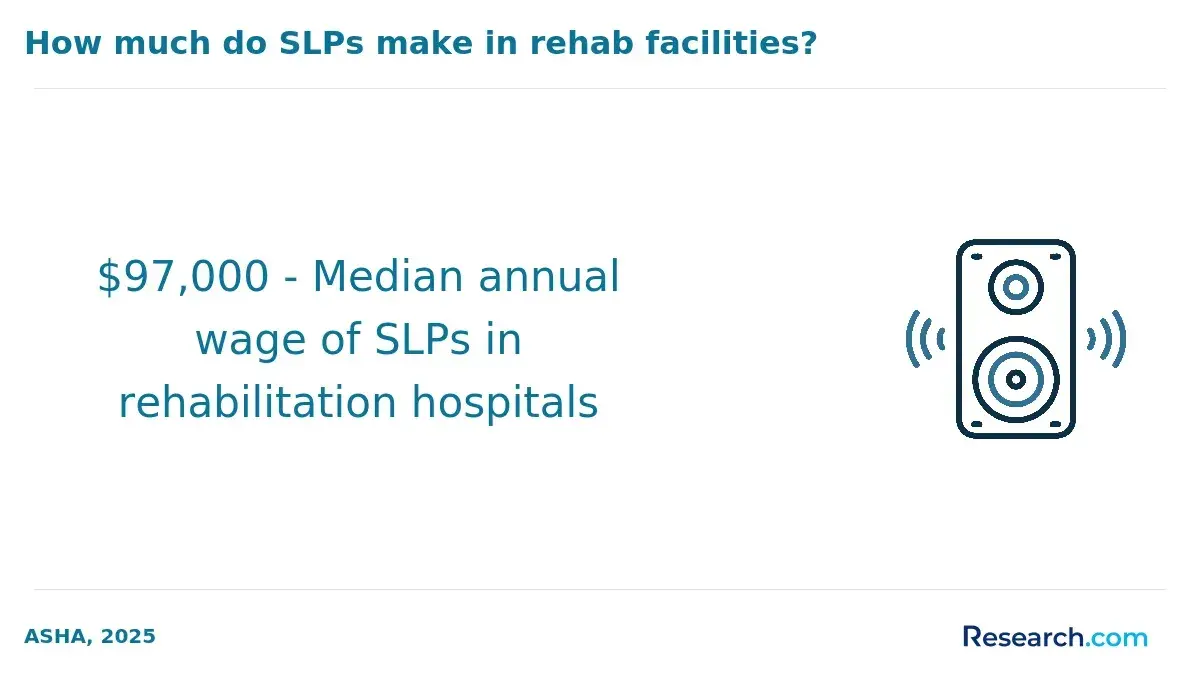
- The U.S. Bureau of Labor Statistics reports a $97,870 median annual wage for speech-language pathologists in May 2025 and projects 17% employment growth from 2025 to 2035, but licensure - not the online format alone - determines eligibility to practice.
Which online speech pathology master's programs accept residents of Port St. Lucie, Florida today?
Port St. Lucie residents can consider online or hybrid-entry master's programs offered by universities outside Florida, provided the institution is authorized to serve Florida students and confirms the student's eligibility before enrollment. "Online" generally describes academic coursework; clinical education remains supervised, in-person professional training.
| Program | Delivery model | Clinical-training approach | Important question for a Port St. Lucie applicant |
| Baylor University, MS in Speech-Language Pathology | Online coursework with required clinical education and program experiences | Clinical placements are coordinated through the program and completed in person | Ask whether Florida enrollment is open for the intended cohort and whether any required immersions involve travel. |
| Emerson College, MS in Speech-Language Pathology | Online graduate instruction with clinical education requirements | Placement support is part of the distance-learning model, subject to site availability | Ask about placement timing, live-session expectations, and the student's role in identifying Treasure Coast sites. |
| New York University, MS in Communicative Sciences and Disorders | Distance-oriented program structure with clinical training | In-person clinical experiences are required under supervision | Confirm Florida authorization, any campus-based requirements, and current licensure disclosures. |
| University of St. Augustine for Health Sciences, MS-SLP | Hybrid or blended model, depending on campus and cohort structure | Includes campus learning and clinical experiences rather than purely remote preparation | Determine the assigned campus, travel frequency, and whether the format is workable from Port St. Lucie. |
| James Madison University, MS in Speech-Language Pathology | Distance education pathway with structured clinical requirements | Students complete supervised practicum and internship experiences | Verify Florida participation, required on-campus sessions, cohort pace, and placement policies. |
These are not interchangeable programs, and no school is universally "best." A working adult who needs predictable asynchronous coursework may favor a program with limited live class meetings, while a student who wants extensive faculty-directed placement support may accept more scheduled sessions or travel. Readers comparing broader online masters in speech language pathology options should separate truly distance-oriented programs from campus programs that merely place some lectures online.
Before narrowing the list, ask admissions staff four direct questions: "May a Florida resident enroll in my intended start term?" "Does the program state that its curriculum meets Florida educational requirements for SLP licensure?" "Which visits are mandatory?" and "Who secures each clinical placement?" A clear written response is more useful than a generalized statement that the university serves students nationwide.
How do Florida licensure rules shape online speech pathology master's options for Port St. Lucie residents?
Florida regulates the practice of speech-language pathology through the Florida Board of Speech-Language Pathology and Audiology. An online degree can be a valid route, but the student must still complete the education, supervised clinical experience, examination, and post-graduate supervised experience required for the applicable Florida credential. Requirements can differ between professional clinical licensure and a credential used to work in public schools.
For a future clinician, the most important issue is whether the degree provides a foundation compatible with Florida's licensing pathway. A program should be able to explain how its graduate curriculum, supervised practicum, and documentation support graduates seeking licensure. It should not promise that completion alone grants a Florida license.
The pathway usually includes several separate milestones. Applicants should plan for all of them rather than treating graduation as the final step.
- Earn a qualifying graduate degree in speech-language pathology or communicative sciences and disorders, ideally from a CAA-accredited program.
- Complete the required graduate clinical practicum under appropriate supervision and maintain detailed records of clock hours, settings, supervisors, and competencies.
- Meet the examination requirement applicable to Florida licensure, which commonly involves the Praxis examination in speech-language pathology.
- Complete any required post-graduate supervised professional experience and submit the Board's application, verification, and fee materials.
- For school employment, separately confirm Florida Department of Education certification requirements with the prospective district or certification office.
Florida school jobs may have a related but distinct route. A school district can require educator certification, a state-issued temporary credential, or other documentation in addition to a clinical license, depending on the role and setting. Applicants interested in St. Lucie Public Schools, charter schools, pediatric clinics, hospitals, early-intervention providers, or private practice should check the credential expected by that employer before selecting a degree format.
The labor market supports careful planning. The Bureau of Labor Statistics projects approximately 12,500 annual openings for speech-language pathologists nationwide from 2025 through 2035. That outlook indicates sustained demand, but it does not eliminate the need to satisfy Florida-specific licensing rules or local employer requirements.
What accreditation should Port St. Lucie students verify in online speech pathology master's programs?
The essential programmatic accreditation to verify is accreditation by the American Speech-Language-Hearing Association's Council on Academic Accreditation in Audiology and Speech-Language Pathology, commonly called CAA. CAA accreditation evaluates whether a graduate program meets standards for curriculum, faculty, clinical education, student assessment, and outcomes.
CAA accreditation matters because it is the most widely recognized benchmark for entry-level SLP preparation and is closely connected to eligibility for the ASHA Certificate of Clinical Competence. It is also the clearest starting point for a Florida applicant assessing whether a distance degree can support clinical licensure. Institutional accreditation alone is not a substitute for CAA accreditation.
| Item to verify | Why it matters | What to request or review |
| CAA accreditation status | Shows whether the specific SLP program meets professional accreditation standards | Current CAA listing, accreditation term, and any published status information |
| Institutional accreditation | Supports federal aid eligibility and broader academic recognition | The university's current institutional accreditor and accreditation status |
| Florida licensure disclosure | Clarifies whether the school has evaluated its curriculum against Florida requirements | A Florida-specific disclosure, not only a nationwide marketing statement |
| ASHA certification preparation | Helps clarify whether coursework and clinical education are designed around national standards | Written explanation of how graduates document academic and clinical requirements |
| Accreditation status at graduation | Can be especially important when considering a newer program or a program in candidacy | How the school handles students if status changes while they are enrolled |
A common error is relying on a university's regional or institutional accreditation while overlooking the graduate SLP program's own status. Another is assuming "accreditation pending" has the same practical effect as full accreditation. Candidates should ask how the program's current status applies to their entering cohort and should independently review the CAA directory before accepting an offer.
CAA status should be checked again close to enrollment, not just at the time of initial research. Accreditation decisions, disclosure language, and cohort eligibility can change, particularly at newer online programs.
How do online speech pathology programs handle clinical placements near Port St. Lucie and the Treasure Coast?
Clinical placements are the part of an online SLP master's program that cannot be completed entirely from home. Students generally serve clients in person at university clinics, schools, medical facilities, rehabilitation settings, early-intervention programs, or other approved sites while supervised by qualified clinicians. Programs may call these experiences practica, externships, internships, or clinical fieldwork.
A program may identify and approve a placement, ask students to help develop potential sites, or use a shared model. None of those approaches guarantees a site in Port St. Lucie, Fort Pierce, Stuart, or elsewhere on the Treasure Coast. Site capacity, supervisor availability, affiliation agreements, client population needs, and program timing all affect where a student can train.
Before enrolling, obtain answers that distinguish support from a guarantee.
- Does the program secure every placement, or must the student find sites and submit them for approval?
- Can the school identify examples of Florida placement regions without promising a particular facility or city?
- What happens if a local site cannot accept a student during the required term?
- Are students responsible for commuting, housing, parking, background checks, drug screening, immunizations, liability coverage, or site-specific onboarding costs?
- Can a placement occur outside St. Lucie County, and how much notice will the student receive?
- How are pediatric, school, adult medical, and specialty experiences incorporated into the clinical sequence?
Clinical timing is a major fit issue for employed students. A placement may require daytime availability across several weekdays, even when lectures are recorded or offered in the evening. A student working full time in Port St. Lucie should not assume that online coursework means clinical hours can occur only after work or on weekends.
Students should also ask whether they must travel to the university for simulation labs, skills assessments, orientation, or intensive sessions. Travel can be manageable, but it changes the actual cost and schedule of an ostensibly online program.
Which accredited online speech pathology master's programs most frequently place graduates in Florida schools and clinics?
No reliable public dataset ranks online SLP programs by the number of graduates placed specifically in Florida schools or clinics. Universities may publish overall employment, Praxis, or completion outcomes, but those figures usually do not show how many graduates work in Florida, in St. Lucie County, or in a particular employer type. Applicants should be cautious when a school implies local placement strength without providing Florida-specific evidence.
Instead of searching for an unsupported statewide placement ranking, evaluate whether a CAA-accredited program has a placement process that can realistically support Florida training and whether its graduate outcomes are transparent. Programs such as Baylor, Emerson, NYU, James Madison, and hybrid options from the University of St. Augustine may be worth evaluating because they have distance-oriented pathways, but each applicant must confirm current Florida availability and placement procedures directly.
The strongest evidence to request is practical rather than promotional.
- Recent aggregate employment or placement outcomes for the specific distance-learning cohort
- The number of students the program has recently placed in Florida, if the school tracks and can disclose it
- Whether the program has active affiliation agreements in Florida or can explain its process for creating them
- Average time from graduation to completion of the program-supported clinical fellowship or supervised experience pathway, if published
- Examples of settings used for student placements, without requesting confidential site or student information
Florida school and healthcare employers tend to focus on whether applicants hold the appropriate degree, licensure or eligibility status, clinical competencies, and setting-relevant experience. For that reason, a program with a clear placement process and strong documentation practices can be a better choice than one that makes broad claims about employer connections.
Career planning should begin before the final internship. Students interested in schools should seek pediatric and education-relevant experiences where possible; students considering medical settings should ask how the program exposes them to adult communication, swallowing, cognitive-communication, and interdisciplinary care. A masters in speech pathology can lead to different work settings, but specialty opportunities usually depend on supervised experience and employer needs as well as the degree.
How do tuition, fees, and total cost of attendance compare for top online speech pathology programs?
Published tuition is only one component of the cost of an online SLP master's degree. Programs may charge per credit, per term, or by cohort, and out-of-state rates can materially affect a Florida resident. Because schools revise tuition regularly and clinical requirements vary, applicants should compare official written estimates for their own start term rather than treating a website's headline price as the final cost.
The table shows the cost categories that make two programs comparable. It deliberately does not assign a single estimated total to schools when current, equivalent tuition-and-fee figures are not publicly standardized across all programs.
| Cost category | Why it can change the comparison | What a Port St. Lucie applicant should confirm |
| Tuition basis | Per-credit, per-term, and flat-rate charges cannot be compared directly without total required credits or terms | Total tuition for the full degree at the Florida resident's applicable rate |
| Mandatory university fees | Technology, student services, graduation, and distance-learning fees may be billed separately | Required fees by term and across the expected enrollment period |
| Clinical education expenses | Background checks, immunizations, compliance platforms, liability coverage, equipment, and site onboarding can add costs | Which expenses are paid to the program and which are paid directly to clinical sites |
| Travel and lodging | Required intensives or out-of-area placements can create substantial non-tuition spending | Number, location, and likely duration of mandatory visits |
| Lost work time | Daytime practicum can reduce employment income even when classes are online | Typical weekly clinical-hour expectations by term |
| Financial aid and borrowing | Federal aid eligibility and loan limits may not cover every cost or living expense | Program-specific cost of attendance, aid package timing, and private-loan need |
A lower per-credit rate is not automatically the lower-cost choice. A program that requires multiple campus trips, takes longer to complete, or makes local placement difficult can cost more overall than a higher-tuition program with a clearer clinical structure. Conversely, a higher-priced private program may be worthwhile for a student who values its schedule or placement support, provided the full borrowing amount is sustainable.
Request a personalized cost worksheet from each finalist. It should show required credits, tuition rate, mandatory fees, estimated books and clinical supplies, required travel, and the school's assumed living-expense budget. Then compare the net amount after grants or scholarships, not simply the tuition sticker price.
Students seeking a shorter timeline should evaluate whether a speech language pathology accelerated program actually reduces total time without creating an unmanageable clinical schedule. Faster pacing can reduce living expenses and delay less income, but it may also limit a student's ability to work while enrolled.
What admissions requirements and prerequisite coursework do online speech pathology master's programs typically expect?
Admissions requirements vary sharply by university, especially for applicants whose bachelor's degree is outside communication sciences and disorders. Most programs evaluate academic preparation, writing, recommendations, observation or clinical exposure, and readiness for intensive graduate clinical work. Competitive requirements should be confirmed from the official program page for the intended admission cycle.
Applicants with a CSD major may already have most prerequisites, while career changers often need a post-baccalaureate sequence or leveling courses before beginning graduate work. Common prerequisite areas include phonetics, language development, anatomy and physiology of speech and hearing mechanisms, audiology, speech and hearing science, neuroscience, research methods or statistics, and clinical observation.
The following application materials are common, although no applicant should assume every program requires every item.
- Completed bachelor's degree and official transcripts from all colleges attended
- Minimum GPA or a holistic academic review process, sometimes with separate prerequisite GPA expectations
- Personal statement describing professional goals, preparation, and fit for clinical graduate study
- Academic or professional recommendation letters
- Resume documenting work, volunteer, research, caregiving, education, or relevant communication-disorders experience
- Prerequisite-course audit and a plan for any missing coursework
- Observation documentation when required by the program or later professional certification pathway
- Interview, recorded response, or writing assessment when used by the admissions process
The Graduate Record Examination is no longer required by many programs, but a no-GRE policy does not mean admission is easy. Cohort size, prerequisite grades, writing quality, and evidence that an applicant understands clinical work can remain important. Applicants looking for easiest SLP grad schools to get into should still evaluate accreditation, Florida eligibility, clinical support, and total cost before choosing a less selective option.
Career changers should avoid enrolling in an expensive graduate program before receiving a written prerequisite evaluation. Some schools integrate leveling coursework into a longer master's plan; others require all foundations before admission. The better choice depends on whether the student needs a single structured pathway or can complete prerequisites affordably at another accredited institution.
How can Port St. Lucie residents confirm state authorization and distance education compliance for these programs?
State authorization concerns whether an institution may provide distance education to a student located in Florida. It is separate from CAA accreditation and separate from Florida professional licensure. A program can be academically accredited yet be unable to enroll students in a particular state or unable to confirm that its curriculum meets that state's licensure requirements.
Florida applicants should complete a documented verification process before enrollment. The goal is to obtain answers that apply to their program, degree track, start date, and physical location while enrolled.
- Ask the university's admissions or compliance office whether the specific online or hybrid SLP program is currently authorized to enroll students residing in Florida.
- Request the program's Florida professional-licensure disclosure in writing and ask whether the school has determined that the curriculum meets, does not meet, or has not determined Florida educational requirements.
- Ask whether authorization or licensure conclusions change if the student completes a practicum in another state or temporarily relocates.
- Confirm that all required clinical placements can be approved for a student located in Florida and ask who manages affiliation agreements.
- Save emails, disclosures, catalog pages, tuition estimates, and placement statements with the date and the name of the school representative.
- Independently review the Florida Board requirements shortly before applying for licensure, because rules and forms can change during a multiyear degree.
Participation in an interstate reciprocity arrangement can simplify institutional authorization, but it does not decide professional licensure eligibility. Applicants should never interpret a school's state-authorization statement as a promise of Florida licensure. The most protective language is specific: it identifies the program, state, determination, and any conditions.
What differences exist between campus-based Florida programs and fully online speech pathology master's options?
Campus-based Florida programs and distance-oriented programs can both lead to the same professional objective when properly accredited and aligned with state requirements. The better format depends on a student's need for geographic flexibility, tolerance for travel, ability to attend daytime placements, prior academic preparation, and preference for in-person faculty and peer interaction.
| Decision factor | Campus-based Florida program | Online or hybrid program | Who may benefit most |
| Academic access | Regular in-person classes and campus resources | Coursework accessed remotely, often with structured live or asynchronous components | Online may suit students who cannot relocate; campus may suit those who value local daily contact. |
| Clinical placements | Often connected to the university's regional network, but not necessarily in the student's home city | May be arranged near the student or through a broader placement process, subject to site approval | Choose based on the documented placement process, not assumed local convenience. |
| Travel | Frequent commuting or relocation may be required | Less routine travel for coursework, but intensives, simulations, and clinical sites may still require travel | Distance programs help only when required visits and placements are feasible. |
| Schedule | Fixed class and clinic schedule is common | May offer more flexibility in lectures, but clinical hours are often daytime and fixed | Working students should compare clinical schedules before focusing on lecture flexibility. |
| Local professional network | Potentially stronger ties to nearby faculty, clinics, and alumni | Can offer a national network but may require the student to build local connections proactively | Campus study may favor students planning to work near the institution after graduation. |
| Cost pattern | May offer public-university resident tuition but can require commuting or relocation costs | May have uniform or private tuition plus travel and placement-related costs | Compare total cost of attendance, not institution type or advertised tuition alone. |
A Port St. Lucie resident should consider a Florida campus program when local faculty access, an established regional clinical network, and possible resident tuition outweigh commuting or relocation demands. A fully online or hybrid option can make sense when a student needs to remain in the area and the university can clearly support Florida authorization and clinical training.
The mistaken assumption to avoid is that an online program automatically provides more flexibility in every part of the degree. Coursework may be flexible; clinical education often is not. Students with inflexible jobs, caregiving responsibilities, or limited transportation should map the clinical sequence term by term before choosing either format.
Which consumer-protection steps should Port St. Lucie applicants take before enrolling in an online speech pathology program?
An SLP master's degree is a substantial financial and professional commitment. The most effective consumer-protection strategy is to compare written, program-specific information before submitting a nonrefundable deposit. Marketing materials can be useful for identifying programs, but they should not replace official disclosures, catalogs, tuition schedules, and licensing guidance.
Use the following review process to identify avoidable risks before committing.
- Verify current CAA accreditation for the exact graduate SLP program, not merely institutional accreditation.
- Get written confirmation that Florida residents may enroll in the intended cohort and that the school has made a Florida licensure determination or clearly explains that it has not.
- Request the total expected tuition and mandatory fees for the full curriculum, including how tuition may change if the program takes longer than planned.
- Ask for every required campus visit, simulation, immersion, residency, or travel-based assessment in writing.
- Read the clinical-placement policy closely, including whether the school guarantees placement, requires student site-finding, or permits delays when sites are unavailable.
- Confirm prerequisite requirements before paying for leveling coursework or applying to multiple programs.
- Compare withdrawal, leave-of-absence, transfer-credit, dismissal, remediation, and refund policies in the graduate catalog.
- Ask financial aid staff for a borrowing projection and consider how reduced work hours during clinical terms affect the household budget.
Red flags include vague answers about Florida eligibility, an inability to explain the placement process, pressure to enroll before costs are documented, and statements that suggest accreditation or licensure is automatic. A responsible program can distinguish what it controls - curriculum, advising, placement procedures, and academic records - from what depends on state boards, clinical sites, examination results, and each graduate's application.
Finally, compare at least two viable programs using the same facts: accreditation status, Florida disclosure, total cost, clinical model, travel, schedule, prerequisites, and completion pace. This side-by-side approach is more reliable than choosing based on name recognition, a single ranking, or the promise of online convenience.
Other Things You Should Know About Speech Language Pathology
Yes, an online or hybrid degree may support the path to Florida practice if the program is appropriately accredited, the student completes required supervised clinical education, and the graduate meets Florida's examination, supervised-experience, and application requirements. Confirm the school's Florida-specific disclosure before enrolling.
Possibly. A program may seek placements near Port St. Lucie or elsewhere on the Treasure Coast, but no applicant should assume a local site will be available. Placement capacity and supervisor availability can require commuting, temporary travel, or a placement outside the immediate area.
Some students work during part of the academic sequence, but full-time employment can become difficult during clinical practica and internships. These experiences often require weekday daytime hours. Ask each program for a term-by-term sample schedule before deciding whether to keep a full-time job.
Not always. Many programs accept applicants from other majors, but they commonly require prerequisite or leveling coursework. The amount of additional study depends on your transcript and the program's curriculum, so request an official prerequisite review early.
References
- Online Master's in Speech-Language Pathology (SLP), MS https://www.neit.edu/academics/graduate-degrees/speech-language-pathology-ms
- Emerson College Online Master's in Speech Pathology https://speech.emerson.edu/
- Best Online Speech Pathology Programs https://www.forbes.com/advisor/education/healthcare/best-speech-pathology-programs-online/
- Premier Online Speech Pathology Master's Degrees https://resources.noodle.com/articles/best-online-masters-programs-for-speech-and-language-pathology/