2027 Best Online Speech Pathology Master's Programs for Residents of Surprise, AZ

Co-Founder and Chief Data Scientist

Reviewed by Rhea Paul, PhD
SLP Education & Research Expert
Choosing an online speech-language pathology master's program from Surprise requires more than finding classes labeled "online." Arizona licensure, CAA accreditation, local clinical placements, required travel, and total cost determine whether a program can lead to practice. This guide compares credible program models and the questions Arizona applicants should ask before paying an application fee. It is designed for career changers, communication sciences graduates, and working adults seeking a practical route to SLP licensure. The national median annual wage for speech-language pathologists was $97,870 in May 2025, but earning potential depends on setting, experience, and local demand.
Key Things You Should Know
- A Surprise resident should prioritize a master's program accredited by ASHA's Council on Academic Accreditation (CAA), because Arizona clinical licensure and ASHA certification generally depend on completing a qualifying graduate degree and supervised clinical requirements.
- Online SLP programs are not fully remote in the clinical sense: expect supervised practicum experiences, and some schools require campus immersions, synchronous classes, or travel for skills assessments.
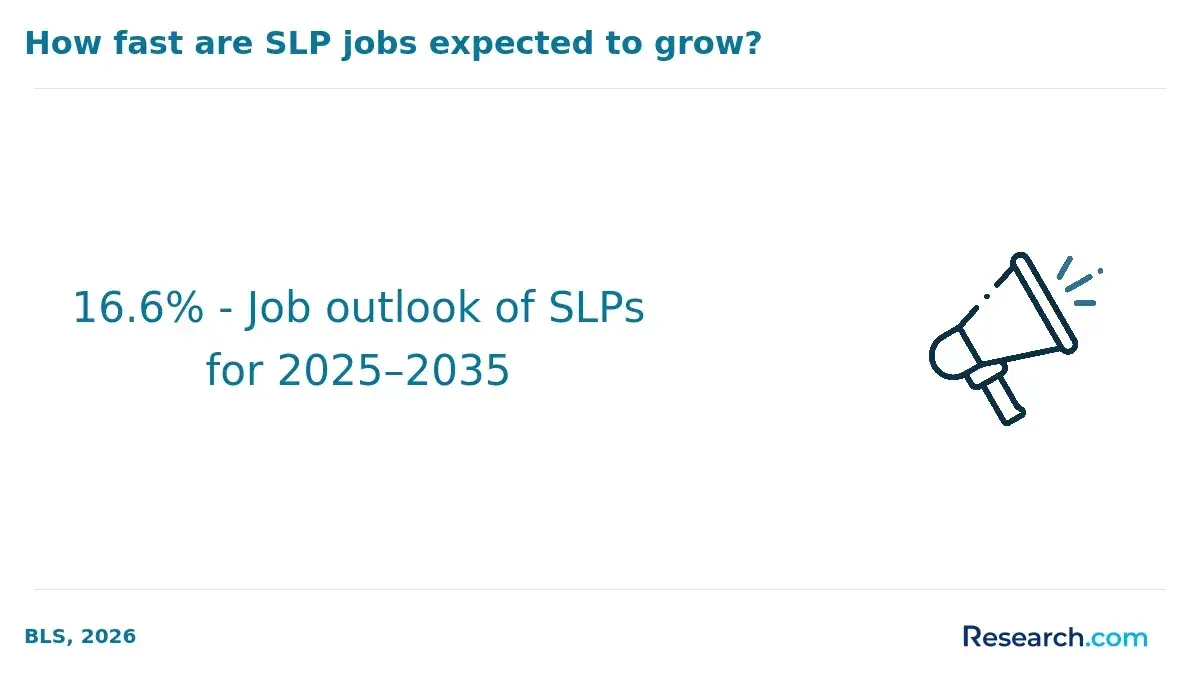
- The Bureau of Labor Statistics projects 17% employment growth for speech-language pathologists from 2025 to 2035, with about 12,500 openings annually; that demand makes a licensure-ready program more important than a low sticker price alone.
Which online speech pathology master's programs actually serve residents of Surprise, Arizona?
The strongest options are not necessarily located in Surprise or even Arizona. A suitable program must be open to Arizona residents, hold CAA accreditation, provide a defensible Arizona licensure disclosure, and have a workable plan for clinical education. Because state-authorized enrollment and clinical-site capacity can change, applicants should obtain confirmation in writing for their intended start term.
The programs below are examples of established online or distance-oriented graduate pathways commonly considered by Arizona residents. "Online" describes academic delivery; it does not mean clinical requirements can be completed without in-person participation.
| Program | Distance-learning model | Arizona applicant questions to resolve | Potential fit |
| Emerson College, M.S. in Communication Disorders | Online coursework with in-person clinical education requirements | Arizona authorization, current CAA status, placement process, required travel, and cohort schedule | Applicants seeking a structured online cohort and willing to complete local or assigned clinical training |
| Baylor University, online M.S. in Speech-Language Pathology | Online academic coursework with clinical practicum and immersion expectations | Arizona licensure disclosure, campus/immersion travel, placement responsibility, and full program charges | Students who want a faith-based private-university option and can accommodate a fixed cohort plan |
| New York University, online M.S. in Communicative Sciences and Disorders | Online classes paired with supervised fieldwork and program-directed clinical experiences | Arizona eligibility, synchronous schedule in Arizona time, travel, and clinical-site availability | Students who value a large-university online model and can manage a demanding placement sequence |
| Rocky Mountain University of Health Professions, M.S. in Speech-Language Pathology | Hybrid or distance-oriented professional program with required hands-on training | Arizona enrollment authorization, residency dates, clinical placement support, and cost by cohort | Applicants comfortable with periodic travel and a health-professions-focused learning environment |
These are comparison starting points, not a promise that every program currently accepts Arizona applicants or can secure a site near Surprise. Review the program's current CAA listing and Arizona professional-licensure disclosure before treating any option as eligible.
Applicants who want a broader cost-focused shortlist can review online SLP master programs, then narrow the list using Arizona-specific authorization and placement questions.
How do online SLP master's programs compare for Arizona licensure and ASHA certification?
Arizona licensure and the ASHA Certificate of Clinical Competence in Speech-Language Pathology (CCC-SLP) are related but separate professional milestones. A graduate degree is only one part of the pathway. Graduates also typically need qualifying supervised clinical education, a supervised post-graduate clinical fellowship, a passing Praxis examination score, and an application that meets Arizona's current rules.
CAA accreditation is the most important academic screening factor. It indicates that a program has met accreditation standards for professional preparation in speech-language pathology. It does not eliminate the applicant's responsibility to verify Arizona's licensure requirements, complete required examinations, or satisfy any future rule changes.
| Requirement area | Why it matters for an Arizona applicant | What to verify before enrollment |
| CAA accreditation | Supports eligibility for widely recognized professional certification and state licensure pathways | Current accreditation status for the exact degree and campus/delivery format |
| Arizona licensure disclosure | Shows whether the institution has evaluated its curriculum against Arizona requirements | Whether the disclosure says the program meets, is designed to meet, or has not been determined to meet Arizona requirements |
| Clinical practicum | Hands-on training is required and cannot be replaced by online simulations alone | Who identifies sites, who executes affiliation agreements, and whether travel may be necessary |
| Clinical fellowship and Praxis | These post-degree steps affect the timeline to independent practice | How the program prepares students for each milestone without implying guaranteed outcomes |
Choose a program that clearly distinguishes academic graduation from professional licensure. A school that says its curriculum is "licensure-track" should still be asked whether Arizona residents have recently been admitted, whether Arizona requirements were reviewed, and what documentation the school will provide after graduation.
What accreditation and state authorization should Surprise, AZ applicants verify before enrolling?
Verify two different issues: program accreditation and institutional permission to educate Arizona residents. Accreditation evaluates educational quality; state authorization concerns whether the institution may offer distance education to a student located in Arizona. Neither should be assumed from a school's national reputation or advertising.
Before committing, ask admissions or compliance staff for current answers to the following questions. Written answers are useful if program policies or disclosures later change.
- Is the exact master's program currently accredited by ASHA's Council on Academic Accreditation, and does that status apply to my anticipated graduation period?
- May a resident physically located in Arizona enroll in this program for my intended term?
- Does the school's current professional-licensure disclosure state that the curriculum meets Arizona educational requirements, and are there additional state-specific conditions?
- What clinical education can be completed in Arizona, and what happens if an appropriate local site or supervisor is unavailable?
- Are there required intensives, orientation sessions, skills assessments, or commencement-related obligations that require travel?
A common error is treating candidacy, institutional accreditation, and CAA accreditation as interchangeable. They are not. Candidates should confirm the status of the particular SLP degree - not merely the university - and ask how a status change would affect students already enrolled.
How do tuition, fees, and total online program cost differ for Arizona residents?
Published tuition is often incomplete for online clinical degrees. Private online programs may charge a single rate regardless of residence, while public universities may use resident, nonresident, distance-learning, or cohort pricing. The meaningful comparison is estimated total educational cost through graduation, including required travel and clinical expenses.
Use the school's current tuition schedule rather than an aggregator estimate. The following cost categories should be requested in a written aid or billing estimate.
| Cost category | Why it can change the comparison | What to ask |
| Tuition per credit or cohort | Programs may require different numbers of credits and use different billing models | What is the estimated tuition for all required terms? |
| University and program fees | Technology, clinical, graduation, health, and distance-learning fees may not be included in tuition | Which mandatory fees apply to online SLP students? |
| Travel and lodging | Immersions and skills sessions can materially increase the effective price | How many trips are mandatory and where are they held? |
| Clinical education expenses | Background checks, immunizations, insurance, testing, attire, and commuting may be student-paid | Which clinical costs are expected before each placement? |
| Lost work time | Full-time placements can limit paid employment even when coursework is online | What are the anticipated weekday hours during each practicum? |
Financial fit is about cash flow as well as the final total. Compare federal aid eligibility, employer education benefits, scholarship deadlines, payment plans, and whether clinical terms prevent you from maintaining your present work hours. Do not assume that an in-state public university is automatically cheaper if its qualifying SLP degree is campus-based or unavailable in an online format.
For applicants weighing speed against borrowing, accelerated SLP programs online can be useful for identifying shorter formats, but an accelerated calendar may increase weekly workload and reduce flexibility for employment.
Which online speech pathology master's programs offer the best clinical placements near Surprise, AZ?
No ethical comparison can promise a clinical placement in Surprise unless a program explicitly confirms it. The best clinical-placement model for a Surprise resident is usually the one that states, in writing, who coordinates sites, how early the search starts, what happens if a preferred site declines, and whether the student may have to commute elsewhere in the Phoenix metropolitan area or beyond.
Programs generally use one of three models. Each can work, but the risk and effort shift between the school and student.
| Placement model | How it works | Best for | Key trade-off |
| Program-arranged placement | The school's clinical team identifies and contracts with sites | Students who need substantial administrative support | Site location, population, and schedule may be less controllable |
| Student-assisted placement | The student may suggest contacts while the school approves sites and agreements | Applicants with relevant local professional connections | A personal contact is not a guaranteed approved placement |
| Student-secured placement | The student takes primary responsibility for finding an acceptable site and supervisor | Highly organized applicants with realistic local access | Greater risk of delays, commuting, or inability to progress on schedule |
Ask whether placements include school, medical, pediatric, and adult experiences as required by the curriculum; whether telepractice is permitted for any portion; and whether supervisors must meet special credentialing requirements. Also ask for the latest policy on travel radius and placement timing. A school may have Arizona agreements but still be unable to place every cohort member near home.
Working adults should be especially cautious: practicum schedules often occur during standard weekday business hours. Online lectures may be flexible, while direct client care, supervision, and documentation deadlines are not.
How do admission requirements and prerequisite coursework vary across top online SLP programs?
Admission requirements vary most sharply for applicants without an undergraduate degree in communication sciences and disorders. Some programs accept career changers and build foundational coursework into a longer plan; others require specific prerequisites before the application is reviewed. A bachelor's degree in another field does not automatically prevent admission, but it usually changes the timeline and cost.
Programs commonly assess the following items, although exact requirements differ by school and application cycle.
- Undergraduate degree and cumulative or prerequisite GPA
- Foundational coursework in areas such as phonetics, speech and hearing science, language development, anatomy, statistics, and audiology
- ASHA-required science and statistics preparation, where applicable
- Personal statement, résumé, recommendations, and observation or relevant experience expectations
- Interview, recorded response, or writing assessment when required by the institution
- Background-check, immunization, and health-clearance ability before clinical work begins
Do not interpret a "no GRE" policy as easy admission. It simply means the standardized test is not used; programs may still be selective because cohorts and clinical placements are limited. Applicants seeking more accessible admissions policies can compare easiest SLP programs to get into, while still confirming accreditation, prerequisite fit, and Arizona compliance.
A practical first step is to create a prerequisite audit using each school's official course list. Match completed courses by content, credit level, and laboratory requirement rather than assuming similar course titles will transfer. Obtain a pre-admission evaluation whenever the school offers one.
What are typical program lengths, formats, and practicum schedules for working adults in Surprise?
Most entry-level SLP master's pathways are cohort-based and sequenced, meaning students cannot freely take every class at their own pace. Programs often take roughly two to three years depending on prerequisite status, enrollment intensity, clinical sequencing, and required breaks. A longer plan can be the better decision when it protects your ability to complete placements successfully.
The comparison below separates classroom convenience from clinical flexibility, which are often mistakenly treated as the same thing.
| Format feature | What it may mean for a Surprise resident | Decision implication |
| Asynchronous coursework | Lectures and assignments may be completed outside a fixed meeting time | Helpful for work schedules, but deadlines and group work still apply |
| Live online sessions | Attendance may be required at scheduled times, often based on the school's time zone | Confirm Arizona-time meeting windows before enrolling |
| Full-time cohort sequence | Courses and clinics follow a prescribed order | Usually the most direct completion route, with limited ability to pause |
| Part-time option | Some academic terms may be reduced in load | May extend total cost exposure and does not always reduce clinical-hour demands |
| Campus immersion | Hands-on assessment, orientation, or competency activities occur in person | Budget travel days, airfare or driving, lodging, and missed work |
| External practicum | Supervised clinical work takes place at a school, clinic, hospital, or other approved setting | Expect daytime availability and potential commuting beyond Surprise |
For workers with inflexible daytime jobs, the key question is not "Can I take the classes online?" Ask, "During which terms must I be available for daytime clinical work, and how many hours each week should I reserve?" A program that is technically online may be a poor fit if it requires full-time practicum availability before you can reduce work hours.
How do online SLP master's programs report graduate outcomes, Praxis pass rates, and job placement?
Graduate outcomes can help distinguish a transparent program from one that relies mainly on marketing language. For CAA-accredited programs, examine the program's required public outcome information and determine the reporting period, cohort size, and definitions used. Small cohorts can make a single year's rate volatile, so read multiple reporting periods when available.
The most useful outcomes measures answer different questions rather than serving as a single ranking score.
| Outcome measure | What it indicates | How to use it carefully |
| Program completion rate | Whether students typically complete the planned curriculum | Ask whether leaves, transfers, and prerequisite students are included |
| Praxis pass rate | Graduate performance on a required professional examination | Check the reporting period and whether results reflect first-time or eventual test takers |
| Employment rate | Whether graduates obtained relevant work after completion | Confirm the time frame, response rate, and definition of employment |
| On-time completion | How often students finish within the advertised sequence | Compare it with information about placement delays and leave policies |
Outcomes do not guarantee an individual result. They are most valuable when paired with questions about Arizona placement history, clinical fellowship support, graduate debt, and the types of employers where alumni work. Nationally, the Bureau of Labor Statistics projects 17% growth in SLP employment from 2025 to 2035, but individual hiring conditions differ among schools, medical employers, private practices, and Arizona communities.
Career plans also affect value. Review the range of highest paying SLP jobs alongside the clinical populations and settings that each program prepares students to serve; higher-paying settings may require experience, specialized skills, or geographic flexibility.
What are the key differences between Arizona universities and out-of-state online SLP programs?
An Arizona university may offer proximity, local professional networks, and clearer familiarity with state systems. However, many Arizona-based SLP degrees are primarily campus-based, so proximity alone does not create an online route. Out-of-state online programs can expand choice, but they introduce additional questions about authorization, travel, clinical agreements, scheduling, and total expense.
| Decision factor | Arizona-based option | Out-of-state online option |
| Physical access | May reduce travel for campus-based activities if the university is within reach | May require planned travel for immersions or assessments |
| Local network | May have established relationships with Arizona employers and clinicians | May have national reach but variable local placement infrastructure |
| Delivery format | Can be predominantly on campus despite being local | May offer more online coursework but still require in-person training |
| Tuition structure | May offer resident pricing where applicable | May use one private or distance-learning rate for all students |
| Licensure disclosure | May be more directly tailored to Arizona requirements | Must be checked carefully for Arizona-specific determination |
Choose an Arizona-based program when local access and relationships outweigh the need for remote coursework. Choose an out-of-state online program only when its written Arizona eligibility, CAA status, clinical model, travel burden, and net cost are at least as clear as a local alternative. "Online" is a delivery feature, not a substitute for evaluating professional readiness.
How can Surprise, AZ residents protect themselves from unaccredited or noncompliant online SLP programs?
The largest avoidable mistake is enrolling based on convenience before checking whether the degree supports the intended license. A low-cost or fast program has little value for someone whose goal is Arizona SLP practice if it lacks appropriate accreditation or cannot provide the required supervised clinical education.
Watch for these red flags before submitting a deposit or taking private loans.
- The school cannot clearly state the CAA status of the exact graduate SLP program.
- The school provides no Arizona-specific professional-licensure disclosure or says it has not determined whether the program meets Arizona requirements.
- Marketing describes the program as fully online but does not explain clinical placements, supervisors, travel, or practicum timing.
- Tuition is advertised without required fees, travel, clinical expenses, or an estimated total through graduation.
- Admissions staff promise local placement, licensure, certification, employment, or salary outcomes without documenting the conditions and limitations.
- The program urges immediate enrollment while declining to provide its student handbook, withdrawal policy, or clinical education policies.
Protect yourself by saving current disclosures, requesting a total-cost estimate, and comparing the written answers from at least two programs. Before accepting an offer, verify the program in ASHA's CAA/EdFind resources and review Arizona's current licensing requirements directly. Rules can change after a program publishes a webpage, so the final responsibility for licensure eligibility remains with the applicant and graduate.
Other Things You Should Know About Speech Language Pathology
Yes, many applicants enter from other majors, but they commonly need communication-sciences prerequisites before or during graduate study. The quickest path depends on how many required courses you already have and whether the master's program includes a leveling sequence.
Yes. Speech-language pathology requires supervised hands-on clinical education. Online coursework can reduce commuting for academic classes, but practicum and externship experiences require in-person participation and may involve daytime schedules.
It may be possible during some academic terms, especially with asynchronous coursework, but later clinical placements can require substantial weekday availability. Ask each program for sample practicum schedules before deciding that full-time employment is realistic.
No. Accreditation supports the educational pathway, but Arizona licensure also involves the state's application requirements and other professional milestones, such as supervised experience and examination requirements. Verify current rules with the appropriate Arizona licensing authority before enrolling and again before applying.
References
- Master of Science in Speech-Language Pathology https://www.atsu.edu/arizona-school-of-health-sciences/academics/master-of-science-in-speech-language-pathology
- Best Online Master's in Speech-Language Pathology for 2026 https://healthscience.pepperdine.edu/online-masters-in-speech-language-pathology/article/best-online-masters-in-speech-language-pathology-programs-guide.htm
- Communication Disorders, MS - ASU degree https://degrees.asu.edu/masters-phd/major/ASU00/LACOMDISMS/communication-disorders-ms
- Best Speech-Language Pathology Programs in America https://www.usnews.com/best-graduate-schools/top-health-schools/pathology-rankings
- Online Master's in Speech Pathology Programs: 2026 Guide https://speechpathologymastersprograms.com/
- 2026 Most Affordable Online Speech Pathology Master's... https://www.onlineu.com/most-affordable-colleges/speech-pathology-masters-degrees
- Masters SLP programs - preferably online: r/slpGradSchool https://www.reddit.com/r/slpGradSchool/comments/s5p0p0/masters_slp_programs_preferably_online/