2027 Best AI Bachelor's Degrees for AI Ethics Careers

Co-Founder and Chief Data Scientist
As Artificial Intelligence technologies rapidly transform industries, ethical concerns grow around bias, privacy, and accountability. Professionals entering this field often face challenges navigating complex moral dilemmas without formal training in AI ethics. For individuals holding unrelated undergraduate degrees, finding a clear educational pathway into ethical AI roles can seem daunting.
This article highlights the best bachelor's degree programs designed to equip students with the interdisciplinary knowledge and skills needed to address ethical challenges responsibly. It aims to guide prospective students toward flexible, accredited programs that provide a strong foundation for a successful career in AI ethics.
Key Things You Should Know
- Bachelor's degrees focusing on AI ethics blend technical skills with philosophy, law, and social sciences, equipping students to address ethical challenges in AI development and deployment.
- By 2027, employment in AI ethics roles is expected to grow 34%, reflecting rising industry demand for professionals who ensure responsible, fair, and transparent AI systems.
- Top programs integrate hands-on learning with emerging regulations, preparing graduates for careers in policy advising, compliance, and ethical AI design across various sectors.
What is an AI bachelor's degree pathway for AI ethics careers?
An AI bachelor's degree program for ethics careers blends technical expertise with foundational knowledge in ethics, law, and social impact. Students often pursue fields like computer science, data science, or cognitive science, enriched with specialized courses on ethical AI design, bias mitigation, privacy, and policy frameworks. This multidisciplinary approach prepares graduates to address the societal consequences of AI and create responsible technologies.
Core technical subjects include machine learning, algorithms, data management, and programming. Ethical studies cover philosophy of technology, data privacy legislation, and AI governance. Many programs offer dedicated tracks or minors in AI ethics to deepen understanding of fairness, transparency, and accountability. These undergraduate pathways in AI ethics studies emphasize practical experience through case studies, internships, and research projects tackling real-world challenges such as algorithmic bias and autonomous system implications.
The World Economic Forum's Future of Jobs Report 2025 highlights that 86% of employers expect AI technologies to transform their business by 2030. Graduates with combined AI proficiency and ethical training are suited for emerging roles like AI policy advisors, compliance officers, ethics consultants, and researchers focusing on responsible AI deployment. Prospective students should look for STEM-accredited programs incorporating liberal arts to develop critical thinking alongside AI expertise.
Engagement with interdisciplinary teams and familiarity with AI regulations and standards are essential to align technology development with societal values. Those considering a fastest computer science degree path can find online accelerated options that integrate these elements effectively.
Which bachelor's majors best prepare you for AI ethics roles?
Bachelor's degrees that prepare you for AI ethics roles often combine technical skills with deep ethical analysis. Computer science remains a key foundation, awarding over 100,000 degrees in computer and information sciences in recent years. This major builds crucial knowledge in programming, machine learning, and data management, essential for understanding AI technologies at the core.
Still, focusing solely on technical expertise is not enough for AI ethics careers. Majors like philosophy, especially those specializing in ethics, offer critical training in moral theory, justice, and reasoning. Philosophy helps address issues such as bias, transparency, and accountability in AI systems.
Interdisciplinary programs like cognitive science or science, technology, and society (STS) blend technical and social perspectives. These fields explore human-AI interaction and societal impacts, equipping graduates to handle complex ethical challenges in practical environments. Students interested in actionable expertise often pursue dual majors or minors combining computer science with philosophy or social sciences, enriching their qualifications.
Other relevant fields include data science with ethics-focused coursework and law, which provide insight into regulatory and policy frameworks. Students should seek programs offering classes in algorithmic fairness, AI accountability, and ethics alongside strong technical training to meet the multidisciplinary demands of AI ethics careers.
Prospective students can also explore a mechanical engineering program online if interested in technical fields that intersect with AI development and ethical considerations.
How do you choose an accredited AI program for ethics-focused careers?
Choose accredited artificial intelligence bachelor's programs with ethics specialization in the United States by verifying institutional accreditation recognized by the U.S. Department of Education or the Council for Higher Education Accreditation. Accreditation ensures curriculum quality, faculty expertise, and the transferability of credits. Prioritize programs that integrate explicit ethics coursework into core AI classes, covering topics like algorithmic fairness, data privacy, and AI policy.
Identify top regional AI ethics degrees with recognized accreditation for career readiness by investigating faculty credentials and their research outputs in AI ethics. Programs connected to research centers or ethics think tanks often offer advanced coursework and internships. Course catalogs featuring bias mitigation, responsible AI design, and regulatory frameworks indicate strong ethics focus.
Evaluate post-graduation outcomes from trusted sources such as the U.S. Department of Education's College Scorecard. Median annual earnings for computer science bachelor's graduates range from approximately $80,000 to $120,000 a decade after entry, providing benchmarks to assess return on investment alongside ethical emphasis.
Consider program flexibility with online or hybrid formats to balance commitments. Seek practicum, capstone projects, or industry collaborations on ethical AI initiatives to improve employability. For cost-conscious options, explore the cheapest online engineering degree.
What core courses teach responsible AI, fairness, privacy, and governance?
Core courses in responsible artificial intelligence ethics integrate ethical principles with technical AI expertise. Such curricula include modules on algorithmic fairness, privacy and data protection, AI ethics, and AI governance. These courses focus on designing AI systems that prevent bias, ensure transparency, and protect user privacy while complying with regulations like GDPR and CCPA.
Privacy and fairness in artificial intelligence governance curriculum emphasize identifying and mitigating bias through fairness metrics and inclusive data practices. Privacy-related classes teach data anonymization, differential privacy, and risk assessment methods that safeguard sensitive information in AI systems. Governance courses explore regulatory frameworks and ethical standards applicable in corporate and governmental AI use.
Students often tackle practical challenges such as balancing AI model accuracy with ethical considerations and managing competing stakeholder interests. Case studies on discriminatory hiring algorithms or data breaches illustrate the critical need for strong governance and corrective design. The rise in privacy governance skills is underscored by the International Association of Privacy Professionals (IAPP), which reports over 80,000 members worldwide.
Prospective students should seek programs offering interdisciplinary training combining computer science, law, philosophy, and social sciences to navigate complex ethical challenges effectively. Pursuing practical projects, internships, and regulatory collaboration improves career readiness. For more information on related fields, consider exploring affordable data science degrees that complement AI studies.
What are the admissions requirements for AI and data science bachelor's programs?
Admissions for AI and data science bachelor's programs require strong backgrounds in mathematics, programming, and critical thinking. Applicants usually submit high school transcripts showing coursework in algebra, calculus, statistics, and computer science. Many programs favor or require AP or IB courses in these subjects. While SAT and ACT scores were once essential, test-optional policies remain common, allowing students to apply without them, which benefits those with strengths beyond standardized tests.
Programs often request personal statements or essays highlighting interest in artificial intelligence and data ethics, emphasizing problem-solving and ethical awareness. Letters of recommendation from STEM teachers or mentors can enhance applications by focusing on analytical skills and teamwork. Some schools expect prerequisite knowledge of programming languages like Python or Java. Engagement in coding contests, internships, or projects related to AI ethics can improve admission chances, with portfolios or project summaries sometimes required.
International applicants must demonstrate English proficiency via TOEFL or IELTS unless exempted. Holistic admissions also consider extracurricular activities such as AI clubs or data science groups as evidence of commitment. Familiarity with evolving AI ethical frameworks is a plus. This comprehensive approach helps identify students prepared for the rapidly advancing field.
How do online AI bachelor's programs compare with on-campus options?
Online AI bachelor's programs offer unmatched flexibility for working adults or those limited by location. The National Center for Education Statistics (NCES) reports that over half of U.S. undergraduates enrolled in at least one distance-education course in 2022-23, underscoring online learning's widespread acceptance. These programs generally cover the same foundational topics as on-campus options, such as machine learning, algorithmic fairness, and ethics frameworks, providing comparable academic rigor.
Experiential learning differs between formats. On-campus programs feature face-to-face labs, live ethical debates, and direct faculty mentorship, which can deepen understanding of bias mitigation and complex AI ethics issues. Some online programs offer virtual labs, interactive simulations, and live video discussions, but the level of engagement depends on the platform's technology and instructional design.
Networking and career services can also vary: on-campus students attend in-person events and job fairs, while online learners often access digital platforms and alumni networks. It is important to confirm internship opportunities and industry connections specific to AI ethics for better employment prospects.
Cost-wise, online programs may save money on housing and commuting but often charge similar tuition. Accredited online and traditional degrees hold equal recognition, ensuring employer acceptance. Prospective students should consider personal learning preferences, work commitments, and access to reliable technology when choosing between formats.
How long does a bachelor's take, and what does it typically cost?
Bachelor's degrees in AI ethics usually require about four years of full-time study, similar to most U.S. undergraduate programs. Students can sometimes accelerate this timeline to three years through advanced placement or dual enrollment, while part-time study or internships may extend it beyond four years. These practical experiences often enhance career readiness in AI ethics roles.
Tuition costs vary widely based on the type of institution and residency. In-state tuition and fees at public universities average roughly $11,610 annually, excluding room and board. Private and out-of-state public schools often charge between $30,000 and $50,000 or more per year. Additional expenses like textbooks, technology, and living costs can add $10,000 or more annually.
Many AI ethics programs are offered through computer science or philosophy departments, so tuition reflects those standards. Prospective students should also explore scholarships, grants, and employer tuition reimbursement programs, which may significantly lower out-of-pocket costs.
- Online and hybrid programs offer flexibility and sometimes reduced costs.
- Confirm transfer credits carefully, especially for licensure or certification needs.
- Research financing options early to manage potential debt effectively.
Specialized bachelor's degrees in AI ethics remain relatively rare but are growing as demand for expertise increases across multiple industries.
What jobs can you get in AI ethics with a bachelor's degree?
Graduates holding a bachelor's degree focused on AI ethics can pursue careers that merge technical expertise with ethical, legal, and societal considerations of artificial intelligence. Key roles include AI ethics analyst, policy advisor, compliance specialist, and data governance officer. These positions emphasize evaluating AI systems for bias, transparency, fairness, and ensuring compliance with emerging regulations.
AI ethics analysts work to assess algorithms to promote equitable outcomes and reduce harm. Policy advisors develop guidelines that balance innovation with social risk management. Compliance specialists oversee adherence to ethical and legal standards in sectors such as healthcare, finance, and technology. Meanwhile, data governance officers create protocols for responsible data use, essential as data supports most AI models.
These professions require strong analytical skills, foundational AI knowledge, and familiarity with ethical frameworks. Employment growth in this field is robust; for example, the U.S. Bureau of Labor Statistics projects a 36% increase for related data scientist roles from 2023 to 2033. Since AI ethics intersects with data science, graduates with ethics expertise can join multidisciplinary teams tackling AI governance challenges.
Additional opportunities exist in research support and ethics committees within corporations, where professionals focus on risk assessment and public accountability. Pursuing certifications or graduate studies in law, philosophy, or computer science can further enhance career options in this evolving industry.
What salaries can AI ethics-related roles earn with a bachelor's degree?
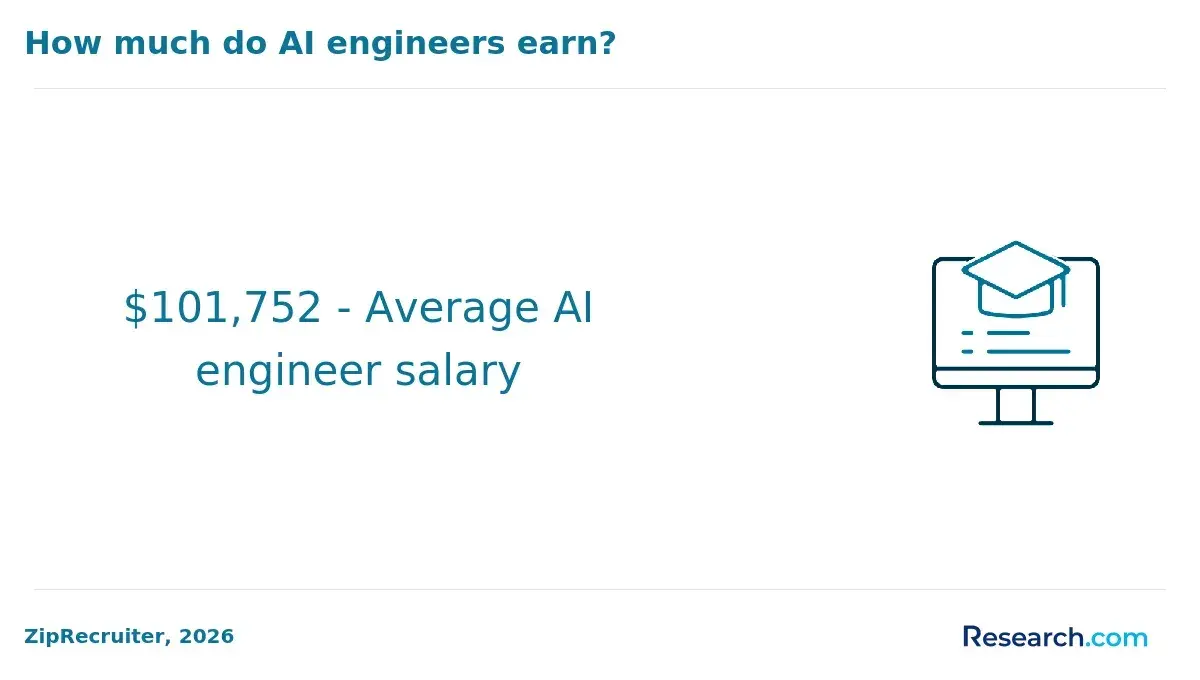
AI ethics-related roles with a bachelor's degree generally offer salaries ranging from $70,000 to over $110,000 annually, varying by position and industry. The U.S. Bureau of Labor Statistics (BLS) reports the median wage for data scientists-an important reference point due to their overlap with AI ethics-is approximately $108,000. This reflects the value of skills combining quantitative analysis and ethical considerations in AI.
Positions such as AI ethics analysts, policy advisors, and compliance specialists commonly start between $70,000 and $90,000, but experienced professionals in sectors like technology, finance, and healthcare can earn upwards of $100,000. Entry-level salaries tend to be closer to $65,000-$75,000.
Combining AI ethics expertise with programming, legal, or public policy knowledge often leads to higher compensation. For instance, AI governance roles at major tech companies can approach $110,000 to $120,000 for bachelor's degree holders, especially when supplemented by certifications or advanced training in ethics frameworks.
Graduates should focus on roles emphasizing responsible AI development, regulatory compliance, and bias mitigation, all of which are in demand and well-paid. Gaining experience through internships or projects focused on ethical AI enhances early career prospects.
Which certifications and skills boost hiring for AI ethics careers?
Certifications and skills in both ai technology and governance are increasingly vital for advancing careers in ai ethics. Employers prioritize candidates who blend strong technical expertise with governance, risk management, and compliance (GRC) knowledge. Recent labor market analyses reveal growing demand for professionals skilled in both ai and GRC domains, differentiating applicants in ethics-focused roles.
Key certifications enhancing eligibility include the Certified Information Privacy Professional (CIPP), Certified in Risk and Information Systems Control (CRISC), and specialized ai ethics credentials from institutions like IEEE or MIT. These credentials validate expertise in managing regulatory and ethical challenges alongside ai development.
Essential technical skills cover machine learning fundamentals, data analysis, and algorithmic bias mitigation techniques. Proficiency in programming languages such as Python or R is often required to audit and interpret ai models effectively. Additionally, knowledge of privacy laws like GDPR and CCPA, together with ethical frameworks for ai deployment, is increasingly important.
Practical experience with compliance audits, bias testing, or participation in ai governance committees strengthens a candidate's profile. Familiarity with emerging frameworks, including NIST's AI Risk Management Framework, demonstrates preparedness for evolving industry standards.
Incorporating technical skills with governance, risk, compliance, and privacy knowledge directly addresses market needs, significantly improving prospects in ai ethics careers.
Other Things You Should Know About Artificial Intelligence
Graduates with AI ethics expertise often find opportunities in technology firms, healthcare, finance, government agencies, and nonprofit organizations. These industries increasingly require professionals to ensure that AI systems operate fairly, transparently, and without bias. Ethics specialists help design policies and monitor AI implementations to comply with legal and societal standards.
No. Most programs do not require a separate ethics or philosophy minor. Instead, they build ethics into the major through required courses such as algorithmic bias, responsible AI, privacy law, and technology policy, usually within about 120 semester credits for graduation.
In 2027, AI ethics graduates can pursue roles like AI Ethics Consultant, Compliance Analyst, and Policy Advisor. These positions are available in sectors such as tech companies, governmental agencies, and non-profits, focusing on ensuring ethical standards in AI development and deployment.
Admission criteria for AI Bachelor's programs with an ethics focus often include a high school diploma, proficiency in mathematics, and strong analytical skills. Some programs may require standardized test scores like the SAT or ACT, and possibly a personal statement outlining the candidate’s interest in AI ethics.
References
- Highest Paying AI Jobs 2025: AI Specialist Salary ($120K-$300K) | Index.dev https://www.index.dev/blog/highest-paying-ai-jobs
- 9 Best Degrees for AI Careers: From Bachelor's to PhD [2026 Guide] - College Educated https://collegeeducated.com/online-degrees/best-degrees-for-ai/
- Best AI Certifications to Boost Your Career in 2026 – Dataquest https://www.dataquest.io/blog/best-ai-certifications/
- Jobs That Need AI Certification - IABAC https://iabac.org/blog/what-jobs-require-an-artificial-intelligence-certification
- Responsible AI: Applying AI Principles with Google Cloud | Google Skills https://www.skills.google/course_templates/388
- International Bachelor of Science in AI https://psl.eu/en/education/international-bachelor-science-ai
- What is the Best Degree for an AI Career? | SNHU https://www.snhu.edu/about-us/newsroom/stem/best-degree-for-an-artificial-intelligence-career
- AI Ethics Jobs: How to Start Your Career https://www.peopleinai.com/blog/ai-ethics-jobs-guide
- How to Understand Online vs. On-Campus Student Preferences https://www.userintuition.ai/reference-guides/online-vs-on-campus-student-preference/
- Which bachelor's degree do you need to study Data Science and Artificial Intelligence? https://www.udit.es/en/que-bachillerato-necesitas-para-estudiar-ciencia-de-datos-e-inteligencia-artificial/