2027 AI Bachelor's Degree Careers in Robotics

Co-Founder and Chief Data Scientist
Many professionals with unrelated undergraduate degrees face challenges breaking into robotics careers driven by rapid advances in artificial intelligence. Without a targeted academic background, navigating entry points into this competitive field can be overwhelming. Employers increasingly demand interdisciplinary skills combining robotics engineering with ai expertise. This situation creates a barrier for mid-career changers seeking relevant roles.
Understanding current pathways and degree options is critical to overcoming these hurdles. This article explores 2027 AI bachelor's degree careers in robotics, highlighting flexible, accredited programs and practical strategies to help prospective students pivot successfully into the robotics and ai industry.
Key Things You Should Know
- Robotics careers with a bachelor's in artificial intelligence are projected to grow 19% from 2024 to 2034, outpacing average job growth, driven by automation and smart systems demand.
- Graduates gain skills in machine learning, computer vision, and robotics programming, crucial for designing autonomous robots used in manufacturing, healthcare, and logistics.
- Starting salaries average $75,000 in 2026, with opportunities to advance into AI research, robotics engineering, or data science roles across diverse industries.
What careers are available for graduates with an AI bachelor's degree in robotics?
Graduates with an AI bachelor's degree in robotics have diverse job roles for graduates with an AI bachelor's degree in robotics, especially in high-growth sectors like manufacturing automation, medical devices, and autonomous vehicles. Robotics engineers design and program intelligent robotic systems, requiring expertise in Python, C++, and machine learning to enhance robotic perception and decision-making.
Another key path involves roles as data scientists or machine learning engineers focusing on robotics data. These professionals create algorithms to analyze sensor inputs, optimize robot behavior, and enable adaptive learning, with applications ranging from warehouse logistics automation to healthcare robotics assisting in surgery and patient care.
Opportunities in AI robotics career opportunities in the United States also extend to research and development of next-generation autonomous systems. Graduates may contribute to academic, government, or private sector projects involving drones, driverless vehicles, and robotic process automation, integrating technologies like computer vision, natural language processing, and real-time control systems.
The robotics market's projected growth to $189.3 billion by 2030 underscores strong demand for specialists such as robotics software developers, control systems engineers, and AI integration experts. Combining AI theory with hands-on experience in simulation tools, embedded systems, and cloud-based AI platforms is crucial to meet industry challenges like sensor noise, mechanical failures, and cybersecurity risks.
For those exploring options, detailed insights on 'What can you do with an applied artificial intelligence degree?' provide valuable guidance for career planning in this multidisciplinary field.
What is the job outlook and salary potential for AI robotics professionals?
The job outlook for AI and robotics engineers in the US remains highly favorable, supported by rapid advancements in automation and intelligent systems. The median salary for robotics engineers is $104,540 annually, according to the U.S. Bureau of Labor Statistics. This reflects strong demand for expertise in designing, building, and maintaining robotic systems enhanced with artificial intelligence.
Employment in this sector is expected to grow by 15% through 2032, a much faster rate than the average growth across all occupations. Key industries driving this growth include manufacturing, healthcare, defense, and logistics, which are adopting AI-enhanced robotics to improve efficiency and reduce operational costs.
Entry-level robotics engineers typically earn between $70,000 and $85,000, with mid-career professionals earning over $120,000 annually when equipped with advanced skills in AI algorithms, machine learning, or autonomous systems. Geographic hotspots like California and Massachusetts offer some of the highest compensation packages in North America, contributing to notable AI robotics salary trends in North America.
Roles in this field vary from robotics software engineers and AI systems developers to control engineers and research scientists. Graduates aiming for stability and growth should cultivate multidisciplinary skills, including programming, mechanical design, and data analytics.
Certifications in popular AI frameworks and practical experience through internships or research enhance hiring prospects. For those considering cost-effective education options, exploring how much a mechanical engineering degree online cost can be a strategic step toward entering this demanding field.
What coursework and technical skills are covered in an AI robotics bachelor's degree program?
An AI robotics bachelor's degree curriculum teaches comprehensive skills in programming, algorithms, and system integration, essential for developing advanced robotic systems. Core programming languages for AI and robotics careers include Python, C++, and Robot Operating System (ROS), identified by 85% of robotics employers as critical for workforce readiness (Stack Overflow Developer Survey, 2024).
Mastery of these tools enables students to design, simulate, and control robots effectively. Students gain hands-on experience through courses in robotics hardware, sensor and actuator integration, and embedded systems. Instruction in machine learning fundamentals prepares graduates to develop adaptive robot behaviors, while computer vision courses focus on creating algorithms that help robots interpret visual data, meeting growing industry demands.
Additional topics cover real-time computing, control theory, and automation principles to address practical robotics challenges. Students often participate in collaborative projects on autonomous navigation, robotic manipulation, and human-robot interaction, reflecting current workforce trends.
Advanced coursework explores deep learning, reinforcement learning, and natural language processing applications in robotics. Those seeking a cheap online engineering degree may find affordable pathways to acquire these skills and advance their robotics careers while managing cost considerations.
What are the admission requirements for accredited AI robotics bachelor's degree programs?
Admission to accredited AI robotics bachelor programs generally involves a minimum cumulative GPA of 3.0, demonstrating strong academic performance. Most institutions require standardized test scores like the SAT or ACT to evaluate quantitative and verbal skills crucial for challenging coursework. The ASEE Engineering Education Survey highlights that 72% of accredited robotics programs require prerequisites in calculus and physics, underlining the importance of a solid foundation in math and science.
Applicants must submit official transcripts confirming high school completion or equivalent. Advanced coursework in mathematics, often calculus I and II, and physics topics such as mechanics or electricity and magnetism, is commonly expected. Some programs request letters of recommendation from science or math teachers to confirm academic ability and problem-solving skills.
Competitive programs may also ask for a portfolio of robotics projects or essays about personal interests and career goals in AI robotics bachelor's degree admission requirements. International students need to show English proficiency through exams like TOEFL or IELTS. Conditional admission or remedial courses may be available for those lacking prerequisites.
Some schools focus more heavily on high SAT math scores or recent computer science classes rather than overall test performance. Early research into each program's specifics helps prospective students align their applications with institutional standards. For those considering further education, an online master's in data science can complement a foundation in robotics and AI, enhancing career prospects in this evolving field.
How long does an AI robotics bachelor's degree take, and what is the typical cost?
An AI robotics bachelor's degree generally requires four years of full-time study, covering essential subjects like mathematics, computer science, mechanical engineering, and specialized artificial intelligence topics such as machine learning and robotics systems. Some universities offer accelerated or co-op programs that integrate internships with academic terms.
The cost of earning this degree varies widely. Private universities average around $243,280 for total expenses, including tuition, fees, room, and board, while public in-state programs are more affordable at approximately $98,520. These figures do not account for personal expenses or materials. Many graduates carry a median student debt of about $28,950, reflecting the reliance on loans to finance education.
Students weighing these financial commitments should consider the return on investment, especially since private schools may provide enhanced research opportunities, industry connections, and specialized faculty. Conversely, public institutions often offer lower tuition but might have fewer resources dedicated to AI robotics research.
Those studying part-time or transferring credits can expect longer completion times and variable costs per semester. Exploring scholarships, employer tuition assistance, or federal aid programs is crucial to managing expenses during the program.
What is the difference between online and campus-based AI robotics degree programs?
The main difference between online and campus-based AI robotics bachelor's degree programs is the availability of hands-on experience. Campus programs offer direct access to robotics labs, physical equipment, and in-person collaboration, which are vital for mastering practical skills.
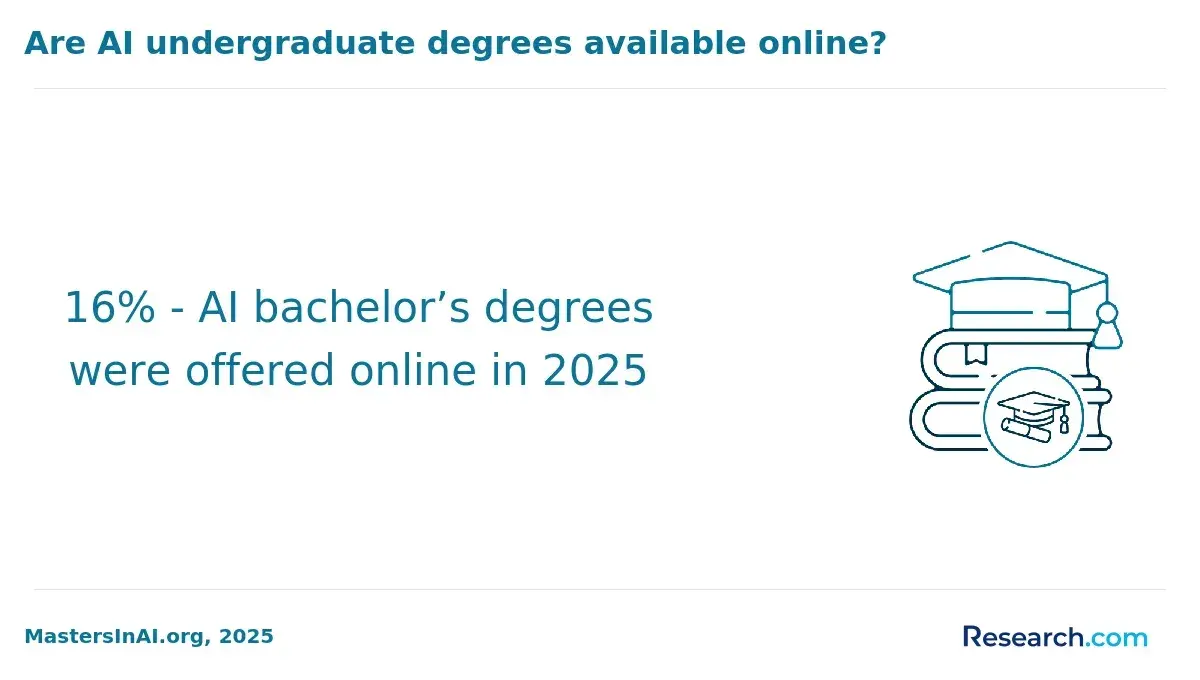
Students can work on real robots, conduct hardware experiments, and engage in team projects under faculty guidance. In contrast, only 12% of accredited robotics bachelor's degrees are fully online, as replicating hands-on learning remotely remains difficult.
Online courses typically use simulation software, virtual labs, and video demonstrations to teach robotics concepts. This format is ideal for students who need flexibility or cannot relocate, but it may limit exposure to physical components like sensors and embedded systems critical to the field. Some hybrid programs blend online learning with periodic on-campus residencies or local lab partnerships, partially addressing this gap.
Networking and mentorship opportunities also vary. Campus settings encourage direct interaction with professors and peers, facilitating informal learning and professional connections valuable for careers in robotics. Online students need to proactively seek virtual networking and internships to access similar benefits.
Cost and accessibility differ as well. Online options can reduce expenses for housing and commuting but require significant technology investments. Campus programs provide immersive learning with structured schedules but involve relocation and higher living costs.
Which accreditation bodies and standards apply to AI robotics bachelor's programs?
ABET accreditation serves as a key benchmark for AI robotics bachelor's programs in the United States, ensuring quality in curriculum, faculty expertise, and student achievements. Programs accredited by ABET cover essential areas such as robotics engineering, embedded systems, and machine learning. This accreditation greatly influences career opportunities; for example, 89% of U.S. robotics engineering programs have ABET accreditation, and their graduates tend to earn 23% more on average compared to those from non-accredited institutions.
The Accreditation Board for Engineering and Technology conducts evaluations through its Engineering Accreditation Commission, which assesses program objectives, laboratory resources, and ongoing improvement efforts. Attending an ABET-accredited program assures students receive an education aligned with professional standards necessary for developing autonomous systems, robotic control, and AI integration.
Some programs also earn accreditation from the Computing Accreditation Commission within ABET, focusing more on software development and computational methods in robotics. This distinction benefits students aiming at AI algorithms and software robotics rather than hardware-intensive paths.
While not formal accreditation, guidelines from the IEEE Robotics and Automation Society offer valuable recommendations for curriculum design, reflecting current industry trends and demonstrating commitment to advanced robotics education.
Prospective students should verify program accreditation and curriculum fit to support their AI robotics career goals, as selecting ABET-accredited programs enhances educational quality and marketability in a competitive job market.
What professional certifications or credentials complement an AI robotics bachelor's degree?
Robotics professionals with a bachelor's degree in AI greatly benefit from specialized certifications that validate expertise and boost career prospects. Leading credentials include the AWS Certified Machine Learning certification, which verifies skills in deploying machine learning models on Amazon Web Services, a vital capability in industrial robotics.
The Robot Operating System (ROS) certification is another essential credential, demonstrating familiarity with widely used robotics middleware. According to the LinkedIn Jobs Report 2024, holders of AWS Certified Machine Learning or ROS certifications earn 18-22% higher salaries than peers without these qualifications. Demand for these certifications has grown by 34% year-over-year, highlighting industry preference for validated technical skills beyond academic achievement.
Additional valuable certifications include the Certified Robotics Technician (CRT), focusing on hardware maintenance and troubleshooting, and the Microsoft Certified: Azure AI Fundamentals, ideal for cloud-based AI applications. Security certifications like CompTIA Security+ address the growing importance of cybersecurity in robotics environments.
For those pursuing research or software development roles, credentials such as the IBM Data Science Professional Certificate and Certified Kubernetes Administrator offer competitive advantages by covering complementary data science and software engineering skills essential to advanced robotics systems.
How do you choose between accredited AI robotics programs at different universities?
Choosing accredited AI robotics programs involves assessing factors that influence career outcomes. Universities with strong industry ties and robust research often see graduates securing jobs faster, with a 94% employment rate within three months compared to 78% for non-ranked schools, according to the National Association of Colleges and Employers. Graduates from top programs also enjoy starting salaries $15,000 to $22,000 higher on average.
A well-rounded curriculum integrating fundamentals like machine learning and control systems with hands-on robotics projects is essential. Programs that offer access to advanced labs and internships with leading tech companies provide valuable real-world experience. Faculty expertise and active research grants expose students to the latest innovations and developments.
Financial factors and location influence overall costs and access to AI robotics hubs. Institutions in tech-centric regions offer superior networking and job placement opportunities. Confirming accreditation through regional and AI-specific bodies is crucial for ensuring educational quality and employer recognition.
Consider if the program connects students to companies hiring AI robotics graduates, the percentage of students securing internships or cooperative education, and whether alumni quickly attain competitive salaries. These indicators help assess your potential return on investment. Prioritize programs where graduates demonstrate rapid job placement and salary success as reflected in recent credible reports.
What prerequisites or foundational knowledge is needed before pursuing an AI robotics degree?
Strong foundations in calculus, physics, and computer science are vital for students pursuing a bachelor's degree in AI robotics. Calculus helps with algorithms involving continuous change and optimization, essential for robotics control and AI model training. Physics offers an understanding of mechanics, electricity, and kinematics, which are important for designing robot movement and sensor integration.
Computer science skills in programming, data structures, and software development enable building and testing AI-driven robotic systems effectively. According to the ACT STEM Research Report (2024), students with prior coursework in these subjects graduate on time at rates 3.4 times higher and score 18% better on technical competency tests.
Those lacking this background often face steep learning curves in introductory AI robotics courses and struggle with projects involving AI algorithms and robot hardware. Practical experience, such as coding in Python or C++ and working with electronics or basic robots, significantly aids comprehension. Familiarity with linear algebra and statistics also supports understanding of machine learning, a core AI component in robotics.
Prospective students should assess their skills and consider supplementary coursework or online training beforehand. Academic advisors and preparation programs can offer tailored guidance to meet these essential prerequisites and smooth the path toward success in AI robotics education.
Other Things You Should Know About Artificial Intelligence
Python is the most widely used programming language in artificial intelligence for robotics due to its extensive libraries and ease of use. Other common languages include C++ for performance-critical components and Java for platform-independent applications. Mastery of these languages is important for developing, testing, and deploying AI algorithms in robotic systems.
Mathematics is fundamental in AI robotics education, particularly linear algebra, calculus, probability, and statistics. These areas underpin machine learning models, computer vision, and control algorithms used in robotics. Strong mathematical skills enable students to design and optimize AI algorithms effectively.
Yes, many AI robotics bachelor's programs encourage undergraduate research projects involving real-world applications such as autonomous navigation and robotic vision. Participation in such projects helps students apply theoretical knowledge, develop problem-solving skills, and gain hands-on experience with hardware and software integration.
In 2027, AI bachelor’s degree students can pursue internships at tech firms specializing in robotics, research institutions, and startups developing AI-driven robots. These internships often focus on designing, programming, and testing robotic systems. Additionally, exploring an AI policy and governance master’s provides valuable insights into regulatory aspects relevant to the robotics industry.
References
- AI Career Paths in Robotics (High-Skills & Roadmap 2026) https://aijobscareer.com/ai-career-paths-robotics-2026/
- Online Specialization in Artificial Intelligence and Robotics | Colorado State University Global https://csuglobal.edu/academic-programs/undergraduate-specializations/undergraduate-specialization-artificial-intelligence-and-robotics
- Get Admission to Your Dream College with Expert Guidance https://campusyatra.com/blog/ai-robotics-careers-in-2026-future-job-opportunities
- AI Hiring Trends: Job Market Data, Salaries, and Industry Demand https://patentpc.com/blog/ai-hiring-trends-job-market-data-salaries-and-industry-demand
- Undergraduate https://ai.seas.upenn.edu/academics/undergraduate/
- International Board for AI Accreditation | Professional Accreditation Body https://www.aiaccreditationboard.org/
- BSc in Robotics and Artificial Intelligence (AI) - Khalifa University https://www.ku.ac.ae/academics/undergraduate-programs/b-sc-in-robotics-artificial-intelligence
- Your 2025 Guide to Robotics & Automation Certifications | UTI https://www.uti.edu/blog/robotics-and-automation/2025-robotics-automation-certifications-guide
- News and Events https://www.roboticscareer.org/news-and-events/news/27854
- ATMAE Announces Recent Program Accreditations - The Association of Technology, Management, and Applied Engineering (ATMAE) https://atmae.org/atmae-announces-recent-program-accreditations/