2027 Online Speech Pathology Master's Programs With No Personal Statement or Admissions Essay Required

Co-Founder and Chief Data Scientist
Applying to an online speech pathology master's program can be time-consuming, especially when a personal statement is one more barrier between you and a clinical career. This guide examines programs that may waive a traditional admissions essay and explains the requirements that can replace it.
The opportunity matters because speech-language pathologists had a median annual wage of $95,410 in May 2024, according to the U.S. Bureau of Labor Statistics. You will learn how to verify current policies, assess accreditation, compare costs, and decide whether streamlined admissions fit your goals.
Key Things You Should Know
- "No personal statement" usually means a school does not request a long narrative essay; it does not necessarily mean no written responses, resume, references, prerequisite review, GPA standard, or clinical-readiness screening. A no-essay policy is separate from a no-GRE policy.
- Speech pathology master's programs commonly evaluate transcripts, communication-science prerequisites, observation hours, recommendations, and interview or short-answer materials even when GRE scores are not required.
- For U.S. licensure preparation, verify that the specific master's program holds accreditation from the Council on Academic Accreditation in Audiology and Speech-Language Pathology, confirm state eligibility, and obtain the current admissions checklist in writing before applying.
What Does "No Personal Statement or Admissions Essay Required" Mean for Online Speech Pathology Master's Programs?
A personal statement is usually a longer applicant-written narrative describing academic interests, relevant experiences, career goals, and readiness for graduate study. An admissions essay may serve the same purpose under a different name. When an online speech-language pathology program says that no personal statement is required, it generally means the application does not include that particular long-form document.
It does not automatically mean the application has no writing requirement. A program may substitute a statement of purpose, a brief prompt about diversity or clinical experiences, an explanation of academic performance, an uploaded resume, or responses within an application portal. These materials can still help an admissions committee assess communication skills, professionalism, and fit for a clinically intensive degree.
The distinctions below help prevent a common application mistake: treating an omitted personal statement field as proof that every essay-like requirement has been waived.
| Application term | What it usually asks for | Can it still apply at a "no personal statement" program? |
| Personal statement | A narrative about background, goals, and motivation | Possibly waived |
| Statement of purpose | Academic and professional objectives, often more program-focused | Yes; it may be required under a different label |
| Short-answer response | A concise response to a specific question | Yes; many schools treat this separately from an essay |
| Academic explanation | Context for low grades, gaps, or repeated courses | Often optional or conditionally required |
| Resume or CV | Education, work, volunteer, and related experiences | Frequently required |
Use the published requirements for the exact campus and online track, not a third-party summary or an older application cycle. Admission policies can differ between a university's on-campus and distance-learning cohorts.
Which Online Speech Pathology Master's Programs Do Not Require a Personal Statement or Admissions Essay?
Fully online or hybrid master's programs that lead toward speech-language pathology licensure are specialized clinical programs, and their admissions requirements change frequently. A school should be considered a genuine no-essay option only when its current graduate application page explicitly says that a personal statement, statement of purpose, or essay is not required. "No GRE required" alone is not evidence of a no-essay policy.
Rather than relying on a static list that can become inaccurate, use this comparison framework when building a shortlist. It identifies the program types that applicants most often confuse with an online clinical speech-language pathology master's degree.
| Program type | May be delivered online? | Usually supports SLP licensure? | What to verify |
| CAA-accredited master's in speech-language pathology | Yes, often with in-person clinical placements | Yes, subject to state requirements | Current essay policy, clinical placement model, accreditation status, and state authorization |
| Communication sciences and disorders master's degree | Sometimes | Only if it meets clinical and accreditation requirements | Whether the degree includes the required supervised practicum |
| Nonclinical speech, language, or communication graduate degree | Often | Usually no | Whether it is designed for educator, researcher, or support roles rather than licensure |
| Post-baccalaureate prerequisite program | Often | No, by itself | Which undergraduate prerequisites it fulfills and whether it has its own essay policy |
The most reliable approach is to ask each admissions office a precise question: "For the upcoming online MS-SLP cohort, are a personal statement, statement of purpose, essay, and short-answer responses all waived?" Request the answer by email and save it with the application materials. If the school cannot answer clearly, treat the requirement as unresolved rather than waived.
Applicants considering other behavioral-health pathways can also compare degree design and admissions expectations through this guide to the best online substance abuse counseling degree programs, but counseling preparation does not replace the clinical education required for SLP licensure.
What Admission Requirements Do Online Speech Pathology Master's Programs Use Instead of an Essay?
Programs may remove a long essay because they can evaluate readiness through academic records and structured evidence. This is especially important in speech-language pathology, where students must complete demanding clinical coursework and supervised experiences before entering the profession.
A typical no-essay review may rely on the following materials. Their exact weight varies by school, so applicants should not assume that one strong factor offsets every other requirement.
- Official transcripts showing overall GPA, communication-science GPA, and completion of required undergraduate courses.
- Prerequisite coursework in areas such as phonetics, language development, anatomy and physiology of speech and hearing mechanisms, audiology, speech science, and statistics.
- Letters of recommendation from faculty members, supervisors, or speech-language pathologists who can evaluate academic or professional readiness.
- A resume documenting relevant employment, volunteer work, observation, research, bilingual skills, or experience with children and adults.
- Observation hours, interviews, video responses, background checks, and technical-readiness requirements when the school uses them.
- English-language proficiency evidence when applicable and any state-specific clinical-placement documentation.
Do not confuse admissions requirements with professional certification requirements. ASHA observation and certification standards, state licensure rules, and university admission rules are related but distinct. A school may admit an applicant before every later certification document is due, while another may require certain evidence at application time.
Students comparing health-professions admissions may notice similar screening patterns in nursing programs that don't require TEAS test requirements. The lesson is the same: a waived test or essay does not eliminate the need to document academic preparation.
Can You Get Into an Online Speech Pathology Master's Program With No Essay, No GRE, or a Low GPA?
Yes, it may be possible to find a program that does not request an essay and does not require GRE scores, but those two policies are independent. Graduate programs may be test-optional, test-free, or silent about the GRE while retaining GPA, prerequisite, recommendation, and interview standards. GMAT scores are generally not relevant to clinical speech-language pathology admissions.
A low GPA does not automatically end an application, but it can narrow options. Review both the cumulative GPA and the communication-sciences or prerequisite GPA required by each school. If a published minimum is not met, ask whether the school considers conditional admission, prerequisite retakes, recent upper-level coursework, or a formal academic explanation. Never assume an exception is available.
Applicants with a less competitive transcript should focus on evidence they can substantiate rather than trying to use a no-essay policy as a shortcut. Useful steps include the following.
- Calculate your GPA using the institution's stated method and identify any missing prerequisite courses.
- Retake weak prerequisite courses only after confirming the target program accepts the provider and grade replacement or repeat credit.
- Choose recommenders who can provide specific, current examples of academic ability, dependability, and communication skills.
- Prepare a concise factual explanation for academic irregularities in case a school requests one.
- Apply to several appropriately accredited programs whose published standards match your academic profile.
For applicants exploring a different nursing route, MSN direct entry programs online may have separate prerequisites and admissions models. They do not qualify graduates to practice as speech-language pathologists.
Are Online Speech Pathology Master's Programs With No Personal Statement Easier to Get Into?
Not necessarily. Waiving a personal statement reduces one application task; it does not reduce the academic, clinical, and regulatory responsibilities of an entry-level SLP graduate program. Programs still need to enroll students who can complete graduate coursework, secure supervised clinical experiences, and meet competencies required for graduation.
In some cases, removing the essay can make an application more accessible for qualified students who have limited time or who find narrative writing difficult. In other cases, it gives the admissions committee fewer opportunities to understand unusual circumstances, career changes, or strengths not visible on a transcript. An applicant with a nontraditional record may benefit more from a program that welcomes a thoughtful optional statement than from one that prohibits extra materials.
Use this trade-off comparison to decide whether simplified admissions is genuinely helpful for your situation.
| Applicant situation | Potential benefit of no essay | Potential limitation |
| Strong grades and all prerequisites completed | Faster, more straightforward application | Little room to distinguish yourself beyond standard materials |
| Career changer with relevant experience | Less writing burden | Experience may be harder to contextualize if no supplemental response is accepted |
| Applicant with a low or uneven GPA | Fewer required documents | May lose a place to explain academic context |
| Applicant seeking licensure in another state | None related to state eligibility | Must still confirm curriculum and placement eligibility independently |
A red flag is any program that markets easy entry while avoiding clear information about practicum hours, faculty oversight, graduation requirements, or accreditation. Selectivity, educational quality, and essay policy are different issues.
How Can You Tell Whether a No-Essay Online Speech Pathology Master's Program Is Accredited and Reputable?
For an applicant seeking to become a speech-language pathologist in the United States, programmatic accreditation is the central check. Look for current accreditation by the Council on Academic Accreditation in Audiology and Speech-Language Pathology (CAA), then confirm that the program's online pathway is covered by that status. Institutional accreditation alone is not the same as CAA accreditation for a clinical SLP degree.
Before paying an application fee or deposit, complete these checks. They protect against enrolling in a degree that is convenient but does not support the intended licensure pathway.
- Search the CAA directory for the university, degree, location, and accreditation status; check whether the status is accredited, on probation, or developing.
- Read the program's clinical education page to learn who arranges placements, whether students may need to travel, and what happens if a placement is delayed.
- Contact the licensing board in the state where you expect to practice and ask whether the program's curriculum and supervised experiences meet that state's requirements.
- Request the current student handbook, tuition-and-fee schedule, completion policies, and disclosure of any required campus visits.
- Ask admissions to confirm the no-essay policy and every remaining written requirement for your intended start term.
Reputable programs can explain their accreditation, curriculum, clinical placement support, state authorization, faculty credentials, and student services without vague promises. Be cautious if a school guarantees licensure, cannot explain out-of-state placements, or treats a nonclinical online degree as equivalent to a clinical master's degree.
How Much Do Online Speech Pathology Master's Programs With No Admissions Essay Cost, and What Financial Aid Is Available?
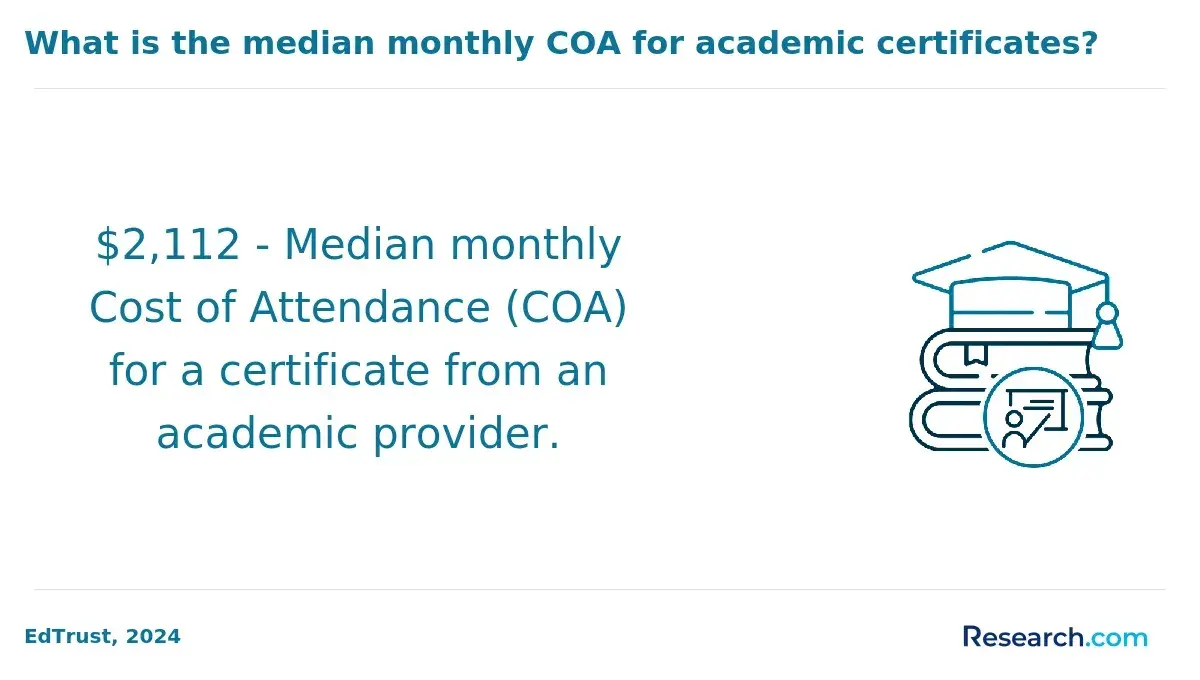
No-essay admission does not determine tuition. Costs vary by public or private institution, resident status, total credits, clinical fees, technology charges, travel, background checks, immunizations, and the location of required practicum or campus experiences. Compare the full estimated program cost rather than a single per-credit figure, especially when an online format still requires local clinical placements or short residencies.
The following cost categories make a more meaningful comparison than advertised tuition alone.
- Tuition and mandatory university fees for all required graduate credits.
- Clinical education, simulation, liability insurance, assessment, and placement-related fees.
- Travel, lodging, parking, and lost work time for intensives or distant placements.
- Books, software, equipment, health requirements, and background-check expenses.
- Interest and repayment consequences if federal or private loans cover part of the cost.
Eligible students may submit the Free Application for Federal Student Aid and explore federal Direct Unsubsidized Loans, Graduate PLUS Loans, scholarships, employer tuition benefits, state aid, and school payment plans. Aid eligibility, borrowing limits, and institutional awards vary, so ask the financial-aid office for a program-specific cost-of-attendance estimate. Students comparing federal-aid options across healthcare training can also review online medical assistant programs FAFSA approved; medical assistant programs are a different credential and career path.
A practical return-on-investment review compares total borrowing with likely repayment terms, not just career salary. The U.S. Bureau of Labor Statistics reported a $95,410 median annual wage for speech-language pathologists in May 2024, but pay varies by employer, geographic area, setting, experience, and hours worked. Use that figure as broad labor-market context, not a personal earnings guarantee.
How Do You Apply to an Online Speech Pathology Master's Program With No Personal Statement Required?
A streamlined application still requires careful planning because transcripts, recommendation letters, and prerequisite verification can take longer than expected. Start by downloading the requirements for the specific online cohort and term, then compare them against the centralized application instructions if the school uses one.
Follow this sequence to avoid discovering a hidden requirement after the deadline.
- Create a comparison sheet for each program's application deadline, prerequisite list, GPA standard, testing policy, references, clinical observation expectations, and essay or short-answer policy.
- Email admissions with a direct request to confirm whether personal statements, statements of purpose, optional essays, and short-answer responses are required for your term.
- Order official transcripts early and have prerequisite courses reviewed if your bachelor's degree is outside communication sciences and disorders.
- Ask recommenders well in advance and provide them with your resume, target program information, and a clear deadline.
- Complete the application truthfully, upload only requested documents, and retain copies of confirmations and requirement clarifications.
- Review financial-aid deadlines and respond promptly to requests for additional documentation, placement information, or interviews.
Common mistakes include submitting an old essay when a school does not accept supplemental documents, overlooking a separate graduate-school application, and assuming that clinical placements are guaranteed in every state. Apply early enough to resolve these issues before seats fill or a deadline passes.
How Long Does an Online Speech Pathology Master's Program With No Admissions Essay Take to Complete?
The absence of an admissions essay does not shorten the degree. An entry-level online or hybrid speech-language pathology master's program commonly takes about two years of full-time study, although the actual timeline depends on prerequisite completion, cohort sequencing, course load, required clinical experiences, and whether a school permits part-time enrollment.
Online delivery usually changes how academic classes are delivered, not whether clinical preparation occurs. Students should expect a combination of asynchronous coursework, live online meetings, simulated practice, local or assigned supervised placements, and possible on-campus intensives. A delayed placement can extend the time needed to finish even when classroom courses are completed on schedule.
This timeline comparison shows why applicants should ask about progression requirements before selecting a program.
| Stage | Typical focus | Timing consideration |
| Prerequisite completion | Foundational communication-science courses for applicants without the required background | May add time before admission or enrollment |
| Graduate academic coursework | Assessment, treatment, research, ethics, and disorder-specific instruction | Usually follows a fixed cohort sequence |
| Clinical practicum | Supervised client or patient experiences | Placement availability and state rules can affect timing |
| Postgraduate clinical fellowship | Supervised professional transition after graduation | Required separately from the master's degree for many certification and licensure pathways |
Ask whether the quoted completion time includes prerequisite courses, whether clinical placements are arranged by the university, and whether a student can remain in the program if a placement becomes unavailable. Those answers matter more than whether the admission form includes an essay.
Is an Online Speech Pathology Master's Degree With No Admissions Essay Worth It for Your Career?
A no-essay online speech pathology master's degree can be worthwhile when it is CAA-accredited, compatible with your state licensure plans, financially manageable, and structured to provide strong clinical supervision. The waived essay itself does not change the degree's academic value, the clinical competencies required for graduation, or the steps needed after graduation to pursue certification and licensure.
The career case for the degree rests on the profession rather than the application format. Speech-language pathologists assess and treat communication, swallowing, voice, cognitive-communication, and related disorders in settings such as schools, hospitals, rehabilitation facilities, clinics, and private practices. The U.S. Bureau of Labor Statistics projects 19% employment growth for speech-language pathologists from 2023 to 2033, indicating demand that is substantially faster than the average for all occupations. That projection is national and does not guarantee openings in a particular city or specialty.
Choose the no-essay route when your record already communicates your readiness and the program's clinical model, accreditation, cost, and state outcomes meet your needs. Consider a traditional application with a statement option when you need to explain a career transition, demonstrate a meaningful commitment to the field, or provide context for grades and experiences.
Professionals who later want to move into advanced nursing practice should recognize that this is a separate pathway; compare program pace and requirements through these DNP online programs rather than assuming an SLP credential transfers into doctoral nursing preparation.
Other Things You Should Know About Speech Pathology
Yes. A school may waive a traditional personal statement while still requiring short responses about prerequisites, clinical interests, background checks, state residency, or academic history. Read every application tab and ask admissions whether any written supplemental materials apply.
Only submit extra material if the school explicitly permits it. Some programs will not review unsolicited documents. If an academic-explanation field is available, keep the explanation factual, concise, and focused on what changed.
Policies vary. Some programs arrange placements, some collaborate with students to locate them, and others expect students to help identify sites in their region. Obtain the written placement policy before enrolling, particularly if you live outside the university's home state.
A qualifying clinical master's degree is a major requirement, but graduates generally must also complete supervised postgraduate clinical experience and meet their state's licensing requirements. Many employers also prefer or require ASHA certification, depending on the setting and state.
References
- Speech Pathology Scholarships and Grants for SLP Students https://teach.com/online-ed/healthcare-degrees/online-masters-speech-language-pathology/scholarships/
- Online MSLP Programs with No GRE Requirement for Admissions https://www.speechpathologydegrees.com/online/mslp-no-gre-required
- Online Master's in Speech-Language Pathology Programs No GRE Required or GRE Waiver https://www.onlineeducation.com/healthcare/faqs/gre-requirements-online-masters-in-speech-pathology-programs
- CSD Student Scholarships https://www.nsslha.org/programs/csd-student-scholarships/
- Application Requirements https://calbaptist.edu/academics/programs/master-of-science-speech-language-pathology/application-requirements
- School of Allied Health Professions https://alliedhealth.lsuhsc.edu/cd/sladmissionrequirements.aspx
- How to Pay for SLP Grad School: Funding Guide 2025 https://www.speechpathologygraduateprograms.org/blog/how-to-pay-for-slp-grad-school/
- Homepage https://speechpathologymastersprograms.com/
- Best Online Master's in Speech Pathology (SLP) Programs for 2025 https://www.onlinemastersdegrees.org/best-programs/speech-language-pathology-slp/
- Speech-Language Pathology Scholarships https://www.salus.edu/admissions/tuition-financial-aid/scholarships/speech-language-pathology-scholarships.html