
2027 Artificial Intelligence Degrees Explained: Are They Classified as Professional Degrees?

Co-Founder and Chief Data Scientist
Choosing an artificial intelligence degree is not the same as choosing a licensed professional pathway in medicine, law, nursing, or teaching. AI programs can be career-focused, research-focused, interdisciplinary, online, campus-based, certificate-level, or graduate-level, and the label “professional” does not automatically mean the degree is required for employment or licensure.
That distinction matters because program cost, admissions standards, employer expectations, and career outcomes can vary widely. Only 34% of AI-related graduate programs in the U. S. are classified as professional degrees, which means many students are comparing programs that serve different goals. At the same time, employment trends show that 72% of AI industry jobs value practical experience over formal professional credentials.
This guide explains what a professional artificial intelligence degree is, who it is best suited for, how accreditation and financial aid work, what courses and training to expect, and when the degree may or may not improve career options or salary potential.
Key Benefits of Professional Artificial Intelligence Degrees
- Professional artificial intelligence degrees equip graduates with advanced skills in machine learning, data analysis, and AI system development for diverse industries.
- These degrees offer high earning potential, as expertise in AI and automation is in strong demand across technology, healthcare, finance, and research sectors.
- They prepare graduates for specialized, leadership, and innovative roles in AI development, ensuring long-term career growth and industry relevance.
What Is Considered a Professional Artificial Intelligence Degree?
A professional artificial intelligence degree is generally a career-oriented program designed to prepare students to apply AI tools, models, and systems in real workplaces. It is not usually a licensure degree. Instead, it tends to emphasize applied machine learning, data systems, AI deployment, technical problem-solving, ethics, and portfolio-ready projects.
This distinction is important because “professional” in AI does not carry the same meaning it does in regulated fields. A professional AI program may be rigorous and employer-aligned, but it does not automatically lead to a state license, protected job title, or guaranteed promotion. Enrollment in applied AI programs has risen by more than 35% in recent years, which has also increased the need for students to separate strong career-focused programs from programs that simply use AI terminology in their marketing.
How professional AI degrees differ from academic AI degrees
- Professional AI degrees: Usually prioritize applied training, capstones, employer-aligned projects, internships, software tools, and implementation skills.
- Academic or research AI degrees: Often place more weight on theory, advanced mathematics, research methods, experimentation, and preparation for doctoral study or research roles.
- Certificates and short programs: Can be useful for targeted upskilling but may not carry the same academic weight as a graduate degree.
Common misconceptions
- Myth: A professional artificial intelligence degree is a standardized licensure program like those in medicine or law.
- Fact: AI degrees are generally not tied to licensure authorities. They focus on applied skills, industry-relevant tools, practical training, and sometimes employer-recognized credentials.
- Myth: All artificial intelligence degrees are designed for the same career outcomes.
- Fact: Some programs are research-heavy, while others are built for job readiness through capstones, internships, labs, and industry partnerships.
Students comparing professional artificial intelligence degree programs should review curriculum, faculty expertise, project requirements, career support, and total cost. Those who need flexibility may also compare the best ai masters programs online when evaluating cost-effective and career-aligned options.
Who Should Pursue a Professional Artificial Intelligence Degree?
A professional artificial intelligence degree is best for students who want structured, applied training that connects directly to AI work in industry. It is especially useful for people who already have some technical, quantitative, analytical, or domain-specific background and want to move into AI implementation, machine learning engineering, data science, automation, product development, or AI strategy roles.
Enrollment in AI-focused professional programs has increased by over 35% annually, but demand alone should not drive the decision. The degree makes the most sense when it fills a clear gap between your current qualifications and the requirements of your target role.
Strong candidates for a professional AI degree
- Early-career technical professionals: Software developers, data analysts, engineers, and IT professionals who want formal AI training and a stronger project portfolio.
- STEM graduates: Students with coursework in computer science, mathematics, statistics, engineering, or related fields who want practice-oriented graduate preparation.
- Career changers with adjacent skills: Professionals from analytics, research, cybersecurity, finance, healthcare technology, or operations who need structured AI training rather than a self-directed learning path.
- Professionals targeting applied roles: Candidates who want to build, evaluate, deploy, or manage AI systems rather than focus primarily on academic research.
When another path may be better
- If you need basic technical foundations: A bridge program, prerequisite coursework, coding bootcamp, or undergraduate-level computer science sequence may be more appropriate before graduate AI study.
- If your goal is research or academia: A research-focused computer science, machine learning, statistics, or doctoral pathway may be a better fit.
- If you only need one skill: A certificate in machine learning, cloud AI tools, data visualization, or neural networks may be more efficient than a full degree.
Common misconceptions
- Myth: A professional artificial intelligence degree is essential for anyone interested in AI-related careers.
- Fact: These degrees are most useful for learners who need structured, practice-oriented preparation for specific technical or industry roles.
- Myth: Everyone pursuing AI credentials needs a professional AI degree.
- Fact: Some fields value vendor certifications, domain credentials, portfolios, or related degrees more than a dedicated AI degree.
- Myth: Career changers cannot benefit from professional AI programs without a computer science background.
- Fact: Career changers from related STEM or analytical fields can benefit, especially when programs offer prerequisites, bridge coursework, or applied project support.
Students interested in human behavior, cognition, workplace decision-making, or human-centered AI may also compare related educational paths such as online psychology programs, particularly when their AI interests involve user research, behavioral data, or ethical technology design.
What Are the Most Common Professional Artificial Intelligence Degree Programs?
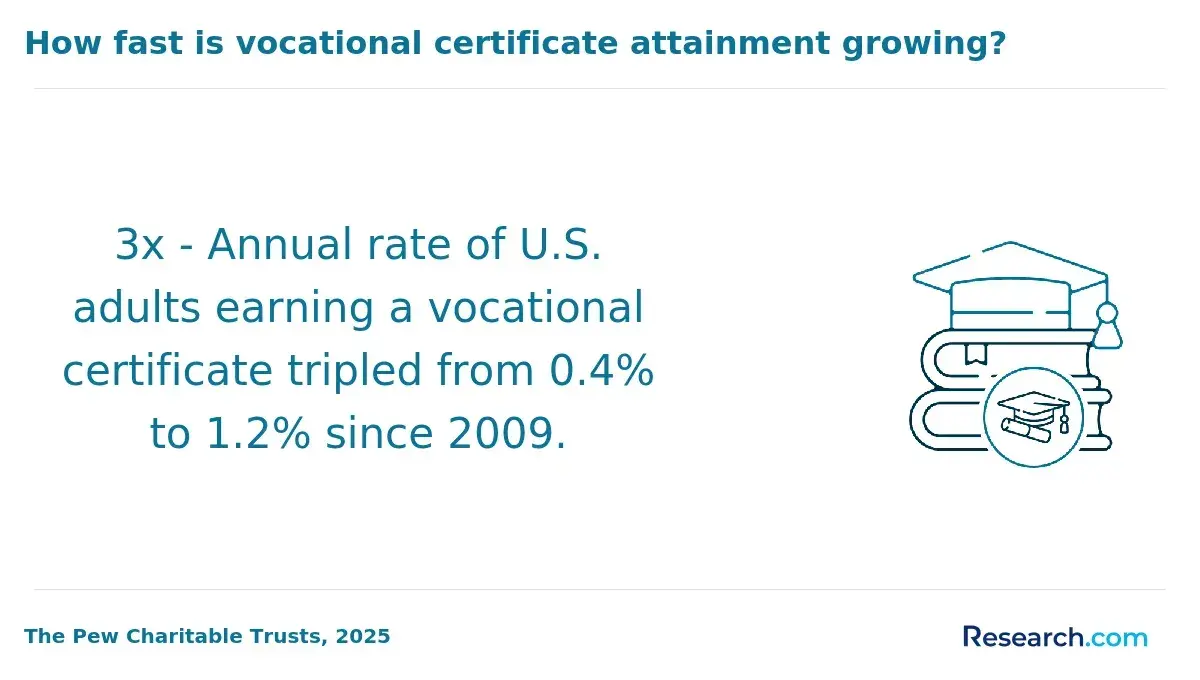
The most common professional artificial intelligence programs are graduate degrees and certificates that combine AI theory with applied technical training. Enrollment in AI-related fields has surged by 35% over the last five years, and schools have responded with programs that vary in depth, specialization, delivery format, and career focus.
Students should choose based on the role they want after graduation. A machine learning engineer, data scientist, AI product manager, robotics specialist, and research scientist may need overlapping but different preparation.
- Master of Science in Artificial Intelligence: This degree typically covers machine learning, natural language processing, robotics, computer vision, algorithms, and data analytics. It is often a strong fit for students who want a broad technical foundation for applied AI roles.
- Master of Data Science with AI Specialization: This option focuses on statistics, data analysis, machine learning, predictive modeling, and large-scale data systems. It can be a good match for students targeting data scientist, analytics, decision science, or AI-enabled business roles.
- Professional Certificates in Machine Learning or Neural Networks: These shorter programs are designed for focused upskilling. They may help working professionals learn specific AI methods without committing to a full degree, though they usually provide less depth and academic recognition than a master’s program.
How to compare program types
- Depth: A full master’s degree usually offers broader and deeper preparation than a certificate.
- Time commitment: Certificates may be faster, while graduate degrees require more sustained study and project work.
- Career signal: A degree may carry more weight for advanced roles, while certificates can be useful for demonstrating targeted skills.
- Technical fit: Students should check whether the curriculum includes Python, statistics, machine learning, cloud tools, data engineering, and model evaluation if those skills are required for their target jobs.
- Portfolio value: Programs with capstones, labs, internships, or employer projects may provide stronger evidence of job-ready ability.
Are Professional Artificial Intelligence Degree Programs Accredited?
Professional artificial intelligence degree programs may be offered by accredited institutions, but there is no universal AI-specific accreditor that approves all AI degrees. Accreditation should be checked carefully because it can affect credit transfer, employer recognition, graduate school eligibility, and access to certain forms of financial aid.
Around 85% of students prefer enrolling in accredited programs to enhance career prospects and secure financial aid. That preference is reasonable, but students need to know which type of accreditation they are evaluating.
Institutional accreditation
Institutional accreditation applies to the college or university as a whole. For most students, this is the first accreditation checkpoint. A degree from an institution without recognized accreditation can create problems with financial aid, transfer credits, employer screening, and future graduate study.
Programmatic accreditation
Programmatic accreditation applies to specific fields or programs. AI programs may fall within computer science, engineering, data science, or information technology units, depending on the institution. There are no dedicated accrediting agencies exclusively for AI degrees, so students should look at the broader department and institutional context.
Common misconceptions
- Myth: All artificial intelligence degree programs are accredited by specialized AI accrediting bodies.
- Fact: There are no dedicated accrediting agencies exclusively for AI degrees. Accreditation is generally handled by established institutional and programmatic bodies recognized by the U.S. Department of Education and the Council for Higher Education Accreditation (CHEA).
- Myth: Institutional accreditation and programmatic accreditation are the same.
- Fact: Institutional accreditation evaluates the college or university, while programmatic accreditation evaluates a particular academic field or program.
- Myth: Accreditation does not affect licensure, financial aid, or job opportunities.
- Fact: Accreditation can affect financial aid eligibility, employer recognition, credit transfer, and further education options. Licensure issues depend on the regulated field involved, not on AI alone.
Students comparing costs across accredited graduate programs may also review examples outside AI, such as the cheapest MLIS degree online, to see how accreditation, tuition, delivery format, and program reputation are commonly weighed together.
What Are the Admission Requirements for a Professional Artificial Intelligence Degree?
Admission requirements for professional artificial intelligence degrees usually reflect the technical demands of the curriculum. With some programs experiencing application increases exceeding 25% annually, applicants should review prerequisites early and avoid assuming that interest in AI is enough for admission.
Requirements vary by school, but strong applicants typically show evidence of quantitative ability, programming experience, academic readiness, and a clear reason for pursuing applied AI training.
- Strong quantitative skills: Programs often expect preparation in mathematics, especially calculus, linear algebra, probability, and statistics. These areas support machine learning, optimization, and model evaluation.
- Programming proficiency: Applicants may need experience with coding, commonly in languages used for AI development such as Python. Programs may look for coursework, professional projects, GitHub work, or technical assessments.
- Relevant academic credentials: A background in computer science, engineering, mathematics, statistics, data science, information systems, or another technical field can strengthen an application. Some programs admit students from other fields if they complete prerequisites.
- Professional or research experience: Work experience, internships, research projects, analytics projects, or software development experience can demonstrate readiness for applied AI study.
- Statement of purpose: A focused statement should explain the applicant’s career goals, technical preparation, and reason for choosing a professional AI program rather than a general computer science or data science degree.
- Recommendations: Letters from faculty, supervisors, or technical leads can help verify analytical ability, work ethic, and readiness for graduate-level study.
How applicants can strengthen their profile
- Complete missing prerequisites before applying, especially in programming, statistics, and linear algebra.
- Build a small portfolio of AI, data analysis, or software projects that shows practical ability.
- Choose recommenders who can speak specifically about technical performance and problem-solving.
- Match the application essay to the program’s focus, such as machine learning, robotics, AI ethics, healthcare AI, or data science.
Applicants should also check whether the program is designed for beginners, intermediate technical learners, or experienced professionals. A mismatch can lead to unnecessary stress, delayed completion, or additional prerequisite costs.
What Courses and Practical Training Are Required in a Professional Artificial Intelligence Degree?
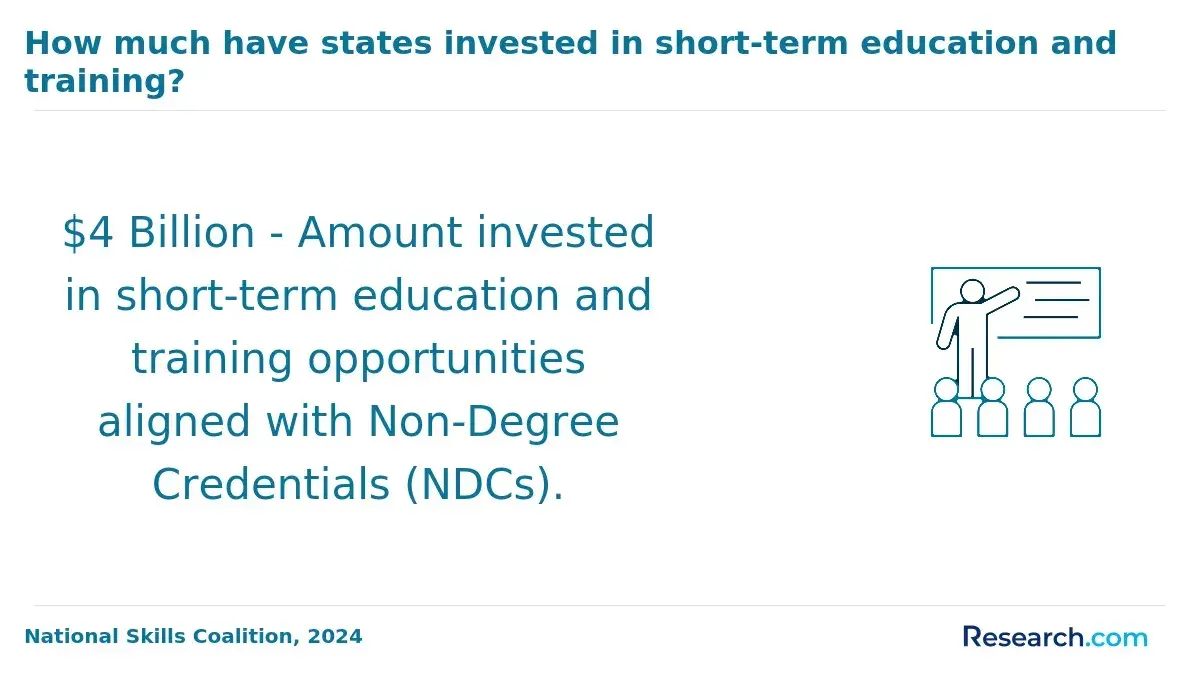
Professional artificial intelligence degrees usually combine technical coursework with applied training. The strongest programs do more than explain AI concepts; they require students to build, test, evaluate, and communicate AI solutions in realistic settings.
Prospective students should review the curriculum for both depth and practice. A program that lists AI topics but lacks labs, projects, or model deployment experience may not provide the job-ready preparation many students expect.
- Core AI coursework: Common subjects include machine learning, data structures, algorithms, probability, statistics, and model evaluation. These courses help students understand how AI systems are designed, trained, and tested.
- Programming and software tools: Students often work with programming languages, libraries, and development environments used in AI practice. Practical coding experience is essential for turning theory into functioning systems.
- Practical training requirements for AI degrees: Hands-on projects, labs, internships, simulations, and capstones may cover natural language processing, computer vision, robotics, predictive analytics, or recommendation systems. These experiences help students build portfolio evidence for employers.
- Ethics and governance: Courses in AI ethics, responsible deployment, bias, privacy, governance, and compliance help students understand the risks of AI systems and the importance of accountability.
- Interdisciplinary exposure: Programs may include computer science, mathematics, engineering, data science, business, healthcare, or policy topics depending on the degree’s focus.
- Career application and outcome focus: Many professional programs connect coursework to applied settings such as healthcare, finance, technology, manufacturing, cybersecurity, or public-sector analytics.
What to look for in the curriculum
- Capstone or final project: A strong capstone can demonstrate end-to-end AI problem-solving, from data preparation to model evaluation and presentation.
- Model deployment: Programs that include deployment, monitoring, and production workflows may better prepare students for industry roles.
- Team-based work: AI projects often involve collaboration among engineers, analysts, product leaders, compliance teams, and domain experts.
- Ethical review: Students should learn to identify bias, privacy risks, misuse, and limitations of AI outputs.
Students comparing accessible advanced degree models in other fields may review affordable EdD programs as an example of how online and professional graduate programs can balance flexibility, applied coursework, and structured academic requirements.
How Much Do Professional Artificial Intelligence Degrees Cost?
Professional artificial intelligence degrees can represent a major financial commitment. On average, tuition for these programs ranges from $15,000 to $50,000 per year, with total costs sometimes exceeding $60,000 to $100,000. The final cost depends on school type, program length, delivery format, residency status, fees, and whether the student studies full time or part time.
Students should calculate the full cost of attendance, not just tuition. A lower advertised tuition rate may become less attractive if the program has high fees, limited financial aid, expensive technology requirements, or fewer career services.
- Tuition fees: Tuition is usually the largest expense and varies by institution, reputation, program length, and online or campus format.
- Books and materials: Students may need textbooks, digital learning materials, software licenses, cloud computing access, or specialized tools.
- Living expenses: On-campus students should account for housing, food, transportation, relocation, and local cost of living.
- Technology fees and lab access: Some AI courses require access to specialized computing environments, labs, data platforms, or cloud resources.
- Opportunity cost: Students who reduce work hours or pause employment should include lost income in their financial planning.
How to judge value
- Compare total program cost with your realistic target roles, not just broad AI salary headlines.
- Ask whether the program includes career coaching, employer connections, internships, or portfolio support.
- Check whether online students receive the same access to faculty, labs, and career services as campus students.
- Review completion time because a longer program may increase both tuition and opportunity cost.
Students still exploring flexible academic options may compare broader online college programs to understand how format, workload, and cost differ across degree types. The cost of AI professional degree programs continues to evolve, so prospective students should request current tuition, fee, and aid details directly from each school.
Do Professional Artificial Intelligence Degrees Qualify for Financial Aid?
Many professional artificial intelligence degrees can qualify for financial aid if they are offered by an eligible accredited institution and meet applicable program requirements. Financial aid eligibility depends more on the school, program status, enrollment level, and student eligibility than on whether the degree uses the word “professional.”
Recent studies show that over 40% of graduate students in STEM fields, including artificial intelligence, rely on some form of financial aid to support their education. Because AI programs can be expensive, students should confirm aid options before enrolling.
Federal funding
- Myth: Professional artificial intelligence degrees are ineligible for federal financial aid because they are not traditional academic programs.
- Fact: Many degree programs may qualify for federal aid when the institution is accredited and the program meets federal guidelines. Graduate students commonly review federal loan options; Pell Grants are generally associated with undergraduate eligibility, so students should confirm program-specific eligibility through the school’s financial aid office.
Scholarships and employer aid
- Myth: Students pursuing professional AI degrees cannot benefit from scholarships or employer tuition assistance.
- Fact: Students may find scholarships for STEM, computer science, data science, engineering, or AI-related study. Some employers also offer tuition reimbursement, especially when the degree connects to current or future job responsibilities.
Questions to ask before enrolling
- Is the institution accredited by a recognized accreditor?
- Is this specific AI program eligible for federal financial aid?
- Are online students eligible for the same aid as campus students?
- Does the school offer graduate assistantships, scholarships, payment plans, or employer partnership discounts?
- Will part-time enrollment affect aid eligibility?
Students should avoid assuming that every online, certificate, or professional-format AI program qualifies for the same aid. The safest step is to request written confirmation from the financial aid office and compare net cost after scholarships, grants, employer support, and loans.
Are Professional Artificial Intelligence Degrees Required for Certain Careers?
Professional artificial intelligence degrees are not universally required for AI careers. Demand for AI specialists continues to rise rapidly, exceeding 30% growth annually, but employers often evaluate candidates based on a mix of technical skills, project experience, domain knowledge, education, and evidence of applied problem-solving.
The key question is not “Do AI jobs require an AI degree?” but “What qualifications does my target role and industry require?” A healthcare AI role, financial risk modeling role, robotics role, or machine learning engineering role may each have different expectations.
Required licensure
- Myth: A professional AI degree is always needed to obtain licensure in AI jobs.
- Fact: Licenses usually apply to regulated sectors such as healthcare or engineering, not to AI broadly. Licensure depends on the profession and jurisdiction, not on an AI credential alone.
Specialized roles
- Myth: AI roles in all industries require a dedicated professional AI degree.
- Fact: Many specialized positions require domain-specific education, certifications, or experience in addition to AI knowledge, especially in fields such as finance, healthcare, engineering, and cybersecurity.
Career eligibility
- Myth: Without a formal AI degree, candidates cannot access most AI careers.
- Fact: Many AI professionals enter the field through computer science, data science, statistics, engineering, analytics, software development, research experience, portfolios, or employer-based training.
When the degree can help
- When job postings consistently request a graduate degree in AI, computer science, data science, or a related field.
- When the applicant lacks formal academic evidence of advanced technical ability.
- When the program provides strong projects, internships, or employer connections.
- When the student wants to move into more specialized AI work from a related technical role.
Students should use job descriptions as the main guide. Reviewing several postings for target roles can reveal whether employers prioritize a professional AI degree, a related technical degree, certifications, cloud experience, programming skill, or a portfolio of deployed projects.
Do Professional Artificial Intelligence Degrees Lead to Higher Salaries?
A professional artificial intelligence degree can improve earning potential, but it does not guarantee a higher salary. Salary outcomes depend on role, industry, location, prior experience, technical depth, portfolio quality, employer demand, and the student’s ability to apply AI skills in business or technical contexts.
The degree may be financially worthwhile when it helps a student qualify for roles that were previously out of reach, move into a higher-paying technical specialty, or gain credibility for advancement. It may be less valuable if the student already has strong AI experience and only needs a targeted certification or portfolio update.
Salary guarantee
- Myth: Earning a professional artificial intelligence degree ensures a higher salary automatically.
- Fact: The degree can improve earning possibilities, but salary growth depends on combining education with relevant skills, experience, and demonstrated results.
Career advancement
- Myth: A professional AI degree is required to access leadership or specialized technical positions.
- Fact: The degree can strengthen qualifications, but advancement also depends on performance, project leadership, communication, domain expertise, and technical execution.
Financial return
- Myth: The long-term salary benefits of a professional AI degree always surpass the program's costs.
- Fact: Financial outcomes vary widely based on tuition, debt, employer support, career stage, industry demand, and geographic market.
How to estimate return on investment
- Compare the total cost of the degree with salary ranges for specific roles you are targeting.
- Review whether graduates move into roles you actually want, not just whether the program advertises AI career outcomes.
- Consider whether employer tuition assistance can reduce debt and improve return.
- Evaluate alternatives such as certificates, self-directed projects, internal training, or a related degree in computer science or data science.
The strongest salary case usually comes from pairing the degree with practical experience, a credible project portfolio, and skills that employers can immediately use.
What Graduates Say About Their Professional Artificial Intelligence Degree
- : "Pursuing the professional artificial intelligence degree was a game-changer for me. The flexibility to learn at my own pace allowed me to balance work and study effectively, and with an average cost of attendance that felt justified by the quality, it was a smart investment. Since graduating, I've seen tangible growth in my career opportunities and confidence in tackling complex AI challenges. — Louie"
- : "Deciding to enroll in a professional artificial intelligence degree program was a thoughtful step toward future-proofing my career. The program's flexible structure fit perfectly with my busy schedule, making it manageable alongside my job. Reflecting on the experience, the cost was reasonable considering the depth of knowledge I gained, which has since opened doors to advancements I hadn't previously imagined. — Jericho"
- : "As a working professional, the decision to pursue a professional artificial intelligence degree stood out because of its practical application and adaptable format. The curriculum's flexibility allowed me to continue my job without interruption, and despite the average tuition, the ROI has been worthwhile given the significant impact it has made on my professional trajectory. I now approach my work with enhanced insight and expertise. — Mandy"
Other Things You Should Know About Artificial Intelligence Degrees
Professional artificial intelligence degrees in 2027 refer to advanced educational programs focused on developing specialized skills in AI. While not universally classified as professional degrees, some institutions consider them professional degrees due to their practical, industry-focused curriculum designed to enhance career readiness in AI fields.
With a 2027 AI degree classified as a professional degree, graduates can pursue roles in AI development, robotics engineering, data science, or machine learning. Depending on specialization and experience, they might work in technology firms, research institutions, or sectors like healthcare and finance.
References
- Your Guide to Artificial Intelligence (AI) Degrees https://www.coursera.org/articles/artificial-intelligence-degrees
- Bachelor in Management and Artificial Intelligence https://www.kozminski.edu.pl/en/programs/undergraduate-programs-bachelor/bachelor-management-and-artificial-intelligence
- Why study Artificial Intelligence? Top 7 reasons... https://isc.sussex.ac.uk/blog/why-study-artificial-intelligence
- AI Myths vs. Facts: What Every Business Leader Needs to Know https://www.bdo.com/insights/advisory/ai-myths-vs-facts-what-every-business-leader-needs-to-know
- How to learn artificial intelligence (AI): the ultimate guide for beginners https://www.walbrook.ac.uk/subjects/ai/artificial-intelligence-guide/
- AI-Proof Jobs: Myth or Reality? - Clover Infotech https://www.cloverinfotech.com/ai-proof-jobs-myth-or-reality/
- AI Myths Debunked: True & Interesting Facts About AI – 365 Data Science https://365datascience.com/trending/ai-myths-debunked/
- AI in Coding Careers: Myths vs Realities | Course Report https://www.coursereport.com/blog/ai-in-coding-careers-myths-vs-realities-with-fullstack-academy
- Top 14 paid AI courses in 2025 | Uxcel https://uxcel.com/blog/top-paid-ai-courses
- Admission requirements https://www.buas.nl/en/programmes/applied-data-science-artificial-intelligence/admission-requirements


