2027 Online SLP Program Fees Beyond Tuition: What to Include in Your School Comparison

Co-Founder and Chief Data Scientist

Reviewed by Rhea Paul, PhD
SLP Education & Research Expert
An online speech-language pathology program can look affordable until required fees, clinical travel, software, and enrollment charges are added to the published tuition figure. This guide is for prospective SLP graduate students who want an apples-to-apples school comparison before accepting an offer.
You will learn which costs are mandatory, which vary by location and clinical placement, and how to build a realistic out-of-pocket estimate instead of relying on a per-credit tuition rate alone.
Key Things You Should Know
- Compare the full cost of attendance, not tuition alone: mandatory institutional fees, clinical requirements, travel, technology, books, and living costs can differ substantially between otherwise similar online SLP programs.
- Clinical education is often the largest non-tuition variable because students may pay for background checks, health clearances, liability coverage, transportation, housing for placements, and travel to required residencies.
- Use program cost to evaluate value, but not as a salary promise: the U.S. Bureau of Labor Statistics reports a $97,870 median annual wage for speech-language pathologists in May 2025 and projects 17% employment growth from 2025 to 2035.
What fees beyond tuition should online SLP students compare?
Beyond-tuition fees are charges and expenses that are not included in the advertised tuition rate. Some are billed by the university, while others are paid to third parties or arise because clinical education requires in-person participation. A school with lower tuition is not automatically less expensive if it shifts more costs to students.
Start by separating mandatory billed charges from required but externally paid expenses. This distinction helps you identify what the university controls and what may change based on your location, placement assignment, and personal circumstances.
| Cost category | Typical examples | How predictable it is | Why it matters in a comparison |
| University-billed fees | Application, enrollment, technology, student services, graduation, course, and distance-learning fees | Usually published, but may change by academic year | Can make a lower per-credit rate misleading |
| Clinical compliance costs | Background check, drug screening, immunizations, CPR certification, liability insurance, fingerprints, health insurance | Varies by placement site and state | Often required before practicum begins |
| Travel and residency costs | Transportation, lodging, meals, parking, and time away from work | Highly variable | May be the largest non-billed expense |
| Learning materials | Textbooks, testing protocols, software, headset, webcam, and clinical apparel | Partly predictable | Some courses require specialized materials |
| Living and opportunity costs | Childcare, reduced work hours, internet service, and lost earnings during intensive placements | Personal and location-specific | Important for affordability even when not billed by the school |
When researching online SLP graduate programs, request each institution's current tuition-and-fee schedule and ask whether every required charge is included in its published estimate. Compare the same enrollment pattern at every school: total required credits, expected terms of attendance, residency requirements, and clinical sequence.
Which program charges are most common in online speech pathology programs?
Most online SLP students encounter a mix of one-time, per-term, per-credit, and course-specific charges. The label matters less than whether the charge is required and how often it is assessed. For example, a modest fee charged each term may add more to a part-time student's total than to a student who finishes on a full-time schedule.
The following charges deserve a line-by-line review on each school's billing page and graduate catalog.
- Application and enrollment fees: Charges due before admission or when a student confirms enrollment; application-fee waivers may be available but should not be assumed.
- Student services and activity fees: Per-term charges that may support advising, wellness services, libraries, recreation, or student organizations, including services online students may use differently.
- Technology and distance-learning fees: Charges for learning platforms, virtual proctoring, help-desk access, or online course delivery.
- Course, lab, clinic, or materials fees: Charges tied to specific courses, simulation activities, clinical labs, or consumable supplies.
- Graduation, records, and credential fees: Charges for degree conferral, transcripts, diploma processing, or final clearance.
- Payment-plan or late-payment fees: Avoidable charges that can arise if billing dates and aid disbursement timing do not align.
A useful comparison is not "Which school has fewer fees?" but "What will I be required to pay across the entire degree?" Ask whether a listed fee applies to online graduate students, whether it is assessed every term including summers, and whether it is included in the program's financial-aid cost-of-attendance budget.
How do practicum and placement costs affect total program price?
Clinical practicum is essential preparation for SLP licensure, but it can make the total cost of an online program difficult to predict. Online delivery does not mean fully remote clinical education. Students generally complete supervised clinical experiences in person, and a program's placement model determines how much financial and logistical risk a student carries.
Programs may arrange placements, assist students in identifying sites, or expect students to participate heavily in securing eligible sites. None of these approaches guarantees that a placement will be close to home, available at a preferred time, or compatible with full-time employment. Before enrolling, examine how each school manages placements and whether it has restrictions in your state.
| Placement expense | Why it may occur | Comparison question |
| Compliance documentation | Clinical sites may require screenings, immunizations, training, or insurance evidence | Which requirements are paid by the student, and how often must they be renewed? |
| Transportation and parking | Placements may be outside a student's immediate area or require frequent commuting | Can the school estimate the usual travel radius or confirm whether a local placement is assured? |
| Temporary housing and meals | An externship, intensive, or residency may require time away from home | How many required in-person days should students expect, and where are they typically held? |
| Lost wages or childcare | Clinical schedules may run during standard daytime work hours | Are placement hours flexible, and when do students usually begin full-time clinical work? |
| Professional supplies | Students may need apparel, identification, clinical tools, or site-specific items | Which supplies are required before the first placement? |
Do not evaluate clinical expenses separately from program design. If speed is a priority, compare the required campus and clinical calendar alongside 5-year speech pathology programs; a faster route can reduce time in school, but a compressed sequence may make outside employment harder during intensive clinical terms.
A practical red flag is a school that gives only a general statement that placements are "supported" without explaining student responsibilities, geographic limits, timing, and costs. Get answers in writing and retain them with your comparison worksheet.
Which technology and course delivery fees matter most for online SLP study?
Technology costs are not limited to a laptop. Online SLP coursework may involve live video instruction, recorded clinical demonstrations, telepractice activities, secure testing, virtual simulations, and communication with supervisors. The total depends on whether the school includes software access in tuition or bills it through a technology or course fee.
Ask the program for its current technical requirements before replacing equipment. A reliable computer, current operating system, broadband connection, webcam, microphone or headset, and a quiet private space are common baseline needs. Some students also need a backup internet plan because missed synchronous sessions or disrupted telepractice activities can create academic problems.
Pay particular attention to software that is temporary versus software students must purchase. Programs may provide access to learning-management systems, video-conferencing platforms, digital libraries, virtual simulation systems, and proctoring services. Assessment platforms, transcription tools, or specialized clinical resources may be handled differently by course and faculty member.
Compare delivery requirements, not just fees. A program with a slightly higher technology charge may be easier to manage if it provides needed software, technical support, and clear live-session schedules. Conversely, low technology fees do not compensate for frequent synchronous classes that conflict with work hours or require a costly home-office setup.
How should students compare clinical, lab, and residency expenses?
Residencies, skills intensives, on-campus orientations, and clinical labs can be academically valuable, yet they are often excluded from a headline online-program price. Treat every required in-person event as a separate cost category, even if the event itself has no registration fee.
This table helps distinguish direct institutional charges from the personal expenses that can accompany required attendance.
| Requirement | Potential school charge | Potential student-paid expense | What to verify |
| On-campus residency | Course or residency fee | Airfare or mileage, hotel, meals, parking, childcare | Number of visits, location, length, and whether dates are fixed |
| Clinical skills lab | Lab or materials fee | Local travel, clinical apparel, supplies | Whether labs occur locally, on campus, or at an assigned site |
| Simulation experience | Simulation-platform fee | Computer upgrades or reliable internet | Whether access is included and how long it remains available |
| Externship or practicum | Clinical course tuition or placement fee | Commute, parking, health documentation, lost work time | Placement process, distance expectations, and schedule control |
For each school, map the required events by term and build a travel reserve rather than estimating one annual trip. A program that requires several short visits may cost more than one longer residency if flights, lodging, and work absences are involved.
Students with caregiving duties, limited paid time off, or rigid work schedules should give extra weight to timing certainty. The least expensive program on paper may not be the lowest-cost option if required travel is announced late or clinical schedules force unpaid leave.
What administrative and enrollment fees can change the real cost?
Administrative fees are easy to overlook because they are often small relative to tuition, appear in different offices' schedules, or are assessed after admission. Their impact grows when charges recur every term or when a student extends enrollment because of a leave, course repeat, delayed placement, or part-time schedule.
Review the following administrative items before making a deposit.
- Seat deposit: Determine whether it is refundable, credited toward tuition, and due before financial aid is finalized.
- Matriculation and orientation charges: Ask whether new-student onboarding has a required fee beyond the application charge.
- Continuous-enrollment fees: Some programs charge students who are maintaining status while completing a clinical requirement, thesis, remediation, or leave process.
- Registration and late-add fees: Check charges connected to schedule changes, late payment, reinstatement, or course withdrawal.
- Health insurance requirements: Some clinical sites require proof of coverage, and university plans may be charged unless students submit a waiver when eligible.
- Transcript and verification costs: Budget for records needed for scholarships, licensure, employment, and later credentialing steps.
Ask whether any fee can be waived for online students or students who already carry qualifying health insurance. Do not assume a fee is optional simply because it is described as a service, activity, or resource charge; confirm its status with the bursar or student accounts office.
How do textbooks, software, and assessment tools add to expenses?
Books and course materials are often variable costs, but they are still important in an SLP program because clinical coursework may use specialized texts, phonetic resources, case materials, screening instruments, and digital platforms. Some materials are reusable across courses; others are access codes or consumables with limited access periods.
Request a recent book list or sample syllabus for early clinical and assessment courses. It is reasonable to ask whether earlier editions, library access, rentals, or inclusive-access programs are permitted. However, do not buy used assessment materials or copied protocols unless the program confirms they are appropriate, current, and legally usable in training.
Software may be bundled into tuition or billed separately. Compare the duration of access, whether licenses remain active through clinical training, and whether the program provides tools needed for telepractice or data collection. These details matter more than a generic "digital materials" estimate.
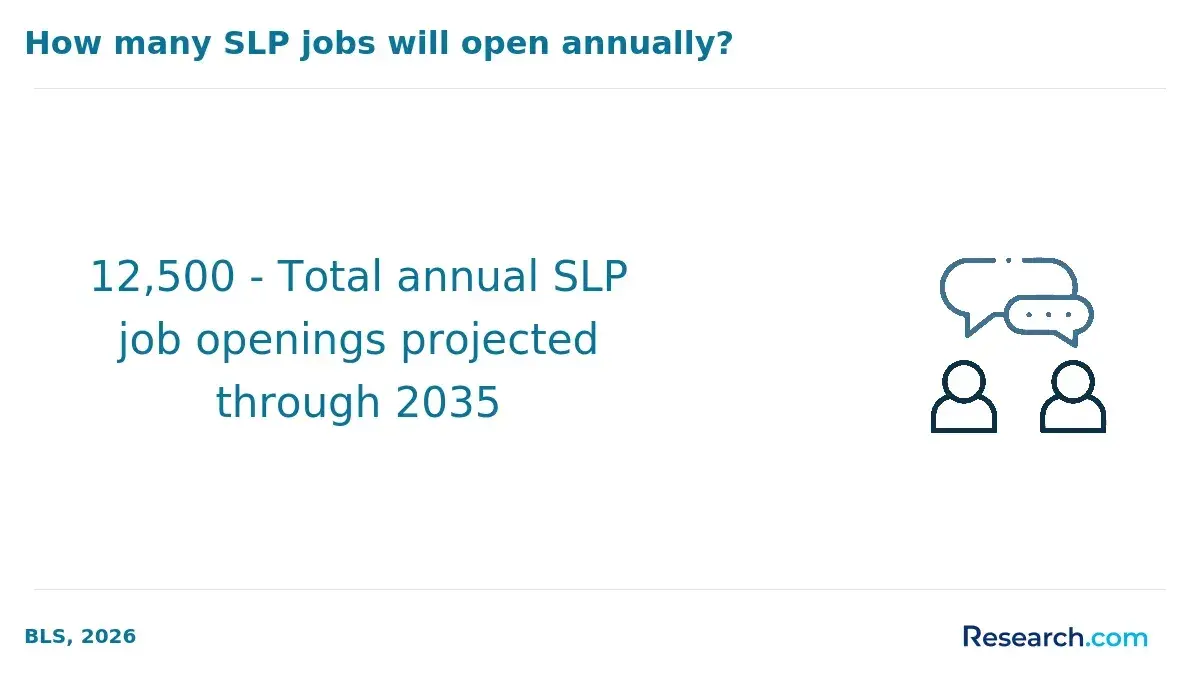
Career prospects may help frame the investment, but they should not replace a personal budget. The BLS projects about 12,500 openings for speech-language pathologists each year on average from 2025 to 2035; review this outlook alongside local licensure requirements, your intended setting, and realistic borrowing. For broader earnings context, see this guide to speech therapist salary.
Which hidden costs appear in school comparisons most often?
The most common "hidden" costs are not necessarily concealed by a school; they are expenses students fail to place in the same comparison because they are paid at different times or to outside vendors. The risk is highest when a student compares one school's annual tuition to another school's per-credit price, without accounting for program length and requirements.
Watch for these comparison mistakes before treating a program as the lower-cost choice.
- Comparing advertised tuition without adding mandatory per-term, clinical, technology, and graduation fees.
- Assuming an online format eliminates campus travel, residency, or in-person clinical requirements.
- Using a school's general cost-of-attendance estimate without checking whether it reflects graduate SLP clinical expenses.
- Ignoring the financial effect of daytime practicum hours, reduced employment, childcare, or a longer completion timeline.
- Assuming a local clinical site will be available without confirming the school's placement approach and state authorization.
- Borrowing for optional lifestyle spending without first identifying required academic and clinical costs.
- Choosing solely on tuition before checking accreditation, licensure alignment, curriculum, and student-support capacity.
Cost should never be separated from eligibility. An inexpensive program is not a good value if it cannot enroll students in your state, lacks appropriate accreditation status, or does not support your intended pathway to state licensure. Confirm those issues before spending application fees or making a deposit.
How can students estimate total out-of-pocket cost before enrolling?
Build one estimate for each school using the same assumptions: identical enrollment pace, the same living arrangement, comparable travel assumptions, and the same expected work schedule. Your estimate will not be exact, but it will reveal where a low tuition figure masks higher mandatory or personal costs.
Use the following process to create a decision-ready comparison.
- Confirm the program's total required credits, estimated number of terms, and current tuition rate that applies to you.
- Add every mandatory institutional fee, identifying whether it is one-time, per credit, per course, or per term.
- List clinical compliance, books, equipment, software, residency travel, and placement transportation as separate lines.
- Estimate work-related effects, including reduced hours, unpaid leave, childcare, and backup internet or commuting needs during clinical terms.
- Subtract confirmed grants, scholarships, employer assistance, savings, and other non-loan funding; do not subtract aid that is only possible or pending.
- Calculate both the full-program total and the cash needed each term so you can assess payment timing.
- Recheck the estimate after admission using the official financial-aid offer and the school's latest fee schedule.
The basic formula is: tuition + mandatory school fees + required third-party costs + travel and living effects − confirmed gift aid and employer support = estimated net out-of-pocket cost. Keep loans separate from grants and scholarships. Loans can cover costs now, but they do not reduce the amount you ultimately repay.
Admissions selectivity and affordability are separate questions. If you are developing a balanced application list, review the easiest online SLP programs to get into while still applying the same total-cost and accreditation checks to every option.
Which questions should you ask schools before comparing final prices?
Ask questions in writing whenever possible, particularly about fees, clinical placements, and residency travel. Admissions teams can explain general policy, while the bursar, financial-aid office, clinical education office, and program director may each hold different pieces of the final answer.
These questions help turn a published price into a comparable estimate.
- What is the current total tuition for all required credits, and is my tuition rate guaranteed for the program length?
- Which mandatory fees are charged per term, per credit, per course, or only once?
- What program-specific clinical, lab, simulation, technology, and graduation fees should I expect?
- How many in-person residencies, orientations, skills labs, or campus visits are required, and when are dates typically announced?
- Does the program arrange clinical placements, and what responsibility does the student have for finding an eligible site?
- What clinical compliance costs must students pay, including insurance, screenings, immunizations, certifications, and background checks?
- Can students in my state enroll, complete required placements, and pursue the relevant professional licensure pathway after graduation?
- What is the normal clinical schedule, and when should working students expect reduced availability for outside employment?
- Which textbooks, assessment tools, hardware, and software are included, rented, or purchased separately?
- What scholarships, assistantships, employer partnerships, payment plans, and emergency funding are available to online graduate students?
A school that answers these questions clearly is easier to evaluate, but clarity alone is not a promise that costs will never change. Revisit the published catalog, fee schedule, and enrollment agreement before committing, and maintain a contingency fund for variable clinical and travel expenses.
Other Things You Should Know About Speech Language Pathology
Financial aid may cover eligible education costs up to the school's approved cost of attendance, but coverage rules vary. Ask the financial-aid office whether required residency travel, clinical compliance items, equipment, and transportation can be documented for a budget adjustment. Approval is not automatic, and additional loan eligibility still means additional repayment responsibility.
Not necessarily. Online study may reduce relocation and daily campus commuting costs, but it can add technology charges, required travel, and placement-related expenses. Compare each program's complete required cost and your likely living and work situation rather than assuming one format is always less expensive.
Choose the program that offers the strongest fit after you confirm total cost, accreditation status, state eligibility, clinical placement model, scheduling, and support. A lower tuition rate may be valuable, but it is not a complete measure of affordability or professional readiness.
Start before applying. Application costs, transcripts, and prerequisite work can occur early, while compliance costs and travel may arise before clinical placements begin. A term-by-term budget helps you avoid treating predictable clinical expenses as emergencies.
References
- Online Graduate Program Tuition & Financial Aid - Baylor CSD https://csd.robbins.baylor.edu/graduate/masters-programs/online-masters-program/tuition-financial-aid
- 2026 Most Affordable Online Speech Pathology Master's... https://www.onlineu.com/most-affordable-colleges/speech-pathology-masters-degrees
- How Much Does It Cost to Become a Speech Pathologist https://www.advancedtherapyclinic.com/blog/how-much-does-it-cost-to-become-a-speech-pathologist