2027 BCBA vs School Psychologist: Career Comparison

Co-Founder and Chief Data Scientist
If you want to work with children, behavior, learning, or mental health, the choice between becoming a BCBA and becoming a school psychologist is not just a job-title decision. It affects the graduate degree you choose, how long training takes, where you can work, what services you are legally allowed to provide, and how your career may grow over time.
A Board Certified Behavior Analyst (BCBA) is trained to assess behavior and design behavior-change interventions, often for children with autism, developmental disabilities, or significant behavioral needs. A school psychologist has broader preparation in assessment, learning, mental health, counseling, and school-based systems. Both roles can support students, but they do so through different professional lenses.
This guide explains the practical differences between BCBA and school psychologist careers: education requirements, certification and licensure, school-based responsibilities, salary outlook, job demand, program options, and admissions expectations. It is designed for prospective graduate students, career changers, educators, psychology majors, and anyone comparing applied behavior analysis with school psychology as a long-term career path.
Key Things You Should Know
- BCBAs specialize in applied behavior analysis, focusing on behavioral interventions, earning a median annual salary of around $70,000 as of 2025, with growth projected at 18% through 2030.
- School psychologists provide comprehensive mental health assessments and support in educational settings, earning a median salary near $80,000 with job growth estimated at 8% over the next decade.
- BCBA roles often require certification and a master's degree emphasizing behavior analysis, while school psychologists typically need a specialist-level degree (Ed.S.) or doctorate with state licensure.
What is the difference between a BCBA and a school psychologist?
The main difference is scope. A BCBA specializes in applied behavior analysis, while a school psychologist is trained more broadly in psychological assessment, learning, mental health, consultation, and school-based intervention. Both may work with students who have behavioral challenges, but they approach those needs from different professional frameworks.
A BCBA focuses on how behavior is learned, maintained, measured, and changed. In schools, clinics, homes, or community settings, BCBAs may conduct functional behavior assessments, design behavior intervention plans, monitor data, train staff or caregivers, and help students build communication, social, academic, or daily living skills. Their work is especially common in autism services and developmental disability support.
A school psychologist focuses on how cognitive, emotional, behavioral, social, and educational factors affect learning. In a school district, they may conduct psychoeducational evaluations, identify learning disabilities, support Individualized Education Programs (IEPs), provide counseling or crisis support, consult with teachers, and help schools address student mental health and academic barriers.
How the two roles compare
- Primary focus: BCBAs focus on behavior assessment and intervention; school psychologists focus on evaluation, mental health, learning, and school systems.
- Common populations: BCBAs often work with children with autism or developmental disorders; school psychologists work with a wider student population, including students with learning, emotional, behavioral, and mental health concerns.
- Typical work product: A BCBA may create a behavior intervention plan; a school psychologist may complete a psychoeducational evaluation or support an IEP eligibility decision.
- Training path: BCBAs complete graduate coursework, supervised fieldwork, and the BACB certification exam. School psychologists usually complete a specialist or doctoral degree in school psychology plus state licensure or certification.
- Work settings: BCBAs may work in schools, clinics, homes, hospitals, private practice, or organizations. School psychologists primarily work in public or private schools, though some work in clinics, universities, or private practice depending on training and state rules.
Salary ranges can overlap. BCBAs earn about $75,000 to $85,000 annually, while school psychologists have a median salary near $84,940. The better choice depends less on average pay and more on the type of work you want to do every day. Choose BCBA if you want a focused behavior-analysis role with measurable intervention plans. Choose school psychology if you want a broader school-based role involving assessment, consultation, counseling, and student support systems.
Students exploring behavior-analysis credentials can compare affordable options through online BCBA certification pathways.
What are the educational requirements to become a BCBA?
To become a BCBA, candidates must meet education, supervised fieldwork, examination, and continuing education requirements set by the Behavior Analyst Certification Board. The typical path starts with at least a master’s degree in behavior analysis, psychology, education, or a related discipline from an accredited institution.
The graduate program must include coursework aligned with BACB content requirements. Core topics generally include behavioral principles, ethics, behavior assessment, intervention design, measurement, data analysis, research methods, and supervision. Students should confirm before enrolling that the program’s coursework fits current BACB requirements, because a general psychology or education degree may not be enough by itself.
BCBA candidates also complete supervised experience totaling around 1,500 hours. This fieldwork is where students learn to apply behavior analysis with real clients or students under qualified supervision. Depending on the program and placement, fieldwork may occur in schools, autism clinics, behavioral health agencies, home-based service programs, or other approved settings.
Typical BCBA preparation steps
- Earn a qualifying graduate degree in behavior analysis, psychology, education, or a related field.
- Complete BACB-aligned graduate coursework.
- Accumulate supervised fieldwork hours under an eligible supervisor.
- Apply for and pass the BCBA exam.
- Maintain certification through continuing education every two years.
Most students should plan for about 2-3 years of graduate study plus supervised experience, though timing depends on enrollment status, program format, and fieldwork availability. The field’s job growth rate is notably strong at 22%, which is an important consideration for students comparing BCBA preparation with other education and psychology careers.
Because requirements are precise, applicants should review program details carefully rather than choosing only on tuition or convenience. Programs that clearly integrate coursework, supervision planning, exam preparation, and faculty support are often better aligned with the realities of certification. For program examples, see this guide to BCBA programs.
What are the educational requirements to become a school psychologist?
School psychologists usually need a specialist-level graduate degree, most commonly an Education Specialist (Ed.S.) in school psychology. This program typically requires about 60 credit hours over 3 to 4 years after a bachelor’s degree. It is more advanced than a standard master’s degree but usually shorter and less expensive than doctoral options such as a PsyD or PhD in School Psychology.
The Ed.S. curriculum is designed for school-based practice. Students study psychological assessment, child and adolescent development, learning theory, consultation, intervention, counseling, research methods, ethics, special education law, and school systems. The goal is to prepare graduates to evaluate students, support mental health and behavior, collaborate with educators, and help schools make legally and educationally sound decisions.
Programs also require supervised clinical training. A school psychology internship often totals 1,200 hours and is a central requirement for licensure or certification in all states. Many candidates must also pass the Praxis School Psychologist exam before becoming fully credentialed.
Common school psychology training components
- Graduate degree: Usually an Ed.S., though some students pursue a PsyD or PhD.
- Coursework: Assessment, counseling, development, learning, school law, consultation, and intervention.
- Practicum and internship: Supervised experience in school or related settings, often including a 1,200-hour internship.
- Licensure or certification: State-specific credentialing, often including the Praxis School Psychologist exam.
The school psychology pathway is broader than the BCBA route. BCBAs generally focus on applied behavior analysis, while school psychologists are trained to address academic, emotional, behavioral, and mental health concerns within educational systems. Students drawn specifically to behavior analysis may also compare school psychology with flexible ABA options such as a master’s in ABA online.
Before applying, review state requirements in the state where you plan to work. Some states may require extra coursework, supervised experience, exams, or documentation beyond the Ed.S. degree.
BCBAs and school psychologists follow different credentialing systems. A BCBA earns a national professional certification through the Behavior Analyst Certification Board. A school psychologist usually needs a state-issued license or certification to practice in schools, and requirements can vary by state.
For BCBA certification, candidates typically complete a master’s degree in behavior analysis, education, or psychology; finish BACB-approved or BACB-aligned graduate coursework; complete about 1,500 supervised fieldwork hours; and pass the BCBA exam. After certification, BCBAs must complete continuing education every two years to maintain the credential.
School psychologists generally need a specialist-level or doctoral degree, such as an EdS, PsyD, or PhD in school psychology. They also complete a supervised internship of approximately 1,200 hours. Many states require the Praxis School Psychologist test and ongoing professional development. The National Association of School Psychologists offers the voluntary Nationally Certified School Psychologist (NCSP) credential, which may support mobility and professional recognition, but state licensure or certification remains the key requirement for school employment.
Credentialing differences that affect career planning
- BCBA: National certification is central, but some states may also regulate behavior analysts through licensure or related requirements.
- School psychologist: State licensure or certification is central, and moving between states may require additional steps.
- Continuing education: Both fields require ongoing professional learning, but the rules and renewal cycles differ.
- Practice boundaries: Certification or licensure determines what services you may provide, how you may advertise your role, and whether you can practice independently.
Salary data indicate the top 10% of BCBAs earn over $120,000 annually, while school psychologists’ highest salaries are around $131,470. BCBAs may achieve even higher earnings in private practice. However, salary should not be the only factor. The more important question is whether you want a credential centered on behavior analysis or a state-regulated school psychology role with broader assessment and mental health responsibilities.
Students seeking flexible ABA training options can review ABAI accredited online programs.
In schools, BCBAs and school psychologists often collaborate, but their day-to-day responsibilities are not the same. A BCBA is usually brought in for behavior-focused assessment, intervention planning, staff training, and data-based behavior support. A school psychologist is more likely to handle psychoeducational evaluation, eligibility-related assessment, counseling, consultation, crisis response, and broader student support.
A BCBA may conduct a functional behavior assessment to determine why a student is engaging in disruptive, aggressive, avoidant, or self-injurious behavior. From there, the BCBA may design a behavior intervention plan, train teachers or paraprofessionals, monitor progress data, and adjust strategies when the plan is not working. This role is highly practical and measurement-driven.
A school psychologist may evaluate a student for a suspected learning disability, intellectual disability, emotional disturbance, attention-related concern, or other educational need. They may interpret cognitive, academic, behavioral, and social-emotional data; help determine special education eligibility; support IEP teams; provide short-term counseling; and assist with schoolwide mental health or crisis procedures.
Examples of how responsibilities differ
- Behavior plan: A BCBA may design and monitor a reinforcement-based plan to reduce classroom elopement or aggression.
- Learning evaluation: A school psychologist may administer and interpret assessments to understand reading, math, cognitive, or processing difficulties.
- Teacher support: Both may consult with teachers, but the BCBA usually focuses on behavior-change procedures, while the school psychologist may address academic, emotional, and environmental factors.
- IEP involvement: Both may participate in IEP meetings, but school psychologists often play a larger role in eligibility evaluation and psychoeducational documentation.
Entry-level salaries reflect some of these differences: BCBAs earn between $55,000 and $70,000 annually, while school psychologists average around $60,880, approximately $5,880 higher. This difference stems from the broader training and licensure requirements for school psychologists, as noted by PsyD Programs & Applied Behavior Analysis Edu.
For students deciding between the two, the key question is the work itself. If you want to spend much of your time designing measurable behavior interventions, BCBA training is the more direct route. If you want to conduct evaluations, support school mental health, and work within special education decision-making systems, school psychology is usually the better fit.
BCBA and school psychologist salaries overlap, but their earning patterns differ. BCBAs may see wider variation because they work across clinics, schools, home-based agencies, private practice, supervisory roles, and specialized services. School psychologists often have more predictable salary structures, especially in public school districts, where pay may be tied to education level, years of service, union agreements, and district budgets.
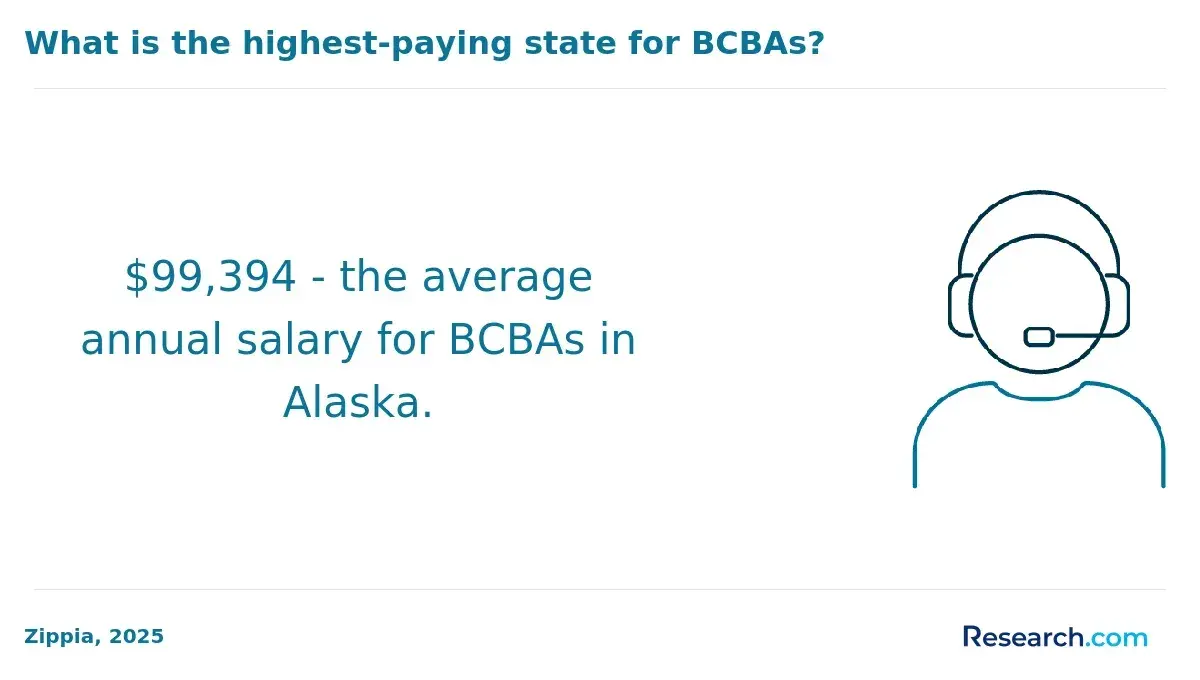
Nationally, BCBAs earn between $70,000 and $90,000 on average. In states like California, salaries rise to around $95,000, with experienced professionals making $100,000 to $130,000. BCBAs in supervisory or specialized roles typically earn above $110,000 nationally. Private practitioners average $95,000 annually, with salaries ranging from $60,000 to over $150,000.
School psychologists’ median salaries generally range from $75,000 to $85,000, but some states with robust education budgets and union support offer $95,000 or more. School psychologists holding doctoral degrees and extensive experience can surpass $100,000. In public schools, benefits such as pensions, health insurance, paid leave, and union protections may make total compensation stronger than the salary alone suggests.
Salary factors to compare
- Work setting: Private-sector BCBA roles may offer faster income growth, while public school psychology roles may offer steadier pay and benefits.
- Location: State demand, cost of living, school funding, and insurance reimbursement patterns can affect earnings.
- Experience: Supervisory, doctoral-level, or highly specialized professionals in both fields may earn more.
- Risk and stability: Private practice may offer higher upside but less predictability; district employment may offer stability but slower salary growth.
For salary-focused students, BCBA careers may provide more variability and higher upside in some private or supervisory roles. School psychology may be more attractive for those who value structured compensation, school-year schedules, and district benefits. The stronger financial choice depends on location, employer type, credentials, and tolerance for private-sector uncertainty.
The most direct BCBA preparation route is a graduate program in applied behavior analysis or behavior analysis that includes the coursework needed for certification eligibility. Students may also qualify through related graduate degrees in psychology, education, special education, or counseling if they complete the required behavior-analysis coursework and supervised experience.
Programs aligned with BCBA preparation typically cover ethics, measurement, experimental design, behavior assessment, intervention, supervision, and research methods. Many programs also help students plan supervised fieldwork, which is essential because coursework alone does not make a candidate eligible for BCBA certification.
Some universities offer a dedicated master’s in applied behavior analysis. Others offer a master’s in psychology, education, or special education with a verified course sequence or ABA concentration. Doctoral degrees are not required for BCBA certification, but they may support research, teaching, leadership, or advanced clinical roles.
Program types to consider
- Master’s in applied behavior analysis: Usually the clearest path for students who already know they want to become BCBAs.
- Master’s in psychology with ABA coursework: May provide broader psychology training while still supporting certification requirements if the coursework qualifies.
- Master’s in education or special education with ABA coursework: Often useful for teachers or school-based professionals who want behavior-analysis expertise.
- Postgraduate ABA coursework: May fit students who already hold a relevant graduate degree but need the required BCBA coursework.
Applicants must complete 1,500 to 2,000 hours of supervised experience, depending on the supervision model. Because supervision quality can affect both exam readiness and professional competence, students should ask programs how fieldwork is arranged, who provides supervision, and whether placements are available in the student’s preferred setting.
BCBA earning potential varies by work setting. Private practitioners average $95,000 annually, with salaries ranging from $60,000 to over $150,000. In contrast, school psychologists tend to have steadier but less variable income (PsyD Programs, 2026). This makes program choice important: students who want flexible, behavior-focused employment should prioritize programs with strong applied training and supervision support.
Demand exists for both BCBAs and school psychologists, but the job markets operate differently. BCBA demand is driven by the expansion of autism services, behavioral health programs, school-based behavioral support, and organizational applications of behavior analysis. School psychologist demand is driven by special education requirements, student mental health needs, evaluation workloads, and district staffing needs.
BCBAs often have more employment variety. They may work in autism clinics, schools, home-based service agencies, hospitals, early intervention programs, private practice, or organizational behavior management. Employers highly value specialized skills, especially BCBAs with expertise in Organizational Behavior Management, who can earn $15,000 to $25,000 more than those in standard roles, reflecting strong career advancement potential (PsyD Programs, 2026).
School psychologists have strong relevance in public education because schools need qualified professionals to conduct evaluations, support special education services, respond to mental health concerns, and consult with teachers and families. However, hiring can depend heavily on school funding, state policy, district budgets, and regional shortages.
Job market trade-offs
- BCBA advantage: Greater sector flexibility, especially across clinical, school, home-based, and organizational settings.
- School psychologist advantage: Stable school-based demand, often connected to legally required evaluation and student support services.
- BCBA limitation: Job quality can vary by agency, supervision model, caseload, and reimbursement environment.
- School psychologist limitation: Roles may be constrained by district budgets, high assessment caseloads, and school-year staffing structures.
Graduates who want varied work settings and faster salary movement may prefer applied behavior analysis, especially with specialization in areas such as organizational behavior management. Those who want to work inside school systems and support students through assessment, consultation, and mental health services may find school psychology a better long-term fit. Continuing professional development is important in both fields because service models, legal expectations, and employer needs continue to evolve.
Online and campus-based ABA programs can both prepare students for BCBA certification, but the best choice depends on how you learn, where you live, and how you will complete supervised fieldwork. The delivery format matters, but it is not as important as whether the program meets certification requirements and provides strong academic and fieldwork support.
Online ABA programs are often a good fit for working adults, career changers, teachers, and students who cannot relocate. Many include asynchronous coursework, live virtual meetings, discussion boards, remote advising, and exam preparation resources. The main challenge is fieldwork: online students usually need to secure local placements and qualified supervision, which can vary in quality and availability.
Campus-based ABA programs may offer more direct faculty access, peer interaction, structured schedules, and established practicum sites through university clinics, schools, or community partners. They can be especially useful for students who want in-person mentorship or who do not already work in a setting where supervised fieldwork is available. The trade-off is less flexibility and, in many cases, the need to commute or relocate.
How to compare ABA program formats
- Certification alignment: Confirm that coursework supports BCBA eligibility requirements.
- Fieldwork support: Ask whether the program provides placements, helps arrange supervision, or expects students to find their own sites.
- Faculty expertise: Review faculty backgrounds in applied behavior analysis, ethics, assessment, autism services, supervision, and research.
- Student support: Look for advising, exam preparation, fieldwork guidance, and career services.
- Schedule fit: Online programs may suit working students; campus programs may suit students who want more structure.
Career outlook for BCBAs is strong, with 22% job growth-about three times that of school psychologists-according to PsyD Programs. Because of that demand, students should avoid choosing a program based only on speed or convenience. A program that helps you build competent, ethical practice skills is more valuable than one that only checks a coursework box.
What are the admission requirements for accredited BCBA and school psychology programs?
Admission requirements differ because BCBA and school psychology programs are built for different professional outcomes. BCBA-focused programs usually look for readiness for graduate-level behavior-analysis coursework and supervised practice. School psychology programs look for academic preparation, interpersonal maturity, assessment potential, and commitment to working with children and schools.
For BCBA certification, candidates must hold a master’s degree in behavior analysis or a related field such as psychology or education. Applicants to ABA graduate programs often submit transcripts, letters of recommendation, a statement of purpose, and sometimes a resume, interview, or background check. Required coursework follows Behavior Analyst Certification Board guidelines, and supervised fieldwork hours range from 1,500 to 2,000 under a qualified BCBA.
School psychology programs generally require a bachelor’s foundation in psychology, education, child development, or a related discipline. Admission criteria may include GRE scores, academic transcripts, letters of recommendation, relevant experience with children or schools, a personal statement, and an interview. Candidates should be prepared for coursework in research methods, child development, assessment, consultation, counseling, and educational systems. They also complete approximately 1,200 practicum and internship hours, including a full-time internship year for licensure eligibility.
What applicants should evaluate before applying
- Career fit: Choose ABA if you want behavior-analysis practice; choose school psychology if you want assessment, consultation, counseling, and school-based mental health work.
- Credential outcome: Confirm whether the program leads to BCBA eligibility, school psychologist licensure, or both only if explicitly stated.
- Fieldwork structure: Ask how placements are arranged and whether supervision meets credentialing rules.
- State rules: School psychology licensure is state-based, and ABA licensure may also apply in some states.
- Time commitment: Consider degree length, internship requirements, exam preparation, and whether you can study while working.
Structure differences highlight the distinct emphases: BCBA programs focus on experimental design and behavior intervention, while school psychology emphasizes psychological testing, counseling, and educational systems. Career advancement for BCBAs typically results in salary increases of $15,000 to $20,000 within 3 to 7 years, with supervisory roles earning between $70,000 and $90,000. This reflects clear professional growth prospects (PsyD Programs, 2026).
The strongest application strategy is to match your materials to the profession. For ABA programs, emphasize behavior-analysis interest, data-driven thinking, ethics, and relevant experience. For school psychology programs, emphasize child development, school experience, assessment readiness, collaboration, and commitment to student well-being.
Other Things You Should Know About Applied Behavior Analysis
To become a BCBA in 2027, candidates must hold a master's degree in behavior analysis or a related field, complete a verified course sequence, and earn supervised fieldwork hours. Success in the BCBA certification exam administered by the Behavior Analyst Certification Board is also required.
Most school psychologists must pass the Praxis School Psychologist exam, but state education agencies set the exact certification rules. BCBA candidates, by contrast, must pass the BACB’s BCBA certification exam after completing an approved graduate program and supervised fieldwork.
In 2027, School Psychologists typically engage more with parents and educators due to their broader role in educational settings, focusing on academic, social, and emotional development. BCBAs may collaborate extensively with educators, but their primary focus is developing behavior interventions, often with less direct interaction with parents and educators compared to School Psychologists.
- 11 Top ABA Schools That Lead to Certification in 2026 - Online ABA Programs https://onlineabaprograms.org/schools/
- BCBA Career Outlook: Essential Guide to Salary and Growth Trends https://www.hiddenlightaba.com/bcba-career-outlook-essential-guide-to-salary-and-growth-trends/
- How To Become A School Psychologist | Psychology.org https://www.psychology.org/careers/school-psychologist/
- BCBA Job Outlook in 2025 Growing Demand and Opportunities https://www.connectncareaba.com/blog/bcba-job-outlook
- How to Become a School Psychologist https://www.iona.edu/blog/how-become-school-psychologist
- BCBA Requirements: College Years Explained | Divine Steps https://www.divinestepstherapy.com/blog/bcba-exam-college-years
- Interested in a career in Educational Psychology? https://www.aep.org.uk/interested-career-educational-psychology
- How to Become a Behavior Analyst https://onlinecounselingprograms.com/mental-health-careers/how-to-become-behavior-analyst-bcba/
- 10 Best BCBA Programs & Schools (In-Person & Online) | Above and Beyond Therapy https://www.abtaba.com/blog/bcba-programs-and-schools
- How to Become a School Psychologist https://paloaltou.edu/resources/blog/how-become-school-psychologist