2027 Online SLP Master's Programs for South Carolina Residents: Eligibility, Tuition, and Clinical Placements

Co-Founder and Chief Data Scientist

Reviewed by Rhea Paul, PhD
SLP Education & Research Expert
South Carolina residents considering an online speech-language pathology master's degree need to verify more than whether classes are remote. The program must be authorized to teach students in South Carolina, hold appropriate CAA accreditation, support clinical training, and align with South Carolina licensing rules.
This guide explains how to compare online options, estimate the real cost, evaluate clinical-placement support, and avoid enrolling in a program that cannot support your professional goals.
Key Things You Should Know
- A South Carolina applicant should obtain written confirmation of state eligibility, clinical-placement support, and licensure alignment before paying an enrollment deposit.
- For clinical licensure, South Carolina generally requires a qualifying graduate degree, supervised experience, a passing Praxis examination, and completion of the clinical fellowship process; school-based practice can involve separate South Carolina educator credential requirements.
- The national median annual wage for speech-language pathologists was $97,870 in May 2025, and BLS projects 17% employment growth from 2025 to 2035, demand does not eliminate the need to choose an accredited, licensure-compatible program.
Which online SLP master's programs currently enroll South Carolina residents, and under what conditions?
There is no permanent, universal list of online SLP programs available to every South Carolina resident. Enrollment eligibility can change when a university updates its state authorization, clinical-placement capacity, cohort model, or professional-licensure disclosure. A school's admissions representative should confirm eligibility for your intended start term in writing.
Several institutions have established distance or hybrid master's pathways in speech-language pathology that prospective South Carolina students commonly evaluate. The comparison below identifies the questions that matter more than a program's marketing label.
| Program to investigate | Distance-learning model | What a South Carolina applicant must confirm | Important trade-off |
| Emerson College | Online graduate SLP pathway with clinical education | Current South Carolina enrollment authorization, required immersions, and local placement process | Private-university tuition may be materially higher than public in-state options |
| New York University | Online speech-language pathology graduate pathway with clinical components | Current state eligibility, live-session schedule, travel expectations, and clinical-site approval process | National delivery does not mean a placement close to home is assured |
| Baylor University | Online/hybrid clinical communication sciences and disorders graduate pathway | South Carolina authorization, residency requirements, prerequisite rules, and placement responsibility | Cohort pacing can limit flexibility for students balancing full-time work |
| James Madison University | Distance-oriented graduate SLP option or related delivery pathway, subject to current availability | Whether the applicable cohort accepts South Carolina residents and how travel is handled | Availability and format can vary by cohort and program policy |
Use this list as a starting point rather than a guarantee of admission or state eligibility. Programs may also require communication-sciences-and-disorders prerequisites, a minimum GPA, interviews, observation hours, background checks, immunizations, and the ability to attend daytime clinical assignments.
When comparing an online SLP program, prioritize verified authorization and clinical feasibility over a broad claim that the degree is "fully online." Clinical practicum cannot be completed entirely asynchronously from home.
Before applying, ask each admissions office these decision-critical questions:
- Are South Carolina residents eligible for my intended cohort and start date?
- Does the program's current curriculum meet educational requirements for South Carolina SLP licensure?
- Who identifies, contracts with, and approves South Carolina clinical sites?
- How many campus visits, virtual simulations, synchronous classes, or travel-based intensives are required?
- What happens if a suitable placement is delayed or unavailable in my region?
How do licensure requirements in South Carolina affect online SLP program eligibility and curriculum?
South Carolina professional licensure is the central filter for choosing an online SLP master's program. A degree can be academically legitimate yet still be a poor fit if its accreditation status, clinical-hour design, or state disclosure does not support the education required for South Carolina licensure.
Applicants seeking clinical SLP licensure should expect to complete a qualifying master's degree in speech-language pathology or communication sciences and disorders, supervised clinical education, a national Praxis examination, and a clinical fellowship or other post-graduate supervised practice required by the state board. Requirements and application procedures can change, so applicants should verify the current rules with the South Carolina Board of Examiners in Speech-Language Pathology and Audiology before enrollment and again before graduation.
The clinical education framework used by CAA-accredited programs generally includes at least 400 total supervised clinical clock hours, including 25 guided observation hours and 375 direct client-contact hours. Programs must also ensure students demonstrate required knowledge and skills, rather than simply accumulating hours. An online format does not reduce these standards.
South Carolina residents planning to work in public schools need to distinguish professional licensure from school credentialing. A school district may require credentials administered through the South Carolina Department of Education in addition to, or in coordination with, state professional licensure. Ask a prospective employer or district human-resources office which credential applies to the role you want.
A practical way to protect your path is to obtain documentation before enrolling. Request the program's South Carolina professional-licensure disclosure, then keep a copy with your admission materials. If a representative says the program is "designed for licensure," ask whether that statement applies specifically to South Carolina and whether there are additional coursework, examination, or supervised-practice requirements.
What tuition, fees, and residency-based cost differences do South Carolina SLP students face online?
Online SLP tuition is not standardized, and the advertised figure is often incomplete. Private universities commonly charge a single distance-learning rate regardless of where students live, while public universities may use in-state, out-of-state, online-specific, or cohort-based pricing. A South Carolina resident should never assume that online delivery automatically qualifies for in-state tuition.
Compare costs on the same basis: total required program tuition, not a per-credit price beside another school's annual estimate. The table identifies costs that should be included in a realistic budget.
| Cost category | Why it matters for online SLP students | What to request |
| Required tuition | Credit totals, prerequisite requirements, and billing models differ substantially | A written estimate for all required graduate credits |
| University and technology fees | Online, clinical, student-service, and graduation fees can be billed separately | A fee schedule for your anticipated enrollment period |
| Clinical education expenses | Background checks, drug screening, immunizations, liability coverage, attire, and site requirements may be student-paid | An itemized clinical-readiness estimate |
| Travel and lodging | Campus immersions, simulations, and distant placements can create costs not reflected in tuition | The number, location, and expected duration of required visits |
| Lost work income | Daytime practica and full-time externships may reduce a student's ability to work | A sample clinical schedule and attendance expectations |
For federal financial-aid planning, graduate and professional students may generally borrow up to $20,500 annually through Direct Unsubsidized Loans, subject to eligibility and aggregate limits. Students who need more may consider Graduate PLUS borrowing, but should compare the resulting repayment burden with expected income, household obligations, and the likelihood of reduced work hours during clinical training.
South Carolina residents who want the lowest possible borrowing should compare public-university pricing, employer assistance, scholarships, and part-time enrollment options before focusing on program speed. Accelerated speech language pathology programs can shorten time in school, but an accelerated schedule may make outside employment and placement travel harder to manage.
Do not rely on an old tuition webpage or a counselor's verbal estimate. Ask for the academic-year rate, anticipated credit count, mandatory fees, likely annual increases if published, and an explanation of whether prerequisites are included in the quoted total.
How do online SLP programs arrange in-state and out-of-state clinical placements for South Carolina residents?
Clinical placement is the most important practical difference between online SLP programs. Coursework may be delivered remotely, but students must complete supervised clinical experiences with approved sites and qualified preceptors. A program - not merely the student - must ensure that placements meet accreditation, supervision, and learning requirements.
Placement models vary widely. Some programs maintain clinical-affiliation teams that search for and contract with sites; others expect students to suggest potential sites while retaining final approval authority. A student may be placed near home, elsewhere in South Carolina, or occasionally outside the state when specialty experience or capacity requires it.
The following comparison helps applicants identify the placement model that fits their circumstances.
| Placement approach | Potential benefit | Risk to investigate | Best fit |
| Program-secured placement | Less administrative burden for the student | Location and schedule may be assigned rather than chosen | Students who can travel or have flexible schedules |
| Student-suggested, program-approved placement | May leverage local professional contacts | A suggested site may decline, lack capacity, or fail program approval | Students with strong local networks and early planning time |
| Hybrid placement model | Shared responsibility can expand options | Responsibilities may be unclear unless documented | Students willing to assist while expecting institutional oversight |
Ask for the program's written placement policy before accepting an offer. The most useful questions concern whether the university guarantees a placement, who pays travel costs, whether a student may decline a distant site, whether placements can occur at an employer, and how delays affect graduation.
Applicants should also examine how schedules affect household and employment commitments. An online curriculum can be flexible during didactic terms, but clinic hours often mirror normal business or school-day operations. Students exploring online speech language pathology programs should not treat a less selective admissions process as a substitute for confirming the program's clinical-placement capacity and support.
Common placement mistakes are avoidable:
- Assuming a nearby hospital or school district will accept student clinicians without a university affiliation agreement.
- Waiting until the final year to disclose a work, caregiving, transportation, or relocation limitation.
- Accepting a program without learning whether placement delays can extend tuition, living costs, or graduation timing.
- Confusing telepractice exposure with permission to complete every clinical requirement remotely.
Which accreditors and approvals must an online SLP program have for South Carolina licensure?
For a student seeking the standard route to clinical practice, the essential programmatic credential is accreditation by the Council on Academic Accreditation in Audiology and Speech-Language Pathology, commonly called CAA. CAA is the accreditor recognized by the American Speech-Language-Hearing Association for graduate education in speech-language pathology and audiology.
Check the program's current CAA status, not simply whether its parent university is institutionally accredited. Institutional accreditation evaluates the university broadly; CAA evaluates the professional program's curriculum, faculty, clinical education, assessment, and student outcomes. A program may be accredited, in candidacy, on probation, or otherwise subject to a status change, each of which requires careful review.
The approvals and verifications below serve different purposes.
| Approval or status | Why it matters | Who should verify it |
| CAA accreditation status | Supports the recognized educational pathway for professional preparation and ASHA certification eligibility | Applicant through ASHA CAA or EdFind records |
| South Carolina licensure disclosure | Addresses whether the curriculum is designed to meet educational requirements in South Carolina | Applicant with the university and state licensing board |
| State authorization | Addresses whether the out-of-state university may deliver distance education to South Carolina residents | Applicant with the university's authorization or compliance office |
| Clinical affiliation approval | Allows a placement site and supervisor to meet program requirements | Program clinical education office |
| School-employment credential review | May be needed for South Carolina public-school roles | Applicant with the South Carolina Department of Education and prospective employer |
Do not assume that candidacy and full accreditation have identical implications for your graduation date or certification route. Ask the program how its status applies to your entering cohort, what happens if status changes, and whether it has a written teach-out or contingency plan.
How does state authorization work for out-of-state universities offering online SLP degrees in South Carolina?
State authorization is separate from accreditation. It concerns whether an institution based outside South Carolina may provide distance education to a South Carolina resident. Many institutions manage authorization through the State Authorization Reciprocity Agreement, often called SARA, but participation does not remove a university's responsibility to disclose professional-licensure information or satisfy applicable state requirements.
Authorization can be affected by where the student lives while enrolled, where clinical activities occur, whether a program is classified as professional education, and changes in institutional participation or state policy. For that reason, a university may admit students from many states but restrict a particular program, cohort, or clinical activity in a specific state.
Before submitting an application, request confirmation from an official university source that includes your state, program name, degree level, and intended start term. Keep the reply. A general statement that the university "accepts online students nationwide" is not sufficiently specific for a licensure-track clinical degree.
If you move after enrolling, notify the program immediately. A move from South Carolina to another state can change authorization and licensure-disclosure considerations, even when coursework remains online.
What South Carolina school districts, hospitals, and clinics most commonly host SLP student placements?
No public statewide database reliably ranks the "most common" South Carolina SLP student-placement hosts, and affiliation agreements can change by university, site, supervisor availability, and term. It would be inaccurate to promise that a named hospital, clinic, or district will accept a particular online student.
In practice, SLP students often complete placements across public schools, pediatric outpatient clinics, hospitals, rehabilitation settings, skilled-nursing facilities, early-intervention programs, and university clinics. Large health systems and school districts may offer a broad range of communication-disorders services, but their capacity for student clinicians must be confirmed through the university's clinical education office.
South Carolina organizations that applicants may encounter when researching local practice settings include Prisma Health, MUSC Health, Roper St. Francis Healthcare, Bon Secours St. Francis, Charleston County School District, Greenville County Schools, and Richland School District Two. These examples identify potential practice environments, not confirmed placement partners for any particular online program.
A strong placement conversation focuses on the learning experience, not only geographic convenience. Ask whether sites can provide pediatric and adult experience, speech and language assessment, swallowing exposure when appropriate, culturally responsive services, interprofessional collaboration, and supervisors with capacity for meaningful feedback.
If you hope to train at your current employer or a local clinic, raise the issue early. The site may need a formal affiliation agreement, an eligible supervisor, adequate caseload variety, and approval before any hours can count.
How can South Carolina applicants verify program accreditation, ASHA eligibility, and CAA status themselves?
Applicants should independently verify claims that affect licensure. University websites are useful, but the most reliable check combines the program's official disclosure with the CAA directory, ASHA program information, and the current South Carolina licensing rules.
Use the following sequence before applying or paying a deposit:
- Find the exact degree program in the CAA or ASHA EdFind directory and record its current accreditation status.
- Read the university's professional-licensure disclosure for South Carolina, not only its general online-learning page.
- Ask admissions whether South Carolina residents may enroll in your intended cohort and request confirmation by email.
- Request the program's clinical-placement policy, including responsibility for securing sites, travel expectations, and consequences of a delay.
- Compare the curriculum and clinical education plan with current South Carolina Board of Examiners requirements.
- Confirm that the program's academic and clinical requirements are intended to support ASHA Certificate of Clinical Competence eligibility if that is part of your career plan.
Save screenshots, emails, catalogs, and placement policies dated near your enrollment decision. This documentation can help if a webpage changes or you need to clarify what information was provided to your cohort.
Red flags include vague answers about South Carolina eligibility, an inability to identify CAA status, a promise that students must find all placements alone without clear approval support, or an unwillingness to explain whether required travel is included in the cost estimate.
What funding options, loan forgiveness, and employer sponsorships exist for South Carolina SLP students?
Most SLP master's students combine federal aid, scholarships, savings, employment income, and sometimes employer support. The best financing strategy is usually the one that limits high-interest borrowing while preserving enough schedule flexibility to complete clinical requirements successfully.
South Carolina applicants should start with the Free Application for Federal Student Aid, then compare institutional scholarships, graduate assistantships where available, professional-association scholarships, and workforce-related support. Availability varies by university and year, and online students may not qualify for every campus-based award.
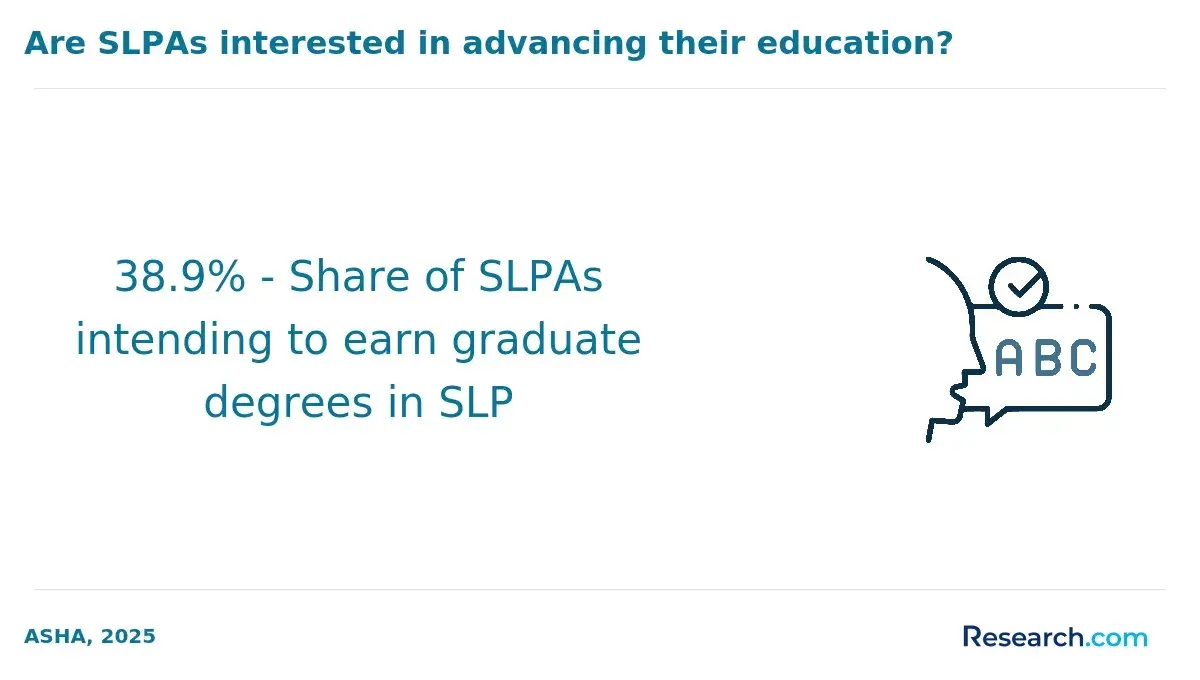
Employer assistance can be especially valuable for speech-language pathology assistants, school employees, rehabilitation staff, and healthcare workers. An employer may reimburse tuition, offer paid leave, adjust schedules for clinical rotations, or provide a future-employment agreement. Read repayment provisions carefully: some agreements require you to remain employed for a specified period or repay assistance if you leave early.
Loan-forgiveness eligibility depends on the borrower, loan type, employer, and service history rather than the title of the degree alone. Graduates working full time for qualifying government or nonprofit employers may wish to assess Public Service Loan Forgiveness rules for eligible federal Direct Loans. School and healthcare employment may be compatible with qualifying work, but eligibility should be confirmed through the federal program's current rules rather than assumed.
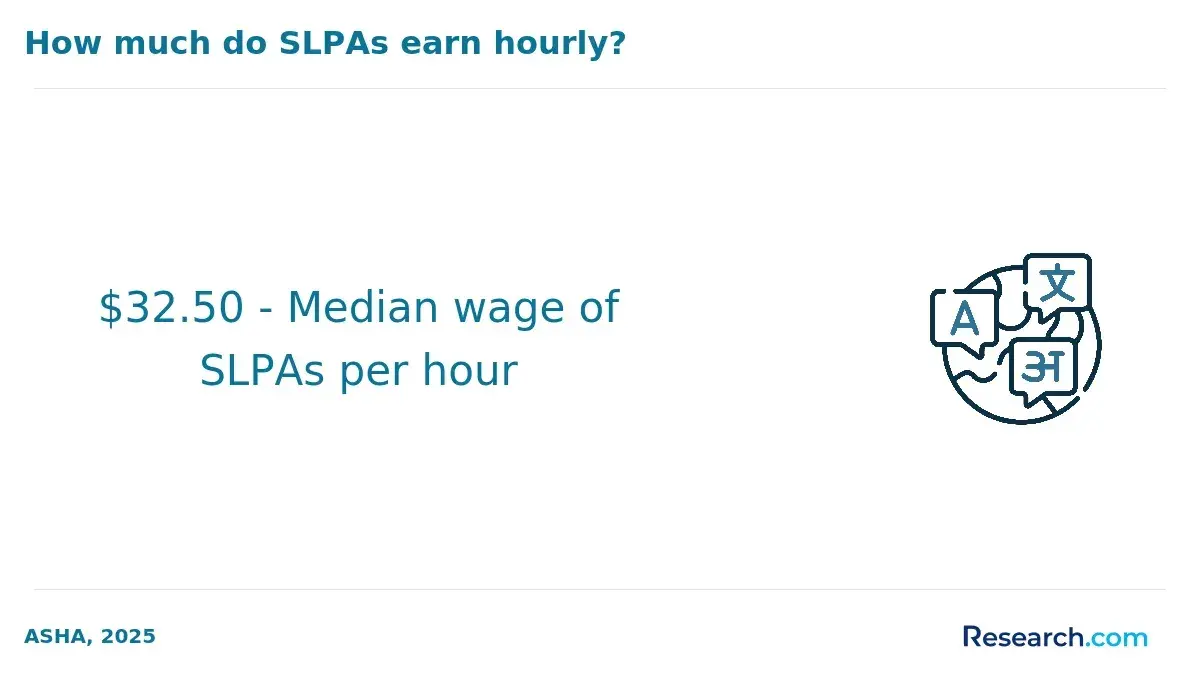
Students should compare borrowing with their likely work setting and repayment plan. BLS reports a $97,870 median annual wage for speech-language pathologists in May 2025, but individual pay varies by setting, experience, location, hours, and employer. Readers considering relocation or setting choices can also explore where do SLPs make the most money, while remembering that higher pay can coincide with higher living costs or different job demands.
How do online SLP outcomes in South Carolina compare to on-campus programs and national benchmarks?
An online SLP master's degree should be judged by outcomes and licensure readiness, not by whether lectures are delivered through a learning platform. A properly designed distance program can provide the same type of graduate credential and supervised clinical preparation as an on-campus program, but the student experience can differ substantially in scheduling control, travel, cohort connection, and placement logistics.
The most useful outcome measures are program-specific and should be reported by the institution or through accreditation materials. Ask for recent Praxis pass rates, program completion rates, employment outcomes, attrition information, time-to-degree data, and the number of students who experienced placement delays. Compare the same reporting period and definitions across schools.
National labor-market benchmarks provide context, but they do not predict an individual graduate's salary or hiring outcome. The U.S. Bureau of Labor Statistics projects 17% employment growth for speech-language pathologists from 2025 to 2035 and approximately 12,500 openings per year on average over the decade. That demand supports the long-term value of a licensure-ready degree, while also making clinical competence, geographic flexibility, and employer fit important.
| Comparison factor | Online pathway | On-campus pathway | How to decide |
| Course access | Often reduces relocation needs for academic coursework | Usually requires regular local attendance | Choose based on where you can reliably study and participate in live requirements |
| Clinical placements | May occur near home or require travel, depending on site availability | May have more established local partner networks | Compare written placement policies, not assumptions |
| Schedule flexibility | May offer flexible coursework but still includes fixed clinical hours | Often follows a traditional campus schedule | Evaluate the clinical calendar rather than course modality alone |
| Networking | Can span multiple states and practice settings | May be stronger within a local region | Consider where you hope to complete fellowship and seek employment |
Online study is often a strong fit for self-directed students who can travel when required, communicate proactively with faculty and placement staff, and tolerate uncertainty around clinical scheduling. An on-campus program may fit better if you need predictable access to local faculty, prefer in-person peer support, or want an established regional placement network.
Other Things You Should Know About Speech Language Pathology
Some students work during academic terms, but full-time employment often becomes difficult during practica and externships because clinical assignments commonly occur during school or business hours. Ask each program for a sample term-by-term schedule before deciding that full-time work is realistic.
Not always. Many programs admit applicants from other majors, but they may require prerequisite or leveling coursework in areas such as phonetics, anatomy, language development, audiology, and speech science. These courses can add time and cost before the graduate sequence begins.
Usually not without program-specific approval and appropriate supervision. Telepractice may be part of clinical education, but programs must ensure that experiences meet competency, supervision, client-contact, and placement requirements. Confirm the mix of in-person and telepractice experiences in writing.
Contact the licensing board before enrolling if you have questions about degree eligibility, prior coursework, criminal-history concerns, or an unusual career path. Contact the board again near graduation to confirm the current application, examination, supervised-practice, and documentation requirements.
References
- American Speech-Language-Hearing Association. (n.d.). Council on Academic Accreditation accredited program listing. https://apps.asha.org/eweb/ashadynamicpage.aspx?caacat=slp&site=ashacms&webcode=caalisting
- Council on Academic Accreditation in Audiology and Speech-Language Pathology. (2026). Programs. American Speech-Language-Hearing Association. https://caa.asha.org/programs/
- Master of Arts in Speech Pathology & Audiology https://scsu.edu/academics/programs/masters_speech_pathology_audiology.php
- Master of Science in Speech-Language Pathology https://chp.musc.edu/programs/master-science-speech-language-pathology
- South Carolina Speech Pathology Degrees https://www.speechpathologydegrees.com/st/south-carolina
- 2026 Most Affordable Online Speech Pathology Master's... https://www.onlineu.com/most-affordable-colleges/speech-pathology-masters-degrees