
2027 Forensic Biologist Careers: Skills, Education, Salary & Job Outlook

Co-Founder and Chief Data Scientist
Becoming a forensic biologist is a serious career decision: you are choosing laboratory science that may be used in criminal investigations, civil cases, and courtroom testimony. The work can be meaningful, but it is not a shortcut into crime-solving. It requires strong preparation in biology, chemistry, genetics, statistics, evidence handling, and quality-controlled laboratory methods.
For students and career changers, the main question is whether the education, training, and emotional demands are worth the payoff. The field offers a projected growth rate of 11% over the next decade and competitive salaries reaching up to $94,000, but opportunities vary by employer, location, lab funding, and specialization. This guide explains what forensic biologists do, what training is typically expected, how salaries and job outlook look, and how to decide whether this career fits your strengths and long-term goals.
Key Things You Should Know About Forensic Biologist Career
- The typical earning potential for a forensic biologist in the United States ranges between $57,113 and $89,403 annually, with many positions averaging around $57,000 to $67,440, and federal or specialized roles offering up to $120,100 or more.
- The field of forensic science is growing rapidly, with employment expected to increase by 13% over the next decade, far outpacing the average growth for all occupations.
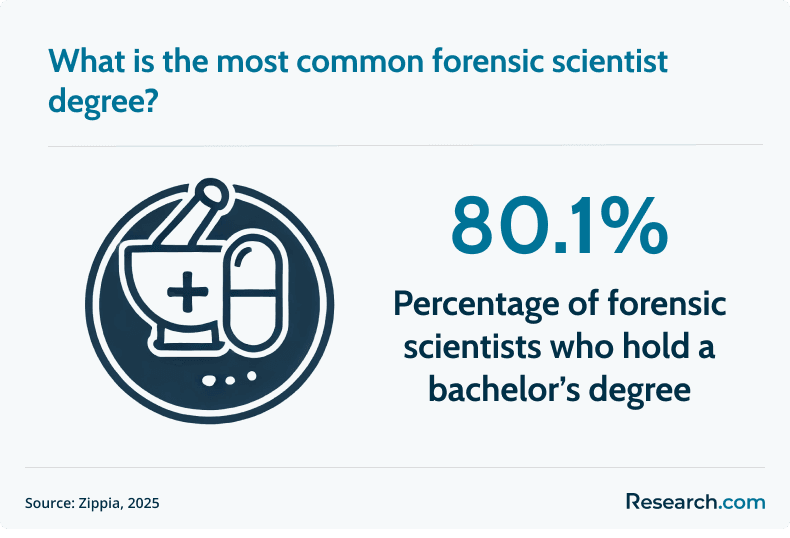
- A bachelor's degree in biology, forensic science, chemistry, or a related natural science is generally required to enter the profession at an entry-level position.
- Success in forensic biology depends on strong analytical thinking, problem-solving skills, meticulous attention to detail, laboratory proficiency, clear communication, and experience with DNA, toxicology, and evidence analysis technologies.
- Career advancement often involves moving from entry-level analyst roles to senior scientist, supervisor, specialist, or federal agency positions, where additional education, certification, and experience lead to higher responsibility and pay.
What do Forensic Biologists do?
Forensic biologists analyze biological evidence connected to legal investigations. Their work may involve blood, saliva, hair, tissue, bones, plant material, insects, or other biological traces that can help establish what happened, who may have been involved, or whether evidence supports or contradicts a theory in a case.
The role is scientific first. Forensic biologists do not simply “solve crimes” on their own. They generate objective laboratory findings, document how evidence was handled, interpret results within scientific limits, and communicate those findings to investigators, attorneys, and courts. In many cases, their work helps identify suspects, exclude individuals, support victim identification, or clarify timelines and events.
A day in the life of forensic biologists
A typical day often happens in a controlled laboratory rather than at a dramatic crime scene. Forensic biologists may receive evidence, verify chain-of-custody documentation, prepare samples, run tests, review quality controls, interpret data, and write formal reports. Accuracy matters because a small procedural error can affect whether evidence is usable in court.
Collaboration is also part of the job. Forensic biologists may speak with detectives about what can and cannot be tested, coordinate with other forensic specialists, prepare for court, or explain why a result is limited or inconclusive. The best professionals are comfortable with both detailed bench work and clear communication under scrutiny.
What are the key responsibilities of Forensic Biologists?
Forensic biologists are responsible for turning biological evidence into reliable scientific findings. Their duties may begin with evidence collection or screening and continue through laboratory testing, interpretation, reporting, peer review, and testimony. The exact scope depends on the employer, lab structure, and whether the position is focused on DNA, trace biology, serology, human identification, wildlife forensics, or another specialty.
- Collect, receive, label, preserve, and track biological samples such as blood, hair, bones, tissue, saliva, and plant material while maintaining strict chain-of-custody procedures.
- Screen items of evidence to determine whether biological material is present and whether further testing is appropriate.
- Perform laboratory analyses using techniques such as DNA sequencing, chemical testing, microscopy, and other validated forensic methods.
- Interpret test results carefully, including limitations, mixtures, degradation, contamination risks, and statistical significance where applicable.
- Write clear technical reports that attorneys, investigators, judges, and juries can understand without overstating the science.
- Testify as an expert witness and explain methods, quality controls, conclusions, and uncertainty under cross-examination.
- Maintain, calibrate, and troubleshoot laboratory instruments while following quality assurance and accreditation protocols.
- Work with investigators, medical examiners, forensic chemists, toxicologists, DNA analysts, and legal teams when cases require multiple specialties.
The most challenging vs. the most rewarding tasks
The hardest part of the job is protecting the integrity of evidence. A forensic biologist must prevent contamination, document every step, follow validated procedures, and recognize when a sample is too limited or compromised to support a strong conclusion. This discipline can be demanding, especially when case backlogs, court deadlines, or public attention increase pressure.
The most rewarding part is producing evidence that genuinely matters. A careful analysis may connect a suspect to a scene, identify human remains, support an investigation, or help exclude someone who should not be implicated. That responsibility is one reason the career appeals to people who want scientific work with direct public-service impact.
For learners who need a faster route into foundational coursework before transferring or advancing, accelerated adult degree programs online may help them compare flexible education options. However, forensic biology roles still require substantial laboratory training and should not be treated as a fully online-only career path.
What are the key skills for Forensic Biologists?
Forensic biologists need more than general interest in crime science. Employers look for candidates who can handle sensitive evidence, follow validated protocols, analyze complex biological material, and communicate findings without bias. The strongest professionals combine technical precision with ethical judgment.
Key hard skills
- DNA analysis: Preparing biological samples, developing genetic profiles, interpreting DNA results, and understanding how matches, exclusions, mixtures, and degraded samples are evaluated.
- Microscopy: Examining small biological materials such as hair, fibers, tissues, or other trace evidence when microscopic identification is relevant to the case.
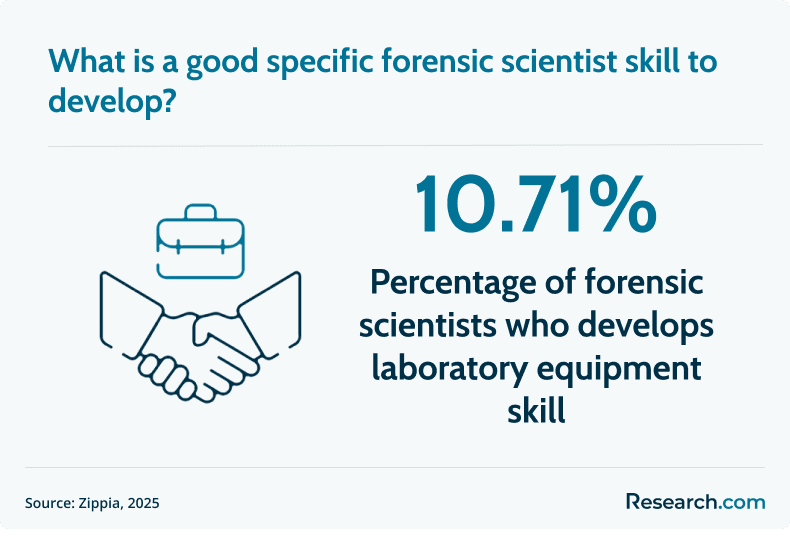
- Laboratory instrumentation: Operating, maintaining, and calibrating specialized equipment used to process, preserve, and test biological specimens.
- Evidence handling: Packaging, labeling, documenting, storing, and transferring samples in ways that preserve chain of custody and minimize contamination.
- Statistical data interpretation: Understanding probabilities, genetic data, and analytical limits so findings are not overstated in reports or testimony.
- Quality assurance: Following standard operating procedures, proficiency testing, peer review, and laboratory accreditation requirements.
Essential soft skills
- Critical thinking: Evaluating evidence objectively, especially when results are partial, ambiguous, or inconsistent with an investigative theory.
- Attention to detail: Maintaining accuracy in sample preparation, documentation, calculations, and report writing.
- Written and verbal communication: Explaining scientific results to non-scientists, including attorneys, investigators, and juries.
- Integrity and objectivity: Resisting pressure to make results fit a preferred narrative and clearly stating the limits of the evidence.
- Emotional resilience: Working with disturbing case details, human remains, violent crime evidence, or testimony related to traumatic events.
The one overlooked skill that separates the good from the great
Expert testimony is one of the most important skills in forensic biology. A technically strong analyst can still struggle if they cannot explain what a result means, what it does not mean, and how the laboratory reached its conclusion. Courtroom communication requires patience, clarity, and composure because opposing counsel may challenge methods, assumptions, documentation, and qualifications.
A strong forensic biologist avoids exaggeration. For example, they do not present a DNA result as absolute proof of guilt. Instead, they explain the evidence, the statistical interpretation, and the scientific limits in plain language. That balanced approach strengthens credibility and reduces the risk that science will be misunderstood.
Professionals who master technical analysis and testimony may qualify for opportunities in the top-paying Scientific Research and Development Services industry. For students still exploring entry points, the easiest associate's degree online can provide context on accessible academic pathways, though forensic biology generally requires more advanced science training for professional lab roles.
Forensic Biologist Careers: A Step-by-Step Guide to Getting Started
The path to becoming a forensic biologist is usually built in stages. A bachelor’s degree is commonly the starting point, but coursework, lab experience, internships, background checks, and supervised training often determine whether a candidate is competitive for forensic laboratory work.
- Build a strong science foundation. Take biology, chemistry, genetics, molecular biology, statistics, mathematics, and laboratory methods seriously. Forensic employers value rigorous scientific preparation more than a broad interest in crime investigation.
- Choose a relevant degree path. A major in forensic biology, biology, biochemistry, molecular biology, forensic science, or a closely related field can prepare you for entry-level roles if it includes sufficient lab and science coursework.
- Gain hands-on laboratory experience. Internships, undergraduate research, academic labs, medical labs, and forensic lab placements can help you develop evidence-handling discipline, documentation habits, and technical confidence.
- Prepare for screening and credential requirements. Many forensic roles require background checks, drug screening, security clearance procedures, professional references, and proof that you can handle sensitive evidence ethically.
- Apply for supervised forensic biology positions. Entry-level hires typically train under experienced analysts before handling independent casework or issuing reports.
- Develop a specialty over time. DNA analysis, serology, forensic anthropology, wildlife forensics, medicolegal death investigation, or related areas may require additional coursework, training, or certification.
- Keep learning throughout your career. Forensic methods, quality standards, instrumentation, and legal expectations change, so continuing education is part of staying employable and credible.
The best strategy is to plan backward from job postings in the region or agency type you want to enter. Compare their required coursework, preferred experience, certification expectations, and background requirements before choosing electives, internships, or graduate programs.
What education, training, or certifications are required?
Most forensic biologists hold a Bachelor of Science degree in Forensic Biology or a related field such as Biology, Biochemistry, Molecular Biology, or Forensic Science with an appropriate concentration. Programs accredited by the Forensic Science Education Programs Accreditation Commission (FEPAC) are often preferred because they signal that the curriculum meets recognized forensic science education standards.
Important certifications include Biological Evidence Screening (ABC-BIO) and Forensic DNA (ABC-DNA), both awarded by the American Board of Criminalistics. Certification requirements can vary by role and employer, so candidates should verify whether a credential is required for hiring, promotion, independent casework, or courtroom qualification.
Hands-on training is essential. Internships during undergraduate or graduate study are strongly recommended and may be required by some programs or employers. New forensic biologists also typically complete supervised on-the-job training before they are authorized to perform independent casework, issue reports, or testify. Ongoing professional development through seminars, workshops, proficiency testing, and updated laboratory protocols is expected throughout the career.
Are advanced degrees or niche certifications worth the investment?
A master’s degree in forensic biology, forensic science, molecular biology, or a related field can be worthwhile for candidates seeking senior analyst roles, specialized technical work, research-heavy positions, federal opportunities, or supervisory tracks. Advanced study may also help applicants stand out in competitive labs, especially when paired with strong laboratory experience.
That said, a graduate degree is not always necessary for entry-level employment. Many roles can be reached with a bachelor’s degree, the right coursework, relevant lab experience, and strong professional references. Before enrolling, compare tuition, time away from full-time work, expected job requirements, and whether the degree includes practical lab training. Reviewing the highest paying masters programs can help you think about return on investment, but the best credential is the one aligned with the forensic specialty and employer requirements you actually plan to pursue.
| Path | Best fit | Main advantage | Potential drawback |
| Bachelor’s degree | Entry-level forensic biology or related lab roles | Often sufficient to begin the career path | May limit access to advanced or highly specialized roles |
| Master’s degree | Specialized, senior, research-oriented, or competitive positions | Can strengthen technical depth and advancement potential | Requires additional time and financial investment |
| Professional certification | Analysts seeking credibility, casework authorization, or promotion | Demonstrates tested professional competence | May require experience, exams, fees, and continuing education |
What is the earning potential for Forensic Biologists?
The median salary for a forensic biologist is $89,403 per year. The forensic biologist salary range 2025 shows a broad spread: starting positions typically offer around $59,500 annually, while senior-level roles can reach up to $137,000 per year. This range reflects differences in employer type, location, experience, specialization, and responsibility level.
Early-career forensic biologists often earn less while they complete supervised training, build casework experience, and qualify for independent analysis or testimony. Earnings generally increase as professionals gain technical depth, handle more complex cases, become qualified in specialized methods, or move into supervisory or management roles.
Several factors can influence pay. Government crime labs may offer structured salary bands, benefits, and job stability, while private laboratories or research settings may differ in compensation and workload. Location also matters because salaries often reflect regional budgets, cost of living, and demand for forensic services. Specialization can also affect earning potential, especially in areas where qualified analysts are harder to recruit.
| Factor | How it can affect earnings |
| Experience level | Entry-level analysts usually earn less than senior analysts, technical leaders, or supervisors. |
| Specialization | Advanced skills in DNA, quality assurance, or niche forensic methods may improve competitiveness. |
| Employer type | Local, state, federal, private, and research employers may use different pay structures. |
| Location | Regional demand, agency budgets, and cost of living can change salary expectations. |
| Courtroom and casework qualifications | Analysts cleared for independent reporting and testimony may have stronger advancement potential. |
What is the job outlook for Forensic Biologists?
The job outlook for forensic biologists is promising, with employment expected to grow 13% from 2024 to 2034. This is much faster than the average for all occupations, which typically ranges from 3% to 5%. Demand is supported by the criminal justice system’s continued use of biological evidence, expanding DNA technologies, and the need for qualified analysts in public and private laboratories.
The key factors shaping the future outlook
Technology is a major driver. Advances in DNA analysis, laboratory automation, software-assisted interpretation, and related forensic tools can expand what evidence can be tested and how efficiently labs process cases. These changes create demand for professionals who can use new methods responsibly and explain them clearly.
The legal system’s reliance on forensic evidence also supports employment. DNA databases continue to be used in investigations, and biological evidence may be important in criminal cases, post-conviction reviews, missing-person investigations, and some civil matters. Labs need analysts who understand both science and legal admissibility.
Workforce turnover is another factor. Retirements among baby boomers are opening up positions, while urban and diverse populations drive the need for multilingual and highly specialized analysts. Students comparing flexible education options can review non profit online accredited colleges, but they should confirm that any program they consider provides the laboratory preparation required for forensic work.
What is the typical work environment for Forensic Biologists?
Forensic biologists usually work in secure, climate-controlled laboratories rather than remote or field-based settings. Most work is performed at lab benches, evidence-processing stations, microscopes, computers, and specialized instruments. The environment is structured because evidence security, contamination prevention, quality control, and documentation are central to the job.
Employment data show that over half of forensic science technicians, including forensic biologists, work in local government settings, excluding education and hospitals. About a third are employed by state governments, and a smaller portion work in testing laboratories. This means many forensic biologists work in public-sector crime labs, medical examiner systems, law enforcement agencies, or contracted laboratory environments.
The daily schedule often follows normal business hours, but overtime can occur when caseloads are heavy, urgent evidence must be processed, or court schedules require preparation. Night and weekend shifts are less common than in some public safety careers, but they are not impossible. Remote work is generally limited because evidence handling and laboratory testing must be performed in controlled facilities.
Forensic biologists should also be prepared for occasional courtroom appearances. Testimony can interrupt routine lab work and requires preparation, confidence, and the ability to explain methods and conclusions to people without scientific training.
What are the pros and cons of Forensic Biologist careers?
Forensic biology can be a meaningful career for people who want to apply science to real legal questions. It also comes with pressure, emotional exposure, and strict accountability. Before committing, compare the rewards with the parts of the job that may be difficult to sustain over time.
| Pros | Cons |
| Work can contribute to justice, public safety, victim identification, and wrongful-conviction review. | Cases may involve violent crime, decomposition, traumatic evidence, or emotionally difficult details. |
| The role offers intellectually challenging scientific analysis and ongoing technical learning. | Accuracy expectations are high because errors can affect legal outcomes. |
| Laboratory work is structured, methodical, and evidence-based. | Documentation, peer review, and repetitive quality-control steps can feel tedious. |
| Specialization can lead to senior analyst, expert witness, or laboratory leadership roles. | Promotion may require years of experience, certifications, advanced training, or relocation. |
| Many positions are in government settings with stable workflows and public-service missions. | Backlogs, court deadlines, and public scrutiny can create stress. |
Who is likely to thrive in this career?
This path is a strong fit for people who enjoy biology, laboratory precision, documentation, and objective problem-solving. It is less suitable for someone who wants fast-paced fieldwork every day, dislikes repetitive procedures, or is uncomfortable having their work challenged in court.
If you are comparing forensic biology with shorter training options or hands-on technical careers, this guide on what can you do with a trade school diploma may help you evaluate alternatives before committing to a longer science degree path.
What are the opportunities for advancement for Forensic Biologists?
Forensic biologists can advance by gaining casework experience, qualifying in additional methods, earning professional credentials, developing courtroom expertise, or moving into supervision and laboratory management. Advancement is usually gradual because labs must trust an analyst’s technical accuracy, documentation habits, ethical judgment, and ability to testify.
Steps and strategies: how to get promoted as a forensic biologist
- Build a strong record as a reliable analyst who follows procedures and produces defensible reports.
- Complete required on-the-job training and become qualified for independent casework in your laboratory’s approved methods.
- Pursue advanced education if it aligns with your target role, especially for specialized, research-heavy, or supervisory positions.
- Earn relevant certifications, such as those connected to biological evidence screening or forensic DNA, when they support your employer’s expectations.
- Develop courtroom confidence by preparing thoroughly, observing testimony, and learning how to explain technical findings clearly.
- Volunteer for quality assurance, validation studies, training projects, or process-improvement work to show leadership potential.
- Stay current with forensic advancements, updated standards, and changes in legal expectations for expert evidence.
Key career advancement opportunities for forensic biologists
- Senior forensic scientist or senior forensic biologist: Handles more complex cases, mentors junior analysts, and may review reports or assist with training.
- Technical leader: Oversees method validation, quality standards, training requirements, and scientific consistency within a specialty area.
- Forensic laboratory manager or natural sciences manager: Manages personnel, budgets, workloads, quality systems, and operational priorities.
- DNA analysis specialist: Focuses on advanced DNA interpretation, complex mixtures, database work, or high-impact casework.
- Forensic entomology, wildlife forensics, or forensic anthropology specialization: Uses biological expertise in niche investigative contexts.
- Forensic pathology or forensic medical examination: Requires additional medical training but may appeal to those interested in death investigation.
- Adjacent forensic fields: Digital forensics, forensic chemistry, forensic toxicology, or forensic nursing may be options for professionals who want a different technical focus.
The best advancement plan depends on whether you want to become a deeper technical expert or move into leadership. Technical experts usually prioritize specialized methods, certifications, and testimony experience. Future managers should add project leadership, quality systems, training, and personnel management to their development plan.
What other careers should you consider?
If forensic biology interests you, several related careers may also fit your strengths. Some are more laboratory-focused, some require medical or graduate training, and others involve more fieldwork. Comparing these options can help you choose a path that matches your tolerance for courtroom work, biological material, case pressure, and years of education.
- DNA analyst: Focuses on analyzing biological evidence such as blood, saliva, and hair using molecular biology methods. This is a strong fit for people who prefer detailed laboratory work and genetic interpretation.
- Forensic pathologist or medical examiner: Determines cause and manner of death through medical examination, autopsy, and investigative findings. This path requires extensive medical training.
- Forensic anthropologist: Applies skeletal anatomy and human identification methods to remains. It may involve advanced study and work with medical examiners, law enforcement, or academic institutions.
- Crime scene analyst or crime scene investigator: Documents scenes, collects evidence, photographs findings, and preserves materials for laboratory analysis. This path usually involves more fieldwork than forensic biology.
- Forensic toxicologist: Tests biological samples for drugs, alcohol, poisons, and other substances using analytical chemistry methods.
- Forensic chemist: Analyzes substances such as drugs, explosives, residues, or unknown materials. This may be a better fit for students stronger in chemistry than biology.
- Medicolegal death investigator: Works with medical examiner or coroner systems to gather information about deaths, scenes, medical history, and circumstances.
| Career | Best for people who like | Key difference from forensic biology |
| DNA analyst | Genetics, lab precision, statistical interpretation | More narrowly focused on DNA evidence |
| Crime scene investigator | Fieldwork, documentation, evidence collection | More scene-based and less laboratory-centered |
| Forensic toxicologist | Chemistry, instrumentation, substance detection | Focuses on drugs, toxins, and chemical analysis |
| Forensic anthropologist | Skeletal biology, human identification, research | Often requires specialized graduate-level training |
| Forensic pathologist | Medicine, autopsy, death investigation | Requires medical school and physician training |
Your choice should reflect the type of work you want to do every day, not just the forensic label. Review job postings, talk with professionals, and compare education requirements before committing to a degree plan.
Here's What Professionals Say About Their Forensic Biologist Careers
- : "The moment I knew this career was for me was when I helped identify key DNA evidence that led to solving a cold case that had haunted the community for years. I love how fascinating the techniques are; each analysis feels like fitting together tiny pieces of a very complex puzzle. What truly motivates me is knowing that my work directly supports justice and safety in ways most people do not see or understand. It is empowering to do something so specialized that has such a concrete impact. — Marcus"
- : "Starting out, I was unprepared for just how intense a crime scene could be. I remember my first experience with a decomposing body; it was difficult not only emotionally but physically, as the senses are overwhelmed in ways I never expected. Testifying in mock courtrooms was nerve-wracking, but it made me realize how essential thorough training and internships are for building confidence. Those moments took me from uncertainty to feeling ready for the realities of actual cases. — Simone"
- : "What drives me every day is the satisfaction of mastering complex forensic biology techniques and seeing the tangible results of my work in court proceedings. When I transitioned to specializing in DNA analysis, I really found my niche within law enforcement. There is something deeply rewarding about contributing directly to clearing innocent people and holding the guilty accountable. Plus, having supportive colleagues and mentors makes this challenging work far more fulfilling. — Andre"
Key Findings
- Forensic biologists analyze biological evidence and produce scientific findings that may be used in investigations and court proceedings.
- The career usually requires a strong bachelor’s-level foundation in biology, chemistry, genetics, laboratory methods, and evidence handling.
- FEPAC-accredited programs are often preferred, and certifications such as Biological Evidence Screening (ABC-BIO) and Forensic DNA (ABC-DNA) can support professional credibility.
- The median salary for a forensic biologist is $89,403 per year, with starting positions around $59,500 annually and senior-level roles reaching up to $137,000 per year.
- Employment is expected to grow 13% from 2024 to 2034, much faster than the average for all occupations, which typically ranges from 3% to 5%.
- The work is meaningful but demanding. Success requires precision, objectivity, emotional resilience, clear communication, and comfort with legal scrutiny.
- Students should compare degree options, lab experience opportunities, employer requirements, and certification expectations before committing to this career path.
Other Things You Should Know About Forensic Biologist Careers
In 2027, forensic biologists can advance their careers by pursuing roles such as forensic science supervisor, laboratory manager, or research specialist. Gaining advanced certifications and specialized training in areas like DNA analysis and toxicology also enhances career progression opportunities.
In 2027, forensic biologists often pursue certifications like the American Board of Criminalistics' (ABC) Diplomate in Biology. Acquiring this certification requires passing an exam, demonstrating specific skills, and sometimes requires ongoing continuing education to maintain credential status, enhancing both credibility and career prospects.
References
- Discover Your Career Options with Top Forensic Medicine Jobs » Forensic Medicine Distance Education Program » College of Medicine » University of Florida https://forensicmedicine.med.ufl.edu/2024/08/26/discover-your-career-options-with-top-forensic-medicine-jobs/
- Forensic science https://www.prospects.ac.uk/careers-advice/what-can-i-do-with-my-degree/forensic-science
- 5 Essential Forensic Scientist Skills & Qualities to Consider https://www.alliant.edu/blog/forensic-scientist-skills
- Forensic Biologist - Degree Programs, Career Outlook & Certification https://www.forensicscolleges.com/careers/forensic-biologist
- What are the pros and cons of forensic science and forensic anthropology? https://www.careervillage.org/questions/837947/what-are-the-pros-and-cons-of-forensic-science-and-forensic-anthropology
- Forensic Science: What You Need To Know To Be A Forensic Scientist | Science | AAAS https://www.science.org/content/article/forensic-science-what-you-need-know-be-forensic-scientist
- Forensic Biologist https://explorehealthcareers.org/careers/technologists-and-technicians/forensic-biologist/
- 14 Pros and Cons of Being a Forensic Science Technician https://legalcareerpath.com/pros-and-cons-of-being-a-forensic-science-technician/
- The Monday Interview - "So, what's it really like working as a...forensic scientist?" https://www.momentumcareersadvice.com/the-monday-interview-so-whats-it-really-like-working-as-a-forensic-scientist/
- Testimonials » Forensic Science » College of Pharmacy » University of Florida https://forensicscience.ufl.edu/about/testimonials/


