2027 Online SLP Programs and School Placements: Comparing Access to Educational Settings

Co-Founder and Chief Data Scientist

Reviewed by Rhea Paul, PhD
SLP Education & Research Expert
Choosing an online SLP master's program is not only an academic decision: it can determine whether you gain meaningful experience in the school settings where you hope to work. This guide is for prospective speech-language pathology students who want K-12 placements, not just any clinical site.
This article also explains how placement systems work, what state rules can change, and how to verify a program's claims before enrolling so you can select a pathway aligned with school-based practice.
Key Things You Should Know
- CAA-accredited entry-level SLP programs must provide supervised clinical education, but accreditation does not mean a program can promise a placement in a particular district, grade band, or specialty area.
- School-based access depends on three separate approvals: the university's clinical-placement process, the district's willingness to host a student, and the student's ability to meet state educator, background-check, and licensure requirements.
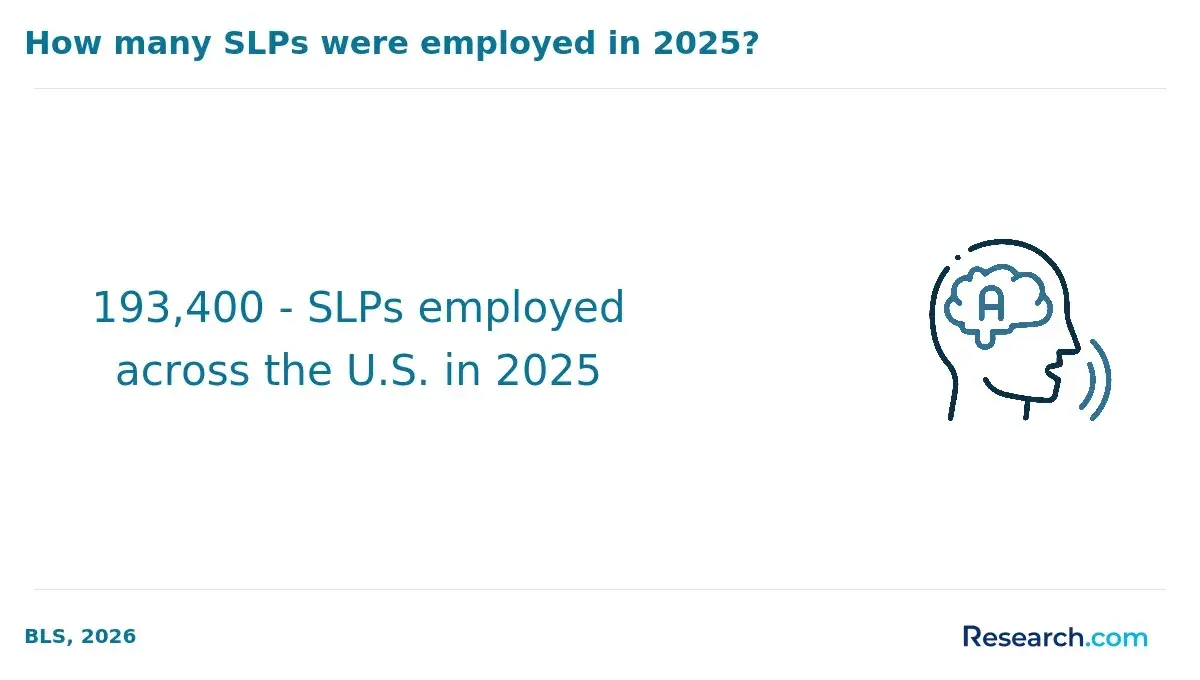
- The U.S. Bureau of Labor Statistics projects 17% employment growth for speech-language pathologists from 2025 to 2035, with about 12,500 openings annually; students targeting schools should therefore assess placement quality, not simply whether a program is online.
How do online speech-language pathology programs structure and guarantee access to K-12 school placements?
Online master's programs generally deliver academic coursework remotely while requiring in-person clinical education near the student's residence or in an approved service area. A school placement is a supervised experience in a public, charter, private, or specialized school where a student clinician works with children and collaborates with educational staff. Programs can coordinate, approve, and support placements, but few can responsibly guarantee a specific school district because districts control affiliation agreements, supervisor availability, and site access.
A strong program distinguishes between placement support and a placement guarantee. Support may include a dedicated clinical coordinator, existing district contracts, supervisor recruitment, onboarding guidance, and alternatives when a preferred site cannot accept a student. A guarantee should be examined carefully: ask what is guaranteed, when it applies, whether travel is required, and what happens if a district withdraws.
The following comparison shows the practical difference between common placement language applicants may encounter.
| Program approach | What it usually means | What the applicant should verify |
| University-arranged placement | The clinical education team identifies and approves the site and supervisor. | Whether school placements are routinely available in the student's state and whether the university covers a broad travel radius. |
| Collaborative placement search | The university and student both contact potential sites, with final approval required from the program. | Who is responsible if no site is secured and whether the student may contact districts independently. |
| Student-secured placement | The student is expected to locate a willing district or clinic, subject to university approval. | Written contingency plans, affiliation-agreement timelines, and local district willingness to supervise. |
| Regional or centralized placement | The program assigns sites within designated regions, which may require commuting or temporary relocation. | Expected travel, housing costs, assignment timing, and whether educational sites are available. |
Before accepting admission, request the clinical handbook and ask for the exact process used for your final externship. A placement model that is workable for a hospital-focused student may not meet the needs of a student seeking experience with IEP teams, school eligibility evaluations, classroom consultation, and pediatric caseload management.
Which online SLP programs explicitly prioritize educational settings over medical or private-practice sites?
Most entry-level SLP programs prepare graduates for multiple settings rather than exclusively for schools. A program should not be described as school-prioritized simply because it offers pediatric coursework or lists schools among possible clinical sites. The better question is whether its published curriculum, faculty expertise, clinical policies, and placement record show sustained access to educational settings.
Look for concrete evidence of an education-centered design: coursework in school-based service delivery, language and literacy, augmentative and alternative communication, culturally responsive assessment, and special education collaboration; clinical objectives involving IEP participation; and a placement process that specifically identifies school districts as a target setting. Programs that publish only general statements about "diverse placements" require additional scrutiny.
This distinction matters because a medical placement can build valuable diagnostic and counseling skills but may not expose a clinician to the legal and collaborative work that drives school practice. Students who want to work in schools should also compare online speech pathology master's programs on their clinical-placement policies, not tuition alone. A lower-priced program can become less economical if students must arrange distant sites, repeat a delayed practicum, or pay for extended housing.
Ask each program for recent, non-identifying placement patterns rather than relying on marketing language. Useful questions include the share of final placements completed in schools, the types of districts used, whether placements include elementary and secondary populations, and whether the program can accommodate a school-focused plan. A program may decline to provide a percentage, but it should be able to explain its process and limits clearly.
How do state licensure, certification, and teacher preparation rules shape school placements for online SLP students?
Professional licensure and school employment credentials are related but separate. State health-profession boards typically regulate SLP licensure, while state education agencies or school districts may require an education credential, school-service certificate, educator license, or other authorization for school employment. Requirements vary by state and can change, so an online program's general accreditation does not by itself establish eligibility everywhere.
Clinical placement rules may be stricter than admission rules. A student may be eligible to enroll in an online program yet face barriers to completing a school practicum in the state because of fingerprinting, immunizations, district onboarding, educator-clearance requirements, or restrictions on out-of-state supervisors. Programs should provide state authorization and professional-licensure disclosures, but applicants should also confirm requirements directly with the applicable licensing board and state education agency.
For many graduates, the Certificate of Clinical Competence in Speech-Language Pathology is an important professional credential after the degree and required clinical fellowship. School systems may value or require it differently depending on state and district policy. Do not assume that a school practicum itself qualifies you for every school credential.
The decision framework below separates credentials students often conflate.
| Requirement area | Primary purpose | Why it affects placements |
| CAA program accreditation | Evaluates whether an academic program meets accreditation standards for graduate SLP education. | It is a foundational quality signal, but it does not reserve a local school site for an individual student. |
| State SLP licensure | Authorizes professional practice under state law. | Programs and supervisors must ensure clinical education aligns with applicable state rules. |
| School credential or education authorization | Establishes eligibility to work in a school system under state education rules. | May require extra documentation or coursework beyond clinical placement requirements. |
| District clearance process | Protects student safety and meets local employment or volunteer policies. | Can delay or prevent a placement even when academic and licensure requirements are met. |
Applicants considering an accelerated schedule should be especially cautious about administrative lead times. Accelerated speech pathology programs can reduce academic calendar time, but a rapid sequence does not eliminate district contracting, clearance, or supervisor-approval timelines.
What placement models do online SLP programs use to secure supervised practice in school districts?
Online programs commonly use one of four models: centralized university assignment, regional partnerships, collaborative student-and-program searches, or student-led site identification. No single model is universally best. The right model depends on your location, flexibility, professional network, and willingness to travel.
Centralized assignment generally reduces the student's administrative burden and may be best for applicants without local contacts. It can, however, limit control over school type or commute. Student-led models may work well for applicants already employed by a district or living near cooperative schools, but they shift meaningful risk to the student when districts are saturated or affiliation agreements take months.
When reviewing a clinical handbook, identify the specific milestones below. They reveal whether the program has a real operating process rather than a vague promise to "assist."
- Determine when the program begins searching for a school site and when the student receives an assignment.
- Confirm whether the university already has an affiliation agreement with the district or must negotiate one.
- Verify that the proposed supervisor meets program, state, and ASHA-related supervision requirements.
- Complete district onboarding, including background checks, health documentation, confidentiality training, and any required clearances.
- Obtain written approval from the program before counting clinical hours or beginning direct client contact.
A red flag is language requiring students to "find their own placement" without a documented fallback process. Another is a program that will not say whether it has recently placed students in your state. Students should obtain answers in writing, especially when their ability to remain employed or avoid relocation depends on local placement access.
How does access to diverse educational settings differ between online and campus SLP pathways?
Online and campus pathways can both provide high-quality school experiences, but their access patterns differ. Campus programs often draw from established local partnerships and may give students predictable access to nearby districts. Online programs can place students closer to home and may reach settings unavailable near one campus, but the quality and range of options depend heavily on regional contracts and district capacity.
The most useful comparison is not "online versus in person" in the abstract. It is whether the program can provide the population, supervision, collaboration, and evaluation experience you need without unreasonable cost or disruption.
| Decision factor | Online pathway | Campus pathway |
| Geographic flexibility | May allow placement near the student's home, subject to approval and local availability. | Usually concentrates placements near the university and may require relocation. |
| District relationships | Can vary by state and cohort; established partnerships may be uneven across regions. | Often deeper in the university's local area, though site availability can still change. |
| Student control over location | Potentially higher when programs use collaborative searches, but not guaranteed. | Often lower because assignments are tied to the local placement network. |
| Exposure to varied school systems | May include the student's local district context, including rural or remote communities. | May offer different district types within commuting distance of campus. |
| Travel and relocation risk | Local placement is possible but should never be assumed. | Relocation for the academic program often also determines clinical geography. |
Choose an online route when remaining in your community is important and the program can document support in your state. Choose a campus route when its known local school partnerships, on-site faculty access, or placement network better matches your goals. Neither format removes the need to ask about commute, scheduling, school calendar alignment, and whether the final placement may be outside your preferred setting.
Which accreditors, agencies, and school systems influence quality and oversight of SLP school placements?
Several entities influence a school placement, and each has a different role. The Council on Academic Accreditation in Audiology and Speech-Language Pathology evaluates graduate programs against academic and clinical education standards. ASHA provides professional guidance and administers its clinical certification framework. State licensure boards regulate professional practice, while state education agencies and local districts establish rules for school personnel and on-site access.
A placement is strongest when these layers align. The university should document clinical competencies and supervision; the district should provide a suitable learning environment; and the student should meet state and district eligibility requirements. A school site's willingness to host a student does not substitute for university approval, and university approval does not override district policy.
Applicants should verify a program's current CAA accreditation status through ASHA's official program directory and read the program's state-authorization disclosures. If a school-based career is the priority, also ask whether the program has experience navigating education-agency requirements in your state. Applicants who are still assessing competitiveness can review easiest SLP masters programs to get into, but admissions accessibility should not outweigh accreditation, state eligibility, and a workable placement plan.
Do not treat a district name on a program webpage as a permanent agreement. Contracts expire, staffing changes, and districts may temporarily pause student placements. Recent placement activity and a transparent contingency plan are more useful than a long, undated list of partner organizations.
How do IDEA, special education mandates, and caseload patterns affect student clinicians' school experiences?
The Individuals with Disabilities Education Act, commonly called IDEA, shapes much of school-based SLP practice. Under IDEA, eligible students receive special education and related services through an individualized education program, or IEP. Student clinicians may observe or participate in evaluation, goal development, therapy, progress monitoring, family communication, and team meetings under appropriate supervision and within site policy.
This is different from many medical settings, where services may be organized around diagnoses, episodes of care, and payer requirements. In schools, the clinician's work is connected to educational access, classroom participation, curriculum demands, and interdisciplinary planning. A placement that includes only pull-out therapy may be useful, but it may not show the full scope of school-based practice.
Caseload and workload conditions also affect the student experience. Caseload refers to the number of students assigned; workload includes the broader tasks required to serve them, such as documentation, meetings, consultation, screening, scheduling, and compliance activities. High demand can limit a supervisor's teaching time, while a well-managed site may provide more observation, feedback, and varied learning opportunities.
Ask whether a placement exposes students to the following school functions, recognizing that access varies by district policy and student confidentiality needs.
- Collaborating with special educators, general educators, psychologists, occupational therapists, and families.
- Using curriculum-relevant language, literacy, social communication, or AAC supports.
- Observing assessment, eligibility, IEP, progress-reporting, and service-delivery decisions.
- Learning how scheduling, missed sessions, and classroom demands affect service implementation.
These experiences can help students decide whether a school role fits their working style. The national median annual wage for speech-language pathologists was $97,870 in May 2025, according to the U.S. Bureau of Labor Statistics, but actual school compensation varies substantially by state, district salary schedule, contract length, benefits, and credential status. Readers comparing settings can explore where do SLPs make the most money while keeping in mind that compensation should be weighed against role fit and licensure requirements.
What placement barriers do online SLP students face in rural, suburban, and urban school districts?
Placement barriers are local, not simply online-program problems. Rural districts may have fewer SLPs available to supervise, long travel distances, and limited specialty services, although they can offer broad generalist experience and strong community connection. Suburban districts may have many schools but also high demand from nearby universities. Urban districts may offer diverse populations and specialized programs, yet complex onboarding, large university competition, and transportation constraints can delay access.
Students should avoid assuming that a densely populated area automatically means easy placement. A district may limit student clinicians because of staffing changes, labor agreements, supervisor workload, or confidentiality procedures. Conversely, a smaller district may welcome students but require substantial commuting or a schedule incompatible with work obligations.
Plan for placement risk before the first clinical term. The following actions are most useful when completed early, ideally before making a nonrefundable enrollment commitment.
- Ask whether the program has placed online students in your county or region recently, without requesting confidential student information.
- Map realistic commute options, including multiple districts and neighboring counties, rather than relying on one preferred school.
- Budget for fingerprinting, health requirements, parking, commuting, professional liability coverage if required, and possible temporary housing.
- Discuss employment constraints honestly with the clinical education office because school-day practica commonly conflict with full-time daytime work.
- Get the program's written policy for delayed placements, site cancellations, and the possibility of reassignment to a non-school setting.
Telepractice may supplement service delivery in some school systems, but it does not automatically solve placement shortages. District policy, supervision expectations, student needs, technology access, and state rules determine whether remote activities count toward a particular clinical experience.
How can prospective online SLP students verify that programs provide accredited, compliant school-based practica?
Verification should happen before enrollment, not after coursework begins. Start by confirming that the degree is currently accredited by the Council on Academic Accreditation or, where relevant, that the program's status is clearly described. Then separate accreditation from state eligibility and school-placement availability; all three need independent confirmation.
Use this practical review process to compare programs consistently.
- Check the program's official accreditation listing and confirm that it is an entry-level graduate SLP degree appropriate for your intended professional path.
- Read the program's state authorization and professional-licensure disclosures for your residence state and any state where you may complete a placement.
- Request the clinical education handbook, including supervision standards, placement responsibilities, travel expectations, and policies for delayed or unsuccessful placements.
- Ask the clinical placement office whether it has current capacity and recent experience arranging school-based placements in your geographic area.
- Contact your state SLP licensing board and state education agency to understand post-graduation licensure and school-employment requirements.
- Save written answers from the program, especially statements about placement responsibility, expected timing, and out-of-area assignments.
Common mistakes include treating "online" as synonymous with "local," relying on an admissions representative's verbal assurance, and comparing programs only by published tuition. A compliant program may still require you to travel, pause employment, or accept a setting other than your first choice. Clear written policies let you assess that risk before you commit.
What questions should applicants ask online SLP programs and districts about educational-setting access?
Ask questions that produce specific, decision-ready answers. "Do you offer school placements?" is too broad; nearly every program can identify schools as a possible setting. Instead, ask about your state, your expected clinical term, your travel limits, and the type of school experience you need.
Use the questions below in conversations with program clinical coordinators. When a district is willing to speak with prospective students, keep in mind that the university, not the applicant, may need to initiate formal affiliation and approval steps.
- Will the program arrange my school placement, collaborate with me to find one, or expect me to secure it independently?
- Have online students recently completed school-based practica in my state or within a feasible commute of my location?
- Can you explain the usual timing for site assignment, district agreements, and required background clearances?
- May my final placement be in a school, and what conditions could lead to assignment in another setting instead?
- What grade levels, student populations, and school-service activities are typically available through your placement network?
- What happens if a district declines, delays, or cancels a placement after I have begun the clinical sequence?
- What expenses beyond tuition should I anticipate for travel, clearances, health documentation, and temporary relocation?
- Does my state require a separate school credential or education-agency authorization after graduation, and what support does the program provide?
A program that answers these questions directly, identifies uncertainty, and provides written policies is usually a safer choice than one that makes broad promises. The goal is not a perfect guarantee; it is a transparent plan that fits your location, career target, budget, and ability to adapt.
Other Things You Should Know About Speech Language Pathology
No. Coursework may be online, but clinical practicum and externship experiences generally require supervised, in-person work at approved sites. A program may arrange a site near your home, but local placement is not automatic.
Not necessarily. Entry-level SLP preparation includes clinical education across relevant populations and settings, but the exact placement mix varies by program. A school placement is especially valuable if you plan to work in K-12 education or need to understand school-based service delivery.
It can be difficult. School practica usually follow daytime school schedules and may require substantial preparation, documentation, and commuting. Ask the program for expected weekly clinical hours and assignment schedules before assuming full-time employment is compatible.
Ask about alternate districts, travel expectations, placement delays, and whether a non-school placement could be assigned. If the answers do not fit your circumstances, consider another accredited program with clearer state-specific placement experience before enrolling.
References
- Speech-Language Pathology | PennWest Global Online https://online.pennwest.edu/programs/speech-language-pathology-grad/index.php
- Online Speech Pathology Master's Programs (SLP) https://teach.com/online-ed/healthcare-degrees/online-masters-speech-language-pathology/
- Best Online Master's in Speech Pathology (SLP) Programs https://www.onlinemastersdegrees.org/best-programs/speech-language-pathology-slp/
- Best Online Speech Pathology Programs https://www.forbes.com/advisor/education/healthcare/best-speech-pathology-programs-online/
- Online Master's in Speech Pathology Programs: 2026 Guide https://speechpathologymastersprograms.com/