2027 Best Online Speech Pathology Master's Programs for Residents of Glendale, AZ

Co-Founder and Chief Data Scientist

Reviewed by Rhea Paul, PhD
SLP Education & Research Expert
Glendale residents pursuing an online master's in speech-language pathology need more than a convenient class schedule: they need a CAA-accredited program that can support Arizona clinical training and licensure.
This guide compares major distance-learning options, explains the questions that determine whether a program is workable from Glendale, and shows how to evaluate cost, travel, prerequisites, and outcomes before applying. The goal is not to identify one universal "best" school, but to help you identify the lowest-risk fit for your clinical and career goals.
Key Things You Should Know
- A Glendale resident should enroll only after confirming three items in writing: current CAA accreditation status, Arizona distance-education eligibility, and whether the curriculum is designed to meet Arizona SLP licensure education requirements.
- Online MS-SLP programs are not fully remote clinical degrees: students generally complete supervised practicum and full-time clinical experiences in person, may need to travel for immersions, and cannot assume a Glendale placement will be available.
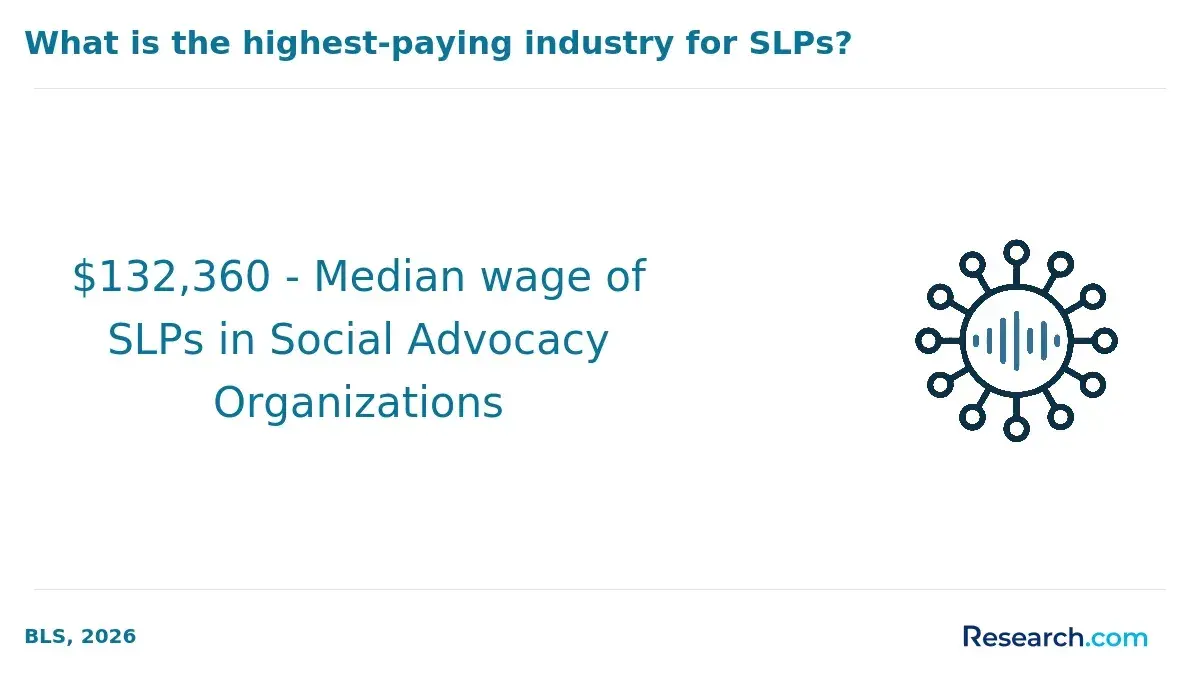
- The career case is strong but the investment is substantial: the U.S. Bureau of Labor Statistics reports a $97,870 median annual wage for speech-language pathologists in May 2025 and projects 17% employment growth from 2025 to 2035.
Which online speech pathology master's programs accept Glendale, AZ residents without relocation?
Several established distance-learning MS-SLP programs have historically enrolled students who live outside the university's home state, including Arizona residents. However, "online" does not automatically mean Arizona admission is available for every cohort. State authorization agreements, clinical-site capacity, and professional-licensure disclosures can change, so applicants should obtain confirmation from admissions before paying an application fee.
The programs below are examples of distance-oriented options worth screening. Their relative fit depends less on brand name than on current Arizona eligibility, clinical-placement policies, travel, tuition, and pacing.
| Program to screen | Distance-learning model | Important Glendale question | Potential trade-off |
| Emerson College, MS in Speech-Language Pathology | Online academic coursework with in-person clinical education | Is Arizona enrollment authorized for the intended start term, and what immersion travel is required? | Private-university pricing and required travel may raise total cost. |
| New York University Steinhardt, MS in Communicative Sciences and Disorders | Online pathway with clinical education and required program experiences | Can the program support Arizona clinical placements and current Arizona licensure preparation? | Live instruction and New York-based immersion requirements may affect work schedules and travel budgets. |
| Baylor University, online MS in Communication Sciences and Disorders | Online cohort curriculum plus in-person clinical placements | Does the program currently accept Arizona residents and arrange or approve placements in the Phoenix area? | Accelerated cohort pacing can reduce flexibility for full-time workers. |
| James Madison University, distance MS in Speech-Language Pathology | Distance-delivered graduate education with supervised clinical requirements | What Arizona eligibility, travel, and placement expectations apply to the current cohort? | Program-specific admission cycles and clinical sequencing may not suit every timeline. |
Before treating any program as relocation-free, ask whether travel is required for orientation, simulation, skills assessment, or campus immersion. Also ask whether the school identifies sites, requires students to locate sites, or uses a shared-placement model. A program can be academically online while still requiring travel outside Glendale for clinical education.
Applicants seeking a broader affordability screen can review online MS SLP programs, then narrow the list using each institution's current Arizona authorization and licensure disclosures.
How do online speech pathology programs serving Glendale meet ASHA CAA accreditation standards?
The Council on Academic Accreditation in Audiology and Speech-Language Pathology, commonly called CAA, is ASHA's specialized accreditor for entry-level graduate SLP programs. CAA accreditation matters because Arizona licensure and the ASHA Certificate of Clinical Competence pathway generally depend on graduating from a qualifying accredited program and completing required supervised experience.
CAA reviews whether a program has appropriate curriculum, faculty, student assessment, clinical education, resources, and outcome monitoring. Delivery mode does not waive these expectations. An online program must still provide students with supervised experiences and demonstrate that its clinical education meets applicable standards.
For Glendale applicants, the key distinction is between CAA accreditation and CAA candidacy. Accreditation indicates that a program has achieved accredited status. Candidacy is a recognized developmental status, but students should carefully confirm the implications for their graduating cohort, Arizona licensing, ASHA certification, financial aid, and employer expectations before enrolling.
Use this verification sequence before making a deposit:
- Find the program in ASHA's CAA or EdFind directory and record its exact current status.
- Read the university's program page and graduate catalog to confirm that the specific online pathway is covered.
- Request a written explanation of how the program's status applies to students entering in your intended term.
- Compare that response with Arizona Board of Speech-Language Pathology requirements before committing.
A common mistake is relying on an institution's regional accreditation alone. Institutional accreditation is important for the university, but it does not substitute for CAA programmatic accreditation when the goal is clinical SLP practice.
Which online speech pathology master's degrees support Arizona SLP licensure requirements after graduation?
An online master's can support Arizona licensure when its curriculum, clinical education, degree status, and post-graduation supervision align with Arizona requirements. The degree itself does not issue a license. Graduates must apply through the Arizona Board of Speech-Language Pathology and complete the applicable licensing and examination steps in effect when they apply.
For a typical clinical SLP pathway, a student should expect to need a qualifying graduate degree, required supervised practicum, a supervised post-graduate clinical fellowship or other required professional experience, and a passing Praxis score where required. Requirements can change, and individuals with school-based goals may also need to meet Arizona education-agency or employer requirements separate from state professional licensure.
This comparison separates what a school can provide from what the applicant must independently verify.
| Licensure factor | What the online program should document | What the Glendale applicant should confirm |
| Graduate education | CAA status and degree completion requirements | That Arizona recognizes the degree pathway for the intended license |
| Clinical practicum | Supervised clock-hour and placement processes | That Arizona-based experiences can be approved and completed on schedule |
| Professional disclosure | Whether the curriculum meets, is designed to meet, or has not been determined to meet Arizona requirements | Whether the disclosure applies to online students in the applicant's location |
| Post-degree requirements | Advising about fellowship and examination pathways | Current Arizona rules at the time of licensure application |
Favor programs that publish a clear Arizona professional-licensure disclosure and will answer follow-up questions in writing. Treat vague assurances such as "our graduates work nationwide" as insufficient; broad graduate mobility is not the same as a determination that a specific curriculum meets Arizona's current rules.
Career goals also matter. Students interested in medical settings, schools, early intervention, or a pediatric SLP path should ask how the program sequences relevant placements, because a generalist degree may offer different clinical exposure depending on local site availability.
What admission criteria and prerequisite coursework do Glendale-focused online SLP programs require?
Admissions policies vary considerably, but most entry-level MS-SLP programs require a bachelor's degree, transcripts, prerequisite coursework in communication sciences and disorders or an approved equivalent, recommendation letters, a statement of purpose, and evidence of academic readiness. Some programs require the GRE, while others do not; applicants should never assume a GRE waiver is universal.
Students without a bachelor's degree in communication sciences and disorders are often viable applicants, but they may need post-baccalaureate leveling coursework first. This can add meaningful time and cost before the master's degree begins. Programs differ on whether they accept courses from community colleges, require specific laboratory components, or offer their own leveling sequence.
Applicants should compare prerequisite expectations course by course rather than simply asking whether a school "accepts non-majors." Common subject areas include:
- Anatomy and physiology of speech and hearing mechanisms
- Phonetics, language development, speech science, and hearing science
- Audiology, aural rehabilitation, and speech-language disorders
- Statistics and biological, physical, and social or behavioral science coursework required for certification pathways
Ask each program to complete a transcript review before enrollment whenever possible. The most avoidable error is paying for a degree application before discovering that missing prerequisites delay eligibility by a year or more.
Academic fit matters as much as admissions accessibility. Resources on online speech language pathology programs can help applicants compare entry points, but an easier admission route is not automatically the best choice if it lacks Arizona eligibility or a workable clinical plan.
How do clinical practicum and local placements work for online SLP students living in Glendale?
Clinical education is the part of an online SLP degree that cannot be completed entirely through a learning platform. Students generally develop clinical skills through direct, supervised work with clients or patients in settings such as schools, outpatient clinics, hospitals, rehabilitation facilities, early-intervention programs, and university clinics.
Programs use different placement models. Some have dedicated clinical-placement teams that secure or coordinate affiliations; others require students to identify potential sites, after which the university negotiates affiliation agreements and verifies supervisor qualifications. In either model, a Glendale-area placement is not guaranteed unless the program explicitly says so.
Before applying, ask admissions or clinical education staff these specific questions:
- Will the program seek placements within reasonable commuting distance of Glendale, and what happens if none are available?
- Who initiates affiliation agreements with Arizona sites, and how long can that process take?
- Can students use an employer site, and what conflict-of-interest restrictions apply?
- How many clinical rotations are required, and are any experiences expected outside Arizona?
- Are daytime weekday hours required during practicum or externship terms?
- What costs apply for background checks, immunizations, drug screening, liability coverage, travel, and parking?
Clinical availability is often the decisive risk for working adults. Even if didactic courses are asynchronous, site schedules are typically set by the clinic or school. A Glendale resident with a full-time daytime job should model how they will handle required daytime clinical hours before choosing a cohort.
Do not resign from work based only on a projected placement timeline. Wait until the program explains its placement process, estimated lead time, and contingency plan in writing.
How can Glendale applicants verify institutional and programmatic accreditation for online SLP degrees?
Accreditation verification should be completed independently, not inferred from marketing language. A legitimate review has two layers: institutional accreditation for the university and CAA programmatic accreditation or status for the clinical SLP degree.
Use the following checklist to create an application record for every school under consideration:
- Confirm the university's institutional accreditation through its official accreditation information and recognized accreditor listing.
- Search ASHA's CAA or EdFind directory for the exact program name, degree, location, and current accreditation status.
- Read the school's online-program page to determine whether the distance pathway is part of the accredited program.
- Read the school's Arizona professional-licensure disclosure, not just its general online-learning page.
- Save dated copies or screenshots of the status and disclosure, then ask admissions to confirm applicability to your intended cohort.
- Check the Arizona Board of Speech-Language Pathology's current requirements before enrollment and again before graduation.
Be cautious if a school cannot identify its exact CAA status, treats "approval" as equivalent to accreditation, or cannot explain how online students obtain supervised clinical education. Another red flag is a promise that a degree "qualifies students in all states" without a state-by-state disclosure.
Arizona authorization and professional licensure are related but different. A school may be authorized to deliver distance education to an Arizona resident while still stating that it has not determined whether the curriculum meets Arizona professional licensing requirements. Both issues must be resolved.
What are typical tuition, fees, and cost-of-attendance ranges for these online SLP programs?
There is no single reliable tuition range for Glendale-accessible online MS-SLP programs because schools price by credit, term, cohort, or annual enrollment, and required fees vary. Private distance programs can carry substantially different charges from public-university distance programs, while in-state tuition may not apply to an Arizona resident attending an out-of-state public institution.
The useful comparison is total estimated cost of attendance, not the advertised per-credit rate. Request an itemized estimate covering every term through graduation, then compare like with like: tuition-only figures should not be compared against another school's tuition-plus-fees estimate.
| Cost category | Why it changes the comparison | Question to ask |
| Tuition | May be charged per credit, per term, or as a cohort price | What is the published total tuition for the required curriculum? |
| Mandatory university fees | Technology, student-services, graduation, and course fees may be separate | Which mandatory fees apply to online students in every term? |
| Clinical compliance costs | Background checks, immunizations, insurance, screening, and equipment can be required before placement | Which clinical costs are paid directly by the student? |
| Travel and lodging | Immersions, skills intensives, or distant placements can create non-tuition expense | How many trips are required, where are they held, and are there placement-related travel expectations? |
| Lost earnings | Daytime practicum can reduce paid work hours | When do full-time clinical commitments begin, and can employment be maintained? |
Federal financial aid eligibility depends on the school, program, enrollment status, and student circumstances. Submit the FAFSA early if eligible, but do not use anticipated aid as a substitute for a cash-flow plan. Scholarships, employer assistance, military benefits, and savings can reduce borrowing, but availability and eligibility vary.
An accelerated format can lower the time spent enrolled, yet it does not necessarily lower tuition and may increase lost-income pressure. Applicants considering accelerated speech pathology programs online should compare the entire payment schedule and clinical workload, not only the advertised finish date.
How do part-time, accelerated, and asynchronous formats differ across Glendale-accessible online SLP programs?
Format labels can be misleading. "Asynchronous" usually describes how some academic content is delivered; it does not mean clinical requirements are self-paced. Likewise, an accelerated program may have online lectures but still require intensive daytime clinical participation.
This table shows the practical trade-offs Glendale applicants should use when matching a program to work and family obligations.
| Format | Best fit | Main advantage | Primary constraint |
| Full-time cohort | Students able to prioritize school and clinical training | Clear sequence and potentially shorter calendar time | Limited flexibility when clinical assignments require daytime availability |
| Part-time cohort | Students who need a slower academic pace | May spread coursework and tuition payments over more terms | Can extend total completion time; clinical phases may still be full-time |
| Accelerated cohort | Students with prerequisites complete and strong scheduling capacity | Condenses academic terms and may reach graduation sooner | High weekly workload and less room for course repeats or work conflicts |
| Mostly asynchronous coursework | Students needing flexibility around lecture viewing | Less dependence on a fixed lecture time | Group work, assessments, advising, and clinical work may still occur on set schedules |
| Synchronous online coursework | Students who value live instruction and can protect recurring time blocks | Real-time interaction and predictable faculty access | Arizona time-zone differences can create early-morning or evening commitments |
Arizona generally does not observe daylight saving time, while many universities do. Ask for a sample weekly schedule for both standard time and daylight saving time periods. This small detail can matter when a course is scheduled according to Eastern or Central Time.
Choose the shortest format only if you can protect clinical availability and have a financial plan for periods of reduced work. Choose part-time study when the school confirms that its clinical sequence remains feasible for your responsibilities, not simply because the coursework appears flexible.
What graduation outcomes, Praxis pass rates, and employment results do these online SLP programs report?
Outcome data can help distinguish a program with a workable student-support system from one that only advertises convenience. CAA-accredited programs commonly publish data related to completion, Praxis examination performance, employment, and program completion time, though reporting periods and definitions can differ. Compare the same reporting year and measure across schools whenever possible.
Applicants should request or locate the program's most recent outcomes disclosures and read the definitions behind the numbers. A high Praxis pass rate is encouraging, but it does not prove a program is the right fit for an individual student, and a small graduating cohort can make year-to-year rates volatile.
Use this outcome review to ask better questions:
- What was the cohort size behind the published completion and examination results?
- How many students completed within the program's expected timeframe?
- What support is available for students who need remediation or a repeated clinical experience?
- How does the program define employment, and when are graduates surveyed?
- Can the school distinguish outcomes for distance students from outcomes for campus-based students?
National labor-market data provide helpful context, not a school-specific employment guarantee. The BLS projects 17% growth in SLP employment from 2025 to 2035, with about 12,500 openings per year on average. That outlook suggests durable demand, but local hiring, setting preferences, Arizona licensing timing, and an individual's clinical experience still shape job prospects.
Be skeptical of a school that highlights salary anecdotes without publishing standard completion, Praxis, and employment disclosures. A stronger program will explain its data transparently and connect students with appropriate licensure and clinical-fellowship guidance.
How should Glendale residents compare online SLP programs versus on-campus Arizona options for value and risk?
An online program is often best for a Glendale resident who needs to remain in the Phoenix area, can manage occasional travel, and finds a school with a clear Arizona placement and licensure plan. An Arizona campus program may be better for students who want direct access to a university clinic, local faculty relationships, and less uncertainty about in-state clinical coordination.
The right comparison is not online versus campus in the abstract. It is the total risk, total cost, and clinical fit of a specific option.
| Decision factor | Online program may be stronger when | Arizona campus option may be stronger when |
| Location flexibility | You must stay in Glendale for family, work, or housing reasons | You can commute or relocate close to campus |
| Clinical coordination | The online school has confirmed Arizona affiliations and placement support | You prefer access to the university's established local clinical network |
| Travel cost | Required immersions are limited and affordable | Distance-program travel would materially raise total cost |
| Schedule | The course format fits your work schedule before clinical terms begin | You benefit from a traditional fixed campus schedule and in-person support |
| Tuition value | Total tuition, fees, and travel are competitive after aid | Resident tuition or reduced travel creates a lower overall cost |
Make a final comparison using written answers from each school, not verbal impressions from a recruitment call. Build a one-page decision sheet for every finalist that includes CAA status, Arizona disclosure, total published cost, travel requirements, required live sessions, clinical-placement responsibility, prerequisites, and expected completion sequence.
The lowest-risk choice is usually the program that gives the clearest written answers, not necessarily the lowest sticker price or shortest advertised timeline. If a school cannot confirm Arizona eligibility or explain clinical placement contingencies, pause the application until it can.
Other Things You Should Know About Speech Language Pathology
Yes, if the degree is from an appropriately accredited program and you complete the clinical, examination, fellowship, and Arizona licensing requirements that apply when you seek licensure. The online delivery format does not remove in-person clinical training requirements.
Not always. Many programs consider applicants from other majors, but they typically require prerequisite or leveling coursework before graduate clinical training. Ask each school for a transcript evaluation because missing courses can change your start date.
It may be possible during some academic terms, especially in a part-time format, but clinical practicum and externships often require daytime weekday availability. Review the clinical calendar before assuming that online coursework will make full-time employment sustainable.
The timeline depends on the graduate program, the availability of a qualifying supervised fellowship or required post-graduate experience, examination timing, and Arizona Board processing. Confirm current rules with the board and begin planning for licensure before your final clinical term.
References
- Master of Science in Speech-Language Pathology... https://www.midwestern.edu/academics/degrees-programs/college-health-sciences/master-science-speech-language-pathology-program/master-science-speech-language-pathology-glendale-campus
- Online MS in Speech-Language Pathology (SLP) | Pepperdine https://healthscience.pepperdine.edu/online-masters-in-speech-language-pathology/
- Master of Science in Speech-Language Pathology https://www.atsu.edu/arizona-school-of-health-sciences/academics/master-of-science-in-speech-language-pathology
- Communication Disorders, MS - ASU degree https://degrees.asu.edu/masters-phd/major/ASU00/LACOMDISMS/communication-disorders-ms
- Online Master's in Speech Pathology Programs: 2026 Guide https://speechpathologymastersprograms.com/