2027 Online BA in Psychology - Mental Health: How to Evaluate a Program That Changes Its Catalog During Your Enrollment

Co-Founder and Chief Data Scientist
A psychology program can change its catalog while you are still working toward your degree. A renamed concentration, discontinued elective, or revised internship requirement could affect your graduation date and cost - even if you enrolled under an earlier catalog.
This guide is for prospective and enrolled online BA students, especially those returning with transfer credit. It explains how to identify the requirements that govern your degree, test whether required courses will remain available, and obtain written answers before a change disrupts your plan.
Key Things You Should Know
- Your entry-term catalog may govern graduation requirements, but that protection depends on the university's published policy and your continuous-enrollment status.
- For a BA commonly requiring around 120 semester credits, accepting transfer credits is not the same as applying them to the psychology major or mental health focus; obtain an approved degree audit.
- Before enrolling, get written answers about discontinued courses, substitutions, placement availability, and the additional terms or costs a catalog change could create.
What Is an Online BA in Psychology With a Mental Health Focus?
It is a bachelor of arts degree in psychology whose curriculum emphasizes topics such as psychological disorders, prevention, behavioral health, or support services. "Mental health focus" might mean an officially recorded concentration, a suggested set of electives, or simply a marketing description. Check the degree audit and transcript policy to learn which it is.
That distinction matters when catalogs change. A school might retain the psychology BA but stop offering the courses that made its mental health focus attractive. If substance-use services are your main interest, compare the actual coursework with academic preparation through an addiction psychology bachelor's; neither label, by itself, establishes a professional credential.
How Do You Verify Accreditation for an Online Psychology Bachelor's Program?
Confirm the institution's accreditation status with its recognized institutional accreditor and check that the status covers the school awarding the degree. Then verify that the online BA is an authorized offering of that institution and ask whether any planned program or institutional change could affect students during your enrollment. The university and accreditor, not a comparison listing, are the authorities on status and scope.
Do not mistake institutional accreditation for proof that a mental health concentration prepares students for licensure. The American Psychological Association does not accredit general undergraduate psychology majors. When reviewing distance learning psychology degree options, evaluate accreditation separately from catalog protections, course availability, and student support: an accredited school can still change a curriculum.
Can You Become a Mental Health Professional With a Bachelor's in Psychology?
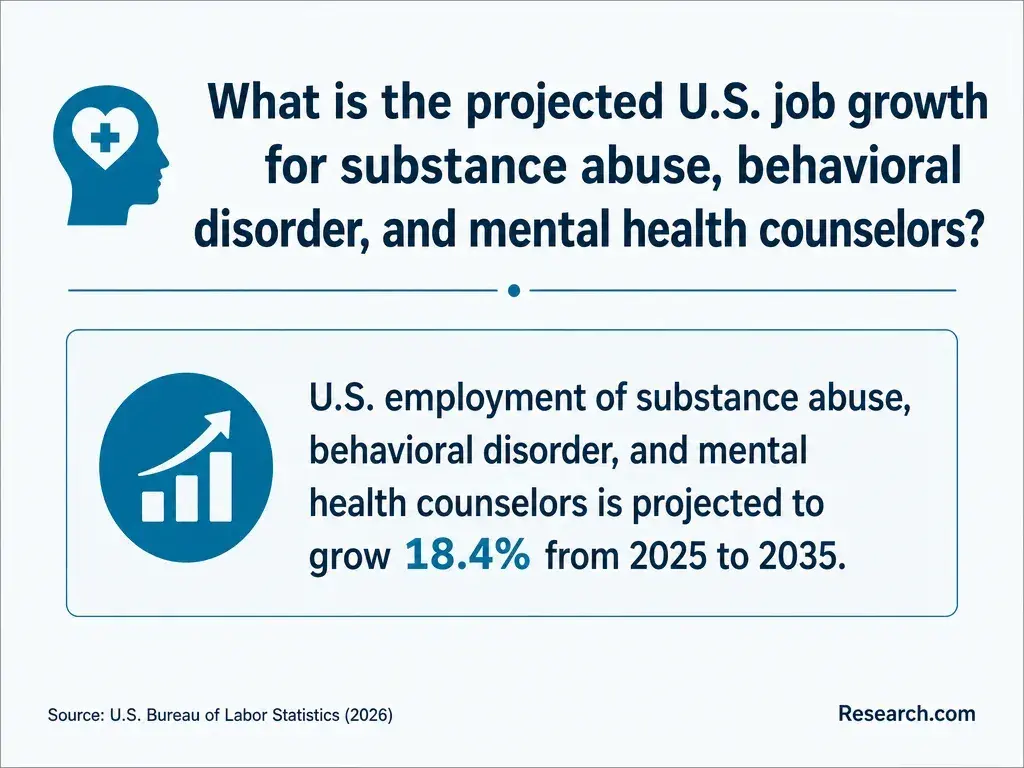
A psychology BA can prepare you to seek nonclinical work in outreach, service coordination, research support, or behavioral-health settings, subject to employer and state requirements. It does not, on its own, authorize psychotherapy, diagnosis, independent assessment, or use of a protected clinical title. Courses about counseling and psychopathology teach academic content; they do not replace qualifying professional education and supervised practice.
If your goal is licensed counseling, check the intended state licensing board's educational rules before choosing an undergraduate program. Investigating online clinical counseling graduate completion options may help you work backward from that goal, but a faster graduate schedule does not waive placement, supervision, or licensing requirements.
Start by separating catalog rights from course availability. A policy may let a continuously enrolled student follow entry-term degree requirements without guaranteeing that every original course will continue to run. Schools may instead approve an equivalent or substitution. Read the catalog-year, continuous-enrollment, leave, major-change, and substitution policies together; ask the registrar which versions apply to you.
The most useful review traces a proposed change all the way to graduation. Use this sequence before committing to a program and whenever a new catalog appears:
- Save your entry-term catalog, concentration requirements, transfer evaluation, and current approved degree audit as dated copies.
- Compare each remaining requirement with the new catalog and published course schedule; flag renamed, discontinued, newly prerequisite-dependent, or infrequently offered courses.
- Ask your advisor and the office authorized to approve degree exceptions which catalog governs, whether a substitution is needed, and how it will appear on your audit.
- Request a term-by-term completion plan showing when required courses or approved alternatives will run, including any internship or capstone approval deadline.
- Get the decision in writing and review the registrar's appeal or grievance process if the audit still conflicts with the applicable policy.
For example, if an abnormal psychology elective disappears, an advisor's verbal suggestion to take another course is not the same as an approved substitution. The consequential question is whether the replacement satisfies your specific requirement and keeps its prerequisites and graduation date workable. Returning students should also examine evaluating transfer options before psychology enrollment, because a catalog revision and a revised transfer evaluation can affect different parts of the same degree plan.
Expect a psychology foundation alongside general education: research methods, statistics, and courses addressing development, social behavior, or biological and cognitive processes. A mental health focus may add psychopathology, health psychology, substance use, community mental health, or related electives. Exact requirements, prerequisites, and whether a course counts toward the focus vary by catalog.
Look beyond titles to sequence and frequency. If statistics precedes research methods and a capstone follows both, a missed course offering can delay more than one requirement. Ask which focus courses are guaranteed to run online, which rotate, and whether supervised nonclinical experience is required or optional. Students drawn specifically to substance-use services can compare addiction counseling degree curriculum choices, while checking the relevant state's credential rules rather than assuming similar course names confer the same eligibility.
Delivery format does not determine academic legitimacy or protect a student from catalog revisions. An online program may make lectures easier to fit around work, but live discussions, group research, scheduled exams, or local placements can still impose fixed commitments. A campus program may offer easier access to faculty and research teams, yet require travel and daytime attendance.
Compare the schedules for courses you actually need, not only the program's advertised format. Accelerated options also deserve scrutiny: three-year online forensic psychology degree options illustrate how a shorter advertised route may depend on transfer credit or course load, and forensic coursework is not a substitute for a desired mental health focus. For either format, ask how the school will deliver or replace a required course if it disappears from the schedule.
Schools commonly request prior academic records and assess applicants under their freshman or transfer policies; individual programs may have additional major-entry rules. For returning students, the decisive document is an official evaluation showing not just which credits were accepted, but which satisfy general education, psychology prerequisites, focus courses, and institutional residency requirements. Only the receiving institution can approve those applications.
Ask whether a change of catalog year, break in enrollment, or later declaration of the mental health focus would change the requirements shown in that evaluation. If the BA is a step toward counseling, review future graduate admissions separately: admission to a psychology BA does not establish eligibility for a particular graduate program. Financial planning for that later step can begin with paying for an online mental health counseling degree, without assuming you will need or qualify for any specific program.
A bachelor's degree commonly totals around 120 semester credits, but remaining time depends on credits that apply to your requirements, course sequencing, enrollment pace, and the school's residency rules. A new catalog requirement or unavailable course can add a term even when it adds few credits. Request a completion estimate based on your approved audit, not a generic program timeline.
Compare tuition using the credits you still need, then add required fees, materials, any travel or placement expense, and the cost of an extra term if a course is delayed. Ask the financial aid office how changes in enrollment pace or satisfactory academic progress could affect your aid. For a broader cost comparison, use psychology degree affordability for returning adults as a starting point, then obtain a school-specific estimate tied to your catalog and audit.
Possible nonclinical targets include behavioral-health support, intake or service coordination, community outreach, and research assistance. Duties and entry requirements differ substantially: one employer may train a new support worker, while another requires prior client-service experience or a state-recognized credential. A concentration does not guarantee eligibility or a particular salary.
There is no reliable single wage for "mental health psychology BA graduates." Even a published occupational median describes workers across backgrounds and experience levels, not the starting pay from this degree. For a useful comparison, identify a specific local job title, inspect its required credentials and duties, and compare its posted pay with the total cost of finishing your BA. Readers targeting substance-use support can explore recovery services employment pathways and verify the state's rules for the exact role.
How Do You Choose a Reputable Online Psychology Program for Your Goals?
Choose the program whose written degree plan remains feasible if the catalog changes. Compare institutional accreditation, the status of the mental health focus, approved transfer applications, course rotation, substitution authority, placement support, and a realistic total-cost estimate. Request the entry-term catalog and a sample or individualized audit before paying an enrollment deposit; a helpful conversation is not a substitute for an approved record.
Make the final choice against your actual goal. If you want a nonclinical support role, weigh the BA against relevant experience or a shorter, role-specific credential. If you plan graduate study, preserve methods and statistics preparation and check that next program's admission and professional-pathway requirements. Comparing prices for online psychology master's degrees can inform longer-term budgeting, but a general psychology master's is not interchangeable with a licensure-qualifying counseling degree. Enroll only when the school can explain, in writing, how you can finish under the requirements it says apply to you.
Other Things You Should Know About Psychology
A leave may affect your catalog year or continuous-enrollment status. Ask the registrar for the applicable leave policy and written confirmation of the requirements you would face on return before you pause.
Ask for the institution's written teach-out or completion plan and how it applies to your degree and concentration. Do not assume another school will accept every credit or preserve your original graduation date.
That depends on whether it was an officially recorded concentration and whether you complete its applicable requirements. Request written confirmation from the registrar rather than relying on the program's former marketing name.
Start with the advisor, then contact the registrar or designated degree-exception authority. If the decision remains disputed, follow the school's published academic appeal or grievance procedure and retain your dated records.
- Teach-Out Process | studentaid.gov https://studentaid.gov/help-center/answers/article/teach-out-plan
- Accreditation in the U.S. | ed.gov http://www.ed.gov/laws-and-policy/higher-education-laws-and-policy/college-accreditation/accreditation-in-the-us
- Change of Catalog Year (Requirement Term) | Rhode Island Small Business Development Center https://web.uri.edu/registration-records/for-students/change-of-catalog-year-requirement-term/
- Transfer Credit FAQ - KU Registrar's Office https://registrar.ku.edu/transfer-credit-faq
- Academic Regulations and Catalog Rights | csusm.edu https://catalog.csusm.edu/content.php
- Evaluation of Transfer Credit | Cal Poly Academic Catalog https://catalog.calpoly.edu/academic-standards-policies/evaluation-transfer-credit/
- Psychology, BSLAS | 2026-2027 Course Catalog | University of Illinois Urbana-Champaign Course Catalog https://catalog.illinois.edu/undergraduate/las/psychology-bslas/
- Catalog Rights Policy | Office of the Registrar | Oregon State University https://registrar.oregonstate.edu/catalog-rights-policy
- Teach Out Policy | Sofia University https://catalog.sofia.edu/teach-out-policy
- EM119 - Catalog Year and Continuous Enrollment | UT System Policies https://policy.tennessee.edu/procedure/em119-catalog-year-and-continuous-enrollment/