2027 Online BA in Psychology - Mental Health for Understanding the Scope of a Non-Licensed Role: Which Courses Should You Look For?
Audited and Verified:
Our Editorial and Data Verification Process
Research.com uses government datasets, official education statistics and primary institutional information to support its career and degree guides. Our review process checks factual accuracy, occupational definitions, source dates and the requirements associated with the credentials discussed.
How This Article Was Fact-Checked
Our editorial team verifies salary estimates, employment projections, education requirements and program information against original data providers and official organizations. Salary figures are checked against the relevant occupational definitions and reporting periods. Information about licensure, accreditation and required in-person training is reviewed separately.
Fact-checked and verified on:

Co-Founder and Chief Data Scientist
An online BA in psychology can help you understand mental health, but studying disorders is different from being qualified to treat them. If you want to work in outreach, intake, service coordination, or another non-licensed support role, the most useful courses depend on the tasks you hope to perform.
This guide connects coursework to those tasks, explains professional boundaries, and shows what to check before choosing a program. It also covers when supervised experience or a more direct credential may serve your goal better than a psychology degree.
Key Things You Should Know
- Prioritize developmental and abnormal psychology, research methods, ethics, and community-focused electives. Pair them with supervised experience in documentation, referrals, or outreach.
- A psychology BA does not authorize diagnosis, psychotherapy, or independent assessment. Some support jobs require separate state credentials or employer training.
- A typical bachelor's degree requires about 120 semester credits, but transfer evaluations and placement requirements, not the online label, determine your remaining time and cost.
What Is an Online BA in Psychology for Mental Health Careers?
It is an undergraduate psychology degree delivered partly or entirely online, with coursework that may address mental health and the systems that support people experiencing difficulties. Some schools offer a formally named mental health concentration; others offer only relevant electives. Ask for the degree requirements rather than relying on a program's description of its "focus."
For non-licensed work, the BA's value lies in understanding behavior, development, evidence, and respectful communication. It is not clinical training. If you already work in a community organization, compare the curriculum with the responsibilities you want to take on.
A targeted course or employer-supported training may address a narrow skills gap more efficiently. For a broader comparison of degree formats and curricula, see this guide to choosing an online psychology program.
Can You Work in Mental Health With a Bachelor's Degree Without Licensure?
Depending on the employer, a graduate might help people find services, coordinate appointments, document contacts, support outreach, or assist with a supervised program. A job title does not define its legal scope: read the actual duties, supervision arrangements, and required credentials.
Support work requires sound referral judgment. A worker may recognize that someone needs prompt help and follow an agency's escalation procedure; that is different from diagnosing the person or independently providing treatment. Peer-support and addiction-service positions can have state-specific certification or training rules even when they are not licensed therapy jobs.
If substance-use services are your specific goal, compare a general psychology BA with budget-friendly substance abuse counseling bachelor's study. Check your state's credential rules before assuming either degree qualifies you for a counseling position.
Does an Online Psychology Bachelor's Degree Lead to Licensure?
Online delivery does not change the distinction between an academic psychology BA and a professional qualification. Licensed counseling, clinical social work, and psychology follow different education, supervised-experience, examination, and state-approval pathways. A course called counseling skills or psychological assessment does not grant permission to practice either.
If psychotherapy is your intended destination, identify the license and state first, then check that jurisdiction's requirements against a qualifying graduate program. The cost of later training matters when weighing an undergraduate choice. This accredited mental health counseling program cost guide addresses a separate pathway, not a feature conferred by a psychology BA.
Choose courses by matching them to support tasks, not by counting how many titles contain "mental health." The comparison below identifies useful academic preparation; none of these courses alone qualifies a student for a regulated clinical duty.
| Course area | Relevance to non-licensed work | What to look for |
| Abnormal psychology and health psychology | Introduces disorders, stress, and evidence about health behavior | Nonstigmatizing language and clear limits of screening versus diagnosis |
| Developmental and cultural psychology | Helps adapt communication and referrals to people's circumstances | Lifespan coverage and attention to cultural context |
| Research methods and statistics | Supports evidence appraisal and basic program reporting | Practice interpreting findings and their limitations |
| Ethics, community psychology, or human services | Connects confidentiality, boundaries, access, and service systems | Applied cases involving referrals and organizational responsibilities |
| Addiction or crisis-related electives | Adds context for a particular service setting | Explicit distinction between support procedures and treatment authority |
A practical sequence is foundational psychology first, then development and methods, followed by setting-specific electives and an approved nonclinical placement if available. Ask whether a placement includes supervised documentation, outreach, or referral work, not just observation, and whether the school helps secure a site.
For a substance-use focus, compare the actual course requirements in addiction psychology BA and BS degree options; the concentration name alone is not a credential.
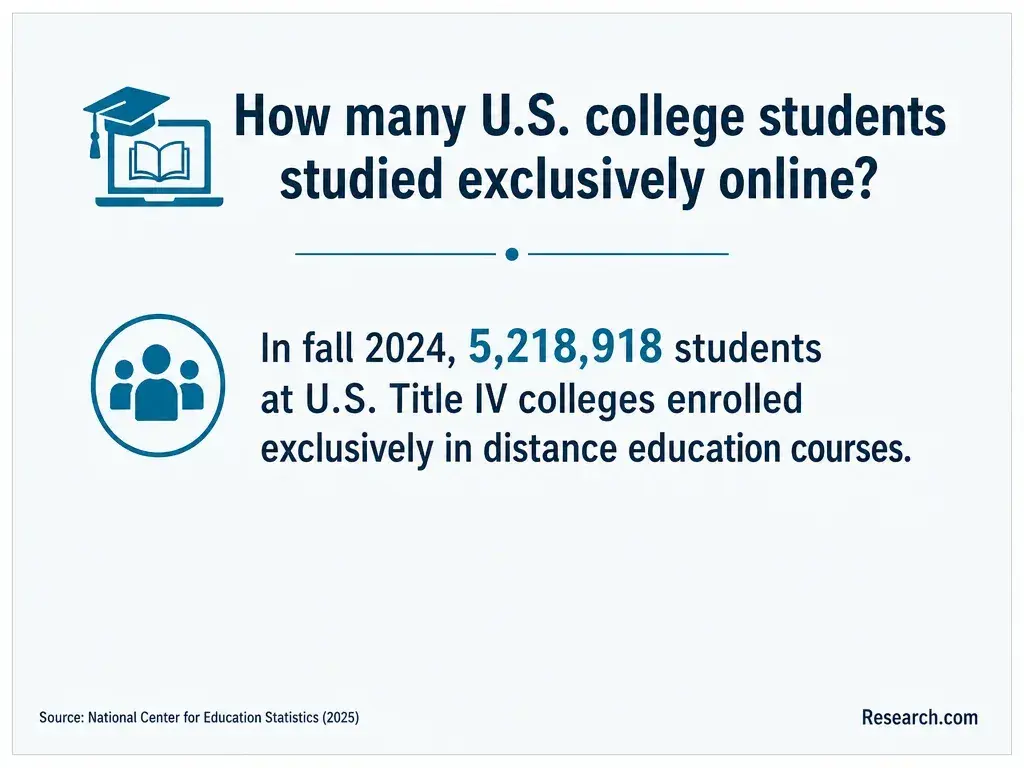
The academic decision is less about screen versus classroom than about access to practice and supervision. An online student may be able to complete lectures asynchronously but still need scheduled discussions, group projects, live research meetings, or a local placement. A campus student may have easier access to nearby agencies or faculty projects, though those opportunities are not guaranteed.
Request the timetable for required courses and ask how online students obtain placement approval, supervision, and career support. This matters if you work shifts or have caregiving obligations: a local agency's hours can be less flexible than the coursework.
Even when comparing three-year forensic psychology bachelor's routes, assess whether an accelerated schedule leaves room for the supervised support experience your target job values.
Check that the institution holds recognized accreditation and that the accreditation covers the school offering the degree. Confirm its status with the accreditor and the U.S. Department of Education's accreditation records. Institutional accreditation is relevant to degree recognition and federal-aid eligibility, but it does not verify a particular internship or establish clinical licensure eligibility.
Do not reject a general psychology BA because it lacks APA accreditation: APA accreditation applies to specified professional psychology training, not general bachelor's programs. If you are considering addiction-service study, separate the school's accreditation and aid eligibility from any state credential requirements. This guide to aid eligibility for online substance use counseling study can help frame the financial-aid questions to ask.
Requirements vary by school and by whether you enter as a first-year or transfer student. Schools commonly review prior transcripts and may have separate rules for admission to the psychology major. Relevant work experience can strengthen your sense of career fit, but it does not automatically replace required coursework.
Transfer applicants should request a written degree audit showing which credits satisfy general education, statistics, research methods, major electives, and residency requirements. An accepted credit may count toward graduation without satisfying the course you expected.
If you have prior college study, review options for using previous coursework toward a psychology degree, then rely on the receiving school's evaluation for your individual plan.
A bachelor's degree often comprises about 120 semester credits, but your remaining credits and course sequence determine your timeline. Compare each school's written degree audit and upcoming course schedule rather than applying a published "fastest completion" claim to your circumstances. An internship offered only in certain terms can delay graduation even when lectures are self-paced.
For a meaningful cost comparison, request the per-credit tuition and mandatory fees, then account for remaining credits, books or software, placement travel, and possible lost work hours. Ask whether financial aid requires a particular enrollment intensity and whether an unpaid placement fits your budget. Faster psychology degree timelines online may reduce elapsed time, but a heavier course load is not automatically cheaper or more workable.
Possible entry points include intake coordination, community outreach, human-services assistance, and program support. Employers may accept several majors and weigh relevant experience heavily.
Some positions require additional training, background checks, or a specific credential. Match the posting's tasks to evidence you can show, such as supervised referral work, accurate documentation, or an ethically completed program project.
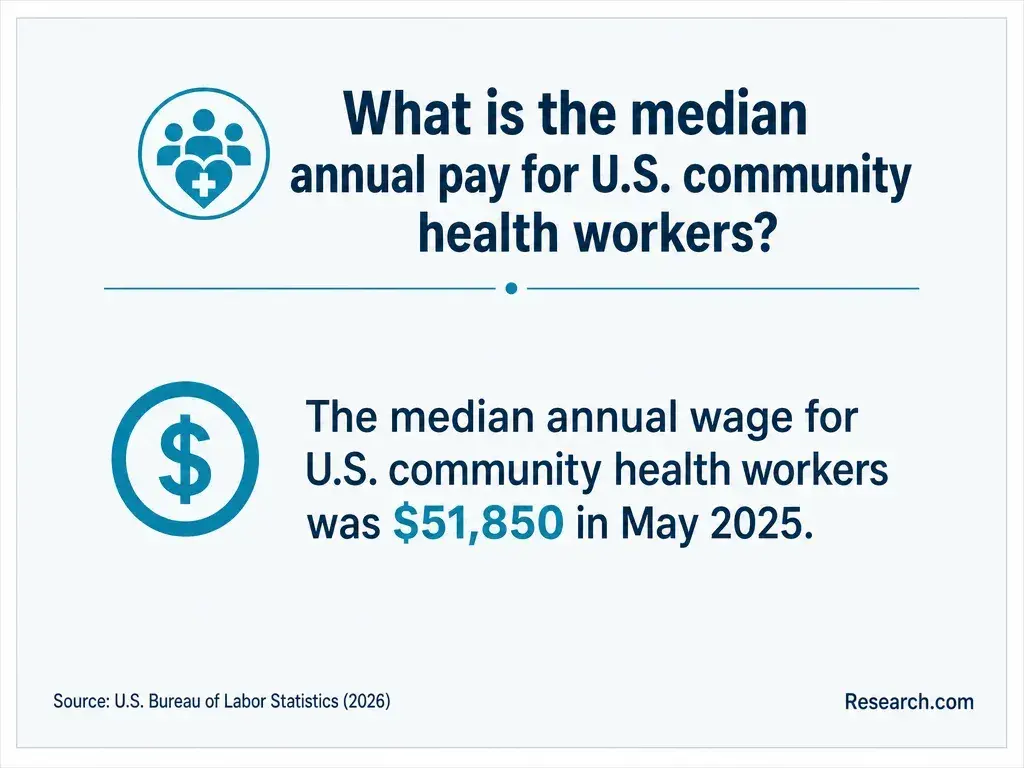
The U.S. Bureau of Labor Statistics groups some comparable duties under social and human service assistants. Its occupation-wide median wage is a useful benchmark to check in the current Occupational Outlook Handbook, but it is not a salary prediction for psychology BA graduates.
The category includes workers with different education and experience. Compare local postings' pay and requirements with your total education cost before enrolling.
A graduate degree is a different decision, not an automatic promotion from support work. Even intensive forensic psychology master's admissions and study plans should be assessed against specific jobs; a nonclinical psychology master's does not, by its name, confer authority to conduct forensic evaluations or therapy.
What Is the Job Outlook for Mental Health Support Roles?
Outlook depends on the occupation, not the degree label. For a support position, use the Bureau of Labor Statistics projection for its closest occupational category, then check local agency openings and funding. A national projection cannot tell you whether a particular employer is hiring, whether its duties are nonclinical, or whether you meet its requirements.
Before committing to more education, compare several current postings: note the required credential, supervision, schedule, and experience. If the roles you want require a license, pursuing a faster general psychology master's will not necessarily bridge that gap. Evaluate shorter online psychology master's timelines only after confirming what the intended role actually requires.
Other Things You Should Know About Psychology Programs
Possibly. Compare each program's service-system coursework, supervised opportunities, and local employer requirements. Psychology may offer broader research preparation; human services may offer more directly applied support coursework.
Only if the program approves the site, duties, supervision, and documentation. Existing volunteer work does not automatically meet academic placement requirements.
Learn what screening can and cannot establish and how your workplace handles referrals. Do not administer or interpret a tool independently unless your role, training, supervision, and applicable rules permit it.
Ask who supervises you, which decisions you can make, how urgent concerns are escalated, and what confidentiality and safeguarding training the organization provides.
- Chapter 510-10 UNLICENSED PRACTICE https://rules.sos.ga.gov/gac/510-10
- Frequently Asked Questions for Mental Health Counselors | nysed.gov https://www.op.nysed.gov/professions/mental-health-counselors/faqs-education-requirements
- Accreditation in the U.S. | ed.gov http://www.ed.gov/laws-and-policy/higher-education-laws-and-policy/college-accreditation/accreditation-in-the-us
- Online Bachelor's Degree in Psychology | OU Online https://online.ou.edu/program/ba-in-psychology/
- Developing and Supporting Virtual Social Work Practicum Placements: Applied Learning in Social Work Education https://alswe.simmons.edu/article/developing-and-supporting-virtual-social-work-practicum-placements/
- Online Bachelor of Arts in Psychology (BA) - apu.apus.edu https://www.apu.apus.edu/online-bachelor-degrees/bachelor-of-arts-in-psychology/
- Behavioral and Mental Health Concentration - Psychology https://psychology.gmu.edu/programs/la-bs-psyc-bmh
- Online Psychology, BS | UCF Online https://www.ucf.edu/online/degree/psychology-b-s/
- The benefits from culturally responsive community-based research partnerships | apa.org https://www.apa.org/research-practice/conduct-research/culturally-responsive-partnerships