2027 Online BA in Psychology - Addictions for Work in Senior Recovery Support Programs: Compare Degree Fit and Hiring Requirements

Co-Founder and Chief Data Scientist
If you want to help older adults affected by substance use, an online psychology BA with an addictions focus may be useful - but it may not be the fastest route into a senior recovery support program. Employers hire for specific duties, and some positions require experience or a state-recognized credential rather than a particular major.
This guide compares what the degree teaches with what these jobs demand, where online study needs in-person practice, and when targeted training or another degree makes more sense. Use it to check your qualifications before committing to tuition and time away from work.
Key Things You Should Know
- An addictions-focused psychology BA can prepare you for nonclinical outreach, referrals, and program support; it does not qualify you to diagnose or treat substance use disorders.
- There is no single national credential for "senior recovery support." Check the job's duties, your state's credential rules, and any employer requirements before choosing a degree.
- Compare the degree's total cost and local placement access with shorter routes such as peer-support training or supervised human-services work; national wage data do not isolate this job title.
What is an online bachelor's degree in psychology with an addictions focus?
It is a psychology bachelor's program that combines core study of behavior and research with coursework on substance use, prevention, treatment systems, and recovery. "Addictions focus" might mean an official concentration, a certificate, or simply a group of electives. Those arrangements can produce different transcripts, so check the catalog rather than relying on a program's marketing name.
A BA typically leaves room for electives and general education, but its actual requirements matter more than the BA label. For senior recovery work, look for aging and lifespan development alongside addiction studies. Older adults may face overlapping concerns involving chronic illness, medication use, grief, isolation, mobility, or cognition; a program devoted mainly to adolescent or general adult addiction may leave important gaps. Use a guide to comparing accredited addiction psychology BA pathways as a starting point, then verify each school's current catalog and field-experience options.
Can an online psychology degree prepare you for senior recovery support work?
Yes, for some nonclinical roles - but coursework alone is incomplete preparation. A support worker might welcome participants, explain available services, help arrange transportation or appointments, document contacts, and make referrals under agency procedures. A psychology BA can strengthen communication, understanding of behavior change, and interpretation of research. It cannot replace practice with older adults, knowledge of local services, or training in an employer's safety and documentation rules.
Map the role's tasks to evidence you can show an employer. A lifespan-development course can support age-responsive communication; an addiction course can help you understand recovery terminology; supervised outreach can demonstrate respectful conversation, reliable follow-through, and referral boundaries. If you already work in a senior center, nonprofit, or behavioral-health agency, ask whether you can take on supervised outreach or program-support tasks before assuming another degree is necessary. Explore the range of jobs involved in working in substance use recovery support, but judge openings by their actual duties and qualifications.
Do not mistake a support role for a treatment role. Recognizing a possible concern and following a referral or emergency protocol is different from diagnosing cognitive impairment, interpreting a clinical assessment, or providing psychotherapy.
What education and credentials are required for senior recovery support programs?
Requirements depend on the position, employer, funding arrangement, and state. "Senior recovery support program" describes a service setting, not one nationally standardized occupation. The table separates routes that can appear under similar-sounding job titles.
Use these distinctions when reading postings: the required qualification follows the duties, not merely the fact that a program serves older adults.
| Role or duty | Qualification to verify | Psychology BA fit |
| Outreach or program assistant | Employer's education, background-check, training, and experience rules | Relevant preparation; may not be required |
| Peer recovery specialist | State or employer rules for lived experience, training, supervision, and certification | May add knowledge; does not substitute for peer requirements |
| Care or case coordinator | Required degree, service experience, supervision, and payer or agency rules | May qualify for some openings, but not all |
| Substance use counselor or therapist | Applicable state credential or license, qualifying education, supervised experience, and other board requirements | Does not independently authorize counseling or therapy |
If counseling is your goal, first obtain your state board's requirements and compare them with a qualifying professional program; shorter routes through mental health counseling graduate study are not shortcuts around required practicum, supervised practice, or licensure. For a support job, a posting may instead point you toward peer training or documented service experience as the more direct investment.
Online delivery can provide the same academic subject matter, but its value for this career depends on what you can practice and demonstrate. Recorded lectures may fit an irregular work schedule; they do not by themselves provide supervised interaction with older adults. Campus study may offer easier access to nearby agencies, while a strong online program may help students arrange approved placements in their own communities. Neither format guarantees a placement.
When comparing online psychology study and degree choices, request a sample course schedule and the placement policy. Check live-meeting times, group work, any campus visits, who finds a site, whether your current workplace can be approved, and who supervises you. An asynchronous course can still carry fixed deadlines; a local placement can require daytime hours. Those details matter more than an unqualified claim that one format is "just as effective."
Typical psychology requirements include introductory psychology, lifespan development, social or health psychology, research methods, and statistics. An addictions focus may add substance use, behavioral health, prevention, or recovery-systems courses. Schools set their own requirements, so confirm which subjects are required rather than available only as electives.
For this goal, a particularly useful course combination is aging plus addictions plus research literacy. Lifespan study helps you avoid treating older adults as a uniform group; addiction coursework introduces recovery concepts; methods training helps you assess service claims without confusing an association with proof of effectiveness. Courses in disability, cultural responsiveness, health systems, or community services can strengthen the fit.
Keep the concentration aligned with the job you want. For example, undergraduate forensic psychology programs by completion time answer a different career-interest question; forensic electives should not displace aging or community-service preparation simply because both programs offer psychology degrees. No course titled "counseling" or "assessment" grants permission to perform regulated clinical work.
First-time applicants generally need the institution's required secondary-school record and application materials. Transfer applicants usually submit transcripts from prior colleges; schools may have separate rules for entry to the psychology major. Admissions requirements, major entry, and graduation requirements are distinct decisions made by the institution.
If you have prior college or human-services training, request a written degree audit before estimating your finish date. Ask which credits satisfy general education, psychology methods or statistics, concentration courses, and any minimum credits that must be earned at the school. Accepted transfer credit does not necessarily fulfill a specific requirement. Compare those findings with accelerated online psychology degrees only after confirming course sequencing and how often required classes run; a faster advertised calendar cannot make a missing prerequisite disappear.
Completion time depends chiefly on accepted credits, how those credits apply to the major, enrollment pace, and the availability of required courses. Someone starting college and someone transferring substantial applicable coursework should not use the same advertised timeline. An internship or capstone may also extend the schedule if site approval takes time.
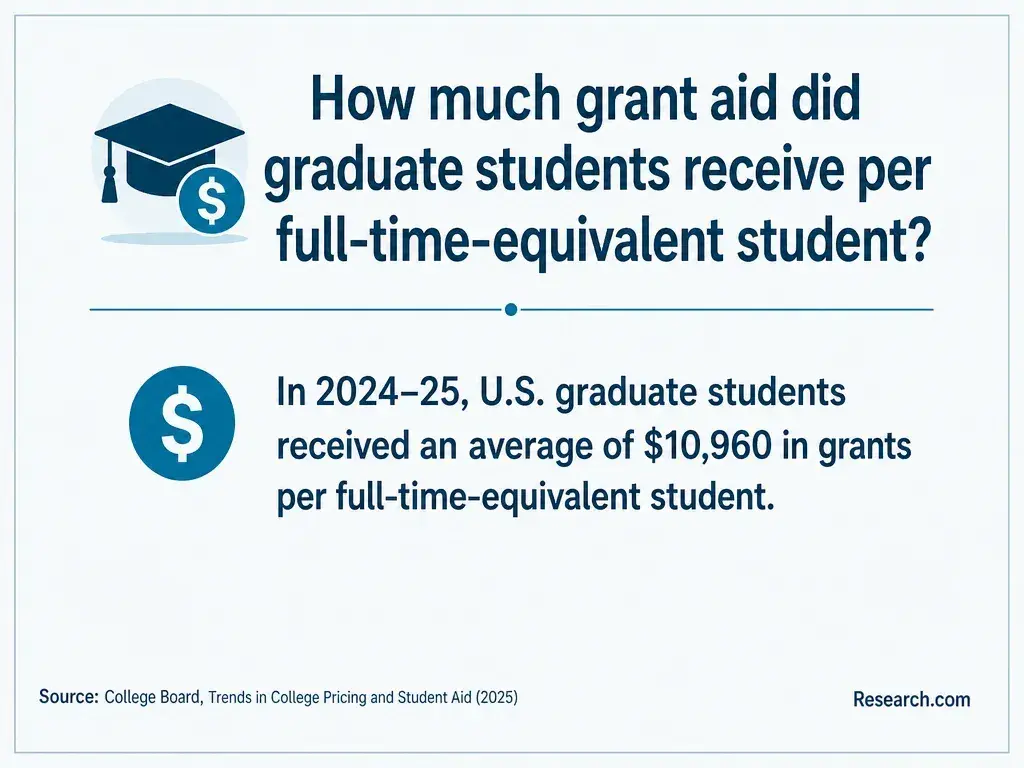
Compare remaining cost to completion, not tuition per credit alone. Request a degree audit and a term-by-term estimate covering tuition, required fees, books or technology, and any travel or unpaid placement hours. Then ask the financial-aid office how your enrollment pace affects aid eligibility. The distinction between grants versus loans for substance abuse counseling bachelor's students matters because a lower upfront bill is not necessarily a lower eventual cost.
For a support position that does not require a BA, compare that estimate with the cost and time of employer training, an applicable peer credential, or entry-level service work. A bachelor's degree may still be worthwhile for broader advancement or later study, but those are separate benefits to weigh against the immediate hiring requirement.
Potential nonclinical openings include recovery-program assistant, older-adult outreach worker, intake or referral coordinator, community health program staff member, and some case-coordination roles. Eligibility varies: one employer may accept a psychology BA, another may prefer social work or human services, and another may prioritize experience with older adults. Read the minimum qualifications and daily tasks before treating a job title as an outcome of the degree.
Your strongest application pairs the degree with documented, supervised work: accessible communication, accurate service notes, appropriate referrals, confidentiality, and collaboration with clinicians and community partners. If you are changing careers, translate relevant experience - such as scheduling, client service, transportation coordination, or nonprofit reporting - into these tasks, then identify the gaps that require training.
Do not use unrelated advanced-degree careers to estimate your options. For instance, comparing forensic psychology master's career earnings addresses different qualifications and jobs; it cannot establish what an addictions-focused BA will earn in senior recovery support.
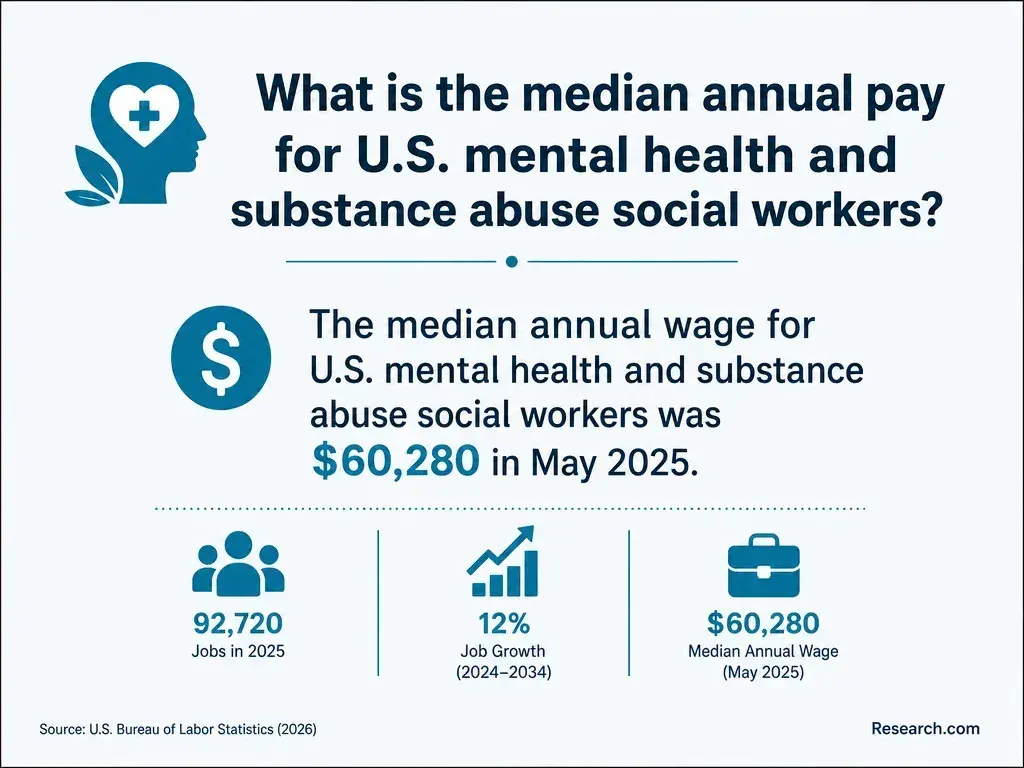
There is no single national wage series for the title "senior recovery support worker." The U.S. Bureau of Labor Statistics reports wages and projections for broader occupations, such as substance abuse, behavioral disorder, and mental health counselors or community health workers. Those groups have different duties and credential requirements. A counselor's occupational median is not an expected wage for a nonclinical support worker - or for graduates of a particular BA.
For a useful pay comparison, collect local postings that match your intended duties and separate entry-level wages from positions requiring certification, extensive experience, or a clinical license. Review the BLS Occupational Outlook Handbook entry for the closest matching occupation for its wage reference year, projection period, and typical entry requirements. Treat its outlook as context for the occupation, not a forecast of vacancies at senior programs near you.
If the jobs with the pay or responsibilities you want require clinical licensure, compare the full qualifying pathway, including supervised practice, rather than assuming this BA leads directly there. Looking at lower-cost accredited counseling degree pathways can inform that separate decision, provided you verify eligibility in the state where you intend to practice.
How do you choose an accredited online psychology program?
Start by confirming the institution's recognized accreditation and the exact award shown in its catalog. An official addictions concentration, a set of electives, and a separate certificate are not interchangeable. APA accreditation should not be presumed for a general undergraduate psychology degree; professional accreditation applies to particular types of programs and credentials.
Before enrolling, ask the program for its current course map, transfer evaluation, total-cost estimate, and written field-experience policy. Ask a local senior recovery employer which degrees, credentials, and experience it accepts. Compare the two sets of requirements: the best-fit program is the one that closes a real hiring or preparation gap at a cost you can sustain. If your goal is licensed counseling instead, compare the distinct program and placement rules described in guides to clinical mental health counseling course pace and accreditation; an undergraduate psychology program cannot be evaluated as though it were a licensure-track counseling degree.
Other Things You Should Know About Psychology
It may help you describe communication and caregiving skills, but employers and schools decide whether informal care meets a specific experience or placement requirement. Ask what documentation and supervision they require.
Not for every support job. Some peer roles have lived-experience eligibility rules; other roles do not. Check the credential or posting and share personal information only through the relevant application process.
Do not assume so. Medication assistance and administration are governed by the role, setting, employer policy, and state law. Obtain task-specific authorization and training before taking responsibility.
Follow the program's safety and escalation procedure, document objective observations, and alert the designated qualified staff member. Do not diagnose the cause or make an independent clinical assessment.
- Chapter 2 - Roles of the Peer Worker - NCBI https://www.ncbi.nlm.nih.gov/books/NBK596269/
- Accreditation in the U.S. | ed.gov http://www.ed.gov/laws-and-policy/higher-education-laws-and-policy/college-accreditation/accreditation-in-the-us
- Cost of Attendance (Budget) | 2025-2026 Federal Student Aid Handbook https://fsapartners.ed.gov/knowledge-center/fsa-handbook/2025-2026/vol3/ch2-cost-attendance-budget
- Behavioral Health Career Descriptions | samhsa.gov https://www.samhsa.gov/about/careers/behavioral-health-workforce/careers-by-state/descriptions
- Recruitment and Employment of People in Recovery | dol.gov https://www.dol.gov/agencies/eta/RRW-hub/Getting-started/Recruitment-employment
- Types of Financial Aid: Grants, Work-Study, and Loans | studentaid.gov https://studentaid.gov/understand-aid/types
- Online Bachelor's Degree in Psychology | Friends University https://www.friends.edu/online/undergraduate/psychology-adult-undergraduate/
- Working with older adults | apa.org https://www.apa.org/monitor/2018/12/working-older-adults
- Applied Psychology: Addictions Studies, B.S. - CPS, CPSO | University of New Hampshire https://www.unh.edu/program/bachelor-science/applied-psychology-addictions-studies
- Online Bachelor's Degree in Psychology in Addictions | Purdue Global https://www.purdueglobal.edu/degree-programs/psychology/bachelor-psychology-addictions/