2027 Choosing an Online BA in Psychology - Addictions Around Joint Custody and Alternating Parenting Weeks

Co-Founder and Chief Data Scientist
Alternating parenting weeks can make an online degree look manageable - until a live class, group project, or placement falls during a caregiving week. If you want to study addiction and recovery, the decision has another layer: a psychology BA may prepare you for support work, but it is not automatically an addiction counseling credential.
This guide is for parents balancing joint custody, education, and career plans. It explains how to assess scheduling, coursework, costs, and career pathways without assuming that either online delivery or an addictions focus solves those practical constraints.
Key Things You Should Know
- Check the calendar, not just the "online" label: alternating parenting weeks can conflict with required live sessions, group meetings, exams, and placements.
- Separate education from treatment credentials: a psychology BA with addictions coursework does not, by itself, authorize independent counseling or diagnosis; state rules govern regulated addiction roles.
- Plan for both weeks: a 7-day caregiving week and a 7-day noncaregiving week may offer different study hours, but deadlines and required activities may not alternate with them.
What Is an Online Bachelor's Degree in Psychology and Addictions?
It is usually a psychology bachelor's degree with addiction-related courses, electives, or a formally named concentration. Students study behavior and psychological research alongside topics such as substance use, prevention, recovery systems, and the social contexts of addiction. The exact credential on the transcript matters: a collection of electives is not necessarily an addictions concentration.
For a parent interested in how recovery intersects with family routines and custody transitions, the degree can provide a useful scientific foundation. It cannot establish what is best for a particular family or substitute for clinical or legal advice. When comparing addiction psychology bachelor's curriculum options, check the actual course catalog and whether addiction courses are offered often enough to fit your planned pace.
Can an Online Psychology Degree Prepare You for Addiction-Related Careers?
Yes, for some nonclinical responsibilities. Relevant work may include recovery-service administration, outreach, resource navigation, intake support, program coordination, or research assistance. Employers may also require experience, training, background checks, or a specific credential. A BA does not turn an outreach worker into a therapist.
Start with your existing experience. A parent who has coordinated services, kept records, worked in a community organization, or managed complex schedules may already have useful communication and organizational skills. To demonstrate addiction-related readiness, seek supervised work that develops accurate documentation, respectful referrals, confidentiality, and knowledge of local services. If your interest in custody instead points toward legal-system work, compare actual duties before choosing a degree; forensic psychology master's career progression options concern a different pathway from addiction recovery support.
Does a Bachelor's in Psychology Qualify You for Addiction Counseling Licensure?
Not automatically. States set their own requirements for addiction counselor titles and duties. Depending on the credential, those rules may specify coursework, a qualifying degree, supervised experience, an examination, and ongoing education. An online psychology BA - even one with an addictions concentration - must be checked against the rules of the state where you intend to work.
If counseling is your goal, identify the exact state credential and obtain its published requirements before enrolling. Ask the program which requirements its curriculum is designed to meet, which it does not meet, and whether any required supervised training can be completed locally. A qualifying counseling or social-work pathway may be more direct for some licensed roles; comparing condensed accredited counseling study routes can inform that separate decision, but a shorter academic schedule does not remove supervised-practice requirements.
Custody schedules can change access to routines and support: child-care responsibilities, transportation, sleep, meetings, and treatment appointments may look different from one week to the next. Those changes do not mean joint custody causes addiction or relapse. Recovery needs and parenting arrangements are individual, and a custody order - not a psychology course - governs the family's legal schedule.
For a student, this distinction matters in two ways. First, design a realistic study plan for both kinds of week rather than assuming you can recover every missed hour during the next one. Second, if you hope to work with families affected by substance use, learn to discuss barriers without diagnosing a parent or treating a schedule as proof of risk. Custody disputes may raise interest in forensic work, but forensic psychology program review before enrollment is a separate decision; an addictions-focused BA does not qualify someone to perform a custody evaluation.
Expect to compare each school's requirements rather than assume a standard curriculum. A useful foundation includes statistics and research methods for evaluating claims about addiction, developmental and social psychology for understanding family and community contexts, and addiction-related study that distinguishes substance use, treatment systems, and recovery support. Ethics and culturally responsive communication are especially important where children and confidential family information are involved.
Check sequencing before choosing a pace: a methods course may require statistics first, while an addiction elective may not run every term. If your goal is later graduate study, compare its stated prerequisites with the BA's courses. Shorter online psychology master's timelines may be relevant later, but speed should not replace the methods preparation or qualifying professional training your goal requires.
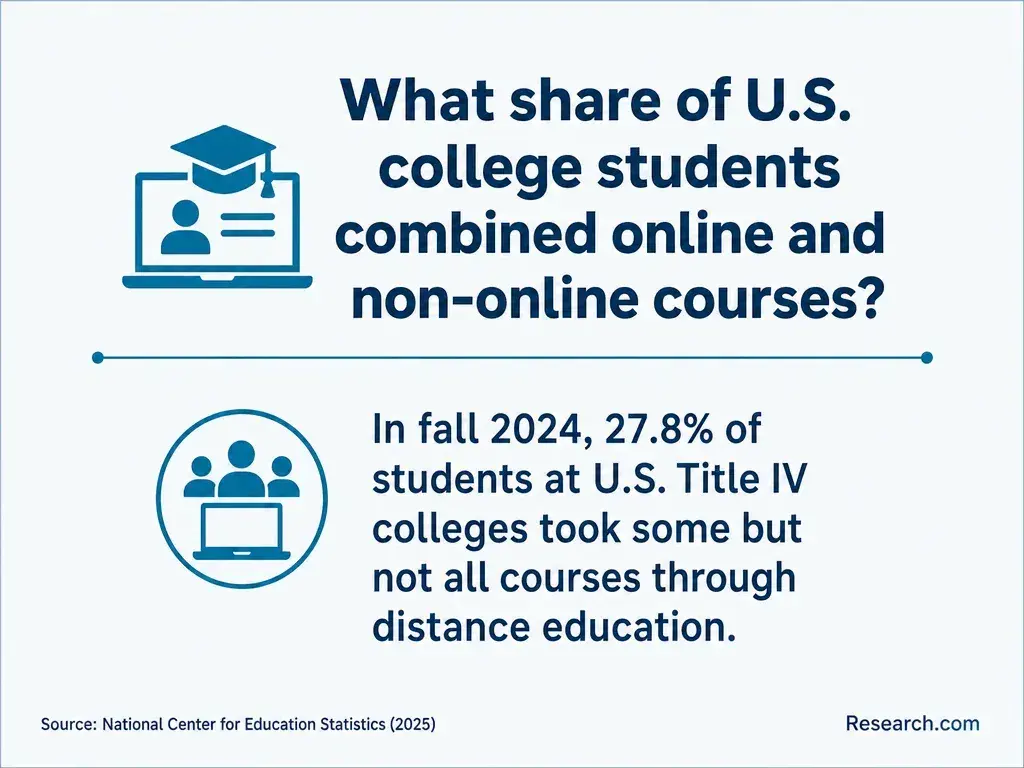
Online delivery can remove a commute, but it does not guarantee control over class times. The comparison that matters for alternating parenting weeks is when and where participation is required, including exams, live discussions, research meetings, and any placement. Campus study may offer easier access to faculty or local projects; an online program may be the better fit if those opportunities are available remotely or near home.
The table distinguishes delivery features that can change a working parent's weekly plan. Treat each entry as a question for the specific program, not a promise about all programs in that format.
| Feature | Online program | Campus-based program |
| Class attendance | May be asynchronous, live, or a mix | Usually tied to scheduled on-campus meetings |
| Applied experience | May require an approved local site or scheduled remote work | May offer nearby sites but still require fixed hours |
| Travel | Possible for residencies, exams, or placements | Regular commute is usually expected |
Request a sample term calendar before comparing an online psychology degree selection guide with campus options. Test every required activity against both parenting weeks, including school breaks and unexpected care needs.
Check that the institution holds recognized institutional accreditation and that it applies to the school awarding the degree. Then check the separate question of whether the program meets any requirements for your intended next credential. Institutional accreditation supports basic educational legitimacy; it is not a determination that a psychology BA qualifies you for addiction counseling.
Do not look for APA accreditation as a blanket requirement for an undergraduate psychology major: APA accreditation covers specified professional psychology training programs, not general psychology BAs. If you might change schools, ask the receiving institution how credits would apply to its degree - not merely whether it accepts them. Psychology program transfer policies are worth reviewing before you rely on a future transfer to preserve your timetable.
Requirements, completion times, and prices vary by institution and by the credits a school applies toward its degree. First-time applicants and returning students may face different admission steps. A returning student should request a written degree audit showing which prior courses satisfy general education, psychology, statistics, and remaining graduation requirements; accepted credit alone does not establish a graduation date.
For cost, compare the price of the remaining courses plus mandatory fees, books, technology, travel, and any placement-related expenses. Calculate a schedule you can sustain during caregiving weeks; a faster plan can become more expensive if it forces withdrawals or reduced work hours. Review eligibility and deadlines for aid, including grants for substance abuse counseling bachelor's study, without assuming that aid described for one program applies to a different psychology BA.
Potential starting points include intake or referral support, community outreach, recovery-program administration, and research support. Pay depends on the occupation, employer, location, experience, and any required credential - not simply the name of the BA. A published occupational median would describe workers across that occupation, not the starting salary of graduates from a particular program.
Compare job postings where you could realistically work during both parenting weeks. Note whether the duties include evening coverage, travel between sites, supervised client contact, or a credential you do not yet hold. If the role you want is licensed counseling, include the cost and time of qualifying graduate education and supervised practice in your career calculation. Paying for an online mental health counseling degree is a separate financial decision from paying for an undergraduate psychology degree.
How Can You Choose a Reputable Online Psychology Program?
Choose against a specific outcome: finishing a BA on a workable schedule, entering nonclinical addiction services, or preparing for a defined next credential. A low advertised price or flexible-sounding format is not enough. Use the same questions with every school so that differences are visible before you commit.
Ask for written answers to the following checks; each can change whether a program works across alternating parenting weeks.
- Which courses, exams, meetings, and group projects require attendance at a fixed time?
- What does my degree audit show, and when are the required statistics, methods, and addiction courses offered?
- Are placements required, who approves a local site, and what hours and supervision must it provide?
- What is the estimated cost of my remaining requirements, including fees and any travel?
- Which of my target state's credential requirements, if any, does this program explicitly address?
Compare written responses alongside economical online psychology program choices. If your immediate goal is a specific support job rather than a bachelor's degree, also check whether employer training or a state-recognized support credential would be a more direct first step.
Other Things You Should Know About Psychology
You can discuss a general question with an instructor, but do not assume you may submit identifiable information about a child, co-parent, or treatment history. Ask what consent, privacy protections, and project approval apply.
Ordinarily, the useful question is whether you can meet published requirements. You can ask about scheduling, leave, and placement policies without volunteering private family details.
Only if the school's relevant office approves it under its rules. Existing experience does not automatically replace coursework or a supervised placement.
Contact the instructor or academic adviser as early as possible. Ask what alternatives are permitted under the course policy, rather than assuming a recorded session or deadline change will be available.
- Who's the Boss? Ethical Dilemmas in the Treatment of... - PMC https://pmc.ncbi.nlm.nih.gov/articles/PMC10153495/
- Children Living with Parents Who Have a Substance Use Disorder | samhsa.gov https://www.samhsa.gov/data/sites/default/files/report_3223/ShortReport-3223.html
- THE NEED FOR UNIFORM STANDARDS ISSUE BRIEF | ASPE https://aspe.hhs.gov/reports/credentialing-substance-use-disorder-counselors-need-uniform-standards-issue-brief-0
- Frequently Asked Questions - California Board of Psychology https://www.psychology.ca.gov/licensees/faq.shtml
- Cost of Attendance (Budget) | 2025-2026 Federal Student Aid Handbook https://fsapartners.ed.gov/knowledge-center/fsa-handbook/2025-2026/vol3/ch2-cost-attendance-budget
- Types of Financial Aid: Grants, Work-Study, and Loans | studentaid.gov https://studentaid.gov/understand-aid/types
- Online Major | CAS - Psychology | The University of Alabama at Birmingham https://www.uab.edu/cas/psychology/undergraduate/online-major
- Online vs On-Campus College: Choose the Right Format | Bay Path University https://www.baypath.edu/news/bay-path-university-blogs/post/online-vs-on-campus-college-choose-the-right-format/
- What's the Difference Between Asynchronous and Synchronous Learning? | Ohio State Online https://online.osu.edu/content-hub/blogs/whats-the-difference-between-asynchronous-and-synchronous-learning/
- Cost of Attendance | Undergraduate Financial Assistance | University of Miami https://finaid.miami.edu/cost/index.html