2027 Choosing an Online BA in Psychology - Addictions for a Future Public Health Graduate Application: Prerequisites to Compare

Co-Founder and Chief Data Scientist
An addictions-focused psychology BA can be a strong foundation for public health graduate study - but the concentration name will not tell you whether you have the courses or experience an MPH program expects. If you are choosing an online bachelor's program with graduate school in mind, the important comparison is between its actual curriculum and your target programs' admissions requirements.
This guide shows you what to check, where online study may complicate applied experience, and when a different undergraduate route could serve your public health goal better.
Key Things You Should Know
- Compare each target MPH program's required courses with the bachelor's degree audit; an addictions concentration cannot substitute for a missing prerequisite.
- Prioritize statistics, research methods, population-health context, and a feasible way to gain supervised research or community experience.
- Verify institutional accreditation, total remaining credits, and any live or in-person obligations before treating an online program as an affordable, flexible route.
What Is an Online BA in Psychology-Addictions Degree?
It is a bachelor of arts degree in psychology with coursework focused on substance use, addiction, and recovery. Depending on the institution, "addictions" may be an officially recorded concentration, a track, or simply a group of electives. Check the catalog and the credential that will appear on your transcript rather than relying on a program's marketing name.
For a future public health applicant, the degree's value lies in combining behavioral science with skills for studying problems across populations. Addiction coursework can explain individual behavior and service needs; it does not necessarily cover epidemiology, health policy, or population-level prevention. When comparing addiction-focused undergraduate psychology degrees, give more weight to the required courses and available electives than to the concentration label.
A BA is not a substance-use-disorder counseling license. Learning about treatment and recovery in class does not authorize a graduate to diagnose, provide psychotherapy, or practice independently.
How Can This Bachelor's Degree Prepare You for Public Health Graduate School?
Psychology can prepare you to investigate how behavior, social conditions, and services affect health. An addictions focus offers a subject area for studying prevention, access to care, harm reduction, or recovery support. Public health graduate study adds a different lens: measuring patterns across populations and evaluating policies, programs, and systems.
The strongest preparation combines academic and practical evidence. A research-methods project might show that you can frame a question and explain limitations; supervised work with a community organization might show that you understand referrals, accessibility, and service boundaries. Ask whether the online program helps students find faculty supervision and approved local opportunities, rather than assuming an internship or research assistantship is included.
Choose the graduate endpoint first. An MPH may fit prevention, program evaluation, epidemiology, or health policy; a psychology master's may emphasize psychological research instead. Comparing the fastest psychology master's formats is useful only if that different degree advances your intended work. Speed alone does not make a psychology master's a substitute for public health training.
What Prerequisites Should You Compare for Public Health Graduate Programs?
Start with the admissions pages for the MPH programs and concentrations you might actually apply to. Separate required prerequisites from recommended preparation and from qualities that strengthen an application. Requirements can differ by school and concentration; an epidemiology-focused route may place more weight on quantitative preparation than another public health pathway.
This comparison identifies the gaps an online BA can realistically fill. Record the exact course requirement, acceptable alternatives, minimum grade if specified, and whether an unfinished course can be completed before enrollment.
| Area to compare | What to check in the BA | Why the distinction matters |
| Statistics and quantitative work | Required statistics course, level, and opportunities to analyze data | A course title alone may not establish the quantitative preparation a target program wants. |
| Research methods | Study design, measurement, ethics, and an assessed project | These skills support graduate evidence appraisal and program evaluation. |
| Biology or other sciences | Available science courses and prerequisites for taking them | Some intended concentrations may expect preparation outside psychology. |
| Public health context | Epidemiology, health disparities, policy, or community-health electives | Addictions knowledge does not automatically supply a population-health perspective. |
| Experience and application evidence | Access to research, community projects, references, and strong writing samples | Competitive evidence is different from a formally required course. |
Send ambiguous course descriptions or syllabi to the graduate program's admissions office for clarification. Do not assume that advice for another graduate field - including forensic psychology admissions and education planning - applies to an MPH. If several target programs require a course your BA cannot accommodate, compare the time and cost of taking it separately before enrolling.
Confirm that the institution is accredited by an accreditor recognized by the U.S. Department of Education. Check the institution's current status with the accreditor and verify that the online BA is offered by that institution. This matters for the credibility of the credential and can affect transfer and graduate-school review, although accreditation alone does not guarantee admission or credit acceptance.
Do not look for American Psychological Association accreditation of a general psychology BA: APA accreditation applies to specified professional psychology training programs, not ordinary undergraduate psychology majors. Likewise, a school's institutional accreditation does not establish that an addictions concentration meets a state counseling credential's rules.
When selecting an online psychology bachelor's program, also request the current catalog, degree map, and written explanation of any required placement or campus visit. Those documents answer a separate question from accreditation: whether this particular program can deliver the preparation you need.
For a public health application, look beyond the addiction electives. A useful curriculum pairs psychology foundations with statistics, research methods, scientific writing, and opportunities to examine health at a community or population level. Course availability matters: an attractive elective is less useful if online students cannot take it before graduation.
Compare the catalog and a proposed term-by-term plan for this combination of preparation:
- Psychology foundations, including development, social behavior, biological influences, and psychological disorders as academic subject matter.
- Statistics and research methods with practice interpreting evidence, measurement limits, and the difference between association and causation.
- Addictions coursework covering substance use, prevention, recovery systems, ethics, and cultural context without presenting classroom study as clinical training.
- Electives in epidemiology, public health, health disparities, policy, or program evaluation when available and relevant to target graduate programs.
If your actual goal is to deliver counseling rather than study population health, this course plan may be the wrong endpoint. Explore qualifying graduate routes instead; shorter routes through mental health counseling graduate study still require scrutiny of licensure-related coursework, supervised training, and state rules.
The key difference for this decision is not whether psychology can be taught online. It is how reliably you can complete quantitative coursework, work with faculty, and obtain relevant experience while meeting your other commitments. Both formats can offer those opportunities, but neither guarantees them.
An asynchronous course may help a working student, while a required live lab meeting, group project, or daytime community placement may not. Campus study can simplify access to nearby research teams or student organizations, though online students may be able to arrange approved local projects. Ask for actual schedules, research-access policies, placement rules, and any travel requirements.
If completing the BA sooner is important, choosing an accelerated psychology degree route should not mean dropping a needed statistics course or losing time to an unavailable prerequisite. Compare the date you could submit a credible MPH application, not just the advertised bachelor's completion date.
Schools commonly distinguish first-year admission from transfer admission, and some apply additional rules to entry into the major or concentration. Check the program's published requirements for prior coursework, transcripts, GPA evaluation, and application materials. An admissions offer alone does not tell a transfer student which psychology or statistics requirements prior credits will satisfy.
If you have college credit, request a written degree audit showing credits accepted, credits applied to the major and general education, remaining requirements, and any residency or course-sequencing rules. Bring syllabi for potentially equivalent statistics and methods courses. Guidance on psychology major credit portability can help you identify questions, but the receiving institution makes the actual evaluation.
Before accepting an offer, ask whether you can fit the public health preparation identified in your graduate-program comparison into the remaining degree plan. A transfer-friendly BA that leaves no room for a necessary science or quantitative course may not be the fastest route to your real goal.
Completion time depends on accepted transfer work, the courses still required, enrollment pace, and when key classes are offered. Cost depends on the same factors - not just the advertised tuition rate. Without a school-specific degree audit and current charges, a reliable personal total cannot be calculated.
Use the written audit to estimate remaining tuition, mandatory fees, books or software, and any travel or unpaid placement costs. Then account for the separate cost of a missing MPH prerequisite if it will not fit into the BA. Comparing the financial value of addiction counseling bachelor's study may provide a useful cost perspective, but a lower-priced counseling-oriented degree is not automatically the better preparation for public health research or policy.
Ask financial-aid staff how your planned enrollment pace affects eligibility, and ask the academic department when required courses next run. Those answers are more decision-worthy than an estimated graduation date that assumes every course is available on demand.
Before an MPH, an addictions-focused psychology BA may help an applicant compete for nonclinical work in community outreach, program support, research assistance, service coordination, or recovery organizations. Duties might include organizing education events, maintaining program records, supporting referrals, or helping collect evaluation data under appropriate supervision. Hiring depends on the employer, experience, and any role-specific credential - not the degree title alone.
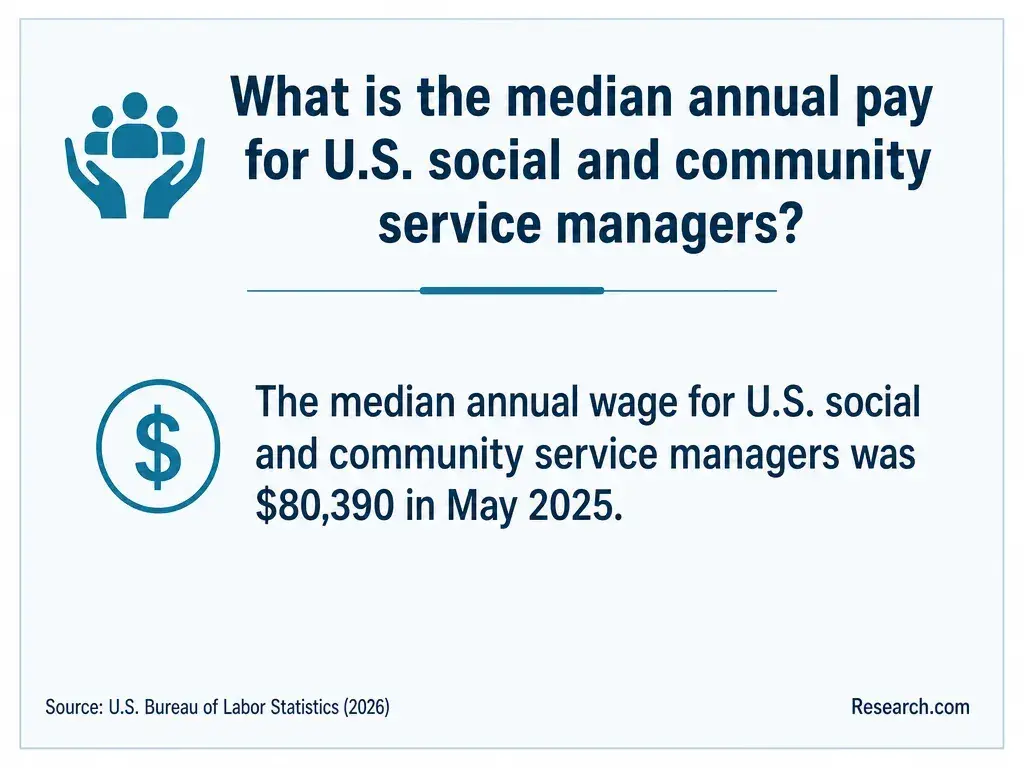
Salary comparisons require a named occupation and location. The U.S. Bureau of Labor Statistics publishes occupation-wide pay and outlook information, but its figures are not salaries promised to graduates of this BA. Compare a current posting's duties and qualifications with the closest BLS occupation before using a published median to assess your options; broad labels such as "psychology career" can conceal very different jobs.
If your interests are primarily in justice-system work rather than addiction prevention or public health, compare that destination separately. For example, accelerated forensic psychology master's costs and outcomes concern a different graduate decision and do not establish an MPH pathway or authority to conduct forensic evaluations.
What Licenses and Certifications Do Addiction Professionals Need?
There is no single credential required for everyone working in addiction-related settings. Nonclinical outreach and program-support jobs differ from substance-use-disorder counseling, peer support, and independently licensed mental health practice. States, certifying bodies, and employers determine the education, supervised experience, examination, and permitted duties for specific roles.
If you may want to counsel clients, check the relevant state board's rules before choosing an undergraduate program. Ask whether it recognizes the particular degree and courses, what supervised experience is required, and whether further qualifying education is necessary. An addictions concentration or undergraduate internship should not be mistaken for license-supervised clinical training.
Counseling is also distinct from the MPH goal of population-level work. If both pathways appeal to you, compare their separate training commitments; accredited clinical counseling program timeline comparisons are a starting point for examining a possible counseling route, not evidence that an accelerated program bypasses state requirements.
Other Things You Should Know About Psychology
Check each target program's policy for your application cycle. Test requirements and waiver rules vary; do not take the exam solely because another graduate program requires it.
Many programs allow applications during the final undergraduate year, but an offer may depend on completing the degree and any outstanding conditions before enrollment. Confirm the deadlines and documentation requirements.
Not necessarily. Compare your existing coursework with your target MPH programs' requirements first. Targeted courses or relevant experience may address gaps more efficiently than a second BA.
Not by itself. Counseling eligibility depends on the credential and jurisdiction. If that is your goal, verify the applicable board's educational and supervised-practice rules before choosing a graduate degree.
- Academia - The Future of the Public's Health in the 21st Century https://www.ncbi.nlm.nih.gov/books/NBK221242/
- Framework for Program Evaluation in Public Health | cdc.gov https://www.cdc.gov/mmwr/preview/mmwrhtml/rr4811a1.htm
- Institutional Accrediting Agencies | ed.gov http://www.ed.gov/laws-and-policy/higher-education-laws-and-policy/college-accreditation/institutional-accrediting-agencies
- What to Expect from an MPH Program | University of Bridgeport https://www.bridgeport.edu/news/mph-program-expectations/
- MPH Degree Guide: Curriculum, Requirements & Careers | Adelphi University https://onlineprograms.adelphi.edu/resources/article/mph-degree-overview/
- Course Descriptions | Master of Public Health | SUNY Downstate https://www.downstate.edu/education-training/school-of-public-health/programs/master-of-public-health/course-descriptions.html
- Program: Public Health Major, MPH - UTK Catalog https://catalog.utk.edu/preview_program.php
- Transfer credit - UC Admissions - University of California https://admission.universityofcalifornia.edu/admission-requirements/transfer-requirements/preparing-to-transfer/transfer-credit.html
- MPH Program Requirements & Curriculum - Public Health https://cosspp.fsu.edu/publichealth/program-requirements/
- Data analysis for the behavioral sciences | apa.org https://www.apa.org/education-career/training/psyclearn-research-methods-data-analysis