2027 Online BA in Psychology - Mental Health for Work in Rural Health Networks: Compare Degree Fit and Hiring Requirements
Audited and Verified:
Our Editorial and Data Verification Process
Research.com uses government datasets, official education statistics and primary institutional information to support its career and degree guides. Our review process checks factual accuracy, occupational definitions, source dates and the requirements associated with the credentials discussed.
How This Article Was Fact-Checked
Our editorial team verifies salary estimates, employment projections, education requirements and program information against original data providers and official organizations. Salary figures are checked against the relevant occupational definitions and reporting periods. Information about licensure, accreditation and required in-person training is reviewed separately.
Fact-checked and verified on:

Co-Founder and Chief Data Scientist
A rural health network may need people who can coordinate referrals, support outreach, and help patients navigate services - but those jobs do not all require the same degree or credential. If you are considering an online BA in psychology, the useful question is whether it prepares you for the work local employers actually hire people to do.
This guide compares bachelor's-level roles with licensed careers, explains what to check in an online program, and shows how to test the degree's value against job postings, placement opportunities, and your existing experience.
Key Things You Should Know
- An online psychology BA can support applications for nonclinical outreach, intake, navigation, and program-support jobs; it does not qualify its holder to diagnose or provide psychotherapy.
- A bachelor's degree commonly requires about 120 semester credits, but accepted transfer credits, course scheduling, and local placement requirements determine the remaining time and cost.
- Compare actual rural-network postings before enrolling: some prioritize relevant experience or a state-recognized credential, while licensed positions require a separate qualifying pathway.
What is an online bachelor's degree in psychology for rural mental health work?
It is an undergraduate psychology degree delivered primarily online, not a standard professional credential called a "rural mental health BA." A BA typically combines general education with psychological science, statistics, research methods, and electives. A school may offer a mental-health concentration, but the concentration's title does not establish clinical training or licensure eligibility.
For rural networks - groups of clinics, hospitals, public agencies, and community partners - the degree is most useful when it builds evidence-based communication and service-evaluation skills alongside locally relevant experience. Compare undergraduate psychology degree program choices by their actual courses, supervised opportunities, and scheduling rather than the appeal of a concentration name. If your target is a specific support job, first check whether its employer accepts other majors or equivalent experience.
What jobs can you get with an online psychology bachelor's degree in rural health networks?
Potential openings include behavioral-health intake coordinator, patient navigator, community outreach worker, case-management assistant, and program or evaluation assistant. Availability depends on the network and its funding. A BA may make you eligible to apply; it does not replace required experience, training, or a state credential.
The distinctions below help you search by duties rather than assume that similar-sounding titles have the same requirements.
| Role to investigate | Typical nonclinical work | Qualification to check |
| Intake or referral coordinator | Gather administrative information, schedule services, and route referrals | Employer's degree, recordkeeping, and privacy requirements |
| Community outreach or navigation worker | Explain available services and help people overcome access barriers | Local experience, travel expectations, and any required training |
| Recovery-support worker | Offer support within an established program and refer clinical concerns | State peer or addiction-support credential rules, if applicable |
| Program assistant | Track approved service measures and prepare reports | Spreadsheet skills, data permissions, and grant-reporting experience |
If substance-use services are your main target, compare the BA with more direct training using substance abuse counseling bachelor's fees and career prospects. Check the exact state credential and job duties before treating either degree as preparation to counsel independently.
Does a psychology bachelor's degree qualify you for mental health licensure?
No. A psychology BA, including one with mental-health coursework, does not by itself authorize psychotherapy, diagnosis, independent psychological assessment, or use of a protected clinical title. Network staff may help with scheduling, referrals, education, and authorized support while licensed professionals make clinical decisions.
If your goal is to provide therapy, identify the license and state where you intend to practice before choosing graduate study. Licensed professional counseling and clinical social work generally require a qualifying graduate pathway plus state-required supervised experience and examinations; psychologist licensure generally requires doctoral-level professional preparation and additional state requirements. A general psychology master's is not automatically a substitute. When comparing a BA-to-counselor route, account for subsequent study and supervision as well as comparing clinical counseling master's completion times.
Online study can let a student remain employed in a rural community, while a campus program may provide easier access to in-person research teams and established placement partners. Neither format automatically supplies a local internship, convenient class times, or better hiring prospects.
Ask each school whether courses are asynchronous, when live meetings occur, and whether exams or residencies require travel. Then ask who approves a local agency placement, what supervision it needs, and whether one is required to graduate. A campus far from your intended employer may be less useful than an online program that will approve a strong local project; the reverse may be true if the campus already has a relevant network partnership. If speed is a priority, examine course availability and placement timing - not just advertised terms - when considering fast-track bachelor's study in psychology.
Prioritize statistics and research methods for interpreting service data; developmental, social, and health psychology for understanding people in context; and courses covering mental health, substance use, ethics, and cultural responsiveness. Public health, community health, or human-services electives may add practical knowledge of referral systems and access barriers. Course names vary, so compare syllabi and prerequisites rather than assuming every program teaches the same skills.
Applied work matters most when it produces appropriate evidence of readiness: for example, an approved, supervised project mapping publicly available referral resources or evaluating an outreach process using data the agency permits you to access. Protect client confidentiality and obtain required school and agency approvals; classroom knowledge is not permission to use patient records. Students focused on recovery services can compare the curriculum with choosing an accredited addiction psychology bachelor's, while separately checking state rules for support or counseling credentials.
Confirm that the institution holds recognized institutional accreditation and that the degree is awarded by that institution. Check its status through the accreditor or the U.S. Department of Education's accreditation information, then verify the psychology major and online format in the school's current catalog.
Do not require APA accreditation of an ordinary psychology BA: APA professional accreditation has a different scope and is not a blanket endorsement of undergraduate psychology majors. Nor does institutional accreditation prove that a concentration meets a state licensing board's rules. That distinction also matters when comparing another specialty, such as forensic psychology admissions and education planning: verify the actual degree and its intended occupation, not just the word "accredited."
Requirements differ for first-year and transfer applicants. Schools commonly request prior academic records and an application; some have separate criteria for entering the major or completing upper-level psychology courses. Ask admissions for the requirements that apply to your entry term rather than relying on a general online-program description.
If you have college credit, request an official evaluation and degree audit showing which courses satisfy general education, psychology, statistics, and remaining residency requirements. Accepted credits do not necessarily satisfy major requirements. Ask whether a required research-methods course has a prerequisite and when both courses are offered; a sequencing delay can matter more than a generous transfer-credit total. Undergraduate admission is also a separate decision from the later graduate-program costs considered in budget planning for mental health counseling study.
A conventional full-time bachelor's pathway is often planned around four academic years and approximately 120 semester credits. Your remaining time depends on the school's approved transfer evaluation, enrollment pace, course sequence, and any required applied experience. Online delivery alone does not shorten the degree.
For an individualized cost comparison, obtain a written estimate of remaining credits and multiply by the school's applicable tuition rate, then add mandatory fees, books or software, travel, and any placement-related expenses. Compare aid eligibility and the effect of part-time enrollment before choosing the lowest advertised tuition. Resources for planning a budget for an online psychology degree can help narrow options, but the school's current charges and your degree audit control your estimate.
Hiring requirements follow the position's duties, not the applicant's major alone. Across postings, check for human-services experience, documentation and scheduling skills, privacy training, reliable travel between sites, and familiarity with local referral partners. Positions involving peer support, addiction services, crisis response, or clinical care may carry additional employer, state, or licensing requirements.
Use three recent postings from networks where you could realistically work. Mark each requirement as already met, teachable through coursework, obtainable through supervised experience, or dependent on a separate credential. Ask a hiring manager whether an approved local internship would count as relevant experience and what tasks a bachelor's-level employee may perform. If addiction-focused work requires a different credential, compare its training and aid options - including reducing undergraduate substance abuse counseling tuition through aid - before committing to a broader psychology BA.
What salary and job outlook can psychology graduates expect in rural mental health?
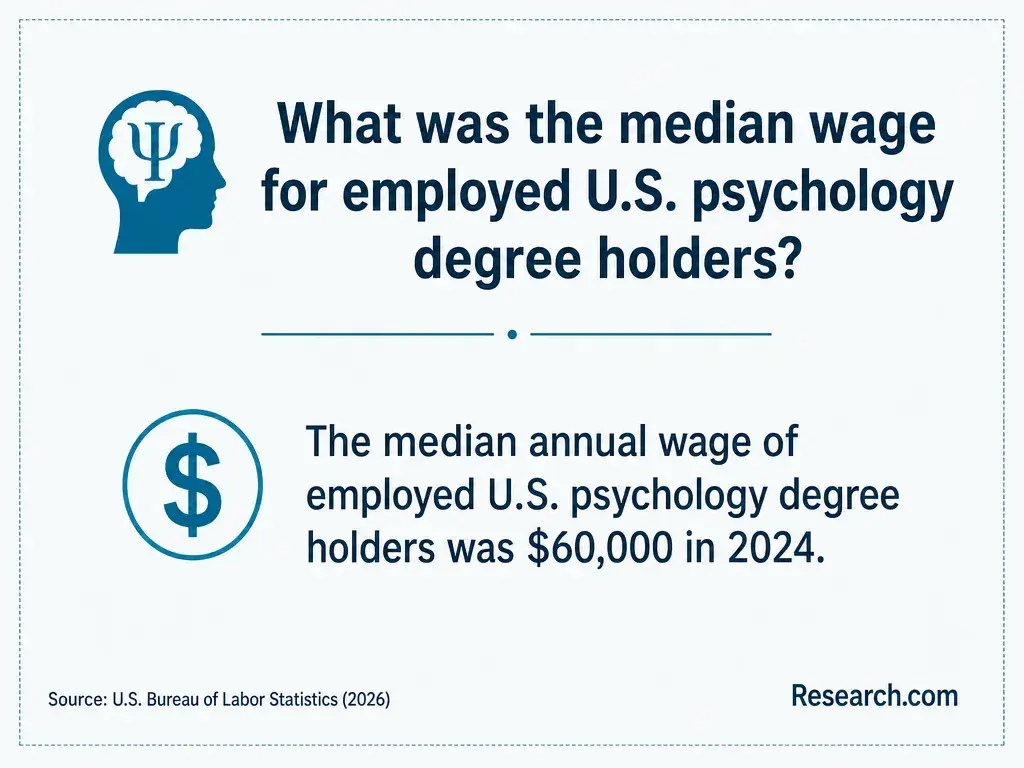
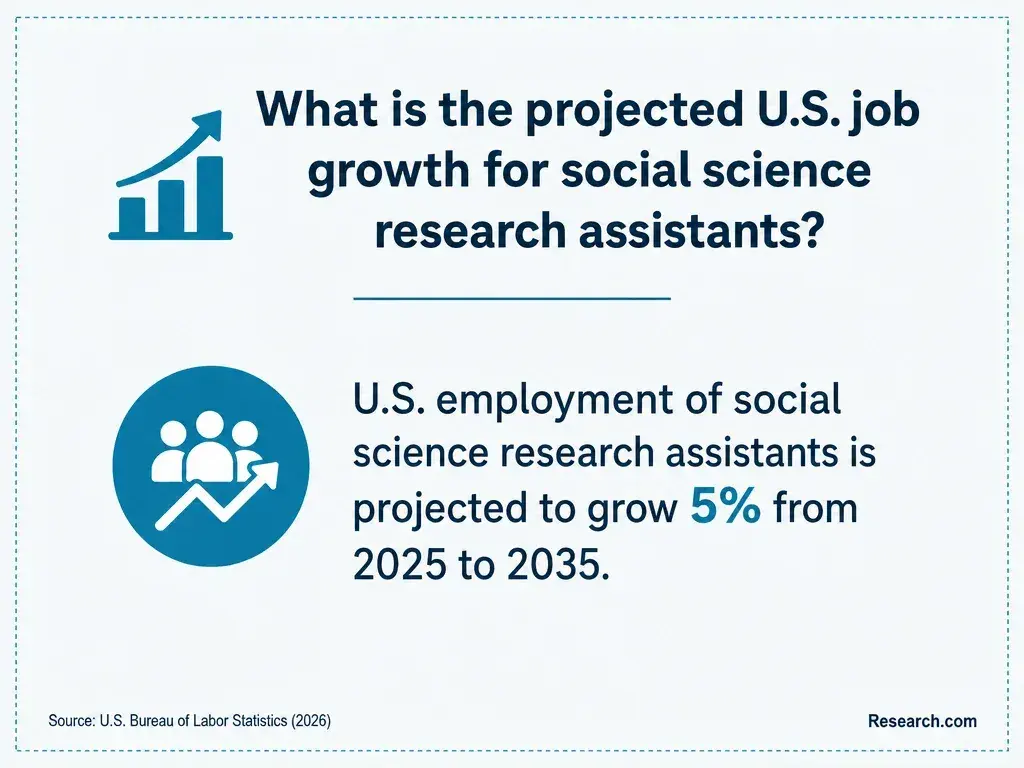
There is no reliable single salary for "rural mental health jobs with a psychology BA." The U.S. Bureau of Labor Statistics reports wages and projections by occupation, not by this degree or by a particular rural health network. Community health workers and social and human service assistants can provide relevant occupational comparisons for some nonclinical postings, but their published medians include workers with varied education, experience, and locations.
Compare the closest BLS occupation with the actual posting's pay range, hours, travel reimbursement, and benefits. Then weigh those terms against your remaining education costs and the likelihood that the role requires a credential the BA does not provide. Do not use licensed-clinician pay - or forensic psychology graduate occupations and salary considerations - as an earnings forecast for entry-level rural network work.
Other Things You Should Know About Psychology
Not necessarily. Employers set service-area, travel, and on-site expectations. Check the posting before assuming a remote address or a nearby city disqualifies you.
Possibly, if the employer permits it and the duties comply with applicable rules. Remote support work is not the same as authorization to provide licensed telehealth services across state lines.
Some programs depend on the site, occupation, credential, and service commitment. Verify the specific program's eligibility rules; employment at a rural site alone is not enough.
They may help where an employer serves people who use those languages. Describe your proficiency accurately and ask whether the role requires formal interpreter qualifications; bilingual ability does not replace clinical credentials.
- Accreditation in the U.S. | ed.gov http://www.ed.gov/laws-and-policy/higher-education-laws-and-policy/college-accreditation/accreditation-in-the-us
- Peer Services | Department of Health Care Policy and Financing https://hcpf.colorado.gov/peerservices
- Behavioral Health Career Descriptions | samhsa.gov https://www.samhsa.gov/about/careers/behavioral-health-workforce/careers-by-state/descriptions
- Levels and Eligibility Requirements | North Carolina Social Work Certification and Licensure Board https://www.ncswboard.gov/levels-and-eligibility-requirements/
- Chapter 6 - How To Become a Peer Specialist - NCBI https://www.ncbi.nlm.nih.gov/sites/books/NBK596268/
- Psychology careers guide | apa.org https://www.apa.org/education-career/guide/careers
- B.S. in Psychology - Behavioral Health Degree Online https://online.ecok.edu/online-degrees/bs-bachelors-psychology-behavioral-health/
- Online Psychology Degrees | Bachelor's (BA) Programs https://www.snhu.edu/online-degrees/bachelors/ba-in-psychology
- 4.1.18 Credit Earned through Transfer, Examination, and Prior Learning | Illinois State https://policy.illinoisstate.edu/academic/4-1-18/
- What Can You Do with a bachelor's in Psychology? | UMass Global https://www.umassglobal.edu/blog-news/can-you-do-a-bachelors-psychology-top-careers-skills-build-your-future