
2027 Online BA in Psychology - Addictions: Choosing Between an Immediate Start and a Better Aid Offer
Audited and Verified:
Our Editorial and Data Verification Process
Research.com uses government datasets, official education statistics and primary institutional information to support its career and degree guides. Our review process checks factual accuracy, occupational definitions, source dates and the requirements associated with the credentials discussed.
How This Article Was Fact-Checked
Our editorial team verifies salary estimates, employment projections, education requirements and program information against original data providers and official organizations. Salary figures are checked against the relevant occupational definitions and reporting periods. Information about licensure, accreditation and required in-person training is reviewed separately.
Fact-checked and verified on:

Co-Founder and Chief Data Scientist
An online BA in psychology with an addictions focus may have a start date approaching before another school finalizes its financial aid offer. Enrolling now could keep your education moving; waiting could lower your cost - or delay courses you need.
This guide is for prospective and returning students weighing that choice. It shows how to compare written aid offers, remaining degree requirements, scheduling, and career fit so that a faster start does not become an unnecessarily expensive one.
Key Things You Should Know
- Compare the cost to finish the degree, not just the first term's bill: aid renewal, transferred credits, fees, and future course availability can change the result.
- An immediate start is strongest when the affordable offer is confirmed, required courses are available, and waiting would cause a meaningful delay; wait when the potential aid difference could outweigh that delay.
- A bachelor's degree commonly requires about 120 semester credits, but an addictions focus does not itself qualify graduates to diagnose, provide therapy, or hold a state addiction-counselor credential.
What is an online bachelor's degree in psychology with an addictions focus?
It is an undergraduate psychology degree that combines broad study of behavior and research with coursework on substance use, prevention, recovery, or service systems. "Addictions focus" might mean a formally designated concentration, a set of electives, or simply a program's emphasis. Confirm what appears on the transcript and which courses are required.
The distinction matters when comparing an immediate-start program with a later offer. A lower-cost general psychology BA may serve a student seeking broad preparation, while someone pursuing a particular state addiction-counselor credential may need coursework that meets that state's rules. Compare the actual requirements - not the concentration's name - when reviewing addiction psychology BA and BS degree options.
How do you choose between starting now and waiting for better financial aid?
Choose the option with the better credible path to completion, not automatically the earlier start or larger advertised award. Compare what you would pay for the same remaining degree requirements under each offer. An aid estimate is less useful than a written offer that identifies its conditions, and a promised start date is less useful than a schedule showing when required courses run.
The comparison below separates the benefits of starting from the risks of waiting. Neither column is a recommendation without your school-specific figures.
| Decision factor | Start now | Wait for another offer |
| Aid certainty | Useful if the award and its renewal terms are confirmed | Potentially cheaper, but savings remain uncertain until the offer is issued |
| Time to finish | May allow earlier prerequisite or major coursework | May delay graduation if required courses have limited openings |
| Credit application | Could be costly if transfer credits remain unevaluated | Allows time to obtain competing degree audits |
| Personal finances | May require borrowing or reducing work hours sooner | May preserve cash, but could defer a degree-dependent opportunity |
Before committing, take these steps in order. They turn a possible aid advantage into a comparison you can actually use.
- Request written degree audits showing remaining general education, major, concentration, and residency requirements from both schools.
- Ask each financial aid office for the award by term, including grant versus loan amounts, enrollment requirements, renewal rules, and any summer coverage.
- Ask advising when the remaining required courses are offered and whether online classes, placements, or exams have fixed meeting times.
- Calculate estimated remaining tuition and required costs, subtract confirmed grants or scholarships, and compare likely borrowing and completion dates.
- Check enrollment, deposit, deferral, and refund deadlines before either choice becomes irreversible.
A useful rule is to wait when a substantial potential grant is still under review and postponement is manageable. Start now when the confirmed offer is affordable, the degree audit is favorable, and waiting would postpone a required course or an important personal goal. If neither option works without uncomfortable debt, compare economical online psychology program choices rather than treating the deadline as a reason to overcommit.
How much does an online psychology degree in addictions cost?
There is no reliable single price for this degree. Schools may charge by credit or term, and the total depends on how many credits apply to graduation, enrollment pace, and aid eligibility. The following cost categories belong in a comparison of the immediate-start and later-start options.
| Cost category | Why it can change the decision |
| Remaining tuition | Accepted transfer credits may not satisfy major or residency requirements, leaving more courses to pay for |
| Required fees and materials | Technology, course, books, and software charges may differ from advertised tuition |
| Applied-learning costs | A placement, if required, may involve travel, screening, or reduced paid-work hours |
| Financing costs | Loans create repayment obligations; grants and scholarships may depend on continued eligibility |
| Delay costs | Waiting can affect course sequencing, employment plans, or the household budget |
Use net cost to complete as your working measure: remaining tuition and required expenses, less confirmed gift aid. Keep loans separate because they finance a bill rather than reduce it. Ask whether awards apply at your intended enrollment intensity and whether satisfactory academic progress or scholarship rules could change later terms. For a related cost-and-outcome comparison, see substance abuse counseling bachelor's fees and career prospects; verify any listed price directly with the institution before relying on it.
Check that the institution holds accreditation recognized by the U.S. Department of Education and that the accreditation covers the school offering the degree. Then confirm the exact award, the status of the addictions concentration, and any requirements tied to where you live. Institutional accreditation supports recognition for purposes such as credit evaluation and federal aid eligibility, but another school or employer still makes its own acceptance decision.
Do not look for APA accreditation of an ordinary psychology BA: APA accreditation applies to specified professional psychology training programs, not general undergraduate majors. If your eventual goal is licensed counseling, the recognition and state eligibility of a future qualifying professional program matter separately. Reviews of accelerated accredited clinical mental health counseling programs address a different degree level; neither their accreditation nor a BA's institutional accreditation establishes addiction-counselor eligibility on its own.
Expect psychology foundations such as development, social behavior, statistics, and research methods, alongside program-specific study of substance use, health, prevention, and recovery. Some schools offer an internship or capstone; others do not. Ask for a degree map showing prerequisites and term-by-term course availability, particularly if the later aid offer would mean missing a course that runs infrequently.
Evaluate what the courses enable you to learn rather than assuming they authorize clinical work. Addiction theory and a counseling-related elective can strengthen knowledge of evidence and referral systems, but they do not replace supervised professional training. Students planning a later counseling degree should check that degree's prerequisites, delivery requirements, and placement schedule separately; online mental health counseling master's timelines concern that subsequent pathway, not the time needed to complete the BA.
Requirements vary by institution and by whether you are entering as a first-year or transfer student. Applicants commonly need prior-school transcripts and must meet the institution's undergraduate admission rules. Admission to the university does not necessarily mean every previous course applies to the psychology major or its addictions focus.
For a returning student, the decisive document is an approved degree audit. Have the registrar or transfer-credit office evaluate previous coursework, then ask the psychology department or advisor to confirm statistics, research-methods, concentration, and residency requirements. An immediate start may lose its time advantage if those decisions arrive after enrollment. If speed is central to the choice, compare the credit and scheduling policies behind speeding up an online psychology degree, rather than assuming short course sessions reduce the number of requirements.
A bachelor's degree commonly totals about 120 semester credits, but your remaining time depends on approved transfer credit, course load, prerequisite order, and when required classes are available. Online delivery does not guarantee self-paced study. Live meetings, group work, exams, or an approved placement can constrain a schedule even when lectures are asynchronous.
Compare both schools' projected completion terms using the same realistic weekly availability - not their fastest advertised pace. If waiting pushes one required course into a later term, that delay may matter more than the gap between start dates. Conversely, a stronger aid offer may justify a later start if the course sequence still permits a similar finish. Avoid trying to compensate for a delayed BA with an unrelated compressed graduate credential: compressed online master's study in forensic psychology, for example, is not a shortcut to addiction-counseling qualification.
The BA can support applications for nonclinical positions such as recovery-service coordinator, behavioral-health support worker, outreach assistant, intake coordinator, or program assistant. Duties may include explaining resources, documenting services, coordinating referrals, and helping evaluate outreach - not independently diagnosing or treating substance use disorders. Employers may also require experience, background checks, or a separate credential.
If you already work in a community organization, compare the degree with the qualifications for the next job you actually want. A supervisor may value documented service experience or targeted training more than a concentration label. Reviewing career choices across recovery service settings can help distinguish support and coordination roles from regulated counseling roles before you decide how much to spend on the BA.
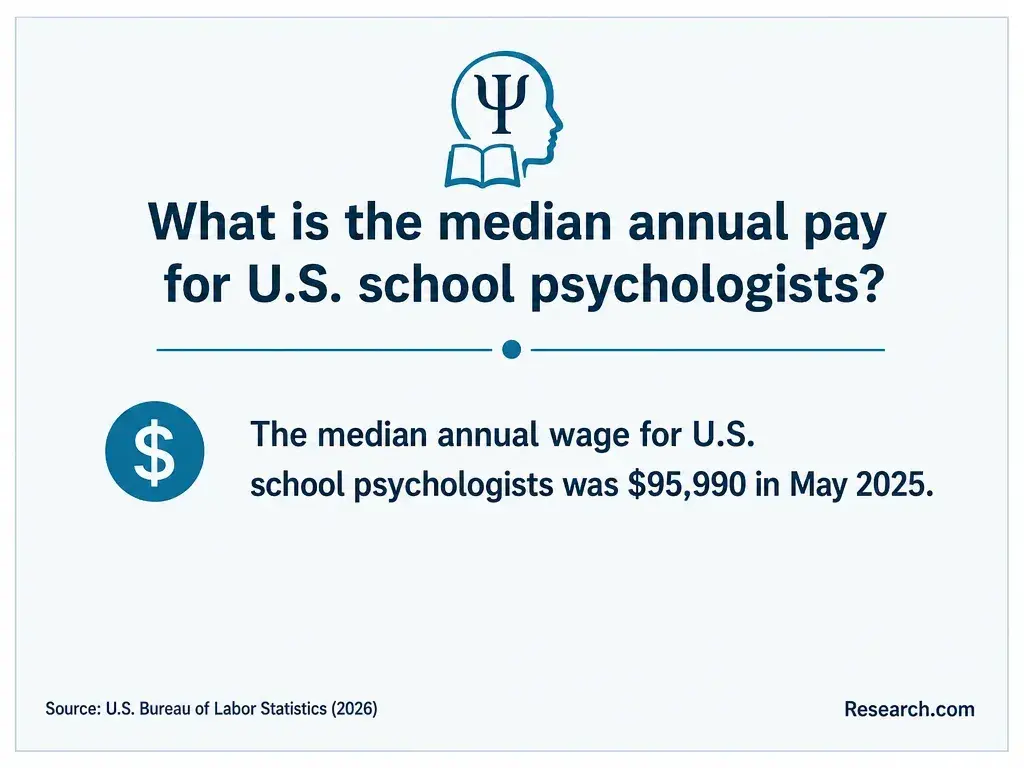
There is no single salary or employment-growth figure for graduates of an addictions-focused psychology BA. The U.S. Bureau of Labor Statistics reports wages and projections for occupations, not for this concentration. Its substance abuse, behavioral disorder, and mental health counselors category is relevant to the field, but it includes workers with different credentials and does not describe the starting pay - or eligibility - of a BA graduate.
For a useful financial forecast, find local postings for the specific support or coordination role you could qualify for, note their stated pay and credential requirements, and compare that with your expected borrowing. If your earnings plan depends on becoming a licensed counselor, include the cost and time of qualifying graduate education and supervised experience; clinical counseling master's fees and graduation timelines can inform that separate calculation. Do not use a counselor occupation-wide median as a promised return on the BA.
What licenses and certifications are required for addiction counseling careers?
Requirements depend on the state and the exact title or duties. A state may distinguish entry-level or supervised substance-use counseling credentials from independent clinical licenses, with different rules for education, supervised hours, examinations, and ongoing renewal. Peer-support credentials can follow another pathway. An addictions-focused BA is academic preparation, not automatic permission to counsel, diagnose, or practice independently.
Before accepting either school's offer, identify the state where you intend to work and the credential attached to your target job. Ask the state licensing or certification authority whether each program's specific courses count toward its educational rules and what additional training and supervision remain. Compare degree pathways for substance use counseling work if a psychology BA does not closely match those requirements. A cheaper or earlier degree is a poor bargain if it leaves a critical credential requirement unmet.
Other Things You Should Know About Psychology
Often, but accepting admission may involve a deposit or other deadline. Read each school's acceptance, refund, and withdrawal terms before committing.
Ask admissions whether deferral is allowed and whether your scholarship or aid offer would carry over. Do not assume either will.
Contact the school's financial aid office about a possible professional-judgment review. Provide the documentation it requests; a revised award is not guaranteed.
It may, if your employer offers it and the program meets its rules. Check annual limits, grade requirements, reimbursement timing, and any obligation to remain employed.
- Types of Financial Aid: Grants, Work-Study, and Loans | studentaid.gov https://studentaid.gov/understand-aid/types
- Free Application for Federal Student Aid (FAFSA) | usa.gov https://www.usa.gov/fafsa
- Cost of Attendance (Budget) | 2025-2026 Federal Student Aid Handbook https://fsapartners.ed.gov/knowledge-center/fsa-handbook/2025-2026/vol3/ch2-cost-attendance-budget
- Recommended Course Sequence | Texas Higher Education Coordinating Board https://www.highered.texas.gov/data-submission-reporting/recommended-course-sequence/
- Credentialed Alcoholism and Substance Abuse Counselor (CASAC) | ny.gov https://oasas.ny.gov/credentialing/casac
- How to Read and Understand Your Financial Aid Offer (Step-by-Step Guide) | Enrollment Management News https://news.em.gatech.edu/2025/03/25/understanding-your-financial-aid-offer/
- Financial Aid Frequently Asked Questions - Affording UA https://afford.ua.edu/financial-aid/faq/
- Financial Aid Terms and Conditions | Ozarks Tech (OTC) https://ozarkstech.edu/cost-aid/financial-aid/use-keep-your-aid/financial-aid-notification-terms-and-conditions/
- Addressing the Hidden Costs of a Stacked Schedule | utah.edu https://academic-affairs.utah.edu/map/addressing-the-hidden-costs-of-a-stacked-schedule/
- How Do Transfer Credits Work When You Go Back to School? | Whitworth Online https://online.whitworth.edu/news-articles/how-do-transfer-credits-work-when-you-go-back-to-school/


