2027 Online BA in Psychology - Addictions: Choosing Between a Transfer Scholarship and an Employer Discount
Audited and Verified:
Our Editorial and Data Verification Process
Research.com uses government datasets, official education statistics and primary institutional information to support its career and degree guides. Our review process checks factual accuracy, occupational definitions, source dates and the requirements associated with the credentials discussed.
How This Article Was Fact-Checked
Our editorial team verifies salary estimates, employment projections, education requirements and program information against original data providers and official organizations. Salary figures are checked against the relevant occupational definitions and reporting periods. Information about licensure, accreditation and required in-person training is reviewed separately.
Fact-checked and verified on:

Co-Founder and Chief Data Scientist
A transfer scholarship and an employer tuition discount can produce very different bills for the same online psychology degree. If you have prior college credit and work in or near behavioral health, the better offer depends on more than its advertised value: transferred courses must count toward graduation, and employer benefits may depend on your job and payment timing. This guide shows how to compare the offers, check whether an addictions-focused BA fits your career goal, and get the written answers you need before enrolling.
Key Things You Should Know
- Choose the offer with the lower total remaining out-of-pocket cost, not the larger advertised award; compare it only after receiving a degree audit and written benefit terms.
- A transfer scholarship may lose value if accepted credits do not satisfy major requirements; an employer discount may lose value if it excludes fees, requires upfront payment, or ends when employment changes.
- Neither funding option changes the degree's professional scope: an addictions-focused psychology BA does not, by itself, qualify you to provide independent addiction counseling.
What Is an Online BA in Psychology With an Addictions Focus?
It is a bachelor of arts in psychology that includes coursework on substance use, addiction, prevention, or recovery. Depending on the school, "addictions focus" may mean an officially recorded concentration, a set of electives, or simply a suggested course pathway. Ask what will appear on your transcript and whether the relevant courses are offered online during your expected enrollment terms.
The distinction matters when comparing funding. A scholarship that helps you complete a broad psychology BA may be a better value than a larger discount at a school where the courses you want are unavailable or require additional terms. If your goal is specifically substance-use-service work rather than broad psychology study, compare the curriculum with planning affordable bachelor's-level substance abuse counseling study. Neither program title, on its own, establishes eligibility for a state credential.
Is an Online Addictions Psychology Degree Program Accredited?
Accreditation must be checked for the particular institution and program you would attend; "online" and "addictions" do not establish accreditation status. Confirm the institution's current accreditation with its accreditor and the U.S. Department of Education's accreditation listings, then ask whether the online BA is offered under that institution's accredited degree authority.
Do not expect APA accreditation of a general psychology BA: APA accreditation applies to specified professional psychology training programs, not ordinary undergraduate psychology majors. If your eventual goal is licensed counseling, investigate the recognition and state eligibility of the subsequent qualifying program separately. That is a different question from BA accreditation, as the distinctions in accelerated counseling study and accreditation requirements illustrate.
Before accepting either offer, confirm that the award applies to your actual online degree, campus or division, enrollment status, and entry term. An institution-wide statement does not establish that a particular scholarship covers every delivery format.
Can You Become an Addictions Counselor With a Psychology Bachelor's Degree?
Possibly, but the BA alone is not proof of eligibility. States use different addiction-counselor titles and may require specified coursework, supervised experience, an examination, certification, or a qualifying graduate degree. Some support positions have different requirements from positions authorized to provide counseling. Check the state board or credentialing body for the precise title and duties you want, then ask the school for a course-by-course comparison with those rules.
Someone already working in outreach or recovery services may gain useful preparation for intake, referrals, documentation, and communication without becoming eligible to diagnose or provide psychotherapy. If that is your target, compare the BA's added value with the skills and education for recovery services work and with any credential your employer or state actually requires. Paying for an extra degree solely because its concentration sounds clinical can be an expensive mismatch.
Choose the offer that reduces the cost of finishing the degree under conditions you can realistically meet. A scholarship is often attractive when it applies predictably to remaining credits and does not depend on continued employment. An employer discount can be stronger when it covers the courses you need, can be used alongside other aid, and remains available throughout your likely completion period. Neither advantage should be assumed from an advertised award.
The comparison below separates each offer's headline appeal from the condition most likely to change its value. Request written answers from financial aid and your employer before relying on either one.
| Decision factor | Transfer scholarship | Employer discount or reimbursement |
| Eligibility | May depend on transferred-credit count, GPA, entry term, or continued enrollment | May depend on employer, job status, tenure, approved school or major, and continued employment |
| How it is applied | Check whether it reduces tuition before billing and whether it is renewable | Check whether tuition is discounted upfront or reimbursed after you pay and pass |
| What it covers | Confirm covered terms, credits, and fees | Confirm covered courses, fees, books, and any annual or lifetime limit |
| Other aid | Ask how it interacts with grants and institutional awards | Ask whether it can stack with scholarships and how the school will coordinate aid |
| Risk of interruption | Check GPA, enrollment, and transfer-status renewal rules | Check leave, job-change, repayment, and reimbursement deadlines |
A transfer student should first obtain an official degree audit showing which credits satisfy general education, psychology major, addictions-focused, and residency requirements. Accepted credits that fill only free electives may not shorten the program. Then ask the school to price the remaining required courses under each offer, including terms when no award applies.
If you expect graduate training for a regulated role, keep that separate future expense in view. Comparing tuition-focused psychology master's program choices can help with longer-range budgeting, but a general psychology master's is not necessarily a licensure-qualifying counseling degree. Do not overpay for the BA based on an assumed graduate-school or licensing benefit.
Expect a psychology foundation that may include research methods, statistics, development, social or biological psychology, and courses addressing psychological disorders. Addictions-related offerings may examine substance use, behavior change, prevention, treatment systems, or recovery. Actual requirements and course availability vary; an advertised elective does not necessarily satisfy a formal concentration.
For the funding decision, compare course sequence as well as course names. If an addictions elective is offered infrequently, an award restricted to certain terms could be less valuable than it looks. Ask whether transferred statistics or research-methods work satisfies the major, whether prerequisite courses are available online, and whether any applied course requires scheduled meetings or an approved local site.
If your purpose is research or later graduate study, prioritize methods preparation over the concentration label. A faster later credential, including options described under shorter online psychology master's timelines, would not replace missing undergraduate prerequisites or supervised experience required by a particular graduate program.
Your timeline depends on the credits that apply to graduation, remaining course sequence, enrollment pace, and term availability - not simply the number of credits a school accepts. An official transfer evaluation and degree audit are more useful than a general completion-time estimate.
Ask an advisor for a term-by-term plan that identifies prerequisites, required online courses, and any residency or capstone requirement. Then compare each offer across that same plan. An employer benefit with a recurring limit may be more useful at a slower pace; a scholarship requiring continuous enrollment may be harder to keep if work or caregiving interrupts study. For a comparison of scheduling models, see shorter routes to an online psychology major, but verify whether acceleration is feasible for your remaining requirements.
There is no responsible single price without a named school, an approved credit evaluation, and written award terms. Calculate your cost using remaining required credits multiplied by the applicable tuition rate, then add required fees and course expenses and subtract aid you are confirmed to receive. Include any upfront payment needed while waiting for employer reimbursement.
The cost categories below show what to request in an individualized estimate. They also reveal where a discount advertised as covering "tuition" can leave a substantial bill.
| Cost or credit item | What to confirm |
| Remaining tuition | Required credits after the official audit, rate by term, and any rate changes |
| Mandatory charges | Technology, course, graduation, and other applicable fees |
| Learning expenses | Books, software, equipment, and travel or placement expenses if required |
| Scholarship value | Amount actually applied to your planned terms and renewal conditions |
| Employer benefit | Covered charges, payment timing, caps, and possible repayment obligations |
Ask for a written estimate under both offers using the same course plan. If neither offer makes the program affordable, use comparing affordable psychology colleges online as a starting point, then obtain fresh school-specific estimates rather than assuming a published tuition rate is your final cost.
Schools set their own rules for admission to the institution and, where applicable, entry to the psychology major. A returning applicant should prepare transcripts from every previous college and ask whether prior coursework meets psychology, statistics, general education, or other requirements. Admission, acceptance of credits, and application of those credits to the BA are separate decisions.
Submit course descriptions or syllabi for disputed equivalents and request a written audit before making a funding choice. Ask the registrar or transfer-credit office who approves equivalencies and substitutions; ask the psychology department who approves major requirements; and ask financial aid whether your scholarship depends on a particular transfer classification. For a closer look at this process, see planning a psychology degree with previous college study.
Relevant possibilities include recovery-support, outreach, intake, referral, program-support, and human-services positions. Your eligibility depends on the job description, prior experience, and any required state credential. For a current behavioral-health employee, the BA may support advancement into coordination or evaluation work; for a career changer, supervised nonclinical experience may matter as much as the concentration.
Read postings for the work you actually want. If they require a substance-use credential, ask its issuing body whether this program's courses qualify. If they require a graduate clinical license, compare the full qualifying education and supervision pathway instead of treating the BA as the final step. And if your interests are primarily in justice settings rather than recovery services, forensic psychology academic pathways and tuition may be a more relevant comparison; forensic coursework does not itself confer investigative or clinical authority.
What Salary and Job Outlook Can Addictions Psychology Graduates Expect?
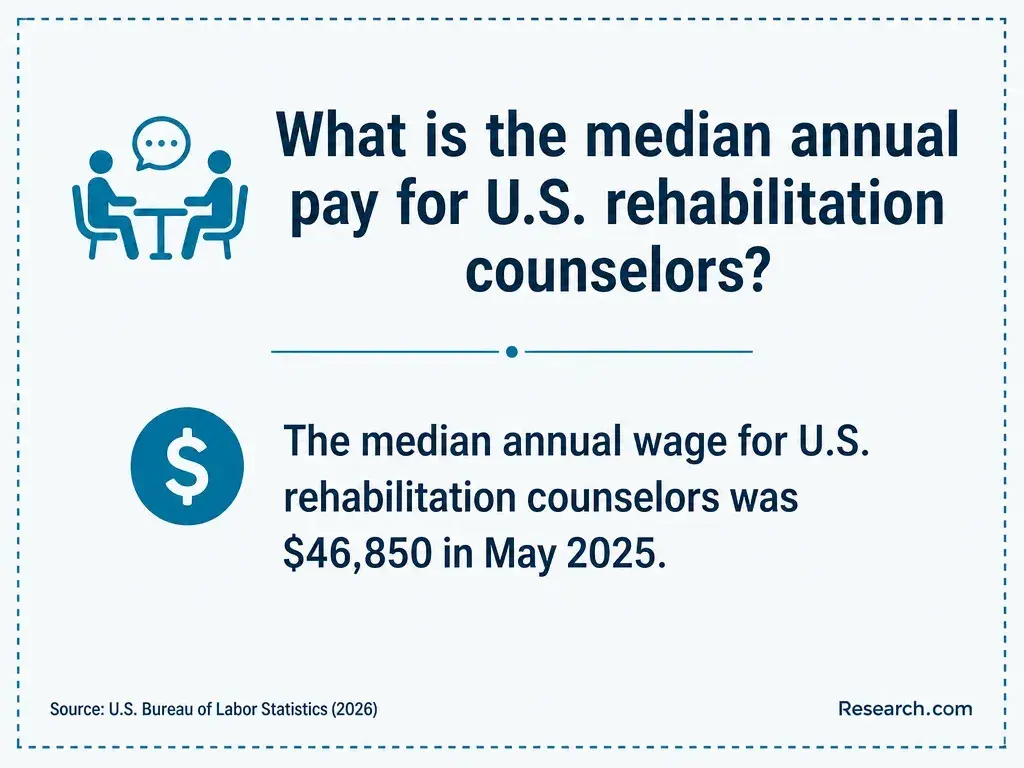
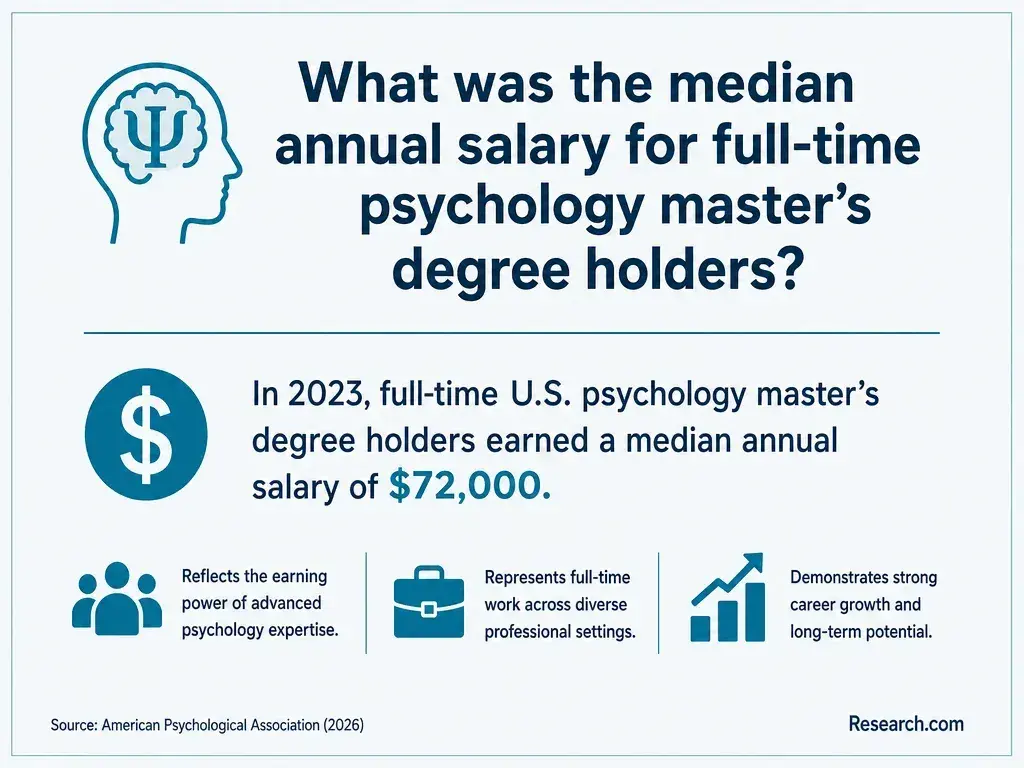
There is no single defensible salary or employment-growth figure for graduates of this concentration. The U.S. Bureau of Labor Statistics reports occupation-wide wages and projections, not outcomes for a particular BA or funding offer. Its substance abuse, behavioral disorder, and mental health counselor category is useful context only if the specific job you seek matches its duties and you meet that job's education and credential requirements.
For a financial decision, compare local postings for roles you could qualify for after this BA with your present pay and the degree's remaining cost. Keep the cost of any later qualifying clinical education separate; tuition and fees beyond the BA can materially change the return. If licensed counseling is your goal, examining mental health counseling program charges beyond tuition is more informative than applying a counselor wage figure to bachelor's-level support jobs.
Other Things You Should Know About Psychology
Yes. Tax-free employer assistance and other tax-free educational benefits can affect which expenses you may use for a credit. Keep billing and benefit records, and check current IRS guidance or a qualified tax adviser for your situation.
Not necessarily. A discount may reduce the bill upfront, while reimbursement may require you to pay first and submit grades later. Ask payroll or benefits staff which arrangement applies.
Only if the program approves the site, duties, and supervision. Existing employment does not automatically satisfy an academic placement, and support duties are not clinical training.
Ask the school's financial aid office for a written award estimate and your employer's benefits administrator for its policy. Each controls different parts of the arrangement; neither office alone can confirm every condition.
- Cost of Attendance (Budget) | 2025-2026 Federal Student Aid Handbook https://fsapartners.ed.gov/knowledge-center/fsa-handbook/2025-2026/vol3/ch2-cost-attendance-budget
- Job protection requirements for employers | Washington State's Paid Family and Medical Leave https://paidleave.wa.gov/job-protection-requirements-for-employers/
- Education credits: Questions and answers | Internal Revenue Service https://www.irs.gov/credits-deductions/individuals/education-credits-questions-and-answers
- How Do Transfer Credits Work When You Go Back to School? | Whitworth Online https://online.whitworth.edu/news-articles/how-do-transfer-credits-work-when-you-go-back-to-school/
- What Is Tuition Reimbursement and How Does It Work? | American InterContinental University https://www.aiuniv.edu/blog/2016/march/what-is-tuition-reimbursement
- Transfer Credit - UF Online - University of Florida https://ufonline.ufl.edu/apply/transfer-credit/
- Transfer Student Scholarships - Student Financial Aid - Mizzou https://financialaid.missouri.edu/scholarships/transfer-students/
- Education Benefits | UA Human Resources https://hr.arizona.edu/benefits/education-benefits
- Tuition Reduction - Benefits https://benefits.utah.edu/tuition-reduction/
- Employer Tuition Reimbursement: How It Works and How to Pay for College | Winston-Salem State University https://ramsonline.wssu.edu/blog/employer-education-benefits/