2027 Best Online Spanish Degrees for Interpretation Careers

Co-Founder and Chief Data Scientist
Aspiring interpreters face a narrowing window to secure relevant credentials before employer preferences shift toward candidates with demonstrable online learning agility and recognized degrees. The U. S. Bureau of Labor Statistics projects a 20% growth in demand for interpreters over the next decade, yet many programs remain inflexible or fail to provide specialized interpretation practice embedded in virtual formats.
Meanwhile, a 2024 NCES report indicates a 12% rise in adult learner enrollment in online language programs, signaling that accessibility and scheduling flexibility weigh heavily on career decisions. Selecting the right online Spanish degree involves balancing program rigor, real-world skill integration, and credential recognition to ensure timely career entry and advancement.
This article evaluates the best online Spanish degrees designed explicitly for interpretation careers, focusing on outcomes that meet this critical intersection of market need and learner constraints.
Key Things You Should Know
- Advanced interpretation-focused Spanish degrees typically reduce overall credit requirements by 15%-20% compared to traditional language majors, accelerating entry but often limiting linguistic depth essential for court or medical interpreting.
- Employers prioritize graduates with state or federally certified credentials, yet 60% of programs lack integrated prep for the Certified Healthcare Interpreter exam, creating a costly, post-graduation certification barrier analyzed by the National Council on Interpreting.
- Online programs show regional accreditation variance impacting credential recognition, with 2024 Department of Education data revealing a 25% higher wage premium in states endorsing accredited curricula aligned to American Translators Association standards.
What is an online Spanish degree for interpretation, and who is it best suited for?
Choosing an online Spanish interpretation degree program in the United States requires balancing linguistic skill with sector-specific demands such as legal or medical contexts, where accuracy impacts critical outcomes.
For example, court and healthcare environments mandate proficiency in confidential terminology and ethical standards, demanding interpreters capable of real-time, culturally aware communication. Employers prefer candidates who combine bilingual fluency with recognized certifications.
The best candidates for an online Spanish degree in interpretation possess strong language foundations before entering these programs, which blend advanced proficiency training with practice in consecutive and simultaneous interpretation and intercultural competence.
Flexible online formats benefit working professionals transitioning careers, though intensive synchronous sessions and proctored evaluations may limit convenience. Program accreditation, instructor feedback, and realistic simulation opportunities are non-negotiable for practical readiness.
The Labor Department projects a 28.7% growth to 78,500 Spanish interpreter jobs by 2024, signaling robust demand but also competitive professional standards. Candidates without proven bilingual fluency face sharp learning curves, and employers uniformly require certification alongside degree completion to comply with industry regulations, especially in healthcare and immigration sectors.
Those considering accelerated credentials may explore options like a bachelor degree online in 2 years to fast-track entry into this evolving field.
How do online Spanish interpretation degrees compare to on-campus programs for quality and outcomes?
Online Spanish interpretation degree programs closely mirror on-campus curricula in core knowledge but fall short in delivering hands-on practice and professional networking.
Critical in-person components like live interpreting labs and face-to-face simulations translate poorly to virtual formats, limiting immediate skill feedback that employers expect. This gap affects readiness for high-pressure contexts, such as simultaneous or medical interpreting, where real-time interaction is non-negotiable.
Career outcomes for online versus traditional Spanish interpretation degrees diverge mainly due to practical experience and professional engagement. Employers prioritize candidates with observable live interpreting skills and established networks, more naturally developed through campus internships and workshops.
Online learners must proactively pursue remote internships and join virtual professional associations to mitigate these disadvantages.
The U.S. Bureau of Labor Statistics projects a 4% growth in interpreter and translator jobs from 2022 to 2032, with Spanish-specific interpreting roles increasing notably by 17,500 jobs to 78,500 by 2024.
This accelerated demand heightens employer expectations for adaptability across healthcare, legal, and government settings, meaning many online graduates require additional hands-on experience or certification to remain competitive.
For students comparing online degrees, comprehensive curriculum alone does not ensure employability. Practical immersion remains critical, a consideration also reflected in related fields such as an online math degree program evaluation, where applied skills weigh heavily in hiring decisions.
What accreditation and institutional quality standards should online Spanish interpretation programs meet?
Accreditation standards for online Spanish interpretation degrees in the United States directly affect graduate employability and professional recognition. Programs must hold regional accreditation, such as from the Middle States Commission on Higher Education or the Southern Association of Colleges and Schools Commission on Colleges, ensuring that credits transfer and meet academic rigor.
Added value comes when programs receive endorsements from specialized bodies like the American Translators Association (ATA), which reflects adherence to industry precision and ethical norms.
Institutional quality criteria for online Spanish interpretation programs extend beyond accreditation. Faculty expertise, access to language labs or virtual interpretation tools, and, critically, supervised practicums are fundamental.
Employers, especially in healthcare or legal fields, prioritize candidates who have demonstrated competency through real-world simulations-such as live-client medical interpreting-because these experiences drastically reduce onboarding time and risk.
Failing to verify these quality markers often translates into longer job searches and earnings below the national average, which is $48,360 annually for Spanish interpreters, with top earners reaching about $78,520. Selecting an unaccredited or substandard program can stall career growth and licensing opportunities.
Prospective students should also consider how program choices relate to broader educational investments. Comparing online Spanish interpretation degrees alongside other pathways-and even fields-can inform smarter decisions; tools that compare affordability and quality, like those used for online engineering programs, provide useful models for such evaluations.
Which types of Spanish degrees best prepare you for professional interpreting careers?
Degrees specifically focused on interpretation and translation skillsets offer the most direct path to professional interpreting roles. Bachelor's programs concentrating on Spanish interpretation teach simultaneous and consecutive interpreting, cultural nuance, and sector-specific terminology critical for medical, legal, or conference environments.
Master's programs deepen these competencies and often integrate preparation aligned with recognized certifications such as those from the American Translators Association. In contrast, general associate or bachelor's degrees in Spanish without specialized interpreting coursework do not equip graduates with the practical skills employers demand, limiting immediate employability.
Employer preference for candidates from accredited programs combining language proficiency with applied interpreting experience is clear. For instance, hospital interpreting requires not only fluency but also familiarity with medical terms and ethics, which generalized Spanish programs typically omit.
Courtroom interpreters must also master legal jargon and procedure. Graduates from programs with embedded interpreting practicums consistently report smoother transitions into field roles and better starting wages, reflecting market realities for those pursuing online Spanish degree programs for professional interpreting.
Cost remains a significant factor when selecting programs. According to GetEducated's 2024 findings, the most affordable online spanish degrees for professional interpreting start at roughly $2,760 for in-state tuition, while some out-of-state options exceed $35,000 total tuition.
Working professionals seeking effective skill acquisition under budget constraints may find a clearer return on investment in specialized, accredited programs. For broader context on affordability and options, reviewing an online master's degree in history offers comparative insight into cost structures across disciplines.
What core courses and language training are included in an online Spanish interpretation curriculum?
Effective Spanish interpretation training demands more than grammar mastery; it requires mastering real-time cognitive agility, cultural nuance, and role-specific terminology under pressure.
Programs that focus solely on asynchronous learning risk leaving graduates underprepared for settings like healthcare or legal environments, where immediate accuracy and cultural competence directly impact outcomes and client safety.
Practical exercises simulating these high-stakes contexts enable interpreters to navigate confidentiality, neutrality, and rapid decision-making challenges.
Development in note-taking and listening comprehension is essential to managing consecutive and simultaneous interpretation tasks, which are standard in professional practice. Ethical frameworks embedded in the curriculum prepare students for common dilemmas, but only immersive, supervised internships or live practice can solidify these competencies to meet employer expectations, especially for certifications such as NAJIT.
Workforce data, such as median salaries cited by Arizona State University, validate interpretation skills as financially viable, particularly in community health and social services.
However, prospective students should weigh whether programs offer a balanced mix of synchronous engagement and asynchronous flexibility to ensure workforce readiness rather than theoretical knowledge alone. Live labs and industry-aligned vocabulary training also correlate with improved job placement in sectors demanding bilingual capabilities.
Before committing, verify each program's rigor against certification standards and its approach to experiential learning-critical factors that differentiate credential holders who are operationally competent from those with academic credentials but limited practical experience.
What are typical admission requirements for online Spanish degrees focused on interpretation?
Admission for online Spanish interpretation degrees typically hinges on demonstrated bilingual fluency and relevant academic preparation, with many programs requiring a bachelor's in Spanish, linguistics, or a related field.
Candidates must usually present official transcripts showing a minimum GPA, often 3.0 or above, alongside letters of recommendation that substantiate interpreting aptitude and professional reliability. A statement of purpose clarifies candidates' focus on interpretation goals, helping admissions assess alignment with program expectations.
Applicants with practical experience in multilingual environments-such as healthcare or legal fields-often gain an advantage, as some programs prioritize applied interpreting skills over purely academic credentials. For example, holding healthcare interpreter certifications can improve admission prospects for specialized tracks addressing medical interpretation demands.
Language proficiency tests like DELE or the ACTFL Oral Proficiency Interview (OPI) are commonly required, especially for non-native Spanish speakers, to verify fluency essential for high-pressure, real-time interpretation tasks. This practical benchmark directly impacts program readiness and future workforce reliability.
Financial considerations also influence decisions. The University of Texas Rio Grande Valley's online MA in Spanish Translation and Interpreting charges about $17,776 for Texas residents versus $32,500 for non-residents, a significant cost gap that shapes applicants' strategies toward residency status or program selection. This tuition disparity may affect access and long-term return on investment for working professionals seeking efficient educational pathways.
How long do online Spanish interpretation degrees take, and what do they cost?
Short-term certificate programs focused exclusively on Spanish/English interpretation offer a direct route to meet immediate employer needs in healthcare and community services.
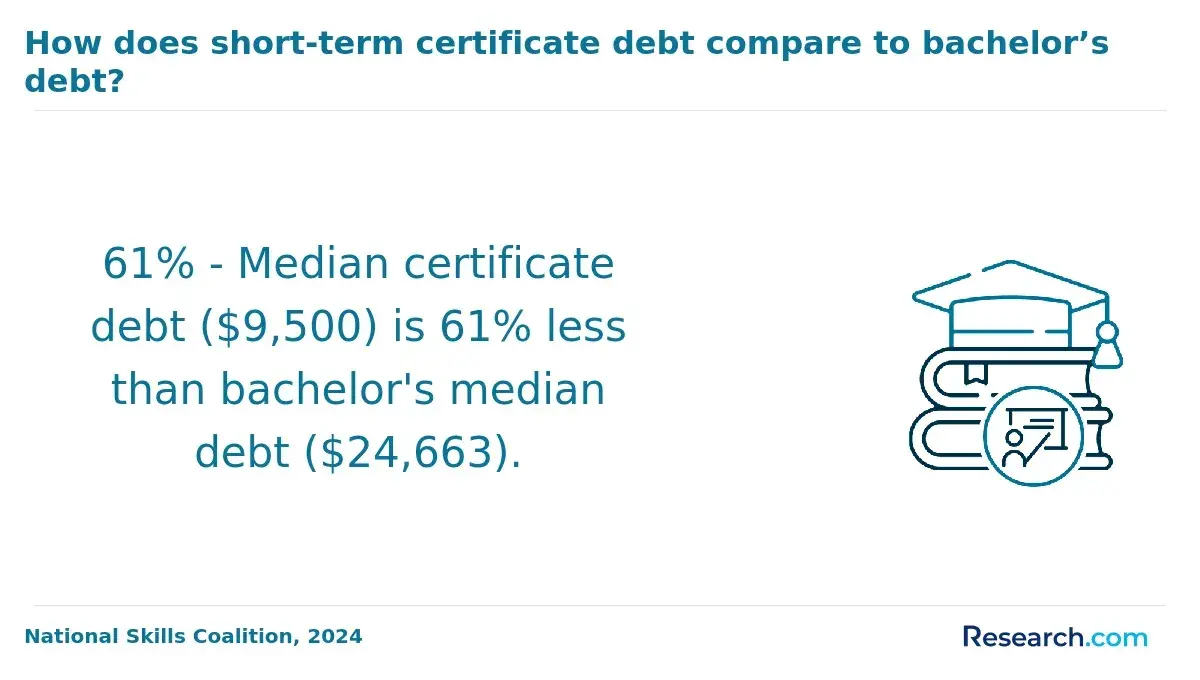
These typically require three to six courses and can be completed within a year, with an investment around $2,500, such as the medical interpreting certificate offered by the University of Arizona at $825 per course. This approach suits professionals prioritizing swift credentialing to enter or elevate their position in specialized fields without the extended time or costs of a full degree.
In contrast, pursuing a bachelor's or master's degree in Spanish interpretation demands two to four years and represents a substantial financial commitment, often between $15,000 and $40,000 or more. These programs incorporate broader cultural, linguistic, and theoretical training critical for sectors like diplomatic or legal interpretation, where deeper proficiency and formal accreditation influence employability.
Choosing between certificates and degrees boils down to intended sector and role complexity:
- Healthcare roles often accept fast-track certificates given urgent demand for qualified interpreters.
- Government, legal, or international organizations prioritize comprehensive degrees for nuanced cultural and linguistic skills.
- Longer programs require planning for practical experience through internships or supervised practice vital for competitiveness.
Considering workforce realities, prospective students must evaluate their career targets against time, cost, and credential depth. Understanding these tradeoffs helps align educational investment to sector expectations and long-term employability.
What interpreting careers can you pursue with an online Spanish degree?
Interpreting roles with an online Spanish degree demand distinct specialization aligned with sector-specific terminology and situational contexts. For instance, legal interpreters must precisely navigate jargon during court proceedings and immigration hearings, where errors carry significant consequences.
Medical interpreters require nuanced understanding of healthcare protocols and confidentiality, often operating under time-sensitive conditions in hospitals.
Business interpreting involves cultural literacy and familiarity with industry-specific language to effectively support multinational negotiations. Community interpreting regularly intersects with social services, necessitating empathy and clear communication across diverse public assistance programs.
Certification is a decisive factor for employability and wage potential. Credentials like the National Interpreter Certification or sector-focused certificates are increasingly mandatory, as employers prioritize certified candidates to meet regulatory and quality expectations.
Notably, bilingual professionals in these sectors command salaries approximately 20% higher than their monolingual peers, reflecting the tangible market value of language skills. Labor projections indicate a steady increase of about 9,000 bilingual roles annually through 2031, signaling sustained opportunities.
The balance between continuing education, technology proficiency, and sector-specific demands shapes career trajectories. Remote interpreting requires familiarity with platforms such as video relay services, adding technical skills to traditional language expertise. Public sector roles entail background checks and standardized assessments, potentially extending hiring timelines.
Conversely, private sector positions may offer higher pay but often demand flexible scheduling and proactive networking to secure assignments. Such tradeoffs should guide candidates in selecting pathways that align with their long-term goals and working preferences.
What salary ranges and job outlook can Spanish interpreters expect in the United States?
Starting salaries for Spanish interpreters in the U.S. typically range from $40,000 to $55,000 annually, with experienced interpreters earning up to $75,000 or more depending on specialization and location.
Positions in federal and medical interpreting often pay more due to certification demands and specialized knowledge. Court interpreters' earnings vary significantly, contingent on contract duration and agency, while freelance interpreters face income fluctuations tied to client volume and hourly rates between $20 and $60.
The 23% projected employment growth from 2022 to 2032 reflects expanding demand across healthcare, legal, and education sectors. Urban areas with large Hispanic populations offer abundant opportunities but also intense competition. Remote interpreting services are growing, allowing tech-savvy interpreters to reach broader markets and improve earnings beyond traditional geographic limits.
Choosing an online interpretation degree requires balancing cost against long-term career impact. Liberty University's model demonstrates how limited tuition inflation-with 2025-2026 rates in the top 35% for affordability-and savings like free electronic textbooks ($800-$2,000 annually) reduce financial strain and enable investment in valued certifications.
Certification expectations such as the Federal Court Interpreter Certification or National Board credentials can boost potential earnings by up to 30% but entail substantial costs and time commitments. Candidates must carefully evaluate tuition, fees, and income gains to determine a viable career investment.
Are certifications or licensing required for Spanish interpreters, and how do you qualify?
Access to higher-earning roles in U.S. Spanish interpretation is tightly controlled by certification requirements. Without credentials from the Certification Commission for Healthcare Interpreters (CCHI) or the National Board of Certification for Medical Interpreters (NBCMI), candidates typically cannot secure positions in healthcare or federal court settings, where precise language skills and ethical standards are non-negotiable.
The U.S. Courts Interpreter Certification mandates citizenship and passing both written and oral exams, effectively limiting entry to government roles. Non-certified interpreters often remain confined to community or informal assignments with restricted pay scales.
Educational pathways that combine a bachelor's degree in Spanish or related humanities with specialized interpretation training improve candidate competitiveness but do not replace the necessity for independent certification. Employers prioritize a mix of degree attainment and recognized credentials, especially for roles demanding stringent accuracy and confidentiality.
Job growth data from Onlinedegree.com forecasts nearly a 30% increase in Spanish interpreter roles by 2024, adding approximately 17,500 new positions. This expansion mainly benefits certified professionals, as uncertified workers face ceilings on wage potential and contract eligibility.
For example, a medical interpreter without CCHI or NBCMI certification will be ineligible for hospital system positions regardless of academic qualifications, whereas freelance and nonprofit interpreters have broader access but lower income ceilings.
Other Things You Should Know About Spanish
While not always required, having a bilingual background can be beneficial for students enrolling in a 2027 online Spanish interpretation degree program. These programs often include advanced language proficiency courses, and a prior understanding of both Spanish and English can enhance learning and facilitate greater success.
Essential technology requirements for online Spanish interpretation degrees include a reliable computer, high-speed internet, a headset with a microphone, and access to virtual interpretation platforms. These tools ensure students can participate in simulations and access course materials seamlessly.
Students usually prepare for the ATA Spanish↔English certification exam and, for court or medical work, state court interpreter tests or the National Board of Certification for Medical Interpreters exam. These credentials typically require advanced bilingual testing and documented experience, not just coursework.
Specialized courses in 2027 online Spanish interpretation degrees often include Advanced Interpretation Techniques, Legal and Medical Terminology in Spanish, and Cultural Competency. These courses prepare students for specific interpretation fields, providing practical skills necessary for professional success in diverse settings.
References
- Spanish Interpreting Careers For Bilingual Adults Start Here! - Certificate Interpreter Training Programs® - Official Site https://interpretertrain.com/spanish-interpreting-careers-for-bilingual-adults-start-here/
- Standards http://www.ccie-accreditation.org/standards.html
- The Standards and guidelines for quality assurance in the European Higher Education Area (ESG) - European Students' Union https://esu-online.org/the-standards-and-guidelines-for-quality-assurance-in-the-european-higher-education-area-esg/
- Everyone Wants Certification, But It's Not That Easy https://www.aaite.org/index.php
- Top U.S. Translation Schools: Online Programs https://altalang.com/beyond-words/top-us-translation-schools-online-programs/
- Spanish Interpreter - Salary, How to Become, Job Description & Best Schools https://www.onlinedegree.com/careers/trade/spanish-interpreter/
- Top Career Paths You Can Explore With a Spanish Degree | UT Permian Basin Online https://online.utpb.edu/about-us/articles/spanish/top-career-paths-you-can-explore-with-a-spanish-degree
- Eligibility https://cchicertification.org/certifications/eligibility/
- Cross Cultural Communications - Interpreter Training https://cultureandlanguage.net/
- Translation - Interpreting - Spanish courses https://en.feeduc.eu/programme/translation-interpreting-spanish-courses/