2027 Online Spanish Degrees With Strong Practical Language Execution Training

Co-Founder and Chief Data Scientist
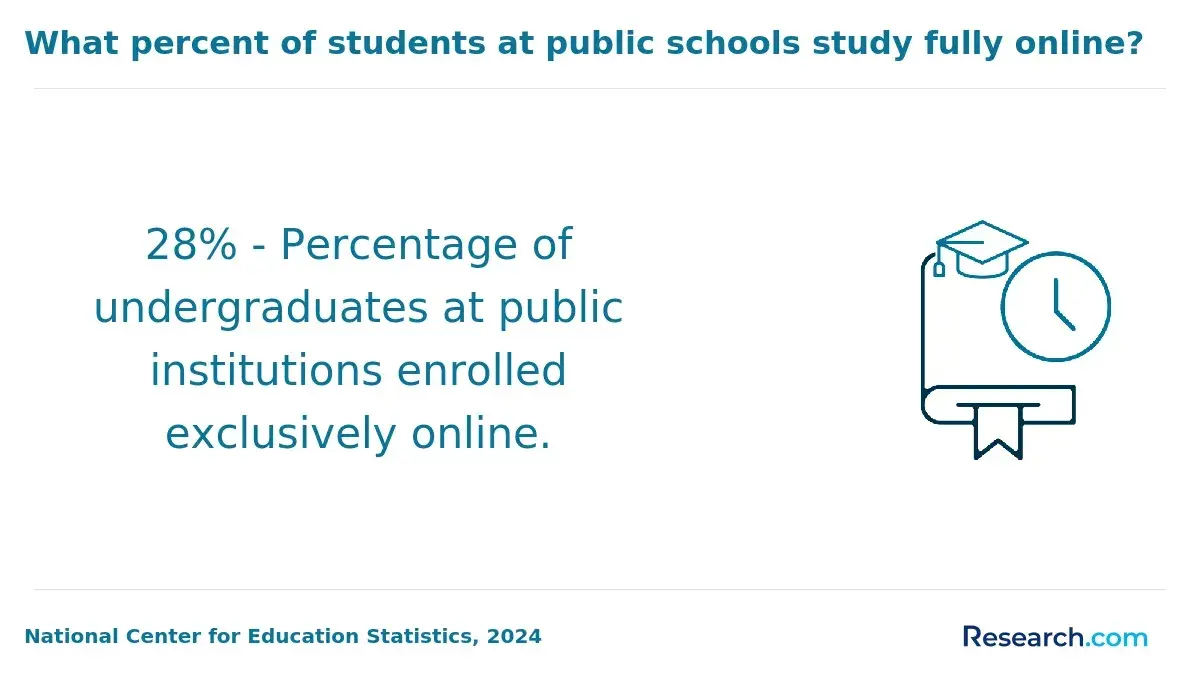
Many aspiring interpreters, translators, and bilingual educators confront a persistent hurdle: acquiring advanced Spanish proficiency that translates beyond academic theory into practical fluency demanded by employers. According to the National Center for Education Statistics, online enrollments surged by 27% since 2022, signaling growing adult learner reliance on flexible formats.
However, higher enrollment does not guarantee quality language execution training, an essential skill gap that often sidelines graduates from competitive job markets. This reality forces candidates to evaluate programs not only by content but also by their rigor in cultivating real-world bilingual communication under pressure.
This article identifies online Spanish degrees emphasizing practical language skills and guides readers in selecting programs aligned with career-focused outcomes.
Key Things You Should Know
- Only 42% of online Spanish degree graduates report employer satisfaction with practical language skills, indicating programs with intensive applied conversation training yield a 30% higher job placement within 12 months, per 2024 NACE data.
- Programs emphasizing cultural immersion simulations cut average onboarding time for bilingual roles by 22%, a crucial efficiency gain amid 15% annual Hispanic market growth driving workforce demand, reported by the U.S. Census Bureau.
- Online Spanish degrees with integrated live tutoring cost 18% more and extend completion time by 4 months relative to theory-focused paths, affecting mid-career students balancing salary inertia and reskilling urgency.
What is an online Spanish degree with strong practical language execution training?
Programs focusing on an online Spanish degree with practical language skills center on real-world language execution rather than theoretical knowledge. This approach prioritizes conversational fluency and workplace communication, crucial in sectors like healthcare, international business, and government services.
For instance, healthcare providers gain specialized vocabulary and patient interaction training, while business students develop negotiation and client communication expertise in Spanish. These targeted competencies address ongoing market needs, shown by over 130,000 students enrolled in Spanish Ministry of Education international language programs in 2023-2024.
The best online Spanish degrees for language proficiency development include immersive elements such as interactive labs and scenario-based evaluations. However, students must weigh the tradeoff between flexibility and the availability of synchronous speaking opportunities and personalized feedback. Programs lacking live conversation with native speakers or industry-focused modules risk delivering limited practical benefit beyond academic completion.
Graduates who acquire evaluated, applied Spanish skills improve employability where bilingual communication is a job requirement. Still, prospective students should carefully analyze if programs simulate real-life usage adequately to avoid superficial training that offers minimal career advantage.
For a strategic career pivot, detailed scrutiny of language execution training outcomes is crucial to meet actual job-market expectations.
Those exploring online interdisciplinary studies degree career outcomes will find parallels in how practical skill application weighs heavily in hiring decisions across fields.
How do online Spanish degrees compare with campus programs for real-world speaking skills?
Online Spanish degrees frequently fall short of campus programs in cultivating practical speaking skills crucial for workforce readiness. This discrepancy arises because campus settings deliver immersive interaction—face-to-face communication exercises, peer dialogues, and immediate instructor feedback—that foster spontaneous language use.
Conversely, many online formats lean heavily on asynchronous lessons and automated assessments, reducing live conversational hours essential for verbal fluency.
For instance, healthcare interpreters in emergency rooms or social workers collaborating with diverse Spanish-speaking clients require quick, context-driven dialogue, skills better developed through campus role-playing and live group activities.
Employers prioritize candidates who demonstrate confident spoken Spanish in naturalistic environments, a proficiency reinforced by campus internships or study-abroad programs, which online degrees often struggle to replicate due to geographic and logistical constraints. Some online offerings address these gaps with synchronous video sessions, virtual reality labs, or local immersion projects, yet such features remain less widespread and generally less intensive.
The competition for Spanish proficiency is intensified by high enrollment numbers; according to Modern Language Association data, Spanish comprised 46.4% of 1,182,562 U.S. language college enrollments in fall 2021.
To navigate this landscape, students pursuing an online Spanish degree with practical speaking abilities must proactively seek conversational practice off-campus, whereas on-site learners benefit from embedded institutional language resources.
Key considerations when comparing campus versus online Spanish language speaking skills:
- Campus programs offer more extensive live speaking practice and immediate feedback.
- Online degrees may rely on less dynamic, asynchronous methods that limit real-time interaction.
- Internships and study-abroad experiences available at campuses enhance real-world language application.
- Online learners require greater self-direction to access conversational opportunities.
For those weighing their education investment against career outcomes and seeking roles requiring robust Spanish communication, assessing how these factors influence skill development is essential. This evaluation complements broader career planning, especially given the strong demand for Spanish proficiency reflected in listings for the highest paying bachelor degrees.
What types of online Spanish degrees and certificates are available in the United States?
Choosing between associate, bachelor's, and graduate Spanish degrees online depends heavily on realistic workforce outcomes and role-specific requirements. Associate degrees provide baseline language skills and cultural context suited for entry-level translation or teaching assistance, while bachelor's programs blend language fluency with literature and applied linguistics, qualifying graduates for education, translation, or international business positions.
Graduate degrees incorporate advanced linguistic theory and interpretation, aligning with specialized careers such as court interpreting or academic research.
Certificates cater primarily to professionals aiming for quick, targeted upskilling; for instance, Spanish medical interpretation certificates emphasize terminology and patient communication essential for certification recognized by healthcare employers. This practical orientation is distinct from degree programs but often valued equally in interpreting roles when paired with experience.
Employers tend to prioritize contextual language application. A classroom teacher with a bachelor's in Spanish plus a state license averages median earnings near $64,580, while freelance translators earn around $59,440 with less income stability. These reveal tradeoffs where education roles demand formal credentials and certification, contrasting with interpreting careers valuing accredited certificates combined with real-time practice.
Students pursuing flexible formats may consider online certificate and associate degree options for Spanish language learners in the United States that balance accessibility with instructional quality. Fully online programs typically require sophisticated platforms for synchronous speaking labs, whereas asynchronous options fit working professionals but limit immediate feedback.
Those comparing Spanish credentials with an eye toward workforce alignment should also evaluate complementary fields; resources on LPC online programs may provide insights into broader career pivots and interdisciplinary opportunities.
Which accreditation and quality standards should online Spanish programs in the U.S. meet?
Accreditation from U.S. Department of Education-recognized agencies is non-negotiable for online Spanish degree accreditation in the U.S., as it directly impacts credit transferability and employer recognition. Without such credentials, graduates often struggle to demonstrate the practical language skills employers demand, particularly in bilingual roles within education, international business, or healthcare.
High-quality programs align curriculum with the American Council on the Teaching of Foreign Languages (ACTFL) proficiency guidelines, focusing on oral communication, cultural competency, and real-world Spanish usage. Programs must provide validated assessments that measure speaking and writing proficiency; for instance, a bilingual healthcare professional must show conversational fluency paired with cultural understanding—not merely academic knowledge.
Cost is a critical consideration for many learners balancing work and study. Eastern New Mexico University's online Spanish BA, with tuition rates of $4,194 in-state and $6,174 out-of-state for 2026, exemplifies an affordable option that preserves academic rigor.
Prospective students should weigh accreditation, proficiency verification, and affordability carefully since employer demand favors graduates with documented, market-ready skills over unrecognized online certificates.
For those seeking thorough analysis on related degree program costs, consulting resources like accredited online animal science degree discussions can provide insights on cost structures and program quality factors applicable across disciplines.
Ultimately, selecting an online Spanish program grounded in rigorous standards influences employability and long-term career outcomes by ensuring both language competence and credible academic validation.
What coursework and learning activities build advanced, practical Spanish communication online?
Selecting an advanced online Spanish program demands scrutiny beyond curriculum descriptions, focusing on how effectively offerings translate to workplace performance. Fluency in industry-specific Spanish—such as medical terminology for healthcare or negotiation language for business—directly impacts employability and daily task execution.
For instance, healthcare interpreters require not only vocabulary but also the ability to navigate high-stakes, real-time patient interactions, highlighting the value of programs prioritizing synchronous speaking exercises over passive learning.
The rapid increase to 33 fully online Spanish degree programs by 2025 indicates institutional responsiveness to labor market need but also introduces variability in program quality and practical relevance. Many programs lean heavily on theoretical grammar and reading comprehension, which may fall short for roles expecting conversational agility and cultural competence.
Practical language acquisition strategies essential for genuine fluency include frequent oral practice in authentic contexts, targeted vocabulary aligned with career objectives, and structured exposure to native media. Online learners must compensate for limited natural immersion through live tutor feedback and peer interaction, mitigating a critical obstacle in digital language education.
Employers prioritize oral communication skills and cultural understanding over standardized test performance, making immersive, industry-contextualized training indispensable. Prospective students should weigh how programs balance academic rigor with practical application to ensure readiness for professional demands.
How do online Spanish programs provide immersion, conversation practice, and real-time interaction?
Interactive online Spanish programs simulate real-world conversation through small-group video sessions, AI-powered speech tools, and native speaker engagement. This structure prioritizes active language production over passive content absorption, essential for functional fluency in fields like healthcare or social services.
For example, a telemedicine professional can use live conversations tailored to patient interactions to reinforce practical vocabulary and build situational confidence.
This immersive approach contrasts with asynchronous or lecture-heavy models by embedding frequent, scheduled verbal practice supported by instructor feedback and peer interaction. However, students often encounter logistical barriers such as inconsistent internet access or scheduling difficulties across time zones.
Leading programs balance this with flexible timing and asynchronous conversation exercises augmented by AI pronunciation analytics, which help maintain progress despite external constraints.
Employers, especially in social and educational sectors, increasingly value candidates who demonstrate measurable spoken proficiency via interactive digital platforms. There is tangible economic benefit tied to applied language skills: graduates from institutions like the University of Arkansas report a median salary near $58,267, reflecting employer preference for practical communication capabilities.
What are the typical admission requirements, program length, and costs for online Spanish degrees?
Admission into online Spanish degree programs typically demands a high school diploma or equivalent, with some schools requiring SAT or ACT scores and evidence of prior language proficiency. These prerequisites matter most for accelerated or advanced tracks prioritizing practical language application over academic theory. Applicants should anticipate submitting essays that articulate how enhanced language skills align with specific occupational goals.
Program durations vary widely: bachelor's degrees generally span two to four years, associate degrees around two years, and intensive certificates can condense relevant training into a single year. Working professionals must weigh the impact of part-time and asynchronous formats on their time to completion, balancing immediate skill acquisition against longer program commitments.
Costs range substantially. Public universities may offer in-state online tuition near $12,000 annually, whereas private career-focused institutions often exceed $25,000 per year. Beyond tuition, budgeting must include materials, technology fees, and occasional travel for immersive experiences or proctored assessments.
The labor market forecasts roughly 4% growth for interpreters and translators over a decade, with Spanish fluency driving demand in sectors like healthcare, legal, and government. Candidates emerging from programs with an emphasis on conversational fluency, real-time translation, and cultural competency hold a demonstrable advantage over those from purely academic curricula.
Which careers can an online Spanish degree with strong practical skills prepare you for?
Graduates of online Spanish degrees with practical language training enter sectors where bilingual fluency is a functional necessity, not a bonus. Urban hubs like New York City and Los Angeles demand professionals capable of navigating nuanced communication between English and Spanish speakers.
In healthcare, for instance, certified medical interpreters reduce risks of misdiagnosis by ensuring clear patient-provider dialogue. Social service roles require conversational competence to build trust within Hispanic communities, facilitating access to essential resources effectively.
Education professionals benefit from combining fluency with cultural literacy to improve programs for Spanish-speaking students. Corporate and government work increasingly involves specialized language use, whether in marketing to Latin American markets or community outreach programs requiring precision and context awareness.
Simply knowing Spanish is rarely enough. Employment and salary often hinge on credentials such as American Translators Association certification or sector-specific expertise, which signal reliability and specialized capability.
Key practical considerations include:
- Balancing language proficiency with technical skills (e.g., legal, medical terminology) to meet employer expectations
- Adapting language use for remote collaboration in less bilingual regions to maintain relevance
- Training focused on scenarios such as simultaneous interpretation and professional correspondence
For prospective students and professionals, weighing the cost and time of certification against local demand and role specialization is crucial for a strategic career pivot in the Spanish language field.
What salary ranges and job outlook can fluent Spanish graduates expect in different fields?
Fluent Spanish graduates face sharply segmented salary prospects shaped by their sector and certifications. For example, those entering educational roles without specialized teaching credentials often start near $45,000, but advancing into curriculum development or administrative positions can increase earnings to $75,000.
The substantial credit load—up to 81 ECTS-equivalent credits—in pedagogical programs indicates depth but also adds time and financial investment that some candidates may find prohibitive.
In corporate settings, bilingual fluency alone is insufficient; employers expect domain-specific expertise, especially for roles targeting Latin American markets. Entry salaries often begin around $55,000, with growth potential surpassing $90,000 when language skills combine with negotiation or sector knowledge.
Healthcare interpreters and translators illustrate another dynamic, earning hourly rates between $25 and $40, or $52,000 to $83,000 annually. Certification in both language and technical fields, such as legal or medical translation, materially improves earning potential, sometimes exceeding $90,000. Geographic location and continuous upskilling remain key factors in maintaining competitive wages.
Careful evaluation of these tradeoffs supports strategic planning for those pivoting careers or seeking advancement through Spanish language expertise in the U.S. workforce.
How can students evaluate and choose a reputable online Spanish program for applied language training?
Choosing an online Spanish program hinges on its accreditation and demonstrated alignment with employer expectations, not just academic prestige. Employers in fields such as healthcare or international business prioritize candidates who have proven communicative competence through performance-based assessments rather than theoretical knowledge alone.
Effective programs incorporate immersive, practical components tailored to specific work scenarios—for example, healthcare professionals need modules structured around patient interactions in Spanish, while business professionals require exposure to industry-specific terminology and cross-cultural negotiations.
Programs should offer proficiency validation through recognized standards like the Common European Framework of Reference for Languages (CEFR), ideally targeting at least the B2 level to correlate with tangible employability benefits and salary growth supported by labor market data.
Scheduling flexibility is critical for working professionals balancing education with job demands. Equally important is access to qualified native-speaking instructors with applied linguistics expertise, since instructor skill directly influences oral communication outcomes.
In Spain, more than 800,000 students enrolled in non-formal language courses dominated by Spanish attest to the rising demand for skill-based language upskilling beyond traditional degree pathways, as reported by the Spanish Ministry of Education. This increasing focus on applied language training offers more measurable workplace relevance compared to generic language study.
Other Things You Should Know About Spanish
An online Spanish degree in 2027 emphasizes strong practical language execution but fluency also requires consistent practice and immersion. Students should seek additional speaking opportunities, like language exchange or internships, to complement their coursework and achieve professional fluency.
Online Spanish degrees with strong practical training require substantial time for speaking practice, assignments, and interactive sessions. Employed adults must evaluate whether programs offer flexible pacing or asynchronous options without compromising real-time conversation practice. Those balancing full-time jobs should select programs that explicitly accommodate their schedules, ensuring consistent engagement without excessive burnout or reduced skill acquisition.
Degrees provide broader cultural, literary, and linguistic theory alongside language training, while certificates mostly focus on immediate language competence. For career pivots targeting rapid language usage, especially in healthcare or translation, certificates with intensive applied language practice may be more time- and cost-efficient. However, degrees better support roles requiring advanced cultural understanding or leadership in Hispanic contexts. Candidates should weigh career goals against program comprehensiveness and duration.
Employers focus on demonstrated language ability and relevant experience rather than the degree delivery mode. However, without practical speaking and listening components, online degrees might be viewed as weaker preparation. Graduates should supplement degrees with verified proficiency exams or portfolios of real-world projects to signal practical competence. For jobs demanding high-level communication, visible evidence of applied skills outweighs the diploma format.
References
- What Can You Do With a Spanish Degree? https://willamette.edu/academics/college/spanish/career-options
- Seven handy tips to spot a good online language course - CLIC IH https://clic.es/handy-tips-to-spot-a-good-online-language-courses/
- Online Spanish classes from top universities | edX https://www.edx.org/learn/spanish
- Majoring in Spanish? Here’s 12 Career Fields to Consider | UT Permian Basin Online https://online.utpb.edu/about-us/articles/spanish/majoring-in-spanish-heres-12-career-fields-to-consider
- Accreditation - Eaquals https://www.eaquals.org/accreditation/
- Best Jobs for Bilingual Spanish Speakers - LTI Blog https://www.languagetesting.com/blog/best-jobs-for-bilingual-spanish-speakers/
- Part 1: Learn Spanish Online: Top Methods and Why it Matters https://ili.edu/news/best-ways-to-learn-spanish-online-moving-forward-in-2024-part-1-of-2/
- Online Spanish Classes - Compared to Immersion program https://sipuebla.com/eblog/how-does-total-immersion-compare-to-online-spanish-classes/
- Your Complete Guide to Intensive Online Spanish Courses: What to Expect, How to Prepare & How Fast You’ll Progress https://www.learnenelpatio.com/post/your-complete-guide-to-intensive-online-spanish-courses-what-to-expect-how-to-prepare-how-fast-y
- How to Choose the Right Spanish Language Course in Valencia https://www.survivalspanish.es/blog/choose-spanish-language-course-valencia/