2027 Spanish Specializations for International Business Careers

Co-Founder and Chief Data Scientist
Facing the challenge of selecting a specialization within spanish for international business demands more than language fluency-it requires precise alignment with industry needs and career mobility. According to the National Center for Education Statistics, over 40% of adult learners pursue flexible or online programs to accommodate work-life balance, indicating a shift toward adaptable formats that impact program accessibility and timing.
This trend reshapes how candidates must evaluate Spanish specializations, especially as employers increasingly prioritize practical cross-cultural competencies tied to specific market sectors. This article will outline key Spanish specialization pathways tailored for international business careers, focusing on strategic program features that optimize employability and advancement.
Key Things You Should Know
- Specializations emphasizing business Spanish for Latin American markets often require up to 30% more coursework and internships to meet employer expectations for regional dialect proficiency, increasing time-to-hire by 3-6 months per National Association of Colleges and Employers data.
- According to the U.S. Bureau of Labor Statistics 2024, bilingual candidates with Spanish business specialization see a 17% wage premium, but employers prioritize sector-specific jargon fluency over general language skills, challenging generic language-only tracks.
- Programs integrating technical Spanish with digital communication tools reduce retraining costs by 22% for firms, yet they limit accessibility for mid-career pivots due to high upfront tuition, as reported in the 2024 Lumina Foundation workforce education report.
What are the best Spanish specializations for international business careers?
The strategic value of spanish language specializations for international business careers hinges on integrating language proficiency with sector-specific expertise, not just bilingual ability. For example, a professional fluent in Spanish with financial terminology can directly influence negotiations and reporting in multinational corporations, aligning with the $80,920 median wage for business and financial occupations reported by the U.S. Bureau of Labor Statistics. This specialization is essential for Latin American market roles where bilingual fluency affects deal-making and regulatory compliance.
Specializing in translation and interpretation with a business orientation reduces risks in legal and trade contexts by ensuring precise contract language application. Meanwhile, supply chain-focused spanish expertise addresses the operational challenge of coordinating logistics across Spanish-speaking vendors, improving efficiency and reducing costly delays.
Marketing and consumer behavior specialization tailors communication strategies to Hispanic markets in the U.S. and abroad, requiring nuanced cultural understanding combined with market analytics-exceeding the value of generic bilingual skills. Employers prioritize candidates who marry analytical competence with high spanish proficiency, especially in sectors like retail and technology.
Prospective students evaluating the best spanish expertise areas for global business professionals should seek programs emphasizing immersive, applied business cases and regional dialects over generic language instruction. These choices weigh heavily on employability and career relevance, especially when considering educational investments. For those seeking financial support options, an online interdisciplinary studies degree financial aid can present a pragmatic alternative.
How does a Spanish for international business degree differ from a general Spanish major?
A Spanish for international business degree directs language training specifically toward the demands of global commerce rather than broad linguistic or cultural studies. This specialization embeds business terminology and practical communication scenarios vital to transactions, negotiation, and marketing within multinational contexts. For instance, students master contract negotiation language and financial document comprehension in Spanish-skills absent from general Spanish majors. This targeted curriculum difference enhances relevance to firms engaged in international trade, finance, and corporate communications.
Employers' preference for bilingual professionals in business is evident. Data from the 2026 workplace language report reveal Spanish is required or preferred in 38% of U.S. bilingual job postings, second only to English. Such demand illustrates how a Spanish specialization benefits global business careers by aligning education with labor market realities.
Graduates with this focus gain operational readiness for tasks like drafting sales agreements with Latin American partners or managing Spanish-speaking customer relations, grounded in coursework on business ethics and international trade law. However, these advantages come with tradeoffs: less exposure to linguistic theory and cultural studies limits academic versatility or translation careers but accelerates immediate workplace productivity.
This pathway requires students to balance their career objectives-choosing targeted business communication skills over a broader language mastery. For a strategic vocational investment, consulting rankings of the highest paying degree programs can provide additional context on economic outcomes tied to various specializations within Spanish studies.
What accredited program options exist for Spanish and international business, online and on campus?
Balancing practical language immersion with business acumen is paramount when selecting accredited Spanish and international business degree programs on campus or online. Programs integrating applied Spanish language skills with sector-specific business competencies must prioritize measurable workforce outcomes over institutional prestige or format alone. For example, an MBA candidate concentrating in Spanish and international business may find on-campus options more effective for accessing networking and internships in US-Latin America markets, a critical factor missing from many online setups.
Tradeoffs between on-campus and online offerings often hinge on cost, geographic limitations, and the robustness of language immersion opportunities. Regional accreditation bodies like AACSB and language proficiency benchmarks such as ACTFL or DELE ensure program quality aligned with employer expectations. This alignment is vital given data indicating bilingual professionals in finance, import-export, and consulting earn 5% to 20% more than monolingual peers, demonstrating tangible market demand.
The availability of cheapest bachelor degree online options expands access but requires careful evaluation of language practice integration and employer connections. Prospective students should assess programs based on their ability to deliver applied skills, verified post-graduation outcomes, and sector-relevant expertise rather than modality appeal alone.
Key considerations include:
- Language proficiency requirements that meet industry standards.
- Employer partnerships offering internships and job placements.
- Curricula that combine global trade law, cross-cultural communication, and supply chain management.
What courses and skills are emphasized in Spanish specializations for global business roles?
Employers in multinational firms increasingly demand that international business professionals combine advanced Spanish fluency with deep knowledge of sector-specific skills such as global supply chain management and international marketing. Effective Spanish for international business communication goes beyond language proficiency to include specialized vocabulary for contract negotiation, client management, and corporate presentations. Graduates must integrate these with digital literacy in CRM platforms and data analysis tools to remain competitive in diverse business environments.
Core coursework often covers international trade regulations, economic policies, and intercultural dynamics. For example, a professional working in export management needs mastery of logistics terminology and customs protocols in Spanish to mitigate costly shipment delays, illustrating how cross-cultural negotiation skills in Spanish-speaking markets translate directly into operational effectiveness. Risk management training also focuses on interpreting legal documents and government reports in Spanish, which is crucial when assessing foreign investment risks.
Real-world application frequently hinges on internships or project-based experiences within multinational companies, contextualizing classroom learning. Labor market data reflects this complexity: degree holders in international business earn a median wage about 24% above the U.S. median, demonstrating tangible returns. However, students must balance program rigor and immersion opportunities carefully to align with realistic industry demands.
Those considering such pathways should also explore military friendly online cybersecurity degree programs as a complementary skill set, given the rising importance of digital security and compliance in global business transactions.
What admission requirements and prerequisites do Spanish-for-business programs typically have?
Admission to Spanish-for-business programs requires more than language proficiency; it demands readiness to integrate fluency with rigorous business fundamentals. Many applicants must demonstrate Spanish skills via placement tests or certifications like DELE, alongside maintaining a competitive GPA-often around 2.5 to 3.0-to manage the academic challenge. Beyond language, programs expect foundational knowledge in economics, marketing, and international trade, frequently necessitating prerequisite courses or bridge classes for students lacking a business background.
This prerequisite structure directly impacts time-to-degree and opportunity cost, particularly for mid-career professionals aiming to pivot strategically. For instance, an individual without prior business coursework may face extended study duration before specializing, delaying potential salary gains. Still, this investment often correlates with access to a network and credentials that help Hispanic international business graduates achieve a median salary of approximately $60,000-well above the $51,000 median of Hispanic peers in related fields.
Admission committees evaluate applicants' multitasking abilities to navigate dual-language business problem-solving within tight deadlines, especially in areas like trade compliance or global supply chain management where precision affects legal and financial outcomes. Work experience in bilingual settings can strengthen applications but rarely substitutes for the required language or academic foundations.
How long do Spanish and international business programs take, and what do they cost?
The choice between shorter certificates, associate degrees, and extended bachelor's or master's programs in Spanish and international business hinges on balancing time, cost, and depth of expertise. While certificates offer targeted skills within a year and lower tuition-$2,000 to $7,000-they often lack the comprehensive knowledge and employer recognition required for advanced roles in Latin American trade contexts.
Graduate degrees, typically lasting one to two years full-time or 18 to 36 months part-time for working professionals, provide critical mastery of language fluency, regional trade compliance, and customs procedures. This expertise aligns with employers' preference for candidates who combine business acumen and Spanish proficiency, especially in functions like supply chain analysis focused on Spanish-speaking markets.
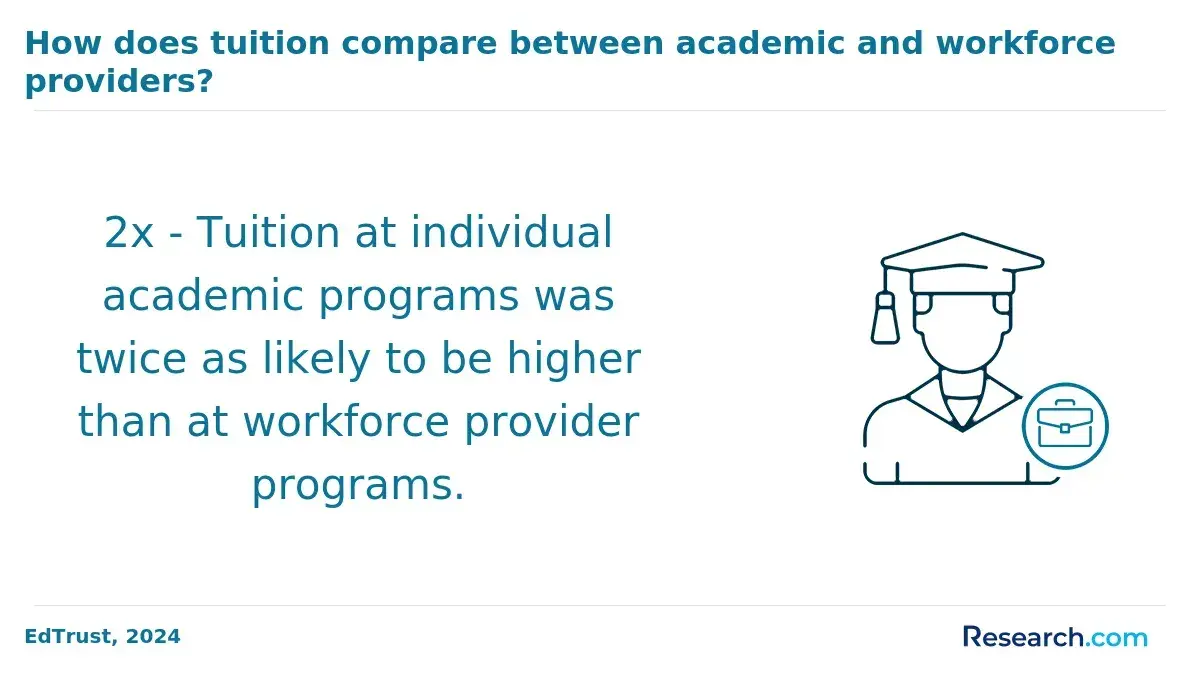
Public undergraduate tuition generally ranges from $10,000 to $25,000 annually, while private programs frequently exceed $35,000 per year, making the total cost a significant factor in decision-making. Bachelor's degrees, spanning about four years, offer broader career flexibility but delay labor market entry compared to two-year associate programs.
Given that U.S. exports to Spanish-speaking Latin America exceeded $430 billion, professionals equipped with languages skills and specialized business knowledge secure measurable competitive advantages. Internship or cooperative education components, though they may extend program length, provide essential industry exposure that significantly enhances employment prospects.
Which international business careers can you pursue with a Spanish specialization?
Fluency in Spanish integrated with international business expertise directly influences employability in sectors requiring cross-cultural communication and operational precision. Employers value candidates who can navigate complex supply chains or customer interactions involving Spanish-speaking stakeholders, as reflected in labor market data predicting strong growth for roles such as Digital Customer Service Manager and Logistics Coordinator in Spain. These positions demand not only language skills but also technical proficiency and cultural adaptability.
For example, a logistics coordinator fluent in Spanish can mitigate misunderstandings with Latin American partners, expediting delivery processes and ensuring regulatory compliance. Similarly, digital customer service managers leveraging Spanish communication skills can resolve issues more efficiently, contributing to improved customer retention in competitive environments. However, language alone rarely suffices; mastery of specific software systems, data analytics, and negotiation techniques are frequently required to thrive.
Students and professionals should anticipate the necessity of supplementing Spanish fluency with certifications or training in analytics, digital tools, or business intelligence. Employers consistently seek measurable expertise alongside bilingualism. The decision to pursue this educational path involves weighing the benefits of a niche bilingual skill set against the need for continuous upskilling in technology and remote collaboration. Strategically aligning Spanish language mastery with targeted international business competencies enhances prospects for advancement and compensation within an evolving global labor market.
What are salary expectations for graduates with Spanish specializations in global business?
Median early-career salaries for graduates with Spanish specializations in global business hover near $60,000, indicating a meaningful premium when language skills are combined with business expertise. Professionals fluent in Spanish and versed in business functions like international marketing or supply chain management more often secure roles demanding bilingual communication paired with strategic negotiation skills. For instance, managing Latin American regional accounts typically offers salary advantages over positions filled exclusively by monolingual candidates.
Tuition averages around $11,000 annually at public four-year institutions, suggesting a payback period under five years for many graduates-but this timeframe depends heavily on the ability to leverage language skills alongside practical business experience.
Prospective students should consider key realities:
- Demand varies by industry; sectors like logistics or finance may reward bilingual fluency more lucratively.
- Advanced qualifications such as an MBA or trade compliance certifications can significantly boost earning potential.
- Entry-level roles may initially provide moderate pay while language proficiency evolves into applied business acumen over a 2-3 year span.
Employers expect language to translate into tangible outcomes such as expanded markets or improved negotiation outcomes. Spanish proficiency without relevant business experience often limits salary growth, necessitating strategic coursework, internships, and network-building tailored to international markets.
How is employer demand and job growth trending for bilingual Spanish-English business professionals?
The employer demand for bilingual Spanish-English professionals extends beyond basic language skills, emphasizing the necessity for sector-specific expertise and cultural understanding. Positions in customer service, healthcare administration, and business operations increasingly require these combined competencies to reduce errors and improve client relations. For instance, bilingual healthcare staff manage patient interactions with greater accuracy and regulatory compliance, while bilingual marketing analysts tailor campaigns to regional demographics, adding measurable value that language fluency alone cannot deliver.
Projected annual bilingual job openings in the U.S. will rise by roughly 9,000 through 2031, concentrated in roles where functional Spanish enhances communication and operational efficiency. However, bilingual proficiency without contextual business knowledge seldom meets employer expectations or unlocks higher salary tiers.
Students and professionals weighing this pathway must focus on immersive, practical training that integrates advanced vocabulary with cultural nuance and real-world case studies reflecting compliance and sector-specific demands. Regional labor markets further shape opportunity availability; metropolitan areas with substantial Hispanic populations show greater demand and pay premiums for bilingual specialists.
How can students evaluate and choose a reputable Spanish for international business program?
Choosing a Spanish for international business program requires prioritizing tangible career outcomes over institutional prestige or broad claims. Prospective students should evaluate whether programs tie advanced Spanish proficiency directly to practical business skills like contract negotiation, cross-cultural communication, and trade compliance. Accreditation and curriculum rigor matter, but the real differentiator is how well a program prepares graduates for sector-specific roles through applied learning elements such as internships, industry partnerships, or case studies in finance, logistics, and export-import.
The workforce implications are notable: the U.S. Bureau of Labor Statistics projects faster-than-average growth for business and financial jobs between 2024 and 2034, with nearly a million job openings annually. For example, professionals targeting multinational supply chain roles must seek programs emphasizing logistics vocabulary and operational fluency in Spanish, whereas finance-focused candidates benefit most from courses centered on economic analysis and market reporting in Spanish-speaking economies.
Students and working professionals also need to weigh delivery method tradeoffs. Flexible or online formats can offer convenience but may compromise the interactive, skill-building components essential for mastery. Faculty expertise, especially instructors with firsthand international business experience in Spanish-speaking countries, substantially strengthens program relevance. Additionally, the strength of a program's employer network is critical to translating combined language and business credentials into real job opportunities. Transparency on graduate employment outcomes and employer feedback should guide informed decision-making.
Other Things You Should Know About Spanish
In 2027, Spanish specializations for international business often include courses designed for non-fluent speakers. Many programs start with beginner to intermediate language courses to build proficiency while simultaneously introducing business concepts, allowing non-fluent speakers to succeed in international business environments.
Programs that heavily favor language accuracy over business curriculum may produce graduates who communicate well but lack sufficient understanding of global market dynamics, legal environments, or trade regulations critical to international roles. Conversely, business-heavy tracks with minimal language immersion can leave graduates unprepared for nuanced negotiations or cultural subtleties. Choosing a specialization with a balanced approach maximizes employability by ensuring both linguistic competence and practical business acumen.
Internships are often optional, not guaranteed, limiting standardized real-world exposure across programs. Yet, practical experience in Spanish-speaking business settings strongly correlates with job placement success and skill application. Candidates should prioritize programs with structured internships or partnerships that provide supervised, relevant work experience to bridge academic concepts and market expectations effectively.
Balancing work, study, and language acquisition creates significant time constraints that can slow language proficiency gains and business knowledge integration. Programs with flexible scheduling, asynchronous content, and targeted support improve completion rates. Professionals should assess their capacity for consistent study hours and prioritize programs designed for adult learners that accommodate workload without sacrificing depth or practical engagement.
References
- How to get into University in Spain | Blog Expanish https://expanish.com/blog/how-to-get-into-university-in-spain/
- What can I do with an international business and languages degree? https://gradireland.com/careers-advice/career-ideas/what-can-i-do-international-business-and-languages-degree
- Bachelor's degree English-Spanish Business and Trade https://formations.univ-gustave-eiffel.fr/en/our-studies/detail
- Language Trends and Multilingual Staff Grow Future Business https://www.languagetesting.com/blog/language-trends-and-multilingual-staff-grow-future-business/
- C3S Business School: Why Southeast Asian Students Choose Study in Spain for https://studygram.me/blog/c3s-business-school-why-southeast-asian-students-choose-study-in-spain-for-affordable-education-in-europe/
- Study Business in Spain: All you need to know https://www.study.eu/article/study-business-in-spain
- Online Master's in International Business: Review Top Schools https://www.onlinemastersdegrees.org/best-programs/business/international-business/
- 5 Global Impact Careers After an MSc in International Business - EMLV Business School Paris https://www.emlv.fr/en/5-global-impact-careers-msc-international-business/
- How Study Abroad Classes Strengthened My International Business & Spanish Major https://blog.academicstudies.com/blog/how-study-abroad-classes-strengthened-my-international-business-spanish-major
- The Demand for Spanish in the Workplace https://www.skillsyouneed.com/rhubarb/demand-spanish-workplace.html