2027 Online BA in Psychology - Mental Health for Work in Community Reentry Organizations: Compare Degree Fit and Hiring Requirements
Audited and Verified:
Our Editorial and Data Verification Process
Research.com uses government datasets, official education statistics and primary institutional information to support its career and degree guides. Our review process checks factual accuracy, occupational definitions, source dates and the requirements associated with the credentials discussed.
How This Article Was Fact-Checked
Our editorial team verifies salary estimates, employment projections, education requirements and program information against original data providers and official organizations. Salary figures are checked against the relevant occupational definitions and reporting periods. Information about licensure, accreditation and required in-person training is reviewed separately.
Fact-checked and verified on:

Co-Founder and Chief Data Scientist
Community reentry organizations need staff who can help people leaving incarceration connect with housing, treatment, employment, and ongoing support. An online psychology BA can build useful knowledge for that work, but it does not qualify someone to provide therapy, and some reentry jobs do not require a psychology degree.
This guide is for prospective students and current community-service workers deciding whether the degree fits a specific role. It compares hiring requirements, practical experience, online study, costs, and alternatives so you can choose a path based on the work you want to do.
Key Things You Should Know
- An online psychology BA can support entry into nonclinical reentry coordination, outreach, and program roles; employers also weigh direct service experience, documentation skills, and local hiring rules.
- A BA does not authorize diagnosis or psychotherapy. Licensed mental health roles require a qualifying professional pathway and state-specific supervised experience and licensing steps.
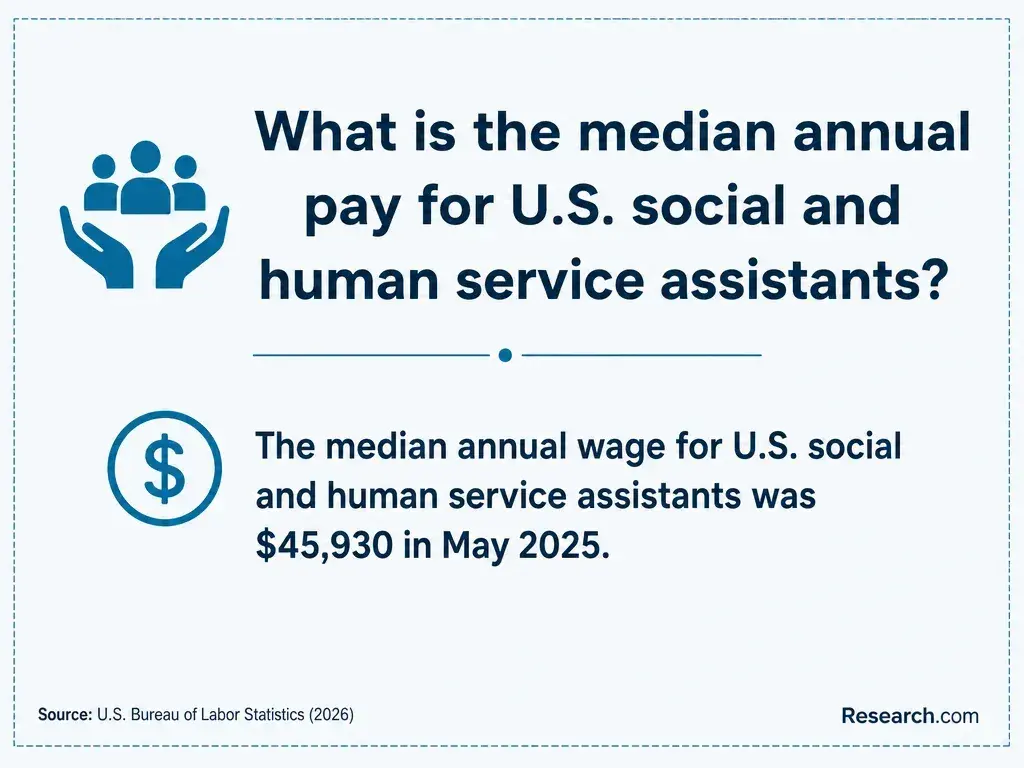
- Compare the degree's remaining cost against the jobs you can actually pursue: a bachelor's program commonly requires about 120 credits, while the U.S. median wage for social and human service assistants was $45,120 in May 2024, not a salary forecast for psychology graduates.
What is an online bachelor's degree in psychology for community reentry work?
An online psychology BA is an undergraduate degree in behavior, development, social interaction, and psychological research. Community reentry refers to services that help people transition from incarceration to life in the community. Organizations may coordinate housing, benefits, employment, substance-use services, family support, and behavioral-health referrals.
Most psychology BAs are broad degrees, not reentry credentials. A program may offer electives or a formal concentration in mental health, addictions, or forensic psychology; those labels should be checked against its catalog. Psychology is a good fit when you want to understand behavior and evaluate support programs across several settings.
A human-services or criminal-justice degree may be more direct when your goal is primarily service coordination or justice-system operations. For a narrower undergraduate focus, compare addiction psychology degree options for undergraduate students against the courses and experience local reentry employers request.
What jobs can a psychology bachelor's degree lead to in community reentry organizations?
Match the degree to tasks in actual job postings, not just titles. A person who already has outreach, corrections, nonprofit, or behavioral-health support experience may use a BA to qualify for roles with broader responsibilities. A new graduate will usually need supervised service experience as well as coursework.
The distinctions below show where psychology preparation can help and where another qualification may control hiring.
| Potential role | Typical work | What to check in postings |
| Reentry or case coordinator | Connect participants with housing, benefits, appointments, and partner agencies; document follow-up | Required degree, caseload experience, driving or travel requirements, and agency screening |
| Behavioral-health outreach or intake assistant | Explain services, gather permitted intake information, arrange referrals, and escalate concerns | Training, supervision, confidentiality rules, and whether clinical tasks are reserved for licensed staff |
| Recovery-support or peer worker | Offer practical, recovery-oriented support and connect people with services | State or employer peer-credential rules; lived-experience criteria may matter more than a BA |
| Program or evaluation assistant | Track services, maintain approved records, and help summarize program activity | Spreadsheet, reporting, data-access, and grant-documentation skills |
Job names vary across nonprofits, treatment providers, and government contractors. A "forensic" label does not itself prepare someone for clinical evaluation or investigative authority. If justice-related coursework interests you, use forensic psychology study choices and employment preparation to compare curricula, then return to the duties and qualifications in your local postings.
What education and licensing requirements apply to mental health reentry careers?
Support, treatment, and clinical assessment are different jobs. A psychology BA can prepare someone to coordinate referrals, conduct permitted outreach, and support a licensed team. It does not independently authorize psychotherapy, diagnosis, restricted psychological testing, or use of a protected clinical title. An organization's job description and supervision policies must also permit each assigned task.
For a licensed counselor or clinical social worker role, expect a qualifying graduate professional degree, supervised experience, examinations, and other requirements set by the relevant state board. Counseling and social-work programs follow different educational paths; a general psychology MS should not be assumed to meet either board's criteria.
Addiction-counselor and peer-support credentials also vary by state and role. If treatment is your target, examine a qualifying counseling pathway and its actual completion requirements before paying for a BA concentration or nonclinical master's that may not advance licensure.
Reentry work also has boundaries beyond licensure. Ask employers how staff handle confidential records, urgent safety concerns, mandated reporting, and referrals when someone needs care outside a nonclinical worker's scope.
For reentry hiring, the more useful comparison is usually what you can learn and demonstrate, not whether lectures occur online. Either format can provide psychology and research-methods coursework. Neither guarantees access to a suitable community placement.
Online study may let a working reentry employee remain employed while completing courses, but asynchronous lectures can still come with fixed exam times, group meetings, or fieldwork during agency hours. Campus study may make in-person faculty contact and local recruiting easier, though travel and class schedules can restrict access.
Ask each school how it arranges supervision, approves a student's existing workplace, and handles required visits; do not assume current employment automatically counts as an internship.
If you may study beyond the BA, investigate format separately at each degree level. Graduate psychology degrees with accelerated schedules may shorten academic study, but an accelerated nonclinical master's does not replace the field training or licensure requirements of a treatment profession.
Prioritize courses that improve everyday judgment with clients and partner agencies. Developmental and social psychology help explain behavior in context; abnormal psychology and substance-use coursework provide academic knowledge of mental health and recovery without conferring treatment competence. Statistics and research methods help staff read evidence and interpret program reports rather than mistake an association for proof that an intervention worked.
Round out those courses with electives in cultural psychology, trauma-informed service systems, public health, or criminal justice when available. A supervised nonclinical project, such as an approved referral-resource review or a report using data the agency permits students to access, can demonstrate more job-ready skill than an elective title alone.
Client information requires agency authorization and appropriate privacy safeguards; a class assignment is not permission to use identifiable records.
If substance-use services are the main goal, compare the actual training and credential implications of online addiction counseling programs with a general psychology BA. Similar course names do not establish equivalent preparation for state-regulated counseling work.
Verify that the institution holds accreditation recognized by the U.S. Department of Education and that the online BA is offered by that institution. Institutional accreditation matters for academic quality oversight and can affect federal aid and how other schools evaluate credits. It does not promise that every credit will transfer or that the degree meets a licensing board's rules.
Do not reject a general psychology BA because it lacks American Psychological Association accreditation: APA accreditation is not the standard for ordinary undergraduate psychology majors. If you intend to pursue counseling later, assess the eventual professional program and your state board's educational rules separately.
That distinction matters when comparing lower-cost accredited counseling degree pathways; the relevant accreditation and eligibility questions belong to the specific credential you seek.
Requirements differ for first-year and transfer applicants. Schools commonly review prior education and transcripts, while some specify a GPA, prerequisite courses, or separate standards for entry to the major. Ask whether admission is to the university, the psychology major, or both.
If you have college credits, request an official evaluation showing which credits satisfy general education, psychology, statistics, research-methods, and remaining residency requirements. Accepted credit is not necessarily credit applied to the major.
A student who needs rapid degree completion should compare that audit with course availability, rather than rely on an advertised transfer maximum. Psychology degree completion through accelerated study is worth considering only after the school confirms the courses and credits you still need.
A bachelor's degree commonly totals about 120 credits; the time remaining depends on accepted credits that satisfy requirements, course sequencing, and how many courses you can manage while working. Online delivery alone does not shorten a degree. Statistics or research-methods prerequisites, limited-term electives, and a scheduled placement can delay completion.
There is no reliable single price for an "online psychology BA." To estimate your own cost, multiply the credits remaining on your approved degree audit by the school's applicable per-credit tuition, then add mandatory fees, materials, technology, and any placement-related travel or lost work hours.
Compare the resulting amount with the pay and advancement rules of your target employers, not an occupation-wide median alone. Students comparing addiction-focused alternatives can also examine funding an online bachelor's in substance abuse counseling, while confirming aid eligibility and actual charges with each school.
Reentry does not have a single U.S. occupational wage category. For one relevant comparison, the U.S. Bureau of Labor Statistics reports a May 2024 median annual wage of $45,120 for social and human service assistants. That category can include service-support work, but its median covers workers across settings and education levels. It is neither a starting offer nor an earnings estimate for psychology BA graduates.
Employment prospects also differ by role, location, employer funding, and required credentials. A coordinator opening may value direct service experience; a licensed clinician opening has a different education pathway and pay market.
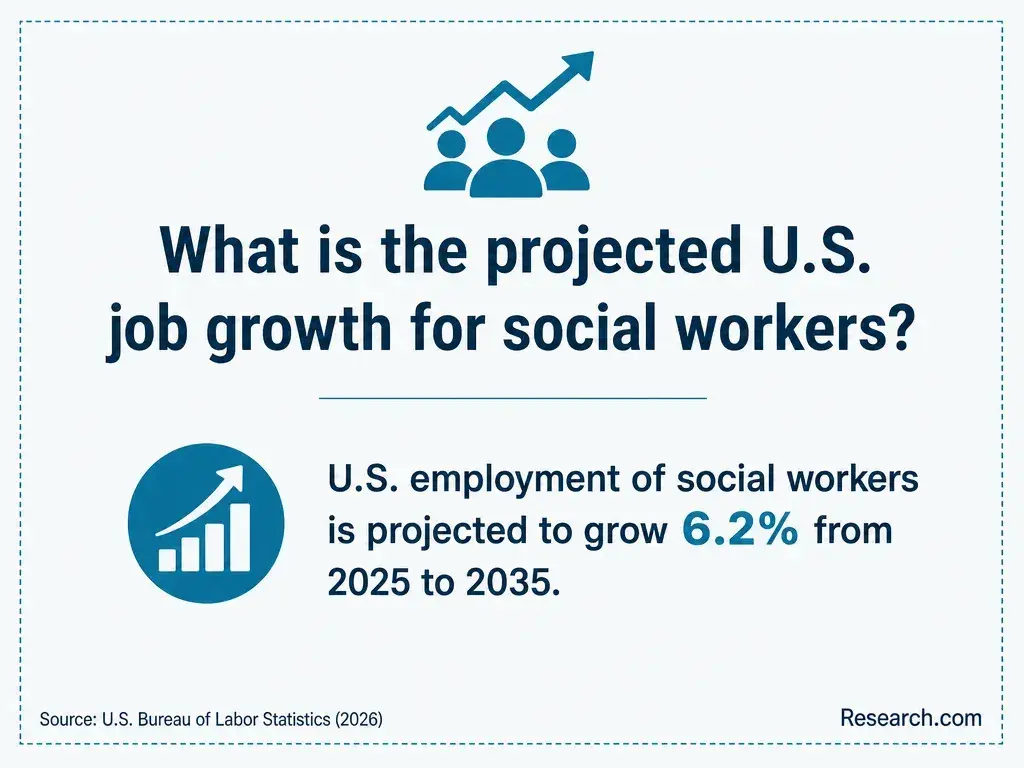
Use current local postings to compare actual salary ranges and hiring requirements, then consult the Bureau of Labor Statistics occupational outlook for the closest matching duties. Broad figures for forensic specialists or psychologists should not be substituted for reentry support wages; earning potential after a master's in forensic psychology concerns different roles and should be read with their qualifications in mind.
How should you choose an online psychology program for reentry mental health work?
Start with the position you want and the experience you already have. A current outreach worker may need a bachelor's credential for advancement; someone seeking peer work may be better served first by a state-recognized peer pathway.
If the goal is psychotherapy, plan backward from the state's qualifying professional degree rather than assuming a psychology BA is the final qualification.
Use this sequence to test whether a program closes a real hiring gap:
- Collect several local reentry job postings and separate required degrees or credentials from preferred psychology knowledge and experience.
- Ask admissions for a written degree audit, the current course schedule, total applicable charges, and any live-session or campus-visit requirements.
- Ask the fieldwork coordinator whether a reentry placement is available or whether your current organization could qualify, including approval, supervision, and scheduling rules.
- Compare the remaining cost and time with a human-services or criminal-justice degree, a targeted credential, or supervised entry-level work.
For an addiction-services goal, substance abuse counseling bachelor's fees and career prospects offer another comparison point. The deciding evidence remains your state's credential rules, local job postings, and each school's written account of what you must complete.
Other Things You Should Know About Psychology Programs
Sometimes. Employers may provide training in their referral systems, documentation, and safety procedures. Training cannot waive a degree or state credential that a particular job legally or contractually requires.
It can be valuable in roles designed around peer connection and community trust. Employers may also have specific peer-credential, screening, or role-boundary requirements; lived experience does not replace them automatically.
Only with the required faculty and employer approvals. Agree on a nonclinical question and permissible information before starting; access to records through your job does not grant permission to use them for coursework.
Language skills can improve communication where local clients need them, but proficiency and the organization's interpreter policies matter. Do not present basic coursework as qualification to interpret sensitive clinical or legal information.
- Medi-Cal Peer Support Services Specialist Program - DHCS https://www.dhcs.ca.gov/medi-cal-peer-support-services-specialist-program-frequently-asked-questions/
- Reentry Programs | CWDB - CA.gov https://cwdb.ca.gov/cwdb-home/our-programs/reentry-programs/
- Re-Entry Services | ny.gov https://doccs.ny.gov/re-entry-services
- Reentry Initiatives & Transitional Work Programs | Louisiana Department of Public Safety & Corrections https://doc.la.gov/imprisoned-person-programs-resources/transition-reentry/
- Chapter 6 - How To Become a Peer Specialist - NCBI https://www.ncbi.nlm.nih.gov/books/NBK596268/
- DAPIP | Homepage - Office of Postsecondary Education (OPE) https://ope.ed.gov/dapip/
- Why APA Accreditation Matters https://accreditation.apa.org/why-accreditation-matters
- Discover Psychology Career Paths That Lead to Professional Success | Mount saint vincent https://online.mountsaintvincent.edu/degrees/undergraduate/bachelor-psychology/careers-for-professional-success/
- BS in Psychology vs. Social Work vs. Human Services | Walden University https://www.waldenu.edu/online-bachelors-programs/resource/difference-between-bs-in-psychology-vs-social-work-vs-human-services