2027 Online BA in Psychology - General Psychology After an AAS in Developmental Disabilities Services: Compare Transfer Credit and Remaining Coursework
Audited and Verified:
Our Editorial and Data Verification Process
Research.com uses government datasets, official education statistics and primary institutional information to support its career and degree guides. Our review process checks factual accuracy, occupational definitions, source dates and the requirements associated with the credentials discussed.
How This Article Was Fact-Checked
Our editorial team verifies salary estimates, employment projections, education requirements and program information against original data providers and official organizations. Salary figures are checked against the relevant occupational definitions and reporting periods. Information about licensure, accreditation and required in-person training is reviewed separately.
Fact-checked and verified on:

Co-Founder and Chief Data Scientist
An AAS in developmental disabilities services can provide a head start on an online BA in general psychology, but the number of credits accepted is not the number that will necessarily count toward graduation. Applied courses may become electives while statistics, research methods, general education, or upper-level psychology requirements remain. This guide is for AAS graduates comparing online programs. It shows how to read a transfer evaluation, estimate remaining coursework and cost, and choose a path that fits both your experience and your career goal.
Key Things You Should Know
- A 60-credit AAS does not automatically leave 60 credits in a 120-credit BA; the decisive figure is how many credits satisfy specific degree requirements.
- Compare written degree audits for general education, psychology prerequisites, major courses, electives, upper-level study, and institutional residency - not transfer-credit caps alone.
- A general psychology BA can complement developmental disabilities experience in nonclinical roles, but it does not authorize diagnosis, psychotherapy, or independent psychological assessment.
How does an AAS in developmental disabilities services transfer into an online BA in psychology?
An Associate of Applied Science (AAS) is often designed around occupational coursework. A BA may accept those courses as college credit without treating them as equivalents to its general education or psychology major requirements. Admission, credit acceptance, application of credit to the degree, and eligibility to graduate are separate decisions.
Developmental disabilities coursework might apply to electives or, with departmental approval, a relevant psychology requirement. A course on supporting people with disabilities is not automatically equivalent to developmental psychology; similarly, workplace documentation or data collection does not automatically replace statistics or research methods. The receiving university makes those equivalency decisions.
Request an official evaluation using your transcript and, for uncertain courses, catalog descriptions or syllabi. Ask which office approves psychology substitutions and how to appeal an elective-only designation. A guide to college credit evaluation for psychology majors can help you prepare those questions, but your receiving school's written audit controls your degree plan.
How many credits remain after transferring an AAS into a general psychology bachelor's degree?
Subtracting the AAS transcript total from the BA total gives only a starting estimate. The actual remainder depends on accepted credits, where they apply, minimum upper-level and in-residence credits, and any unmet course requirements. A student can reach the total-credit threshold and still lack a required psychology course.
The following example is illustrative, not a prediction of any school's policy. It shows why two evaluations of the same 60-credit AAS can produce different graduation plans for a 120-credit BA.
| Illustrative evaluation | Accepted credits | What still needs checking |
| Most AAS credits fit the degree | 60 | At least 60 credits remain by total count; required major, upper-level, and residency courses may constrain the schedule. |
| Some applied courses do not fit | 45 | At least 75 credits remain by total count; unmet general education and major requirements may dictate which courses to take. |
Compare each school's remaining required courses, not just accepted credits. When reviewing psychology degree schools and online formats, obtain a program-specific audit before relying on an advertised transfer maximum.
What courses are required for an online BA in general psychology?
Requirements vary, but a general psychology major commonly builds from introductory psychology into statistics, research methods, and upper-level study of development, cognition, social behavior, biological foundations, or psychological disorders. A BA also has institution-specific general education, writing, elective, and graduation requirements. Some programs require a capstone; others offer one as an option.
For an AAS graduate, the most consequential gaps are often quantitative and research preparation rather than additional disability-services electives. Check whether statistics is a prerequisite for research methods and whether methods must precede a capstone. That sequence can affect completion time even when ample transfer credit is accepted.
Choose electives against a defined goal. Disability-related study and supervised nonclinical experience may strengthen service-coordination work; research and statistics can better prepare you for evaluation roles or graduate applications. If the goal is a regulated substance-use counseling job, compare the BA's curriculum with choosing an addiction counseling degree route and the relevant state credential requirements rather than assuming a psychology elective qualifies you.
There is no dependable universal winner for an AAS in developmental disabilities services. Published transfer ceilings describe how many credits a school may accept, not how many of your courses will satisfy its online BA in general psychology. An articulation agreement, course-by-course equivalencies, major restrictions, and residency rules can matter more than the headline ceiling.
Compare programs using the same transcript and intended entry term. Request written answers on accepted credits, degree-applicable credits, outstanding required courses, and whether those courses are offered online on a workable schedule. A school accepting fewer credits can still be the faster choice if it applies more AAS courses to requirements or offers the missing sequence more often.
Programs marketed for psychology degree completion through accelerated study deserve the same course-level audit. A shorter term does not remove prerequisites, upper-level requirements, or limits on how many demanding courses you can reasonably take at once.
Transfer applicants generally need an application and official transcripts from every college attended. Schools set their own GPA thresholds, deadlines, and rules for applicants with fewer college credits. Admission to the university may not be identical to admission to, or progression within, the psychology major.
Ask whether the AAS's awarding institution and individual courses are eligible for evaluation, whether prior grades affect transfer, and whether any psychology prerequisite must be completed before declaring the major. If you have professional training outside college, ask whether it can be assessed for credit rather than assuming work experience transfers automatically.
Financial-aid applications may run on a different timetable from admissions. Gather records early and distinguish grants from borrowing when estimating what you can afford; this explanation of grants versus loans for substance abuse counseling bachelor's students covers a related undergraduate funding decision. Confirm aid eligibility and deadlines with the school you actually choose.
Completion time is a scheduling calculation, not simply remaining credits divided by a full-time course load. First identify the required courses left on the audit. Then check when each is offered, its prerequisites, term length, and your sustainable enrollment pace alongside work or caregiving.
For example, statistics followed by research methods followed by a required capstone may span multiple terms even if other credits can be taken concurrently. Ask whether classes are asynchronous, whether exams or group meetings have fixed times, and whether a capstone, internship, or campus visit is required. "Online" does not settle those questions.
If graduate study is a longer-term goal, finish the BA plan before comparing accelerated MS psychology options. A faster master's program cannot compensate for missing undergraduate prerequisites or make the BA's remaining course sequence disappear.
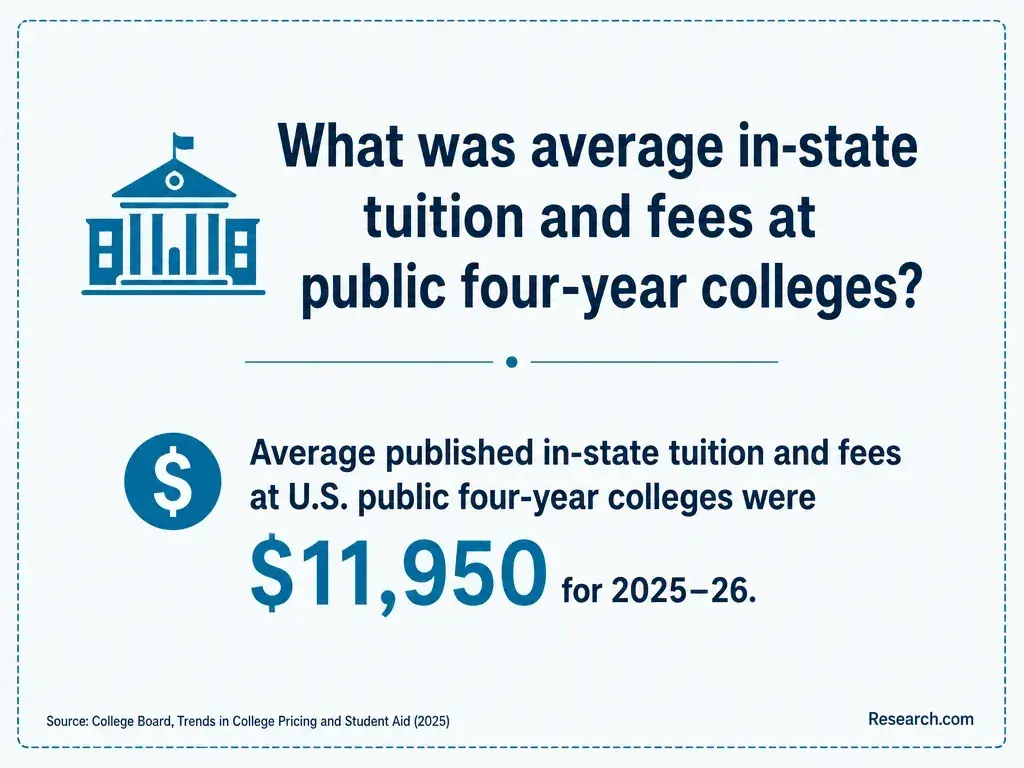
For each school, multiply its applicable tuition rate by the credits you must complete there, then add mandatory fees and expected course materials. Ask whether tuition differs by residency or enrollment status and whether repeated, prerequisite, or non-degree-applicable courses change the estimate. Do not calculate savings from accepted credits until the audit shows that they reduce coursework required for graduation.
Compare the resulting school-specific estimates alongside cost-focused comparisons of psychology degrees. A lower per-credit rate may not produce a lower total if more credits remain or required courses delay completion.
Also ask the financial-aid office how your enrollment pace and satisfactory academic progress affect eligibility. Employer tuition assistance, if available, can change the decision, but verify its annual limits and repayment conditions before including it in your budget.
Confirm the university's institutional accreditation through its accreditor and the U.S. Department of Education's accreditation records. Then check that the psychology BA is actually offered online to students in your location. APA accreditation is not a general accreditation designation for psychology bachelor's programs; it should not be used as a proxy for BA quality or transfer eligibility.
Use the current catalog and transfer office's written evaluation to verify the policy for your entry term. Ask the psychology department to confirm major substitutions, the registrar to confirm residency and graduation requirements, and an advisor to produce an updated degree audit. Retain the decisions in writing, including any approved appeal.
If a school presents the BA as a step toward graduate study, evaluate that later program separately - including its credential purpose and psychology master's fees and total study costs. Undergraduate institutional accreditation does not establish admission to a particular master's program or eligibility for a professional license.
Your AAS and direct-service experience may already support some disability-services positions. A psychology BA can add research literacy, writing, and broader behavioral-science knowledge for roles such as service coordinator, program assistant, community-support specialist, or research-support staff. Employers may still require specific experience, training, background checks, or credentials.
Map the job posting to evidence you can show: accessible communication, accurate documentation, appropriate referrals, teamwork, and - if relevant - basic data handling. Seek approved nonclinical projects or supervised work that fills a real gap. Do not assume your current job counts as a BA internship unless the program approves the site and duties.
If you are considering forensic or justice-related work, distinguish support roles from licensed forensic assessment. Even one-year online forensic psychology master's options should be evaluated against a specific job's qualifications; a specialized degree title alone does not confer clinical or investigative authority.
Do psychology bachelor's graduates need licensure or certification for their career goals?
A general psychology BA does not itself require a psychologist license, and it does not qualify its holder to practice as a licensed psychologist, provide psychotherapy, diagnose conditions, or conduct independent psychological assessment. Many nonclinical support and coordination jobs instead use employer-defined qualifications, although particular duties may require training or a state-recognized credential.
Work backward from the exact job title and jurisdiction. Check its posting, the responsible state licensing or certification authority, required degree, supervised experience, and permitted duties. Licensed counseling, social work, psychology, and some addiction-service paths have distinct educational and credential rules; a general psychology BA may be preparation, not the qualifying credential.
The same caution applies to graduate study. Forensic psychology master's study with faster pacing is not automatically a route to psychologist licensure. If a regulated role is your destination, compare its required training pathway before paying for additional psychology coursework.
Other Things You Should Know About Psychology
Often, yes. Ask the transfer office about its appeal procedure and submit the course syllabus or other documentation it requests. Obtain the final decision in writing before changing your enrollment plan.
Only if the university offers an applicable prior-learning assessment or other approved credit route. Employment alone does not create transferable college credit.
Possibly. Check each term's course load, fixed meeting times, deadlines, and any applied-learning requirement against your work schedule before enrolling.
Compare the actual audits. A BS may require additional science or quantitative courses, while BA requirements also vary. Choose the route that meets your career or graduate-school prerequisites with an achievable remaining course plan.
- .14 Evaluation and Review Process for Transfer of Courses and Credits. | Library of Maryland Regulations https://regs.maryland.gov/us/md/exec/comar/13B.06.02.14
- How to Become a Licensed Psychologist | Texas Behavioral Health Executive Council https://bhec.texas.gov/texas-state-board-of-examiners-of-psychologists/applying-for-a-psychology-license/how-to-become-a-licensed-psychologist/
- 8VAC40-31-140. Certification criteria for institutions of higher education. | virginia.gov https://law.lis.virginia.gov/admincode/title8/agency40/chapter31/section140/
- Psychology Requirements | Rutgers University https://psych.rutgers.edu/academics/undergraduate/major
- Major Requirements | Psychology - Natural Sciences https://naturalsciences.uoregon.edu/psychology/undergraduate-programs/major-requirements
- Transfer Credit Process | Cal State LA https://www.calstatela.edu/undergraduatestudies/transfer-credit-process
- Psychology Degree Pathway | Valencia College https://catalog.valenciacollege.edu/degrees/associateinarts/degreepathways/psychology/
- Psychology, B.S. - University of North Carolina at Charlotte https://catalog.charlotte.edu/preview_program.php
- Psychology Curriculum | charlotte.edu https://psych.charlotte.edu/undergraduate-program/psychology-courses/
- Psychology Degree Requirements | University of Bridgeport https://www.bridgeport.edu/news/psychology-education-requirements/