2027 Online MS in Psychology - Forensic Psychology: How to Evaluate Access to Justice Data for an Online Thesis
Audited and Verified:
Our Editorial and Data Verification Process
Research.com uses government datasets, official education statistics and primary institutional information to support its career and degree guides. Our review process checks factual accuracy, occupational definitions, source dates and the requirements associated with the credentials discussed.
How This Article Was Fact-Checked
Our editorial team verifies salary estimates, employment projections, education requirements and program information against original data providers and official organizations. Salary figures are checked against the relevant occupational definitions and reporting periods. Information about licensure, accreditation and required in-person training is reviewed separately.
Fact-checked and verified on:

Co-Founder and Chief Data Scientist
An online forensic psychology thesis can examine whether people can obtain legal help, understand court processes, or navigate services - but available records rarely show everyone who needed help. That gap can make an apparently straightforward access-to-justice study misleading.
This guide is for prospective and current master's students, especially those working in justice agencies or community organizations. It explains how to choose a feasible question, assess data quality and permissions, and decide whether a program offers the supervision needed to produce a defensible, nonclinical thesis.
Key Things You Should Know
- Define access to justice as a measurable outcome, such as completed referrals or time to assistance; a count of services delivered cannot reveal how many people needed help but never reached the system.
- Check the numerator, eligible population, missing cases, and data permissions before selecting a dataset. Comparing two jurisdictions is not meaningful if they record requests or outcomes differently.
- Choose an online program only after confirming that its thesis timeline, methods supervision, and data-access rules fit the proposed project; a forensic psychology MS does not confer clinical or legal authority.
What Is an Online Master's in Forensic Psychology?
An online master's in forensic psychology is graduate study of psychological science in legal and justice settings. Depending on the program, it may emphasize research, behavior in legal contexts, victim services, corrections, or applied analysis. "Online" describes delivery, not a standard curriculum: a program may require live meetings, a capstone instead of a thesis, or faculty approval before a student can use outside data.
For an access-to-justice thesis, the best fit is not necessarily the program with the most forensic electives. Look for instruction in research design, statistics, measurement, ethics, and writing, plus a faculty member able to supervise research on service access. Students still building foundational psychology knowledge can compare online bachelor's program choices in psychology rather than assuming a specialized master's will supply every prerequisite.
How Can an Online Forensic Psychology Thesis Evaluate Access to Justice Data?
Start with a decision-relevant question, not a convenient spreadsheet. "Access to justice" can mean reaching legal information, obtaining representation, understanding a process, or receiving a timely referral. A feasible thesis might ask whether the share of eligible help-seekers who complete a referral differs across service locations. That is narrower - and more measurable - than asking whether a program made the justice system fair.
Before committing to a thesis, use this sequence to test whether the proposed evidence can answer the question:
- Specify the population and measure. Define who is eligible, what counts as a request, what counts as a completed referral, and the observation period. Decide whether the unit is a person, request, case, location, or month.
- Audit coverage and comparability. Determine which offices submit records, whether repeat contacts are counted, how missing outcomes are coded, and whether definitions changed over time. A rate needs a defensible denominator; service users are not the same as everyone who needed service.
- Assess selection and interpretation. Compare groups only where recording practices and eligibility rules permit it. Differences may reflect language access, outreach, geography, or staffing rather than differences in need. Observational associations do not establish that a service caused an outcome.
- Confirm governance before analysis. Obtain the data owner's permission, follow the university's review process, and determine whether institutional review board review, a data-use agreement, or additional safeguards apply. Public availability does not remove every ethical concern, and removing names alone may not prevent reidentification.
- Plan the output. Prepare a data dictionary, reproducible cleaning decisions, a table of missingness, a clearly labeled analysis, and limitations written for the agency or community audience. Share only material the data agreement and university permit.
Possible sources include published court statistics, legal-aid reports, and authorized agency records. Each answers different questions: aggregate public data can support comparisons of reported activity, while individual-level records may be needed to examine referral completion. If the preferred data are inaccessible, a documented evaluation of public reporting quality can be a stronger thesis than an underpowered analysis of restricted records. Students considering psychology master's programs with intensive pacing should establish data access early; a short academic schedule cannot speed up an external agency's approval process.
Does an Online Forensic Psychology Master's Lead to Licensure?
An online forensic psychology master's does not, by its title, qualify a graduate for licensure as a psychologist, independent forensic evaluation, psychotherapy, or expert testimony. The degree may prepare students for research and nonclinical justice-related work. Authority to perform regulated assessments or treatment depends on the relevant profession's education, supervised experience, examinations, and jurisdictional rules.
If clinical practice is the goal, compare the intended license's requirements with the actual curriculum before enrolling. A counseling degree is a distinct pathway, not an interchangeable version of a forensic psychology MS; counseling degree affordability and accreditation are useful considerations only after confirming that a program meets the target state's educational criteria.
First, verify that the university holds recognized institutional accreditation. Then check whether any program-specific recognition is relevant to the credential you want. Do not assume that APA accreditation applies to a nonclinical forensic psychology master's; institutional accreditation also does not prove that a thesis option, particular supervisor, or licensure pathway is available.
For this thesis decision, request the current catalog and thesis handbook. Confirm who may supervise the project, whether external datasets are allowed, what research-ethics review is required, and whether remote students receive methods support. Accreditation questions differ across degree types; even when comparing online addiction psychology bachelor's admissions and coursework, the relevant check is the institution and the actual credential - not an assumption that every psychology program has the same professional accreditor.
Course titles vary, but an access-to-justice thesis benefits most from research design, statistics, psychological measurement, ethics, and the study of behavior in legal and community settings. Training in survey design or qualitative interviewing can help when administrative records omit people's experiences. Legal-system coursework provides context; it does not authorize students to give legal advice.
Check whether the methods sequence teaches students to distinguish a construct such as perceived procedural fairness from an administrative indicator such as time to referral. Also ask whether a thesis is required, optional, or unavailable. Programs focused on support services may cover related populations, but comparing degrees in addiction counseling serves a different educational decision from selecting forensic research training.
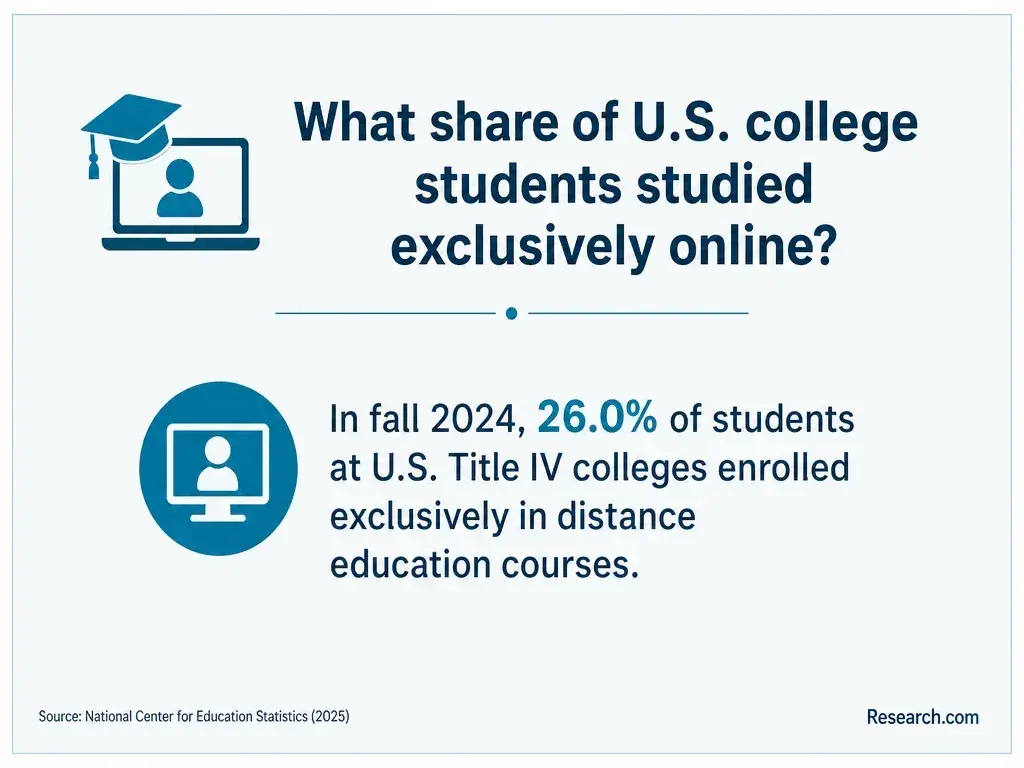
Online study can let a student remain near an employer or community partner, while campus study may make in-person research meetings and local partnerships easier. Neither format guarantees dataset access or strong supervision. The useful comparison is what the student can actually do during the thesis period.
This table identifies format features to verify rather than treating delivery mode as a proxy for quality.
| Feature | Online program | Campus-based program |
| Advisor contact | May use scheduled video meetings and shared drafts; check response expectations. | May offer in-person meetings; check actual advisor availability. |
| Data access | Remote analysis may work if permissions and secure systems allow it. | Local partnerships may help, but access still requires authorization. |
| Scheduling | May include live classes and fixed thesis milestones. | May require travel and daytime attendance. |
For working students, thesis pacing matters more than an advertised completion speed. Review leave and continuation policies alongside online forensic psychology master's options with compressed schedules; a faster course sequence can leave less time to resolve data-quality or approval problems.
Admissions requirements are set by each program. Applicants should verify the accepted bachelor's degrees, minimum academic standards, required psychology or statistics preparation, application materials, and whether research experience is expected rather than required. Prior justice-system or nonprofit work can strengthen a proposed thesis, but it does not replace a stated prerequisite or secure permission to use employer records.
Applicants from criminal justice, sociology, public administration, or another field can map prior coursework to the program's requirements and ask whether missing preparation may be completed before enrollment. If substantial undergraduate groundwork is needed, compare the cost of individual prerequisite courses with affordable bachelor's study in psychology online; an additional degree is not automatically necessary.
Time and cost depend on required credits, enrollment pace, tuition rules, fees, and whether a thesis extends beyond scheduled coursework. A student may also need to budget for software, secure storage, travel to a partner site, or continuation enrollment. Request a written estimate for the intended pace rather than relying on an advertised tuition figure alone.
Before choosing an accelerated route, ask when thesis advising starts, how long approvals usually take under university policy, and what happens if data access falls through. If the immediate goal is basic preparation for community support work rather than graduate research, an undergraduate or targeted-training route may cost less; scholarships for undergraduate substance use counseling are relevant only to students considering that separate pathway, not a source of funding to assume for this MS.
A forensic psychology MS can support applications for nonclinical roles involving program evaluation, research coordination, victim-service administration, or justice-agency support. Hiring depends on the employer's requirements and the applicant's demonstrated skills. A thesis using authorized data can show careful measurement, documentation, and communication, but it does not establish competence to investigate crimes, conduct forensic assessments, or practice law.
For applicants already working in an agency, an internal evaluation assignment or methods training may be more direct than another degree. Those seeking therapy or another regulated service role should examine qualifying professional education instead; online clinical counseling graduate completion options address a different career objective and must be checked against state rules.
What Salary and Job Outlook Can Forensic Psychology Graduates Expect?
There is no single reliable salary or job-growth figure for "forensic psychology master's graduates." The degree can lead toward several occupations with different duties and qualifications; psychologist workforce figures, for example, should not be treated as the expected pay for holders of a nonclinical MS. For a useful estimate, identify a specific job title, location, public-sector pay grade if applicable, and required experience, then compare current occupation-specific labor data with local postings.
Evaluate return on investment against the role you actually want. If that role requires a clinical license, include the additional qualifying education and supervision in the comparison; comparing the value of shorter clinical counseling degrees may help frame that separate decision, but neither program length nor an occupation-wide wage predicts an individual outcome.
Other Things You Should Know About Psychology
Possibly, if its definitions, coverage, and time periods support a sufficiently focused question. Confirm that your advisor accepts a secondary-data thesis and document what the dashboard cannot measure.
Propose a backup question using data you can lawfully access. An informal promise is not a data-use agreement or university approval.
Include only material your university and data owner permit. A methods summary using public information may be safer than sharing restricted records, small-cell results, or identifiable examples.
Only if that construct fits the question and you have an appropriate measure, recruitment plan, and required approvals. Satisfaction does not by itself establish legal access or case fairness.
- Access to Justice through Data and Research https://www.justice.gov/atj/media/1379491/dl
- Ethical Guidelines and the Institutional Review Board - PMC https://pmc.ncbi.nlm.nih.gov/articles/PMC10885741/
- Informed Consent FAQs | hhs.gov https://www.hhs.gov/ohrp/regulations-and-policy/guidance/faq/informed-consent/index.html
- An example of mixed methods research. | National Institute of Justice https://nij.ojp.gov/library/publications/integrating-qualitative-and-quantitative-approaches-example-mixed-methods
- Datasets for Justice Innovation https://justiceinnovation.law.stanford.edu/resources/datasets/
- Specialty guidelines for forensic psychology | apa.org https://www.apa.org/practice/guidelines/forensic-psychology
- Master's in Forensic Psychology Degree Online & On Campus | University of North Dakota https://und.edu/programs/forensic-psychology-ma-ms/index.html
- 3 Model Data Use Agreements: A Practical Guide | mit.edu https://admindatahandbook.mit.edu/book/v1.0-rc3/dua.html
- Effective master's thesis supervision - A summative framework for research and practice - ScienceDirect https://www.sciencedirect.com/science/article/pii/S1747938X23000829
- Forensic Psychology, MS | Monroe University Catalog https://catalog.monroeu.edu/catalog/schools-academic-programs/criminal-social-justice/forensic-psychology-ms/