2027 Online BA in Psychology - General Psychology for Research Ethics and Informed Consent: Which Courses Should You Look For?
Audited and Verified:
Our Editorial and Data Verification Process
Research.com uses government datasets, official education statistics and primary institutional information to support its career and degree guides. Our review process checks factual accuracy, occupational definitions, source dates and the requirements associated with the credentials discussed.
How This Article Was Fact-Checked
Our editorial team verifies salary estimates, employment projections, education requirements and program information against original data providers and official organizations. Salary figures are checked against the relevant occupational definitions and reporting periods. Information about licensure, accreditation and required in-person training is reviewed separately.
Fact-checked and verified on:

Co-Founder and Chief Data Scientist
A psychology program may promise research experience without showing where students learn to protect participants or obtain meaningful informed consent. That gap matters if you hope to assist with studies, complete a capstone, or prepare for graduate research. This guide identifies the courses and supervised opportunities worth looking for in an online general psychology BA. It also explains how to check whether ethics is practiced - not merely mentioned - in the curriculum, so you can choose a program that fits your goals without mistaking a degree for permission to conduct research independently.
Key Things You Should Know
- Prioritize a sequence that combines statistics, research methods, explicit human-participant ethics instruction, and a supervised project; a standalone ethics module is useful but insufficient.
- Look for practice with voluntary consent, privacy, recruitment, risk assessment, and institutional review - not just memorization of ethics principles.
- An online psychology BA can prepare you for supervised research support, but it does not grant independent research approval, clinical licensure, or a universal research certification.
What Is an Online BA in Psychology for Research Ethics and Informed Consent?
Usually, this is a general psychology bachelor's degree whose curriculum includes the ethical conduct of research, not a separate credential in informed consent. Research ethics concerns how studies protect people and produce trustworthy knowledge. Informed consent is an ongoing process in which prospective participants receive understandable information about a study and make a voluntary choice about participation; a signed form alone does not establish that the process was adequate.
For a US student, relevant foundations include the Belmont Report's principles of respect for persons, beneficence, and justice, along with applicable institutional policies and federal human-subjects rules. The precise obligations depend on the activity, setting, funding, and data involved. A student analyzing a public dataset may face different review and permission questions from a student recruiting people for interviews.
The best fit is someone seeking broad psychological-science preparation with room for methods electives and supervised research. If you are still comparing degree formats, reviewing online psychology education pathways can provide context; for this particular goal, the decisive evidence remains each program's actual courses and access to research supervision.
Which Psychology Courses Cover Research Ethics and Informed Consent?
Start with research methods or experimental psychology. A strong syllabus connects study design to recruitment, fair participant selection, potential harms, consent language, withdrawal, debriefing, confidentiality, and when a project needs institutional review. An introductory psychology course may name famous ethics cases, but it rarely provides enough practice to plan a responsible study.
Other courses can deepen that foundation. A dedicated ethics course may compare the APA's research ethics provisions with institutional and legal requirements. Developmental, social, health, or community psychology may examine consent and safeguarding in particular populations or settings. For example, bachelor's study in addiction psychology online may offer relevant context for discussing stigma, privacy, and undue influence - but a subject-focused course is not a substitute for methods training.
Use course descriptions as a first screen, then request recent syllabi. The most informative assessment is not whether "ethics" appears in a learning objective; it is whether students must critique a consent procedure, identify foreseeable risks, or revise a recruitment plan based on feedback. Coverage of psychological testing should also distinguish research measures from restricted clinical assessments.
How Do You Choose an Accredited Online Psychology Bachelor's Program?
Confirm the institution's current accreditation through the accreditor and the school, then examine the specific online BA. Institutional accreditation supports the legitimacy of the degree, but it does not establish that the psychology major offers an ethics elective, a research mentor, or a suitable capstone. APA accreditation is not the standard to look for in a general psychology BA; its accreditation scope covers specified professional psychology doctoral programs, internships, and postdoctoral residencies.
Compare published degree requirements against a recent course schedule. Ask whether methods and ethics courses run often enough to complete your planned sequence, who supervises online projects, and whether students can work with an existing approved study or only with hypothetical proposals. If you have prior coursework, seek a written degree audit: accepted credits do not necessarily satisfy statistics or major requirements. Transfer credit reviews for psychology applicants are a useful starting point, but the enrolling institution decides how each course applies.
The strongest sequence typically moves from statistics into research design, then into an advanced methods course or supervised project. Statistics helps students interpret uncertainty and missing data. Methods courses address sampling, measurement, comparison groups, and the limits of causal claims. A project adds the practical question: can this design be carried out responsibly with the available participants, permissions, and supervision?
The table shows how common course types contribute to an ethics-focused research foundation. Course names vary, so compare learning outcomes rather than titles alone.
| Course type | Relevant learning | What it does not establish alone |
| Statistics | Interpreting estimates, variation, and limitations | Permission to access participant data |
| Research or experimental methods | Design, recruitment, consent, privacy, and review pathways | Approval to launch a student study |
| Measurement or qualitative methods | Instrument quality or respectful interviewing and interpretation | Qualification to use restricted clinical tests |
| Supervised capstone or research assistantship | Applying methods under faculty or research-team oversight | Independent investigator status |
For a possible graduate research pathway, ask whether advanced courses require students to write a protocol and defend its ethical choices. Fast-track graduate psychology programs may shorten later study, but speed does not replace undergraduate methods preparation or supervised experience.
An online course can teach ethical reasoning well through case analysis, peer review, and feedback on draft consent materials. Campus study may make it easier to meet a research team or observe recruitment procedures. Neither format guarantees hands-on experience: the meaningful comparison is access to qualified supervision, feasible projects, and timely feedback.
Ask an online program how research meetings are scheduled, whether participation is asynchronous, and whether a capstone requires campus visits, a local site, or live sessions. Those details matter especially if you work or have caregiving commitments. If your long-term interest later shifts toward a specialized field, options such as faster routes through forensic psychology graduate coursework warrant a separate review; a short graduate format cannot compensate for weak undergraduate research fundamentals.
Requirements vary by institution and by whether you are entering as a first-year or transfer student. Schools may request prior transcripts and other application materials; admission to the university, entry into the major, and eligibility for upper-level methods courses can involve separate rules. Do not assume that previous statistics coursework meets a psychology-specific prerequisite until the school evaluates it.
Before accepting an offer, request a degree audit and a term-by-term plan showing when statistics, methods, and any ethics-focused elective are available. Applicants considering faster psychology degree timelines online should check course prerequisites and scheduling first: accelerated terms do not help if the next required methods course is unavailable when needed.
Completion time depends on the school's credit requirements, accepted transfer work, enrollment pace, and the order in which required courses are offered. A short advertised completion window may assume a substantial number of credits already earned. For this goal, leaving enough time for statistics before methods - and methods before a supervised project - may be more valuable than finishing as quickly as possible.
Compare the full remaining cost: tuition for credits still needed, mandatory fees, course materials, and any project-related travel or technology expenses. Obtain the school's written credit evaluation before estimating savings from transfer work. If your interests include substance-use services, inexpensive undergraduate substance use counseling degree choices may offer a cost comparison, but check whether their required methods and research-ethics coursework match your intended preparation.
Relevant starting points include research-assistant positions, study coordination support, participant recruitment under an approved protocol, data-entry or quality-checking work, and nonclinical program-support roles. Employers may expect experience with documentation, confidentiality, data systems, or a particular population in addition to the degree. A supervised project can help you demonstrate those skills more concretely than a course title can.
Community and recovery-service roles can also involve respectful communication and careful handling of sensitive information. Career options in recovery services illustrate adjacent paths, although their duties and state-specific credential requirements differ from research jobs. Neither research-support work nor a psychology BA authorizes diagnosis or psychotherapy.
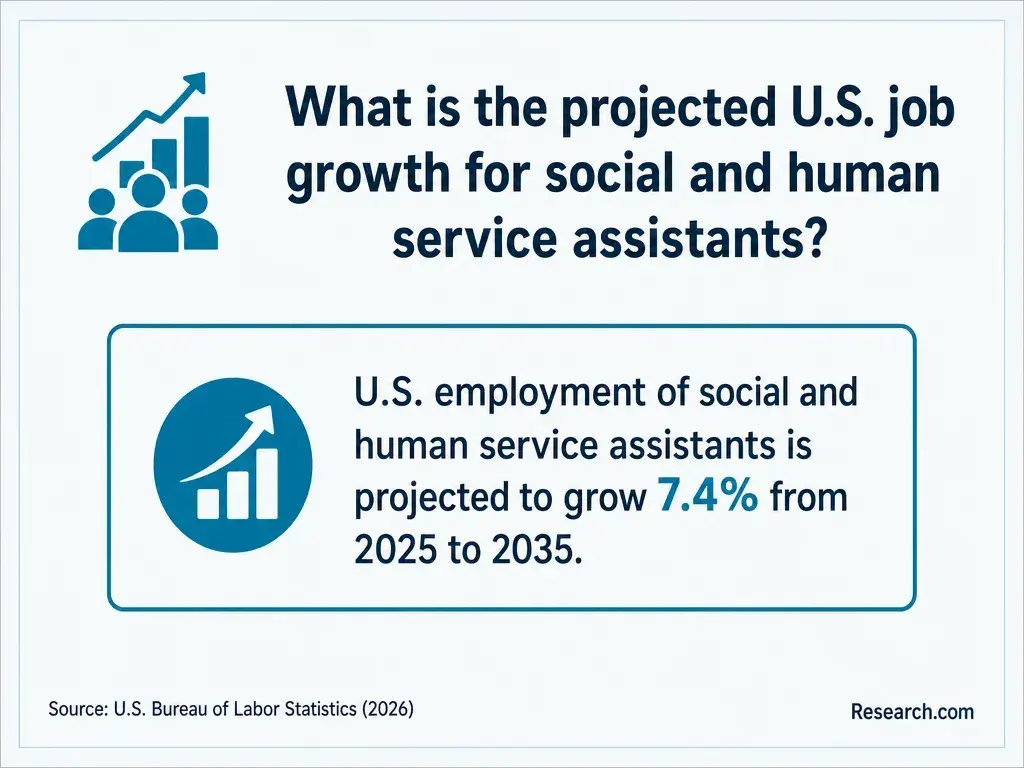
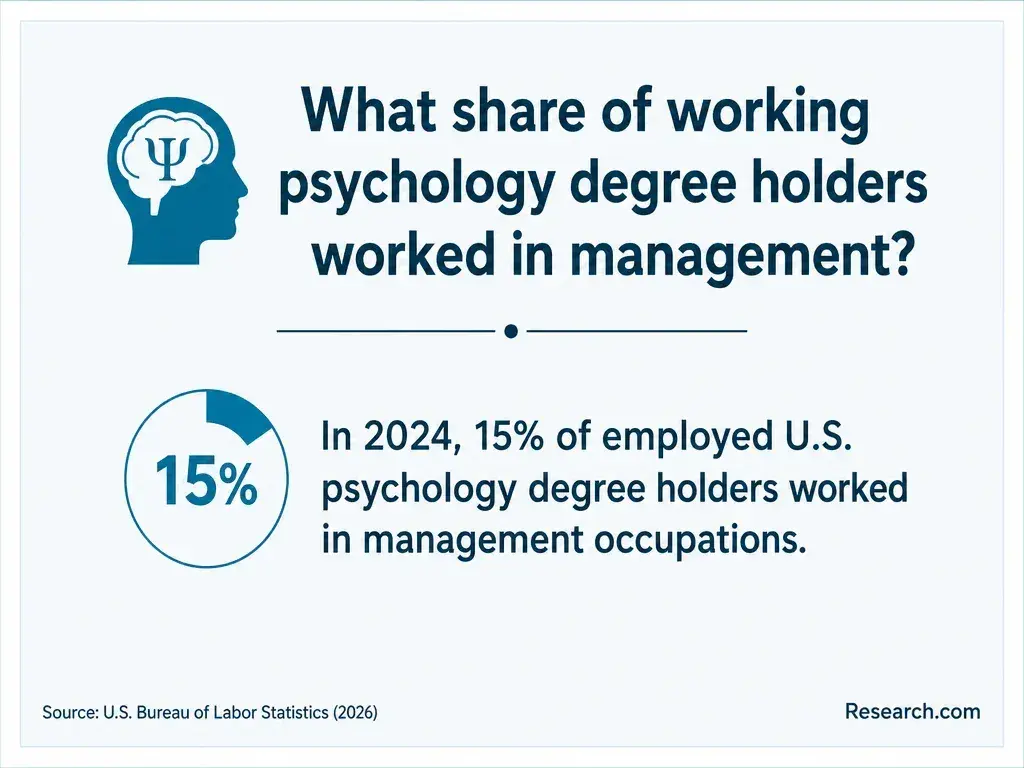
There is no single reliable salary or growth figure for "psychology BA graduates." US labor-market figures describe occupations, not everyone holding a particular major, and research assistant, human-services, and clinical roles have different duties and entry requirements. Before using a wage figure, match the source's occupational definition and geographic area to the job you actually plan to seek.
For a research-oriented decision, compare local postings for specific entry-level tasks and experience requirements, then weigh likely earnings against the remaining degree cost. A move into licensed counseling requires a different educational and supervised-practice pathway; short-duration counseling master's return on investment should therefore be assessed separately, not treated as a salary outcome of the BA.
Does a Psychology BA Qualify You for Licensure or Research Certification?
No. A general psychology BA does not by itself qualify someone for psychologist licensure, independent clinical practice, or a universal credential authorizing human-participant research. Training in research protections - sometimes documented by a course-completion certificate - is not the same as institutional permission to recruit participants or use restricted data.
For a proposed student study, the faculty supervisor and responsible institution determine the appropriate review route under their policies. Do not assume that a class assignment always requires IRB review, or that calling data "deidentified" removes every permission and privacy obligation. If later graduate study is part of your plan, include psychology master's fees and total study costs in the decision - but verify whether the particular program builds research skills or meets requirements for your intended profession. Those are different outcomes.
Other Things You Should Know About Psychology
Generally, consent is voluntary and participants may stop taking part, subject to the study's disclosed limits on withdrawing data already collected. The consent materials should explain those limits clearly.
Not necessarily. Applicable rules and institutional review may also call for the child's assent when appropriate. Requirements depend on the study and the child's circumstances.
Usually, a clearly labeled hypothetical form is safer to share than materials from a real study. Obtain permission before sharing team documents, and remove any confidential participant or site information.
No. Survey content, recruitment, software settings, and the possibility of identifying someone from combined responses can still create risks. Review the full procedure with your instructor or supervisor.
- Informed Consent FAQs | hhs.gov https://www.hhs.gov/ohrp/regulations-and-policy/guidance/faq/informed-consent/index.html
- Guiding Principles for Ethical Research | nih.gov https://www.nih.gov/health-information/nih-clinical-research-trials-you/guiding-principles-ethical-research
- IRBs | ORI https://ori.hhs.gov/content/chapter-3-The-Protection-of-Human-Subjects-IRBs
- Frequently Asked Questions about Human Subject Research (IRB) - Office of Research https://research.syracuse.edu/compliance-ethics-safety/human-subjects-research-irb/frequently-asked-questions/
- Online Bachelor's in Psychology | University of Kansas https://online.ku.edu/undergraduate-programs/online-bachelors-psychology
- Human Subjects Protection and Institutional Review Board (IRB) | NBER https://www.nber.org/programs-projects/projects-and-centers/human-subjects-protection-and-institutional-review-board-irb
- Privacy, Confidentiality, and Anonymity in Human Subjects Research | usc.edu https://hrpp.usc.edu/irb/privacy-confidentiality-and-anonymity-in-human-subjects-research/
- Human Subjects Protections - Research Ethics & Compliance https://research-compliance.umich.edu/glossary/human-subjects-protections
- Research Ethics and Informed Consent | Educational Research Basics by Del Siegle https://researchbasics.education.uconn.edu/ethics-and-informed-consent/
- Vulnerable Populations | Office for the Protection of Research Subjects (OPRS) https://oprs.research.illinois.edu/research-topics/vulnerable-populations