2027 Online BA in Psychology - General Psychology: When Retaking a Course Is Better Than Appealing Transfer Credit
Audited and Verified:
Our Editorial and Data Verification Process
Research.com uses government datasets, official education statistics and primary institutional information to support its career and degree guides. Our review process checks factual accuracy, occupational definitions, source dates and the requirements associated with the credentials discussed.
How This Article Was Fact-Checked
Our editorial team verifies salary estimates, employment projections, education requirements and program information against original data providers and official organizations. Salary figures are checked against the relevant occupational definitions and reporting periods. Information about licensure, accreditation and required in-person training is reviewed separately.
Fact-checked and verified on:

Co-Founder and Chief Data Scientist
Your previous psychology course may appear on an online BA transfer evaluation without satisfying the requirement you expected. An appeal could save tuition and time, but waiting for one can also delay a statistics or research-methods sequence. This guide is for transfer and returning students deciding whether to challenge a credit decision or enroll again. It explains how to identify the actual credit problem, compare the two routes, and get written answers before committing to another course.
Key Things You Should Know
- Retake a course when the school has identified a substantive mismatch, a required sequence is at risk, and the approved replacement is available sooner than an uncertain appeal.
- Appeal first when the previous course appears equivalent and you can document its content, credit value, and level; accepted credit alone does not mean a major requirement is satisfied.
- For an illustrative 3-credit course, compare the full charge for those credits and any resulting delay - not tuition alone - before deciding. Confirm repeat and aid rules in writing.
What Is a General Psychology Bachelor's Degree?
A general psychology BA combines broad study of behavior and mental processes with research methods, statistics, general education, and electives. "General" usually means the major is not confined to a formal specialty; it does not mean every psychology elective can replace a required methods course. BA requirements differ by institution, so the receiving school's catalog and degree audit - not the name on an old transcript - control how a transferred class applies.
That breadth can help returning students use prior humanities, social science, or science coursework, but only after an evaluation identifies which requirements it fulfills. When considering undergraduate psychology degree program choices, compare the remaining requirements on each school's written audit rather than its advertised maximum transfer allowance.
When Is Retaking a Course Better Than Appealing Transfer Credit?
Retaking is usually the better choice when the receiving department has found a genuine gap in content or level, the course is a prerequisite you need soon, and an approved replacement costs less - in money and delay - than pursuing an uncertain exception. An appeal is stronger when the disagreement concerns missing documentation or an apparent coding error. For example, a prior statistics class that covered the required analyses may merit review; a class devoted mainly to mathematical theory may not meet a psychology statistics requirement, even if its title sounds similar.
Use the following sequence before registering. It separates a fixable evaluation error from a requirement that the previous class cannot meet.
- Ask the registrar or transfer-credit office whether the course was rejected entirely, accepted as elective credit, or accepted but not applied to the psychology requirement.
- Request the written reason and the appeal or substitution process; submit the original-term syllabus, catalog description, transcript, credit-hour information, and relevant assignments if requested.
- Ask the psychology department whether it will approve equivalency or a substitution and when its decision will arrive. Confirm how either decision would appear on your degree audit.
- Compare that timetable with the next approved course offering, prerequisite deadlines, tuition and fees, aid eligibility, and the school's repeat-credit policy before choosing.
If a methods course is offered infrequently, waiting for an appeal can postpone several later classes. Conversely, repeating a course before a well-supported appeal is decided may waste money without adding credits toward graduation. Start with psychology transfer eligibility and degree planning, then obtain a decision from the institution that will award your BA.
How Does Transfer Credit Work in an Online Psychology Bachelor's Program?
Transfer evaluation has two distinct stages: the institution decides whether to accept prior learning for credit, and the appropriate office or department decides where that credit fits in the degree. A course can count toward total credits while leaving a major requirement unfinished.
The distinctions below explain why a transcript showing transferred credits may still leave you needing another class.
| Evaluation result | Effect on the degree |
| Not accepted | Adds no credit to the receiving institution's record. |
| Accepted as elective credit | May help meet total-credit requirements but does not automatically fulfill the psychology major. |
| Approved as an equivalent or substitution | Fulfills the specified requirement if recorded on the applicable degree audit. |
Schools may also review course level, grade, age, laboratory or methods content, quarter-to-semester conversion, and limits on community-college, examination, military, or other prior-learning credit. Residency rules can require coursework at the degree-granting school even when earlier credits are accepted. For students comparing fast-paced psychology degree formats, the useful measure is the number and sequence of requirements left after evaluation, not the speed advertised for a new student.
Check the institution's accreditation status with its recognized institutional accreditor and confirm that the status covers the institution awarding the online BA. The U.S. Department of Education's accreditation database can help you identify the accreditor; verify the current status directly with the accreditor as well. Accreditation does not settle whether an individual course is equivalent, so you still need a transfer evaluation.
Do not reject a general psychology BA because it lacks American Psychological Association accreditation: APA accreditation applies to specified professional psychology training programs, not general BA majors. The same distinction matters when a school advertises a specialty. Resources on forensic psychology degree program quality checks can inform questions about institutional status, but a concentration name is not proof of professional accreditation or licensure eligibility.
Requirements commonly include introductory psychology, statistics, research methods, and upper-level study in areas such as development, cognition, social behavior, or biological psychology. General education and a capstone may also be required. The exact mix, course level, and prerequisites depend on the catalog governing your degree.
Statistics and research methods deserve special attention in a transfer appeal: departments may examine the analyses taught, study-design work, and assignments rather than matching titles alone. Likewise, an abnormal psychology elective cannot be assumed to replace a required developmental course. An interest in addiction psychology BA and BS degree options may shape elective choices, but specialty coursework does not remove a general major's required sequence.
Admission as a transfer student and admission to, or continuation in, a psychology major may be separate decisions. Schools typically request official transcripts and apply their own academic-standing and minimum-grade policies. Some allow admission before a final course-by-course evaluation; that is not a promise that a disputed class will fulfill the major.
Ask which catalog applies to your entry term, whether a prerequisite can be taken after admission, and whether an appeal must finish before you register for its successor. If future graduate study is part of your plan, check the prerequisites of programs you might actually apply to rather than repeating a course solely because it seems useful for a fast-track graduate psychology program. Undergraduate equivalency and later graduate admission are separate decisions.
Your remaining time depends on the approved degree audit, course sequencing, enrollment pace, and when required classes run. Online delivery does not guarantee that a needed class is offered every term or that its meetings and assessments are asynchronous. A retake can shorten the path if it unlocks a prerequisite promptly; it can lengthen it if repeating earns no additional usable credit.
Compare these cost components for each option using your school's published charges and your own aid information. No school-independent tuition figure can establish which route is cheaper.
| Cost component | Why it matters to this decision |
| Course tuition and mandatory fees | A retake creates a new charge even if prior credit remains on the record. |
| Materials and scheduling | Software, textbooks, or an unavailable course section can add expense or delay. |
| Additional enrollment time | Waiting for an appeal or a later course offering may affect fees, work hours, and completion plans. |
| Financial aid | Eligibility can depend on whether the course counts toward the program and on applicable repeat-course rules. |
Ask financial aid to review the exact proposed retake before assuming it is covered. Guidance on FAFSA for online substance use counseling undergraduates discusses aid concepts, but your psychology program and your award determine your actual eligibility.
A general psychology BA can support applications for nonclinical work in human services, community outreach, research support, recruiting, or program coordination. Employers may also require relevant experience, data skills, a background check, or a separate credential. Finishing a methods sequence can be valuable for research-support roles because it provides practice evaluating evidence - not because the BA alone qualifies someone to run independent studies or provide treatment.
For example, addiction recovery workforce opportunities include support roles with differing employer and state requirements. If one specific job is your goal, compare its posted qualifications with your audit before paying to repeat an elective that does not advance graduation or job readiness.
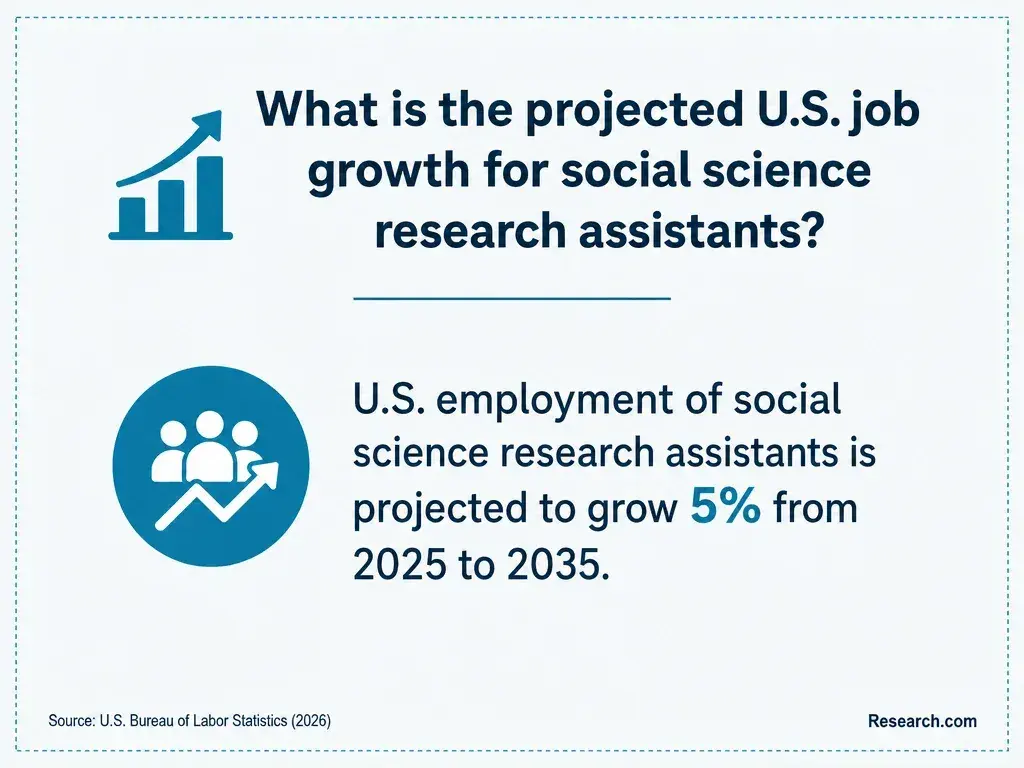
There is no single salary or job-growth rate for general psychology BA graduates: they enter different occupations, and employers weigh experience and location alongside education. For a meaningful comparison, use the U.S. Bureau of Labor Statistics Occupational Outlook Handbook entry for a specific target occupation, checking its wage reference year, projection period, typical entry education, and duties. An occupation-wide median is not a predicted starting salary for a psychology graduate.
That distinction is especially important if you are weighing the cost of a retake against a longer-term career change. Counseling is a separate, credential-dependent path; discussions of evaluating shorter mental health counseling graduate pathways should not be used to assign counselor earnings to a BA or to justify an unnecessary undergraduate retake.
Does a Psychology Bachelor's Degree Qualify You for Licensure?
No. A general psychology BA does not by itself authorize psychotherapy, diagnosis, independent psychological assessment, or use of a protected professional title. Requirements for psychologists and other licensed mental-health professionals differ by occupation and state and commonly involve further qualifying education, supervised experience, and examinations.
If licensure is your eventual goal, identify the specific profession and state board before choosing which disputed undergraduate course to repeat. A course may strengthen preparation without satisfying a later program's prerequisite or licensing rule. Even shorter routes through mental health counseling graduate study must be checked against that state's educational and supervised-practice requirements; speed alone does not establish eligibility.
Other Things You Should Know About Psychology
Not necessarily. Schools set separate policies for transfer grades, institutional GPA, repeat credit, and grade replacement. Ask the registrar how both attempts would appear and which credits would count.
Possibly. Get advance written approval for the exact course and term. An upper-division psychology requirement or residency rule may prevent a community-college class from filling the gap.
Only if your school accepts that option for the specific requirement. Confirm its credit limit, fees, and effect on your degree audit before paying for an assessment.
Ask whether an archived catalog description, department letter, reading list, or assignments would be acceptable evidence. The receiving department decides whether the available documentation supports equivalency.
- Transfer Dispute - Texas Higher Education Coordinating Board https://www.highered.texas.gov/transfer-dispute/
- Department Expectations: Curriculum | New York State Education Department https://www.nysed.gov/college-university-evaluation/department-expectations-curriculum
- Staying Eligible | Federal Student Aid https://studentaid.gov/understand-aid/eligibility/staying-eligible
- Transfer Course Evaluation Process - Registrar-UMD https://registrar.umd.edu/transfer-credit/transfer-course-evaluation-process
- Psychology Program FAQs | University of La Verne https://health.laverne.edu/psychology/faq/
- Psychology Degree Requirements | University of Bridgeport https://www.bridgeport.edu/news/psychology-education-requirements/
- Cost of Attendance Appeal | vt.edu https://finaid.vt.edu/appeals/cost-of-attendance-appeal.html
- Transfer Evaluation Appeal Process | TCC.edu https://www.tcc.edu/service-support/registrar/transfer-evaluation/transfer-evaluation-appeal-process/
- Transfer Credit Evaluation | University of Arizona Office of the Registrar https://registrar.arizona.edu/records-enrollment/transfer-credit/transfer-credit-evaluation
- Transfer Credit | U-M LSA Department of Psychology https://lsa.umich.edu/psych/undergraduates/transfer-credit.html