2027 Online MS in Psychology - Forensic Psychology Admissions with a Resume with Several Short-Term Jobs: What to Ask Before Applying
Audited and Verified:
Our Editorial and Data Verification Process
Research.com uses government datasets, official education statistics and primary institutional information to support its career and degree guides. Our review process checks factual accuracy, occupational definitions, source dates and the requirements associated with the credentials discussed.
How This Article Was Fact-Checked
Our editorial team verifies salary estimates, employment projections, education requirements and program information against original data providers and official organizations. Salary figures are checked against the relevant occupational definitions and reporting periods. Information about licensure, accreditation and required in-person training is reviewed separately.
Fact-checked and verified on:

Co-Founder and Chief Data Scientist
A resume with several short-term jobs can make a forensic psychology master's application feel uncertain, especially if your work spans different fields. But job length is only one part of an admissions decision. Your academic preparation, reasons for changing roles, and fit with the program may matter more.
This guide shows you how to present an accurate work history, identify evidence of readiness, and ask schools whether their admissions policies and career outcomes justify the time and cost of applying.
Key Things You Should Know
- Several short-term jobs are not an automatic admissions barrier; ask whether the program evaluates employment history and how applicants can explain transitions.
- A relevant bachelor's degree, prerequisite coursework, recommendations, and a credible purpose may carry more weight than job tenure, but requirements vary by school.
- Before paying an application fee, verify the degree's credential limits, total cost, scheduling and placement demands, and evidence of outcomes for your target role.
What Is an Online Master's in Forensic Psychology?
An online master's in forensic psychology examines psychological science in legal and justice-related settings. Depending on the program, students may study research on eyewitness memory, behavior in correctional settings, victimization, or the use and limits of psychological evidence.
An MS may emphasize research methods, but the degree name alone does not establish its curriculum or professional purpose.
For an applicant with varied employment, the central fit question is whether the program builds skills you need for a defined next step, such as research support or nonclinical work in a justice-serving organization.
When reviewing accredited online pathways in forensic psychology, compare actual courses, applied opportunities, and graduate outcomes rather than relying on the concentration name.
Can You Become a Licensed Psychologist With a Forensic Psychology Master's?
Generally, a forensic psychology master's alone does not qualify someone for independent practice as a licensed psychologist. Psychologist licensure ordinarily requires doctoral-level professional education and additional jurisdiction-specific requirements.
Studying forensic assessment is not permission to administer restricted tests, diagnose people, conduct independent evaluations, or offer expert opinions as a licensed practitioner.
If your goal is psychotherapy rather than psychology research or nonclinical justice-system work, investigate a degree specifically designed around your state's requirements for a counseling or social-work license.
Compare required supervised practice and program format as well as speed: reviewing accelerated clinical counseling program formats can help clarify why a shorter advertised timeline is not the same as a faster route to licensure.
What Are the Admission Requirements for Online Forensic Psychology Programs?
Programs set their own rules. A completed bachelor's degree, transcripts, a statement of purpose, recommendations, and a resume are common application components; specific GPA thresholds, psychology prerequisites, tests, and interviews must be checked at each school. Prior work in law enforcement or corrections should not be assumed necessary unless a program says so.
The following distinctions help you separate an actual eligibility problem from an aspect of your application that needs explanation:
| Application item | What to verify | Why it matters with short-term jobs |
| Degree and coursework | Accepted majors; required psychology, statistics, or methods courses | Academic preparation may be more consequential than job duration. |
| Resume and experience | Whether employment history is required, evaluated, or discussed in an interview | You can prepare a focused, factual account of transitions. |
| Recommendations | Who may write them and whether an academic reference is preferred | A supervisor who knows your work well may be more useful than one with a prestigious title. |
| Statement and exceptions | Prompt, prerequisite alternatives, and any conditional-admission policy | You can address a preparation gap without assuming an exception is available. |
If you do not yet hold a bachelor's degree, master's admissions is a later decision. Prior study, including bachelor's study in addiction psychology online, may provide relevant preparation, but only the graduate program can determine whether your completed degree and courses meet its requirements.
Keep dates, employers, titles, and duties accurate. Brief positions can reflect contracts, layoffs, relocation, caregiving, or an intentional career change; do not label them all "contract" unless they were. A resume can group genuinely related skills under a short profile, but it should still let reviewers understand where and when you gained them.
Use the statement of purpose - not a lengthy defense on the resume - to connect your work history to graduate readiness. A useful explanation has three parts: the relevant reason for transitions, a concrete skill or result, and why this program now fits a stable goal.
For example, an applicant who moved through time-limited service positions could describe documented referral, recordkeeping, or research-support responsibilities without implying clinical expertise. Explain sensitive circumstances only to the extent needed; you need not disclose private health or family details.
Experience in recovery services can demonstrate communication and referral skills, but it does not establish forensic or clinical credentials. Applicants drawing on that background can use skills and education for recovery services work to identify accurate descriptions of transferable, nonclinical duties.
Confirm the institution's current accreditation with its recognized institutional accreditor and confirm that the exact online degree is offered by that institution. Then ask what, if any, program-specific recognition applies.
Do not reject a nonclinical forensic psychology MS simply because it lacks APA accreditation: APA accreditation has a defined professional-training scope and is not a blanket accreditation for general psychology master's programs.
Reputation is more useful when translated into evidence. Ask for the curriculum in effect for your entry term, faculty research interests, access to thesis or project supervision, completion information with a clear cohort and time period, and career services available to online students.
Broad psychology program admissions and curriculum comparisons can help you formulate questions, but they cannot replace confirmation of a particular school's policies or outcomes.
Look for substantive training in research design, statistics, ethical interpretation of evidence, and the psychological topics most relevant to your goal. Legal-system coursework may address eyewitness evidence, violence research, victim services, or correctional settings.
Check whether applied work is a thesis, a nonclinical capstone, an approved internship, or simply an elective; those experiences are not interchangeable.
Course titles can obscure important differences. Studying psychopathology or assessment does not train a student to deliver independent clinical services.
If your intended work is substance-use counseling, compare the forensic curriculum with an addiction counseling degree comparison resource, then verify the target state's credential rules. That alternative may align more directly with the job you want.
Online delivery removes some commuting but does not necessarily remove scheduled obligations. A program may require live seminars, group research meetings, examinations at set times, campus visits, or an approved local placement.
Campus study may make informal faculty contact easier, while an online program may better accommodate employment; neither format guarantees mentorship or practical experience.
Ask for a sample term schedule and written requirements for any placement before assuming you can keep your current hours. An accelerated calendar can intensify weekly work rather than eliminate it.
Compare twelve-month forensic psychology graduate study pathways against your actual availability, especially if another job transition would threaten your ability to finish.
Completion time depends on required credits, course availability, enrollment pace, and any thesis or placement. Request a term-by-term plan for both full-time and part-time study.
For cost, ask for a written estimate covering tuition, mandatory fees, materials, technology, travel, and any charges for continuing a thesis or placement beyond the expected term. Compare that estimate with realistic earnings and any income you would forgo.
Applicants still completing an undergraduate degree need a separate funding plan: grants versus loans for substance abuse counseling bachelor's students addresses a different degree level.
Do not assume an undergraduate award will continue into master's study. Ask the graduate school what aid is available, whether its enrollment schedule affects eligibility, and whether any employer assistance has conditions.
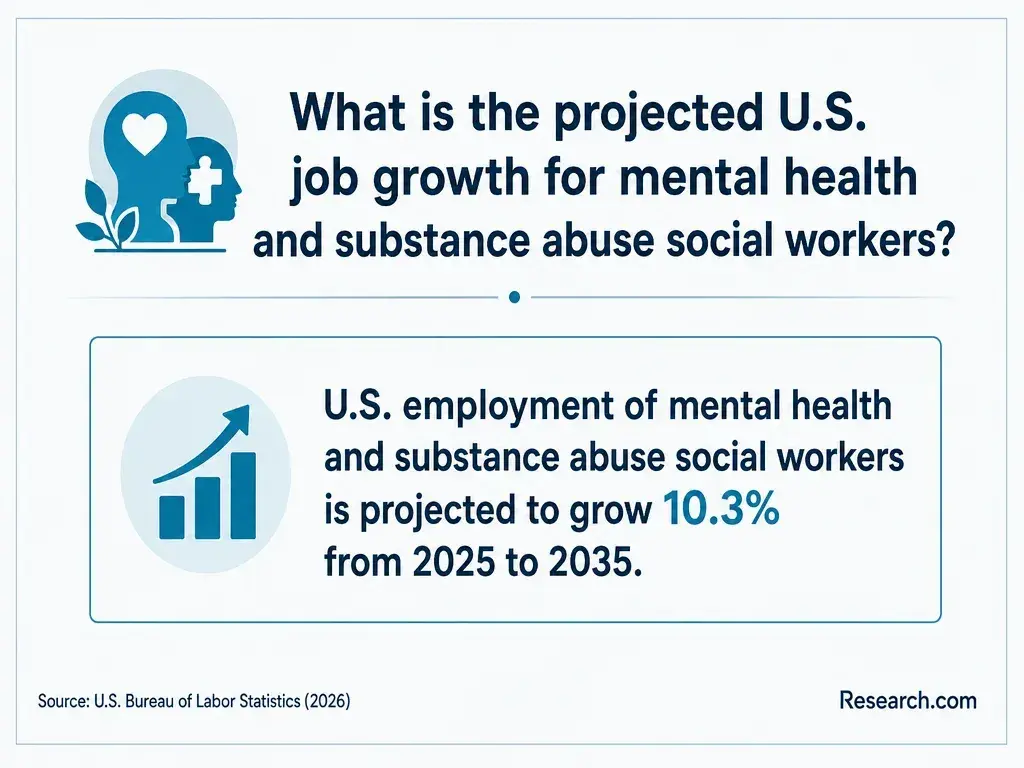
Possible nonclinical directions include victim-services coordination, correctional program support, justice-related research assistance, and agency program evaluation. Eligibility depends on the employer, the specific duties, prior experience, and sometimes separate government hiring or credential rules.
An applicant with several short jobs may be competitive for a role if those positions collectively demonstrate reliable documentation, data skills, or work with relevant populations.
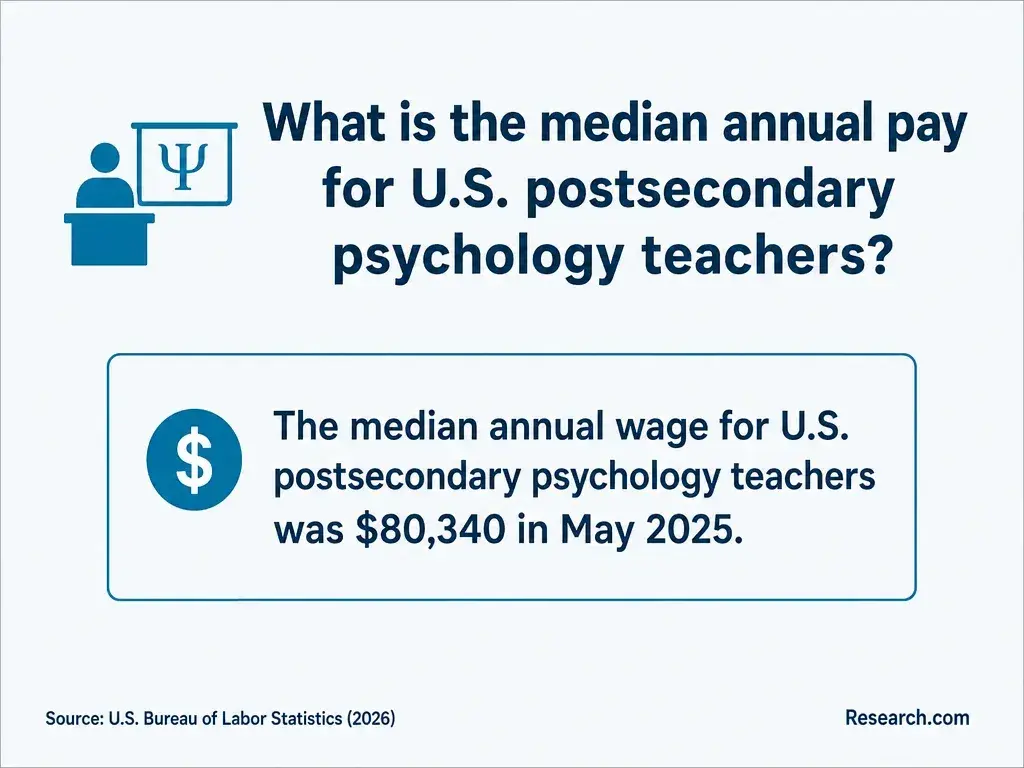
Do not use a published "psychologist" wage as a forecast for this degree: that occupational category includes professionals whose qualifications and duties differ from those of most nonclinical master's graduates.
For salary planning, collect pay ranges for actual job titles in your location and compare them with your current earnings and the full cost of the degree. If your target is counseling, its qualifying education and financing are a separate calculation; mental health counseling fees and financial support can help frame that comparison.
What Should You Ask Schools Before Applying to Forensic Psychology Programs?
Send the same questions to each program and request answers that apply to your intended entry term. If a reply is ambiguous, ask which admissions, academic, or career-services office has authority to confirm it.
- Does the admissions committee consider employment duration, and where should I explain several short-term positions?
- Which of my completed courses meet prerequisites, and can you identify any outstanding requirement before I apply?
- What are the required live sessions, visits, projects, and placements, and who arranges and approves a placement?
- What is the estimated total cost at my planned pace, including fees and possible additional terms?
- Which roles have recent graduates entered, how were those outcomes collected, and does the degree meet any credential requirement for my target role?
Compare the responses alongside online master's psychology programs by affordability, but do not let a low advertised tuition figure outweigh missing prerequisites, unsuitable scheduling, or weak evidence of career fit. Apply when you can explain your transitions honestly and show why this particular program advances a specific next step.
Other Things You Should Know About Psychology
Yes, if that person can describe your work and readiness with specific examples. First confirm the program's rules for academic and professional references.
Usually not unless the application asks. Address the overall pattern where relevant, and answer any direct question accurately.
Only if you have permission and can comply with confidentiality rules. A newly written, nonconfidential example of your analytical skills may be safer than agency records.
Not necessarily. Wait if more experience would resolve a clear preparation gap; otherwise, judge your readiness against the program's stated criteria and your ability to explain your goals.
- Building Knowledge About Victim Services | National Institute of Justice https://nij.ojp.gov/topics/articles/building-knowledge-about-victim-services
- Cost of Attendance (Budget) | 2025-2026 Federal Student Aid Handbook https://fsapartners.ed.gov/knowledge-center/fsa-handbook/2025-2026/vol3/ch2-cost-attendance-budget
- Victim Services Careers | fbijobs.gov https://www.fbijobs.gov/victim-services
- Accreditation in the U.S. | ed.gov http://www.ed.gov/laws-and-policy/higher-education-laws-and-policy/college-accreditation/accreditation-in-the-us
- General Schedule Qualification Policies | U.S. Office of Personnel Management https://www.opm.gov/policy-data-oversight/classification-qualifications/general-schedule-qualification-policies/
- Application & Instructions for Initial Licensure - Short-Term IMG https://www.lsbme.la.gov/content/application-instructions-initial-licensure-short-term-img
- Who Should Write Me a Letter of Recommendation for Graduate School? https://www.mgbu.edu/news-and-more/opinions/who-should-write-me-letter-recommendation-graduate-school
- Resume Writing Guide | Oconee Fall Line Technical College https://oftc.edu/career-services/resume-writing-guide/
- Practicum Education Manual - VI. Practicum Education Placement Policies, Procedures, and Processes https://socialwork.wayne.edu/practicum/manual/policies
- Online MS in Forensic Psychology | Walden University https://www.waldenu.edu/online-masters-programs/ms-in-forensic-psychology