2027 Paying for an Online BA in Psychology - Mental Health: A Tuition Benefit with an Annual Dollar Cap
Audited and Verified:
Our Editorial and Data Verification Process
Research.com uses government datasets, official education statistics and primary institutional information to support its career and degree guides. Our review process checks factual accuracy, occupational definitions, source dates and the requirements associated with the credentials discussed.
How This Article Was Fact-Checked
Our editorial team verifies salary estimates, employment projections, education requirements and program information against original data providers and official organizations. Salary figures are checked against the relevant occupational definitions and reporting periods. Information about licensure, accreditation and required in-person training is reviewed separately.
Fact-checked and verified on:

Co-Founder and Chief Data Scientist
An employer tuition benefit can make an online psychology degree more affordable, but its annual cap may not cover the courses you need when you need them. This guide is for working adults considering a BA in psychology with a mental health focus. It explains how to compare tuition with the benefit's rules, plan coursework across benefit years, and account for fees, scheduling, and career goals. The aim is to help you decide whether the degree is financially workable - not merely whether your employer offers education assistance.
Key Things You Should Know
- An annual tuition cap is not a degree discount: compare your employer's eligible charges and benefit year with the school's actual course schedule and your remaining degree requirements.
- Under Internal Revenue Code Section 127, up to $5,250 in qualifying employer educational assistance per calendar year can generally be excluded from wages; that tax limit is separate from whatever annual cap your employer sets.
- A mental health-focused psychology BA can support nonclinical work and further study, but it does not qualify you to diagnose conditions or provide psychotherapy.
What Does an Online BA in Psychology With a Mental Health Focus Cover?
This degree combines broad psychology study with coursework on mental health, behavior, and service systems. Depending on the school, "mental health" may be a formal concentration, a set of electives, or simply a description of the curriculum. Check the degree audit rather than assuming the wording represents a separately awarded credential.
For a working adult, the distinction matters financially: an optional concentration may add courses that do not replace other graduation requirements. If your goal is specifically addiction-related study, compare the required coursework in accredited college pathways in addiction psychology with the BA you are considering. Neither route, by its name alone, establishes eligibility for a state-regulated counseling role.
How Much Does an Online Psychology Bachelor's Degree Cost?
There is no reliable universal price for an online psychology BA. Schools may charge by credit, course, or term; online students may also face technology fees, books, and costs associated with an approved placement. Published tuition alone cannot tell a transfer student what remains to pay.
The following components show what to request from each school before comparing its price with your annual benefit cap.
| Cost component | What to verify | Why the cap may not cover it |
| Remaining coursework | Written degree audit and tuition for each required course | Accepted transfer credits may not satisfy major requirements |
| Required fees and materials | Online fees, books, software, and other required purchases | The employer may define "tuition" narrowly |
| Applied learning | Whether a placement is required and any travel or scheduling costs | Unpaid time and transportation are usually separate from tuition |
| Finishing costs | Graduation fees and any additional terms needed for course sequencing | A delayed requirement can push spending into another benefit year |
Use an online psychology tuition comparison guide to identify schools worth investigating, then obtain a personalized estimate. The lowest advertised rate may not produce the lowest remaining cost after transfer evaluation and employer eligibility rules.
How Can an Annual Tuition Benefit Help Pay for Your Degree?
An annual dollar cap is the most your employer will contribute under its plan during a defined benefit year. It is not necessarily an amount paid automatically or in advance. Some employers pay approved schools directly; others reimburse employees after a course ends and required documentation is submitted.
Before enrolling, get the written policy and confirm the details below with your benefits administrator. These rules determine both your out-of-pocket cost and whether a slower course load could make better use of the cap.
- Confirm the cap, the dates of the benefit year, and whether unused funds carry forward.
- Check eligible schools, programs, grades, fees, and the approval deadline for each course.
- Find out when payment occurs and whether you must cover tuition until reimbursement arrives.
- Ask how a course spanning two benefit years is assigned and whether employment changes trigger repayment.
- Compare approved charges for your planned courses with both the employer cap and any other aid you may receive.
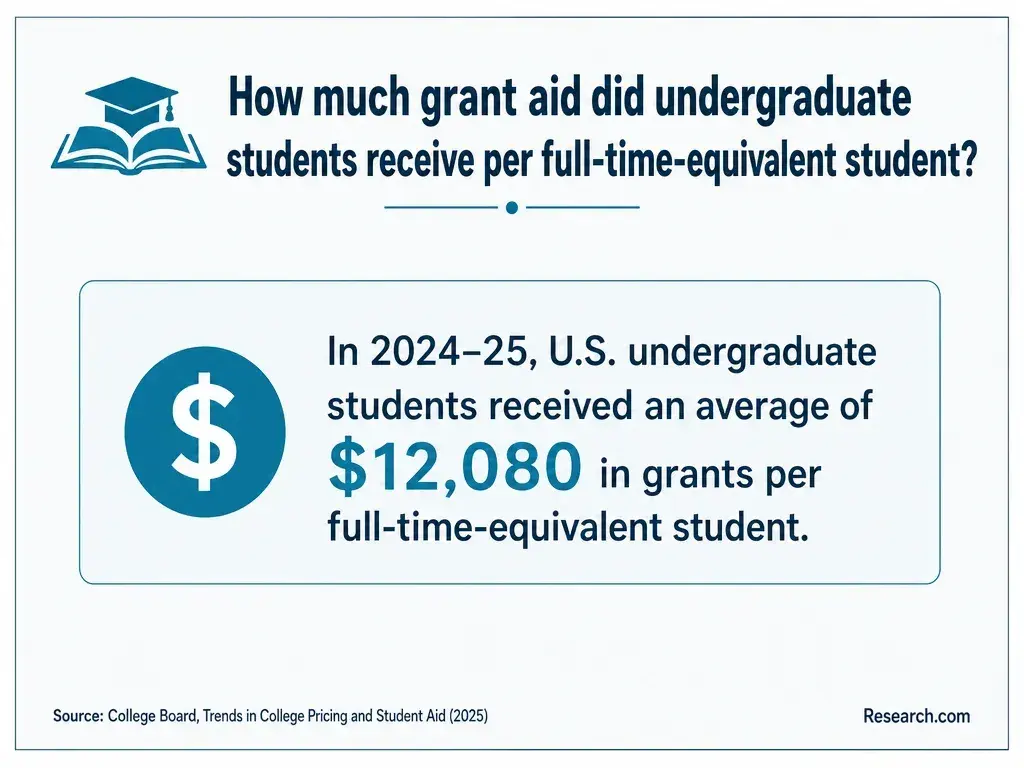
Section 127's generally applicable $5,250 annual tax exclusion is not a universal employer benefit cap. An employer can set different assistance limits, and tax treatment depends on the arrangement and applicable rules. Federal aid may also be relevant; a guide to reducing undergraduate substance abuse counseling tuition through aid covers aid questions worth raising with a school's financial aid office, even if you choose a broader psychology BA. Ask that office how your specific employer benefit affects your aid package.
Online delivery does not determine accreditation. Verify that the institution holds accreditation recognized by the U.S. Department of Education or the Council for Higher Education Accreditation, and check that the status applies to the school awarding your degree. Your employer may impose its own school-eligibility rules as well.
Do not look for APA accreditation as a general test of an undergraduate psychology BA: APA accreditation applies to specified professional psychology doctoral programs and related training, not ordinary bachelor's majors. If you are comparing a general BA with undergraduate substance use counseling study on a budget, check the target state's credential requirements separately. Institutional accreditation and relevant coursework do not, by themselves, establish counseling eligibility.
Expect a foundation in psychological science, research methods, statistics, and development, followed by program-dependent study of abnormal psychology, health, addiction, or community mental health. These courses teach students to evaluate evidence and understand behavior; studying diagnosis or treatment concepts is not authorization to perform either service.
Ask for the current catalog and a term-by-term plan. Statistics may precede research methods, and a desired elective may not run every term - both can affect whether you can use the full employer cap each year. Keep the program aligned with your goal: a forensic elective, for example, is not equivalent to choosing a one-year forensic psychology master's pathway. Neither is necessary merely to pursue general mental health support work.
Requirements vary by institution and by whether you enter as a first-year or transfer student. Schools commonly request prior transcripts and may have separate rules for admission to the major. An employer's approval to pay for a course does not substitute for admission to the degree program.
If you have college credits, request a written evaluation showing which credits satisfy general education, psychology, statistics, and residency requirements - not just how many credits the school accepts. A completed bachelor's degree also changes the financial comparison: before starting a second undergraduate degree, examine whether targeted prerequisites or comparing affordable graduate psychology programs better serves your goal. Check a graduate program's admissions and career purpose before assuming it is the right alternative.
Completion time depends on accepted credits, the courses still required, how often those courses run, and the load you can sustain alongside work. A benefit cap creates a trade-off: taking fewer courses may reduce annual out-of-pocket tuition but extend the time until graduation; taking more may shorten the degree while leaving a larger bill in a single benefit year.
Ask an advisor to map your remaining requirements by term, then compare that schedule with your employer's benefit years. If speed matters more than maximizing each annual benefit, investigate psychology degree completion through accelerated study. Verify live meetings, placement hours, and leave policies before assuming an accelerated online schedule will fit your job or caregiving responsibilities.
A psychology BA may be relevant to nonclinical positions such as human services assistant, program assistant, intake coordinator, or research support worker. Actual eligibility depends on the employer, your experience, and any state rules governing the duties. Workers in these roles might help people navigate services, maintain records, assist with outreach, or support evaluation under appropriate supervision; they do not independently provide psychotherapy because they studied mental health.
If you already work in a nonprofit or service agency, compare its promotion requirements with the degree's cost before enrolling. Experience, supervision, and a targeted credential may be more direct than a full BA for some positions. Exploring roles in community recovery organizations can help you distinguish support and coordination work from jobs requiring a substance use counseling credential.
There is no single salary for psychology BA graduates: pay follows the occupation, location, employer, and experience rather than the degree title. As a concrete benchmark, the U.S. Bureau of Labor Statistics reported a May 2024 median annual wage of $45,120 for social and human service assistants. That occupation includes workers with varied educational backgrounds; its median is neither an entry-level offer nor a prediction of what this BA will earn you.
Compare local postings for jobs you can realistically qualify for now and after graduation. Be especially careful not to treat pay figures for specialized graduate-level work - such as those discussed in a forensic psychology master's employment and pay guide - as a return on an undergraduate mental health-focused BA. For a tuition-benefit decision, the more useful question is whether the degree opens a specific opportunity that your present qualifications do not.
Do You Need Graduate School or Licensure to Work in Mental Health?
Not for every job. Nonclinical outreach, service coordination, and support roles may be accessible without graduate school, although employers can require training or credentials. Providing psychotherapy, making clinical diagnoses, or practicing under a protected professional title requires a qualifying pathway determined by the occupation and state - not simply a mental health concentration on a BA.
If your goal is licensed counseling, research the state board's educational and supervised-experience rules before choosing a bachelor's program or budgeting for graduate study. A resource on tuition-conscious shorter mental health counseling master's study can help frame the later cost-and-time comparison, but verify each program against your state's requirements. If your target is nonclinical work, graduate school may be unnecessary; compare job postings and employer training options first.
Other Things You Should Know About Psychology
Only if the employer's written plan extends eligibility to them. Do not assume a benefit advertised to employees covers family members or uses the same limits.
Possibly, but your employer must approve the school and course under its policy. Separately, obtain written confirmation that your degree-granting school will apply the credit as intended.
That depends on the plan. Some restrict eligible institutions; others permit outside schools with prior approval. Confirm the rule before paying an application fee.
Employment and leave-status rules vary. Ask benefits staff whether eligibility continues during your specific leave and get the answer in writing before registering.
- Qualified Ed expenses | Internal Revenue Service https://www.irs.gov/credits-deductions/individuals/qualified-ed-expenses
- College Cost and Financial Aid Terms Explained | Illinois State Treasurer https://illinoistreasurer.gov/home/individuals/college-savings/key-terms-for-understanding-education-costs/
- Academic Years, Academic Calendars, Payment Periods, and Disbursements | 2025-2026 Federal Student Aid Handbook https://fsapartners.ed.gov/knowledge-center/fsa-handbook/2025-2026/vol3/ch1-academic-years-academic-calendars-payment-periods-and-disbursements
- 29 CFR 825.213 -- Employer recovery of benefit costs. | ecfr.gov https://www.ecfr.gov/current/title-29/subtitle-B/chapter-V/subchapter-C/part-825/subpart-B/section-825.213
- Transfer Credit Services | usc.edu http://arr.usc.edu/transfer-credit-services/
- 26 U.S. Code § 127 - Educational assistance programs | LII / Legal Information Institute https://www.law.cornell.edu/uscode/text/26/127
- Employer Tuition Reimbursement: How It Works and How to Pay for College | Winston-Salem State University https://ramsonline.wssu.edu/blog/employer-education-benefits/
- How Do Transfer Credits Work When You Go Back to School? | Whitworth Online https://online.whitworth.edu/news-articles/how-do-transfer-credits-work-when-you-go-back-to-school/
- and Ask For - Employer Tuition Reimbursement Benefits | Harvard Extension School https://extension.harvard.edu/blog/how-to-use-and-ask-for-employer-tuition-reimbursement-benefits/
- Mandatory fees - VCU Student Financial Services https://sfs.vcu.edu/tuition-and-fees/understanding-tuition-and-fees/mandatory-fees/